Web
The Ultimate Guide to Business Website Development for Beginners
Jun 17, 2025

Business Website Development: Top 10 Essential Steps 2025
Why Business Website Development is Critical for Small Business Success
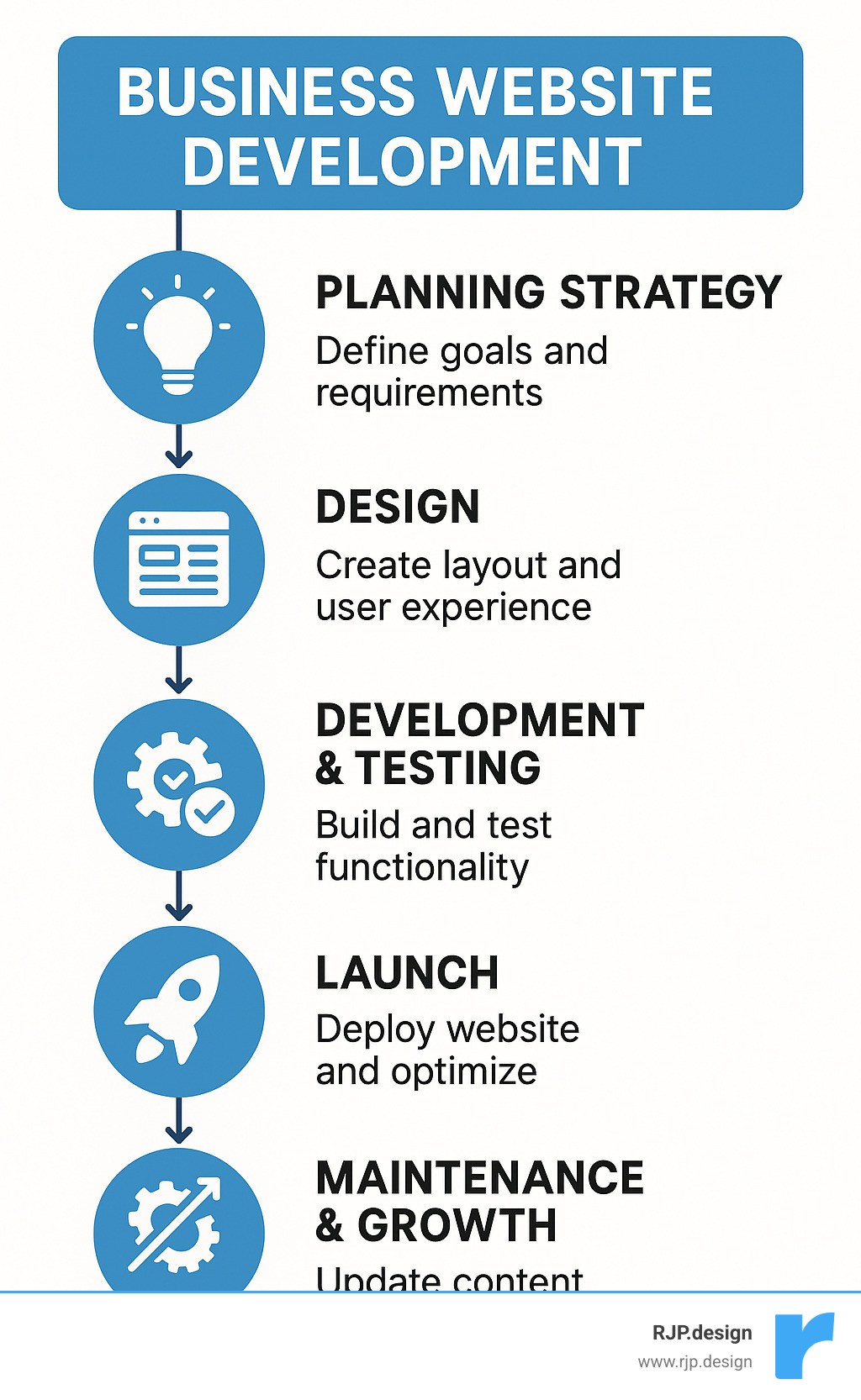
Business website development is the process of creating, building, and launching a professional website that helps small businesses attract customers, establish credibility, and drive revenue growth. Here’s what you need to know:
Key Components of Business Website Development:
– Planning & Strategy – Define goals, target audience, and core features
– Design & User Experience – Create mobile-friendly layouts that convert visitors
– Development & Testing – Build secure, fast-loading pages with proper functionality
– Launch & Optimization – Deploy your site and continuously improve performance
– Maintenance & Growth – Keep content fresh, security updated, and track ROI
The stakes couldn’t be higher for small businesses today. Research shows that 93% of B2B purchase decisions start with an online search, while 80% of consumers won’t risk buying from a company without a website. Your website isn’t just a digital brochure – it’s your most powerful sales tool working 24/7.
Yet many small business owners feel overwhelmed by the technical complexity. Should you use a free website builder like Wix or WordPress.com? Hire a professional agency? What features do you actually need versus nice-to-haves?
The good news is that modern business website development has become more accessible than ever. With the right approach, you can create a professional site that competes with larger competitors – even on a tight budget.
This guide walks you through every step, from initial planning to post-launch optimization. You’ll learn how to avoid common pitfalls, choose the right tools, and build a website that actually grows your business.
I’m Ross Plumer, and I’ve helped businesses market over $20 million in revenue through strategic digital marketing and business website development. My experience working with companies of all sizes has shown me exactly what separates websites that generate leads from those that just look pretty.
Business website development basics:
– custom website solutions
– creative web design agency
– responsive web solutions
Laying the Groundwork: Strategy, Branding & Legal Must-Dos
Think of business website development like building a house. You wouldn’t start pouring concrete without blueprints, right? Yet I see small business owners jump straight into picking colors and fonts before they’ve figured out what their website actually needs to accomplish.
Start With Your Mission and Find Your Sweet Spot
Your mission statement isn’t corporate fluff – it’s your website’s compass. Can you explain what you do, who you help, and why it matters in two sentences or less? If not, visitors won’t stick around to figure it out.
Once your mission is crystal clear, dig deep into your niche. The more specific you get, the easier it becomes to create content that actually converts.
Know Your People Inside and Out
Here’s where many business website development projects go sideways. Business owners assume they know their customers, but assumptions kill conversions.
Spend time creating detailed buyer personas. What keeps your ideal customers up at night? How do they research solutions? Understanding these details shapes everything from your navigation structure to your call-to-action buttons.
Handle the Legal Stuff (It’s Not Optional)
Nobody starts a business dreaming about privacy policies, but legal compliance builds trust and protects your investment. Setting up your business structure like an LLC creates a buffer between your personal and business assets. Clear contracts prevent scope creep and misunderstandings.
According to research on B2B search behavior, most business decisions start with online research. Professional legal pages signal that you’re a legitimate, trustworthy company worth doing business with.
Plan Your Content Before You Build
Your content plan should map out every page you need, the keywords you’re targeting, and how each piece of content moves visitors closer to becoming customers.
Domain research matters more than you might think. Your domain should match your business name when possible. Budget and timeline planning keeps projects on track. Professional business website development is an investment, not an expense.
Business Website Development Step-by-Step Checklist

Define your project scope by getting crystal clear on your business goals and target audience. Complete your competitor analysis and establish your budget and timeline upfront.
Map out your site architecture with a detailed sitemap showing every page you need. Plan your navigation structure so visitors can find what they need quickly. Design your URL structure with SEO in mind.
Create wireframes that show the basic layout of your key pages. Map out the user journey from first visit to conversion. Confirm you’re taking a mobile-first approach since most visitors will see your site on their phones first.
Get your content ready by completing your copywriting or at least outlining what goes where. Gather all your images and media assets. Finish your SEO keyword research and plan your call-to-action placement.
Choosing Essential Features Before You Code
Feature creep kills budgets and delays launches. Start with features that directly support your business goals, then add bells and whistles later.
Your navigation should get visitors where they need to go in three clicks or less. Every page needs strong CTAs that tell visitors exactly what to do next. Make it easy for prospects to reach you with simple contact forms that actually work.
SSL certificates aren’t optional anymore – they’re essential for security and SEO. Set up analytics from day one because you can’t improve what you don’t measure.
Business Website Development Fundamentals
Ready to turn your vision into reality? This is where business website development gets exciting. Today’s tools make it easier than ever to create a professional website that actually works for your business.
Start with Design, Not Code
Always start with design first. This means creating mockups of your key pages, choosing your brand colors and fonts, and mapping out how visitors will move through your site. Get stakeholder approval on the design before any development begins. This saves countless hours and prevents costly changes later.
Mobile-First Isn’t Just a Buzzword
Your website absolutely must work perfectly on phones and tablets. Google now uses mobile-first indexing, which means they judge your entire site based on how well it works on mobile devices.
Test your site on actual phones, not just your computer’s browser. Responsive design ensures your site adapts beautifully to any screen size.
Choose Your Development Path
Content management systems like WordPress offer the sweet spot for most businesses. You get plenty of flexibility without needing to be a programmer. Visual page builders let you drag and drop elements to create pages quickly. No-code platforms are the fastest way to get online, though they may not grow with your business long-term.
For most small businesses, we recommend starting with a solid CMS approach. It gives you room to grow without breaking the bank.
Testing is Your Safety Net
Never launch a website without thorough testing. Test everything: different browsers, mobile devices, form submissions, and page loading speeds. Use a staging server – this is like a private copy of your site where you can test changes without affecting your live website.
Platform Selection & Tech Stack Essentials
Choosing the right foundation for your website is like picking the right location for a brick-and-mortar store. Get it wrong, and you’ll pay for it later.
The CMS Advantage
Content management systems handle the technical heavy lifting while letting you focus on your content and business goals. Look for systems with strong SEO capabilities built in.
No-Code Solutions Have Grown Up
Modern no-code tools offer drag-and-drop editing, professional templates, and built-in hosting. They’re perfect if you need to launch quickly or have a limited budget. The trade-off is flexibility.
Hosting Matters More Than You Think
Your hosting choice directly affects your site’s speed, security, and reliability. Cheap hosting might save money upfront, but slow loading times cost you customers and hurt your search rankings.
For detailed guidance on choosing the right platform for your specific needs, check out our Web Design & Development services.
Common Business Website Development Mistakes to Avoid
Scope Creep Will Kill Your Budget
Projects without clear boundaries always spiral out of control. Always use detailed contracts that specify exactly what you’re building and what happens if you want to add features later.
Backing Up Isn’t Boring – It’s Essential
Set up automated backups from day one. Don’t rely on your hosting company’s backups alone. Security isn’t optional either. Use SSL certificates, keep software updated, and monitor for suspicious activity.
Mobile Testing on Real Devices
Test your site on actual phones and tablets, not just your computer’s browser tools. Pay attention to loading speeds on mobile too.
Weak Calls-to-Action Kill Conversions
Every page should guide visitors toward a specific action. Make it crystal clear what you want visitors to do next, and make sure your contact information is easy to find on every page.
Optimize, Secure & Scale Your Site for Long-Term Success
Launching your website is just the beginning of your business website development journey. The real magic happens when you optimize, secure, and scale your site for sustainable growth.
Core Web Vitals have become Google’s way of measuring user experience, and they directly impact where you show up in search results. The three key metrics are Largest Contentful Paint (loading speed), First Input Delay (responsiveness), and Cumulative Layout Shift (visual stability).
On-page SEO is where many businesses miss huge opportunities. This means doing proper keyword research, creating unique title tags and meta descriptions, using proper header structure, and implementing internal linking.
Schema markup helps search engines understand your content better. Whether you’re a local restaurant, professional service, or online retailer, schema helps search engines display your information correctly.
Security builds trust with customers. SSL certificates encrypt data, regular updates keep software secure, and strong passwords protect your accounts. ADA compliance ensures everyone can use your website, regardless of disabilities.
The mobile revolution is real. Research shows that 70% of mobile searches lead to online actions within one hour. Your website needs touch-friendly navigation, readable text without zooming, and fast loading even on slower connections.
Caching and CDN services speed up your site by storing copies of your content closer to visitors around the world.
Business Website Development Performance Toolkit
Speed testing should become a regular habit. Tools like Google PageSpeed Insights show you exactly what’s slowing down your site and provide specific recommendations.
Image optimization often provides the biggest performance boost. Compress your images before uploading them and implement lazy loading so images only load when visitors scroll to them.
Security audits should happen regularly. Run malware scans, check for vulnerabilities, monitor your SSL certificate, and verify your backups actually work.
For businesses serious about performance optimization, our Responsive Web Design services ensure your site delivers excellent experiences across all devices.
Promoting & Growing Traffic
A beautiful, optimized website needs active promotion to see real business results.
Content marketing remains one of the most effective long-term strategies. Create valuable content that answers your customers’ questions – blog posts, how-to guides, industry insights, and case studies all work together to attract your ideal customers.
Email marketing deserves special attention because it consistently delivers the highest ROI. Your website should capture email addresses through newsletter signups with valuable lead magnets.
Social media integration extends your website’s reach. Add social sharing buttons and maintain consistent branding across all platforms.
Search engine optimization is a marathon, not a sprint. Regular content creation, technical SEO maintenance, local SEO, and strategic link building improve your authority over time.
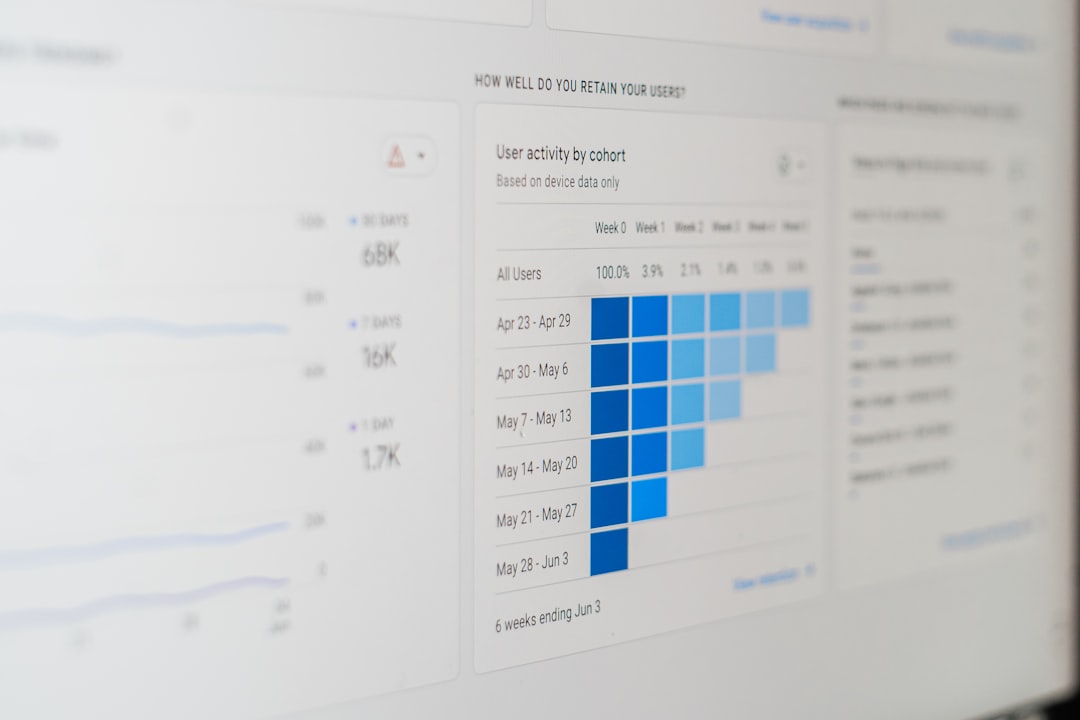
Analytics and conversion tracking tell you what’s actually working. Google Analytics reveals how visitors find and use your site, while conversion tracking measures your actual business goals.
Maintenance, Analytics & Continuous Improvement
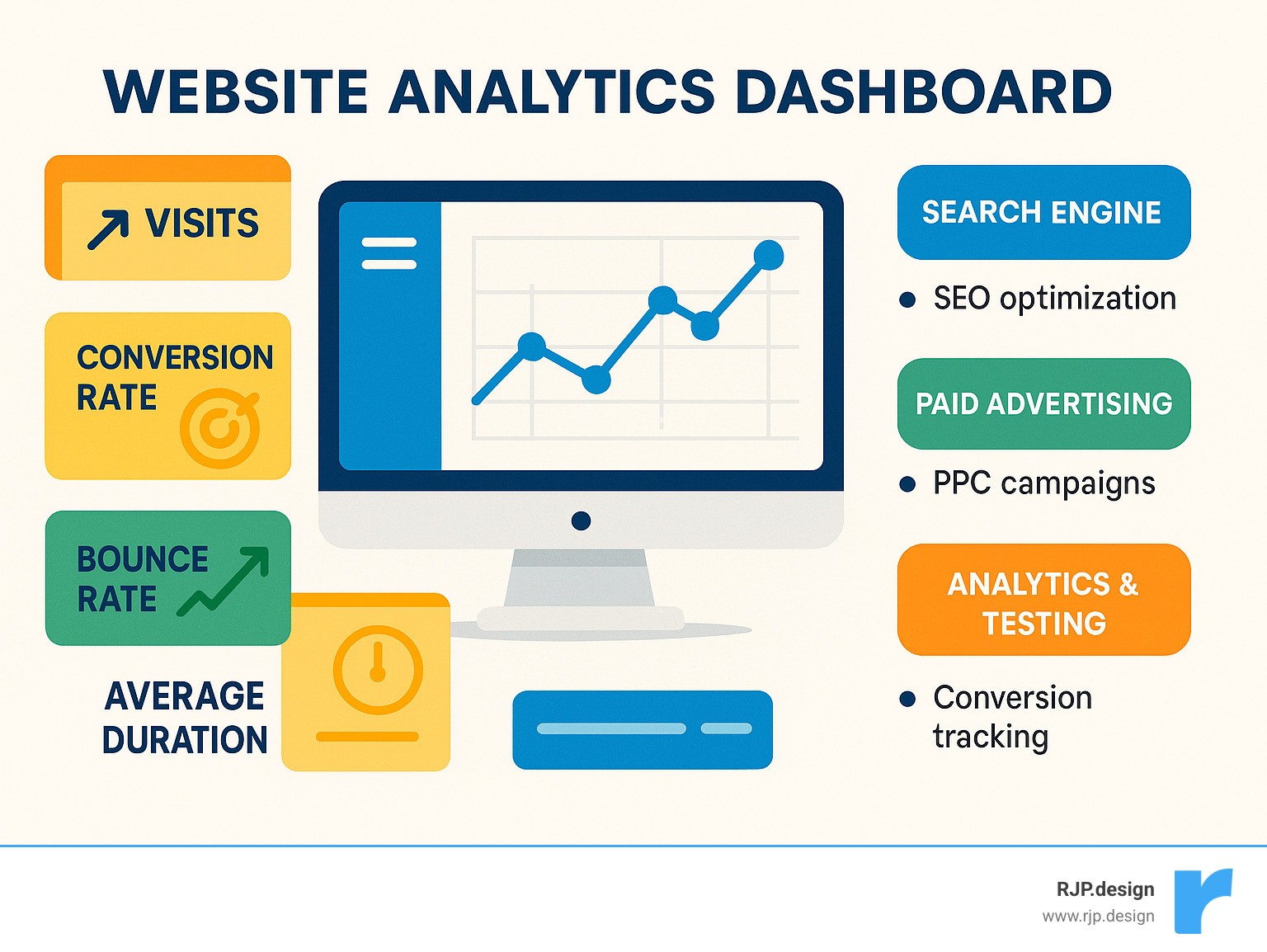
The real work starts after you hit “publish.” Your website is a living, breathing part of your business that needs regular care to keep performing at its best.
Think of Website Maintenance Like Running a Store
Weekly tasks keep things running smoothly – updating content, checking that contact forms work, and making sure your backups are solid. Monthly maintenance goes deeper with software updates, security scans, and analytics reviews. Quarterly reviews help you see the bigger picture and decide if changes are needed.
Measuring What Actually Matters
Focus on metrics that connect to your bottom line. Traffic numbers tell you if people are finding you. Conversion metrics show if your site is doing its job – are visitors filling out contact forms or making purchases? Technical performance affects everything else – monitor your page speed, uptime, and search rankings regularly.
Calculating Your Website’s ROI gets easier when you track consistently. Look at revenue attributed to your website, cost per lead from organic traffic, and how much you’re saving through automated processes.
For businesses wanting to focus on growth instead of technical maintenance, our Website Concierge Maintenance service handles the heavy lifting.
Post-Launch Business Website Development Roadmap
The first month after launch is crucial for watching technical hiccups and gathering initial feedback. Set up your analytics properly, submit your sitemap to Google, and start creating content consistently.
The 90-day mark reveals your site’s true performance. You’ll see traffic patterns emerge and identify pages that need improvement. Your first year brings major insights about your audience and which features matter most.
Tools & Automations That Make Life Easier
Smart business owners leverage tools to handle routine tasks automatically. Analytics tools like heat mapping show exactly how visitors use your site. A/B testing platforms let you try different approaches and stick with what works best.
Business automation transforms your website from a digital brochure into a working team member. Scheduling widgets book appointments automatically. Email sequences nurture prospects while you focus on other priorities.
Security and backup automation protects your investment without constant worry. Modern tools monitor threats, update software, and create backups automatically.
Frequently Asked Questions about Business Website Development
How much does it cost to develop and maintain a small-business site?
Starting on a shoestring budget? You can get online for practically nothing. Free website builders let you create a basic site for just hosting costs, usually around $10-20 per month. A self-hosted approach might run you $100-500 for the first year.
Ready to invest in professional results? Most small businesses find their sweet spot in the $1,000-5,000 range for a professionally designed site that actually converts visitors into customers.
Need something more sophisticated? E-commerce sites or businesses requiring custom features typically invest $5,000-15,000. Consider that your website works 24/7 to bring in new customers – it’s often the best marketing investment you’ll make.
Don’t forget the ongoing costs. Your domain renewal runs about $15 yearly, hosting ranges from $60-600 annually, and professional maintenance typically costs $500-2,000 per year.
Should I use a free builder or hire a professional team?
Free builders make sense when you’re testing the waters or just starting out. They’re perfect for getting your feet wet with business website development without major financial commitment.
Professional development becomes worth it when your website needs to work harder. If you’re serious about generating leads, competing online, or creating a memorable brand experience, the expertise and customization options make a huge difference.
Consider your time value too. If spending 40 hours learning website tools means missing out on client work, professional help often pays for itself quickly.
What metrics prove my website’s ROI?
Follow the money first. Track leads generated through your website and follow those leads through to actual sales. If your site cost $3,000 but brought in $15,000 worth of new business in the first year, that’s a clear win.
Look at your customer acquisition costs. If you’re spending $200 per customer through paid advertising but your website brings in customers for $50 each through organic search, your SEO investment is working.
Track your organic search growth. More people finding you through Google searches means less money needed for advertising. Monitor your conversion rates – a professional site might convert 3-5% of visitors into leads, while a DIY site might only convert 1%.
The bottom line? If your website isn’t generating measurable results within 6-12 months, it needs attention.
Conclusion
Your journey through business website development doesn’t have to end here – in fact, it’s just getting started. Think of this guide as your roadmap to creating a website that actually works for your business, not just one that looks pretty sitting in cyberspace.
The numbers tell a compelling story. With 93% of B2B purchases beginning with online search and 80% of consumers refusing to buy from businesses without websites, your website isn’t just a nice-to-have anymore. It’s the difference between thriving and merely surviving in today’s digital marketplace.
Here’s what really matters: start with solid planning, focus relentlessly on user experience, make mobile your priority since 70% of mobile searches lead to action within just one hour, build for tomorrow, not just today by choosing platforms that can grow with your business, and measure what actually moves the needle for your bottom line.
You don’t need to implement every feature we’ve discussed right away. Start with the essentials that serve your customers best, then expand based on real data and feedback. The perfect website doesn’t exist – but the profitable one absolutely does.
Every day you delay is another day your competitors are capturing customers who could be yours. But here’s the good news: you now have everything you need to create a website that works as hard as you do.
At RJP.design, we’ve seen how the right approach to business website development transforms businesses. Our team doesn’t just build websites – we create digital growth engines that generate leads and sales around the clock. We keep things simple, honest, and focused on what actually drives results for your business.
Ready to turn your website into your most productive team member? Check out our comprehensive Business Website Solutions: A Comprehensive Guide to Online Success to see how we can help your business dominate online.
Your website should be working for you 24/7, turning visitors into customers while you sleep. With smart business website development, that’s not just possible – it’s inevitable.