Marketing
Small Business Success: Leveraging Internet Marketing Services
May 27, 2025
Internet Marketing Services for Small Businesses: 7 Powerful Success Tips 2025
Why Internet Marketing Services Are Essential for Small Business Growth
Internet marketing services for small businesses have become the backbone of competitive success in today’s digital marketplace. With 88% of consumers searching for products online before making in-store purchases, small businesses can no longer rely solely on traditional marketing methods to reach their customers.
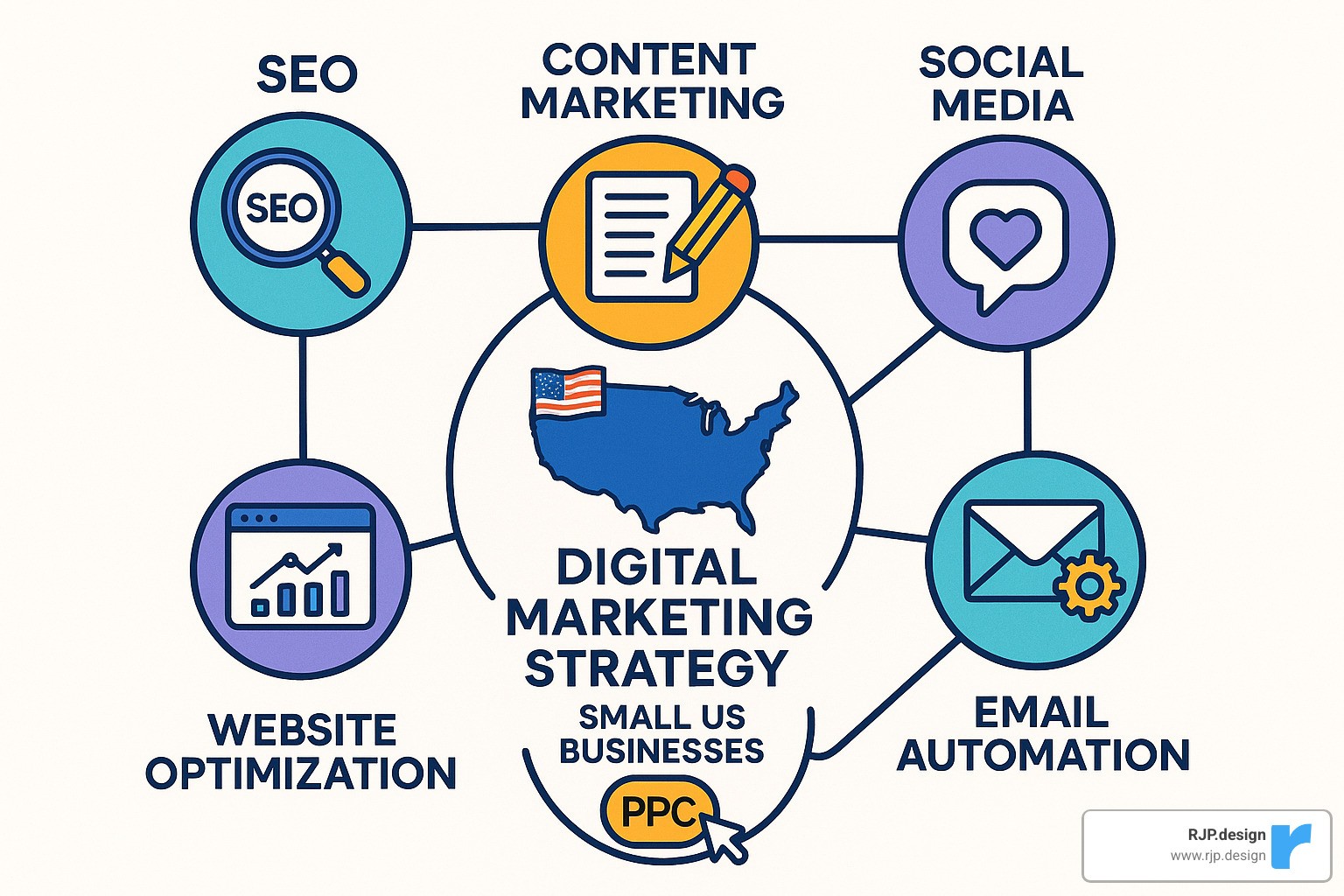
Core internet marketing services for small businesses include:
• SEO & Local Search – Improve visibility in Google searches and local listings
• Content Marketing – Create blogs, videos, and social content that attracts customers
• Social Media Management – Build community and engage with your audience
• Email Marketing & Automation – Nurture leads and retain existing customers
• Pay-Per-Click Advertising – Target specific audiences with measurable results
• Website Design & Optimization – Convert visitors into paying customers
• Online Reputation Management – Monitor and improve your digital presence
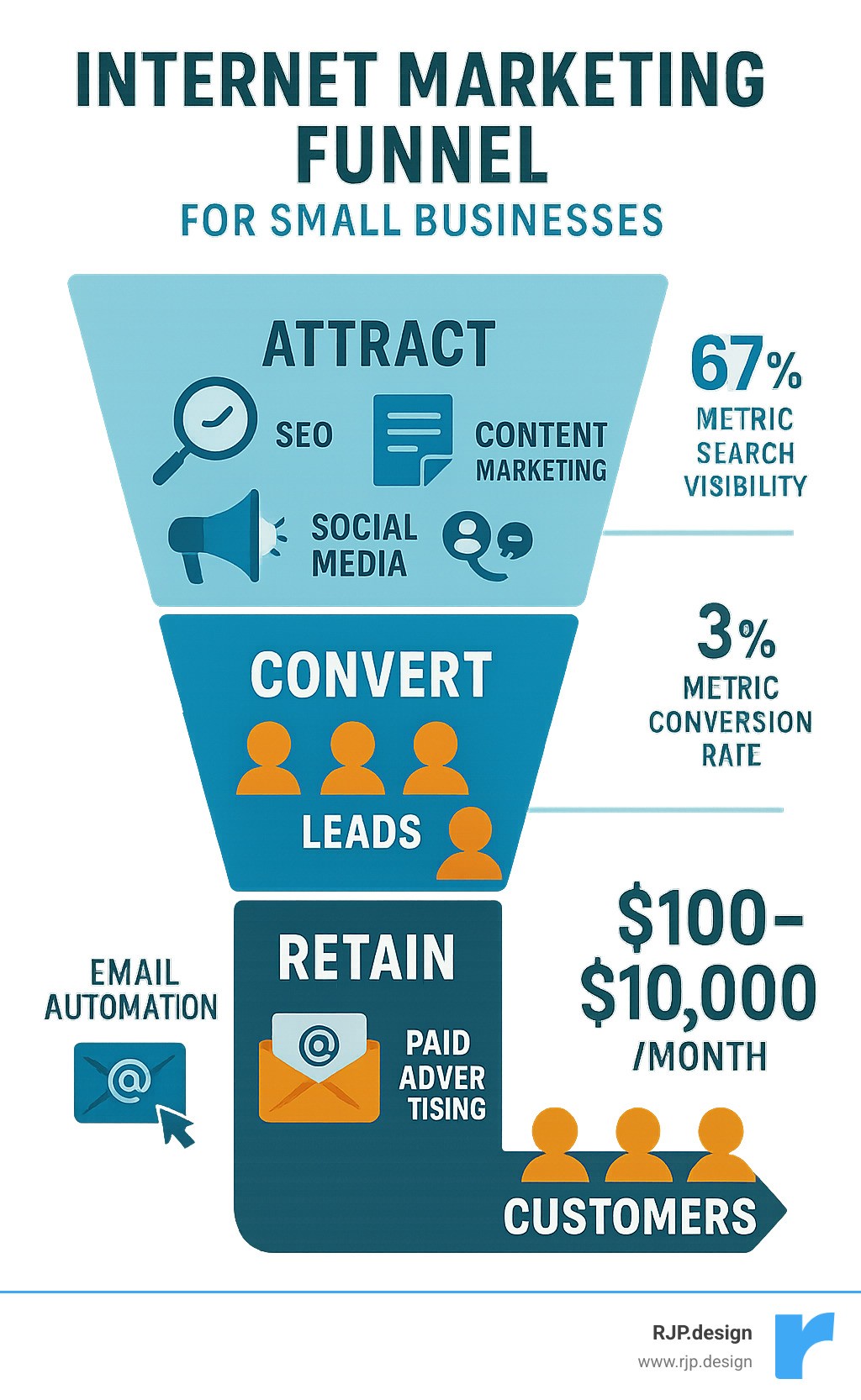
The research shows that 67% of small business leaders credit community support as vital to their survival, while businesses typically invest between $100-$10,000 per month on digital marketing depending on their size and goals.
What makes internet marketing particularly powerful for small businesses is its cost-effectiveness and measurability. Unlike traditional advertising, you can track exactly how many people see your content, visit your website, and become customers. This data-driven approach helps you spend your marketing budget more wisely.
Many successful small businesses have finded that the right internet marketing strategy doesn’t require losing the human connections that make them special. Instead, digital tools amplify those relationships by helping you reach more people who genuinely need your products or services.
I’m Ross Plumer, and I’ve helped businesses market over $20 million in revenue by creating internet marketing services for small businesses that focus on real results rather than flashy tactics. My approach combines psychology and data to build marketing systems that grow your business while staying true to your brand values.
Simple guide to internet marketing services for small businesses terms:
– ppc advertising solution
– seo digital solutions
– web marketing solution
Understanding Internet Marketing: Why It Matters for Small Businesses
Think of internet marketing as your business’s way of having conversations with customers in the digital spaces where they already spend their time. It’s not about shouting louder than everyone else – it’s about being genuinely helpful when people are looking for what you offer.
The reality is that your customers’ journey to finding and choosing your business has completely changed. They’re researching on their phones while standing in line for coffee, comparing options while binge-watching Netflix, and making decisions based on what other customers say in online reviews. If your business isn’t part of these digital conversations, you’re missing out on most of your potential customers.
Mobile-first behavior has become the new normal. More people browse the internet on their phones than on computers, which means your marketing needs to work perfectly on small screens. And with voice search growing rapidly, people are literally talking to their devices to find local businesses – “Hey Google, find me a good pizza place nearby.”
What Is Internet Marketing?
Internet marketing is really about creating an omnichannel experience – a fancy way of saying your business shows up consistently and helpfully across multiple digital touchpoints. Instead of the old-school approach of talking at customers through ads, digital marketing lets you have real conversations and build relationships.
The foundation starts with SEO basics – making sure your website appears when people search for your products or services. This isn’t about gaming the system; it’s about organizing your website and content so search engines can easily understand what you do and who you help.
Your content channels are where the magic happens. These include your website blog, social media profiles, email newsletters, videos, and anywhere else you share valuable information. The secret sauce is creating content that genuinely helps your customers solve problems or reach their goals, rather than just talking about how great your business is.
Why Small Businesses Can’t Ignore It
Here’s the thing about modern search behavior – when someone needs a service or product, their first instinct is to pull out their phone and search. If you’re not showing up in those search results, it’s like your business doesn’t exist to that potential customer.
Trust signals in today’s world come from your digital presence. People judge your business based on your website, online reviews, social media activity, and how consistent your brand feels across all platforms. They’re forming opinions about you before they ever walk through your door or pick up the phone.
The budget-friendly nature of digital marketing is what makes it perfect for small businesses. You can start small, see what works, and gradually invest more as you get results. Unlike traditional advertising where you pay upfront and hope for the best, internet marketing services for small businesses let you track exactly what’s working and adjust your spending accordingly.
Scalability is perhaps the biggest advantage. A single blog post or social media campaign can reach thousands of potential customers with the same effort it takes to have a few face-to-face conversations. As your business grows, your digital marketing grows with it without requiring you to hire a huge team or spend exponentially more money.
Core Internet Marketing Services for Small Businesses
Think of internet marketing services for small businesses as a well-orchestrated team where each player has a specific role, but they all work together toward the same goal. You wouldn’t field a basketball team with five point guards, and you shouldn’t approach digital marketing with just one strategy either.
The magic happens when your search engine optimization drives traffic to content that engages visitors, who then follow you on social media and eventually join your email list. Each service strengthens the others, creating a marketing system that’s much more powerful than the sum of its parts.
More info about Website Marketing forms the foundation of everything else you’ll do online. Your website serves as your digital headquarters where all other marketing efforts ultimately direct potential customers.
SEO & Local Search Foundations
Keyword research is like learning your customers’ language. You need to understand exactly what words they type into Google when they’re looking for what you offer. It’s not about guessing – it’s about finding the specific phrases that show someone is ready to buy.
On-page SEO means making your website crystal clear to both visitors and search engines. When someone lands on your page, they should immediately understand what you offer and how it helps them. Search engines need the same clarity to match your content with the right searches.
Technical SEO keeps your website running smoothly behind the scenes. If your site takes forever to load or looks terrible on phones, you’ll lose customers before they even see what you’re selling. Think of it as the foundation of a house – nobody notices when it’s done right, but everyone notices when it’s wrong.
For local businesses, citations and Google Business Profile optimization can make or break your visibility. When someone searches for “dentist near me,” Google decides which businesses to show based partly on how consistent and complete your business information is across the web.
More info about Google Search Optimization can help you understand the specific strategies that work best for your industry and location.
Content Marketing & Storytelling
Content marketing isn’t about selling – it’s about helping. When you consistently provide valuable information that solves your customers’ problems, they start to see you as the expert they want to work with. This builds trust long before they’re ready to buy.
Video content has become the fastest way to build that trust. You don’t need a Hollywood production budget either. Some of the most effective business videos are simple smartphone recordings that show real expertise and genuine personality.
Infographics and visual content work particularly well because they’re easy to share and understand quickly. A good infographic can explain complex ideas in seconds and often gets shared across multiple social platforms.
Consistency in your brand voice and publishing schedule helps people know what to expect from you. You don’t need to post every day, but when you do post, it should sound like the same helpful, knowledgeable business every time.
The secret to sustainable content marketing is repurposing. One great blog post can become a video, an infographic, several social media posts, and an email newsletter. Work smarter, not harder.
Social Media & Community Building
Platform selection should follow your customers, not the latest trends. A plumbing company might thrive on Facebook and YouTube, while a graphic designer could find their best clients on Instagram and LinkedIn. Go where your people are.
Engagement beats follower count every single time. A thousand followers who actually read and respond to your posts will generate more business than ten thousand who scroll past without noticing. Focus on building real relationships.
User-generated content provides the kind of authentic social proof that money can’t buy. When real customers share photos of your work or rave about your service, it carries more weight than any advertisement you could create.
Scheduling tools help you maintain a consistent presence without living on your phone. But remember – social media is called “social” for a reason. You still need to show up for real-time conversations and respond to comments.
More info about Social Media Services can help you develop a strategy that builds genuine community around your brand.
Email, Automation & CRM
Email marketing remains one of the most effective ways to stay connected with your customers. Unlike social media, where algorithms decide who sees your content, emails land directly in your customers’ inboxes.
List building should happen everywhere – your website, social media, in-person events, and even on receipts. Make it easy for people to stay in touch, and give them a good reason to want your emails.
Segmentation lets you send the right message to the right people. New subscribers need different information than longtime customers. Someone who bought from you last week doesn’t need the same “getting to know us” emails as someone who just finded your business.
Drip campaigns and automation work like having a helpful assistant who never forgets to follow up. They can welcome new subscribers, nurture leads over time, and even win back customers who haven’t purchased in a while.
Modern AI tools make personalization easier than ever. You can customize emails based on what people have bought, which pages they’ve visited, and how they’ve engaged with previous messages.
Scientific research on engagement rates shows that personalized email campaigns can achieve significantly higher open and click-through rates than generic broadcasts.
Paid Advertising & Smart Budgeting
PPC advertising is like having a fast lane to visibility. While SEO builds long-term results, paid ads can put you in front of potential customers immediately. The key is choosing the right PPC channels for your audience and budget.
Return on ad spend (ROAS) tells you whether your advertising is actually profitable. A healthy ROAS for most small businesses is around 4:1 – meaning you make $4 for every $1 you spend on ads.
Geo-targeting ensures you’re not wasting money advertising to people who can’t or won’t buy from you. If you’re a local business, there’s no point paying to show ads to someone across the country.
Remarketing helps you reconnect with people who already know about your business. These “warm” audiences typically cost less to reach and convert at higher rates than completely new prospects.
A/B testing turns advertising from guesswork into science. Small improvements in your headlines, images, or targeting can dramatically improve your results over time.
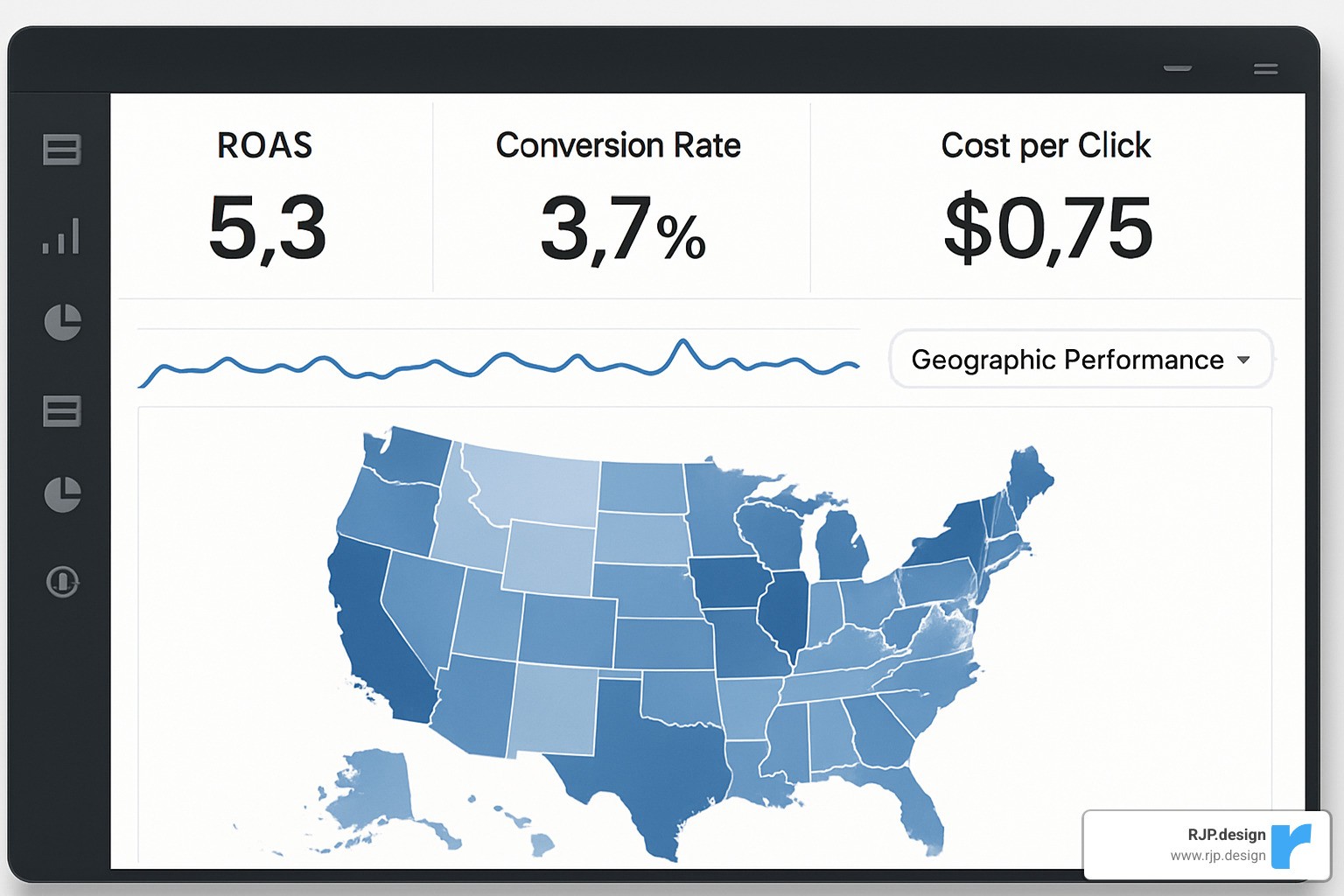
How internet marketing services for small businesses drive visibility
Search ranking improvements create lasting value. Unlike paid ads that disappear when you stop paying, good SEO work continues delivering traffic months or even years later. It’s like planting a tree that keeps growing.
Social reach extends far beyond your immediate followers through shares, comments, and platform algorithms that promote engaging content. One piece of content that resonates can introduce your business to hundreds of new potential customers.
Conversion funnels help you understand how all these services work together. Someone might find you on Instagram, research you through Google, sign up for your email list, and finally make a purchase after receiving a promotional email. Each touchpoint plays a role in the final sale.
The beauty of internet marketing services for small businesses is that they create multiple pathways for customers to find and choose you. The more touchpoints you have, the more opportunities you create for meaningful connections that turn into lasting business relationships.
Choosing and Budgeting: Finding the Right Fit
Finding the perfect internet marketing services for small businesses starts with understanding exactly what your business needs right now. Are customers having trouble finding you online? Maybe you’re getting plenty of website visitors but they’re not converting into sales? Or perhaps you’re drowning in day-to-day operations and need someone to handle your marketing entirely?
Your specific situation should guide every decision you make about marketing investments. There’s no point paying for advanced social media advertising if your website doesn’t even show up when people search for your services.
Goal setting makes the difference between marketing that works and marketing that wastes money. Instead of vague hopes like “get more customers,” aim for concrete targets like “generate 50 new leads per month” or “increase website traffic by 25% in six months.” These specific goals make it much easier to evaluate whether your marketing investments are actually working.
When you’re evaluating potential partners, transparency should be non-negotiable. Any provider worth working with will clearly explain their methods, show you relevant examples of their work, and give you honest timelines for results. Be especially cautious of anyone promising overnight success or using confusing jargon to explain their approach.
Cost ranges for internet marketing services for small businesses typically run from $100 to $10,000 per month, depending on your business size and how comprehensive your marketing needs are. A local bakery might start with basic SEO and social media for a few hundred dollars monthly, while a growing online retailer could easily invest several thousand in comprehensive campaigns.
In-House vs Agency vs Hybrid
The decision between handling marketing internally, hiring an agency, or mixing both approaches depends on your resources, timeline, and comfort level with marketing complexity.
Approach | Pros | Cons | Best For |
|---|---|---|---|
In-House | Full control, deep brand knowledge, immediate availability | Limited expertise, higher fixed costs, slower learning curve | Businesses with dedicated marketing budgets and time to train staff |
Agency | Broad expertise, proven systems, faster implementation | Less control, potential for cookie-cutter approaches, ongoing costs | Businesses wanting comprehensive strategies without internal management |
Hybrid | Flexibility, cost control, specialized expertise when needed | Coordination challenges, potential gaps in strategy | Businesses with some internal capacity but specific skill gaps |
Building internal marketing capabilities gives you complete control and deep brand integration, but it requires significant time investment to develop skills and stay current with changing digital platforms. If you’re already working 60-hour weeks just keeping your business running, trying to become a marketing expert might not be realistic.
Working with experienced agencies often provides faster results because they have established systems, tools, and knowledge from working with similar businesses. However, you’ll need to find providers who understand your industry and won’t treat your business like every other client.
The hybrid approach works well for many small businesses – perhaps you handle day-to-day social media posting while outsourcing technical SEO work, or you create content while someone else manages your advertising campaigns.
More info about Digital Marketing can help you understand which approach aligns best with your current situation and long-term goals.
Evaluating Costs, Packages & ROI
Understanding what you can afford to spend on marketing starts with knowing how much each new customer is worth to your business. If your average customer generates $500 in profit over their relationship with you, then spending $100 to acquire that customer makes perfect sense.
Key Performance Indicators should directly connect to your revenue. While metrics like website traffic and social media followers can be interesting, focus on measurements that actually impact your bottom line – lead generation, conversion rates, customer acquisition cost, and lifetime customer value.
Break-even analysis helps you set realistic budgets. Calculate how much profit each new customer brings, then work backwards to determine your maximum cost per acquisition. This gives you a clear framework for evaluating whether marketing investments make financial sense.
Lifetime value calculations become crucial as you grow. A customer who makes repeat purchases or refers friends provides much higher value than someone who buys once and disappears. This higher lifetime value justifies spending more on acquisition, especially for strategies that attract loyal customers.
The monthly investment range of $100 to $10,000 reflects the huge variety in business needs and marketing complexity. Start with what you can comfortably afford, measure the results carefully, and increase investment in the strategies that prove successful.
Selecting a Partner or Freelancer
Portfolio review should focus on relevance rather than just impressive visuals. Look for examples of work with businesses similar to yours in size and industry. Be skeptical of providers who only showcase work for massive corporations if you’re running a small local business – the strategies and budgets are completely different worlds.
Communication style often predicts the success of your working relationship. During initial conversations, pay attention to whether they ask thoughtful questions about your business, listen to your concerns, and explain their recommendations in terms you can understand. If they’re already difficult to reach or unclear in their communication, imagine how frustrating that will become over months of working together.
Industry experience can be valuable but isn’t always necessary. Sometimes fresh perspectives from outside your sector can identify opportunities that industry specialists might overlook. What matters more is their ability to understand your specific business challenges and customer behavior.
Contract terms should protect your interests while allowing flexibility. Avoid long-term commitments until you’ve had a chance to evaluate the quality of work and actual results. Month-to-month arrangements often demonstrate a provider’s confidence in their ability to deliver value consistently.
Red flags include guarantees of specific search rankings, promises of overnight results, reluctance to explain their methods clearly, or high-pressure tactics to sign contracts immediately. Quality providers are confident enough in their work to let you make informed decisions at your own pace.
Measuring Success & Overcoming Obstacles
Understanding whether your internet marketing services for small businesses are actually working requires more than just looking at pretty charts. You need to focus on the numbers that directly impact your bottom line and learn from both your wins and setbacks.
The key is building a simple system that tracks what matters most. Google Analytics shows you where your website visitors come from, while social media insights reveal which posts spark real engagement. Email marketing reports tell you who’s actually reading your messages and clicking through to your offers.
Creating a dashboard that makes sense doesn’t require a marketing degree. Focus on five core metrics: website traffic, lead generation, conversion rates, customer acquisition cost, and revenue growth. These numbers tell the complete story of your marketing performance without overwhelming you with unnecessary data.
Monthly check-ins help you spot patterns before they become problems. Maybe your social media engagement drops every third week because you’re too busy with client work to post consistently. Or perhaps your email open rates spike when you share behind-the-scenes stories about your business.
The most successful small businesses treat every marketing campaign as a learning opportunity. That Facebook ad that flopped? It taught you something valuable about your audience. The blog post that went viral? Figure out what made it special so you can recreate that magic.
Common pitfalls include getting excited about vanity metrics like social media followers instead of focusing on actual sales. It’s also tempting to panic when your website traffic dips for a few days or to completely overhaul your strategy based on one bad week.
Algorithm updates from Google and Facebook can shake things up unexpectedly. That’s why smart businesses spread their marketing efforts across multiple channels instead of putting all their eggs in one digital basket.
Measuring the ROI of internet marketing services for small businesses
Traffic source analysis reveals which marketing efforts bring you the most valuable visitors. Someone who finds you through a Google search for your specific service is probably more ready to buy than someone who stumbled across your funny meme on Instagram.
Your conversion rate – the percentage of website visitors who actually become customers – matters more than total traffic numbers. It’s better to have 100 highly interested visitors than 1,000 people who immediately bounce off your site.
Customer acquisition cost calculation helps you understand what you can afford to spend on marketing. If each new customer brings you $500 in profit over their lifetime, you know you can spend up to that amount to acquire them while staying profitable.
Revenue growth attribution connects your marketing activities to actual business results. This can be tricky to track perfectly, but tools like Google Analytics and CRM systems help you see which touchpoints contribute to sales.
The goal isn’t to become a data scientist – it’s to understand which marketing investments are paying off so you can do more of what works and less of what doesn’t.
Common Challenges & How to Fix Them
Budget constraints force you to be strategic about where you spend your marketing dollars. Start with one or two channels that make the most sense for your business, then expand as you see results. A local restaurant might focus on Google My Business and Instagram, while a consulting firm might prioritize LinkedIn and email marketing.
Content consistency becomes challenging when you’re trying to post everywhere all the time. It’s much better to show up regularly on two platforms than sporadically on five. Pick the channels where your customers actually hang out and focus your energy there.
Technical barriers often feel scarier than they actually are. Most modern marketing tools are designed for regular business owners, not computer programmers. Don’t let fear of technology keep you from trying tools that could help your business grow.
Skill gaps are normal and fixable. You don’t need to become an expert in everything overnight. Identify which skills matter most for your business goals, then decide whether to learn them yourself, hire someone, or work with a partner.
Reputation management requires both immediate response and long-term strategy. When negative reviews appear, respond professionally and publicly to show you care about customer satisfaction. Meanwhile, implement systems to encourage happy customers to share their positive experiences online.
More info about Business Growth Online provides additional strategies for overcoming common marketing obstacles and building sustainable growth systems that work for your specific business situation.
Frequently Asked Questions about Internet Marketing Services for Small Businesses
What does a starter budget look like?
When small business owners ask me about budgets, I always tell them the truth: you can start making a real impact with $500-$2,000 per month. I know that might sound like a lot when you’re watching every penny, but here’s the thing – internet marketing services for small businesses are designed to pay for themselves through increased sales.
Your starter budget should focus on one or two channels that make the most sense for your business. If you’re a local plumber, that might mean investing in Google My Business optimization and local SEO. If you sell products online, you might split your budget between professional product photos and some targeted Facebook ads.
The beauty of digital marketing is that you can start small and grow your investment as you see results. Many of my most successful clients started with basic SEO and social media management, then reinvested their profits into expanded campaigns. This approach feels much more manageable than trying to do everything at once.
Think of it this way: if spending $1,000 per month brings in three new customers worth $2,000 each, you’ve just made a $5,000 profit on your $1,000 investment. Those are the kinds of returns that make marketing budgets feel like the best money you’ve ever spent.
How long until I see results?
This is probably the question I get asked most often, and I understand why. When you’re investing your hard-earned money into marketing, you want to see something happening.
Paid advertising can start bringing visitors to your website within hours of launching a campaign. You might see your first leads within days. But here’s what I’ve learned after helping businesses market millions in revenue: the real magic happens when you give your marketing time to build momentum.
SEO typically takes 3-6 months to show meaningful results, but once it kicks in, it keeps working for you around the clock. Content marketing might get people engaging with your posts within days, but building a loyal audience that trusts your expertise takes several months of consistent effort.
Email marketing can produce immediate results if you already have subscribers, but building a quality email list from scratch takes time. Social media engagement starts quickly, but converting followers into customers usually requires weeks or months of relationship building.
I always tell my clients to focus on early indicators like website traffic increases, email sign-ups, and social media engagement before expecting major changes in sales. These leading indicators show that your marketing is working, even before you see the full impact on your bottom line.
Which metrics matter most?
After working with hundreds of small businesses, I’ve seen owners get excited about the wrong numbers. Having 10,000 social media followers feels great, but if none of them buy anything, those followers aren’t helping your business grow.
The metrics that actually matter are the ones that connect directly to your bank account. How many potential customers are you attracting each month? What percentage of your website visitors actually contact you or make a purchase? How much does it cost you to gain a new customer, and how much revenue does each customer generate over time?
Lead generation numbers tell you if your marketing is attracting the right people. If you’re getting lots of website visitors but no phone calls or email inquiries, something’s not working. Conversion rates show you if your website and marketing messages are compelling enough to turn interested visitors into paying customers.
Customer acquisition cost and lifetime value are the numbers that determine whether your marketing is profitable. If it costs you $200 to acquire a customer who spends $1,000 with you over time, that’s fantastic. If it costs $500 to get a customer who only buys once for $100, you need to adjust your strategy.
The beautiful thing about internet marketing services for small businesses is that everything can be measured. Unlike traditional advertising where you’re never quite sure what’s working, digital marketing gives you clear data to make smart decisions about where to spend your money.
Conclusion & Next Steps
Internet marketing services for small businesses have transformed from a “nice to have” into an absolute necessity for staying competitive. The beauty of digital marketing lies in its accessibility – you don’t need a Fortune 500 budget to compete effectively online.
At RJP.design, we’ve seen how the right digital strategy can completely transform a small business. We specialize in creating websites and enhancing online presence for businesses, ensuring they look great and are easily found online. Our high-quality service and down-to-earth team prioritizes client satisfaction above all else, because we understand that your success is our success.
Every successful digital marketing journey starts with an honest assessment of where you are right now. Take a moment to Google your business name – what comes up? Search for the services you offer in your area – do you appear anywhere on the first page? Check how your website looks on a smartphone. These simple tests will quickly reveal your biggest opportunities.
The most important next step is simply to start somewhere. You don’t need to master every digital marketing channel overnight. Pick one area that makes the most sense for your business – maybe it’s claiming and optimizing your Google Business Profile, or perhaps it’s finally getting that website redesigned. Small, consistent actions compound into significant results over time.
Continuous improvement isn’t just marketing jargon – it’s how successful small businesses stay ahead. The digital landscape changes constantly, but that’s actually good news. It means there are always new opportunities to reach your customers in better ways. The businesses that thrive are those that stay curious and willing to try new approaches.
We’ve watched countless small businesses transform their growth trajectory by taking digital marketing seriously. The local bakery that started sharing behind-the-scenes videos on social media and saw foot traffic increase by 40%. The consulting firm that began writing helpful blog posts and tripled their qualified leads. The retail store that optimized for local search and started appearing ahead of much larger competitors.
Your customers are already online, searching for exactly what you offer. The question isn’t whether internet marketing services for small businesses work – it’s whether you’re ready to meet your customers where they are.
More info about Social Media growth can help you take your first confident steps toward building an online presence that actually drives business results.
Every expert was once a beginner. The most successful business owners we work with didn’t have all the answers when they started – they just had the courage to begin. Your competitors might have a head start, but with the right strategy and consistent effort, you can not only catch up but surpass them.
The best time to start building your digital presence was five years ago. The second-best time is right now.