
SEO
Retail Local SEO Strategies: Tips, Tools, and Tactics for Local Domination
Nov 14, 2025
Retail Local SEO: 3 Pillars to Dominate
Why Local SEO is Critical for Retail Success
Retail local SEO is the process of optimizing your store’s online presence to attract nearby customers actively searching for products and services in your area. It involves several core components:
Google Business Profile – Your digital storefront on Google Search and Maps
Online Reviews – Building trust, as 89% of consumers check them before buying
Local Citations – Consistent business information across directories
Localized Content – Pages and blog posts targeting your specific geographic area
Mobile Optimization – Critical since 62.5% of web traffic comes from mobile devices
The impact is significant: 54% of customers search online before buying in-store, and over 80% of local searches lead to store visits. With “near me” searches growing over 200% from 2020-2022, local SEO is a direct sales driver. The difference between general and local SEO is proximity and intent. A search for “running shoes near me” signals a customer is ready to visit a store and buy today.
For brick-and-mortar retailers, local visibility connects online searches to in-store purchases at the exact moment customers are ready to buy.
I’m Ross Plumer, and I’ve helped businesses generate over $20 million in revenue through strategic digital marketing. Throughout my career, I’ve specialized in retail local SEO strategies that drive real foot traffic and measurable sales for physical stores. Let me show you exactly how to dominate your local market.
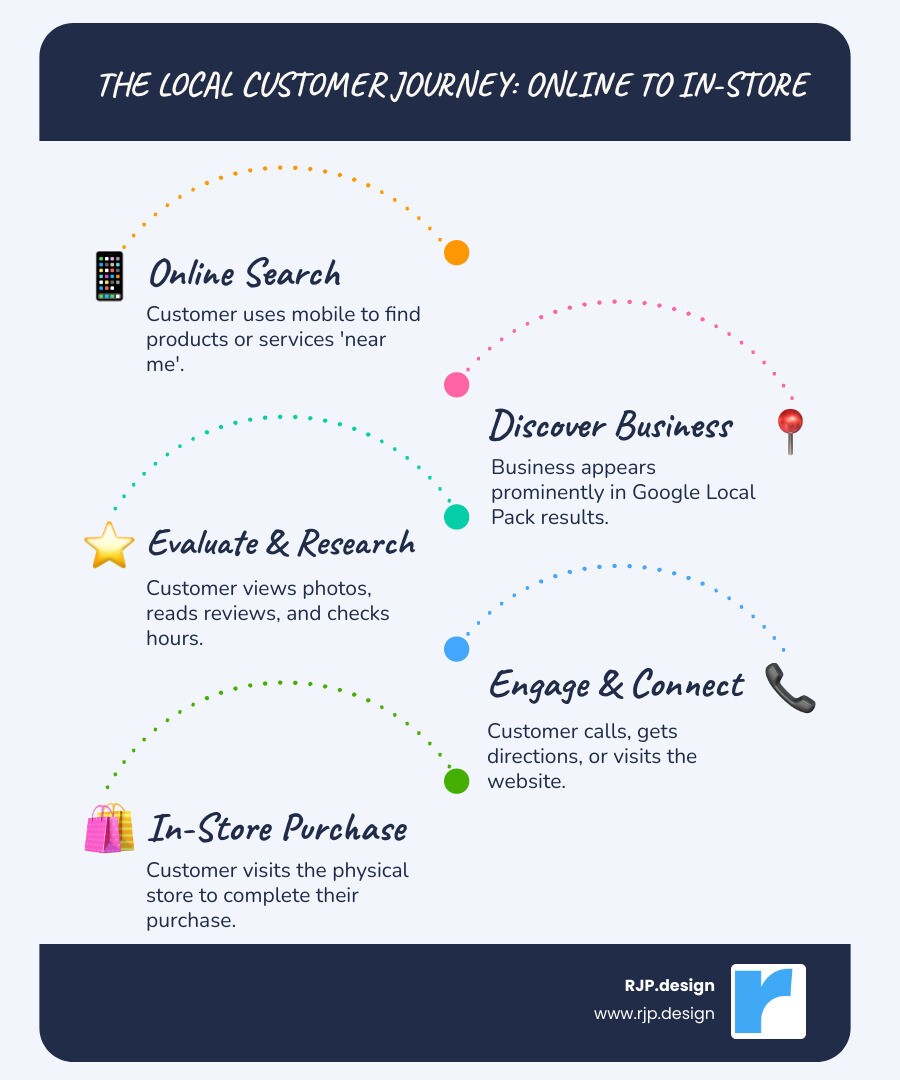
Simple retail local seo word guide:
The Three Pillars of Local Search Dominance
When you’re trying to get your retail store noticed online, it helps to understand what Google actually cares about. Google’s local search algorithm evaluates businesses based on three core factors: relevance (how well your business matches a search), distance (how close you are to the searcher), and prominence (how well-known and trusted your business is). These pillars determine whether your store appears in the coveted “Google 3-Pack” at the top of local search results.
The good news? You have direct control over all three. By focusing your retail local SEO efforts on these foundational strategies, you’re building on solid ground that will support everything else you do.

Mastering Your Google Business Profile (GBP)
Your Google Business Profile is the foundation of local SEO. This free listing is your digital storefront on Google Search and Maps. Start by claiming and verifying your profile at Google Business. Once verified, focus on these key areas:
NAP Consistency: Your business Name, Address, and Phone number must be identical everywhere online. Even small variations can hurt your rankings.
Business Categories: Choose a specific primary category (e.g., “Women’s Clothing Store”) and add relevant secondary ones.
Photos and Videos: Show off your storefront, products, and team. Profiles with photos get more engagement.
Google Posts: Share updates, offers, and events at least once a week to keep your profile fresh.
Q&A Section: Monitor and promptly answer customer questions to show you’re engaged.
Product Catalog: Showcase your inventory directly on your profile to give searchers a preview.
Business Hours: Keep them carefully updated, especially for holidays.
For a deeper look at maximizing this critical tool, check out our guide on Google My Business Optimization to Help Rank Your Sites.
Building Trust and Credibility with Online Reviews
Reviews are modern word-of-mouth, with 89% of global consumers checking them before a purchase. They signal trust to both customers and Google, which looks at your star rating, review quantity, and freshness.
Ask for Reviews: Train staff to ask happy customers. Use email, text, or QR codes on receipts to make it easy.
Respond to All Reviews: Thank customers for positive feedback. For negative reviews, respond professionally, apologize for their experience, and offer to resolve the issue offline. This shows other potential customers you care.
Accept Authenticity: A perfect 5-star record can look suspicious. A mix of mostly positive reviews with a few critical ones appears more genuine and trustworthy.
For more strategies on managing your online reputation, explore our Local Business SEO Tips.
Establishing Authority with Local Citations
Local citations are online mentions of your business’s Name, Address, and Phone number (NAP). Search engines use them to verify your legitimacy and location.
Consistency is Key: Inconsistent information (e.g., “St.” vs. “Street”) confuses search engines and hurts your ranking. Your NAP must be identical everywhere.
Build Core Citations: Get listed on essential platforms like Apple Maps, Bing Places, Facebook, and Yelp.
Find Niche & Local Directories: Seek out industry-specific directories and listings from your local Chamber of Commerce. These are highly relevant and valuable.
Manage Citations: Use citation management tools to ensure consistency across the web, as manual management is tedious and prone to error.
Building a strong citation profile is fundamental for effective Business Citations SEO and comprehensive Local Directory Listings.
Advanced Retail Local SEO: On-Site and Content Strategies
Once your foundational pillars are in place, it’s time to optimize your website. This is where you build a bridge between someone’s online search and their physical visit to your store. Your site needs to speak the language of your local community while making it clear to search engines that you’re the best nearby option.
Winning with Local Keyword Research for retail local seo
Effective retail local SEO starts with understanding how customers search. They use high-intent phrases that signal they’re ready to buy now.
“Near me” searches: These have exploded in popularity (e.g., “store open near me”).
Geo-modifiers: Customers add locations to their searches (e.g., “boutique in SoHo,” “organic grocery Portland”).
Long-tail keywords: These are specific phrases with high conversion rates (e.g., “gluten-free bakery near Central Park”).
Product-specific queries: These combine products with a location (e.g., “custom wood tables in Seattle”).
Use tools like Google Keyword Planner, Answer The Public, and Google Trends to find these terms. Weave them naturally into your website content, product descriptions, and Google Business Profile. Write for humans first. Our Local Keyword SEO services can help.
Creating High-Impact Localized Content
Your website should be a local resource, not just a product catalog.
City-Specific Landing Pages: For multi-location businesses, create a unique page for each store (e.g., yoursite.com/locations/brooklyn). Include the address, hours, local promotions, and unique content.
Store Locator: An easy-to-use, mobile-friendly map is essential for multiple locations.
Local Blog Content: Write about topics relevant to your community. A Denver sporting goods store could blog about “Essential Gear for Hiking Colorado’s 14ers.”
Community Involvement: Showcase sponsorships, local partnerships, and community events. This builds trust and can earn valuable backlinks.
Localized Product Pages: Consider creating pages for key products with geo-modified titles, like “Best Outdoor Grills in Austin.”
The goal is to genuinely connect with your local audience. For more guidance, explore our insights on Content for Local SEO and City Landing Pages SEO.
Essential Technical SEO for Local Retailers
Great content needs a solid technical foundation to perform well.
Mobile-First Design: With over 62.5% of web traffic from mobile, your site must be flawless on small screens. Google uses mobile-first indexing, making this non-negotiable.
Page Speed: Slow sites lose customers. Fast loading times improve user experience and rankings. Aim to meet Google’s site speed standards.
Local Business Schema: This structured data helps search engines understand your business details (address, hours, etc.) and can lead to eye-catching rich snippets in search results. Learn more at schema.org or Google Search Central.
Title Tags & Meta Descriptions: These are your first impression in search results. Make them compelling and include local keywords. Use a SERP simulator tool to preview them.
Internal Linking: Connect related pages on your site to help users and search engines steer.
Getting these technical elements right supports all your retail local SEO efforts. Check out our Best Retail Website Designs for inspiration.
Scaling Your Strategy: Multi-Location and Link Building
Growing your retail business brings new challenges for retail local SEO. With the right approach, you can make every store a local search powerhouse while building community connections that boost your authority.
A Scalable Strategy for Multi-Location Retail
Managing retail local SEO for multiple stores requires treating each one as a unique entity under a consistent brand.
Create Unique Landing Pages: Each store needs its own webpage with a specific address, phone number, hours, and unique content like staff bios or local testimonials. Avoid duplicate content.
Individual Google Business Profiles: Every location must have its own GBP, linking to its corresponding landing page. Keep branding consistent but localize details like posts and review responses.
Centralize Review Management: Use a platform to aggregate reviews from all locations to ensure timely responses.
Tailor Regional Content: Create blog posts and promotions that are relevant to each store’s specific community. This makes your brand feel like a local partner, not a faceless chain.
For more strategies on managing growth, explore our Agency for Local SEO services.
Building Powerful Local Backlinks
Local backlinks are community endorsements that tell search engines your business is a legitimate part of the local fabric.
Sponsor Local Events/Teams: Sponsoring a charity run or youth team often earns a link from the organizer’s website and builds goodwill.
Partner with Local Businesses: Collaborate with complementary businesses (e.g., a yoga studio and a health food store) for cross-promotions and backlinks.
Engage Local Media: Pitch interesting stories about your business—like a unique founding story or milestone—to local newspapers and bloggers.
Join Business Associations: Memberships in groups like the local Chamber of Commerce usually include a valuable directory listing and link.
Authentic community involvement is the key to successful local link building. For a deeper dive, check out our guide on Local SEO Link Building.
Measuring Success and Choosing the Right Tools
Implementing a retail local SEO strategy is an investment, and you need to measure its return. Tracking the right metrics and using the right tools makes managing your local presence more effective and less overwhelming.
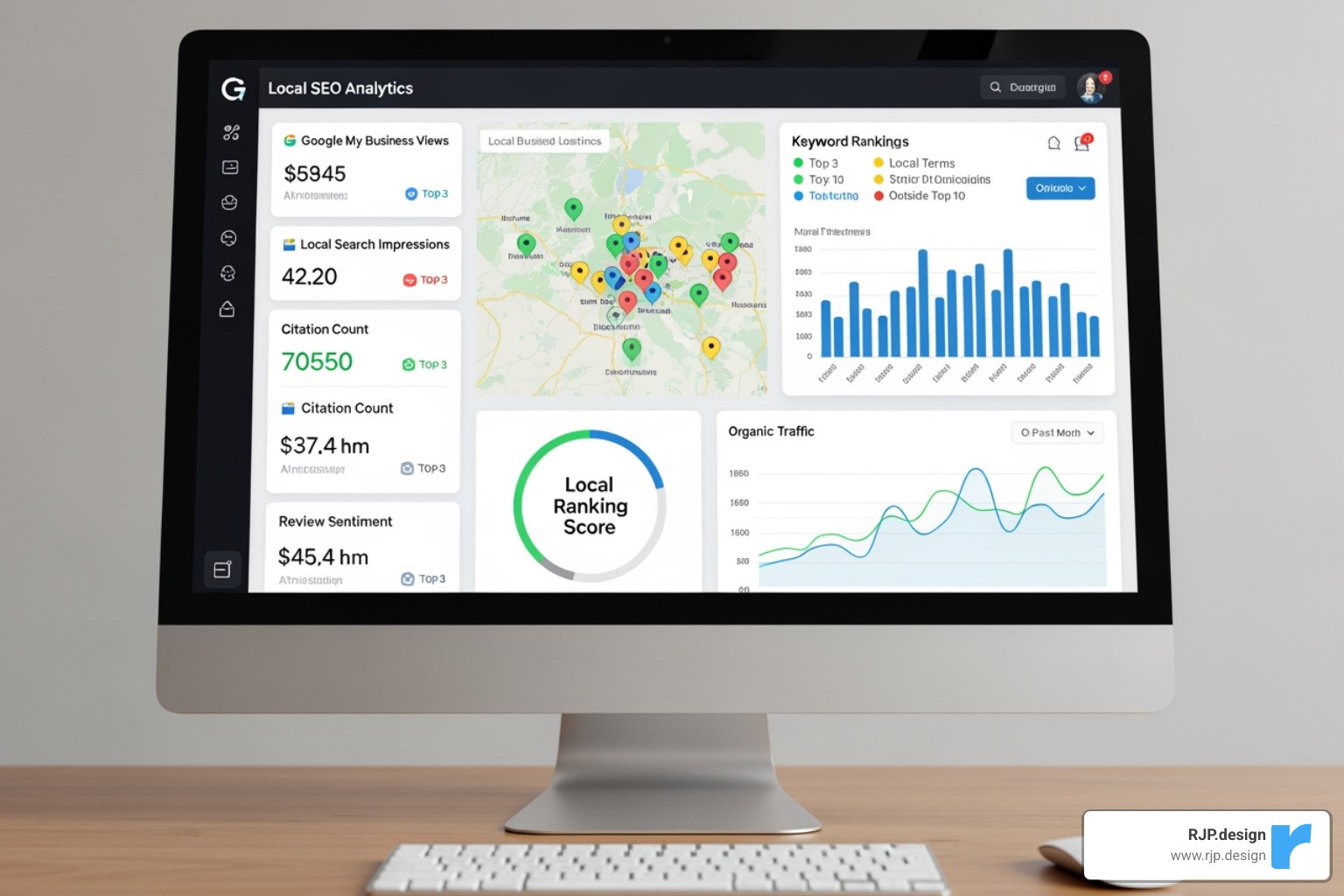
Key Metrics to Track for Your retail local seo Campaign
To measure retail local SEO success, track the actions that lead directly to sales.
Google Business Profile Insights: This is your primary dashboard. Monitor views, website clicks, phone calls, and especially direction requests—a strong indicator of intent to visit.
Google Analytics: Analyze organic search traffic to your location-specific pages to see if you’re reaching the right geographic audience.
Local Pack Rankings: Use a tool like BrightLocal’s local search results checker to track your position for key local terms.
Online Reviews: Track the volume and star rating of new reviews.
Website Conversions: Monitor form submissions, online orders for pickup, and ultimately, foot traffic and in-store sales.
For deeper insights into interpreting these metrics, explore our guides on SEO Local Results and Local Search Visibility.
The Essential Local SEO Toolkit
The right tools can save you hours and provide critical insights.
Listing Management: Tools like Moz Local ensure your Name, Address, and Phone (NAP) are consistent across hundreds of directories.
Rank Tracking: A tool like BrightLocal’s local search results checker shows your ranking in the Local Pack for specific keywords and locations.
Review Management: Platforms centralize reviews from all sources, making it easy to monitor and respond.
Keyword Research: Use Google Keyword Planner, Semrush, and Answer The Public to understand how customers search.
Website Analytics: [Google Analytics] is essential for understanding traffic sources and user behavior.
Local Search Audits: Tools like Bright Local Search identify gaps and provide actionable recommendations.
Shopify Apps: The Shopify partner apps library offers specialized SEO tools for Shopify stores.
Start with the essentials like Google Analytics and your GBP dashboard, then expand as your strategy matures.
Frequently Asked Questions about Retail Local SEO
What is the single most important first step for retail local SEO?
The single most important first step is to claim and fully optimize your Google Business Profile. This free listing is your digital storefront on Google Search and Maps and the foundation for your visibility. With 60% of smartphone users contacting businesses directly from local search, an unoptimized GBP makes you invisible. Complete every section, add high-quality photos, and keep your information current.
How long does it take to see results from local SEO?
Local SEO is a marathon, not a sprint. While you might see small wins within a few weeks (like more profile views), substantial results—such as consistent top rankings and increased foot traffic—typically take 3 to 6 months. This is because search engines need time to process your updates, reviews, and content. The effort is cumulative; consistent work builds momentum over time, leading to lasting dominance in your local market.
Can I do local SEO myself, or do I need to hire an agency?
It depends. If you’re a single-location business with time to learn, you can handle the basics yourself, like optimizing your Google Business Profile and managing reviews. However, hiring a specialized agency for local SEO is a smart move if you’re managing multiple locations, lack the time, or want to implement advanced strategies like technical SEO and link building. An agency brings expertise and tools to accelerate your results and achieve market dominance faster.
Conclusion
If there’s one thing to remember, it’s this: retail local SEO is the essential bridge connecting your physical store to local customers who are ready to buy. When someone searches “running shoes near me,” they have high purchase intent. Being visible at that moment is critical.
Your Google Business Profile is foundational, and consistency is crucial across every mention of your business name, address, and phone number online. Beyond technical optimization, your content must be genuinely local, speaking to your community and building real connections.
Local SEO directly drives real-world sales in a measurable way. It connects high-intent searchers to your physical store, boosting foot traffic and revenue.
At RJP.design, we specialize in creating high-quality websites and executing local SEO strategies that deliver tangible results. We’re invested in helping your business thrive in its local market. By implementing the strategies we’ve covered, you build a powerful engine that consistently brings customers through your door.
Ready to turn local searches into in-store sales? Learn more about our Google search optimization services and let’s make it happen together.