SEO
Don’t Launch Naked: SEO Strategies for Your Fresh Site
Sep 10, 2025

SEO for new websites: 5 Essential Steps to Success
Why Your New Website Needs SEO from Day One
SEO for new websites is critical because 96.55% of web pages get zero traffic from Google. Without proper optimization, your fresh site could become another invisible casualty in the vast digital ocean.
Essential SEO steps for new websites:
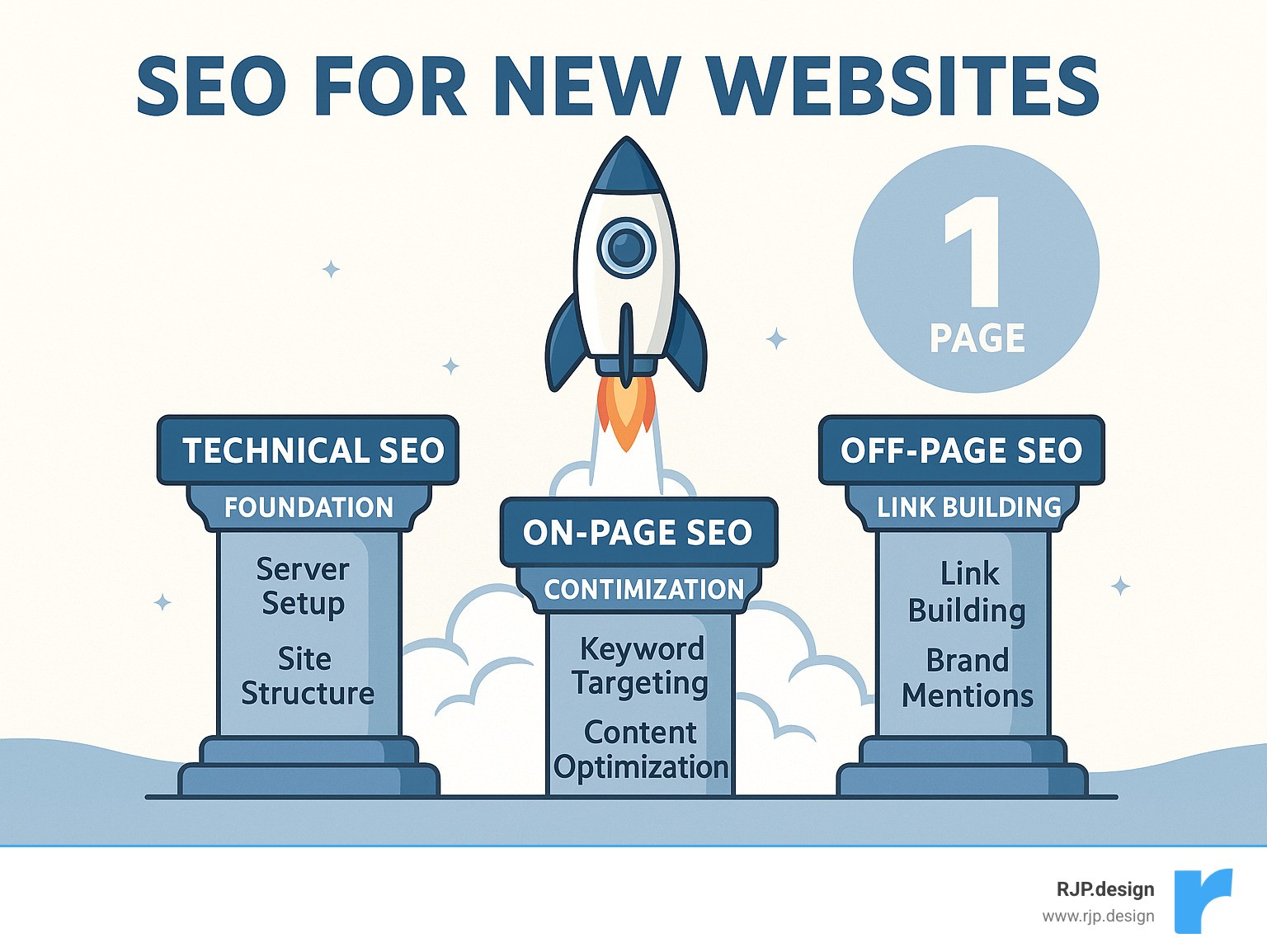
Set up technical foundations – SSL, mobile-friendly design, fast loading speeds
Conduct keyword research – Find terms your audience uses
Create high-quality content – Write helpful, original content that satisfies search intent
Optimize on-page elements – Title tags, meta descriptions, headers, and images
Submit to search engines – Use Google Search Console and XML sitemaps
Build authority gradually – Earn quality backlinks over time
Track and monitor – Use Google Analytics to measure progress
Most new websites launch without any SEO foundation, hoping Google will magically send traffic. It doesn’t work that way.
Starting SEO from day one gives you the best chance of ranking within 4-6 months. The sooner you implement these strategies, the faster you’ll see results.
I’m Ross Plumer, and I’ve helped businesses generate over $20 million in revenue by implementing SEO for new websites strategies from launch day. My experience shows that sites with strong foundations always outperform those that add SEO as an afterthought.
Important SEO for new websites terms:
The Pre-Launch Foundation: Setting Your Site Up for Success

Building a website without a proper SEO foundation is like constructing a house on quicksand. Smart pre-launch planning creates a rock-solid base for your SEO for new websites strategy, putting you ahead of competitors who fix problems after launch.
Foundational Keyword Research for a New Website’s SEO
Most new website owners create content based on assumptions, not on what people actually search for. Keyword research is your roadmap to understanding your customers’ search behavior.
Start with seed keywords (basic terms for your business) and expand them into related phrases and questions. The key is understanding user intent: is the searcher looking to learn, hire, or compare? Creating content that satisfies this intent is crucial.
For new sites, long-tail keywords are gold. Instead of targeting a broad term like “web design,” aim for something specific like “affordable web design for small restaurants in Portland.” These phrases have less competition and often convert better.
Competitor analysis reveals what keywords your rivals target and, more importantly, what gaps you can fill.
Use Google’s Keyword Planner as a starting point, and supplement it with free tools like Google Trends (keyword popularity), AnswerThePublic (user questions), Keywords Everywhere (search volume data), and Ubersuggest (keyword ideas).
Structuring Your Site for Users and Search Engines
A poorly structured website confuses both visitors and search engines. Your site needs logical navigation that acts as a clear map for everyone. Use simple URL slugs like “yoursite.com/services/web-design” instead of cryptic ones like “yoursite.com/p=123.”
The pillar pages and topic clusters model is highly effective. A pillar page is a comprehensive guide on a broad topic. Cluster content dives deeper into specific subtopics, with each piece linking back to the pillar. This internal linking strategy signals your authority to search engines and keeps visitors engaged.
At RJP.design, our custom website solutions always begin with thoughtful architecture to support both user experience and search visibility.
Essential Technical Setup Before You Go Live
Technical SEO is the invisible but essential framework of your site. Getting these elements right is critical for performance.
Choose the right host: A slow host handicaps your site from the start. Fast, reliable hosting is a worthwhile investment as page speed directly impacts rankings.
Install an SSL certificate: HTTPS is no longer optional. It’s a Google ranking signal and builds trust, as browsers warn users away from non-secure sites.
Accept mobile-first indexing: Google primarily ranks your site based on its mobile version. With over half of web traffic coming from mobile devices, a flawless mobile experience is mandatory.
Optimize for page speed: Beyond hosting, optimize images, clean up code, and use caching to ensure pages load instantly. A one-second delay can significantly reduce page views. Our Responsive Web Design approach ensures top performance on all devices.
Create a custom 404 page: When a page isn’t found, a helpful 404 page can guide users back to relevant content instead of losing them forever.
Launch Day Checklist: Getting on Google’s Radar
Your website is live, but Google doesn’t know it exists yet. You can’t wait for traffic to appear; SEO for new websites requires you to actively introduce your site to search engines.
Submitting Your Site to Search Engines
Getting indexed by Google is like being listed in the phone book—without it, you’re invisible to searchers.
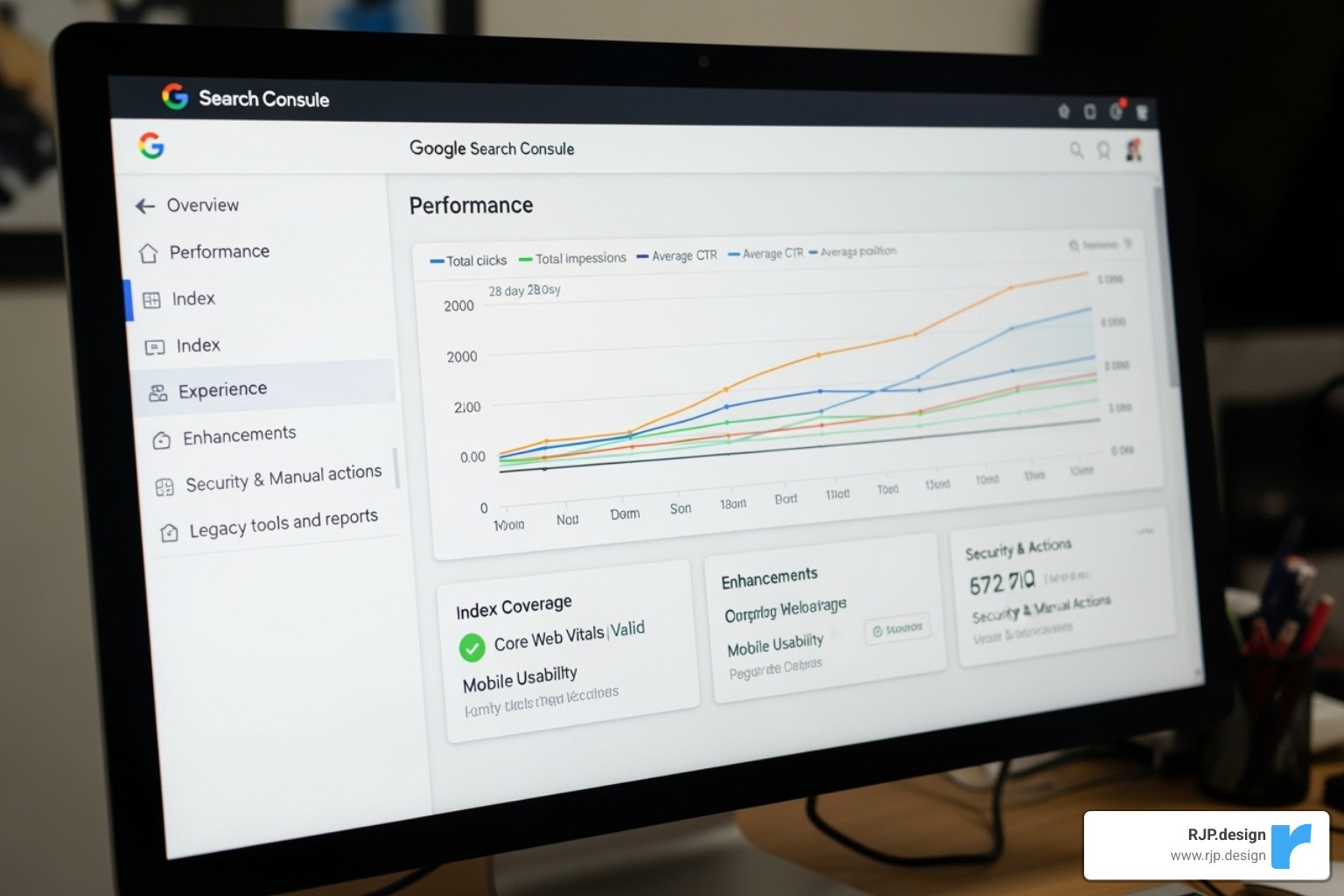
Set up Google Search Console: This free tool is your direct communication line with Google for performance data and problem alerts.
Verify ownership: Prove you own the site by adding a code snippet, uploading a file, or using your domain provider.
Use Bing Webmaster Tools: Don’t ignore Bing; setting it up is quick and captures a significant share of search traffic.
Submit your XML sitemap: This roadmap of your website helps search engines find and crawl all your pages efficiently.
Request indexing: Use the URL Inspection Tool in Search Console to ask Google to crawl a specific new or updated page immediately.
Setting Up Analytics and Tracking
Without tracking, you’re flying blind. Google Analytics 4 (GA4) is your eyes and ears, showing you exactly what’s happening on your site and telling a story with your data.
Impressions: How often your site appears in search results.
Clicks: How many people visit from a search result.
Click-Through Rate (CTR): The percentage of impressions that result in a click. A low CTR may indicate your titles or descriptions need improvement.
Average Position: Where your site typically ranks for various searches.
Watching these metrics improve is concrete proof that your efforts are working. This data-driven approach is central to our SEO Ranking Improvement services.
Checking Your Crawlability
Sometimes, websites accidentally block search engines. It’s crucial to ensure Google can see your site correctly.
Robots.txt file: This file controls which areas search engines can access. A single mistake can block your entire site from being indexed.
Noindex tags: These tags tell search engines to skip specific pages. They are useful for thank-you pages but disastrous if accidentally placed on important content.
URL Inspection Tool: Use this Search Console feature to see exactly how Google views any page and diagnose indexing issues.
CSS and JavaScript: Ensure Google can access these files. If they are blocked, Google may see a broken, confusing version of your site.
Our Technical SEO Experts handle these details from day one, ensuring your site communicates clearly with search engines and avoids common pitfalls.
Content & On-Page SEO for New Websites

With a solid foundation, it’s time to create content that helps people. Great content is what separates successful sites from digital ghost towns. Think of your content as a helpful conversation with your ideal customer, not a sales pitch.
Creating High-Quality, Helpful Content
Keyword-stuffing is dead. Google rewards content that genuinely serves users. When you write for people first, you’re already ahead of the competition.
Address the real-world questions and problems your customers face. Satisfying search intent is key. If someone searches “how to choose a web designer,” provide a helpful guide before pitching your services.
Google emphasizes E-E-A-T: Experience, Expertise, Authoritativeness, and Trustworthiness. For new sites, this means showing your work through case studies, credentials, and personal experience. Original research or unique insights, like customer surveys or local market analysis, can also attract valuable links and attention.
Use visuals like images and infographics to break up text, keep users engaged, and make complex topics understandable. For businesses serving a specific area, creating Content for Local SEO is essential.
Essential On-Page Elements for a New Website’s SEO Success
On-page SEO is the packaging for your content, helping search engines understand it and encouraging users to click.
Title Tags: The headline of your search result. Keep it under 60 characters, include your main keyword, and make it compelling.
Meta Descriptions: Your elevator pitch in search results (~155 characters). They don’t directly impact rankings but heavily influence clicks.
Header Tags (H1, H2, H3): These structure your content for scannability and help search engines understand its hierarchy.
Image Alt Text: Describes images for visually impaired users and search engines, providing context for your visuals.
Internal Links: Guide visitors and search engines to related content using descriptive anchor text.
Schema Markup: This structured data helps search engines understand your content better, potentially earning you rich snippets (like star ratings) in search results. Learn more at Schema.org.
Optimizing Images and Videos
Visuals are a key part of your SEO strategy. They can drive traffic, improve engagement, and boost page rankings.
Use descriptive filenames: Instead of “IMG001.jpg,” use “custom-website-design-process.jpg.”
Compress images: Reduce file sizes to improve page speed without sacrificing quality.
Use proper dimensions: Size images appropriately for their display on the site to avoid slowdowns.
Host videos externally: Use platforms like YouTube or Vimeo to handle video delivery and gain SEO benefits from their search capabilities.
Add video schema markup: Help search engines understand your video content to earn better visibility in video search results.
Building Authority and Earning Trust

Your site is live, optimized, and full of great content. Now for the hardest part of SEO for new websites: proving to Google that you’re a trustworthy authority. Google wants proof of legitimacy before recommending you to users.
How to Build High-Quality Backlinks
Backlinks are digital recommendations. When a reputable site links to you, it signals your value. However, not all links are created equal.
Guest posting: Write valuable content for other reputable sites in your industry to earn a backlink and reach new audiences.
Digital PR: Create remarkable content (original research, compelling infographics) that media outlets and bloggers want to share organically.
Broken link building: Find broken links on other sites and suggest your relevant content as a replacement.
Unlinked brand mentions: Find where your business is mentioned without a link and politely request one.
Avoid paid links at all costs. Google’s algorithms are skilled at detecting manipulative schemes, and penalties can be severe. Focus on earning links naturally. Our Link Building (Off-Page SEO) services use ethical strategies to build lasting authority.
Leveraging Social Media and Other Platforms
While not a direct ranking factor, social media is a crucial supporting tool for SEO for new websites. It acts as a megaphone for your content.
Promote your content: Share blog posts and guides on social channels to reach wider audiences, increasing the chance of shares and natural backlinks.
Engage with communities: Participate in relevant discussions on Reddit, Quora, or industry forums. Provide helpful answers and occasionally link to your content to build your reputation.
Build brand presence: Consistent social activity creates brand recognition. Users are more likely to click on results from brands they know.
Drive referral traffic: Visitors from social platforms signal to search engines that your site is active and engaging.
According to Nielsen research, consumers trust recommendations from people they know, and social media amplifies this word-of-mouth effect.
Long-Term Strategy and Patience
SEO for new websites is a marathon, not a sprint. Anyone promising overnight results is selling false hope. Real success takes 4-6 months for initial traction and requires ongoing commitment.
Monitor performance: Regularly check Google Analytics and Search Console to see what’s working and guide future decisions.
Adapt to algorithm updates: Search engines constantly evolve. Stay informed and be ready to adjust your strategy.
Publish content consistently: Fresh, valuable content signals that your site is active and relevant, creating more ranking opportunities.
Too many site owners give up just before seeing results. Persistence is what separates dominant websites from the rest. Our Comprehensive SEO Services are designed for this long-term approach.
Frequently Asked Questions about SEO for New Sites
Here are answers to the most common questions new website owners have about SEO.
How long does it take for SEO to work on a new website?
This is the most common question. The honest answer is that patience is essential. Most new sites see initial traction within 4-6 months, meaning the first impressions and clicks appear in Google Search Console.
However, the timeline depends on several factors:
Competition: Highly competitive niches like real estate or fitness will take longer to rank in.
Consistency: Regular content creation and optimization efforts yield faster results than sporadic activity.
Niche: Some industries have less competition, making it easier to gain visibility.
While initial results may appear in 4-6 months, achieving top rankings for competitive terms often takes a year or more. SEO is a long-term investment.
What are the biggest SEO mistakes new website owners make?
These common, avoidable mistakes can derail your progress:
Ignoring technical SEO: A beautiful site is useless if Google can’t crawl it properly. Technical issues can make you invisible.
Targeting impossible keywords: Don’t aim for highly competitive terms right away. Start with specific, long-tail keywords where you have a chance to rank.
Inconsistent content creation: Long gaps between publishing content signal to Google that your site is not actively maintained.
Buying backlinks: This is a risky shortcut that can lead to severe penalties from Google, wiping out your progress.
Expecting instant results: SEO is not like paid ads. It’s a gradual process that requires time and consistent effort to yield results.
Can I do SEO myself or should I hire an expert?
Both paths are viable, depending on your resources and goals.
DIY SEO is possible, especially for smaller sites in less competitive niches. If you have the time to learn and implement the basics, you can manage it yourself. However, be prepared for a significant learning curve and time commitment, as SEO requires continuous effort to keep up with algorithm changes.
Hire an expert if:
Your site has complex technical requirements (e.g., e-commerce).
You are in a highly competitive industry.
You lack the time or interest to manage SEO yourself, allowing you to focus on running your business.
Our SEO Optimizer Audit can help you understand your site’s current standing and determine the best path forward, whether you choose DIY or professional services.
Conclusion
Launching a new website without SEO for new websites is like opening a store in the middle of nowhere. With 96.55% of pages getting zero Google traffic, you risk being invisible. But you now have the roadmap to avoid that fate.
We’ve covered the entire process: laying a solid pre-launch foundation, getting on Google’s radar, creating helpful content, and patiently building authority. SEO is not a quick fix; it’s a long-term strategy. Growth is slow but steady, often showing initial results in 4-6 months.
The difference between websites that thrive and those that fail is starting with a solid SEO foundation from day one, not adding it as an afterthought.
At RJP.design, we build websites with SEO baked in from the start. Our high-quality service and down-to-earth team ensure your site doesn’t just look great—it gets found by your customers. We focus on solid, sustainable growth, not band-aid solutions.
Your new website deserves a strategy that works. Start building your online presence with our Digital Marketing solutions and give your business the foundation it needs to succeed online.