Marketing
From Clicks to Customers: 14 Strategies to Enhance Your Website Conversion
Feb 6, 2025
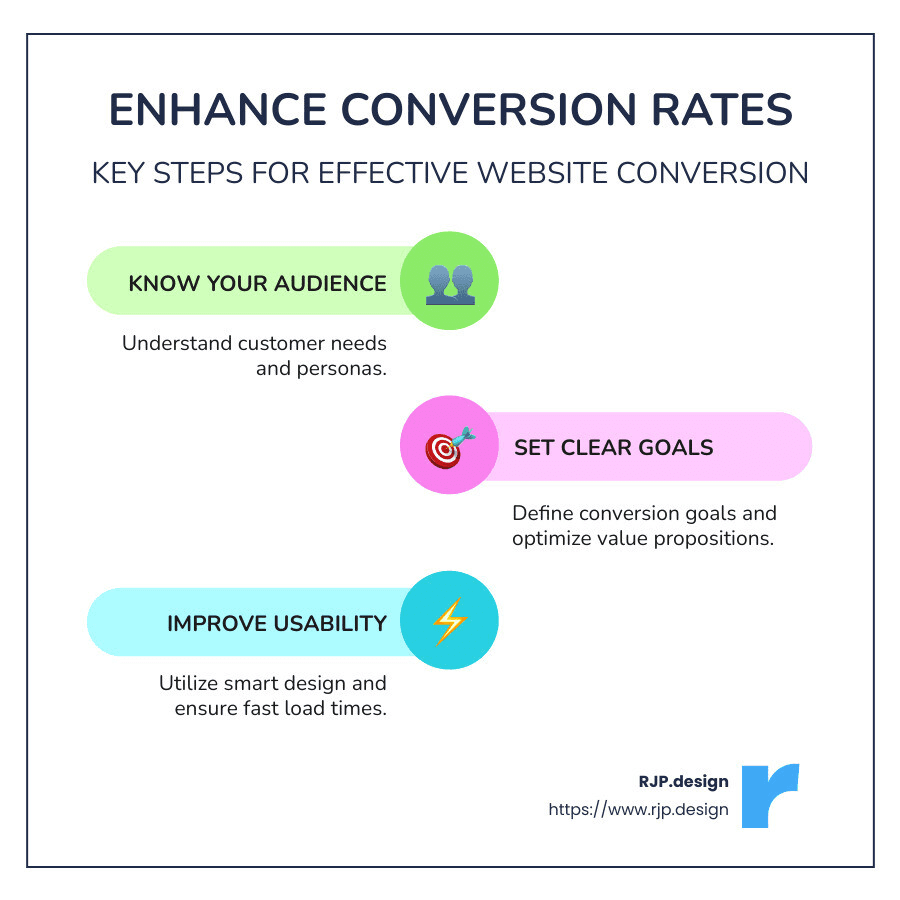
Website conversion strategies are the backbone of any successful online business. These strategies can turn casual visitors into loyal customers by improving your website’s conversion rate. Here are some key tactics to get started:
Know your audience and tailor the user experience.
Set clear goals and optimize your value propositions.
Use smart design and fast load times to improve usability.
The importance of website optimization cannot be overstated. A well-optimized site not only draws in more visitors but also converts more of them into paying customers. This ultimately leads to increased revenue and a stronger brand reputation.
A strong conversion rate ensures your digital presence translates into real-world success.
As someone deep-rooted in digital marketing, I’m Ross Plumer. I’ve crafted website conversion strategies that have transformed businesses. My background in psychology and philosophy plays a critical role in developing strategies that resonate deeply with customers.
Quick website conversion strategies definitions:
– business growth online
– digital presence improvement
– website marketing solutions
Understand Your Audience
To craft effective website conversion strategies, you must first understand your audience. This means knowing their needs, behaviors, and what drives them to take action.
Customer Needs
Every customer visits your site with specific needs or problems they’re trying to solve. By identifying these needs, you can tailor your content and offerings to better meet their expectations. This involves conducting both quantitative and qualitative research. Use tools like Google Analytics to see what users are searching for and which pages they visit most. This data can reveal valuable insights into what your audience values.
User Personas
Building user personas is a powerful way to represent your ideal customers. These personas should be based on real data and include details like demographics, interests, and challenges. For instance, if you’re an eCommerce site, a persona might be “Busy Brenda,” a 35-year-old professional who values quick and easy shopping experiences.
Creating personas helps you visualize your audience and design more targeted marketing strategies. This approach ensures that your messaging resonates with the right people and increases the likelihood of conversion.
Visitor Data
Analyzing visitor data is crucial for understanding how users interact with your site. Heatmaps, for example, can show where users click most frequently, which helps identify areas that draw attention or need improvement.
A case study from the research highlights how Gogoprint used heatmap analysis to find a confusing design issue on their pricing page. By addressing this, they reduced drop-off rates by 7% and increased conversions by 2%.
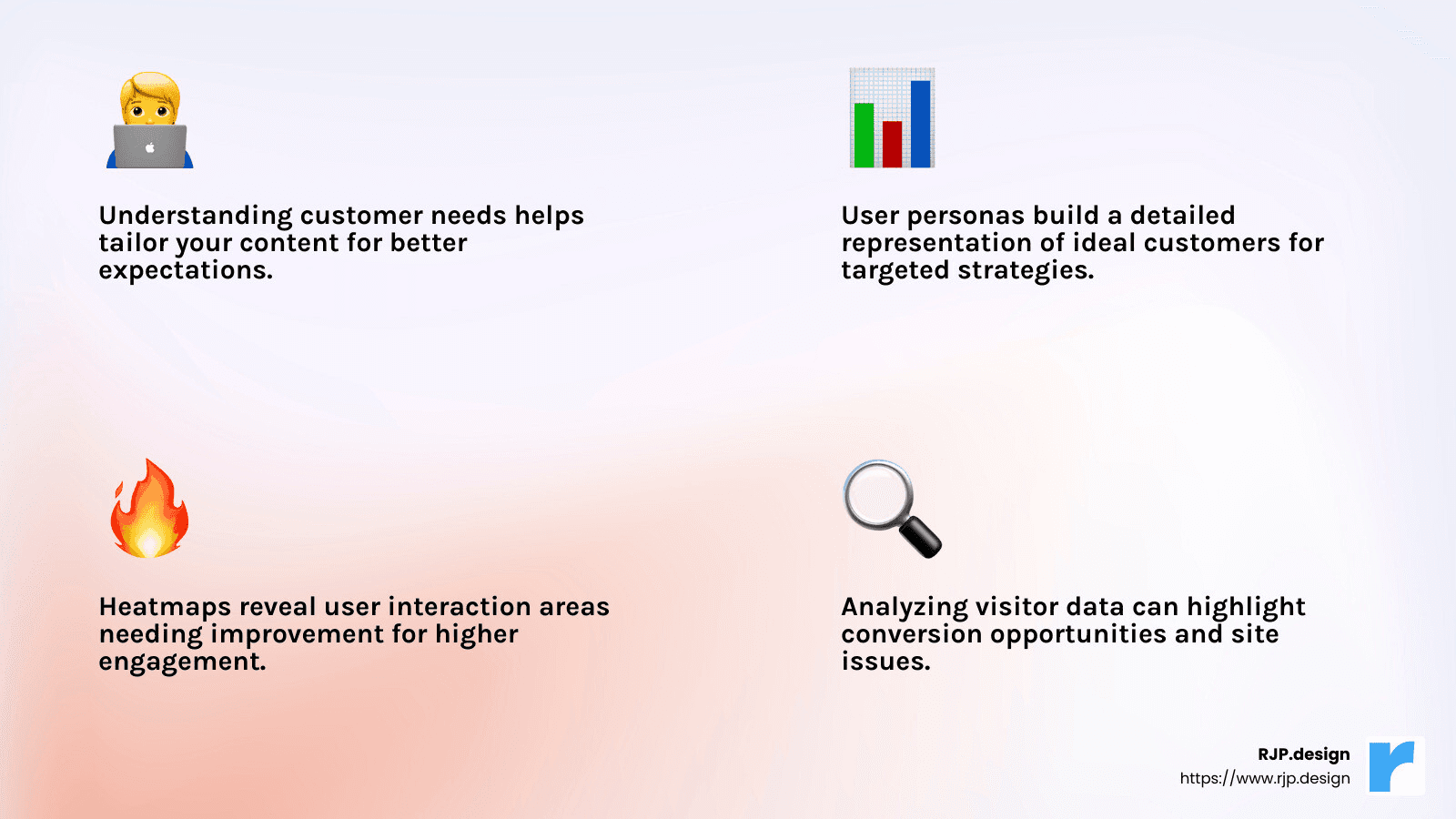
In summary, knowing your audience is the first step in creating a user experience that converts. By focusing on customer needs, building detailed personas, and analyzing visitor data, you can design a website that not only attracts but also retains and converts visitors.
Next, let’s explore how to define clear goals for your site to guide users through the conversion funnel effectively.
Define Clear Goals
A well-defined goal is the cornerstone of any successful website conversion strategy. It gives direction to your efforts and helps align your team towards a common objective. Without clear goals, you may end up optimizing for the wrong outcomes, wasting time and resources.
Site Goals
Site goals are the specific actions you want visitors to take on your website. These could be making a purchase, signing up for a newsletter, or downloading a resource. Defining these goals clearly helps you measure success and make data-driven decisions.
For instance, if your goal is to increase newsletter sign-ups, you might focus on optimizing your landing pages and call-to-action (CTA) buttons. Each goal should be Specific, Measurable, Achievable, Relevant, and Time-bound (SMART).
Conversion Funnel
The conversion funnel represents the journey a visitor takes from the moment they land on your site to becoming a customer. Understanding this funnel is crucial for identifying where users drop off and why.
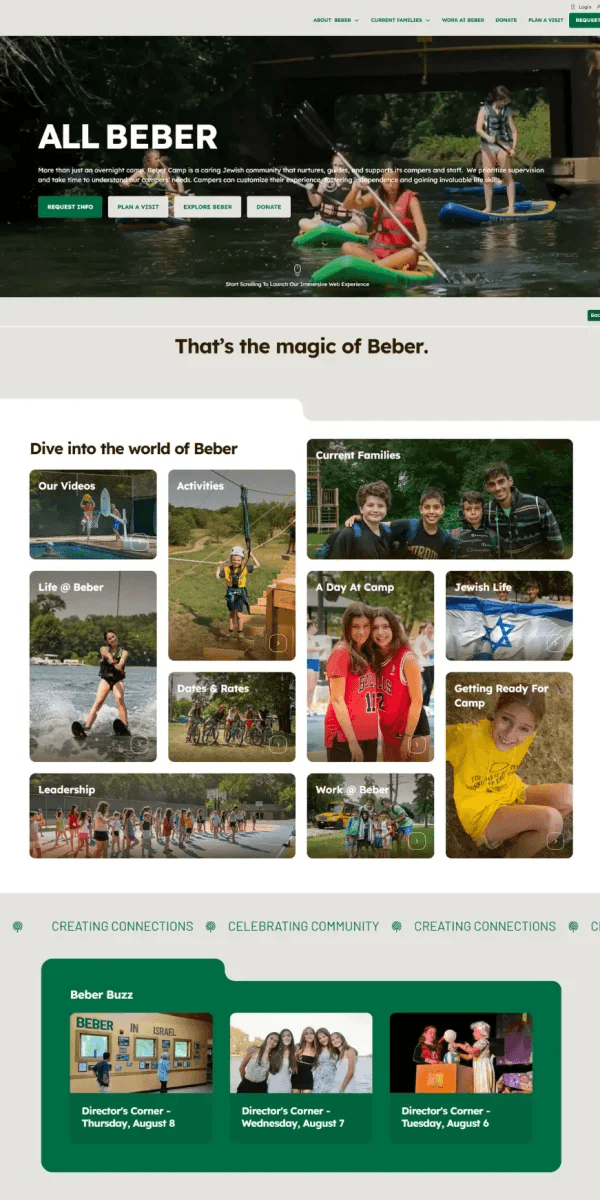
A common drop-off point is the checkout process, where an average of 69.23% of shoppers abandon their carts. To tackle this, you can simplify the checkout process or offer multiple payment options. Amazon’s one-click checkout is a great example of optimizing this stage to boost conversions.
Value Proposition
Your value proposition is what sets you apart from competitors. It’s a concise statement that explains why a user should choose your product or service over others. A strong value proposition is essential for convincing visitors to convert.
Consider Evernote’s revamped tagline, which shifted from “Remember Everything” to a more descriptive and functionality-focused statement. This change better communicated the tool’s benefits and improved user understanding, leading to higher conversions.
Your value proposition should be highlighted across your site, especially in headlines and key sections. It should be specific, unique, and tell a story about how your product benefits the user.
By defining clear goals, understanding your conversion funnel, and crafting a compelling value proposition, you create a roadmap for guiding visitors toward conversion. With these elements in place, you’re better equipped to optimize your website and achieve your desired outcomes.
Next, we’ll dig into optimizing the user experience to ensure a seamless and engaging journey for your visitors.
Optimize User Experience
A stellar user experience is the backbone of effective website conversion strategies. When visitors find your site easy to use and steer, they’re more likely to stick around and convert. Let’s explore how you can improve user experience through design, navigation, and page load time.
User-Friendly Design
Design isn’t just about aesthetics; it’s about functionality, too. A user-friendly design ensures that visitors can easily find what they’re looking for without feeling overwhelmed.
Simplicity is key: Keep your design clean and straightforward. Avoid clutter and focus on essential elements that guide the user.
Visual hierarchy: Use size, color, and placement to direct attention to critical areas like call-to-action (CTA) buttons and important content.
Responsive design: Ensure your website looks and functions well on all devices. With over 50% of searches happening on mobile, a mobile-friendly design is non-negotiable.
Seamless Navigation
Navigation is the roadmap for your users. It should be intuitive and straightforward, allowing them to move through your site effortlessly.
Clear labels: Use simple, descriptive labels for navigation links. Users should know exactly where each link will take them.
Consistent layout: Maintain a consistent layout across all pages. This familiarity helps users feel comfortable and confident as they explore.
Search functionality: Implement a search bar to help users quickly find specific information. Visitors who use site search tend to convert at higher rates because they often have a clear intent.
Page Load Time
In our digital world, speed matters. A slow-loading site can frustrate users and drive them away, impacting your conversion rates.
Optimize images: Compress images without sacrificing quality to reduce load times. Use the correct format (JPEG or PNG) for each image type.
Minimize external requests: Limit the use of plugins and external resources. Each additional request can slow down your site.
Use caching: Leverage browser caching to store frequently accessed files, speeding up the user’s experience on return visits.
By focusing on these aspects of user experience, you can create a website that not only attracts visitors but also keeps them engaged and ready to convert. Up next, we’ll explore how social proof can further boost your site’s credibility and conversion rates.
Leverage Social Proof
Social proof is a powerful element in website conversion strategies. It builds trust and encourages visitors to take action by showing them that others have already done so successfully. Let’s explore how you can use reviews, testimonials, and trust badges to improve your website’s credibility.
Reviews
Customer reviews are like digital word-of-mouth. They give potential buyers insights into real experiences with your products or services. According to research, highlighting customer reviews can boost conversion rates by as much as 270%.
Prominent placement: Display reviews prominently on product pages or landing pages. This visibility reassures visitors that others have had positive experiences.
Diverse feedback: Include a mix of detailed and concise reviews. Some visitors appreciate in-depth insights, while others prefer quick summaries.
Testimonials
Testimonials add a personal touch to your social proof strategy. They showcase satisfied customers who are willing to vouch for your brand.
Authentic stories: Use genuine quotes from real customers. Authenticity is key—potential customers can spot fake testimonials a mile away.
Visual elements: Pair testimonials with photos of the customers, if possible. Seeing a real person adds credibility and relatability.
Trust Badges
Trust badges are small icons or symbols that show your website is secure and reliable. They can significantly impact a visitor’s decision to convert.
Security seals: Display badges from well-known security providers like Norton or McAfee. These reassure visitors that their data is safe.
Payment logos: Show logos of accepted payment methods, like PayPal or Visa. This confirms that your site supports secure and familiar payment options.
Industry certifications: If applicable, feature badges from industry organizations that certify your products or services.
By effectively leveraging social proof, you can create a sense of trust and reliability around your brand. This trust encourages visitors to take the next step—whether it’s making a purchase, signing up for a newsletter, or any other conversion goal you have in mind.
Next, we’ll explore how personalizing user interactions can further improve your website’s conversion potential.
Personalize User Interactions
Personalization is a game-changer in website conversion strategies. By tailoring the experience to each visitor, you can create a more engaging and relevant journey. Let’s explore how personalized messages, dynamic content, and recognizing returning visitors can lift your site.
Personalized Messages
Imagine walking into a store and the salesperson greets you by name, knowing exactly what you’re looking for. Personalized messages on your website serve the same purpose.
Relevance is key: Use visitor data to craft messages that align with their interests or past interactions. This makes communication feel more like a conversation and less like a generic broadcast.
Dynamic greetings: Adjust welcome messages based on the time of day or visitor location. A simple “Good morning!” or “Welcome back, [Name]!” can make visitors feel valued and seen.
Returning Visitors
Your returning visitors are gold. They’ve already shown interest in your site, so it’s crucial to make their subsequent visits even more rewarding.
Recognize and reward: When a returning visitor lands on your site, acknowledge their previous activity. Offer recommendations based on past purchases or browsing history.
Loyalty perks: Consider exclusive offers or discounts for repeat visitors. This not only boosts conversions but also fosters a sense of community and loyalty.
Dynamic Content
Dynamic content adapts to each user’s preferences and behavior, ensuring a unique experience every time they visit your site.
Content that changes: Use dynamic content to display products or articles that match a visitor’s interests. This can significantly increase engagement and the likelihood of conversion.
Behavior-based suggestions: If a visitor spends time on a specific product page, show them complementary products or related content. This not only improves their experience but also guides them further down the conversion funnel.
By personalizing user interactions, you can create a more engaging and custom experience that resonates with each visitor. This approach not only improves user satisfaction but also significantly boosts conversion rates.
Next, we’ll dig into how improving call-to-action effectiveness can further drive your website’s success.
Improve Call-to-Action (CTA) Effectiveness
Your CTA is like the GPS of your website—it guides visitors on what to do next. A well-crafted CTA can be the difference between a casual browser and a committed customer. Let’s explore how CTA design, action-oriented language, and contrasting colors can improve your website conversion strategies.
CTA Design
A compelling CTA starts with a standout design. It should be impossible to miss but not overpowering.
Size matters: Ensure your CTA button is large enough to be easily clickable, especially on mobile devices. But avoid making it so big that it feels pushy.
Placement is key: Position your CTA where it’s most likely to be seen. Often, this is above the fold or at the end of a page where the user has consumed enough information to take the next step.
Action-Oriented Language
A CTA needs to tell visitors exactly what to do. This is where action-oriented language comes into play.
Be specific: Use verbs that clearly state the action you want visitors to take. Instead of “Learn more,” try “Find how we can help you.”
Create urgency: Phrases like “Sign up now” or “Get started today” encourage immediate action and reduce the likelihood of hesitation.
Contrasting Colors
Colors can make or break your CTA. The right contrast ensures your button stands out and draws the eye.
Pop with contrast: Use colors that contrast with your website’s primary color scheme. For example, a bright orange button on a blue-themed page can be very effective.
Stay complementary: While contrast is important, the color should still complement the overall design. This keeps your page visually appealing and cohesive.
By focusing on these elements, you can create CTAs that not only capture attention but also drive action. Every click on your CTA is a step closer to converting a visitor into a customer.
Next, we’ll explore how simplifying the checkout process can further improve your website’s conversion rates.
Simplify Checkout Process
A seamless checkout process is crucial for turning potential buyers into paying customers. Let’s explore how reducing cart abandonment, ensuring a seamless checkout, and offering multiple payment options can improve your website conversion strategies.
Cart Abandonment
Cart abandonment is a common issue in eCommerce. According to cart abandonment stats, high shipping costs and complicated checkout processes are major culprits. To tackle this:
Transparent Costs: Display all costs upfront, including shipping, taxes, and fees, to prevent surprises at checkout.
Guest Checkout: Offer a guest checkout option to avoid forcing users to create an account, which can deter them from completing their purchase.
Reminder Emails: Implement cart abandonment emails to gently nudge users back to complete their purchase. These emails remind users of items left in their cart and can include incentives like discounts.
Seamless Checkout
A smooth checkout experience can make the difference between a sale and an abandoned cart.
Minimal Steps: Keep the checkout process as short as possible. Each additional step increases the risk of abandonment.
Auto-Fill Features: Use auto-fill and address lookup features to speed up form completion and reduce user effort.
Progress Indicators: Show users where they are in the checkout process with progress indicators. This reduces uncertainty and keeps them engaged.
Multiple Payment Options
Offering a variety of payment methods caters to different customer preferences and can significantly boost conversions.
Credit & Debit Cards: Ensure you accept all major credit and debit cards.
Digital Wallets: Include options like PayPal, Apple Pay, and Google Pay for users who prefer quick, secure transactions.
Alternative Payments: Consider options like Buy Now, Pay Later services, which can attract budget-conscious customers.
By addressing these areas, you can create a checkout process that not only retains customers but also encourages them to complete their purchases. This approach can significantly improve your website’s conversion rates.
Next, we’ll look at how using A/B testing can help refine your website conversion strategies.
Use A/B Testing
A/B testing, also known as split testing, is a powerful tool in the arsenal of website conversion strategies. By comparing two versions of a webpage to see which one performs better, you can make data-driven decisions that improve your site’s effectiveness.
Test Variations
When it comes to A/B testing, the possibilities are nearly endless. You can test different elements of your website to see what resonates most with your audience. Here are a few ideas:
Headlines: Sometimes, a simple change in wording can make a big impact. For example, China Expat Health saw a 79% increase in lead conversion by changing their headline to highlight a specific value proposition.
CTA Buttons: Experiment with different colors, sizes, and texts for your call-to-action buttons. A contrasting color or more action-oriented language can make a significant difference.
Images and Videos: Try different visuals to see which ones capture your audience’s attention and lead to more conversions.
Data-Driven Decisions
The beauty of A/B testing lies in its ability to provide concrete data. This means you can make decisions based on actual performance rather than assumptions. According to a study, testing multiple variants and using AI to determine the most effective combinations can greatly improve user engagement and drive sales.
Analytics Tools: Use tools like Google Analytics to track the performance of each variant. Look at metrics like click-through rates, bounce rates, and conversion rates to identify winners.
User Feedback: Pair quantitative data with qualitative insights from user feedback. This can provide context to the numbers and help you understand why a particular variant is performing better.
Conversion Optimization
A/B testing is not a one-time activity. It’s an ongoing process that helps you continuously refine your website for better results. By regularly conducting tests, you can keep improving your site’s conversion rate over time.
Iterative Testing: After identifying a winning variant, don’t stop there. Use it as a new baseline and start testing other elements to further optimize your site.
Segmented Testing: Consider running tests for different audience segments. Personalizing the experience for each segment can lead to even higher conversion rates.
Dynamic A/B testing is a game-changer, allowing you to apply multiple variants to specific customer segments. Platforms like Vmax enable continuous optimization at scale, ensuring your website remains at the cutting edge of conversion strategies.
Next, we’ll explore how implementing comprehensive website conversion strategies can take your optimization efforts to the next level.
Implement Website Conversion Strategies
To turn website visitors into customers, you need an effective conversion rate optimization (CRO) plan. This involves using CRO techniques and website personalization to improve user engagement and boost sales.
Conversion Rate Optimization
CRO is all about enhancing your website to increase the percentage of visitors who complete a desired action, like making a purchase or signing up for a newsletter.
Homepage Optimization: Your homepage is the first impression many visitors will have of your site. Use value-driven headlines and intuitive design to guide users further into your site. A/B testing different headlines and layouts can reveal what works best for your audience.
Pricing Page Adjustments: Your pricing page is crucial. Simplify pricing options and add social proof, like testimonials or trust badges, to build trust. Hotjar’s case study showed how a simple email opt-in pop-up on their pricing page generated over 400 new leads in just three weeks.
CRO Techniques
Implementing the right techniques can significantly improve your conversion rates.
Personalized Experiences: Personalization isn’t just a buzzword; it’s a powerful tool. Tailor content and offers based on visitor data to create a more relevant experience. For example, show a special discount to users who have previously browsed specific product categories.
Effective Call-to-Actions (CTAs): CTAs should be clear and compelling. Use contrasting colors and action-oriented language to grab attention. Bombas saw a 36% increase in logins by changing their CTA from an icon to text.
Website Personalization
Personalizing your website can dramatically improve user experience and conversions.
Dynamic Content: Delivering content that changes based on user behavior or preferences can keep visitors engaged. Think about how Netflix recommends movies based on your watch history—this keeps users coming back for more.
Multimedia Integration: Incorporate videos and images to make your site more engaging. A video on a product page, for example, can help showcase the item’s features and benefits. Multimedia not only captures attention but also aids in storytelling, making your content more memorable.
By focusing on these website conversion strategies, you can create a more engaging and efficient site that turns clicks into customers. Next, we’ll dive into frequently asked questions about achieving successful conversions.
Frequently Asked Questions about Website Conversion Strategies
What is a good conversion rate for a website?
A “good” conversion rate can vary by industry, but generally, a conversion rate between 2% and 3% is considered average. However, achieving rates above 5% is outstanding. According to a study analyzing thousands of AdWords accounts, some advertisers convert at rates two or three times the average. The key is to continuously optimize and test your website to reach these higher benchmarks.
How can I boost my website conversions?
Boosting your website conversions involves several strategies:
Navigation: Ensure your website is easy to steer. A seamless navigation experience helps visitors find what they’re looking for quickly, reducing bounce rates and increasing conversions.
CTA Buttons: Make your Call-to-Action buttons stand out. Use contrasting colors and action-oriented text to draw attention. For instance, Bombas increased logins by 36% simply by changing their CTA from an icon to text.
Mobile Optimization: With more users browsing on mobile devices, ensuring your site is mobile-friendly is crucial. A responsive design ensures that your site looks good and functions well on all devices, which can significantly boost conversions.
User Experience: Focus on creating a smooth and enjoyable user experience. Fast page load times, intuitive design, and engaging content can keep visitors on your site longer and encourage them to convert.
What is the difference between CRO and SEO?
While both aim to increase sales, Conversion Rate Optimization (CRO) and Search Engine Optimization (SEO) focus on different aspects:
CRO is about improving the user experience to convert more visitors into customers. It involves techniques like A/B testing, personalizing user interactions, and optimizing landing pages.
SEO focuses on improving your site’s visibility on search engine results pages. This involves optimizing content, using keywords effectively, and building backlinks to drive more organic traffic to your site.
SEO brings visitors to your site, while CRO turns those visitors into customers. Both are essential components of a successful digital marketing strategy.
Conclusion
At RJP.design, we’re all about turning clicks into customers. Our focus is on client satisfaction and delivering high-quality service. We believe that a successful online presence starts with understanding our clients’ needs and providing them with the right tools to improve their digital presence.
Our team is passionate about creating websites that not only look great but also perform exceptionally. We know that every business is unique, and we tailor our services to fit each client’s specific goals. Whether it’s improving navigation, optimizing CTAs, or ensuring mobile-friendliness, we prioritize strategies that drive results.
Client satisfaction is at the heart of everything we do. We work closely with our clients to ensure their vision is realized, and we provide ongoing support to help them thrive online. Our down-to-earth team is always ready to assist, ensuring a smooth and enjoyable experience from start to finish.
If you’re looking to improve your website’s conversion rates and overall online presence, we invite you to explore our Digital Marketing Services. Let us help you achieve your goals with a website that’s built to convert and a team that’s committed to your success.