
Marketing
Content Chaos to Content Control: Why Asset Management is Your Marketing Superpower
Sep 16, 2025
Content Marketing Asset Management: 1 Superpower
Why Content Marketing Asset Management is Your Marketing Game-Changer
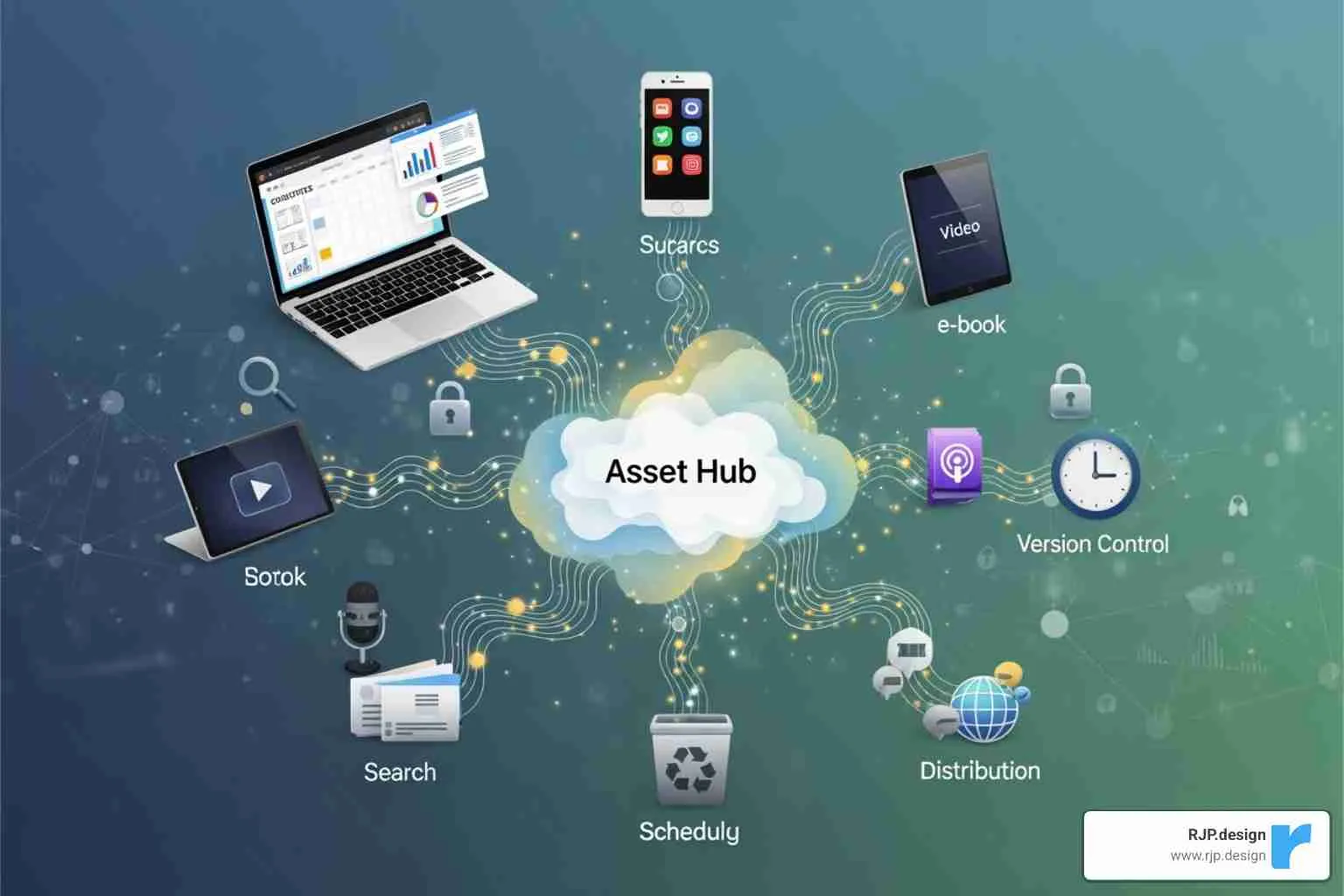
Content marketing asset management is the systematic process of organizing, storing, and distributing the digital files that power your marketing. It’s the difference between spending 25 minutes hunting for a logo versus finding it in seconds. In short, it’s a centralized system that transforms content chaos into streamlined workflows, saving time and boosting productivity.
The numbers tell the story. Content marketing is projected to reach $107.5 billion by 2026. With 90% of organizations using content marketing, the volume of assets is exploding. The problem? Most marketing teams are drowning in digital chaos.
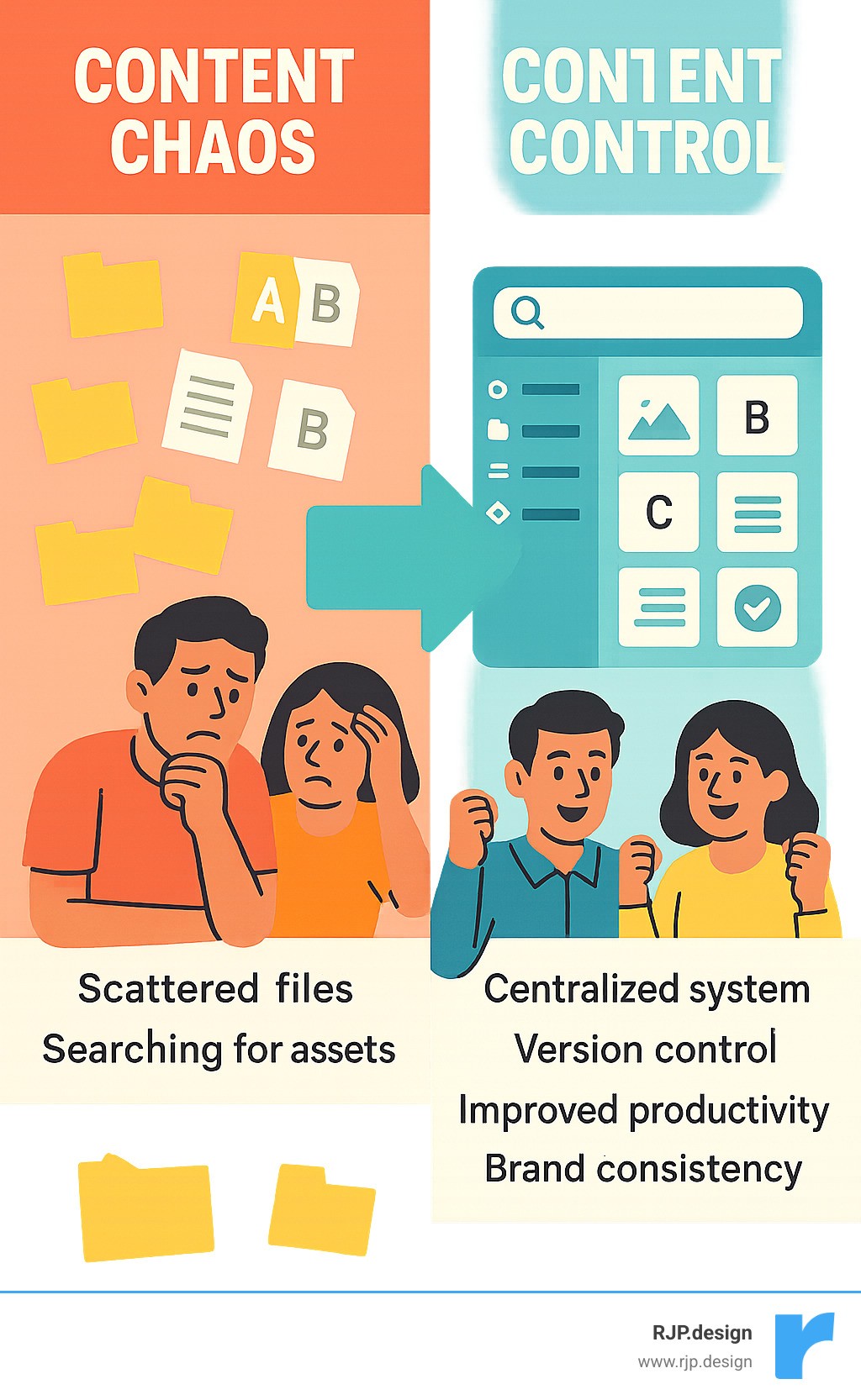
Files are scattered across Dropbox, Google Drive, and desktops, with multiple versions of the same document. This chaos is expensive: teams waste an average of 129 hours annually on duplicated work, and employees spend 1.8 hours daily just searching for information.
This is where content marketing asset management becomes your superpower. It transforms scattered files into an organized, searchable powerhouse. It turns wasted time into productive workflows and helps small businesses compete by making every piece of content work harder.
I’m Ross Plumer, and I’ve helped businesses optimize their digital strategies through effective content marketing asset management systems, creating solutions that teams actually want to use.
Relevant articles related to content marketing asset management:
Decoding Marketing Asset Management (MAM): The Foundation of Efficiency
Marketing Asset Management (MAM) is your marketing team’s digital headquarters. It’s a systematic way to collect, organize, and store every piece of content, creating a centralized repository—a single source of truth where every approved asset lives. Unlike simple storage, MAM is designed for marketing challenges, handling large files and complex workflows with ease.
As your business grows, a MAM system scales with you, keeping an expanding content library organized. This is crucial as employees continue to favor remote and hybrid work, ensuring scattered teams have access to the same approved assets.
More info about our Digital Marketing Solutions
MAM vs. DAM: Understanding the Key Differences
While you may have heard of Digital Asset Management (DAM), MAM is different. DAM is an enterprise-wide solution for all company files, from HR documents to legal contracts. MAM is laser-focused on marketing, built for the specific assets and workflows that fuel your campaigns.
Here’s how they stack up:
Criteria | Marketing Asset Management (MAM) | Digital Asset Management (DAM) |
|---|---|---|
Primary Users | Marketing teams, content creators, brand managers | All departments across the organization |
Scope | Marketing-focused assets and campaigns | All digital files company-wide |
Core Function | Streamline marketing workflows and brand consistency | Centralize and secure all digital assets |
Typical Asset Types | Logos, social graphics, campaign videos, blog images, templates | All digital files including legal docs, HR forms, technical specifications |
In short, if DAM is a massive company warehouse, MAM is your marketing department’s perfectly organized supply closet.
Why MAM is Crucial for Modern Marketing Teams
Today’s marketing landscape demands speed, volume, and consistency. With approximately 70 percent of businesses increasing their content marketing budgets, the amount of content is exploding. Without a system, you’ll drown in digital files.
Content marketing asset management is crucial because it:
Increases Speed: Eliminates bottlenecks by making assets instantly findable, allowing you to respond to market changes in minutes, not hours.
Ensures Brand Consistency: Guarantees everyone uses the most current, approved assets, protecting your professional image.
Improves Campaign Agility: Makes it easy to repurpose content across channels, maximizing the value of every asset.
In today’s environment, MAM isn’t a luxury; it’s the foundation for efficient, competitive marketing.
The ROI of Order: Key Benefits of a MAM Strategy
Implementing a content marketing asset management strategy isn’t just about organizing files; it’s about open uping business value. Streamlined systems deliver measurable returns, as increased efficiency leads to time savings, cost reduction, and improved ROI across your entire marketing operation.

Every minute your team isn’t searching for files is a minute they can spend creating value for your customers.
More info about our SEO Optimization Services
Boost Productivity and Streamline Workflows
Employees spend 1.8 hours daily just searching for information, and teams waste an average of 129 hours annually on duplicated work. A well-designed MAM system eliminates this waste. With smart search and organization, finding assets takes seconds, not hours, so campaign launches happen faster.
Modern MAM systems also automate repetitive tasks like resizing images or converting file formats. This frees your creative team to focus on creating compelling content instead of technical busy work.
Improve Personalization and Customer Experience
Personalization is what customers expect, and research shows that getting personalization right leads to faster growth. Delivering targeted content is nearly impossible when assets are scattered. A MAM system with detailed metadata allows you to quickly find the right assets for specific audience segments.
This precision creates a better customer experience and provides data on which assets perform best. You can see what resonates with different audiences, helping you refine your strategy and improve the customer journey.
From Silos to Systems: A Blueprint for Effective Content Marketing Asset Management
Building a solid content marketing asset management system requires a clear plan. The journey from scattered files to a streamlined system starts with a needs assessment to identify pain points, followed by establishing clear governance and ownership.

More info about our Digital Marketing Strategies
Identifying and Categorizing Your Core Content Assets
First, take inventory of your marketing assets. Anything that helps you attract, engage, or convert customers counts. This includes:
Blog posts and articles
Videos and audio files
Images, graphics, and infographics
Ebooks and whitepapers
Case studies and reports
Email newsletters
Social media content
Templates
Best Practices for Organizing Your Content Library
Create order with a few ground rules:
File Naming Conventions: Establish a clear, consistent pattern like
[CampaignName]_[AssetType]_[Date]_[Version]to make files easily identifiable.Folder Structure: Design an intuitive folder system, organized by campaign, content type, or date. Consistency is key.
Metadata and Tagging: Use metadata (author, creation date, usage rights) and descriptive tags to make assets highly searchable.
Version Control: Ensure your system tracks changes automatically so everyone uses the most current, approved version of an asset.
Regular Audits: Periodically review your library to remove outdated content and identify top-performing assets for repurposing. A well-organized system helps you create content that aligns with Google’s ‘helpful content update’.
Choosing the Right Tools: Essential Features for Your Content Marketing Asset Management Software
Picking the right software is crucial. Look for these essential features:
Search Functionality: Robust search with keywords, tags, and filters is non-negotiable.
Integrations: The system must connect seamlessly with your existing tools (website, email platform, project management software).
Security and User Permissions: Granular control over who can view, edit, and publish assets is vital for protecting your brand.
Analytics and Reporting: Get insights into asset performance to make data-driven content decisions.
Scalability: Choose a solution that can grow with your business.
Collaboration Features: Tools like commenting and approval workflows streamline content creation.
Beyond Storage: How MAM Fuels Collaboration and Brand Integrity
Content marketing asset management is more than a digital filing cabinet; it’s a tool that transforms how teams work together and protects your brand’s reputation. It connects scattered departments and guards your brand identity.
More info about our Internet Marketing Solutions
Unifying Teams and Breaking Down Departmental Silos
A MAM system acts as a central hub, breaking down departmental silos. Marketing and sales alignment becomes effortless, as the sales team gets instant access to the latest case studies and presentations. Creative workflows become smooth collaborations with real-time feedback and approvals in one place. Sharing assets with external partners like agencies is secure and simple, eliminating version control issues.
Ensuring Brand Consistency and Compliance at Scale
Your brand is the sum of all customer interactions. A MAM system enforces brand guidelines by making approved assets the easiest to find and use, preventing brand dilution. It also manages usage rights and licensing restrictions automatically, embedding digital rights management (DRM) to avoid costly mistakes. For regulated industries, it simplifies legal compliance by tracking asset history and approvals.
Overcoming Common Implementation Problems
Implementing a new system has challenges, but they are manageable:
User Adoption: Show immediate value by demonstrating time savings. Make the system intuitive and celebrate quick wins.
Staff Training: Provide comprehensive training and clear documentation. Empower internal champions to help their peers.
Data Migration: Take a phased approach, starting with your most important assets. Clean up and organize as you go.
Securing Budget: Frame MAM as a revenue enabler. Calculate the ROI based on time saved, reduced rework, and improved brand consistency.
The Future of Asset Management: What’s Next for MAM Technology?
The world of content marketing asset management is evolving rapidly, with innovations that will make today’s systems feel like simple filing cabinets.

With the DAM market is predicted to grow to $12.29 billion by 2030, investment is flowing into making these systems smarter and more intuitive. Here’s what’s next:
AI and Machine Learning: Systems are already using AI to automatically tag assets, recognize content, and analyze past performance to recommend which assets to use for new campaigns.
Predictive Analytics: Future MAM systems will help predict what’s next, suggesting content ideas based on trending topics or past campaign data to improve future results.
Mobile-First Solutions: As teams become more agile, robust mobile apps are essential for approving, uploading, and sharing assets on the go.
Deeper Integrations: Expect seamless connections between your MAM and other marketing tools like your CRM, email platform, and social media schedulers, creating a unified ecosystem.
These advances will level the playing field, giving small businesses access to intelligent asset management capabilities. The future of MAM is about making your content smarter, your workflows more intuitive, and your marketing more effective.
More info about our Digital Marketing and SEO Services
Frequently Asked Questions about Content Asset Management
Here are answers to common questions about content marketing asset management.
How is MAM different from a simple cloud storage drive?
While cloud storage like Google Drive is for storing files, a MAM system is a specialized tool for managing marketing assets. Key differences include:
Advanced Search: MAM uses rich metadata and tagging to find assets by campaign, usage rights, or content, which is far more powerful than simple folder browsing.
Version Control: Automatically tracks asset versions, ensuring everyone uses the latest approved file and eliminating “FINAL_V2” confusion.
Permissions and Security: Offers granular control over who can access, edit, and share specific assets, protecting your brand.
Workflow and Analytics: Includes tools for collaboration, approvals, and reporting on asset performance.
Can a small business benefit from content marketing asset management?
Yes, small businesses often benefit the most. With limited resources, you can’t afford to waste time or recreate work. A MAM system helps you:
Maximize Resources: Easily repurpose content to get more value from every asset.
Maintain Brand Consistency: Ensure every customer touchpoint is professional and on-brand, which is crucial for building trust.
Boost Efficiency: Free up your team from hunting for files so they can focus on growth-oriented tasks.
Scale Smartly: Establish good systems early to prevent chaos as your content library grows.
How do I get my team to adopt a new MAM system?
Successful user adoption is key. Here’s how to encourage it:
Start with “Why”: Explain how the system will save time and reduce frustration.
Lead by Example: Ensure managers and team leads are active users and advocates.
Provide Training: Offer comprehensive, hands-on training and easy-to-access support materials.
Keep it Simple: Start with core features and introduce advanced capabilities gradually.
Listen to Feedback: Encourage input to refine and improve the system for your team.
Integrate with Workflows: Connect the MAM to tools your team already uses daily.
Celebrate Wins: Highlight successes, like faster campaign launches, to reinforce the system’s value.
Conclusion: Take Control of Your Content and Amplify Your Marketing
We’ve explored how content marketing asset management transforms marketing operations from content chaos into an organized, searchable powerhouse. Instead of wasting hours hunting for files, your team can focus on creating compelling campaigns and connecting with your audience.
A MAM strategy boosts productivity, saves money, ensures brand consistency, and empowers seamless collaboration. It’s about taking strategic control of your content to gain a competitive advantage. By quickly finding, customizing, and deploying the right assets, you can deliver more personalized experiences and launch campaigns faster.
As the content marketing industry grows, businesses that master their content operations will be the ones that thrive. Implementing a robust MAM strategy lays the foundation for sustainable growth, turning every piece of content into an asset that works harder for you.
At RJP.design, we know that organized content is the backbone of a strong online presence. Our approach to creating websites and digital strategies relies on having the right assets ready. We’ve seen how proper content management improves not just efficiency, but the quality of work we deliver for our clients.
The choice is clear: continue wrestling with content chaos, or take control and turn your marketing assets into a true competitive advantage.