Marketing
Maximize Your Reach: The Complete Guide to Cross-Platform Digital Marketing
Aug 13, 2025

Cross Platform Digital Marketing: Master 2025 Success
Why Cross-Platform Digital Marketing is Essential for Modern Business Success
Cross platform digital marketing is a strategy that uses multiple channels—social media, email, search engines, and websites—to create a seamless customer experience. Instead of treating each platform separately, this approach connects them to guide customers through a unified journey from awareness to purchase.
Quick Implementation Guide:
Identify your audience – Know where your customers spend time online
Choose 3-5 key platforms – Start with social media, email, and your website
Create consistent messaging – Same brand voice across all channels
Tailor content formats – Adapt content to fit each platform’s style
Track and measure – Use analytics to see what’s working
Integrate data – Connect platforms to understand the full customer journey
The numbers don’t lie. Research shows that cross-platform marketing drives 48% higher conversion rates compared to single-channel approaches. Multi-channel customers are also more valuable, showing greater brand loyalty and spending more over time.
But managing multiple platforms can feel overwhelming. The good news? You don’t need to be everywhere. Success comes from being strategic about which platforms you choose and how you connect them.
Think about your last major purchase. You likely saw a social media post, visited the website, read reviews, and got an email reminder before buying. That’s cross-platform marketing in action, and it’s what your customers expect.
I’m Ross Plumer, and I’ve helped businesses market over $20 million in revenue using integrated cross platform digital marketing strategies. My approach combines psychology and data-driven insights to create marketing that resonates with real people across multiple touchpoints.
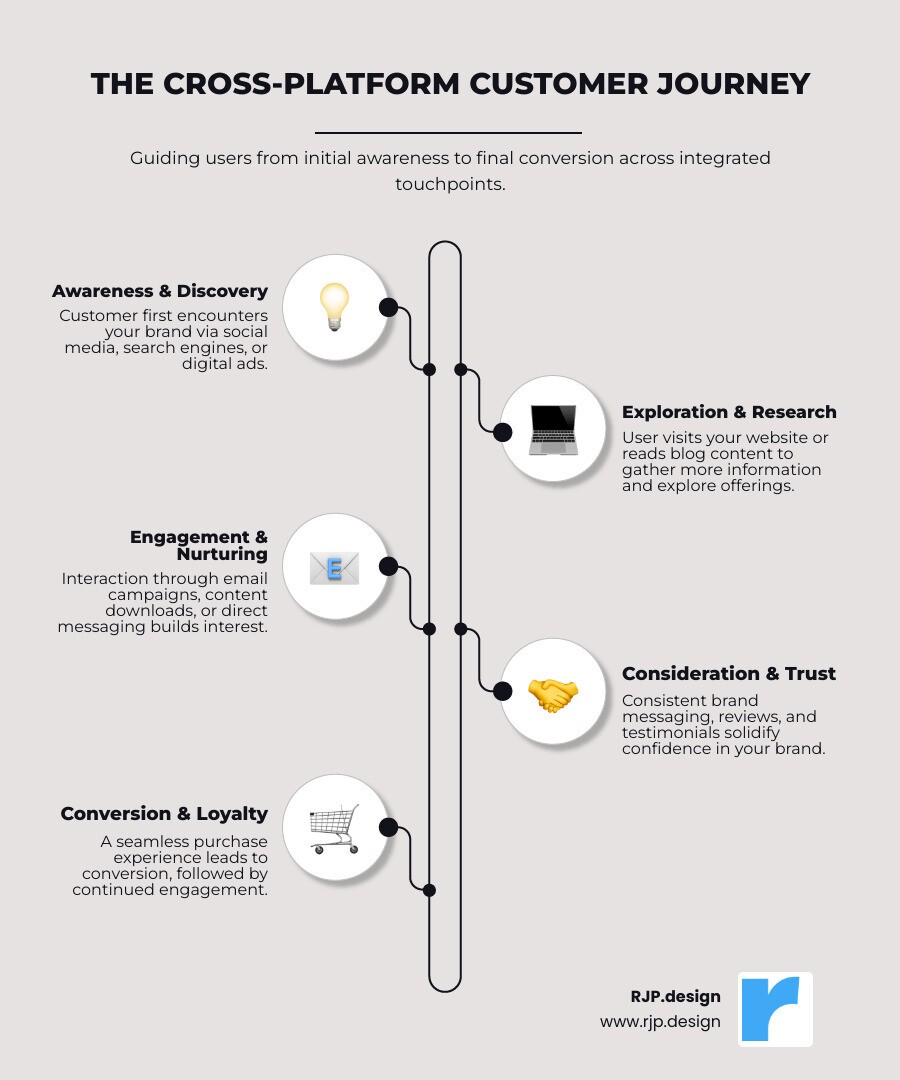
Basic cross platform digital marketing terms:
Understanding the Foundations of Cross-Platform Marketing
Think of cross platform digital marketing like an orchestra. Each platform is an instrument with its own part, but when synchronized, they create something far more powerful than any single instrument alone.
This approach isn’t just about being everywhere; it’s about being strategic. When you unify your strategy, you’ll see increased reach, improved engagement, and higher conversion rates. Each interaction—from an Instagram post to an email to a website visit—builds on the last, moving customers deeper into a relationship with your brand.
This consistency builds brand loyalty. Customers recognize and trust you because your voice feels familiar everywhere. Financially, this leads to lower customer acquisition costs and higher lifetime customer value, as every marketing dollar works harder.
Ready to see what this could look like for your business? Let’s explore how we can improve your digital presence with our services.
What is Cross-Platform Marketing vs. Multichannel?
Many businesses miss a huge opportunity here. Having a Facebook page, sending emails, and running Google ads is a start, but there’s a crucial difference that impacts results.
Multichannel marketing is when channels operate independently. You post on Facebook, send a separate email, and run Google ads. The platforms don’t connect.
Cross platform digital marketing creates one continuous conversation that flows between platforms. A customer might find you on Instagram, visit your site, and sign up for your email list, with each step feeling connected and intentional.
Feature | Multichannel Marketing | Cross-Platform Marketing |
|---|---|---|
Approach | Channel-centric, siloed | Customer-centric, integrated |
Customer Journey | Separate experiences on each channel | Seamless, continuous journey |
Channel Function | Channels operate independently | Channels work together, inform each other |
Messaging | Can be inconsistent across channels | Unified and consistent |
Goal | Maximize presence | Optimize customer experience and conversions |
The magic happens when your platforms “talk” to each other. An abandoned cart on your website can trigger a reminder email. An Instagram engagement can inform your Facebook ads. This integration creates a personal, thoughtful customer experience.
Why is a Cross-Platform Approach Essential Today?
Your customers don’t live on a single platform. The modern customer journey is complex, moving from a TikTok video to a Google search to a Facebook page before a purchase is ever made.
Audience fragmentation is real. Different demographics prefer different platforms—teenagers on TikTok, professionals on LinkedIn, and older generations on Facebook. A single-platform strategy misses huge segments of your audience.
It’s also about building trust through consistency. When your brand feels the same across multiple touchpoints, customers develop confidence. Inconsistency creates doubt.
Finally, the data insights are invaluable. You can see how Instagram followers convert after visiting your website or how email subscribers engage with social content. This helps you make smarter decisions about your time and budget.

The Pew Research Center data on social media use confirms how differently age groups use platforms. Your strategy must account for these preferences while maintaining a core brand message.
Your customers expect a seamless experience. They don’t think in “channels”; they just want to interact with your brand conveniently. Cross platform digital marketing makes that possible.
How to Build a Winning Cross-Platform Digital Marketing Strategy
Building a successful cross platform digital marketing strategy requires strategic planning, clear goals, and meticulous execution. Many businesses jump in without a solid foundation, trying to be everywhere at once, which leads to messy results.
At RJP.design, we’ve learned that success comes from a methodical approach. Our Digital Marketing Strategies provide the roadmap you need. Here is our proven four-step process.

Step 1: Define Your Audience and Choose the Right Channels
Before creating content, you must know who you’re talking to. Buyer personas are the foundation of your strategy. Audience segmentation involves analyzing demographics and, more importantly, how customers use different platforms.
For platform selection, avoid spreading yourself too thin. Focus on the 3-5 channels where your audience is most engaged. This often includes a mix of social media (Facebook, Instagram, LinkedIn, etc.), email marketing, and search engines. Our Comprehensive SEO Services ensure your search presence works seamlessly with your other efforts.
Step 2: Ensure Absolute Brand Consistency
Inconsistent branding across platforms confuses customers and erodes trust. Brand consistency is about creating a unified experience that builds recognition.
Your brand guidelines should cover visuals like logo usage, color palette, and typography. Just as important is your voice and tone. While you might be more casual on Instagram than on LinkedIn, your core brand personality must remain the same.
Unified messaging ensures your value proposition is consistent, even if the format changes. As customers move from Instagram to your website to your email, they should feel like they’re continuing a single conversation.
Step 3: Tailor Content for Your Cross-Platform Digital Marketing Campaign
Copy-pasting the same content everywhere is a common mistake. Each platform has a different purpose, and effective content adaptation is crucial.
For example, a single blog post can be repurposed effectively. Share a key insight on Facebook, create an infographic for Instagram, post professional takeaways on LinkedIn, and send the full article with commentary in your email newsletter.
Platform-specific formats matter. Instagram favors visuals, Twitter (X) rewards concise updates, and LinkedIn appreciates thoughtful, longer content. Video content is versatile, but its style and length should be adapted for each platform.
Intelligently repurposing content saves time and ensures consistency. User-generated content is also powerful, as authentic customer experiences build community and trust across all channels.
Step 4: Integrate Data and Technology
Technology is what makes cross platform digital marketing truly powerful. The biggest challenge is overcoming data silos, where analytics from email, social media, and your website remain separate.
A Customer Data Platform (CDP) or similar integration tool acts as a central hub, connecting all these pieces to create a complete view of the customer journey. Integrated analytics tools become more powerful, showing how an email open leads to a website visit and a sale.
Marketing automation can then trigger actions based on this data, like sending a targeted email sequence after a website download. AI-powered marketing tools take this even further by optimizing budgets, ensuring message consistency, and enabling personalization at scale. AI also helps you adapt to platform changes by analyzing performance patterns in real-time.
To see how technology can transform your marketing, explore the role of AI in performance marketing.
Measuring Success and Overcoming Common Problems
Once your cross platform digital marketing strategy is running, you must constantly monitor its performance. This involves tracking Key Performance Indicators (KPIs), calculating Return on Investment (ROI), and A/B testing to optimize your approach.

Key Metrics to Track for Cross-Platform Digital Marketing
Conversion rates: The percentage of users who take a desired action (e.g., purchase, sign-up). Cross-platform strategies boost this by delivering the right message at the right time.
Customer Acquisition Cost (CAC): How much you spend to get a new customer. Tracking this across platforms reveals which channels are most efficient.
Engagement rates: Likes, shares, comments, and clicks. High engagement across platforms indicates your message is resonating.
Reach: The number of unique people who see your content across all channels. This shows if you’re successfully casting a wider net.
Customer Lifetime Value (CLV): The total revenue a customer generates over time. Cross-platform customers are often more loyal and valuable.
Attribution modeling: Determining which touchpoints get credit for a conversion. Tools like UTM tags help track where users come from and what’s driving results.
Common Challenges and How to Solve Them
Fragmented audience data: Customer information is often stuck in separate silos. Solution: Use a Customer Data Platform (CDP) or integration tools to create a unified customer view.
Inconsistent brand messaging: Your brand’s voice and tone differ across platforms. Solution: Create and enforce detailed brand guidelines for voice, tone, and visuals.
Resource allocation: Spreading a small team too thin. Solution: Focus on the 3-5 channels your customers use most. Use automation and AI tools to manage workloads.
Platform-specific limitations: Each platform has its own rules and formats. Solution: Stay flexible and adapt content for each platform’s unique environment.
Ad fraud and invalid traffic: Bots and fake clicks waste your budget. Solution: Use fraud detection tools and work with reputable ad networks.
Real-World Examples of Success
The best way to understand cross platform digital marketing is to see it in action. Successful strategies share common threads:
A tech company might use a TV ad for awareness, social media with a unique hashtag to drive website traffic, influencer marketing for credibility, and retargeting ads with email discounts to close the sale.
A clothing brand could use Instagram for visuals, YouTube for styling tips, Google Ads for specific searches, and LinkedIn for industry conversations about sustainability, all while maintaining a consistent brand personality.
A local bakery can use Facebook and Instagram for daily specials, Google Ads for “bakery near me” searches, and email newsletters for offers, blending digital marketing with in-person traffic.
In every case, success comes from understanding the customer journey, maintaining consistent messaging, creating platform-specific content, and using data to improve. It’s about guiding your audience smoothly from awareness to purchase.
Frequently Asked Questions about Cross-Platform Marketing
How is cross-platform different from omnichannel marketing?
Cross platform digital marketing creates a connected experience across different channels. A customer is aware they are moving from Instagram to your website to an email, but the conversation feels continuous.
Omnichannel marketing takes this further by making the transitions so seamless that the customer feels they are having one single experience with your brand, regardless of the channel. For example, a customer service chat started on your website can be seamlessly continued over the phone.
For most small businesses, mastering cross-platform consistency is the perfect foundation before evolving to a true omnichannel strategy.
How can a small business start with cross-platform marketing on a limited budget?
Successful cross platform digital marketing is about being smart, not having the biggest budget. Here’s how to start:
Build a Foundation: Choose 2-3 platforms where your customers actually spend their time. A solid website, email marketing, and one key social media channel are often enough.
Repurpose Content: This is a small business superpower. Turn one blog post into multiple assets: Instagram graphics, short video tips, LinkedIn insights, and an email newsletter.
Focus on Organic Reach: Before paying for ads, create genuinely helpful content. Boost only your best-performing organic posts with a small budget.
Use Free Analytics: Pay close attention to the data every platform provides. It tells you what’s working so you can invest your limited time and money wisely.
Stay Consistent: Consistent branding across your chosen platforms costs nothing but builds invaluable trust.
What is the most important element for a successful cross-platform campaign?
The single most crucial element is understanding your customer’s journey and maintaining absolute brand consistency across all touchpoints.
Your customers interact with you in many places: social media, Google, your website, and email. If each interaction feels like it’s from a different company, you lose trust. But when your brand voice, visuals, and message are consistent, you build recognition and confidence.
Success depends on two things: knowing how your customers move between platforms and presenting a unified brand that guides them smoothly. Your Instagram posts, website copy, and emails should all feel like they come from the same reliable source. This consistency is what turns cross-platform marketing into a revenue-driving strategy.
Conclusion
We’ve learned that cross platform digital marketing is no longer optional—it’s essential. Your customers are already moving between platforms, and their decision to trust you depends on a consistent brand experience.
The magic happens when you see your platforms not as separate projects, but as parts of one cohesive story. A customer’s journey from an Instagram post to your website to an email should feel like one continuous, trusted conversation.
We’ve walked through the practical steps: understanding your audience, maintaining brand consistency, tailoring content, and using technology to connect the dots. These are the building blocks that turn scattered marketing efforts into a powerful, revenue-generating system.
At RJP.design, we’ve seen how transformative this approach can be. Our down-to-earth team helps businesses move from feeling overwhelmed to having a marketing strategy that works. We specialize in creating websites and enhancing online presence, understanding that your website is just one piece of a larger puzzle.
You don’t have to figure this out alone. There is a path forward that fits your budget and timeline.
Your customers are looking for businesses they can trust. The question isn’t whether you should meet them where they are—it’s how quickly you can start. Start building your integrated social media presence today and let’s turn your marketing into one powerful, unified voice.