
SEO
Mastering Local SEO: How to Discover Local Keywords That Work
Jan 30, 2025

Local keyword seo is crucial for enhancing your business’s presence in search engine results, especially when trying to attract nearby customers. It focuses on the specific words or phrases people use when searching for services or products in a certain location.
Key Points:
– Importance: Boost search engine visibility
– Focus: Targets local audience effectively
– Benefit: Drives more foot and web traffic
By connecting with job-specific terms and local intent, businesses can rank higher in search engine results, like Google, leading to increased local traffic and sales. Whether you’re a plumber in London or a bakery in Miami, identifying the right local keywords can make all the difference in bringing customers right to your doorstep.
Being able to understand and implement local keyword seo allows businesses to zero in on what the nearby audience is genuinely searching for, which often gets overlooked as businesses assume they know what keywords their potential clients are using.
As your guide through the maze of local search optimization, I’m Ross Plumer. With a deep background in digital marketing and website design, I’ve helped businesses not only improve their presence online but also amplify their reach through strategic local keyword seo.
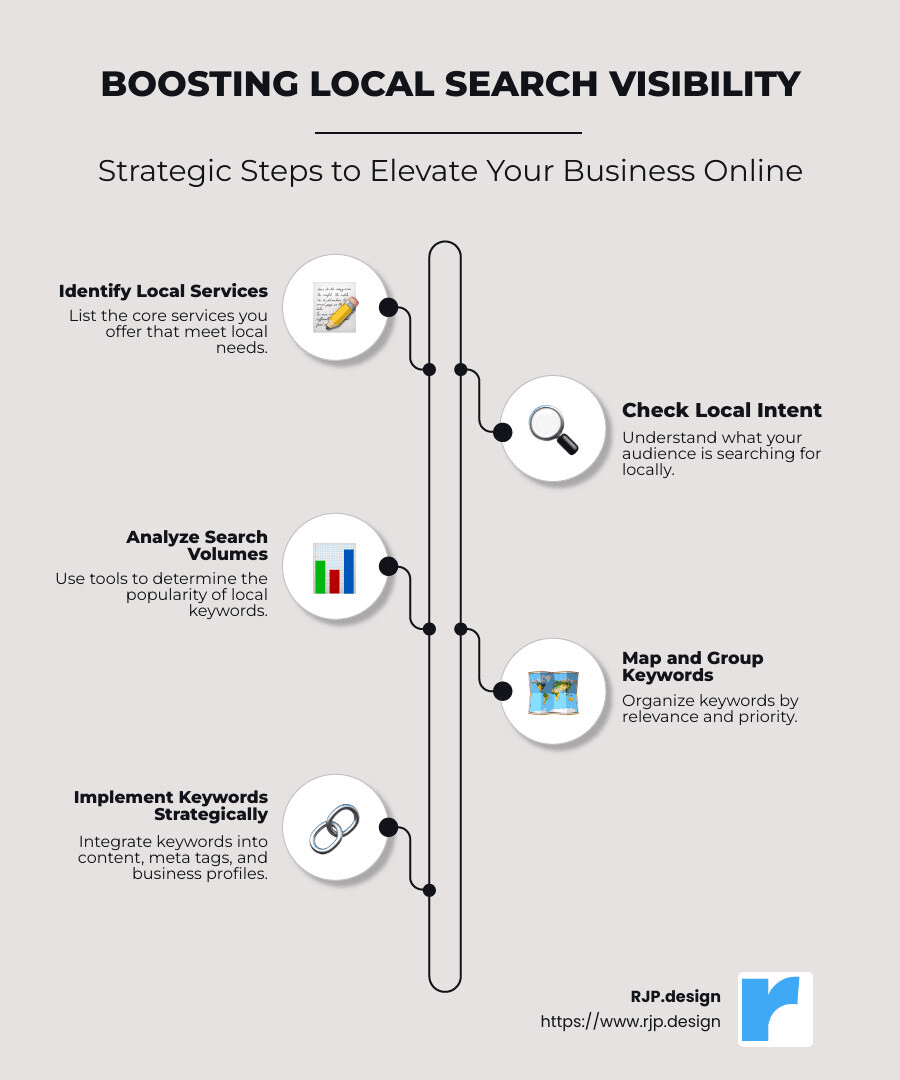
Terms related to local keyword seo:
– best local video seo company
– local video seo
– plumber local seo
Understanding Local Keyword SEO
Local Keyword SEO is all about connecting your business with people searching for services or products in a specific area. It’s not just about any keywords—it’s about the right ones that match local intent.
What Are Local Keywords?
Local keywords are search terms that include geographical qualifiers. These qualifiers can be explicit, like the name of a city or neighborhood, or implicit, where the search engine understands the local intent without a specific location mentioned. For example, someone searching for “pizza delivery” might not include their city name, but they expect results that are nearby.
The Role of Geographical Qualifiers
Geographical qualifiers are crucial in local keyword SEO. They help refine search results to match the user’s location or the location they specify. Phrases like “near me” or specific city names make the user’s intent clear, guiding search engines to deliver relevant local results.
For instance, “locksmith in Seattle” tells the search engine to focus on businesses in Seattle. On the other hand, just typing “locksmith” might still yield local results due to the implicit local intent understood by the search engine algorithms.

Enhancing Search Engine Optimization
To effectively use local keywords, businesses need to optimize their web pages. This involves strategically placing these keywords in places like page titles, meta descriptions, and throughout the content.
By doing so, search engines like Google can easily identify the relevance of your page for local searches. This boosts your chances of appearing in top search results, driving more local traffic to your site.
Tip: Use tools like Google Keyword Planner or Semrush to find which local keywords are popular in your area. These tools provide insights into search volumes and competition levels, helping you choose the most effective keywords for your business.
Understanding and utilizing local keyword SEO is essential for any business looking to improve its online visibility and attract local customers. It’s about knowing what your audience is searching for and making sure your business is the one they find.
How to Find Local Keywords
Finding the right local keywords is essential for boosting your business’s visibility in search results. This involves using keyword research tools to identify terms that potential customers are using when searching for products or services in your area.
Keyword Research Tools
To start, you need tools that can help you uncover the most relevant local keywords. Here are a few popular options:
Google Keyword Planner: This free tool is a great starting point. It allows you to search for keywords by specific locations, such as a city or region. You can see the average monthly search volumes and gauge the level of competition for each keyword. This helps in identifying keywords that are not only popular but also achievable in terms of competition.
KeywordsFX: Another valuable tool that can generate a list of related keywords based on your initial search. This is particularly useful for expanding your keyword list and ensuring you don’t miss out on any relevant terms.
Semrush: Known for its comprehensive features, Semrush’s Keyword Magic Tool provides detailed insights into keyword variations, search volume, and keyword difficulty. It allows you to filter results by location, making it easier to find local keywords that align with your business.
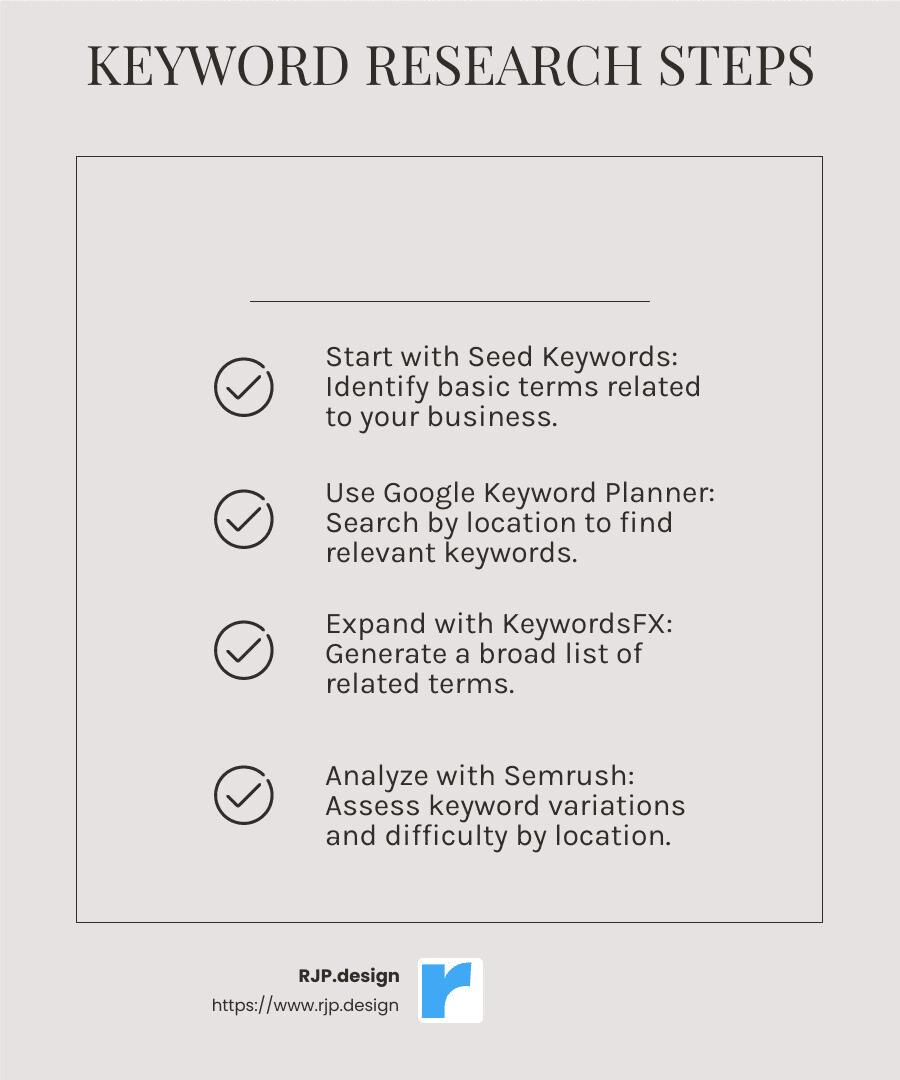
Steps for Finding Local Keywords
Start with Seed Keywords: These are the basic terms related to your business. For instance, if you run a bakery in Austin, your seed keyword might be “bakery Austin.”
Use Keyword Tools: Input your seed keywords into tools like Google Keyword Planner or Semrush. Filter the results to focus on your target location. This helps in finding variations that include geographical qualifiers, such as “best bakery in Austin” or “Austin cupcake shop.”
Analyze Search Volume and Competition: Look for keywords with a good balance of search volume and competition. High search volume means more potential traffic, but high competition can make it challenging to rank. Aim for keywords with moderate competition for better chances of ranking higher.
Expand Your List: Use tools like KeywordsFX to find related terms you might have missed. This ensures a comprehensive list of local keywords that cover all aspects of your business.
By effectively using these keyword research tools, you can find local keywords that will help your business appear in more relevant search results. This not only increases your visibility but also attracts more local customers actively searching for your products or services.
In the next section, we’ll explore how to pick the best local keywords to maximize your SEO efforts and drive more local traffic to your business.
Picking the Best Local Keywords
Once you’ve gathered a list of potential local keywords, it’s time to refine your selection. This involves focusing on three key factors: location specification, industry-related focus, and keyword modifiers. Let’s break these down:
Location Specification
The first step is to be clear about which locations you want to target. If your business operates in multiple areas, like Los Angeles and its suburbs, make sure to include each location in your keywords. This ensures that you’re visible to potential customers in all the areas you serve.
For instance, an event planner in Los Angeles might target keywords like “event planner Santa Monica” or “party planner Venice Beach.” By specifying locations, you can capture local search traffic more effectively.
Industry-Related Focus
It’s crucial to focus on keywords that are relevant to your industry. This means avoiding high-volume keywords that don’t align with what your business offers. For example, an event planner should target terms like “Los Angeles party planners” instead of unrelated terms like “talent agents in Los Angeles.”
Industry-related keywords ensure that the traffic you attract is interested in your specific products or services. This leads to more qualified leads and lowers your bounce rate, signaling to search engines that your page is relevant.
Keyword Modifiers
Modifiers are additional words that can make your keywords more specific and attractive to potential customers. They help expand your reach and target specific search intents. There are four types of keyword modifiers to consider:
Quality Modifiers: Words like “best” or “top” can help attract customers looking for high-quality services. For example, “best event planners in Los Angeles” appeals to users seeking top-tier services.
Occasion Modifiers: These focus on specific events or times, like “wedding planner in Los Angeles.” They can capture searches related to particular needs or occasions.
Type Modifiers: Highlight specific offerings of your business. If you provide wedding venues, a keyword like “wedding venues Los Angeles” is ideal.
Special Offering Modifiers: Unique aspects of your business can be highlighted with phrases like “all-inclusive wedding venues in Los Angeles.”
By combining these strategies, you can refine your keyword list to focus on terms that are most likely to drive local traffic to your business. This targeted approach not only improves your search rankings but also attracts the right audience to your website.
In the next section, we’ll explore strategies to improve your local SEO and ensure your business stands out in search results.
Strategies to Improve Local SEO
Improving your local SEO can make a big difference in how often people find your business online. Let’s look at three key strategies: optimizing your Google Business Profile, using PPC advertising, and leveraging the local SEO 3-pack.
Google Business Profile
Claiming and optimizing your Google Business Profile is one of the most effective ways to boost your local visibility. When someone searches for local services, Google often displays a box with three businesses at the top of the search results. This is known as the local SEO 3-pack.
To get your business into this coveted spot, start by claiming your Google Business Profile. Make sure all your information is accurate and complete. This includes your business name, address, phone number, and website.
Add photos to your profile. Businesses with photos get 42% more requests for directions and 35% more website clicks. Use images that showcase your business, and name them with relevant keywords, like “event planner Los Angeles.”
Encourage customer reviews. Positive reviews not only build trust but also improve your local rankings. Consider offering incentives for reviews, such as a discount or a small gift.
PPC Advertising
Pay-per-click (PPC) advertising is another powerful tool for local SEO. These ads appear at the top of search results and are marked with “ad” to indicate they are paid content. PPC is especially effective because 80% of consumers prefer ads custom to their location.
To get started, use the local keywords you identified earlier. Create ads that are relevant to your geographic area, such as “wedding planners in Santa Monica.” Set a budget for how much you’re willing to pay for each click, and craft compelling ad text that speaks directly to local searchers.
A well-designed landing page is crucial. If your ad is about wedding planning in Santa Monica, your landing page should focus solely on that service, providing a seamless experience from ad to website.
Local SEO 3-Pack
The local SEO 3-pack is a prime spot for any local business. Appearing here can significantly increase your visibility and attract more local customers.
To improve your chances of appearing in the 3-pack, focus on:
Relevance: Ensure your business information is complete and matches the searcher’s query.
Proximity: The closer your business is to the searcher’s location, the better your chances.
Prominence: Build your online reputation through reviews and local backlinks.
By optimizing your Google Business Profile, running targeted PPC campaigns, and aiming for the local SEO 3-pack, you can effectively boost your local search presence and attract more customers.
In the next section, we’ll address some frequently asked questions about local keyword SEO to further clarify how these strategies can benefit your business.
Frequently Asked Questions about Local Keyword SEO
What is an example of a local keyword?
A local keyword is a phrase that includes a geographical qualifier to specify a location. For instance, if you run a bakery in Chicago, a local keyword might be “best cupcakes in Chicago.” The geographical qualifier “Chicago” helps target people searching for cupcakes in that area. This specificity can make a big difference in attracting the right audience to your business.
Is doing a local SEO worth it?
Absolutely, local SEO is worth the effort, especially for small businesses. By focusing on local keyword SEO, you can significantly boost your visibility in search results. This means more people in your area will find your business online, which can lead to increased foot traffic and sales. According to research, businesses that optimize for local search can see a substantial boost in customer inquiries and revenue. For small businesses, this can be a game-changer, helping them grow and compete with larger companies.
What is the difference between local SEO and regular SEO?
The main difference between local SEO and traditional SEO lies in the focus on visibility. Traditional SEO aims to improve your website’s ranking on a broad scale, targeting a global or national audience. In contrast, local SEO targets a specific geographical area, making it ideal for businesses that serve a local community.
Local SEO involves optimizing for keywords with local intent, like “plumber near me” or “Italian restaurant in Boston.” This helps your business appear in local search results and the local SEO 3-pack, increasing your chances of attracting nearby customers. By understanding and leveraging these differences, you can create a more effective strategy to reach your target audience.
In the next section, we’ll conclude by discussing how RJP.design can help improve your online presence and ensure client satisfaction.
Conclusion
At RJP.design, we understand the power of local keyword SEO in boosting your business’s online presence. Our team specializes in creating websites that not only look great but are also optimized for search engines, ensuring your business is easily found by local customers.
Our approach to online presence improvement is simple yet effective. We don’t just build websites; we craft digital experiences that resonate with your target audience. By focusing on local keyword SEO, we help you reach more potential customers in your area, driving more traffic to your business and increasing your chances of success.
Client satisfaction is our top priority. We pride ourselves on our down-to-earth team and high-quality services that put your needs first. We work closely with you to understand your goals and tailor our services to meet them. Our success is measured by your success, and we are committed to helping you achieve it.
If you’re ready to take your business to the next level, let us help you improve your online presence with our expert SEO services. Find how we can make your business shine online by visiting our Google Search Optimization page. Together, we can ensure your business thrives in the digital landscape.