
SEO
Navigating Local Search: A Comprehensive Guide
Apr 23, 2025
The Power of Local Search for Your Business
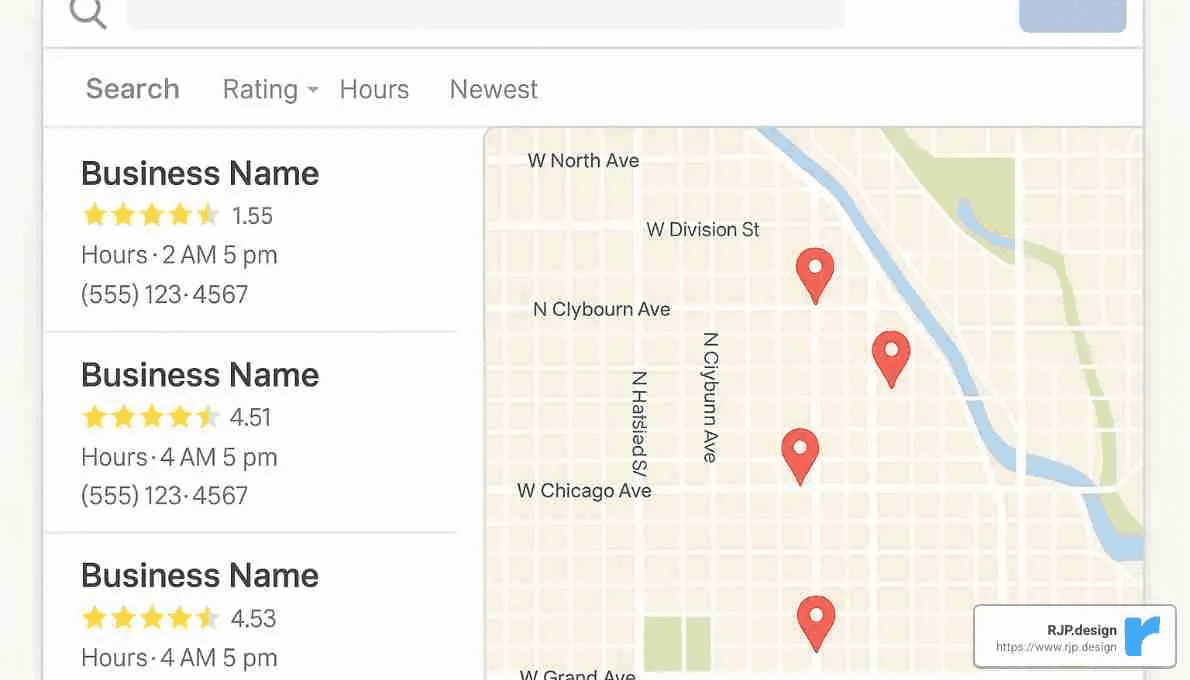
Local search results are listings that appear when someone searches for businesses or services near their location. These specialized search results help connect local customers directly with nearby businesses.
What are local search results?
Definition: Geographically-relevant search listings shown when users search with local intent
Components: Google Map Pack (3-pack), business listings, and localized organic results
Ranking factors: Proximity, relevance, and prominence
Importance: 4 out of 5 people use search engines for local queries, with 18% of local searches resulting in a purchase within 24 hours
Local search has become a critical pathway for customers to find businesses in their area. Whether someone is looking for a nearby coffee shop, plumber, or retail store, these results determine which businesses get finded and which remain invisible.
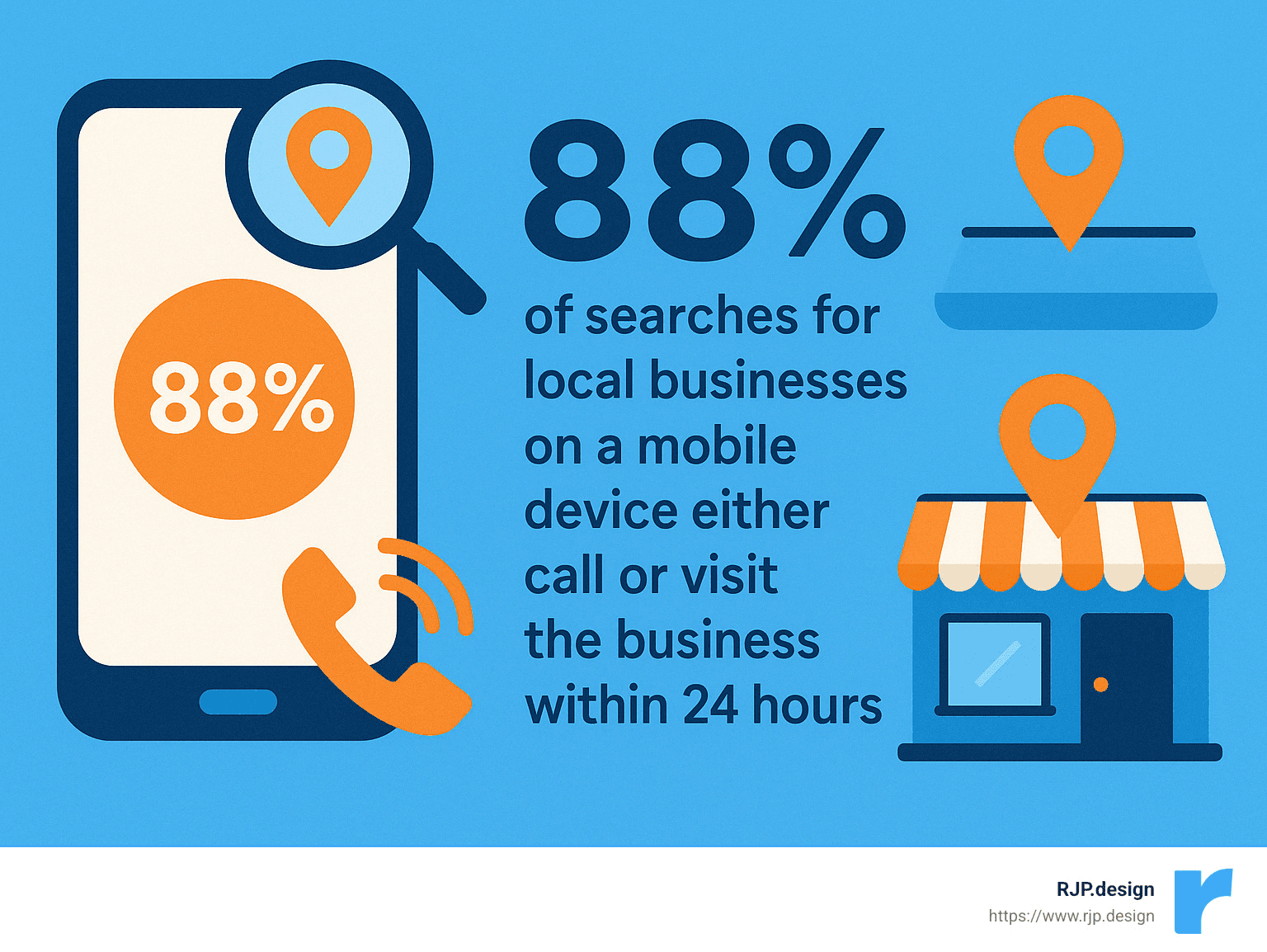
The impact of local search visibility is substantial – 88% of searches for local businesses on a mobile device result in either a call or visit to the business within 24 hours. For small businesses especially, appearing prominently in local search results can be the difference between thriving and merely surviving.
Google dominates the local search landscape, but other platforms like Apple Maps and Bing Places also contribute to the local search ecosystem. The most visible component is the “local pack” or “3-pack” – the block of three business listings that appears prominently in search results with a map.
I’m Ross Plumer, and I’ve helped businesses generate over $20 million in revenue by optimizing their local search results through comprehensive digital marketing strategies that integrate technical SEO, business profile optimization, and review management.
Simple guide to local search results terms:
Understanding Local Search Results and Their Importance
When you whip out your smartphone to search for “coffee shops near me” or “emergency plumber,” you’re diving into local search. Behind those search results is a complex web of factors working together to connect you with the businesses around you.
Search engines like Google have a secret sauce of factors they use to decide which businesses pop up in these local search results. This magic formula boils down to three main ingredients:
Proximity: Is the business nearby?
Relevance: Does it match what you’re looking for?
Prominence: Is it well-known and reputable?
Consumer Behavior and Local Search
The way people use local search is fascinating. A whopping four out of five people use search engines to hunt for local info. Imagine this: 18% of these local searches lead to a purchase within just one day, while a stunning 78% of location-based mobile searches end in an offline buy. Plus, half of the folks searching on their smartphones visit a store within a day.
Take Duncan, a 23-year-old from Tucson, AZ, for example. He says, “It just makes life that little bit easier. I don’t need to think ‘do I need to tell Google where I am?’ No, Google knows and gives me search results that are local to me. It saves me the hassle.”
This ease and convenience make local search results a vital part of how customers find and connect with businesses. They bridge the gap between online searches and offline purchases, making life a whole lot simpler.
What Makes Local Search Different from Traditional SEO
While traditional SEO focuses on ranking websites all over the world, local SEO zooms in on specific areas, putting physical location at the forefront. Here’s how it’s different:
Local SEO emphasizes geographic targeting by turning the searcher’s location into a key ranking factor. It highlights the importance of a verified business address or service area and integrates maps to show where businesses are located. Business profiles like Google Business Profiles take center stage, and the ranking factors shift to prioritize proximity, reviews, and citations over domain authority and backlinks.
To stay visible in local search results, businesses need to keep their info accurate and follow Google’s Guidelines. This ensures searchers get reliable details about local businesses.
The Business Impact of Local Search Results
Being visible in local search results isn’t just about being seen online—it’s about the bottom line. Picture this: 18% of local smartphone searches end in a purchase in just one day. An impressive 88% of mobile searches for local businesses lead to a call or visit within 24 hours. Plus, 76% of people searching nearby on their smartphones visit a local business within a day.
These numbers show that local searches are packed with purchase intent. When someone searches for a local business, they’re often ready to make a quick decision, whether that’s calling for a service, getting directions, or making a reservation.
For small businesses, this is a golden opportunity. Local search results level the playing field, allowing them to show up alongside or even above big-name competitors, gaining visibility they might miss with traditional marketing methods.
At RJP.design, we specialize in helping businesses shine online. Our focus is on creating stunning websites and boosting your online presence. Our friendly team is all about making sure you’re completely satisfied with our work.
The Anatomy of Local Search Results
To effectively optimize for local search, you need to understand the components that make up local search results. Let’s break down what you typically see when performing a local search:
Breaking Down the Google Local Pack
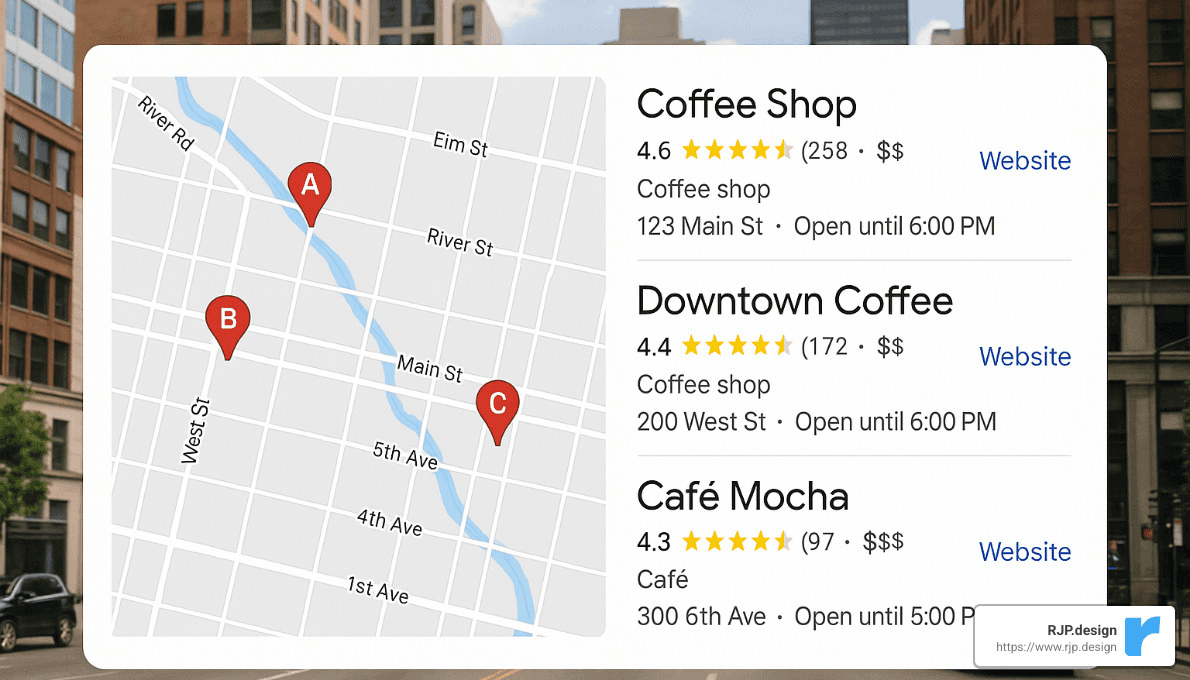
The Local Pack (often called the “3-Pack”) is the most prominent feature in local search. It appears at or near the top of search results when Google detects local intent in a query.
Key components of the Local Pack include:
Map section: Shows the geographic location of the listed businesses
Three business listings: Each containing:
Business name
Rating (out of 5 stars) and review count
Business category
Brief description or highlighted services/products
Hours indication (open, closed, or closing soon)
Address or distance from searcher
Website and directions links
Click-to-call button (especially on mobile)
This format represents a significant evolution from earlier versions. As recently as 2015, Google displayed seven local results (the “7-Pack”), but reduced this to three to improve user experience, particularly on mobile devices. This change made competition for these coveted spots even more intense.
The Local Pack is generated using precise latitude and longitude coordinates of both the searcher and the business, which is why the results are typically highly relevant to the user’s actual location.
Beyond Google: Other Local Search Results Platforms
While Google dominates the local search landscape, other platforms also play important roles in connecting customers with local businesses:
Apple Maps and Business Connect
With millions of iOS users, Apple Maps is a significant player in local search. Apple recently launched Business Connect, allowing businesses to claim and manage their listings, add photos, and create special offers. This platform is especially important for reaching iPhone users, who often default to Apple Maps for navigation.
Bing Places for Business
Microsoft’s search engine may have a smaller market share, but it still drives valuable traffic, especially for certain demographics. Bing Places offers features similar to Google Business Profile, allowing businesses to claim listings, add photos, and manage reviews.
Directory Sites
Specialized directories like Yelp, TripAdvisor, and industry-specific platforms continue to influence local search. These sites often appear in organic search results and can be valuable sources of traffic and reviews.
Voice Search Results
With the growing popularity of voice assistants like Siri, Alexa, and Google Assistant, optimizing for voice search has become increasingly important. Voice searches tend to be more conversational and often have local intent (e.g., “Where’s the nearest gas station?”).
Each platform has its own algorithms and ranking factors, though many principles remain consistent across them. For comprehensive local visibility, businesses should maintain accurate, consistent information across all relevant platforms.
Key Factors That Influence Local Search Rankings
If you’re a business owner looking to light up the local search scene, understanding what influences local search results is your secret weapon. It’s like trying to master a game where Google—and other search engines—play the role of a mysterious dungeon master. They weave a complex algorithm that decides which lucky businesses get to appear in local search results.
Proximity: The Foundation of Local Search Results
First up, we have proximity, the kingpin of local search rankings. Simply put, it’s all about where you are. If your coffee shop is right around the corner from a caffeine-deprived searcher, you’re more likely to pop up in their local search results.
So, how does this magical proximity work? Google uses a cocktail of tech wizardry, like GPS data, IP address, and even the user’s search history, to pinpoint their location. This means even if someone doesn’t type “near me” in their search, Google gets the hint and serves up results based on where they are right now. For mobile users, the results can change faster than you can say “espresso,” depending on their precise spot in the city.
And for businesses without a physical storefront, like service area businesses, don’t worry! Google considers where you say you serve, making sure you’re still in the game.
Relevance and Prominence in Local Results
Next, let’s chat about relevance and prominence, two equally charming sidekicks in this search story. Relevance is all about how well your biz matches what someone is hunting for. This includes things like choosing the right business category (because who wants to show up as a bakery when they’re a dentist?), business attributes that highlight your unique offerings, keyword relevance in your content, and even the words your happy customers use in their reviews.
Then there’s prominence, which is a bit like your business’s reputation on a digital scale. Think of it as how famous you are—online and offline. Review quantity and quality play a big role here; more glowing reviews mean a shinier stature in the eyes of search engines. Maintaining consistent mentions, or citations, across various directories also boosts your standing. And let’s not forget the importance of link signals and mentions from other corners of the web.
Google puts it like this: prominence reflects “how well-known a business is.” And yes, reviews do indeed pack a punch—ever wonder why only businesses with four stars or higher get the nod when a searcher tosses in the word “best”? That’s why.
In this game of local visibility, the more you know about these factors, the better you can play—and with RJP.design on your side, your business can truly shine in those local search results.
Optimizing Your Business for Better Local Search Results
Now that we understand what drives local search results, let’s explore how to optimize your business to improve its visibility.
Creating a Powerful Google Business Profile
Your Google Business Profile (formerly Google My Business) is the cornerstone of your local search presence. It directly influences how you appear in the Local Pack, Google Maps, and Knowledge Panel.
Key optimization steps:
Claim and verify your listing: This gives you control over your business information and open ups additional features.
Choose the right primary category: This is perhaps the single most important selection you’ll make. As our research indicates, “If you wish to appear in the local results for a search like ‘dentists in denver’, your business must be categorized as a dentist.”
Add secondary categories: You can select up to nine additional categories to capture related searches.
Complete all information fields:
Business name (use your actual business name, avoid keyword stuffing)
Address (if you have a physical location)
Service area (if you travel to customers)
Phone number (preferably with a local area code)
Website URL
Business description
Opening hours (including special hours for holidays)
Attributes (features specific to your business type)
Add high-quality photos and videos: Businesses with photos receive substantially more clicks, calls, and direction requests. Google recommends:
Exterior photos (storefront, building entrance)
Interior photos (showing the atmosphere)
Product photos
Team photos
Work photos (for service businesses)
Create Google Posts: These allow you to share updates, offers, events, and products directly on your profile.
Set up messaging: Enable customers to contact you directly through your profile.
Manage Q&A: Monitor and answer questions that customers ask about your business.
According to our research, “Google defines relevance by how well a local Business Profile matches a search query — for instance, whether a particular business sells or has the attributes a searcher is looking for.” This makes it essential to fully complete your profile with accurate, detailed information.
For businesses with multiple locations, Google offers bulk upload tools to manage numerous listings efficiently. As Google notes, “To edit business information for 10 or more locations at once, you can create a bulk upload spreadsheet.”
Building a Local-Focused Website Strategy
While your Google Business Profile is crucial, your website remains a significant factor in local search results. Here’s how to optimize it for local visibility:
Create location-specific pages:
For businesses with multiple locations, create a dedicated page for each location
Include the full NAP (Name, Address, Phone number) information
Add unique content about each location, including:
Local staff information
Location-specific services or products
Local testimonials and case studies
Directions and parking information
Nearby landmarks or points of interest
Implement local schema markup:
LocalBusiness schema helps search engines understand your business information
Include address, phone number, business hours, and geo-coordinates
Our research found that many businesses, even large ones, neglect to implement full or valid schema markup
According to one case study, implementing proper LocalBusiness schema with both address and geo (lat/long) properties can significantly improve local search visibility
Optimize for local keywords:
Conduct keyword research specific to your locations
Naturally incorporate location terms in:
Page titles
Meta descriptions
Heading tags
URL structure
Image alt text
Body content
Develop neighborhood-specific content:
Create content targeting specific neighborhoods you serve
Address local issues, events, or news relevant to your business
Feature local landmarks or community initiatives
Mobile optimization:
Ensure your site is fully responsive and mobile-friendly
Optimize page load speed (especially important for mobile users)
Make contact information easily accessible on mobile
Implement click-to-call functionality
For plumbing businesses specifically, we offer specialized Plumber Local SEO services to address the unique challenges of the industry.
According to our research, “It’s not enough to apply tactics like keyword stuffing to rank well.” Focus on creating genuinely useful content that serves your local audience’s needs.
Managing Reviews for Better Local Search Results
Reviews play a dual role in local search: they influence your rankings and impact whether users choose your business over competitors.
Review acquisition strategies:
Ask at the right time: Request reviews when customers are most satisfied, such as after a successful service completion
Make it easy: Send direct links to your review platforms via email or text
Train your team: Ensure all staff know how to politely request reviews
Follow up: Implement a system to follow up with satisfied customers who haven’t left reviews
Diversify platforms: While Google reviews are most important, reviews on other platforms also contribute to your online reputation
Effective review response:
Respond to all reviews: Both positive and negative
Personalize responses: Address the reviewer by name and reference specific details from their review
Be professional: Even when responding to negative reviews
Include keywords: Naturally incorporate relevant keywords in your responses
Resolve issues: For negative reviews, offer solutions and take the conversation offline when appropriate
Review monitoring and management:
Set up alerts: Be notified when new reviews are posted
Track sentiment: Monitor the overall tone of your reviews
Identify patterns: Look for recurring themes in feedback
Address operational issues: Use review feedback to improve your business
According to our research, “Review signals make up to 15 percent of Google’s local search engine ranking factors.” Additionally, “No-star reviews make up about 50% of all reviews,” highlighting the importance of actively soliciting detailed feedback.
One interesting insight from our research: “Google adjusts results based on whether a searcher includes a location in their search.” Additionally, “Google will only present businesses with four stars or higher if a searcher includes the qualifier ‘best’.” This demonstrates how critical maintaining a strong review profile is for appearing in high-intent searches.
Measuring and Tracking Local Search Performance
To really shine in those local search results, you need to keep a close eye on your performance and tweak your strategy based on what the data is telling you.
Tools for Monitoring Local Search Results
Don’t worry, you don’t have to do it all alone—there are some nifty tools out there to help you keep track of your local search visibility.
Local rank tracking tools are a great place to start. Tools like Local Falcon can give you a geo-grid view of your rankings across different areas. It’s like having a map that shows how you’re doing in different neighborhoods. Another handy tool is BrightLocal, which bundles together rank tracking, citation monitoring, and review management. And if you’re worried about unauthorized changes to your Google Business Profile, Localo can help keep an eye on that too.
But it’s not all about fancy tracking tools. Good old local search checkers can show you how your business appears in search results from various locations. This is super useful for spotting where you’re doing great and where there’s room for improvement.
For those who love data, integrating with analytics tools can be a game-changer. Connect Google Search Console to keep tabs on your local keyword performance, and set up Google Analytics to track traffic from local searches. Don’t forget to create conversion tracking to measure those all-important calls, direction requests, and form submissions.
And if you’re a visual person, heat maps and visualization tools can be your best friends. They’ll help you see where you’re red-hot and where you’re a bit chilly, so you know where to focus your efforts.
Understanding Local Search Analytics
Looking beyond just seeing where you rank, it’s all about understanding the impact of your local search presence.
Start with impression data: how often are you showing up in those search results? Keep an eye on trends—is your visibility growing, or is something slipping? And how do you stack up against competitors?
Then there’s the click-through rates. Are those impressions turning into clicks? Are people visiting your website, or are they more interested in calls and directions? It’s also worth noting how these actions differ on mobile vs. desktop.
Next, dive into conversion metrics. This is where the magic happens. Track those phone calls, direction requests, and form submissions. If you’re super savvy, you might even tie in-store visits to local search efforts.
Finally, keep a close watch on your review metrics. See how many new reviews you’re getting, monitor your average rating over time, and make sure you’re responding promptly. Also, analyze the sentiment—are people singing your praises or pointing out areas for improvement?
As they say, “You can’t fix what you can’t see.” By keeping a close eye on these metrics, you’ll be in a much better position to tweak your strategy and boost your visibility in those all-important local search results.
And if Google Maps is your main playground, don’t miss out on our Google Maps Optimization services to give your visibility that extra boost.
Frequently Asked Questions about Local Search Results
How Do Mobile Searches Affect Local Search Results?
Mobile searches have revolutionized the way local search results work. With mobile-first indexing, Google predominantly uses the mobile version of a site for ranking and indexing. This means your website needs to be mobile-friendly to look good in search results. Page speed is crucial too—nobody likes a slow-loading site, especially on their phone.
Mobile searches are often driven by immediate needs, like finding a coffee shop when you’re out and about. These on-the-go searches often include “near me” queries, and thanks to GPS, location accuracy is spot-on. As you stroll through a city, your search results might change, reflecting businesses nearest to you.
Mobile-specific features also play a huge role. Click-to-call and direction buttons make it super easy to contact or find a business with just a tap. Mobile search results tend to emphasize proximity more than desktop, which makes sense when you’re looking for something right now, right here.
Research shows that 88% of local business searches on mobile lead to a call or visit, with 78% resulting in an offline purchase. Plus, 18% of these searches lead to a purchase within a day. And here’s a kicker: businesses are 61% more likely to get contacted if their site is mobile-friendly. So, making sure your site plays nice with mobile devices is no longer optional—it’s a must for local business success.
What Role Do Reviews Play in Local Search Results?
Reviews are like magic pixie dust for local search results. They not only boost your rankings but also act as trust signals. When it comes to ranking, factors like review quantity (how many you have), review velocity (how fast you get them), and even the content of your reviews matter. Google pays attention to what people are saying and how often you respond.
But it’s not just about ranking. Reviews are critical trust signals. A whopping 98% of people read online reviews for local businesses, and 6 out of 10 won’t even consider a business with less than a 4-star rating. Reviews help folks decide between businesses in the local pack by providing social proof of your quality.
And let’s not forget about decision-making. Reviews can be the deciding factor for consumers choosing between two similar businesses. They provide social proof, and your response to reviews shows that you care about customer service.
In fact, review signals contribute up to 15% of Google’s local ranking factors. And did you know that 39% of consumers filter reviews to see the most recent ones first? Plus, 60% of reviewers expect a response within two days. Yet, many businesses miss the chance to stand out by not responding promptly. Being on top of your review game can set you apart.
How Can Small Businesses Compete in Local Search Results?
Small businesses can definitely hold their own in local search results. One key strategy is niche targeting. By focusing on specific, less competitive services or products, you can carve out your own little corner of the market. Targeting neighborhood-specific keywords that larger competitors might overlook can also give you an edge.
Creating hyperlocal content is another smart move. Write about your local area, address community issues, and share local news. Featuring local landmarks or customer stories can make your business feel like part of the community fabric.
Engage with your community by participating in local events, sponsoring sports teams, or collaborating with other businesses. This community engagement not only helps you stand out but also fosters good will.
And of course, never underestimate the power of service excellence. Exceptional customer service can lead to positive reviews and word-of-mouth referrals, which are gold in the local search game. Responding to customer feedback, both good and bad, shows that you value your customers’ opinions.
Lastly, use your local knowledge to your advantage. Highlight your understanding of local needs and regulations. This not only helps build trust but also showcases your expertise.
Interestingly, Google gives a lot of real estate to local results when users search with generic keywords, meaning small businesses have a great chance to shine. By sticking to these strategies, small businesses can not only compete but often outperform larger competitors in local search.
Conclusion
Navigating local search results isn’t just about pushing buttons and hoping for the best. It’s about understanding how search engines think and applying strategies that make your business shine locally. We’ve digd into the heart of what makes local search tick, focusing on the pivotal trio: proximity, relevance, and prominence.
The numbers don’t lie. With a whopping 88% of mobile users reaching out or visiting a business within 24 hours after a local search, and 18% making a purchase within a day, the stakes couldn’t be higher. If your business serves local customers, being visible in local search results isn’t just nice to have—it’s crucial for your success and growth.
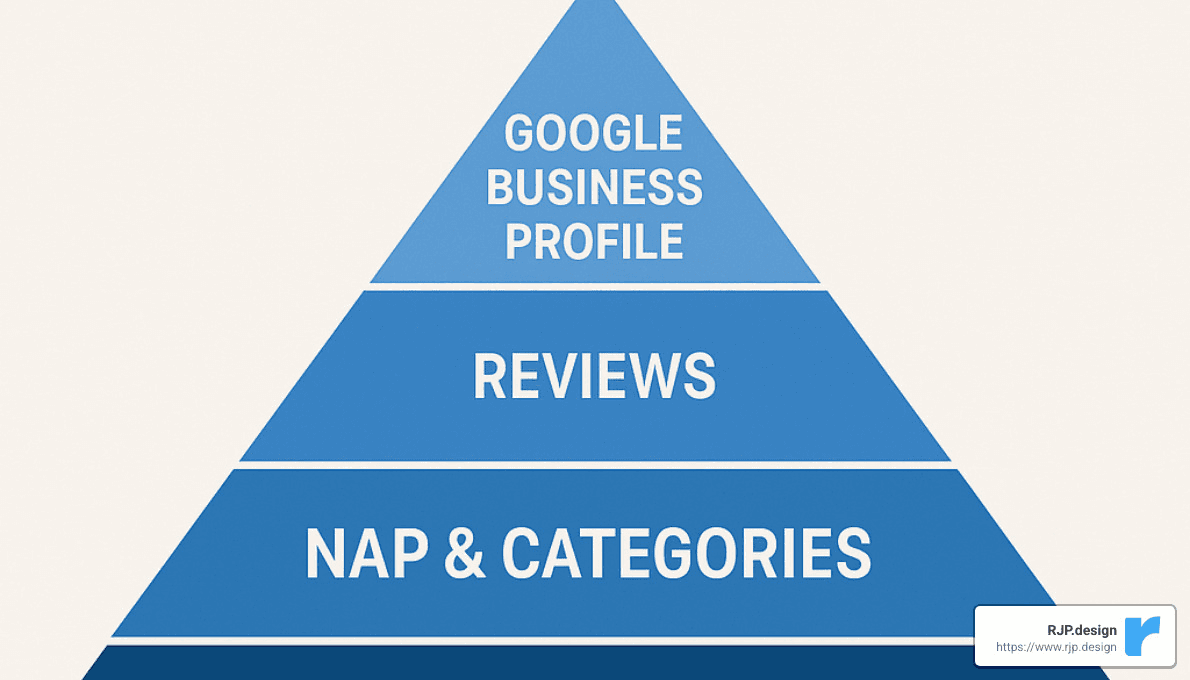
So, what did we uncover in this guide? First and foremost, your Google Business Profile needs to be in tip-top shape. It’s the cornerstone of your online local visibility. Consistency is key, especially with your NAP (that’s Name, Address, Phone, not a cozy afternoon doze!) across all platforms. Reviews? They’re not just stars on a page—they influence rankings and can tip the scales when customers are deciding where to spend their money. Creating content that’s locally relevant isn’t just for kicks; it’s a way to show search engines you mean local business.
Let’s not forget mobile optimization. With most searches happening on phones, your website needs to work seamlessly on every screen. And to improve, you need to measure. Regularly tracking your local search performance means you can make smart, data-driven tweaks to your strategy.
At RJP.design, we know that local search isn’t just about algorithms—it’s about connecting real businesses with real people in their neighborhoods. Our team doesn’t just make your website look good; we make sure it’s found by the folks who matter. As local search evolves, staying updated on search engine changes and consumer behaviors will be your secret weapon. The businesses that succeed will be the ones that adapt quickly and continue to focus on their local customers.
Ready to boost your local visibility? Check out our Google Search Optimization services and find how we can help your business connect with local customers. Let’s make your business the talk of the town!