
SEO
Local SEO Campaign Secrets—Get Found by Neighbors, Not Just Google
Jul 15, 2025

Local SEO Campaign: 3 Powerful Steps for 2025
Why Your Local SEO Campaign is the Key to Being Found by Your Neighbors
A local seo campaign is a strategic approach to optimize your business’s online presence so customers in your area can find you when they search for your products or services. Here’s what makes an effective local SEO campaign:
Google Business Profile optimization – Complete your listing with accurate information, photos, and regular updates
NAP consistency – Ensure your Name, Address, and Phone number are identical across all online listings
Local keyword targeting – Focus on “near me” searches and location-specific terms
Citation building – Get listed in local directories and industry-specific sites
Review management – Encourage positive reviews and respond to all feedback
On-page optimization – Include local keywords in your website content and create location-specific pages
The truth is, 46% of all Google searches are local. That means nearly half of everyone searching on Google right now is looking for businesses like yours in their neighborhood. Yet most small business owners are missing out on this massive opportunity because they’re focusing on competing with big national brands instead of dominating their local market.
Think about it this way: when someone searches “coffee shop near me” or “plumber in [your city],” they’re not just browsing – they’re ready to buy. These are your ideal customers, and they’re actively looking for you right now.
I’m Ross Plumer, and I’ve helped businesses market over $20 million in revenue by focusing on strategies that actually work for local companies. Through my experience with local seo campaign development, I’ve seen how the right approach can transform a struggling business into the go-to choice in their community.
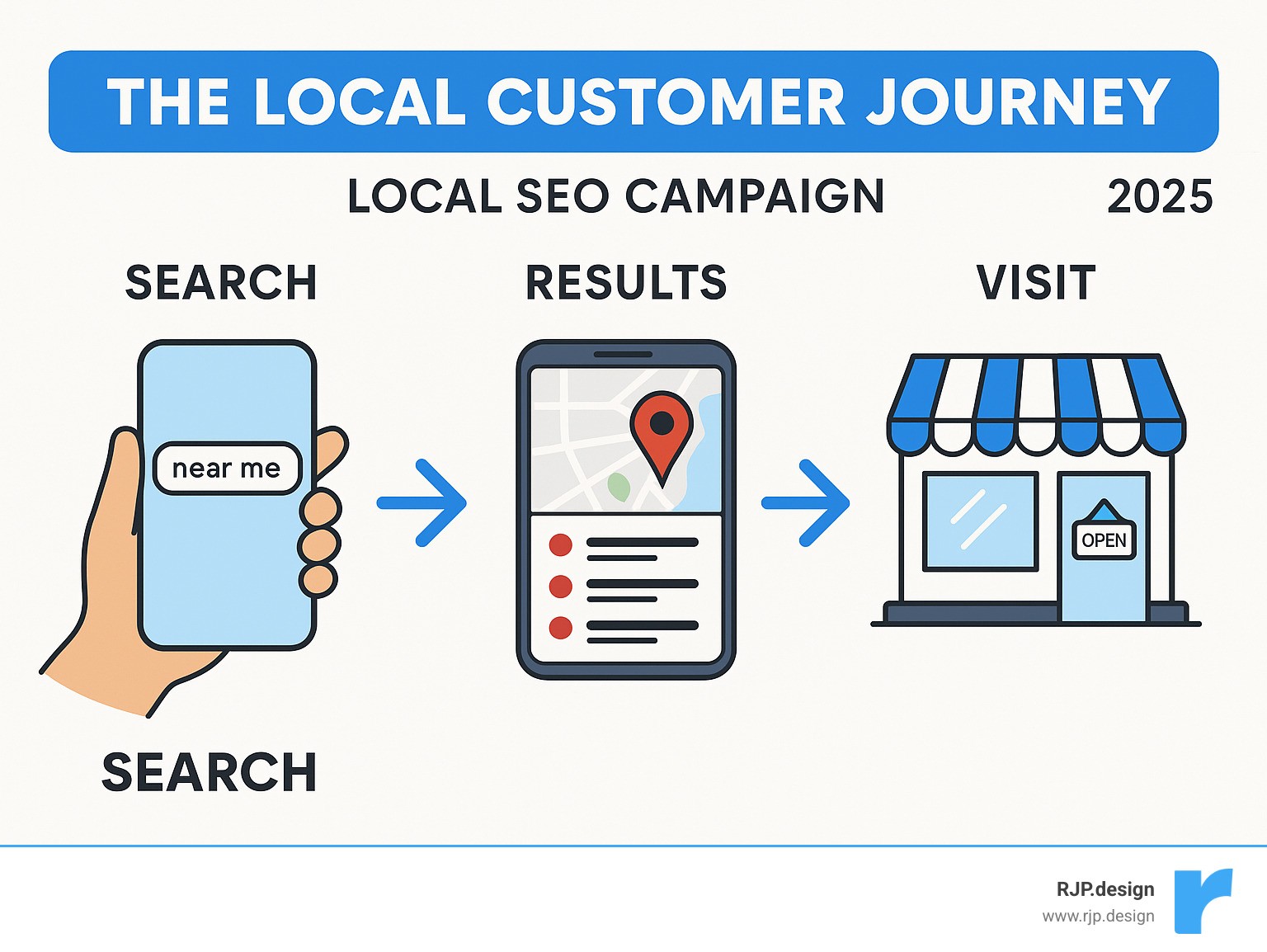
Similar topics to local seo campaign:
Foundations of Local SEO: Why Your Neighborhood Matters Most
Local SEO isn’t about beating every competitor on the internet—it’s about being the obvious choice for people who live or work near you. When someone searches “pizza near me,” distance, relevance, and reputation decide who shows up first. That’s great news for small businesses because you control each of those factors.
Why bother?
46% of all Google searches have local intent.
Local searches convert at dramatically higher rates because users are ready to visit, call, or buy now.
You don’t need a national-size budget—just the best presence in your immediate market.
How Google Ranks Local Results
Proximity – How close you are to the searcher.
Relevance – How well your listing matches the query.
Prominence – Online authority built through reviews, links, and citations.
What a Local SERP Looks Like
The “Local Pack” (three results + map) dominates the page, followed by localized organic listings and, on mobile, quick-action buttons for calls or directions. If you appear here, you win a massive share of clicks—often without users scrolling further.
Mobile & Voice: The Real-Time Factor
Mobile devices drive more than 60% of organic visits, and “near me” searches keep growing. Voice queries are even more conversational: “Who fixes iPhone screens open now?” If your details, hours, and reviews are accurate, Google can surface you instantly. That’s why every piece of your local SEO campaign must be mobile-first and laser-focused on real-world intent.
Executing Your Winning Local SEO Campaign: A Step-by-Step Guide

Here’s where the rubber meets the road. You’ve learned why local SEO matters, and now it’s time to roll up your sleeves and build your local seo campaign. I’ll walk you through the exact three-step process that has helped our clients at RJP.design become the go-to businesses in their neighborhoods.
Think of this as your roadmap to local dominance. Each step builds on the last, creating a foundation that will keep bringing customers to your door long after you’ve finished the initial setup. If you’d rather have professionals handle this for you, our Local SEO Services can take care of everything while you focus on running your business.
Step 1: Master Your Google Business Profile (GBP)
Your Google Business Profile is like your digital storefront window. It’s often the first impression potential customers get of your business, and frankly, it can make or break whether they choose you over your competitors.
The journey starts with claiming and verifying your Google Business Profile. Don’t skip the verification step – unverified profiles are basically invisible to most searchers. Google will usually mail you a postcard with a verification code, though some lucky businesses can verify by phone or email.
Once you’re verified, it’s time to make your profile shine. Your business name should match exactly what’s on your storefront and legal documents. For your primary category, choose the most specific option that describes what you do – this tells Google when to show your business in search results.
Your address and phone number need to be rock-solid accurate and match everything else online. Use a local phone number if possible – toll-free numbers don’t help with local rankings. Keep your hours updated religiously, especially during holidays when customers are most frustrated by incorrect information.
Here’s something most business owners don’t realize: photos are absolute gold for your profile. Businesses with photos get 42% more requests for driving directions and 35% more clicks to their website. Upload crisp, bright photos of your storefront, your team at work, your products, and happy customers using your services.
Google Posts let you share updates, special offers, and events directly on your profile. While they don’t directly boost your rankings, they make your business look active and engaged. The Q&A section is your chance to answer common questions before customers even have to ask. Monitor it regularly and respond quickly to new questions.
If managing all these details feels overwhelming, our Google My Business Optimization service can handle the heavy lifting while you focus on serving customers.
Step 2: Achieve Flawless NAP & Citation Consistency
NAP stands for Name, Address, and Phone Number – the holy trinity of local SEO. These three pieces of information must be identical everywhere your business appears online. I know it sounds simple, but NAP inconsistencies are the silent killers of local rankings.
Even tiny differences can confuse search engines and hurt your credibility. Using “St.” in one listing and “Street” in another might seem harmless, but Google’s algorithms see these as potentially different businesses. The same goes for phone number formatting – pick one format and stick with it everywhere.
Start by auditing where your business currently appears online. Check the big players like Google Business Profile, Yelp, Facebook Business, Apple Maps, and Bing Places. Don’t forget industry-specific directories and your local Chamber of Commerce website.
Data aggregators like Acxiom, Factual, and Foursquare are the puppet masters behind hundreds of smaller directory sites. When you verify that your citations are consistent on these major platforms, accurate information spreads like wildfire across the web.
If you find duplicate listings during your audit, drop everything and fix them immediately. Multiple listings for the same business split your online authority and confuse both Google and customers. Most platforms have processes for claiming and merging duplicates – it’s tedious work, but absolutely essential.
Step 3: Conduct Hyper-Focused Local Keyword Research
Local keyword research is like regular keyword research’s more practical cousin. Instead of trying to rank for “plumbing” nationally, you’re targeting “plumber Denver” or “emergency plumber Capitol Hill.” This focused approach means you’re competing with dozens of local businesses instead of thousands of national companies.
Start by thinking like your customers. How would they search for your business when they need you? Service + location combinations like “dentist Austin” are obvious starting points. “Near me” searches are pure gold – they’ve grown 400% year over year and indicate someone ready to take action immediately.
Don’t overlook neighborhood-specific keywords. People often search for businesses in their specific area rather than the entire city. If you’re in Denver, optimize for neighborhoods like Capitol Hill, LoDo, or Cherry Creek.
Voice search is changing the game completely. People don’t say “pizza delivery Denver” to their phones – they ask “Where can I get pizza delivered near me?” These conversational, question-based searches require a different approach than traditional keyword targeting.
Pay attention to long-tail keywords that include intent modifiers like “best,” “cheap,” “emergency,” or “open now.” These searches have less competition and higher conversion rates because they indicate specific needs and immediate intent.
The beauty of local keyword research is that you don’t need massive search volumes to succeed. A keyword that gets 50 searches per month in your city might generate more business than a national keyword with 5,000 searches, because those 50 people are actually in your area and ready to buy.
Optimizing Your Digital Storefront: On-Page & Off-Page Tactics
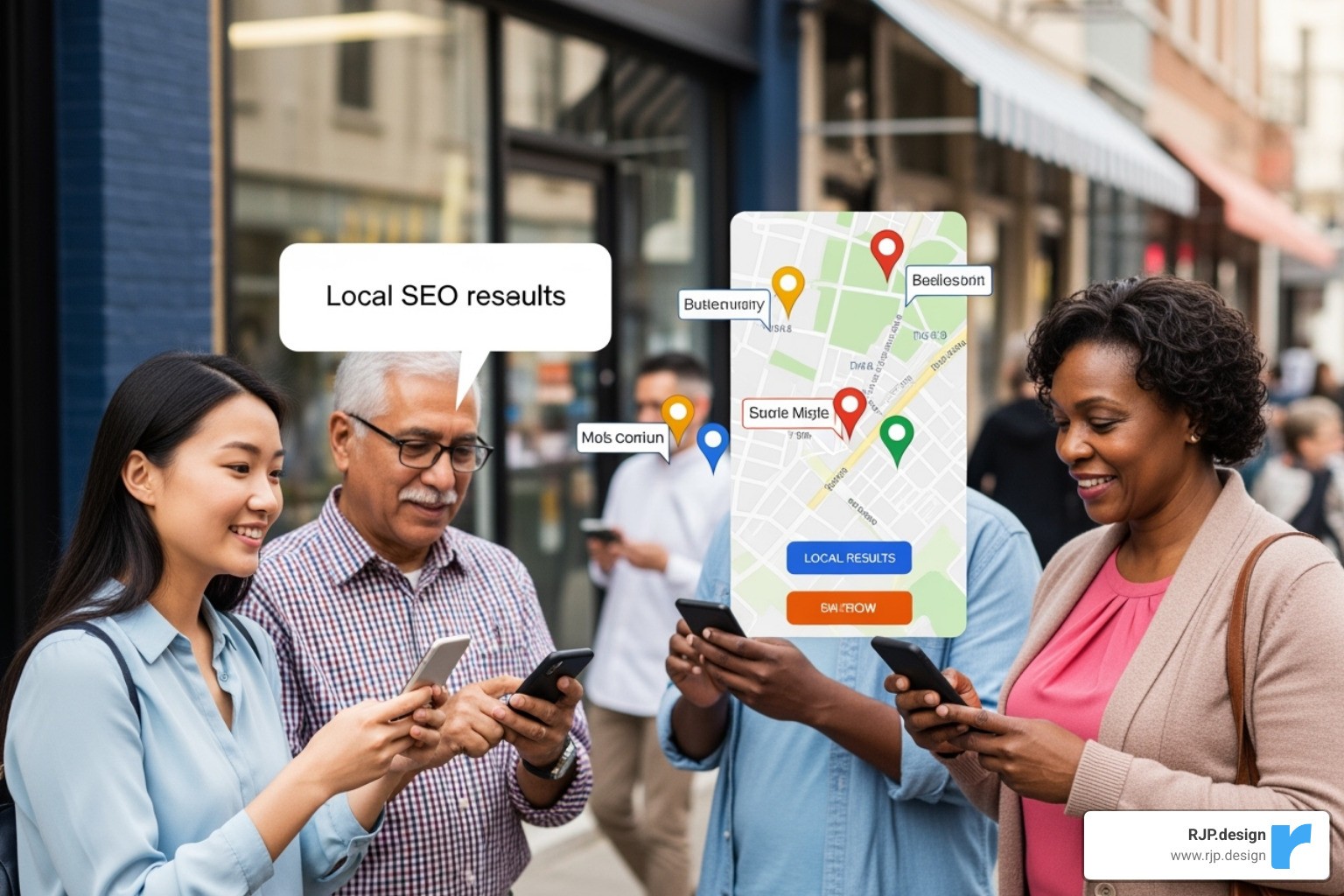
Your website should make it instantly clear where you are and what you offer. Treat every page like a digital welcome mat.
On-Page Must-Haves
Title & meta description: add city or neighborhood (“Best Sushi in Downtown Denver | Mizu”).
Header tags: reinforce location and services.
Dedicated location pages if you serve more than one area. Mention landmarks, include unique photos, and add testimonials from that neighborhood.
Local Business schema so search engines read your address, hours, and phone in a structured format.
Embedded Google Map and consistent NAP in the footer.
Off-Page Authority Builders
Local links from Chambers of Commerce, sponsors, and local blogs.
Community involvement: sponsoring events often earns press coverage and natural backlinks.
Unlinked mentions: set Google Alerts and request a quick hyperlink.
Reviews: Digital Word-of-Mouth
98% of consumers read reviews before choosing a local business. Ask happy customers right after a successful service, send a direct link, and reply to every review—good or bad. A thoughtful response to a negative review can convert skeptics into fans and signals to Google that you’re engaged.
Advanced Strategies and Measuring Success
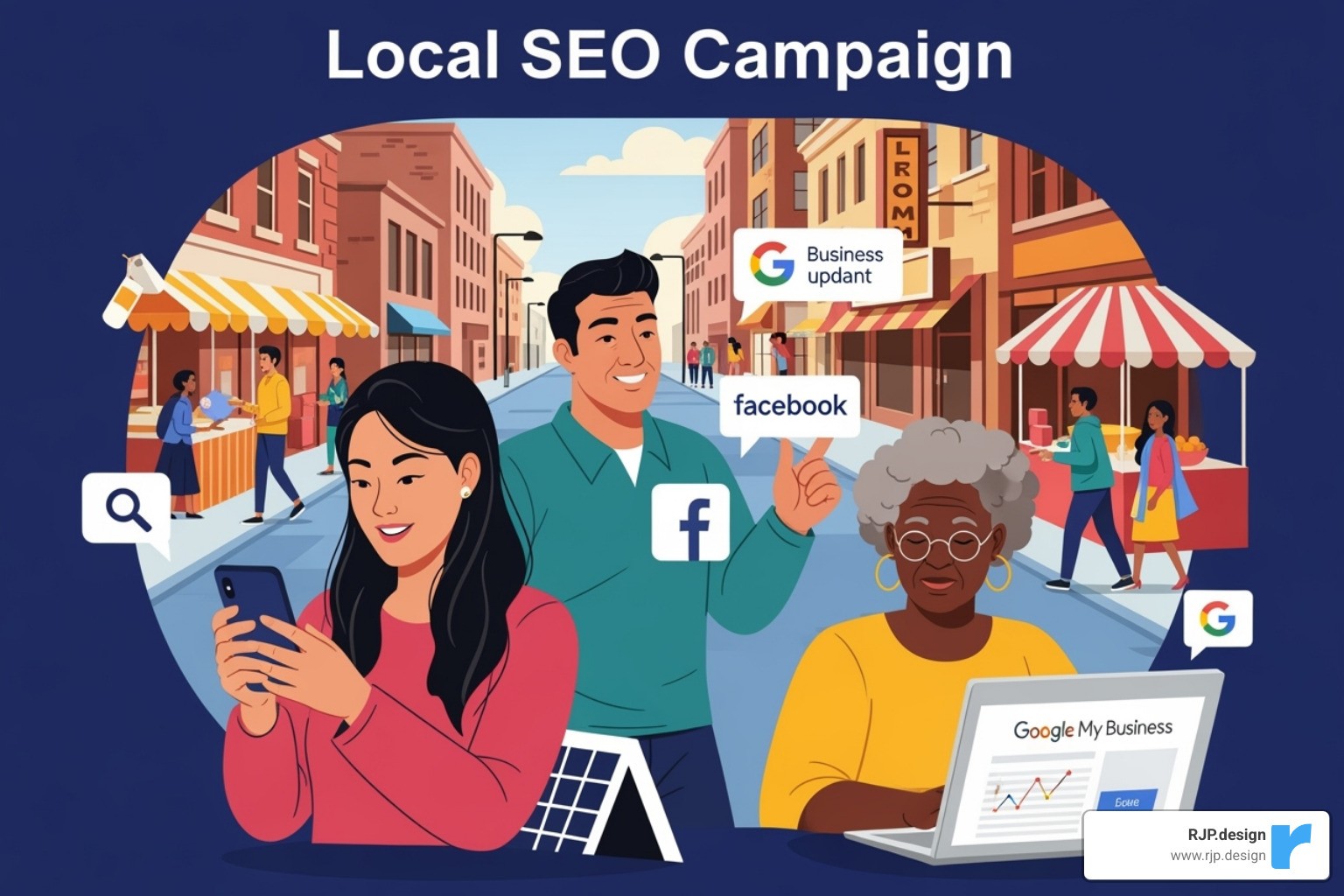
Go Beyond the Basics
Competitor gaps: identify keywords or neighborhoods rivals ignore and capture them first.
Hyperlocal content: write posts for specific districts, events, or common questions (“How much does a root canal cost in Wicker Park?”).
Voice search optimization: phrase headings as natural questions; answer them clearly in the first sentence.
Video snippets: short, geo-tagged videos (store tour, customer testimonial) boost engagement and can appear in Maps results.
Essential Tool Stack
Citation management (BrightLocal, Yext) to keep NAP spotless.
Rank tracking (Whitespark, Local Falcon) to monitor map positions by ZIP code.
Review software (GatherUp, Grade.us) to automate polite asks and responses.
Site crawlers (Screaming Frog) for technical health checks.
Measure What Matters
Google Business Profile Insights: views, calls, direction requests.
Local Pack rankings for priority keywords.
Website conversions traced to local organic traffic.
Revenue & lead volume attributable to local SEO vs. other channels.
Review these metrics monthly, refine weak spots, and double down on what’s driving real customers.
Frequently Asked Questions about Local SEO Campaigns
How is local SEO different from traditional SEO?
Local SEO adds geography to the mix. Google uses proximity, reviews, and citations to decide which nearby businesses to show. Traditional SEO chases broad keywords without caring where the searcher is located.
When will I see results?
Quick wins—like more profile views and a bump in calls—often appear within a few weeks of optimizing your Google Business Profile. Competitive Local Pack rankings usually take 3–6 months of steady work.
Can I handle local SEO myself?
You can absolutely claim your Google Business Profile, request reviews, and fix obvious NAP errors on your own. When tasks get technical (schema, extensive citation cleanup, advanced content), many owners bring in specialists such as the team at RJP.design so they can stay focused on serving customers.
Conclusion
Your local seo campaign is more than just a marketing strategy – it’s your ticket to becoming the business everyone in your neighborhood knows and trusts. Think about it: when someone needs what you offer, you want to be the first name that comes to mind, whether they’re searching online or asking a friend for recommendations.
The strategies we’ve walked through together – mastering your Google Business Profile, ensuring NAP consistency, building authentic reviews, and creating content that speaks to your local community – aren’t just checkboxes to tick off. They’re the building blocks of a digital presence that truly reflects the quality and care you put into your business every day.
Here’s the thing about local SEO: it’s not a “set it and forget it” kind of deal. The businesses that absolutely dominate their local markets are the ones that show up consistently, month after month, refining their approach and staying committed to serving their community well. They understand that building trust and providing excellent service naturally leads to the positive reviews and word-of-mouth referrals that make local SEO campaigns successful.
The numbers don’t lie – 46% of all Google searches are local, and your potential customers are out there right now, searching for businesses exactly like yours. They’re not just browsing; they’re ready to buy, ready to visit, ready to become your next loyal customer.
But here’s where many business owners get stuck: they know local SEO is important, but they’re not sure if they’re doing it right, or they simply don’t have the time to manage everything while running their business. That’s completely understandable – you got into business to serve your customers, not to become a digital marketing expert overnight.
At RJP.design, we get it. We’ve built our reputation on being the down-to-earth team that actually cares about your success. We don’t just optimize your online presence; we help you become the obvious choice in your community. Our approach combines the technical expertise you need with the personal touch that makes working with us feel like having a trusted partner in your corner.
Whether you’re just starting your local SEO journey or you’re ready to take your current efforts to the next level, we’re here to help. Learn more about our Digital Marketing services and find how we can help you become the business everyone in your neighborhood is talking about – for all the right reasons.