SEO
Search Engine Optimisation for Local Businesses: A Step-by-Step Playbook
Oct 2, 2025
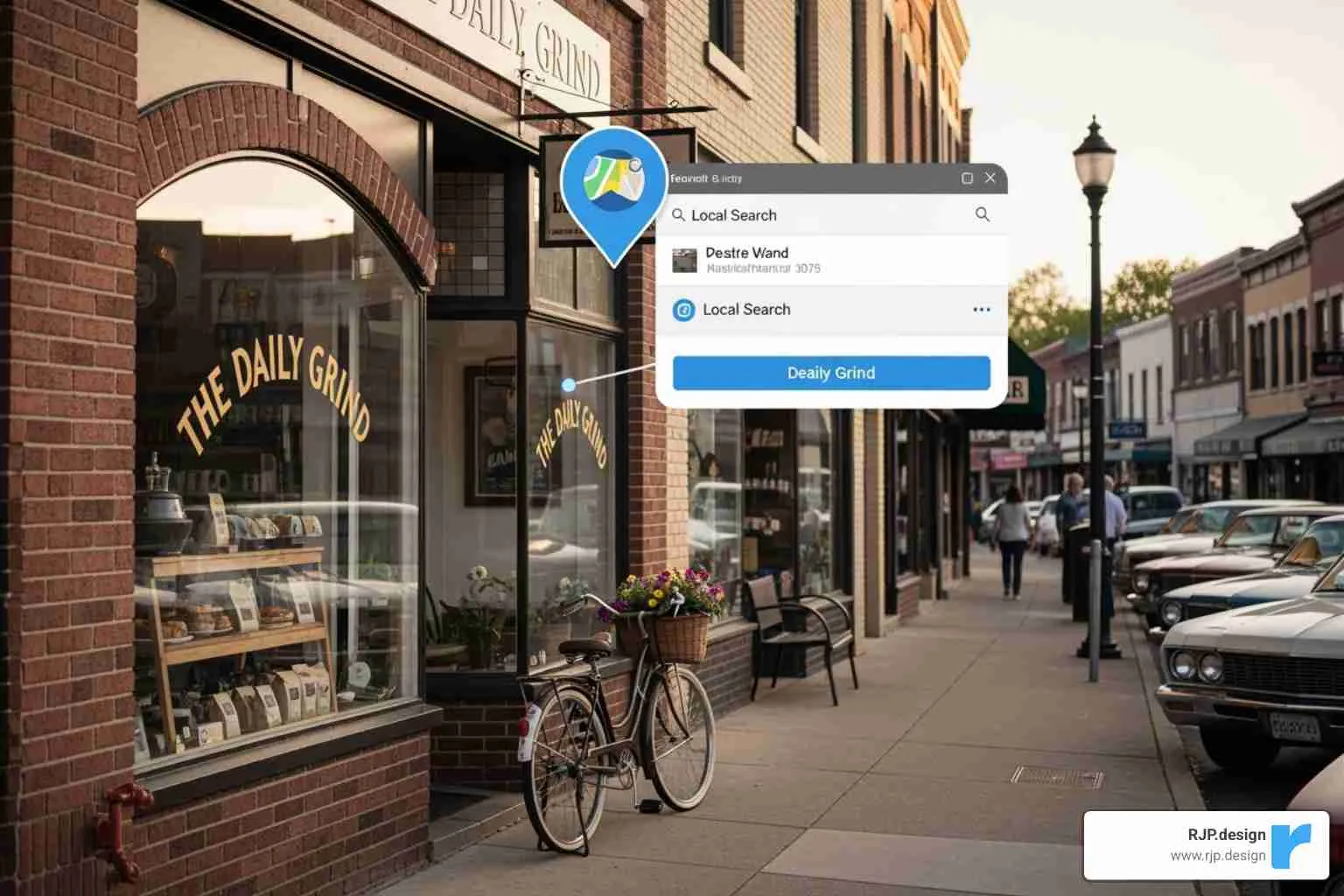
Search engine optimisation for local businesses: Master 2025
Why Local SEO is Essential for Small Business Success
Search engine optimisation for local businesses is a digital marketing strategy that helps your business appear in local search results. When customers in your area look for your products or services, local SEO makes you visible.
Key Components of Local SEO:
Google Business Profile optimization: Your digital storefront on Google.
NAP consistency: Your Name, Address, and Phone number must match everywhere online.
Local citations: Directory listings that build trust with search engines.
Customer reviews: Social proof that influences rankings and customers.
Localized content: Website pages targeting your specific service areas.
On-page optimization: Technical elements that help search engines understand your location.
Statistics show that 30% of all mobile searches are location-related, and 76% of consumers who search for ‘near me’ visit a business within a day. Crucially, 28% of these local searches result in a purchase.
When you need a local service, you likely search for “best [service] near me” on your phone. Your customers do the same. If your business isn’t in those top results, you’re missing high-intent customers ready to buy.
Local search is exploding. Mobile searches for “store open near me” grew by more than 250% between 2020-2022, while searches with “where to buy” and “near me” increased by over 200%.
Unlike general SEO which targets a broad audience, local SEO focuses on customers in your geographic area—the people who can actually visit your business or hire your services.
I’m Ross Plumer, and I’ve helped businesses market over $20 million in revenue through strategic digital marketing, including comprehensive search engine optimisation for local businesses. My experience shows that local SEO is about connecting with customers at the exact moment they need you.
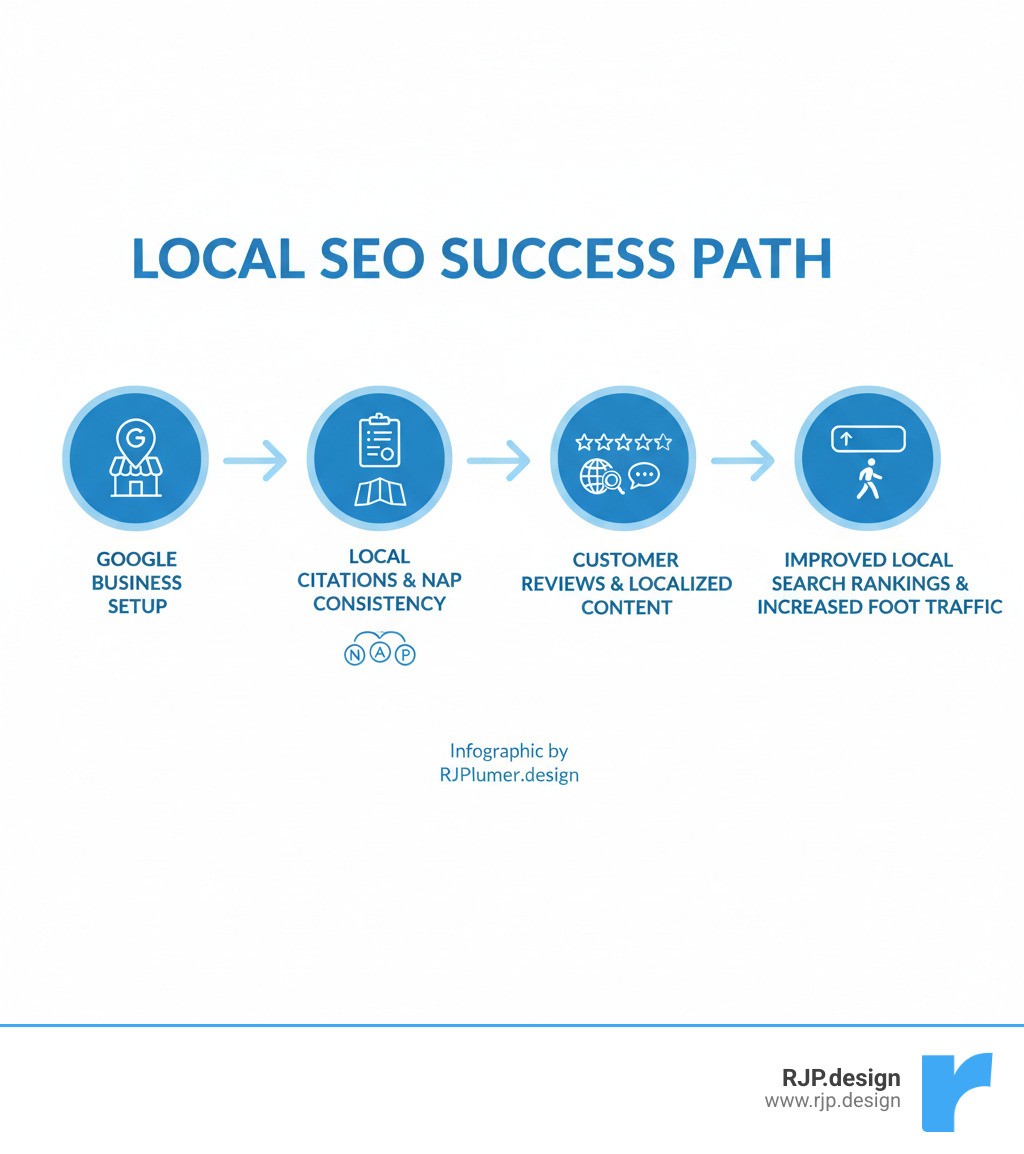
Terms related to search engine optimisation for local businesses:
The Foundation: Mastering Google’s Local Ranking Signals
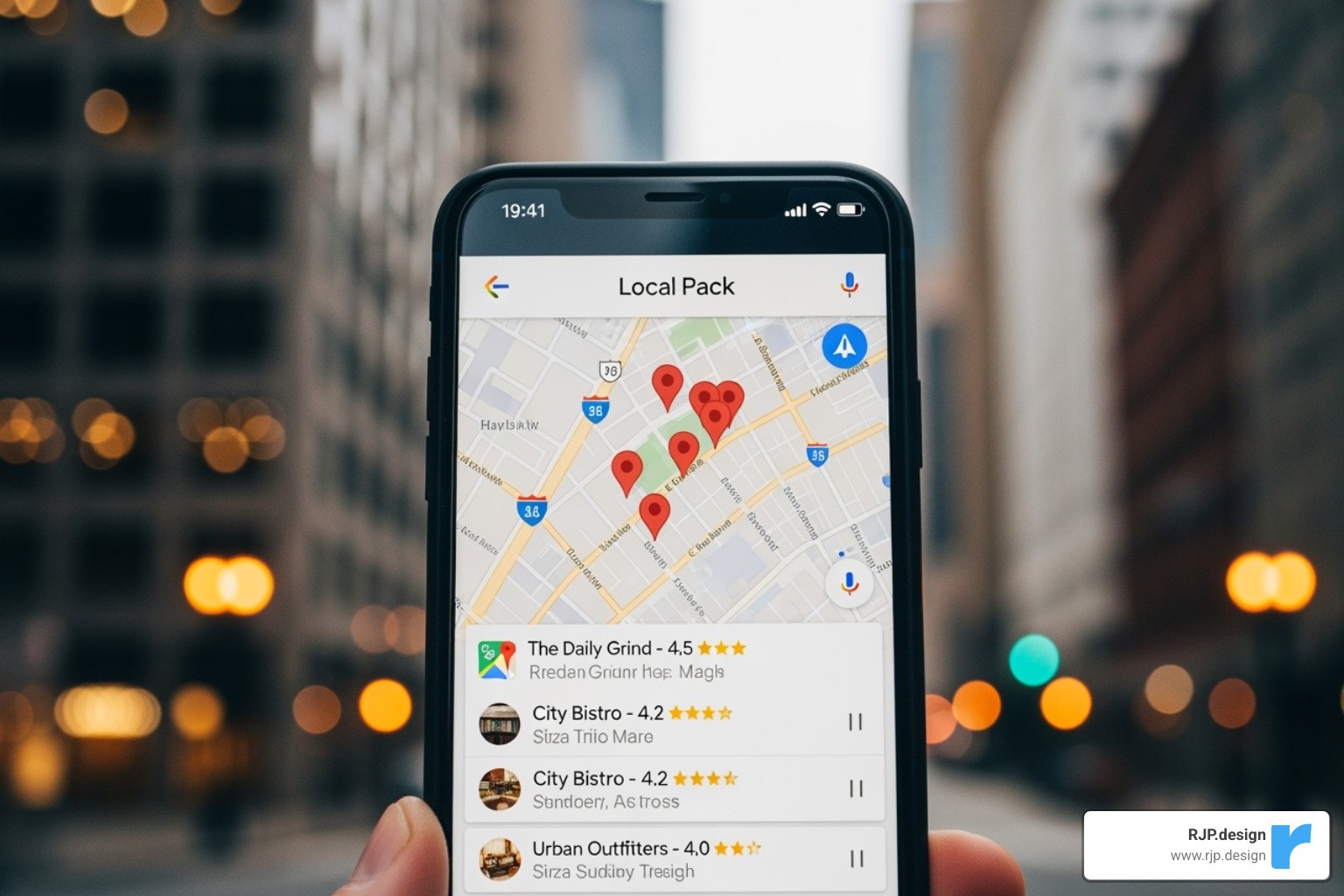
When you search for a pizza place on your phone, Google instantly shows you three local options with a map. This is Google’s local ranking algorithm at work. Understanding how it ranks businesses is the foundation of effective search engine optimisation for local businesses.
Google uses three main signals to rank local businesses: Relevance, Distance, and Prominence.
Relevance is how well your business profile matches a search query. If someone searches for “dentist near me,” Google needs to confirm you are a dentist.
Distance is how close your business is to the searcher. While you can’t move your location, you can clarify the areas you serve.
Prominence measures how well-known and trusted your business is online. It’s your digital reputation, built on reviews, web mentions, and overall online presence.
These factors work together. You might not be the closest business, but high relevance and prominence can still win you a top spot. The key is building a strong digital foundation that connects your online presence to real-world customers.
How to Fully Optimise Your Google Business Profile (GBP)
Your Google Business Profile (GBP) is your business card, storefront, and billboard combined. It’s free, powerful, and essential for local visibility. Google states that businesses with complete profiles are 70% more likely to get visits and 50% more likely to get purchases.
Claim and Verify Your Profile: Your first step is to claim your profile through Google Business and complete the verification process to prove you’re the legitimate owner.
Ensure Complete and Accurate Information: Your business name, address, phone number (NAP), website, and hours must be perfect. Keep everything updated, including holiday hours or temporary closures.
Select the Right Categories: Your primary category should define your main service (e.g., “Italian Restaurant”). Use secondary categories for related services (“Pizza Delivery,” “Wine Bar”).
Define Your Service Area: If you’re a service-area business (like an electrician), hide your physical address and define the specific areas you serve.
Upload High-Quality Photos and Videos: Show off your team, workspace, and finished projects. Fresh visuals signal to Google that your business is active and build customer trust.
Use Google Posts: These mini-updates appear on your profile. Use them to announce sales, share news, or highlight services, keeping your profile fresh.
Manage the Q&A Section: Proactively answer questions on your profile. Being responsive shows excellent customer service and helps other potential customers.
Our comprehensive Google Maps Optimization approach ensures every element of your profile works to attract local customers.
The Critical Role of NAP Consistency and Local Citations
Google values consistency. When it finds your business listed with different phone numbers across the web, it questions your reliability. That’s why NAP consistency—keeping your Name, Address, and Phone number identical everywhere—is crucial for search engine optimisation for local businesses.
Every time your business information appears online, it must match exactly. This consistency acts as a trust signal for Google. When your information matches, Google feels confident recommending you. When it doesn’t, Google may show a competitor instead.
Local citations are mentions of your NAP on other websites, like digital references that vouch for your business. A link back to your site isn’t always necessary; the mention itself is valuable.
Key citations come from top business directories like Apple Maps, Bing Places, and Yelp, as well as industry-specific sites and your local chamber of commerce. Each citation builds credibility.
Managing listings across hundreds of sites can be overwhelming. Our Local Citations SEO expertise and approach to Optimize Local Listings ensure your information is consistent, building trust with Google and customers.
Building Trust and Authority: Reviews, Links, and On-Page SEO

Trust is the foundation of your local business. For search engine optimisation for local businesses, building authority means creating a web presence that both Google and customers can rely on.
Trust is built through on-site signals (your website’s speed, navigation, and content) and off-site signals (reviews, mentions, and links from other sites). Google evaluates both, and user experience has become a major ranking factor. A website that frustrates visitors will struggle in local search.
Leveraging Online Reviews to Boost Your Rankings
89% of global consumers check online reviews before making a purchase. Reviews don’t just influence customers; they directly impact your search rankings. Google uses review quality, quantity, and recency as local ranking signals. Businesses with more recent, positive reviews tend to outrank those with fewer or older ones.
The key is to make it easy for happy customers to share their experience. When a customer compliments your service, ask them to leave a review on Google. You can also add a direct review link to your follow-up emails or receipts. Never offer incentives for reviews, as this violates Google’s terms and can harm your rankings.
Responding to reviews is also critical. Google has confirmed that responding to reviews strengthens your local presence. Thank customers for positive reviews to show you care. Address negative reviews professionally by acknowledging the issue and offering a solution, perhaps suggesting an offline conversation. This approach shows accountability and can impress potential customers more than a perfect record.
For detailed guidance, Google provides helpful information about getting reviews from customers.
Creating Localised Content and On-Page Signals
Your website must align with how customers search. People don’t just search for “plumber”; they search for “emergency plumber downtown.”
Local keyword research helps uncover the specific phrases your community uses. This research is the foundation for creating Content for Local SEO that connects with your audience.
For businesses serving multiple areas, dedicated landing pages for each location are powerful. Each page should offer genuinely useful information for that area, such as local testimonials or area-specific services, not just a template with the city name changed.
Writing about local events and news demonstrates genuine local expertise. Blogging about a local festival you sponsored or community issues shows search engines you are an authentic local business.
Technical on-page elements are just as important:
Title tags should include your location and main keyword.
Meta descriptions must be compelling and indicate your local focus.
Header tags organize content and provide more opportunities for local keywords.
NAP information should be displayed prominently on every page, usually in the footer.
Website speed is critical. Google’s Core Web Vitals measure load time, interactivity, and layout stability. A slow site frustrates users and hurts rankings. Finally, building quality links through Local SEO Link Building from other respected local sites signals to Google that you’re a trusted part of the community.
Advanced Search Engine Optimisation for Local Businesses: Tools, Measurement, and Future Trends

Once your foundation is set, it’s time to advance your local SEO. This means using data to drive decisions, avoid mistakes, and prepare for the future of local search. Search engine optimisation for local businesses is constantly evolving, so staying competitive requires the right tools, metrics, and foresight.
Essential tools for search engine optimisation for local businesses
The right tools are critical for effective local SEO. Google provides powerful free resources that should be your starting point.
Google Business Profile: Your command center for managing your local listing.
Google Search Console: This free tool reveals how your website performs in search, including which local queries drive traffic. Access it at Google Search Console and check it weekly.
Google Analytics: This shows what users do after landing on your site—do they call, fill out a form, or leave immediately? This data connects your SEO efforts to business results.
Paid tools offer advanced capabilities:
Rank tracking tools monitor your position in the local pack for target keywords automatically.
Citation management software helps maintain consistent NAP information across hundreds of directories, saving significant time and effort.
Review management platforms aggregate reviews from multiple sites into a single dashboard for easier management.
These tools support our comprehensive Search Engine Optimization Analysis, ensuring we make data-driven decisions.
Measuring the success of your search engine optimisation for local businesses
If you don’t measure your local SEO efforts, you can’t improve them. Tracking the right metrics reveals the real business impact.
Local Pack Rankings: Your position in the top three map results for local searches. Higher visibility here directly translates to more customers.
Organic Traffic from Local Searches: Traffic from searches containing your city, neighborhood, or “near me” is highly valuable, as these users have strong local intent.
Google Business Profile Insights: This data shows how customers interact with your listing. We analyze clicks to call, website visits, and direction requests to understand which optimizations are most effective.
Conversion Tracking: This is where SEO proves its worth. We track when visitors become customers by filling out forms, booking appointments, or making purchases, connecting your SEO investment to your bottom line.
Consistent measurement allows us to demonstrate real SEO Ranking Improvement and refine strategies based on what works.
The Impact of AI and How to Prepare for the Future
The search landscape is changing rapidly, driven by AI. Businesses that adapt early will gain an advantage.
AI-Powered Search Results: Google’s Search Generative Experience (SGE) can answer user questions directly. The opportunity lies in creating clear, valuable content that AI tools will reference. We use structured data markup to help AI understand your business information and focus on content with unique local expertise.
Voice Search: People increasingly use voice commands to find local businesses (e.g., “Where’s the best pizza place that’s open right now?”). We optimize content to answer these conversational, natural language questions.
E-E-A-T: Google’s E-E-A-T guidelines (Experience, Expertise, Authoritativeness, Trustworthiness) are crucial. For local businesses, this means showcasing credentials, customer success stories, and establishing yourself as a trusted local authority.
The focus should be on creating genuinely helpful content for your local customers. This philosophy guides all our Digital Marketing Strategies and ensures your business thrives regardless of technological shifts.
Frequently Asked Questions about Local SEO
Here are answers to common questions business owners have about search engine optimisation for local businesses.
How long does it take to see results from local SEO?
SEO is a long-term strategy, not an overnight fix. While you may see initial improvements within a few weeks from quick wins like optimizing your Google Business Profile, meaningful and sustainable results typically take 3-6 months or longer.
Local SEO is like building a foundation; it takes time for Google to recognize and trust your efforts. The timeline is affected by several factors:
Competition Level: Ranking in a competitive market like New York City will take longer than in a small town with few competitors.
Budget and Resources: Consistent investment of time and resources accelerates results. Sporadic efforts yield slow progress.
Industry: Some industries, like restaurants, naturally generate reviews and content faster than others, such as roofing companies.
Current Online State: A business starting from scratch will need more time to build a foundation than one with an existing, albeit unoptimized, presence.
The businesses that succeed with local SEO are those that remain consistent and patient.
What is the difference between the “local pack” and regular organic results?
Google displays different types of results based on your search query.
The Local Pack (or Map Pack) is the prominent block showing three business listings with a map, typically at the top of the results page. It appears for searches with local intent, like “coffee near me.” For local businesses, the Local Pack is extremely valuable due to its high visibility, especially on mobile devices.
Regular organic results are the traditional list of blue links that appear below the Local Pack. These are ranked using different algorithms that prioritize factors like general website authority and content quality.
Essentially, the Local Pack answers “where to go,” while organic results answer “what to know.” A comprehensive search engine optimisation for local businesses strategy should target both, but the Local Pack often drives the most immediate customer actions.
Can a business without a physical storefront use local SEO?
Yes. Businesses without a physical storefront are known as Service-Area Businesses (SABs). This includes plumbers, electricians, consultants, and any professional who travels to their customers.
Local SEO is just as crucial for SABs, though the strategy differs slightly. In your Google Business Profile, you can hide your physical address and instead define your service areas by listing the specific cities, neighborhoods, or zip codes you serve.
Google will then show your business to customers searching within those defined areas. Other local signals remain vital:
Consistent business name and phone number across all online platforms.
Dedicated website pages for each service area detailing your offerings.
Customer reviews from people within your service areas.
Listings in local directories relevant to the communities you serve.
We have helped many SABs dominate their local markets with specialized strategies like Plumber Local SEO. Your “local” is defined not by your office, but by where you serve your customers.
Conclusion
Search engine optimisation for local businesses is not just about technology—it’s about connecting with your community in the digital age. A steady stream of new customers, phone inquiries, and positive online reviews are the direct results of a well-executed local SEO strategy.
This guide has covered the essential elements: optimizing your Google Business Profile as your digital storefront, maintaining NAP consistency to build trust with Google, managing online reviews to turn customers into marketers, and creating localized content to speak directly to your neighbors.
The power of local SEO is in its compound effect. Each optimized element strengthens the others, creating a trustworthy and authoritative online presence. However, local SEO is an ongoing process. Google’s algorithms change, new competitors emerge, and customer behavior evolves. The businesses that thrive are those that treat local SEO as a continuous conversation with their community.
This is where the right partner makes a difference. At RJP.design, we understand that a local business is the heart of a community. We don’t just optimize websites; we help local businesses become the obvious choice when customers are searching for their services.
Our approach combines technical expertise with a genuine commitment to your business goals. We know that our work matters most when your phone rings, a new customer walks in, and your local reputation grows stronger every month.
Ready to transform your local presence from invisible to irresistible? Your community is searching. Let’s make sure they find you first. Learn more about Google Search Optimization and find how we can help your local business thrive in today’s digital marketplace.