SEO
Local SEO Link Building: Think Global, Act Local
Apr 30, 2025
The Power of Local SEO Link Building
Ever wonder why some local businesses always show up first when you search for services in your area? The secret ingredient is often local SEO link building – and it’s more powerful than you might think.
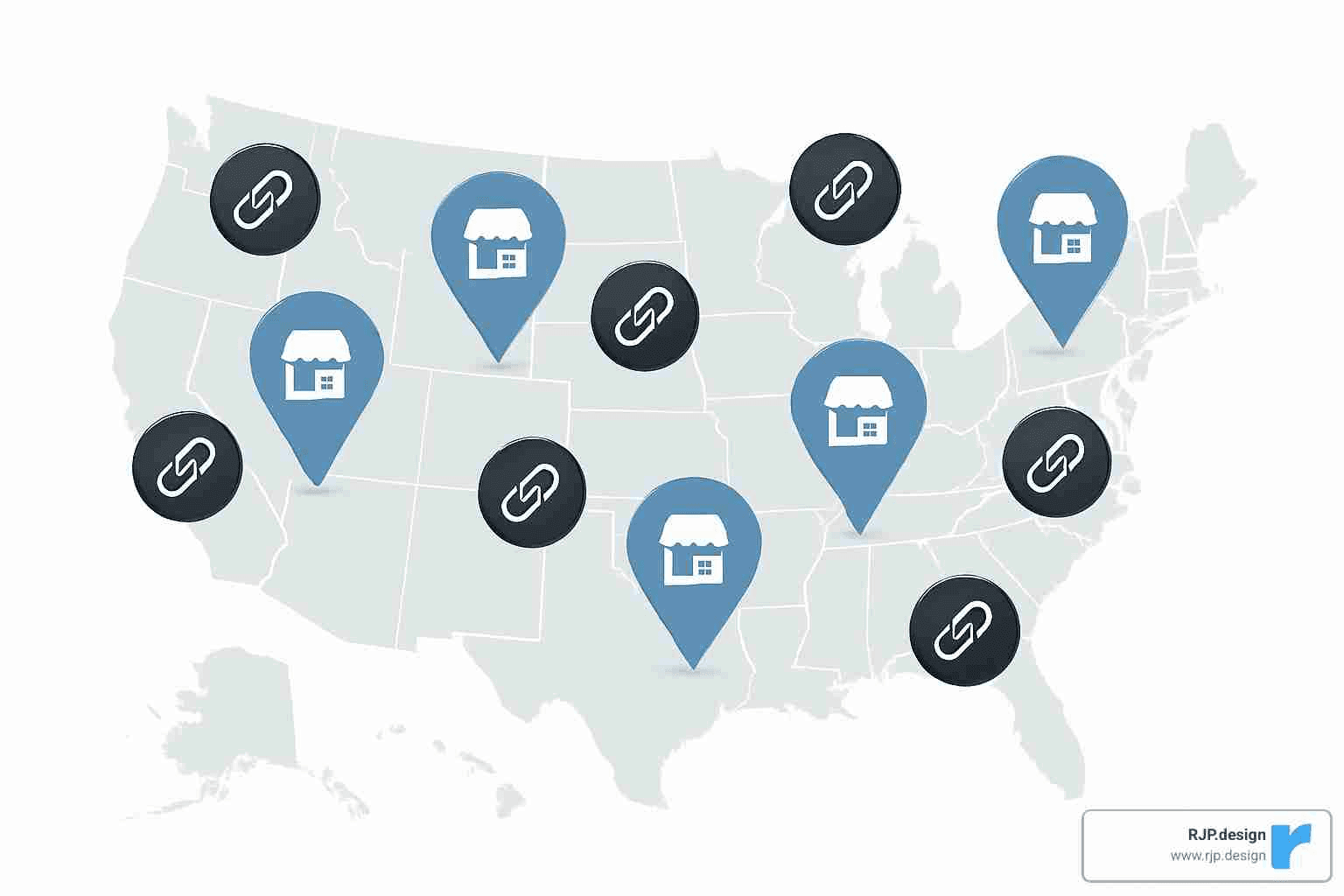
Local SEO link building is like creating a web of local connections for your business online. It’s the thoughtful process of earning backlinks from websites that matter in your community, helping Google understand that you’re a trusted local authority. These digital votes of confidence boost your visibility when nearby customers are searching for exactly what you offer.
When it comes to local link building, quality trumps quantity every time. One link from your town’s respected business journal carries more local weight than dozens of random links from across the globe. Your strategy should focus on building genuine relationships within your community that naturally lead to valuable links.
The numbers tell the story: “near me” searches have skyrocketed by 500% year over year, and a whopping 81% of consumers turn to Google when looking for local businesses. Without a thoughtful local SEO link building strategy, you’re essentially invisible to these potential customers.
I’m Ross Plumer, and I’ve helped local businesses generate over $20 million in revenue through strategic digital marketing. What makes my approach different is combining hard data with human psychology – understanding not just how search engines work, but how your local customers think and search.
Local link building differs from traditional approaches because geographic relevance often matters more than domain authority. A mention from a small but trusted community website can drive more foot traffic than a link from a national publication with no local connection.
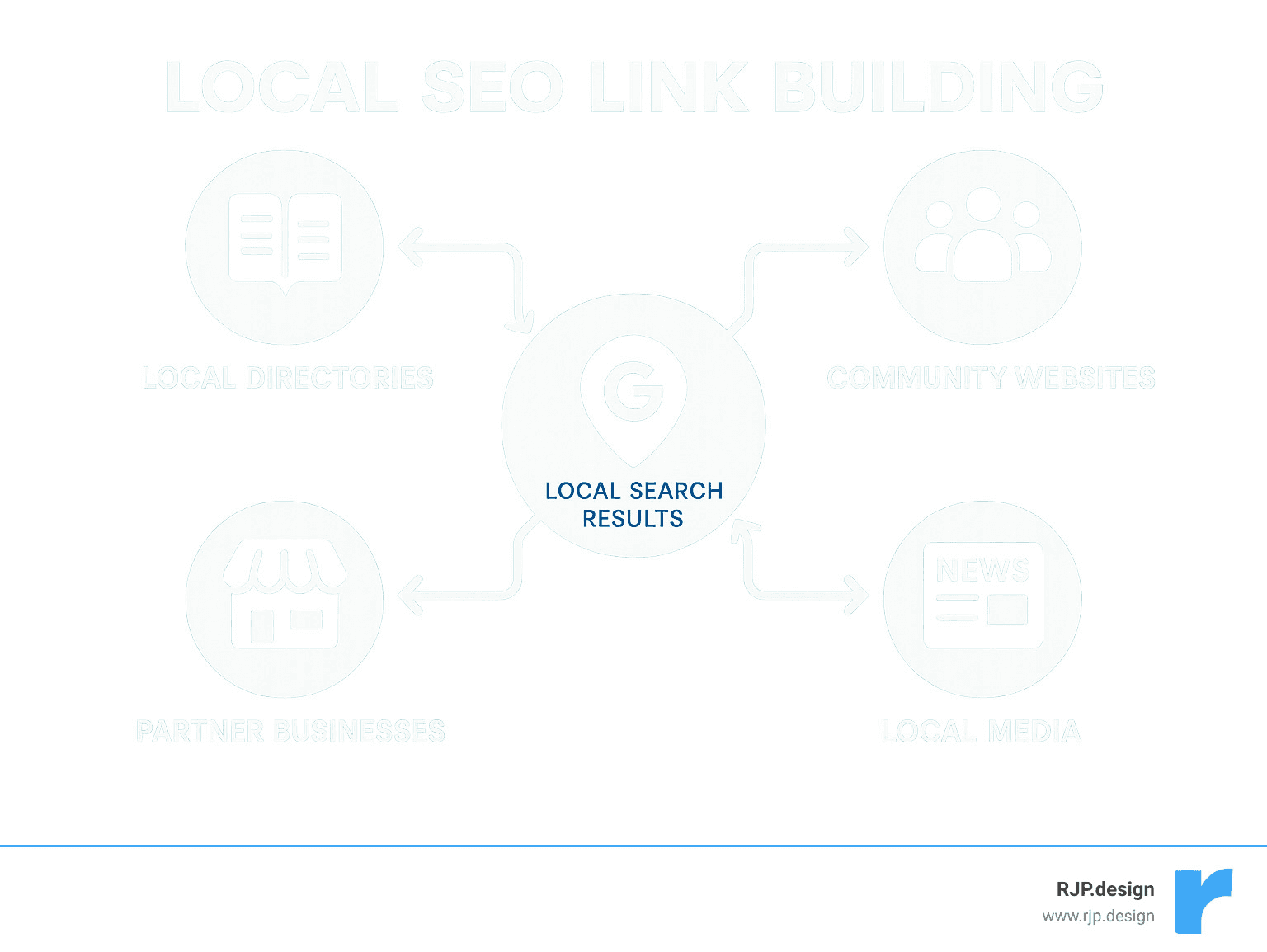
Building your local link profile isn’t something you do once and forget. The most successful businesses maintain consistent NAP (Name, Address, Phone) information across all platforms, regularly engage with community partners, create content that speaks directly to local interests, and carefully monitor their backlink health.
Ready to dive deeper into local search? These concepts will help you understand the landscape better:
– local business SEO
– link building off page seo
– habazar google my business optimization to help rank your sites
At RJP.design, we don’t just build websites – we build local visibility that turns into real business growth. Our down-to-earth team knows that the best local SEO link building feels natural, not forced, and we’re committed to creating strategies that feel right for your unique business and community.
Why Local Backlinks Are Critical for Local Rankings
Let’s talk about why local SEO link building truly matters for your business. The numbers paint a clear picture: “near me” searches have exploded by 500% year over year. Think about that – more and more people are pulling out their phones looking for businesses just around the corner. And a whopping 81% of consumers rely on Google when hunting for local businesses.
Here’s the kicker – over 67.6% of all clicks go to just the first five organic search results. If you’re not showing up there, you might as well be invisible to potential customers walking right past your door.
Local backlinks do much more than just tick a box for SEO. They’re like digital handshakes that build your neighborhood reputation:
They send authority signals to Google, essentially getting other local businesses and organizations to vouch for you. It’s like having respected members of your community telling everyone “these folks are the real deal!”
They establish geographic relevance, helping search engines understand exactly where you operate and serve customers. This is crucial when someone’s looking for “coffee shops in downtown Portland” rather than just “coffee shops.”
They build consumer trust through what marketers call the “Rule of 7” – people need about seven impressions of your brand before they feel comfortable enough to take action. Each local backlink creates another touchpoint.
They give you a competitive edge over other businesses in your area that haven’t invested in building strong local connections online.
As one local SEO expert put it, “Local links are the bread and butter of building a local audience.” And this isn’t just theory – we consistently see businesses with strong local link profiles outranking competitors both in regular search results and in that coveted Google Maps pack that appears at the top of local searches.
How Local Links Differ From Traditional Links
For years, traditional SEO has been obsessed with high Domain Authority (DA) backlinks above everything else. But for local businesses, this approach often misses what really matters.
Greg Gifford, who’s helped countless local businesses improve their rankings, says it plainly: “I prefer a link from a site with low DA, as long as it’s a local website.” This might sound backward if you’ve read general SEO advice, but it makes perfect sense for local search.
Here’s why local links work differently:
When it comes to hyper-local relevance, a link from your town’s chamber of commerce might have a modest DA score, but it provides powerful geographic signals that even the most prestigious national website simply can’t match.
Those low-DA power links that some SEOs might dismiss as “crappy little church websites” can actually be gold mines for local SEO. These sites establish authentic community connections that search engines recognize as valuable indicators that you’re truly part of the local fabric.
Unlike purely online businesses, local links often drive actual foot-traffic impact – real people visiting your physical location, not just clicking around your website. As one expert noted, “When you’re building links, it’s not only about the inbound link for SEO value. If you get quality links on local sites, they’re links that humans will actually click on.”
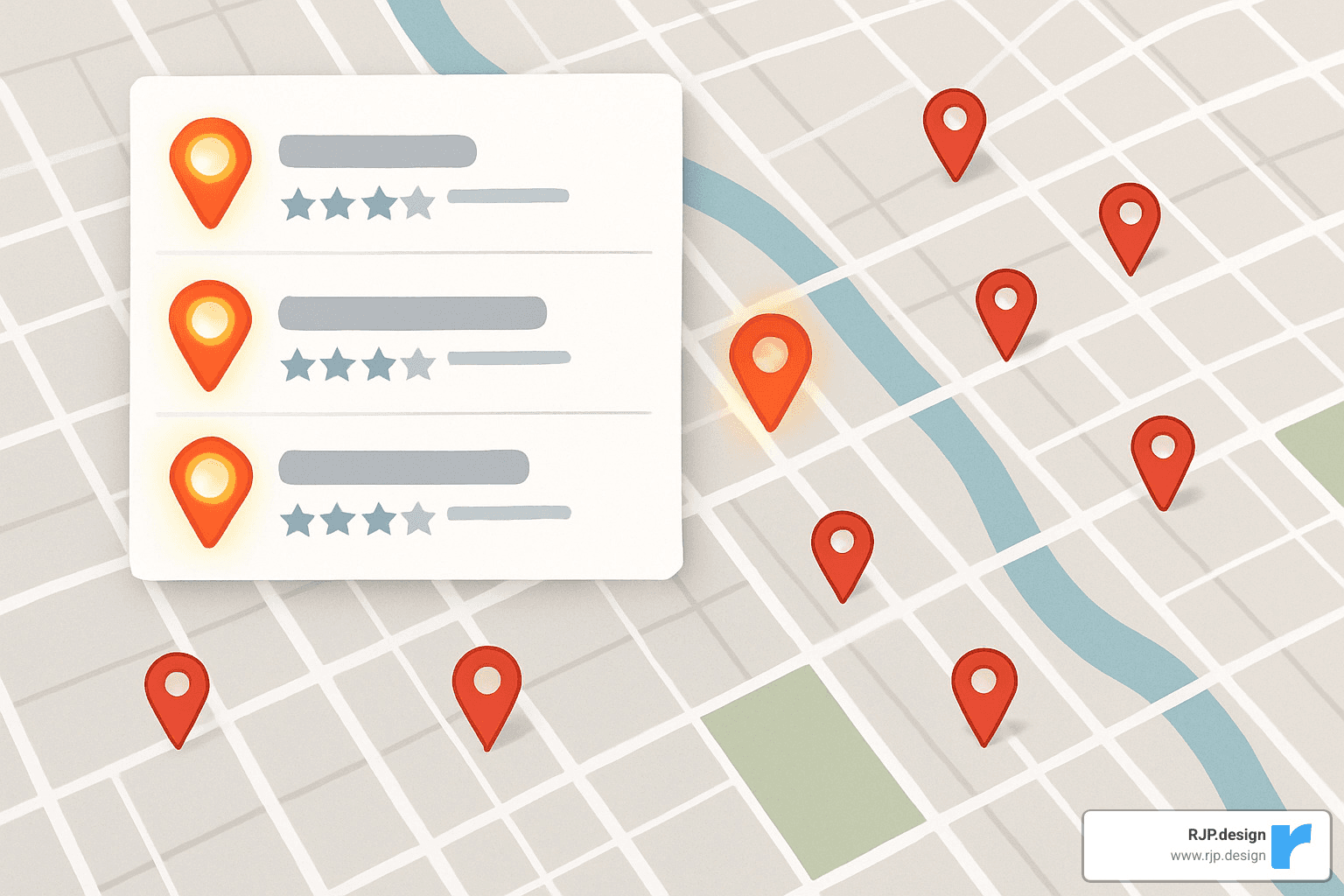
Perhaps most importantly, local links significantly influence your map-pack ranking – your position in Google Maps results, where many local searches lead to immediate business visits. Research from Think with Google shows that 76% of smartphone users who search locally visit a business within a day.
Local SEO Link Building Blueprint: 10 Proven Tactics
When it comes to local SEO link building, quality and relevance always win over quantity. While national brands might be chasing hundreds of backlinks, local businesses typically only need about 150 referring domains to land on that coveted first page for local searches.
The secret sauce? A diverse mix of links that tell search engines your business is both locally relevant and authoritative. At RJP.design, we focus on sustainable tactics that build genuine relationships while boosting your search visibility.
Let’s look at how citations and editorial backlinks compare in the local SEO world:
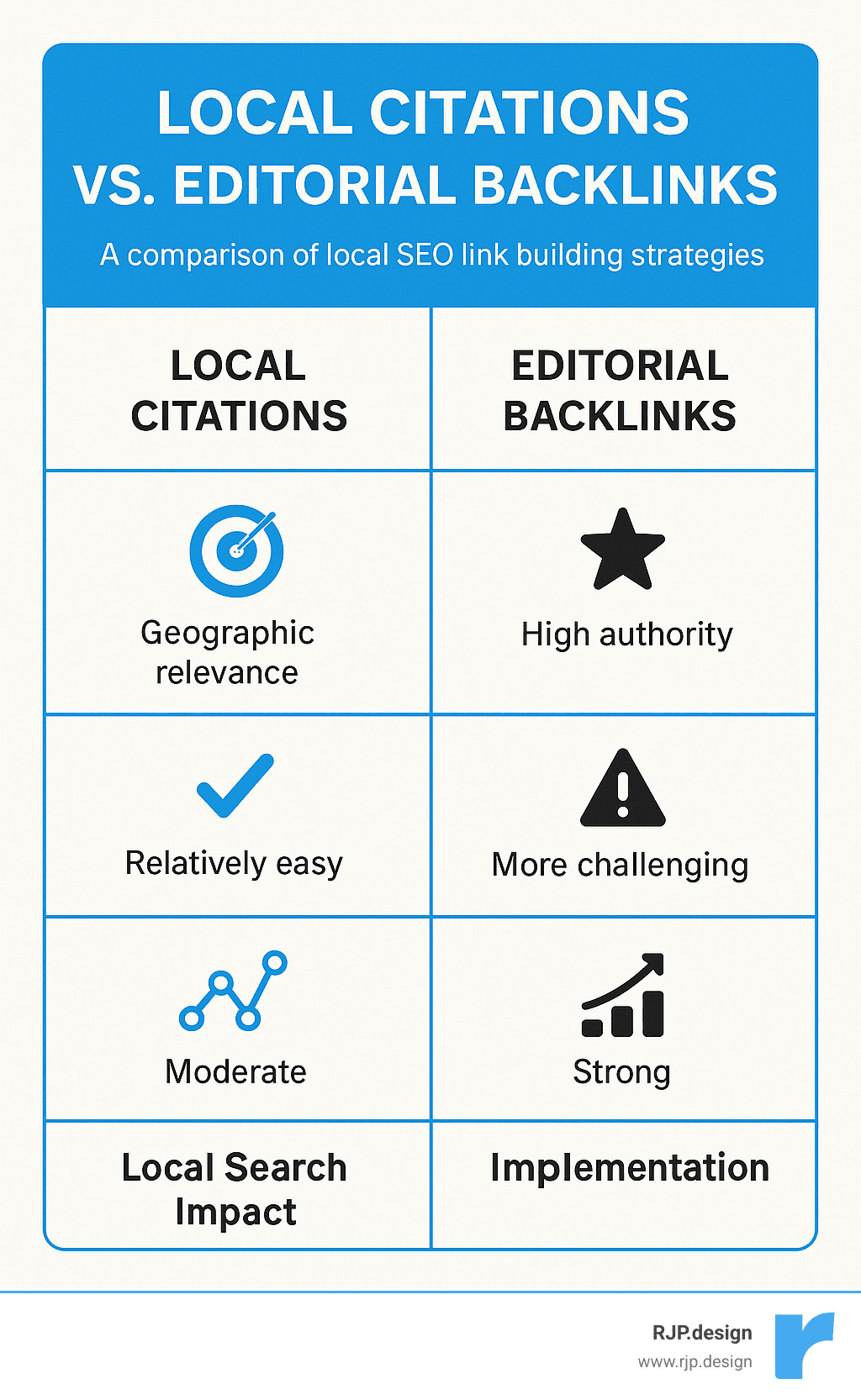
#1 Local SEO Link Building via Directories & Citations
Think of citations as the foundation of your local link strategy. These mentions of your business name, address, and phone number (NAP) are like digital breadcrumbs that help search engines trust your business.
Start with Google Business Profile – this isn’t optional! Make sure you’ve optimized your listing with accurate business information, all relevant categories, high-quality photos, and regular posts. And don’t forget to link to your website!
Consistency is key with your NAP details. Even small differences across platforms can confuse search engines and dilute your local authority. We’ve seen businesses at RJP.design dramatically improve their rankings just by cleaning up inconsistent citations and adding new ones in relevant directories.
Tools like Whitespark can help you identify citation opportunities and manage existing listings. For a deeper dive into building your local presence, check out our Local SEO Services.
#2 Earn Reviews & Citations from Trusted Platforms
Reviews are like gold for local businesses. According to BrightLocal, a whopping 98% of consumers read online reviews when researching local businesses, and 85% specifically look for those shiny star ratings.
When happy customers leave reviews on Google, Yelp, and industry platforms, they’re creating valuable citations – and sometimes even backlinks. The key is to respond thoughtfully to every review (yes, even the negative ones) and feature testimonials on your website with proper schema markup.
Where appropriate, don’t be shy about requesting links from reviewers who have their own websites. One flooring company we worked with saw a 31% jump in local search visibility after implementing a review generation strategy that resulted in both citations and several valuable backlinks from customers with business websites.
#3 Partnership, Sponsorship & Community Events
Getting involved in your community isn’t just good citizenship – it’s smart local SEO link building.
A local accounting firm sponsored a Little League team for just $100 and earned a permanent link on the league’s website. Another business hosted a charity fundraiser that snagged coverage (and links) from three local news outlets. These aren’t just link-building tactics; they’re relationship builders that establish your business as a valued local entity.
Offering your space for local Meetup groups can be another winner. As one SEO specialist told us, “Sponsoring refreshments for $50-$100 a month is an easy way to get links from Meetup pages.” Similarly, providing free workshops related to your industry can earn mentions from community calendars and event listings.
#4 Local Content & Guest Blogging
Creating locally relevant content is one of the most sustainable ways to build links. Research shows that 60% of buyers read blog posts in the early stages of their purchase journey, making this strategy both SEO-friendly and customer-focused.
A Denver bakery created “The Ultimate Guide to Denver’s Food Scene” that earned links from tourism sites and local bloggers. Other content ideas that work well include interviewing local experts (who often share and link to their features), creating neighborhood spotlights, and providing expert commentary on local news related to your industry.
For guest blogging, look for local publications and business websites that accept contributions. Focus on providing genuine value rather than just seeking links. At RJP.design, we’ve helped clients create local content strategies that build backlinks while establishing them as community authorities. Learn more about enhancing your local visibility through our guide on Mastering Local SEO: Using Video to Dominate Local Search.
#5 Local SEO Link Building with Local Media & Bloggers
Local journalists and bloggers are constantly hunting for stories and sources. By positioning yourself as a helpful resource, you can earn powerful editorial links that drive both SEO value and actual customers.
Press releases still work – when they’re genuinely newsworthy. One client saw a 400% traffic spike after a local news outlet featured their story. Tools like HARO (Help A Reporter Out) can connect you with journalists seeking expert insights related to your industry and location.
Building authentic relationships with local content creators pays dividends too. A restaurant owner invited local food bloggers to a special tasting event, resulting in multiple high-quality backlinks. Different demographics consume media differently – according to research, 96% of 18-25 year-olds and 87% of 55-66 year-olds check social media daily, so tailor your outreach accordingly.
#6 Scholarships, Alumni & EDU Pages
Educational institutions typically have high-authority domains that can significantly boost your local SEO efforts. One law firm’s scholarship campaign generated links from 49 different educational institutions – that’s serious link juice!
If you’re an alumnus of a local college, check if they offer business listings for graduates. These are often easy wins for quality backlinks. Similarly, offering student discounts can get you listed on university resource pages – try search operators like “site:.edu + [your city] + student discounts” to find opportunities.
Guest lectures at local educational institutions can also earn you mentions on event pages. These strategies not only build powerful backlinks but also establish community goodwill and potential customer relationships.
#7 Leverage Supplier & Vendor Testimonials
Your business relationships are untapped gold mines for local SEO link building. Think about all the suppliers, vendors, and service providers you work with – each represents a potential backlink opportunity.
The approach is simple: offer genuine, detailed testimonials about their products or services, and politely request your business name be linked to your website. One client at RJP.design identified 17 vendor relationships and secured 11 quality backlinks simply by offering testimonials.
This strategy works particularly well because it leverages existing relationships rather than cold outreach. And when appropriate, you can reciprocate by featuring vendors on your own site with backlinks.
#8 Unlinked Brand Mentions & Digital PR
You might be surprised to find how many websites mention your business without linking to it. These unlinked mentions are low-hanging fruit for your link building efforts.
Set up Google Alerts or tools like BrandMentions to track when your business is mentioned online. When you find instances where your business name appears without a hyperlink, reach out politely to the website owner with a friendly request to add a link.
The success rate for this approach is surprisingly high—typically 30-50% of requests result in new backlinks. One local business we worked with at RJP.design found 23 unlinked mentions and successfully converted 14 of them into valuable backlinks. Always express gratitude for the mention, regardless of whether they add the link.
#9 Local SEO Link Building through Expired or Acquired Domains
Here’s a tactic many overlook: leveraging expired or acquirable domains with existing local authority. Did you know that 70% of domains aren’t renewed after the first year? That creates opportunities for strategic acquisitions.
Keep an eye on local competitors going out of business, look for retiring business owners in complementary fields, or use specialized tools to identify expired local domains with existing backlinks. After acquisition, you can redirect the domain to your website to inherit link equity, create a microsite that links to your main site, or repurpose the content while maintaining valuable backlinks.
This approach requires some investment, but the results can be worth it. One RJP.design client acquired a complementary business’s domain for $1,200 and saw a 22% increase in local search visibility within just three months.
#10 Internal Linking for Local Authority Flow
While not technically “backlinks,” internal linking plays a crucial role in any local SEO link building strategy. Think of it as directing the flow of authority you’ve built through external links throughout your site.
Create a logical hierarchy of service and location pages, use locally-relevant keywords in your internal links, ensure blog posts link to your core service pages, and implement breadcrumb navigation to reinforce site structure.
At RJP.design, we’ve seen clients improve their local rankings by up to 15% simply by implementing a strategic internal linking plan that properly distributes link equity to location-specific pages. For more insights on optimizing your local presence, check out our guide to Google Maps Optimization.
Prospecting & Outreach: Turning Opportunities into Links
Finding link opportunities is just the first step—you need to actually secure those backlinks through thoughtful outreach. It’s a bit like dating—you need to make a good impression and show why you’re worth their time!
At RJP.design, we’ve found that starting with a deep dive into your competitors’ backlink profiles pays huge dividends. Think of it as competitive intelligence that’s completely above-board:
First, identify who’s ranking for your target local keywords. These businesses have already cracked the code in your area! Then use tools like Ahrefs or Semrush to peek at their backlink sources. The gold mine? Finding websites that link to multiple competitors but haven’t linked to you yet—these are your highest-probability targets.
“Blanket link request emails are about as effective as spam calls during dinner,” says one of our link building specialists. “But personalized outreach? That’s like showing up with their favorite dessert—hard to ignore!”
When we reach out to potential link partners, we make sure to mention something specific about their business. Maybe it’s a recent article they published or a service they offer that impressed us. This simple touch shows we’ve done our homework and aren’t just mass-emailing everyone in town.
Successful outreach isn’t just about asking—it’s about offering value in return. Sometimes that’s contributing content, sometimes it’s a genuine business relationship, and yes, sometimes it might involve cross-promotion. The key is making it feel like a win-win rather than a one-sided request.
At RJP.design, our relationship-building approach achieves 3-4 times higher success rates than transactional “give me a link” emails. We’ve helped businesses in everything from plumbing to professional services build local link profiles that drive real traffic and rankings. For more details about our comprehensive approach, check out our SEO Consultant Price guide.
Tools & Metrics That Matter
When evaluating potential local SEO link building opportunities, it’s tempting to chase high domain authority scores above all else. But that’s often a mistake for local businesses.
Think about it this way: would you rather have a recommendation from a national celebrity who’s never visited your town, or from the beloved local community leader everyone trusts? For local SEO, that DA 30 hometown newspaper often packs more punch than a DA 70 national website with zero local relevance.
Anchor text—the clickable words in your links—matters too, but diversity is key. A natural mix of branded mentions (“RJP Design”), naked URLs (“www.rjp.design”), and occasional keyword-rich anchors (“local web design experts”) keeps your profile looking organic to search engines. Too many identical keyword anchors can actually trigger penalties!
One metric many businesses overlook is actual referral traffic. A great local backlink should send real people to your site, not just boost SEO. We regularly check Google Analytics to see which links are driving visitors—sometimes a “lower quality” link by traditional SEO standards brings in your best customers.
For tracking campaign success, we focus on meaningful KPIs like new referring domains per month, improvements in local keyword rankings, increases in Google Business Profile views and actions, and maintaining a healthy citation consistency score.
By focusing on these metrics that actually move the needle for local businesses, you’ll build a link profile that not only ranks well but drives real customers through your door. And isn’t that the point of all this local SEO link building work in the first place?
Monitoring, Measuring & Maintaining Your Local Backlink Profile
Treating local SEO link building like a “set it and forget it” strategy is a recipe for disappointment. Just like tending a garden, your backlink profile needs regular care to truly flourish. I’ve seen countless businesses build impressive link portfolios only to watch them wither because they didn’t keep an eye on things.
Think of your backlink profile as a living ecosystem that needs regular check-ups. At RJP.design, we recommend quarterly link audits to stay ahead of potential issues. These reviews help you spot new opportunities, fix broken links before they damage your rankings, identify any potentially toxic links that need disavowal, and keep tabs on what your competitors are up to with their link strategies.
Your citations need just as much attention. NAP (Name, Address, Phone) consistency across platforms isn’t just a one-time fix – information can change unexpectedly on third-party sites, creating confusion for both search engines and customers. We’ve had clients find outdated addresses still floating around the web years after they’ve moved!
Pay attention to your link velocity too. Building backlinks should follow a natural rhythm – sudden spikes might feel like progress, but they can trigger algorithmic penalties. As one of our clients learned the hard way, “Going from zero to sixty links in a week raised red flags with Google, and we actually dropped in rankings temporarily.”
Measuring what matters is essential for understanding ROI. Track these key metrics:
Ranking improvements for your target local keywords
Increases in organic traffic from your service area
Growth in your Google Maps visibility and click-through rate
Changes in conversion rates from local traffic sources
I love sharing this real-world example: A small accounting firm we worked with at RJP.design implemented our quarterly link audit process and finded something shocking – 12% of their most valuable backlinks had either broken or disappeared entirely. After reaching out to reclaim these links, they saw a 17% jump in local keyword rankings in just two months. That translated to eight new clients who specifically mentioned finding them through local search.
Scaling or Outsourcing Your Efforts
As your business grows, your local SEO link building needs will evolve too. Many of our clients reach a crossroads where they need to decide whether to build their internal capabilities or bring in outside help.
If you’re considering keeping everything in-house, you’ll maintain complete control and build valuable institutional knowledge. The downside? It requires significant time investment and comes with a steeper learning curve. I’ve watched business owners burn countless evenings trying to master link building when they could have been focusing on their core business.
Partnering with an agency like RJP.design brings specialized expertise and saves your internal resources. The trade-off is a higher monetary investment and the potential for alignment challenges if you don’t find the right partner. As one client told us, “I wasted six months with an agency that didn’t understand my local market before finding you.”
Many businesses find success with a hybrid approach – handling some elements internally while outsourcing the more technical or time-consuming aspects. This balances control with expertise and is often the most cost-effective solution, though it does require clear communication and coordination to work smoothly.
At RJP.design, we’ve designed our partnerships to be flexible, adapting to your business needs and growth stage. We believe in teaching our clients as much as they want to learn while handling the heavy lifting. You can learn more about our comprehensive approach through our Digital Marketing services.
Whether you build links yourself or hire help, consistency is key. The local businesses that dominate search results aren’t necessarily the ones with the biggest budgets – they’re the ones who show up month after month with a thoughtful, sustainable approach to building their local authority.
Frequently Asked Questions about Local SEO Link Building
How many local links do I really need?
I get this question all the time, and the answer isn’t as straightforward as you might hope. It really depends on how competitive your market is, but I can tell you this: quality matters way more than quantity.
Most local businesses do just fine with fewer than 150 referring domains. In fact, one SEO expert I work with regularly puts it this way: “I’ve rarely seen businesses with more than 150 referring domains ranking on the first page.”
Instead of chasing numbers, focus on building relationships that lead to relevant, diverse local links. A dental practice in a medium-sized city might only need 30-50 quality local links to stand out, while a law firm competing in downtown Chicago might need 100+ to make a dent in those search results.
It’s not a race to collect the most links – it’s about finding the right ones that tell Google your business matters in your community.
Are low-authority local links still valuable?
Absolutely yes! This might be the biggest misconception I encounter in the local SEO link building world.
Greg Gifford, one of the smartest local SEO minds out there, puts it perfectly: “I prefer a link from a site with low DA, as long as it’s a local website.”
Think about it this way – a link from your town’s community center website might have a measly Domain Authority score, but it tells Google exactly where you operate and shows you’re recognized by real local entities. That geographic relevance is pure gold for local search.
A high-DA link from a national website might look impressive on paper, but without that local connection, it won’t move the needle nearly as much for your neighborhood visibility. Don’t get caught up in the numbers game – local relevance trumps raw authority when you’re trying to rank in your community.
What risks should I avoid with local link building?
While local link building is generally safer than aggressive national SEO tactics, there are still some pitfalls that can get you in trouble.
Paid Link Schemes are a big no-no. Yes, legitimate sponsorships with proper disclosure are fine, but secretly buying links violates Google’s guidelines and can lead to penalties. The distinction matters.
Watch out for Over-Optimization too. When every link to your site uses the exact same keyword-rich anchor text, it looks unnatural. Keep your anchor text diverse and natural-sounding.
Citation Inconsistency is a silent killer for local businesses. When your address appears differently across various listings, it confuses both Google and potential customers. Keep your NAP (Name, Address, Phone) consistent everywhere.
I’ve seen too many businesses waste time on Spammy Directory Submissions. Focus on quality directories relevant to your industry and location instead of shotgunning your info to hundreds of low-quality sites.
Finally, don’t fall into the trap of Neglecting Link Maintenance. Links break or disappear over time, and if you’re not monitoring and fixing them, your hard work slowly erodes.
By building genuine relationships and focusing on strategies that add real value to your community, you’ll develop a powerful local link profile while keeping these risks at bay. At RJP.design, we help businesses steer these waters safely while building lasting local authority.
Conclusion
Building strong local SEO link building strategies isn’t just about climbing search rankings—it’s about becoming a recognized part of your community’s digital landscape. When done right, these efforts create meaningful connections that translate into real customers walking through your door.
Throughout this guide, we’ve explored numerous approaches to building your local link profile. The most successful businesses don’t just focus on accumulating links; they build genuine relationships that naturally result in online recognition.
Remember what truly matters in local link building:
Focus on neighborhood relevance over big-name authority. That link from your local chamber of commerce might not have an impressive domain score, but it tells Google exactly where you belong in the community. As we’ve seen, these hyper-relevant local connections often outperform flashy national links from bigger websites.
Mix up your approach by combining different strategies. Don’t put all your eggs in one basket—whether that’s directories, content creation, community involvement, or business partnerships. The strongest local link profiles include diverse signals from throughout your community.
Think beyond just SEO benefits. The best local links do double-duty: they improve your search visibility while also sending actual customers your way. That sponsorship of the little league team? It might drive more foot traffic than a dozen generic directory listings.
Stay vigilant with regular maintenance. Link profiles decay over time as websites change, businesses close, or technical issues arise. A quarterly audit helps you catch and fix problems before they impact your rankings.
Cultivate authentic community connections. The most sustainable link building comes from being a genuinely valued part of your local area. No algorithm update can take away the benefits of real community relationships.
At RJP.design, we understand that local businesses need practical, down-to-earth approaches to digital marketing. Our team specializes in helping businesses like yours build meaningful local connections that translate into both improved search visibility and increased customer traffic. We skip the jargon and focus on what matters—getting your business found by the people looking for exactly what you offer.
Ready to strengthen your local digital presence? Our Digital Marketing services can help your business become more visible to the customers who matter most—the ones right in your neighborhood.