
SEO
Boost Your Local Presence: SEO Tips for Small Businesses
May 1, 2025
Why Local SEO Matters for Your Business
Remember flipping through the Yellow Pages to find a local plumber or pizza shop? Those days feel like ancient history now! Today, when someone needs a service or product, they pull out their smartphone and search. That’s why mastering local business SEO tips has become essential for small businesses wanting to thrive in their communities.
Think about this: 46% of all Google searches have local intent. Even more impressive, 76% of people who search for something nearby on their smartphone visit a related business within 24 hours. That’s not just traffic—that’s people ready to walk through your door and make a purchase.
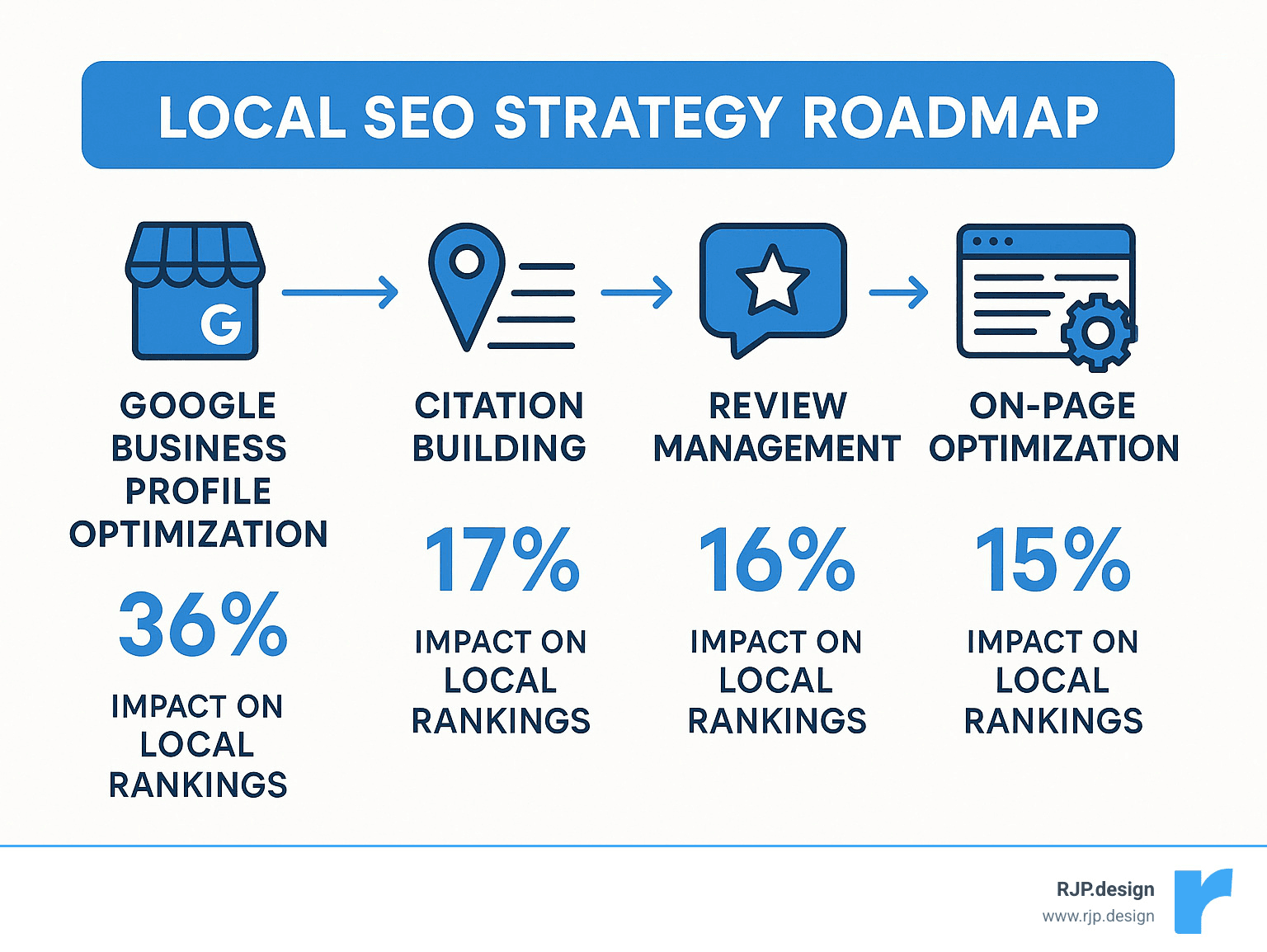
The most effective ways to boost your local visibility include claiming and optimizing your Google Business Profile, ensuring your business information is consistent across the web, actively managing customer reviews, creating location-specific content, implementing proper schema markup, and building citations in relevant directories. These aren’t just technical tasks—they’re about making sure your business shows up when local customers need you most.
Local SEO works differently than traditional SEO because Google evaluates local businesses based on three key factors: relevance to what people are searching for, distance from the searcher, and the prominence or reputation of your business. When you align your strategy with these factors, you dramatically increase your chances of appearing in those valuable local search results.
I’m Ross Plumer, and I’ve helped local businesses implement these strategies to generate over $20 million in revenue through improved local visibility. What I love about local SEO is how efficient it is—instead of casting a wide net, you’re connecting with people already in your neighborhood who are actively looking for what you offer.
The statistics speak for themselves: 88% of consumers who search locally on their mobile device call or visit the business within 24 hours. And 97% of people learn more about local companies online than anywhere else. These aren’t just numbers—they represent real people becoming your customers.
Important terms to understand include local search results, content for local seo, and local video seo.
Why this guide matters
There’s something powerful about local business connections that builds trust in ways national brands can’t match. In fact, 87% of consumers trust Google reviews more than any other site when evaluating local businesses. This trust translates directly into sales, with 59% of mobile searchers visiting businesses on the same day they perform a local search.
Despite all the buzz around e-commerce, physical retail still accounts for roughly 70% of total retail sales. That’s a massive opportunity for small businesses that position themselves correctly in local search results.
At RJP.design, we’ve seen how implementing effective local business SEO tips transforms struggling businesses into neighborhood favorites. There’s nothing more satisfying than watching a client’s phone start ringing with new customers after we’ve optimized their local presence.
Our down-to-earth team skips the jargon and focuses on what matters—helping real businesses connect with real customers in their communities. Because at the end of the day, local SEO isn’t about algorithms—it’s about bringing more people through your door.
Understanding Local SEO Fundamentals
Ever wonder why some local businesses pop up at the top of Google while others remain hidden? It all comes down to how Google determines who deserves that prime real estate in local search results. Google looks at three key factors when deciding where to rank your business:
Relevance: How well your business matches what someone is searching for
Distance: How close you are to the searcher (or the area they mentioned)
Prominence: How established and trustworthy your business appears online and offline
These three factors determine whether you’ll appear in that golden “Map Pack” – you know, those three local businesses with the map that show up at the top of search results – and how well you rank in the regular organic listings below.
And don’t forget about voice search! With 20% of Google mobile searches now happening by voice, more people are asking their phones questions like “pizza place near me” or “closest hardware store.” These conversational searches are becoming a huge opportunity for local businesses.
What Is Local SEO?
Local business SEO tips focus on optimizing your online presence specifically to attract customers in your geographic area. While traditional SEO might help you rank for general topics, local SEO is about showing up when people nearby are looking for exactly what you offer.
The beauty of local search is in the intent behind it. When someone searches “coffee shop downtown” or “plumber near me,” they’re usually ready to visit or make a purchase – they’re not just browsing. This makes local search traffic incredibly valuable for brick-and-mortar businesses.
I love what one of our clients told us recently: “I always asked customers, ‘What made you call me?’ and oftentimes they tell me, ‘We reached out because of your Business Profile on Google.'” That’s the real-world impact of good local SEO!
Service-area businesses – like plumbers or landscapers who go to their customers rather than having customers come to them – need local SEO too, just with some strategic adjustments we’ll cover later in this guide.
How Google Determines Rankings
Google’s local algorithm is pretty sophisticated, pulling signals from all over the web to decide who ranks where. According to BrightLocal’s research on local ranking factors, here’s what matters most:
Your Google Business Profile sends the strongest signals, especially your primary category and the keywords in your business name. Your website matters too – Google looks at whether your address and phone number match your listings, keywords in your page titles, and your overall domain authority.
Reviews play a huge role as well. As one expert from Moz’s Local Search Ranking study put it: “Reviews (along with an owner’s response) show that consumers trust a business, and trust is a foundational factor in ranking.” Google looks at how many reviews you have, how quickly you’re getting them, and where they’re coming from.
Don’t forget about links and citations either – these signals of authority and consistency help Google verify you’re a legitimate, established business.
For a deeper dive into the science behind all this, check out this Scientific research on local ranking factors.
The Google Map Pack Explained
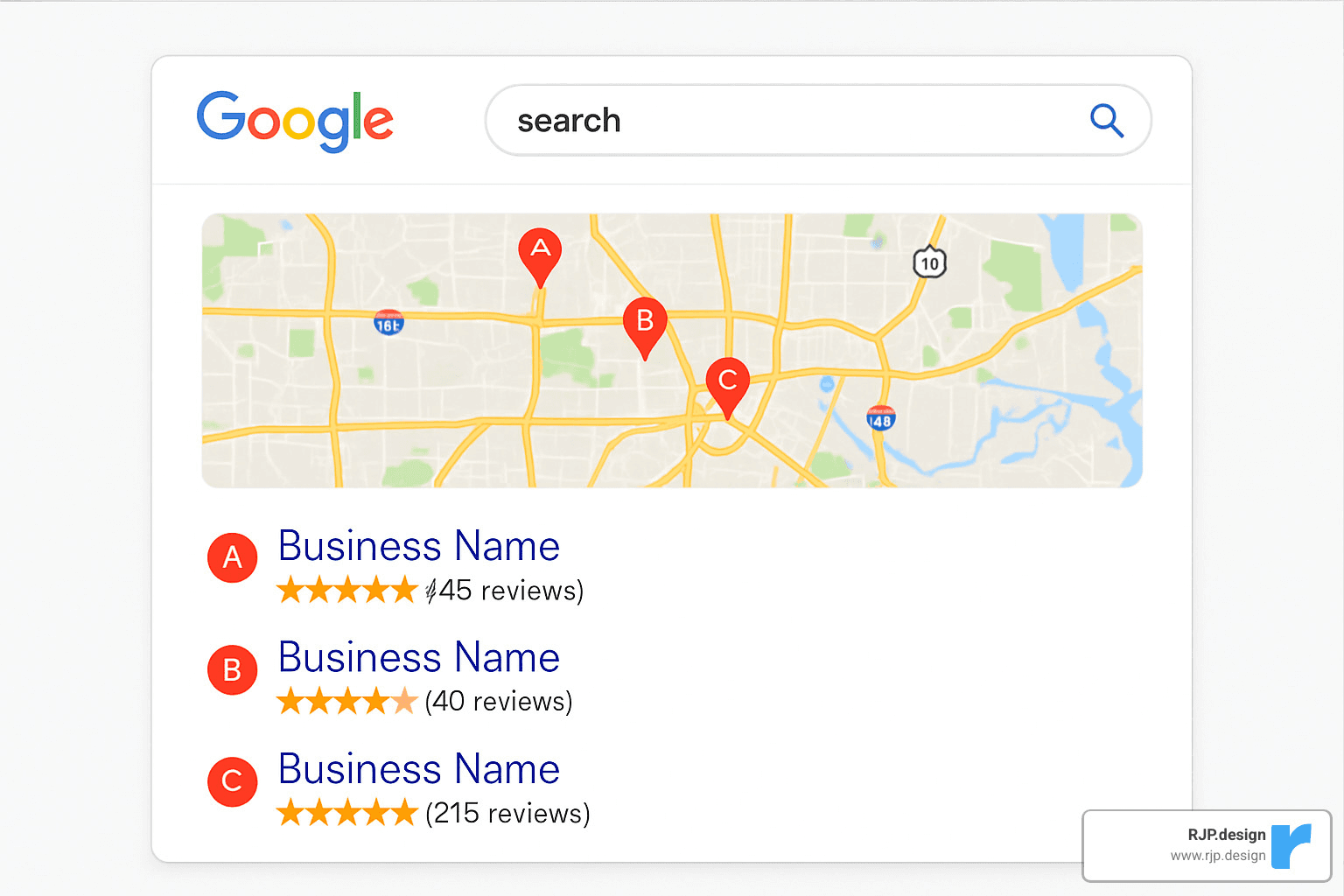
The Google Map Pack (sometimes called the Local Pack or 3-Pack) is that prominent block of three local businesses that appears at the top of search results for local queries. Landing a spot in this coveted space can be a game-changer for your business visibility.
Here’s something many business owners don’t realize: your Map Pack ranking can vary dramatically even across small geographic areas. Someone searching for “dentist” from one neighborhood might see you in the top three, while someone just a mile away might not see you at all.
This is where tools like Local Falcon for grid tracking become invaluable. They show you how your business ranks from different locations within your service area, revealing neighborhood-by-neighborhood opportunities to improve.
We saw this with a local paving company client who finded they ranked well on the east side of their city but were practically invisible in western neighborhoods. By adjusting their strategy to target those western areas specifically, they achieved much more consistent visibility across their entire service area.
At RJP.design, we help businesses understand these local search nuances and develop strategies that ensure you’re visible to the right people in the right places – because showing up is the first step to standing out.
Claim & Optimize Your Google Business Profile
Your Google Business Profile (formerly Google My Business) is the cornerstone of your local SEO strategy. It’s free, powerful, and directly influences your visibility in both Google Maps and local search results.
“A well-optimized Google Business Profile is arguably the single most important factor for local SEO,” according to industry experts. Let’s walk through the essential steps to maximize its impact.
Step 1: Claim and Verify
Before you can optimize your profile, you need to claim and verify it. Here’s how:
Search for your business on Google Maps
If it appears, click on it and select “Claim this business”
If it doesn’t appear, add it by clicking “Add your business”
Follow the verification process, which typically involves receiving a postcard with a verification code (though phone and email verification are sometimes available)
For businesses with multiple locations, Google offers a bulk verification process that allows you to manage numerous listings efficiently. This is particularly valuable for franchises or businesses with several branches.
The verification process is crucial because it gives you control over your business information and open ups additional features. As Google states, “Your position in web results is also a factor, so SEO best practices also apply to local search optimization.”
For more detailed guidance on optimizing your presence specifically on Google Maps, check out our Google Maps Optimization resource.
Step 2: Complete Every Data Field
Once verified, it’s time to complete your profile comprehensively. Google rewards businesses that provide complete and accurate information.
NAP consistency (Name, Address, Phone) is paramount. Your business information must be identical across your website, Google Business Profile, and all other online directories. Even small discrepancies like “St.” versus “Street” can potentially confuse search engines and impact your rankings.
Key elements to complete include:
Business name: Use your exact business name without keyword stuffing
Primary category: Choose the most specific category that applies to your business
Secondary categories: Add relevant additional categories to capture more searches
Business description: Write a compelling 100-200 word description that naturally includes key services and location
Products and services: List all offerings with descriptions and prices if applicable
Business attributes: Select all relevant attributes (e.g., “women-owned,” “wheelchair accessible,” “outdoor seating”)
Opening hours: Include regular hours and special hours for holidays
Photos: Add high-quality images of your business exterior, interior, products, and team
A car body repair shop saw significant improvement in their local visibility after carefully selecting their Google Business Profile categories and adding detailed service information. This specificity helped them appear for more relevant searches in their area.
Step 3: Manage Reviews & Posts
Active management of your Google Business Profile goes beyond the initial setup. Regular engagement through review responses and posts keeps your profile fresh and signals to Google that your business is active.
For reviews, follow these best practices:
Respond to every review—positive or negative—promptly and professionally
Thank positive reviewers and address concerns raised in negative reviews
Create a custom review link to make it easy for customers to leave feedback
Never incentivize reviews, as this violates Google’s policies
“A good response to a negative review can positively impact your business image,” notes one local SEO expert. This approach transforms potential negatives into opportunities to demonstrate your commitment to customer satisfaction.
Regular posts on your Google Business Profile also boost engagement. Share updates, offers, events, and new products or services to keep your profile active and informative. These posts appear directly on your Business Profile and can drive clicks and conversions.
For comprehensive strategies on managing your online reputation, visit our Customer Reviews page.
On-Page Essentials: Local business SEO tips for Your Website
While your Google Business Profile is crucial, your website remains the foundation of your online presence. Optimizing it for local search requires attention to several key elements.
Local Keyword Research That Converts
Think about how your neighbors and community members actually search for businesses like yours. This is the heart of effective local keyword research. Start with your core offerings – these “seed terms” are the foundation of your local SEO strategy.
When people search locally, they typically use two types of phrases. Some directly mention your location with explicit local keywords like “plumber in Chicago” or “Seattle coffee shop.” Others use implicit local keywords that suggest locality without naming places, such as “emergency plumber near me” or “coffee shop open now.”
Those “near me” searches? They’ve exploded by 900% in recent years according to Google. That’s a gold mine of potential customers literally looking for what you offer in your neighborhood.
I recently worked with a New York florist who transformed their business by targeting phrases like “NYC florist” and “wedding flowers New York.” By understanding exactly how their customers searched, they created content that connected with real people looking for their exact services.
Tools like Ubersuggest can help you find these valuable local keywords without breaking the bank. Look for terms with decent search volume but manageable competition – that sweet spot where opportunity meets reality.
Want to take your local keyword strategy to the next level? Check out our guide on HubSpot Local SEO for advanced techniques.
Schema & Technical Tweaks
Schema markup might sound technical, but think of it as your business’s digital ID card. It helps search engines understand exactly who you are, where you’re located, and what you offer. For local businesses, LocalBusiness schema is particularly valuable.
“`html
“`
This little snippet of code speaks volumes to search engines. One restaurant client saw remarkable results after we implemented schema markup for their hours and menu. Suddenly, their rich results in Google Search showcased their star ratings and menu highlights, dramatically increasing clicks to their website.
Beyond schema, several other technical elements boost your local visibility. Your title tags should naturally include your location and primary service. Create compelling meta descriptions that mention your neighborhood and include a call to action. Structure your content with proper header tags (H1, H2, H3) that incorporate local terms naturally. Keep your URLs simple and descriptive, and build a solid network of internal links connecting your location and service pages.
For a deeper dive into schema implementation, check out the scientific research on schema for businesses.
Core Web Vitals & Mobile UX
When someone’s looking for a local business, chances are they’re on their phone, possibly even walking or driving nearby. That’s why mobile experience isn’t just important—it’s absolutely critical for local business SEO tips that actually work.
Factor | Desktop Impact | Mobile Impact |
|---|---|---|
Page Load Speed | Important | Critical |
Mobile Responsiveness | N/A | Critical |
Interactivity | Moderate | High |
Visual Stability | Moderate | High |
HTTPS Security | Required | Required |
Google’s Core Web Vitals measure three essential aspects of user experience:
Largest Contentful Paint (LCP) measures how quickly your main content loads. First Input Delay (FID) tracks how responsive your site is when users try to interact with it. Cumulative Layout Shift (CLS) ensures elements don’t unexpectedly jump around as the page loads.
I recently helped a local service business improve their mobile site speed by 40%. Not only did their rankings improve, but their conversion rate from mobile visitors nearly doubled. People simply don’t wait for slow sites anymore—especially when they’re looking for a quick solution nearby.
For voice search optimization, think conversational. People speak differently than they type. Create FAQ sections that address common questions like “What hours is the hardware store open on Saturday?” rather than the typed equivalent “hardware store hours Saturday.”
At RJP.design, we believe technical optimization should never feel overwhelming. Our down-to-earth approach makes these local business SEO tips accessible to every business owner, regardless of technical background. We handle the complex details so you can focus on what you do best—running your business and serving your community.
Building Authority: Citations, Reviews & Local Links
Beyond your website and Google Business Profile, your business’s online reputation across the web plays a crucial role in local SEO success. Think of citations, reviews, and local backlinks as your digital word-of-mouth – they tell both search engines and potential customers that you’re a trusted business worth visiting.
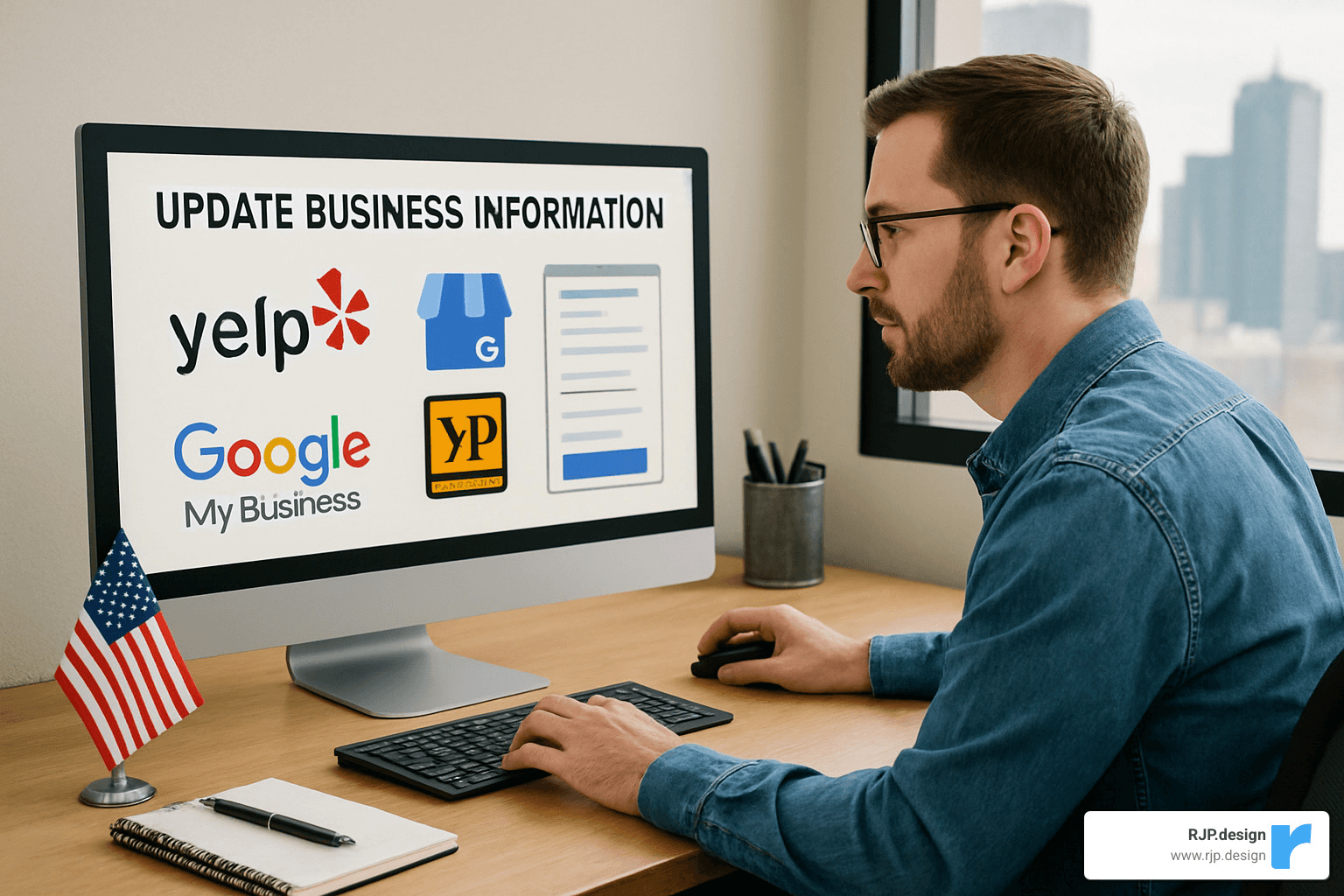
Build & Audit Citations
Citations are simply mentions of your business name, address, and phone number (NAP) on other websites. They act like digital breadcrumbs that validate your business information to search engines.
When it comes to citations, I always tell my clients that quality trumps quantity every time. As one industry expert perfectly put it, “A local business only needs the top 20 to 40 business listings.” Focus on getting listed in the places that matter most:
Data aggregators like Infogroup and Acxiom feed information to hundreds of smaller directories, giving you more bang for your buck. Primary directories such as Yelp, Yellow Pages, and the Better Business Bureau are must-haves for any local business. Don’t forget about industry-specific directories (like TripAdvisor for hospitality businesses or Healthgrades for healthcare providers) and local directories including your Chamber of Commerce or neighborhood associations.
I recently worked with a small bakery that was struggling with inconsistent business information across the web. Using tools like Yext, we cleaned up their citations and ensured their name, address, and phone number were identical everywhere. Within weeks, their local search visibility improved dramatically – all because we fixed these seemingly minor details!
For help managing your citations and other aspects of local SEO, check out our comprehensive Local SEO Services page.
Get More & Better Reviews
Online reviews are pure gold for local businesses. Not only do they influence your search rankings, but 95% of customers read them before making a purchase decision. The quality and quantity of your reviews can make or break your local SEO efforts.
Timing is everything when asking for reviews. Reach out when customers are most satisfied – right after they’ve complimented your service or when you’ve successfully completed a project. Make the process ridiculously simple by sending them a direct link to your preferred review platform. And don’t be afraid to follow up with a gentle reminder if they don’t leave a review right away.
While Google reviews should be your top priority, don’t put all your eggs in one basket. Having reviews on multiple platforms like Yelp, Facebook, and industry-specific sites creates a well-rounded online reputation.
I love the story of a local entertainment venue that skyrocketed to the top of search results using a beautifully simple approach. They trained their staff to mention reviews during positive customer interactions and handed out business cards with a QR code linking directly to their Google review form. Within months, they had dozens of glowing reviews that mentioned specific shows and experiences – which helped them rank for those very terms!
Earn High-Value Local Backlinks
When it comes to local business SEO tips, quality backlinks remain one of the most powerful ranking factors. For local businesses, focus on earning links from websites that have local relevance and authority.
Some of the most effective ways to build local links include forming partnerships with complementary (but non-competing) local businesses and getting involved in your community. Sponsor a little league team, participate in charity events, or volunteer for local causes – these activities often lead to natural link opportunities.
Don’t overlook the power of local media coverage. When you have something newsworthy happening at your business, reach out to local publications with a well-crafted pitch. Getting featured in a local news story typically comes with a valuable backlink to your website.
A Seattle plumber I worked with saw tremendous improvement in their local search visibility after joining the Better Business Bureau and several local contractor associations. These high-authority links signaled to Google that they were a legitimate, trusted business in their community.
As one SEO expert perfectly summed it up: “Backlinks are a defining factor” in local SEO success. The best approach is to focus on earning links that would make sense even if SEO wasn’t a consideration. These natural, relevant connections carry the most weight with search engines and create genuine pathways for local customers to find your business.
At RJP.design, we help local businesses build these meaningful connections that boost both their online visibility and their community presence. After all, local SEO is as much about building real-world relationships as it is about technical optimization.
Advanced Local Business SEO Tips
Once you’ve mastered the fundamentals, these advanced strategies can help you outpace competitors and dominate local search in your area.
Leverage Community Events & Content
There’s something special about businesses that truly accept their local community. Creating content with a local focus doesn’t just help your SEO—it establishes your business as a trusted community authority that people want to support.
Think about creating comprehensive local guides related to your industry. A hardware store might create “The Ultimate Guide to Home Maintenance in Chicago Winters,” while a restaurant could publish “Hidden Food Gems in Downtown Portland.” These guides naturally attract local searchers and position you as an expert.
Neighborhood spotlights work wonders too. A real estate agent I worked with created monthly features on different neighborhoods in their city, highlighting local businesses, parks, and community features. This content not only ranked well but generated genuine goodwill with residents who appreciated seeing their areas celebrated.
One of my favorite success stories involves a local coffee shop that started covering community events on their blog. They’d share photos and stories from farmer’s markets, arts festivals, and charity runs—events they often sponsored with free coffee. The content generated natural backlinks from event organizers and participants, while significantly increasing foot traffic from people who finded them through these community connections.
Sharing customer success stories with a local angle adds authentic personality to your business. A landscaping company that showcases “Before and After: How We Transformed This Historic District Property” creates compelling content that resonates with nearby homeowners facing similar challenges.
For businesses looking to make an even bigger splash, consider hosting or sponsoring events. Even small gatherings create opportunities for backlinks, social mentions, and press coverage—all valuable for your local business SEO tips toolkit.
For more on using video to improve your local presence (which works brilliantly for event coverage), check out our guide on Mastering Local SEO: Using Video to Dominate Local Search.
Optimize for Voice & “Near Me” Searches
“Hey Siri, find a plumber near me.” Voice search has fundamentally changed how people look for local businesses, and if you’re not optimizing for it, you’re missing out on a growing segment of potential customers.
Voice searches tend to be conversational, question-based, and heavily local-focused. Instead of typing “best pizza downtown,” people are asking, “Where can I get the best pizza near me right now?” This shift requires adjusting your content strategy.
Creating robust FAQ content that answers common questions is one of the most effective local business SEO tips for voice search. A dental practice I consulted with saw tremendous success by creating content that directly answered questions like “How do I find an emergency dentist open on weekends in Boston?” They even implemented FAQ schema markup, which helps Google understand and feature their content in voice search results.
Focus on natural, conversational phrasing throughout your website. Think about how people actually talk, not just how they type. This means incorporating longer, more natural phrases rather than just keyword fragments.
“Near me” searches deserve special attention in your strategy. These searches have exploded in popularity—growing over 900% in recent years according to Google. A local hardware store owner told me, “We never realized how many people were searching ‘hardware store open now near me’ until we optimized for it. Those customers are ready to buy immediately.”
To capture this valuable traffic, ensure your Google Business Profile is fully optimized with accurate location data, build consistent local citations, and consider creating location-specific pages if you serve multiple areas. Including neighborhood names in your content can help you appear in hyperlocal searches.
Paid Boosts: Google Ads & LSAs
While organic strategies should form your foundation, strategic paid advertising can give you an immediate boost while your organic efforts build momentum.
Google Ads offers several options specifically designed with local businesses in mind. Local campaign extensions allow you to add your address and phone number directly to standard search ads, making it easy for nearby customers to find or contact you. For retailers, local inventory ads showcase your in-store products to shoppers in your area—perfect for capturing “near me” shoppers who want something today.
One of the most exciting developments for service businesses has been Local Service Ads (LSAs). Unlike traditional pay-per-click, these operate on a pay-per-lead model—you only pay when a customer actually calls or messages you. They appear at the very top of search results with the coveted “Google Guaranteed” badge, which instantly builds trust.
A plumber I worked with was initially skeptical about LSAs, but after implementing them alongside his organic local business SEO tips, he saw a 40% increase in high-quality leads. “The people who contact us through these ads are actually ready to book,” he told me. “They’re not just price shopping.”
When planning your paid strategy, start small and focused. Target specific geographic areas using radius targeting or zip codes, and schedule ads to run during your business hours to maximize ROI. Use location-specific ad copy that speaks directly to local customers—”Same-Day AC Repair in Phoenix” will outperform generic messaging every time.
Most importantly, track your conversions carefully. A local dental clinic combined organic SEO with targeted Google Ads for terms like “emergency dentist near me” and could precisely measure their 300% return on ad spend. This data helped them refine their strategy to focus on their most profitable services and locations.
At RJP.design, we’ve helped dozens of local businesses find the right balance between organic and paid strategies, creating a sustainable approach that delivers consistent results without breaking the bank.
Tracking Success & Avoiding Pitfalls
Measuring how well your local SEO efforts are working isn’t just about watching numbers climb on a dashboard—it’s about understanding what those numbers mean for your actual business growth. And let’s be honest, we all make mistakes along the way. The key is knowing which pitfalls to avoid so your hard work doesn’t go to waste.
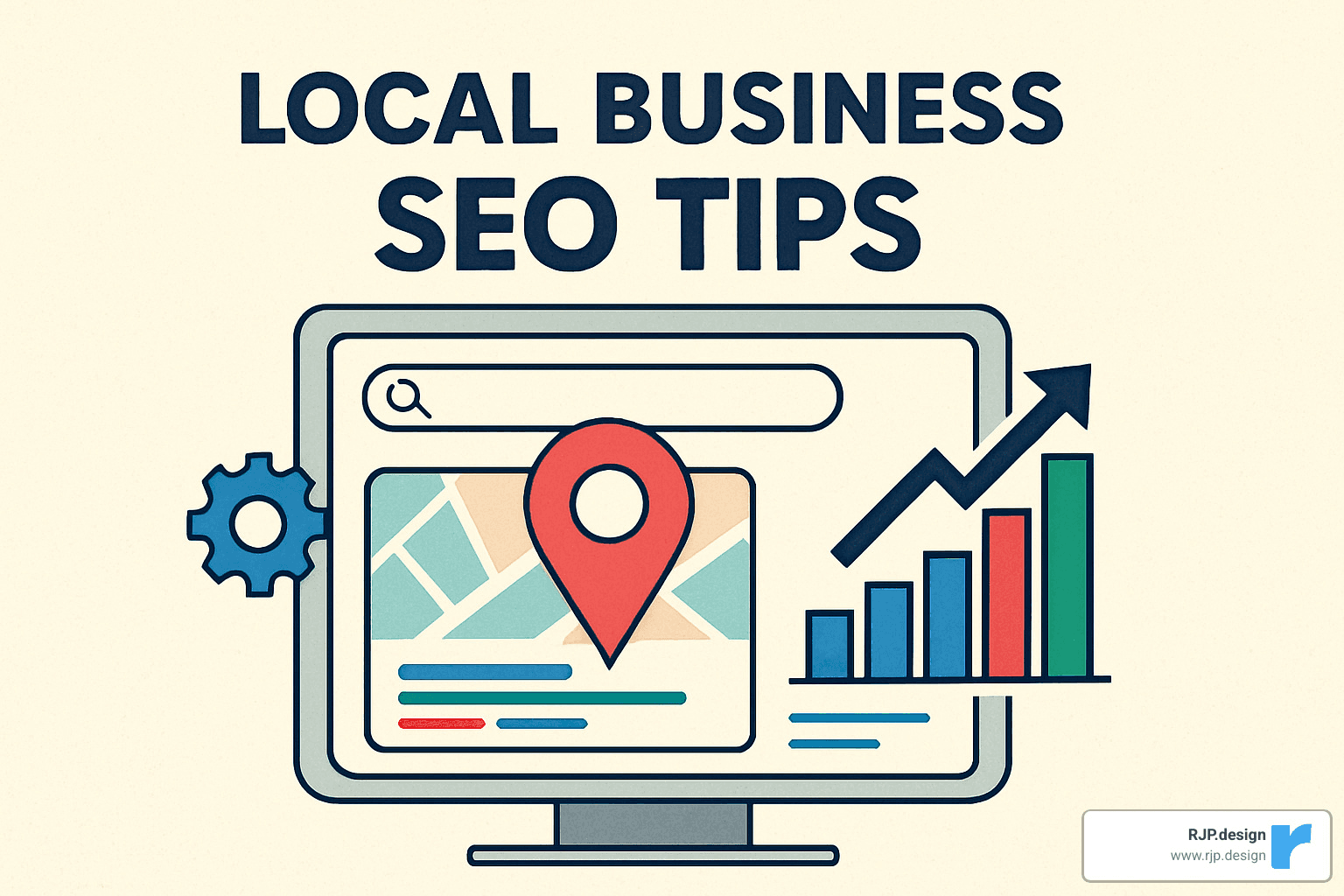
Tools & Metrics That Matter
Remember when marketing meant putting an ad in the paper and hoping for the best? Those days are long gone! Now we have powerful tools that show us exactly what’s working and what isn’t.
Google Analytics 4 has become the bread and butter for tracking website performance. It helps you see not just how many local visitors are finding your site, but how they’re engaging with it. Are they bouncing right away or sticking around to learn more about your services? This tells you if your content is actually connecting with local searchers.
Google Search Console is like having a direct line to Google’s brain. It shows you which local keywords are bringing visitors to your site and where you might be missing opportunities. One of our clients finded through Search Console that they were showing up for “custom cabinets” but not “kitchen remodeling”—a simple content adjustment later, and they were capturing both search intents.
Your Google Business Profile Insights deserves special attention too. This is where you’ll see how people are interacting with your profile—whether they’re clicking for directions, calling your business, or visiting your website. These actions often translate directly into foot traffic and sales.
For tracking your Map Pack positions (you know, those three local businesses that show up with the map), tools like Local Falcon or Bright Local can be invaluable. They show you how your rankings vary across different neighborhoods in your service area.
“The most important metric isn’t always rank—it’s conversions,” shared one of our successful clients. They’re right! Call tracking solutions that assign unique phone numbers to different marketing channels help you determine which aspects of your local business SEO tips are actually generating leads.
Setting up UTM parameters on links from your Google Business Profile is a simple yet powerful trick. This way, when someone clicks through to your website, you’ll know exactly where they came from and can track their journey all the way to conversion.
Common Mistakes to Dodge
Even the savviest business owners can stumble into local SEO pitfalls. Let’s make sure you’re not one of them!
Keyword stuffing is the digital equivalent of shouting at your customers—it doesn’t work, and it makes everyone uncomfortable. I once saw a business name that read “Boston Plumber Plumbing Services Boston Emergency Plumber”—yikes! Google’s smart enough to see through this and may actually penalize you for it.
Inconsistent NAP information across the web is like giving your customers different phone numbers depending on which friend referred them—it creates confusion and erodes trust. When your name, address, and phone number vary even slightly between listings, both search engines and customers get mixed signals.
Neglecting reviews is a missed opportunity that hurts twice—once for SEO and once for reputation. A hardware store owner told me, “I was so busy running my store that I forgot to respond to reviews for months. When I finally started engaging, not only did my rankings improve, but customers started mentioning how much they appreciated my responses.”
Creating thin, duplicate content across multiple location pages is another common mistake. Each location page should feel like it was created specifically for that neighborhood or community. Share local insights, highlight nearby landmarks, and feature testimonials from customers in that area.
Mobile optimization cannot be an afterthought when 60% of local searches happen on mobile devices. If your site loads slowly or is difficult to steer on a phone, you’re essentially turning away customers at the door.
Using fake addresses or P.O. boxes might seem like a clever way to appear in more locations, but it violates Google’s guidelines and can result in suspended listings. One landscaping company learned this the hard way when their listing disappeared overnight after Google detected they were using a virtual office.
The most successful local businesses approach their SEO with authenticity. A San Diego contractor created unique pages for each neighborhood they served, featuring local testimonials, area-specific service information, and even photos of projects completed in those communities. This genuine approach not only avoided the duplicate content trap but actually strengthened their connection with each neighborhood.
At RJP.design, we believe in tracking what matters while staying true to your business values. The numbers should tell a story about real people finding and choosing your business—not just algorithmic victories.
Frequently Asked Questions about Local business SEO tips
How long before I see results?
The million-dollar question! Most of our clients start seeing meaningful local SEO results within 2-4 months, though I always remind them that this timeline can shift based on several factors.
If you’re in a highly competitive market like Manhattan restaurants, it might take longer than if you’re the only pet groomer in a small town. Your starting point matters too—established businesses with some online presence typically see faster movement than brand-new ventures starting from scratch.
The quality and consistency of your efforts make an enormous difference. I’ve seen businesses transform their local visibility in just weeks after claiming and fully optimizing their Google Business Profile, while others take longer when they approach things sporadically.
One of our bakery clients put it perfectly: “We saw our first ranking improvements about 6 weeks after implementing local business SEO tips, but it took about 3 months before we noticed a significant increase in leads and foot traffic.”
Local SEO isn’t a one-time project you can check off your list—it’s more like tending a garden that needs regular attention to truly flourish.
Are paid local SEO services worth it?
This really depends on your specific situation—there’s no one-size-fits-all answer.
If you’re running a busy restaurant and barely have time to check your email, professional help can be invaluable. Similarly, if you manage multiple locations or face fierce competition, expert guidance often pays for itself many times over.
At RJP.design, we’ve helped businesses achieve 5-10x returns on their local SEO investments through increased visibility and customer acquisition. But we’re also honest when someone might be better off handling things themselves—especially if they have the time and inclination to learn.
When you’re evaluating services (ours or anyone else’s), look for transparency in tactics, industry-specific case studies, clear communication about timelines, and a strong focus on sustainable techniques that won’t get you in trouble with Google down the road.
One word of caution: in local SEO, as in life, you often get what you pay for. Those $99/month miracle packages usually deliver exactly $99 worth of value—which isn’t much. Quality local SEO requires genuine expertise and ongoing effort, which should be reflected in the pricing.
What’s the biggest mistake small businesses make?
In our experience working with hundreds of local businesses, the most common mistake is treating local SEO as a “set it and forget it” task. This shows up in so many ways, from claiming Google Business Profiles but never updating them, to ignoring customer reviews (both positive and negative), to letting business information go stale when hours or services change.
Another huge mistake is trying to do everything at once rather than focusing on high-impact activities first. Local business SEO tips work best when implemented strategically, not scattered like buckshot.
A hardware store owner we work with shared this wisdom: “Start with one major area, measure results, then expand rather than building hundreds of pages at once.” His methodical approach helped him dominate local search in a competitive market within six months.
At RJP.design, we help businesses prioritize their local SEO efforts based on their specific goals, market, and resources. We’re big believers in doing the right things in the right order—ensuring you get the maximum return on every hour and dollar you invest in your local online presence.
Our down-to-earth team loves seeing small businesses succeed, and we’re always happy to chat about whether your business might benefit from some professional guidance or if you’re on the right track handling things yourself.
Conclusion
Implementing effective local business SEO tips isn’t just a nice-to-have for small businesses anymore—it’s become essential to staying afloat and growing in today’s increasingly digital marketplace. Throughout this guide, we’ve walked through strategies that create a solid foundation for boosting your local visibility and making meaningful connections with customers right in your neighborhood.
What makes local SEO so powerful is that perfect blend of technical know-how and genuine community engagement. The businesses that truly shine aren’t just the ones checking off SEO boxes—they’re the ones who genuinely understand their local customers and serve them authentically.
Tracking your performance is crucial as you put these strategies into action. Be ready to pivot and adjust as search engines evolve (which they constantly do) and as your customers’ behaviors shift. Think of local SEO as an ongoing journey rather than a destination you reach once. The businesses that commit to continuous improvement are the ones that see the best long-term results.
I’ve seen how businesses transform when they accept local SEO. A small bakery I worked with went from barely surviving to having lines out the door on weekends after implementing just a handful of the strategies we’ve covered. Their secret? Consistency and authenticity in everything they did.
Here at RJP.design, we’re passionate about helping businesses like yours create websites that don’t just look great but actually get found by the people looking for exactly what you offer. Our team keeps things down-to-earth—no confusing jargon or empty promises—just solid strategies that deliver real results for real businesses.
Are you ready to take your local presence to the next level? We’d love to chat about how we can help you put these local business SEO tips into action and connect with more customers in your community. The digital landscape can feel overwhelming sometimes, but you don’t have to steer it alone.
For more information about our Google Search Optimization services and how we can help your business thrive online, visit our Google Search Optimization page.