Web
Top Tips for Choosing a Professional Web Design Firm
Sep 27, 2024
Why Professional Web Design Matters
Professional web design is crucial for any business aiming to thrive in today’s digital world. It drastically impacts your business’s online presence, affecting everything from customer experience to conversion rates. Here’s a quick summary if you’re short on time:
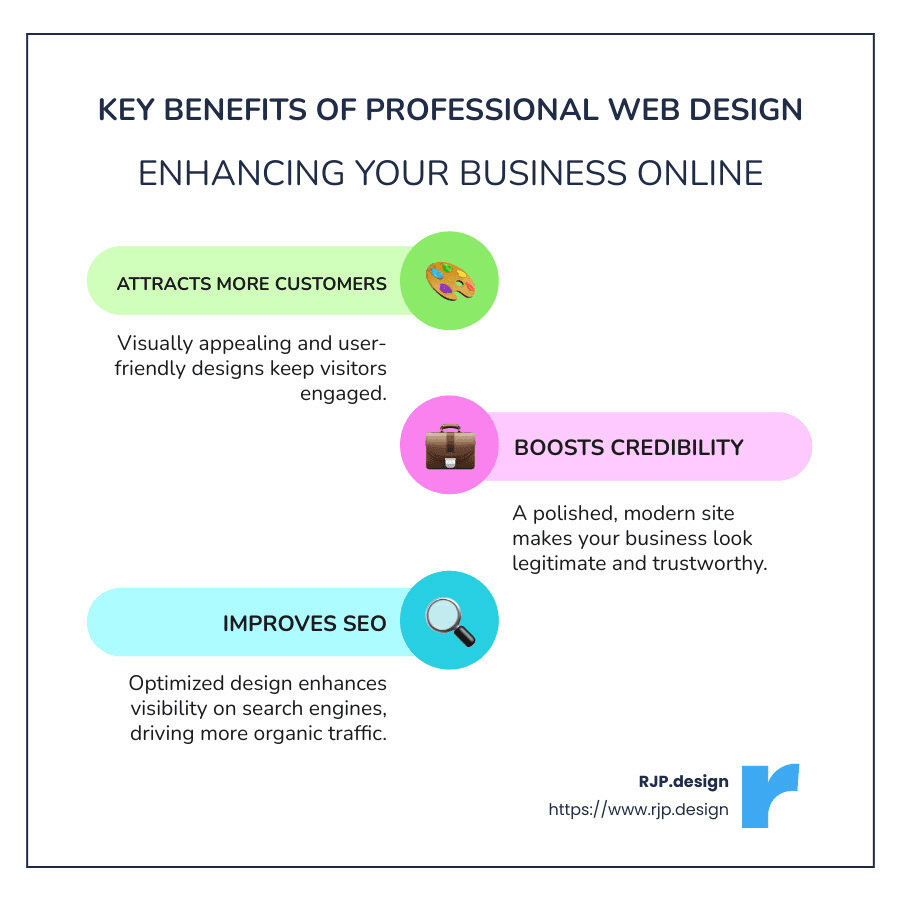
Key Benefits of Professional Web Design:
– Attracts More Customers: Visually appealing, user-friendly designs keep visitors engaged.
– Boosts Credibility: A polished, modern site makes your business look more legitimate and trustworthy.
– Improves SEO: Optimized design improves visibility on search engines, driving more organic traffic.
– Increases Conversion Rates: Effective layout and clear calls to action turn visitors into customers.
A professional website isn’t just about aesthetics; it’s a vital tool for communication with your audience and achieving your business goals. Your website is often the first interaction potential customers have with your brand. Thus, it should convey your message clearly, engage users from the get-go, and guide them smoothly through their journey.
The importance of web design transcends mere visual appeal. It touches on user experience, site performance, and marketing strategies. An effective design can lead to significant business growth by enhancing brand recognition, authority, and sales. As Sayenko Design succinctly puts it, “A website can be as powerful a branding experience as a storefront, and for many businesses it is a primary way of engaging with patrons.”
I’m Ross Plumer, a digital marketing and website design expert with a background from Purdue University and extensive experience helping businesses maximize their digital presence. My holistic approach integrates psychology and societal research into creating effective web designs that resonate with users. Here’s more about what makes professional web design essential for your business:
Key professional web design vocabulary:
– affordable mobile website redesign
– professional website redesign
Define Your Website’s Purpose
Before diving into the design process, it’s crucial to define the purpose of your website. This foundational step ensures that your site meets your business goals and resonates with your target audience.
Site’s Purpose
Your website’s purpose will guide every design decision. Are you aiming to increase product sales, generate leads, or perhaps promote a key piece of content? Clearly identifying your primary objective helps shape the user experience and ensures visitors are guided towards that goal. For instance, an e-commerce site will prioritize product listings and a seamless checkout process, while a blog might focus on readability and content findability.
Business Goals
Aligning your website with your business goals is essential for success. Whether you want to boost brand awareness, demonstrate industry expertise, or improve customer engagement, your website should facilitate these aims.
Example: A conversion-focused approach means every element on the site works towards turning visitors into customers. This strategy has been proven to increase traffic, leads, and conversions.
Target Audience
Understanding your target audience is key to creating a site that appeals to them. Consider their demographics, preferences, and behaviors. This knowledge will influence your site’s aesthetics, functionality, and content.
Story: A cosmetics and beauty website, for example, might focus on high-quality visuals and easy navigation to appeal to its primarily female audience. Conversely, a B2B website might prioritize professional design and detailed information to attract corporate clients.
By defining the purpose, aligning with business goals, and understanding your target audience, you set the stage for a website that not only looks good but also drives business growth.

Next up: We’ll explore how to evaluate a web design firm’s portfolio to ensure they can deliver a site that meets your needs and exceeds your expectations.
Evaluate the Firm’s Portfolio
Reviewing a web design firm’s portfolio is a crucial step in choosing the right partner for your project. This will give you insights into their past projects, design examples, and industry experience.
Past Projects
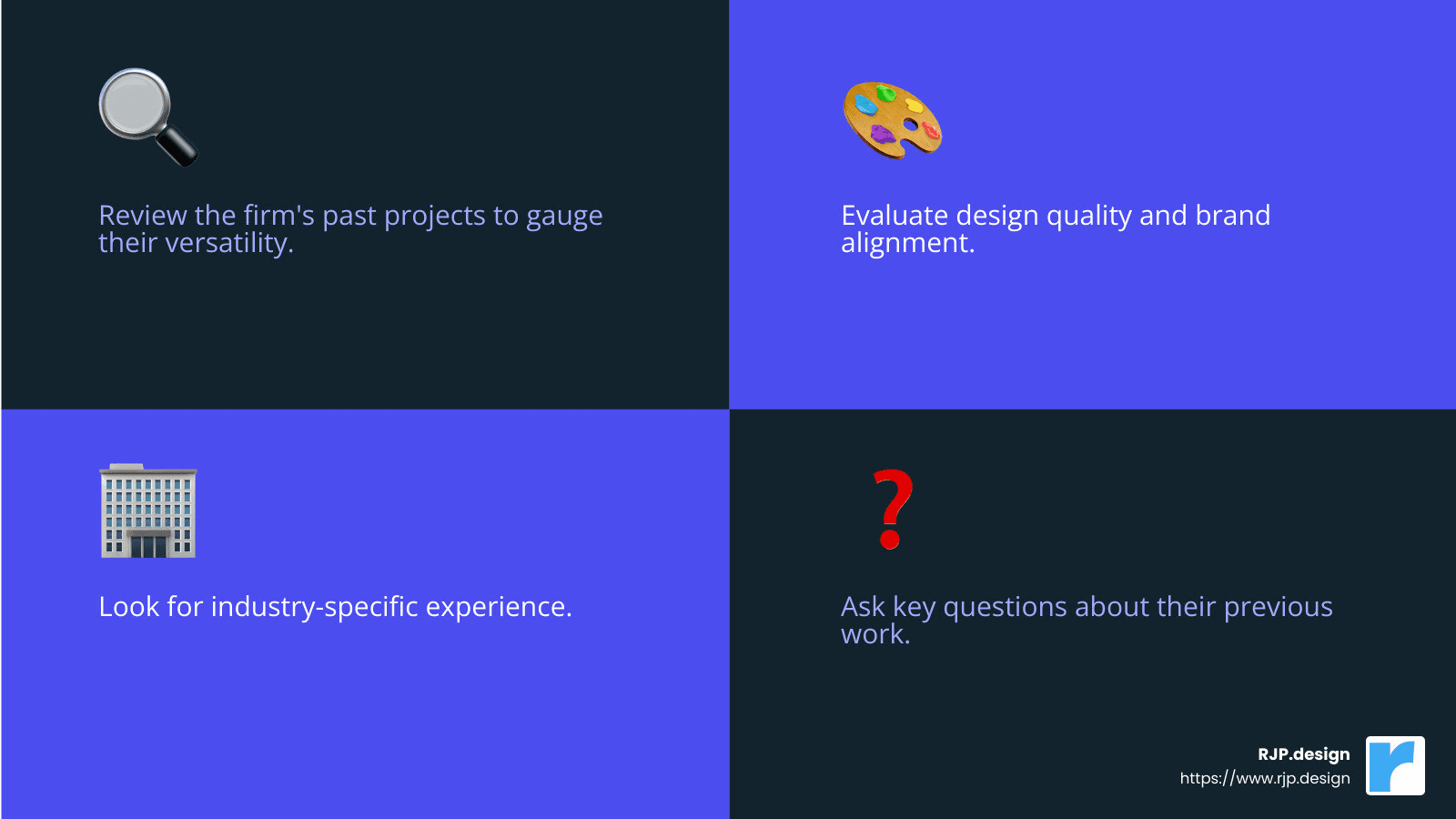
Start by looking at the firm’s past projects. A comprehensive portfolio showcases a variety of websites they’ve designed, giving you a sense of their versatility and creativity.
Tip: Look for projects that are similar in scope and complexity to your own. This can be an indicator that the firm can handle your specific needs.
Design Examples
Evaluate the design quality of the examples in the portfolio. Are the websites visually appealing and easy to steer? Do they reflect the brand’s identity effectively? Good design is not just about aesthetics; it should also improve user experience.
Case Study: A refresh of a brand’s website is a perfect example of adapting design to meet a revamped brand style guide and identity. This shows the firm’s ability to integrate new branding seamlessly into an existing framework.
Industry Experience
Consider whether the firm has experience in your industry. This can be a significant advantage as they will already understand the unique challenges and requirements of your sector.
Fact: A firm with diverse industry experience can bring a wealth of knowledge and innovative solutions to your project.
Key Questions to Ask
When evaluating a firm’s portfolio, consider asking the following questions:
Have they worked with businesses similar to yours?
What design challenges did they face and how did they overcome them?
Do their designs align with current web design trends?
By thoroughly evaluating a web design firm’s portfolio, you can gain confidence in their ability to deliver a website that meets your needs and exceeds your expectations.
Next up: We’ll dive into the design process and how the right firm collaborates with clients to ensure a successful project.
Assess Their Design Process
Understanding a firm’s design process is crucial for ensuring a successful project. A well-defined process indicates professionalism and a structured approach to web design.
Design Steps
A professional web design firm should have a clear and transparent design process. This typically involves several key steps:
Discovery Phase: Understanding your business, goals, and target audience.
Planning: Creating a site map and wireframes to outline the website structure.
Design: Developing visual elements and layouts based on the wireframes.
Development: Turning the designs into functional web pages.
Testing: Ensuring everything works perfectly before launch.
Launch: Making the website live and accessible to your audience.
Post-Launch: Ongoing support and maintenance.
Tip: Ask the firm to walk you through their design process. This will give you a better idea of what to expect and how they handle each phase.
Client Collaboration
Effective collaboration between the client and the design firm is essential. The best firms involve clients at every stage, ensuring their vision is accurately translated into the final product.
Fact: At RJP.design, user Q&A sessions and usability studies are integral parts of their process. This ensures that real-world feedback is incorporated into the design.
Quote: “From step one, our professional web design process is custom to the end user in mind.” – RJP.design
Feedback Loops
Regular feedback loops are vital for a successful design project. They allow for adjustments and improvements based on client input, ensuring the final product meets expectations.
Initial Feedback: After the discovery and planning phases, initial designs are shared for client feedback.
Iterative Reviews: Design iterations are reviewed and refined based on client input.
Final Approval: The client gives the final go-ahead before development begins.
Case Study: RJP.design’s approach includes deep company, competitor, and industry research. This ensures that their designs are not only visually appealing but also strategically aligned with the client’s business goals.
Key Questions to Ask:
How do you involve clients in the design process?
What tools do you use for collaboration and feedback?
How often can we expect updates and reviews?
By thoroughly assessing a web design firm’s process, you can ensure that they have the structure, transparency, and collaboration needed to bring your vision to life.
Next up: We’ll explore the cost considerations and how to evaluate the pricing models of professional web design firms.
Consider the Cost
When choosing a professional web design firm, understanding their pricing models and costs is crucial. Here are some key points to consider:
Pricing Models
Web design firms typically offer different pricing models. Understanding these can help you choose the best option for your budget and needs:
Fixed Price: A set price for the entire project, agreed upon upfront. This model is best for projects with clear, well-defined requirements.
Hourly Rate: Charges based on the number of hours worked. This is ideal for projects with evolving needs or those requiring ongoing adjustments.
Retainer: A recurring fee for ongoing work and support. This model suits businesses needing regular updates and maintenance.
Fact: According to industry standards, pricing can range from free to over $100,000, depending on the complexity and size of the website.
Hourly Rates
Hourly rates vary widely based on the firm’s expertise, location, and the project’s complexity. Here’s a general idea:
Entry-Level Designers: $25 – $50 per hour
Mid-Level Designers: $50 – $100 per hour
Expert Designers: $100 – $200+ per hour
Tip: Clarify the hourly rate and ask for an estimate of the total hours needed to avoid surprises.
Project Estimates
A detailed project estimate helps you understand the total cost and what’s included. Look for estimates that cover:
Findy and Planning: Costs for initial research and planning.
Design and Development: Fees for creating and coding the website.
Testing and Launch: Expenses for testing and making the site live.
Post-Launch Support: Costs for ongoing maintenance and updates.
Case Study: Some firms provide a comprehensive breakdown of costs, ensuring transparency and no hidden fees.
Key Questions to Ask:
What is your pricing model, and can you provide a detailed quote?
Are there any additional costs beyond the initial estimate?
How do you handle changes or additional requests during the project?
Understanding the cost structure of a professional web design firm helps you make an informed decision and ensures you get the best value for your investment.
Next up: We’ll discuss the additional services that web design firms may offer, such as SEO, branding, and content creation.
Check for Additional Services
When choosing a professional web design firm, it’s important to consider the extra services they offer. These can significantly improve your website’s performance and overall brand presence. Here are some key services to look for:
SEO (Search Engine Optimization)
A well-designed website is only valuable if people can find it. SEO helps your site rank higher in search engine results, driving more traffic and increasing visibility.
Keyword Integration: Using relevant phrases throughout your site.
Content Optimization: Ensuring your content is valuable and easy to read.
Technical SEO: Improving site speed and mobile compatibility.
Fact: Up to half of web traffic now comes from smartphones, making mobile optimization a must for SEO.
Branding
Your website should reflect your brand’s identity. A cohesive branding strategy can make your site more memorable and engaging.
Logo Design: Creating a unique and recognizable logo.
Color Schemes: Using colors that align with your brand.
Typography: Choosing fonts that improve readability and brand feel.
Tip: Consistent branding helps build trust and recognition among your audience.
Content Creation
High-quality content keeps visitors engaged and encourages them to take action. Look for firms that offer:
Blog Posts: Regular updates to keep your audience informed.
Videos and Graphics: Visual content to make your site more engaging.
Product Descriptions: Detailed and persuasive descriptions to boost sales.
Fact: Qualitative user testing can refine content and improve user interaction.
Maintenance
Websites require regular updates and maintenance to stay secure and functional. Ensure the firm offers:
Security Updates: Patching vulnerabilities to protect your site.
Content Updates: Adding new content and features as needed.
Performance Monitoring: Regular checks to ensure optimal performance.
Fact: Ongoing maintenance can reduce the need for future adjustments or redesigns post-launch.
By considering these additional services, you can ensure your website not only looks great but also performs well and supports your business goals.
Next up: We’ll discuss the importance of responsive design and how it impacts user experience across different devices.
Ensure They Offer Responsive Design
Responsive design is crucial for today’s digital landscape. With more people using mobile devices to browse the web, your site must look good and function well on all devices. Here’s why responsive design matters:
Mobile Optimization
Mobile optimization ensures your website performs well on smartphones and tablets. A Google study found that 53% of mobile users will abandon a site if it takes more than three seconds to load. This makes speed a critical factor.
Fact: Page load speed impacts your bounce rate. As load speeds increase from one to three seconds, the probability of a bounce increases by 32%.
Cross-Device Compatibility
Your website should offer a seamless experience across all devices—desktops, tablets, and smartphones. This is essential for maintaining a consistent user experience.
Tip: Test your website on multiple devices during development to ensure it renders well everywhere.
User Experience
Good user experience (UX) keeps visitors on your site longer and encourages them to take action. A custom web design can tailor conversion funnels and user journeys, making the site more engaging.
Stat: 67% of users consider bad UX a primary reason to leave a website.
By focusing on responsive design, you can provide a better user experience, reduce bounce rates, and increase conversions.
Next up: We’ll explore how client testimonials and reviews can help you choose the right web design firm.
Look for Client Testimonials and Reviews
When choosing a professional web design firm, client testimonials and reviews are invaluable. They give you insight into the firm’s reliability, expertise, and the quality of their work.
Customer Feedback
Reading customer feedback helps you understand the experiences of past clients. Look for comments on:
Communication: Did the firm keep the client updated?
Timeliness: Were deadlines met?
Quality: Was the final product up to the mark?
For instance, RJP.design assigns a dedicated, senior-level digital strategist to each project to ensure streamlined communication and timely delivery. This approach has garnered them positive feedback from clients.
Case Studies
Case studies provide a detailed look at the firm’s problem-solving skills and their ability to deliver results. They often include:
Project Goals: What did the client want to achieve?
Challenges: What obstacles did the firm face?
Solutions: How did the firm overcome these challenges?
Results: What were the outcomes?
For example, a university saw increased applications after a custom website design improved their user journey with engaging call-to-action buttons and easy-to-steer menus.
Success Stories
Success stories highlight the firm’s ability to drive tangible results. These stories often include metrics that show the impact of their work.
Take an e-commerce store, for instance. Their custom Shopify store, designed by a professional web design firm, significantly boosted their online visibility and conversions.
Tip: Look for success stories that align with your industry to gauge how well the firm understands your specific needs.
By focusing on client testimonials, reviews, and case studies, you can make an informed decision and choose a web design firm that aligns with your goals.
Next up: Frequently Asked Questions about Professional Web Design.
Frequently Asked Questions about Professional Web Design
How much does a professional web designer cost?
The cost of hiring a professional web designer can vary widely. Hourly rates typically range from $75 to $200 per hour, depending on the designer’s experience and location. For instance, a basic website might cost between $2,000 and $5,000, while more complex sites can exceed $10,000.
Project estimates often depend on the scope and complexity of the work. A small business website with a few pages and standard features might fall on the lower end of the spectrum. In contrast, a custom e-commerce site with advanced functionalities will be more expensive.
Tip: Always ask for a detailed quote to understand what you’re paying for. This helps avoid unexpected costs later.
What is professional web design?
Professional web design is more than just creating a visually appealing website. It involves several key components:
UI/UX (User Interface/User Experience): Ensuring the site is easy to steer and provides a pleasant experience for users.
Visual Elements: This includes layout, color schemes, typography, and imagery that align with your brand.
User Navigation: Designing intuitive menus and buttons that guide visitors through the site seamlessly.
A good professional web design balances aesthetics with functionality. It aims to engage visitors, keep them on the site longer, and encourage them to take action, like making a purchase or filling out a contact form.
How much does it cost to hire a professional web developer?
Hiring a professional web developer can also vary in cost, influenced by the project’s complexity and required skills. Hourly rates for web developers range from $50 to $150 per hour.
Cost range: For a basic website, you might spend between $3,000 and $6,000. More intricate websites with custom features can range from $10,000 to $30,000 or more.
Optimization benefits: Investing in a professional web developer ensures your site is optimized for speed, mobile usability, and search engines. This not only improves the user experience but can also improve your site’s ranking on search engines, driving more traffic and potential customers to your business.
Understanding these costs and components helps you make an informed decision when choosing a web design firm.
Next up: Conclusion.
Conclusion
Choosing the right professional web design firm is crucial for your business’s online success. A well-designed website not only looks good but also functions seamlessly, driving traffic and conversions. By following the tips in this article, you can ensure you select a firm that aligns with your goals and delivers a high-quality product.
At RJP.design, we specialize in creating custom websites that improve your online presence. Our team is down-to-earth and prioritizes client satisfaction, ensuring you get the best value for your investment. From initial strategy to final launch, we are committed to delivering a website that meets your business needs and exceeds your expectations.
Client satisfaction is our top priority. We work closely with you throughout the design process, incorporating your feedback to create a site that truly represents your brand. Our portfolio speaks for itself, showcasing a range of successful projects across various industries.
Ready to take your online presence to the next level? Contact us for a free consultation and see how we can help you achieve your goals.