SEO
The SEO Starter Kit: Making Your Website Search Engine Friendly
Sep 4, 2025

SEO-friendly websites: 3 Essential Tips
Why SEO-Friendly Websites Are Your Business’s Best Investment
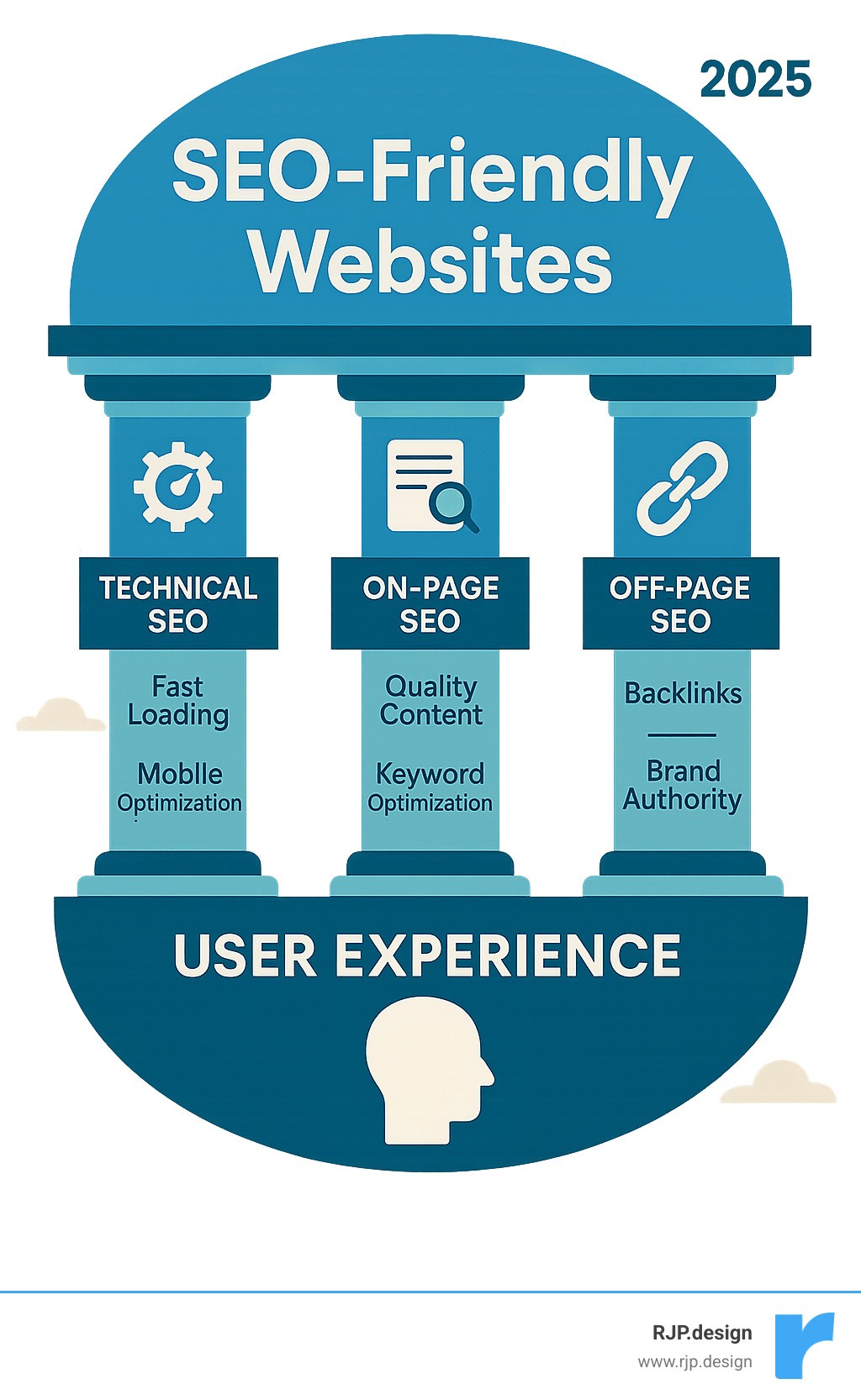
SEO-friendly websites are the foundation of any successful online business. They are websites built to be easily found, crawled, and understood by search engines like Google, while also providing an excellent experience for visitors.
Here’s what makes a website SEO-friendly:
Technical foundation – Fast loading speeds, mobile responsiveness, and clean code.
Quality content – Well-structured, keyword-optimized content that answers user questions.
Strong authority – Trustworthy backlinks and positive signals from other websites.
User-focused design – Easy navigation and an engaging experience.
The numbers don’t lie: 68% of online experiences begin with a search engine. This means potential customers are actively looking for businesses like yours right now. Without an SEO-friendly website, you’re invisible to them.
Think of it this way: a great product is useless if people can’t find your store. SEO makes your website findable, trustworthy, and valuable to both search engines and real people.
The beauty of an SEO-friendly website is that it works around the clock. While you sleep, your optimized site attracts new customers and builds trust. It’s not just about rankings; it’s about creating a digital asset that consistently delivers results.
I’m Ross Plumer, and I’ve helped businesses market over $20 million in revenue by creating SEO-friendly websites that drive growth, combining technical expertise with a deep understanding of what makes people click, stay, and convert.
The Blueprint: Core Technical SEO for a Solid Foundation
When we talk about SEO-friendly websites, what happens behind the scenes matters most. Technical SEO creates a rock-solid foundation that search engines can work with.
Google’s crawlers roam the internet to find, understand, and index your pages. If your website isn’t technically sound, these crawlers can’t find you. A site with clean code and a logical structure is essential. Important pages should be just a few clicks from your homepage, making it easy for both users and crawlers to steer. Messy code confuses crawlers and slows everything down.
Tools like Google’s Lighthouse testing tool can spot these technical issues. Our Technical SEO Experts at RJP.design specialize in navigating this technical maze for you.
Why Mobile-First is a Must for SEO-friendly websites
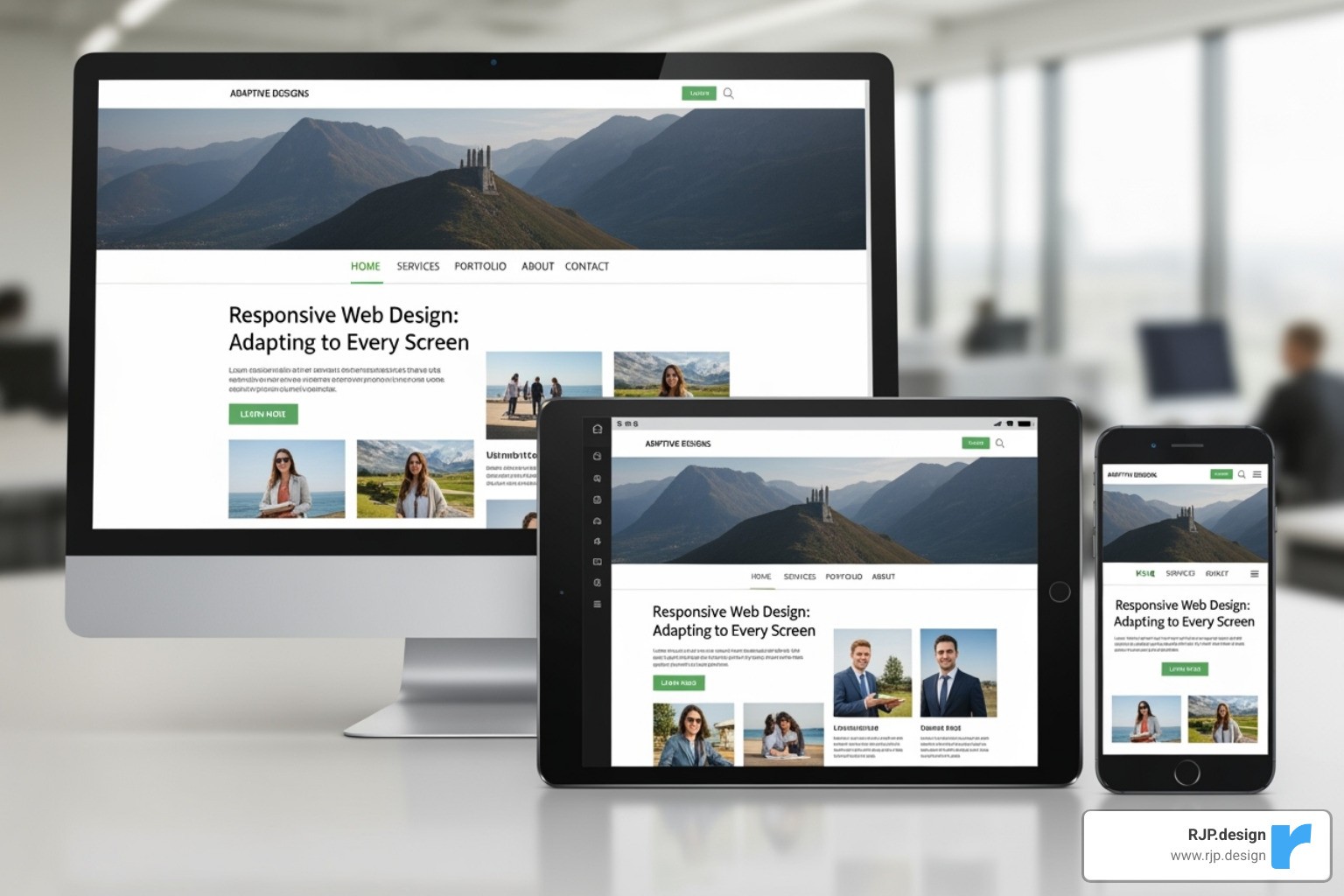
More than half of all web traffic now comes from mobile devices. Because of this, Google uses mobile-first indexing, meaning it judges your entire website based on its mobile performance. If your site works poorly on a phone, Google assumes it’s not worth showing to anyone, even on desktop.
Responsive design is the solution. It ensures your website automatically adjusts to look great on any screen, from a small phone to a large monitor. Text should be readable (at least 16-20 pixels), and buttons easy to tap. This isn’t just for Google; a poor mobile experience causes visitors to leave immediately, increasing your bounce rate. Google rewards sites that provide a good user experience with better rankings.
Check your site with Google’s Mobile-Friendly Test. If you need help, our Good Mobile Website Design by RJP.design service can create a site that works beautifully on every device.
How Website Speed Impacts Your Ranking
No one waits for slow websites. If your site takes more than a few seconds to load, visitors will leave. Google knows this and has made page loading speed a major ranking factor.
Google measures this with Core Web Vitals, which track how fast your content loads and how quickly users can interact with your page. These metrics directly reflect user experience. A slow site leads to a high bounce rate (the percentage of visitors who leave after viewing only one page), signaling to Google that your site isn’t meeting user needs, which hurts your rankings.
The most common speed killers are large, uncompressed images, poor browser caching, and too many simultaneous page requests. Tools like PageSpeed Insights can identify what’s slowing you down. Maintaining a fast site requires constant attention, which is why our Website Concierge Maintenance by RJP.design service handles these technical tune-ups for you.
Ensuring Your Content is Findable
Even a fast, mobile-friendly site needs technical guidance for search engines.
An XML sitemap acts as a map for search engines, listing all your important pages to ensure they get found. Submitting this sitemap via Google Search Console gives Google a VIP pass to your content.
Your robots.txt file tells crawlers which parts of your site to explore and which to ignore, which is useful for keeping private or low-value pages out of search results. Be careful, as a mistake here can block your entire site.
Indexing is the process of Google analyzing and storing your pages. For this to work, your pages need the right technical signals. Canonical tags are crucial for managing duplicate content. If you have similar pages, a canonical tag tells Google which is the “official” version, concentrating your SEO value on a single page instead of splitting it.
Content is King: Mastering On-Page Optimization
Once your technical foundation is solid, it’s time for on-page SEO—the content on your pages. This is about crafting content that both search engines and people love.
Google’s mission is to deliver the best answers to user questions. They look for helpful, well-written, and trustworthy content. When visitors find what they need on your site, they stay longer and explore more, signaling to Google that your content is high-quality.
Great content must also be easy to read. Use clear headings, short paragraphs, and white space to avoid overwhelming readers. Simple, clear writing always wins. Keywords are important, but use the natural language your customers use. Focus on being helpful first.
This aligns with Google’s E-E-A-T framework: Experience, Expertise, Authoritativeness, and Trustworthiness. It’s about being authentic. Share your experience, showcase your expertise, and build a trustworthy reputation. Our SEO Content Optimizer services help you create content that naturally meets these standards.
The Role of Keywords and Content Structure
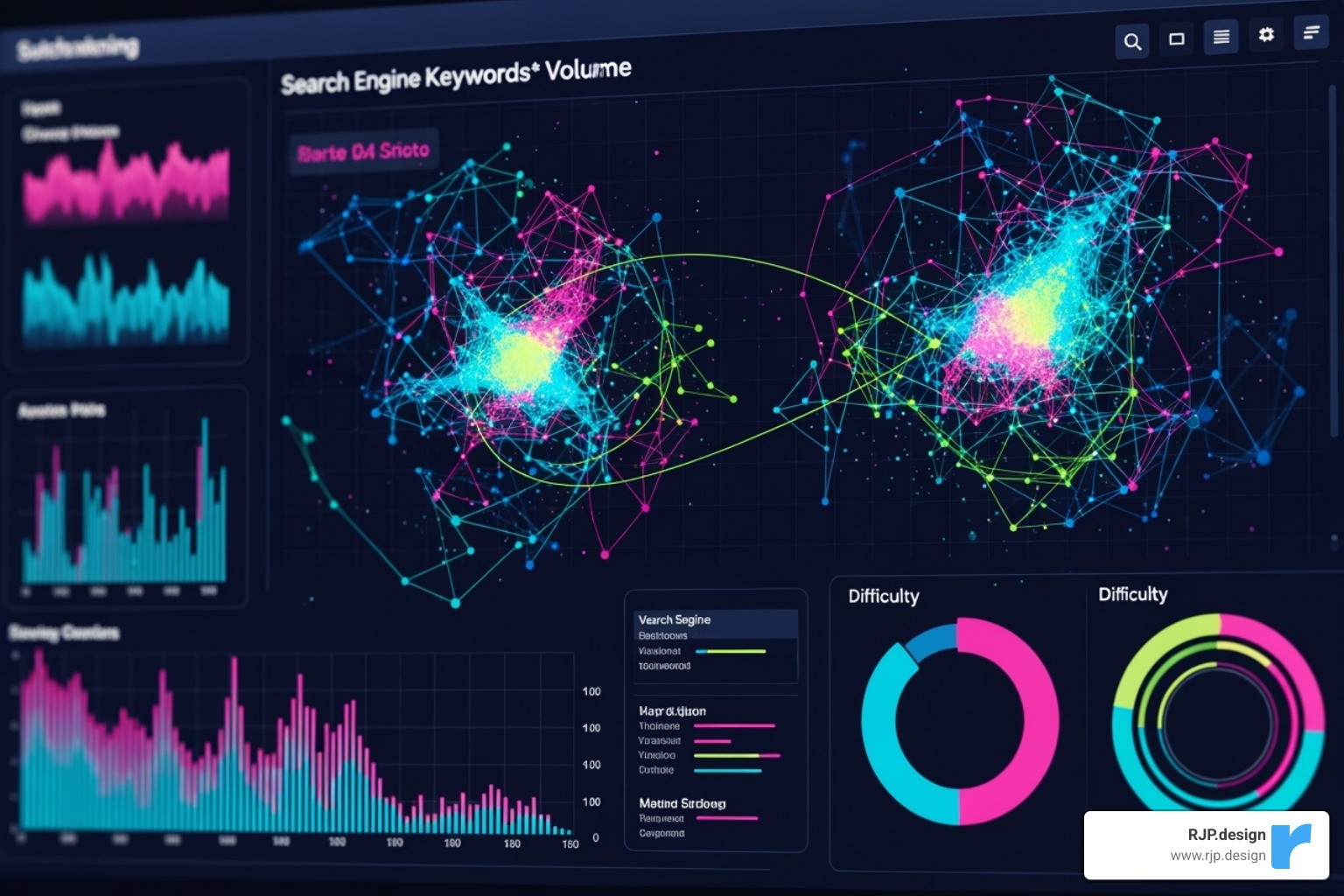
Keywords connect your content to search engines. It’s not just about the words, but the search intent behind them. Why is someone searching for “pet toys”? Are they researching, comparing prices, or looking for DIY ideas? Matching your content to this intent is crucial for SEO-friendly websites.
Our keyword research process identifies not just popular terms, but related phrases your customers use, like “puppy chew toys” or “interactive pet toys,” to capture more opportunities.
Content structure is the skeleton of your page. Header tags (H1 through H6) act as an outline. Your H1 tag is the main headline; use only one per page, and include your primary keyword. H2 tags break content into major sections, and H3 tags create subsections. This helps both readers and search engines scan your content efficiently.
Your title tag is what people see in search results. Keep it under 60 characters and make it compelling. The meta description (around 155 characters) is your ad copy in the search results; while not a direct ranking factor, a good one boosts clicks. Our SEO Keyword Research services can help you find the right keywords and structure for your content.
Creating Clean URLs and Optimizing Links
A clean URL like yourwebsite.com/dog-training-tips tells users and search engines exactly what to expect. Avoid messy URLs like yourwebsite.com/index.php?id=12345. Keep URLs short, descriptive, and keyword-rich.
Anchor text—the clickable words in a link—is also a powerful tool. Use descriptive phrases like “our dog training services” instead of “click here.” This helps users and gives search engines context.
Internal linking is a strategic way to show search engines which pages are important and guide users to related content. By linking between pages on your site, you spread authority and keep visitors engaged. We follow proven internal linking best practices to build a logical site structure. External links, or Link Building Off-Page SEO, are also vital for building authority.
Optimizing Images and Videos for Search
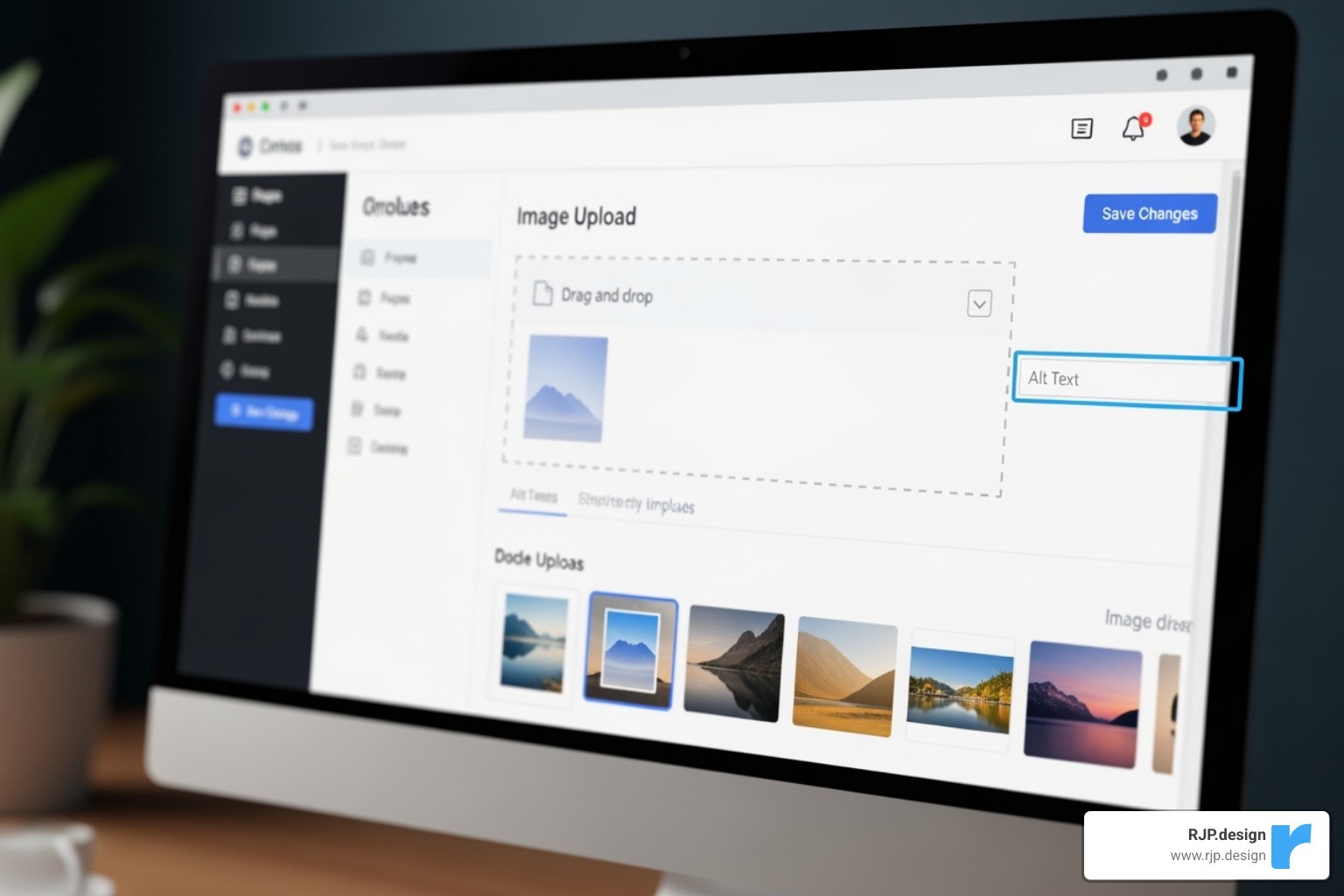
Images and videos are powerful SEO tools. Many searches start on Google Images, so a well-optimized image can be a user’s first interaction with your brand.
Before uploading, change image file names from IMG_1234.jpg to something descriptive like chocolate-labrador-playing-fetch.jpg. Use alt text to describe the image for search engines and users with screen readers. Be clear and include relevant keywords naturally.
Image compression is crucial for site speed. Large files slow down your pages, so compress images to balance quality and file size.
Video optimization follows similar rules. Use keyword-rich titles and descriptions, and provide transcripts. Videos can significantly increase page engagement time, a positive signal for search engines. Both images and videos can help you earn rich snippets in search results, which grab attention and increase clicks.
Our Image Optimization Services ensure your visuals support your SEO, while our Video Production team creates engaging content to boost your visibility.
Building Authority: Off-Page and Promotional Strategies
Think of your website as a new restaurant. Great food and decor (on-page SEO) aren’t enough if no one knows you exist. Off-page SEO is about building your reputation and getting others to vouch for you.
Off-page SEO includes everything that happens outside your website to boost its rankings. The goal is to show search engines that your SEO-friendly websites are trustworthy and popular. The most important factor is link building—getting other reputable websites to link to yours. Google sees these backlinks as votes of confidence; more quality votes mean higher authority.
Brand mentions, even without a link, also matter. When people discuss your business on social media or leave reviews, they create “brand signals” that show you’re an active, relevant business. This creates a snowball effect: as your authority grows, more people find, share, and link to your content naturally. Our Off-Page SEO Strategies by RJP.design help build this external authority ethically.
The Difference Between On-Page and Off-Page SEO
Understanding how on-page and off-page SEO work together is key for SEO-friendly websites.
Feature | On-Page SEO | Off-Page SEO |
|---|---|---|
Location | Optimizations done directly on your website (within your control). | Optimizations done outside your website (less direct control, more influence). |
Focus | Optimizing content and website structure to be relevant and user-friendly. | Building authority, credibility, and popularity through external signals. |
Examples | – Keyword research and integration | – Backlinks (from other websites) |
Goal | To help search engines understand what your content is about and its relevance to queries. | To demonstrate your website’s trustworthiness, authority, and popularity to search engines. |
On-page SEO is what you control directly: content, keywords, and site structure. Off-page SEO is your reputation, influenced by what others say about you. The magic happens when both work together: great on-page content earns valuable off-page links and mentions, creating a virtuous cycle that search engines reward.
Leveraging Social Media for SEO
Social media doesn’t directly boost search rankings, but it’s a powerful tool for supporting your SEO-friendly websites. It acts as a megaphone for your content.
When you publish a new blog post, social media gets it in front of people immediately. This initial traffic sends positive signals to search engines. This quality traffic from social platforms often consists of engaged visitors who spend more time on your site, which is a good SEO signal.
Building a community around your brand encourages people to search for you by name and share your content. These social signals (likes, shares, comments) increase visibility and can lead to valuable backlinks from bloggers or journalists who find your content. Your social media profiles also provide backlinks to your website.
The key is to be authentic and helpful. Our Digital and Social Media Marketing Services by RJP.design help you build a social presence that supports your SEO goals.
Measuring Success and Avoiding Pitfalls for SEO-friendly websites
Building SEO-friendly websites is an ongoing process, not a one-time project. Like tending a garden, you must regularly monitor and nurture your site to see it flourish. Tracking your performance is key to knowing what’s working. Without measurement, you’re flying blind.
Fortunately, Google provides powerful free tools to understand your site’s performance. Our Website Traffic Analysis services help you turn this data into actionable insights.
Essential Tools for Monitoring SEO Performance
Your two best friends in SEO are Google Search Console and Google Analytics.
Google Search Console shows you how Google sees your site. You can find which search queries bring people to your site, spot technical issues, and check mobile performance. The performance data is invaluable, showing impressions (how often your site appeared in search), clicks, and your click-through rate (CTR). High impressions with low clicks might indicate your titles or meta descriptions need improvement.
Google Analytics shows what happens after people land on your site. Are they staying? Which pages are most popular? Where did they come from? This helps you understand your audience.
Combining these tools gives you the full story: Search Console shows your performance in search results, while Analytics reveals how well your site engages those visitors. Our Search Engine Optimization Analysis services leverage both to give you a complete picture.
Common SEO Misconceptions to Avoid
The internet is full of outdated SEO advice that can harm your rankings. Let’s clear up some common myths.
Keyword stuffing: Cramming keywords into your content makes it unreadable and signals to Google that you’re trying to game the system. Write naturally.
Buying backlinks: This is a fast track to a Google penalty. Focus on creating valuable content that earns links organically.
SEO is a one-time task: Search algorithms and competitors constantly evolve. SEO-friendly websites require ongoing attention and optimization.
Expecting instant results: SEO is a long-term investment. It typically takes 4-6 months to see initial movement and 6-12 months for significant impact.
Longer content is always better: Quality trumps quantity. Focus on thoroughly answering the user’s query, whether it takes 300 or 3,000 words. Don’t add fluff to meet a word count.
Frequently Asked Questions about SEO-friendly websites
I’m often asked the same questions by business owners who want to improve their online visibility. Here are straight answers based on my experience helping companies market over $20 million in revenue.
How long does it take to see results from SEO?
The honest truth is that SEO is a long-term investment. You might see early signs of progress within 4-6 months, like more impressions in Google Search Console. However, for significant traffic increases and higher rankings, you should plan for 6 to 12 months of consistent effort.
Google needs time to crawl, understand, and rank your site against competitors. It takes time to improve your rankings, but businesses that remain patient see incredible long-term results. It’s about building an asset that brings you customers for years, not a quick fix that disappears.
What are the most important elements of an SEO-friendly website?
Successful SEO-friendly websites nail three fundamental areas:
Technical Health: Your site must be fast, work perfectly on mobile devices, and have clean code that search engines can easily read.
Quality Content: This means creating helpful, engaging content that answers user questions and uses keywords naturally.
Authority and Trust: This is built through backlinks from other reputable websites and positive brand mentions online.
Underpinning all of this is user experience. If visitors love your site, Google will too.
Can I do SEO myself or should I hire an expert?
You can absolutely learn SEO yourself. Basic optimizations like writing good page titles or improving site speed are achievable.
However, modern SEO is complex, involving technical audits, algorithm updates, and deep competitor analysis. The question isn’t if you can do it, but if you should. How much is your time worth? An SEO Expert Near You at RJP.design brings years of experience and a tested system to get results faster. We can spot issues in minutes that might take you weeks to find, letting you focus on what you do best: running your business.
Conclusion
Building SEO-friendly websites is essential for any business that wants to thrive online. We’ve covered the three pillars of success: a solid technical foundation, high-quality on-page content, and strong off-page authority.
SEO is an ongoing process. When done right, your website becomes a powerful digital asset that works around the clock, attracting the right visitors who are actively looking for what you offer. It’s not just about getting more traffic; it’s about driving genuine business growth.
At RJP.design, we combine expert web design with proven SEO strategies to create websites that don’t just look stunning—they perform. Our down-to-earth team is committed to helping you achieve your business goals.
Ready to open up your website’s potential? Get a complete Google Search Optimization analysis for your site and find what’s possible when your website becomes a true Business Growth Online powerhouse.