
SEO
Digging for Gold: Top SEO Keyword Research Tools Reviewed
Jun 3, 2025

SEO Keyword Research: 5 Powerful Tools for Winning Results 2025
Finding the Right SEO Keyword Research Tools for Your Business
SEO keyword research is the critical first step of any successful search engine optimization campaign. To help you quickly find the best tools for your needs:
Top SEO Keyword Research Tools at a Glance:
1. All-in-one SEO toolkit offering 25+ billion keywords across 140+ countries
2. Competitor-research–focused platform with an 8+ billion query database
3. Beginner-friendly keyword explorer providing 1.25+ billion suggestions
4. Free planner tightly integrated with popular search advertising
5. Question-first keyword idea generator ideal for content brainstorming
Most keyword research feels like guesswork without the right tools. Finding the perfect balance between search volume, competition, and user intent can make or break your SEO strategy. The good news? You don’t need to sell your firstborn child to access powerful keyword data – there are excellent options at every price point.
Whether you’re building a content calendar, optimizing product pages, or planning a PPC campaign, the right keyword research tool will help you find what your audience is actually searching for rather than what you think they might be typing.
I’m Ross Plumer, and I’ve leveraged SEO keyword research to help businesses market over $20 million in revenue, using psychology-backed strategies to identify keywords that not only drive traffic but convert visitors into customers.
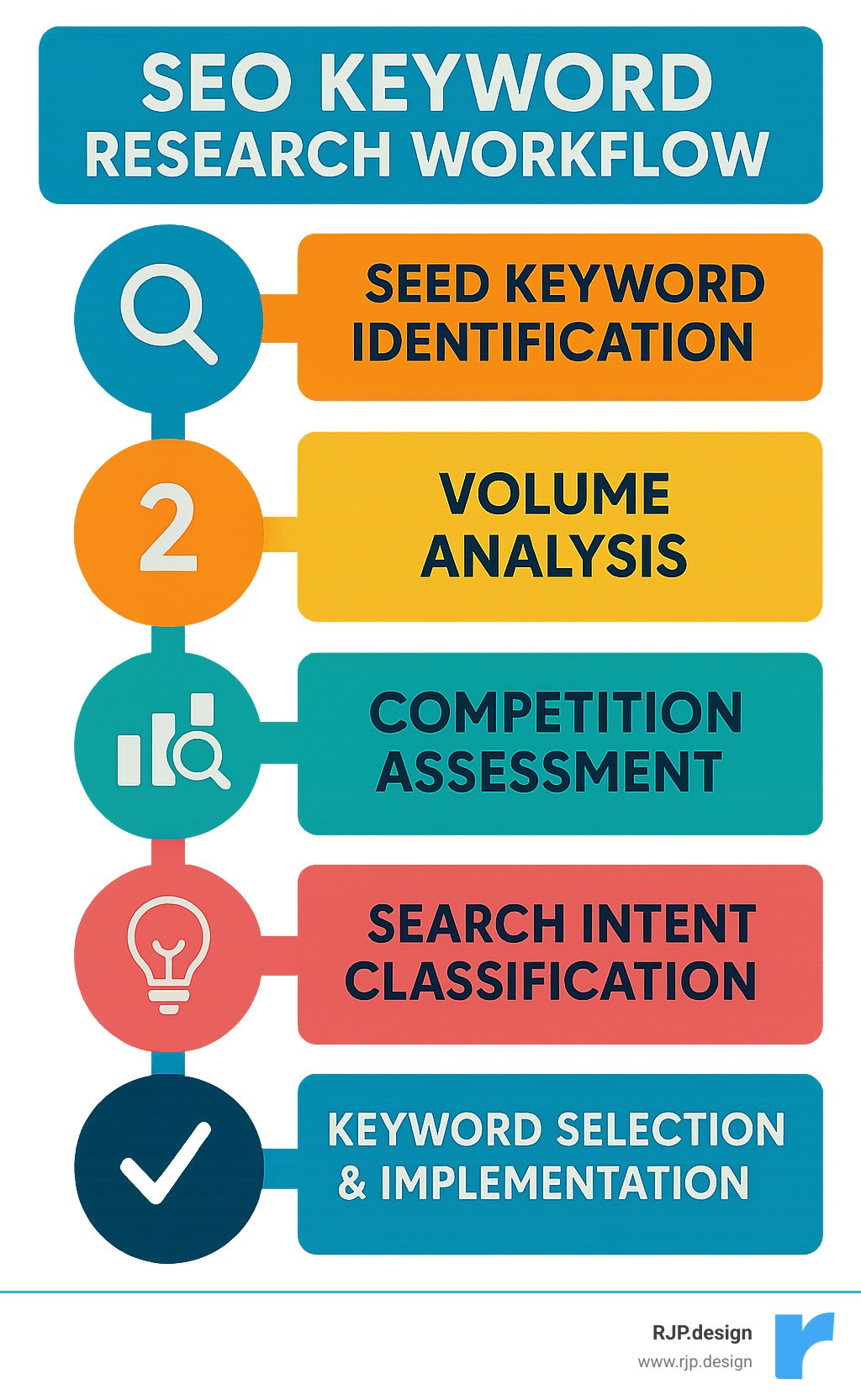
Key terms for SEO keyword research:
– search engine optimization analysis
– seo content optimizer
– website traffic analysis
Mastering SEO Keyword Research: Why It’s the Mother Lode
Imagine setting sail without a compass or map – that’s what creating content without SEO keyword research feels like. I’ve seen countless businesses transform their online presence simply by finding what their audience is actually typing into search engines. It’s like finding a treasure map that leads directly to your ideal customers!
The real magic of keyword research isn’t just about driving any traffic – it’s about connecting with people who are actively looking for exactly what you offer. When your content perfectly matches what someone is searching for, that’s when the real gold starts flowing in: engaged visitors who stick around and eventually become customers.
SEO Keyword Research in a Nutshell
At its heart, SEO keyword research is about understanding the language your potential customers speak when they’re looking for solutions. It’s like learning to translate between what you call your products or services and what your customers actually type into Google.
Good keyword research doesn’t happen in isolation – it connects deeply with your audience’s needs at every stage of their journey. Are they just becoming aware of a problem? Comparing possible solutions? Ready to make a purchase? Each stage requires different types of keywords.
The most powerful research aligns your business goals with your audience’s search behavior. When you nail this alignment, your content becomes a magnet for the right visitors – those who are most likely to value what you offer.
Metrics That Matter
When you’re panning for keyword gold, not every shiny object is worth your attention. Here’s what really matters:
Search Volume tells you how many people are looking for a term each month. But context is crucial! In a specialized industry, 300 monthly searches might be incredibly valuable, while in a broader market, even 3,000 searches might represent just a drop in the bucket.
Keyword Difficulty measures how hard you’ll need to work to rank for a term. On a scale of 0-100, “digital marketing services” might score 82 (extremely competitive), while “digital marketing services for local restaurants” might be just 25 (much more achievable).
Click Potential recognizes that not all searches lead to clicks. Some queries get answered right in the search results with featured snippets or knowledge panels. Understanding which keywords actually drive clicks helps you avoid wasting effort on high-volume terms that rarely bring visitors to your site.
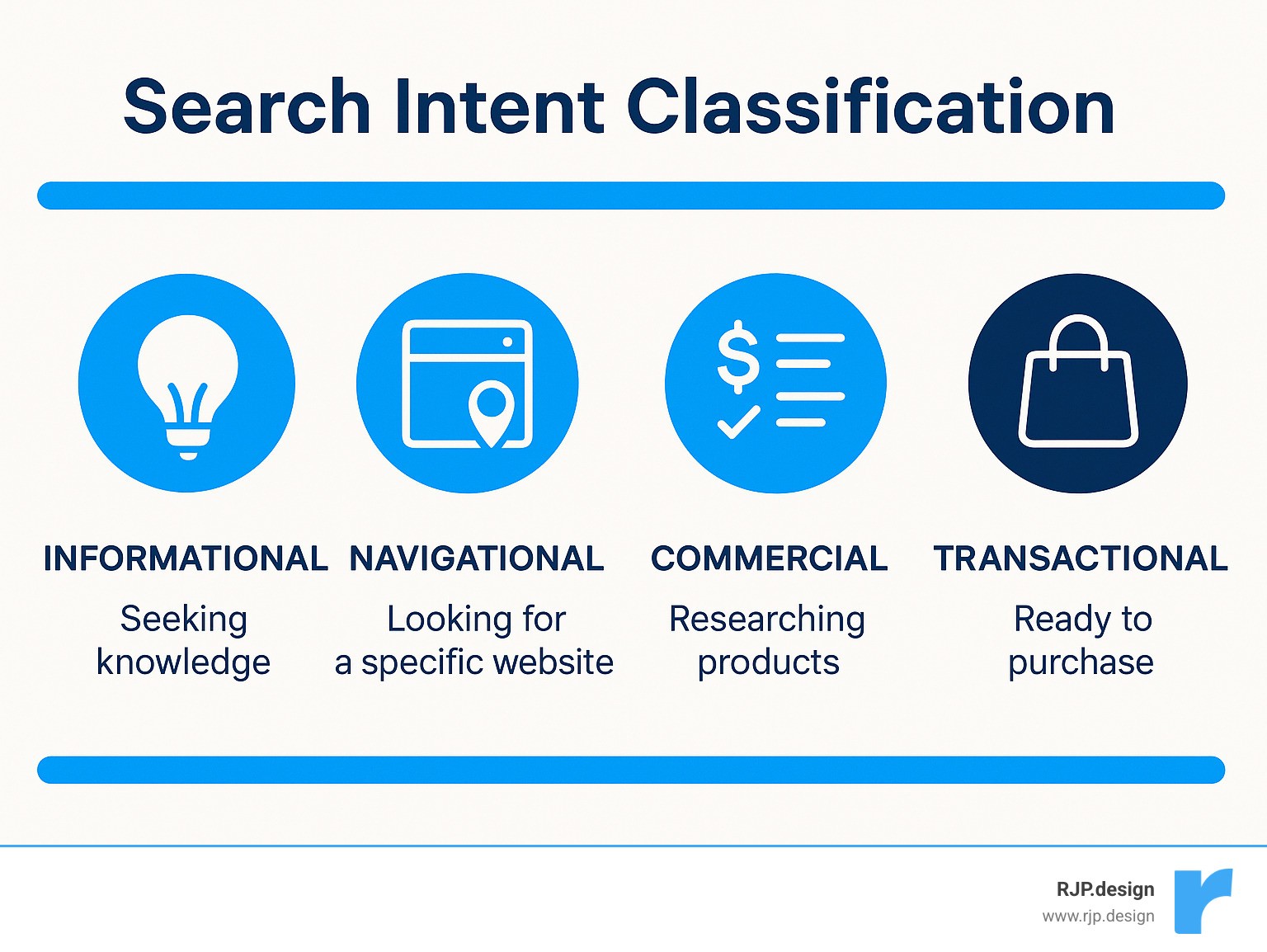
Search Intent is perhaps the most important factor of all. Understanding why someone is searching reveals how to create content they’ll love. Are they:
– Looking for information? (“how to create a website”)
– Trying to steer to a specific site? (“facebook login”)
– Researching products before buying? (“best website builders 2023”)
– Ready to purchase? (“hire website designer near me”)
Opportunity Gap is where the real treasures often hide – keywords your competitors haven’t finded or properly optimized for. These gaps represent your best chance to strike gold quickly.
The most successful businesses don’t just follow the crowd when it comes to SEO keyword research – they dig deeper to understand the specific questions and problems their audience is trying to solve. This customer-centered approach to keyword research is what separates websites that merely exist from those that truly connect and convert.
For more information about how search intent works, check out Google’s official guide to search intent.
Criteria for Picking the Perfect Tool
Finding your ideal keyword research tool can feel a bit like dating – you need to find the right match for your specific needs and budget. At RJP.design, we’ve helped countless businesses steer this choice, and we’ve learned that the perfect tool balances data quality with usability.
“I spent months jumping between free tools before finally investing in the right platform,” one of our clients told me. “I wish I’d known what features actually mattered from the start – it would have saved me so much time!”
Core Features Checklist
When you’re evaluating keyword tools, don’t get impressed by fancy extras that you’ll never use. Focus on these must-have capabilities instead:
SERP Analysis gives you a peek behind the curtain at what’s already ranking for your target keywords. This insight is gold – it shows you exactly how Google interprets search intent for specific queries. Is the first page full of how-to guides or product pages? That tells you volumes about what content to create.
Keyword Clustering is a massive time-saver. Rather than manually sorting through hundreds of related terms, good tools can automatically group keywords that belong together. I’ve watched clients’ eyes light up when they see how some platforms can organize 50,000 keywords by SERP similarity in minutes.
Intent Detection features are becoming increasingly sophisticated. The best tools now use AI to classify keywords by user intent, helping you match your content to what searchers actually want. This means you’ll know instantly whether to create a buying guide, product page, or informational article.
Export Options might seem basic, but they’re crucial for integrating your research into your broader content strategy. You’ll want clean, organized data that plays nicely with your content calendar and other marketing tools.
Multilingual Support matters even if you only serve English speakers today. As your business grows, you might expand to new markets, and having historical data in those languages will give you a head start.
Historical Data helps you spot seasonal patterns and emerging trends before your competitors. Is interest in your products cyclical? A tool with good historical data will tell you exactly when to ramp up content production.
Avoiding Common Pitfalls
After helping dozens of businesses optimize their SEO keyword research process, I’ve noticed several traps that even experienced marketers fall into:
Volume Ranges vs. Exact Numbers can lead to misplaced priorities. Tools like Google Keyword Planner might tell you a term gets “1K-10K searches monthly” – that’s a huge range! More precise tools help you make better decisions about which terms deserve your attention.
Irrelevant Intent Matching happens when you chase volume without considering context. I once worked with a luxury watch retailer who was targeting “free watches” because of its high search volume. Unsurprisingly, those visitors weren’t converting into $5,000 watch buyers!
Analysis Paralysis is the enemy of progress. Set clear goals before diving into research – are you planning a content calendar? Optimizing product pages? Understanding the competitive landscape? Having a purpose keeps you focused.
Stale Data can lead to missed opportunities or wasted effort. Some tools update weekly, others quarterly. For trending topics or seasonal businesses, frequent updates are essential.
Tool Discrepancies are normal but confusing. You might see 1,000 monthly searches in one tool and 1,500 in another. Pick one reputable source as your “home base” and track trends rather than obsessing over exact numbers.

The best tool isn’t necessarily the most expensive or feature-packed – it’s the one that fits your specific needs and workflow. At RJP.design, we help clients find that perfect match so they can stop worrying about tools and start focusing on growth.
The Top Keyword Research Tool Categories Reviewed
Finding the right keyword research tool can feel like searching for a needle in a digital haystack. After years of testing dozens of options at RJP.design, we’ve organized the most effective tools into categories to help you steer this landscape without the overwhelm.
All-in-One SEO Suites
These powerhouses do much more than just keyword research – they’re like the Swiss Army knives of the SEO world.
Comprehensive SEO platforms offer massive databases of keywords spanning numerous countries. The best tools in this category let you filter by intent, questions, and more – perfect when you need comprehensive insights. Look for features like competitor gap analysis to uncover opportunities others have missed.
The most robust platforms excel at competitive intelligence with large query databases. Their reporting features can show you exactly what’s working across the web. When evaluating these tools, consider both the depth of data and the pricing structure that works for your research needs.
For beginners, look for platforms with clean, intuitive interfaces that make complex data digestible. Some tools offer free queries monthly to let you test before committing, which is perfect for those just starting their SEO keyword research journey.
Autocomplete & Question Generators
When you need to understand exactly what questions your audience is asking, these specialized tools shine.
Question visualization tools display queries related to your topic in formats that make content planning intuitive. They’re content creators’ dreams for blog topics and FAQ development. Many offer free versions with limited searches, with affordable paid plans for more extensive research. These tools are invaluable for developing content that directly addresses customer pain points.
For international campaigns, look for tools covering multiple Google domains and languages. The best can generate hundreds of long-tail keyword suggestions from autocomplete features – perfect for capturing natural language variations. When expanding into new markets, these tools provide crucial insights into regional search behavior.
For more information about how autocomplete works in search engines, check out Google’s official documentation on search predictions.
AI-Powered Assistants for SEO Keyword Research
AI has revolutionized how we approach SEO keyword research, making what was once tedious work almost effortless.
Modern AI tools take the guesswork out of intent classification. Rather than manually sorting through keywords trying to determine if they’re informational, commercial, or transactional, the AI does the heavy lifting. For content strategists looking to align their work with user intent, it’s a massive time-saver.
Conversational AI offers a refreshingly different approach to brainstorming. While it shouldn’t replace data-driven tools, it’s wonderful for expanding your thinking and uncovering related topics you might have missed. Consider using it as a starting point before validating with more traditional tools.
Some tools strike a nice balance between AI assistance and traditional metrics. Look for features like content ideas and keyword suggestions that are particularly helpful for small businesses and solo marketers. The best options offer both free features and paid plans with flexible pricing.
Lightweight Browser Extensions & Plugins
Sometimes you need insights on the fly, and that’s where these browser-based tools come in handy.
Browser extensions that show volume and CPC data right within your search results are like having an SEO assistant looking over your shoulder. Pay-as-you-go credit systems mean you only pay for what you use, making them perfect for occasional research needs.
Free SERP overlay tools with search volume data are a blessing for budget-conscious marketers. While not as comprehensive as paid tools, they provide solid baseline metrics without costing a penny. These are often recommended to startups and small businesses taking their first steps with SEO keyword research.
Free Planner & Forecast Tools
Don’t let a tight budget stop you from gathering valuable keyword insights – these free tools pack a surprising punch.
Google’s own planning tools remain the industry standard for PPC research, though they have limitations for pure SEO work. The direct integration with Google Ads makes them invaluable for planning paid campaigns, and they cost nothing with an advertising account.
Trend analysis tools offer something most keyword tools don’t – a historical perspective on keyword popularity. Use these religiously for seasonal planning and trend identification. They’re completely free and complement volume-based tools beautifully.
Industry-specific keyword tools fly under the radar but deserve attention, especially for niche and local businesses. Look for filtering across multiple verticals to help you zero in on relevant terms. Many require just an email signup to access more actionable data than most free alternatives provide.
At RJP.design, we’ve found that combining tools from different categories creates the most comprehensive approach. Like a master chef using various ingredients, we blend insights from multiple sources to create a custom web marketing solution for each client’s unique needs. The right mix of tools helps us uncover not just any keywords, but the perfect keywords that connect businesses with their ideal customers.
Advanced Prospecting: Striking Low-Competition Gold
Finding those hidden gems in SEO keyword research is a bit like panning for gold in a river where everyone else has already been. The real treasures aren’t usually those obvious, high-volume keywords everyone’s fighting over. Instead, the smart prospector looks for those untapped opportunities where competition is manageable but potential is high.
Mining Long-Tail Veins
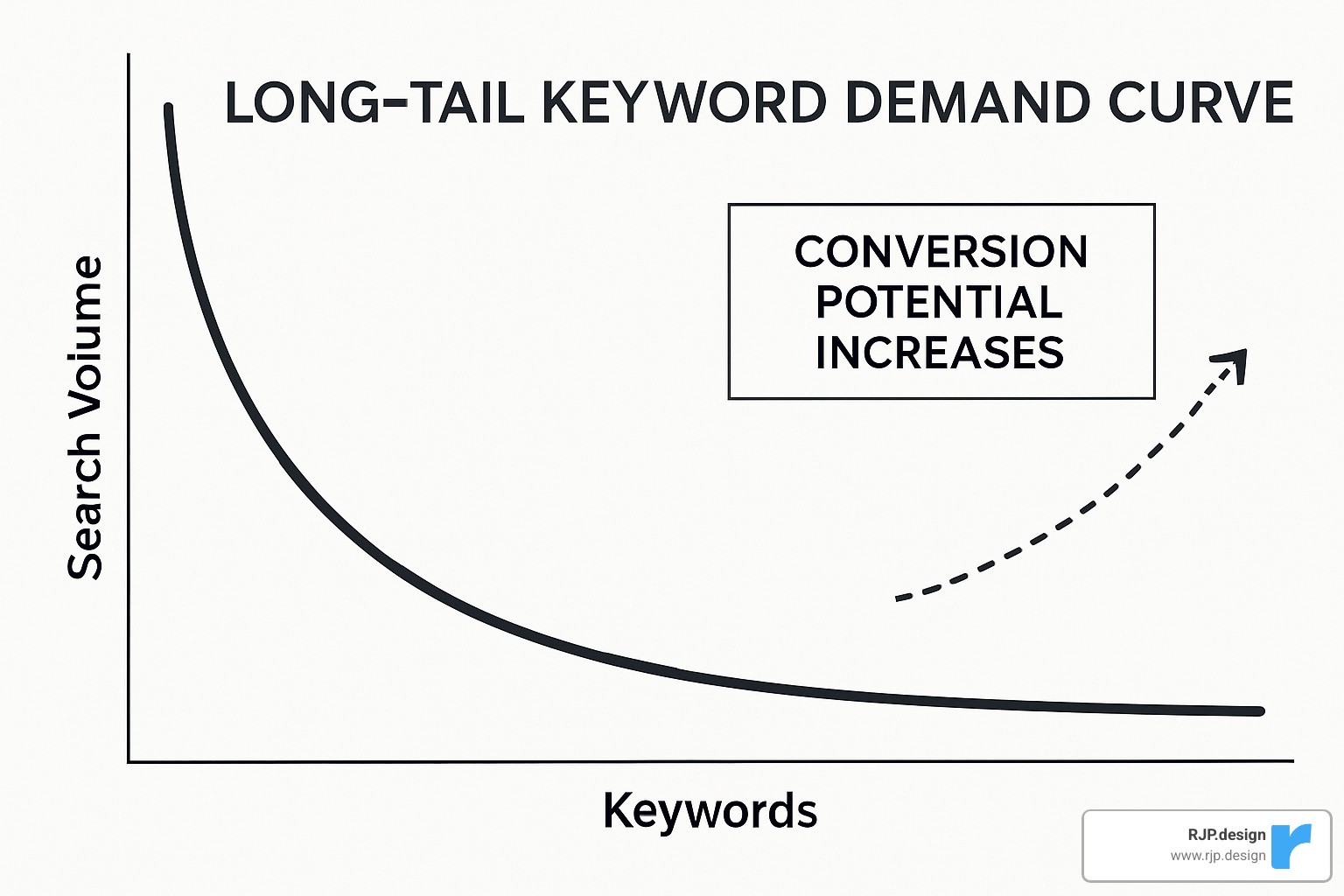
Long-tail keywords are those longer, more specific phrases that might not get searched as often, but when they do, they’re coming from people who know exactly what they want. These are your golden nuggets in the SEO keyword research world.
Think about it – which visitor is more likely to become a customer: someone searching “shoes” or someone searching “waterproof hiking boots for wide feet”? The second person is practically ready to pull out their credit card!
Our research shows about 70% of all searches fall into this long-tail category. While individually these terms might seem modest in search volume, together they create a powerful stream of highly-qualified traffic.
Finding these valuable long-tail keywords isn’t complicated once you know where to look. Start by adding question words (who, what, when, where, why, how) to your core terms. Then add specificity – instead of “office chair,” try “affordable ergonomic office chair for back pain.” You can also tap into advanced keyword findy features found in many comprehensive platforms or use the “Questions” filters that some keyword explorers provide. And don’t forget to check out those “People Also Ask” boxes on Google – they’re goldmines of long-tail inspiration!
Using Trend & Seasonality Data
Timing in SEO keyword research is like knowing when to plant your garden – get it right, and you’ll reap a much bigger harvest. Understanding when interest in your keywords rises and falls helps you plan content that arrives right when people are looking for it.
Google Trends is your best friend here. Instead of showing absolute search volumes, it reveals relative interest over time, helping you spot patterns that might otherwise go unnoticed. Is your client a holiday decoration retailer? You’ll want to have that content ready and ranking before November when searches start climbing, not scrambling to catch up in December.
At RJP.design, we love helping clients build content calendars that sync perfectly with these natural demand cycles. There’s nothing worse than publishing your best content right after interest has peaked – it’s like showing up to the party after everyone’s gone home!
Organizing Keywords into Clusters
Modern SEO keyword research isn’t about targeting individual keywords in isolation – it’s about building topical authority through smart clustering. Think of your content like neighborhoods in a city, with main streets (pillar content) connected to smaller streets and alleys (supporting content).
When you cluster related keywords together, you’re creating comprehensive content that naturally covers related concepts. This approach builds your site’s authority on particular topics and creates a logical structure that both users and search engines appreciate.
For example, if you run a coffee shop, your main pillar might be “specialty coffee” with clusters branching out to “coffee brewing methods,” “coffee bean origins,” and “coffee equipment.” Each cluster supports the main topic while targeting its own set of keywords.
This approach is particularly powerful for local businesses. When combined with specialized local SEO services, you can dominate regional searches in your niche. We’ve seen clients transform their visibility by implementing this strategic approach to content organization.
The goal isn’t just to rank for a bunch of random keywords – it’s to build a comprehensive resource that genuinely answers your audience’s questions. When you do that well, the rankings tend to follow naturally.
Frequently Asked Questions about SEO Keyword Research
How often should I update my SEO keyword research?
Think of SEO keyword research like tending a garden – it needs regular care, not just a once-a-year overhaul. Search trends are always evolving, just like your business and the competitive landscape around you.
In our experience at RJP.design, a rhythm that works well for most businesses includes quarterly deep-dives into your core keywords. This gives you enough time to see meaningful patterns without missing important shifts. We also recommend quick monthly check-ins to spot seasonal opportunities or emerging trends that might benefit your business.
Once a year, set aside time for a comprehensive refresh, especially if you’ve launched new products or services. And always keep one eye on major Google algorithm updates – they can shuffle the deck overnight!
The goal isn’t to chase every trending keyword, but to maintain a living strategy that grows with your business and your audience’s needs.
How do I measure keyword performance over time?
Numbers tell stories, and your keyword performance metrics reveal whether your content is connecting with the right audience.
At RJP.design, we focus on five key indicators that paint the complete picture:
First, track your rankings to see where you stand in search results for your target terms. But don’t stop there – rankings alone don’t pay the bills! Look at your organic traffic numbers to confirm those rankings are actually bringing visitors to your site.
The real magic happens when you connect those visitors to conversions – whether that’s sales, sign-ups, or whatever action drives your business forward. Your click-through rate reveals how compelling your search listing is compared to competitors, while time on page and bounce rate help you understand if your content actually satisfies the searcher’s intent.
Google Search Console offers fantastic (and free!) insights into which keywords are driving traffic your way. Pair that with Google Analytics to follow visitors through their journey on your site, and you’ll have a complete view of your keyword performance.
Can I use the same keywords for PPC and SEO?
Yes, you absolutely can – and often should – but with some strategic thinking behind it. Think of PPC and SEO as two instruments playing the same song in different ways.
There’s a natural sweet spot where certain keywords perform beautifully in both channels. Your brand terms are obvious candidates here – you want to own that real estate on the search results page, both organically and through ads. High-converting terms that already work well in one channel are also worth testing in the other.
Where things get interesting is in how you can use these channels to complement each other. At RJP.design, we often recommend using PPC as a testing ground – it gives you immediate data on which keywords convert before you invest months of SEO effort. Meanwhile, your long-term SEO strategy can gradually reduce your dependency on paid ads for your most valuable terms.
For highly competitive terms where ranking organically might take many months, PPC offers immediate visibility. On the flip side, informational queries often perform better through organic content than ads, making them perfect SEO targets.
The smartest approach isn’t choosing between PPC and SEO keywords – it’s building a strategy where each channel plays to its strengths while supporting the other.
Conclusion
Finding the right keywords isn’t just a technical exercise—it’s the foundation of connecting with the people who need what you offer. SEO keyword research truly is like panning for gold in a digital river. You need patience, the right tools, and a bit of intuition to spot those gleaming opportunities that others might miss.
Throughout this guide, we’ve explored tools that approach keyword findy from different angles. Some excel at competitive analysis, others at uncovering questions your audience is asking, and still others at identifying seasonal trends. The right choice depends on your specific needs, budget, and goals—there’s no one-size-fits-all solution.
But here’s the thing about keyword research that many folks miss: finding great keywords is just the first step. The real magic happens when you transform those insights into content that genuinely helps your audience. When you answer their questions before they even need to ask them. When you solve problems they didn’t know they had.
At RJP.design, we love seeing the light bulb moment when clients realize the power of connecting with their audience through the exact words and phrases they’re already using. Our team takes pride in making these sometimes complex SEO concepts feel approachable and actionable, no matter the size of your business.
While search algorithms continue to evolve (sometimes dramatically!), understanding what your audience is searching for remains a constant north star. With the right approach to SEO keyword research, you’ll build content that meets people exactly where they are—at that magical moment when they’re actively looking for solutions you provide.
The digital landscape might keep changing, but the human needs driving those searches remain surprisingly consistent. That’s why keyword research isn’t just about algorithms and rankings—it’s about people and connections.
Ready to turn these keyword insights into tangible business growth? Our team at RJP.design would love to help you mine that digital gold. Explore our comprehensive digital marketing services and find how we can help you strike it rich in your industry.