
Web
Cheap Thrills and Great Skills in Affordable Web Design
Jun 2, 2025
Affordable Web Design: 6 Powerful Ways to Avoid Costly Mistakes
Affordable Web Design: Value Without Breaking the Bank
Affordable web design combines professional quality with reasonable pricing, typically ranging from $100-$5,000 depending on your needs. Unlike cheap web design that cuts corners, truly affordable options deliver long-term value.
What Makes Web Design Affordable | What to Expect | Typical Cost Range |
|---|---|---|
Template customization | Mobile-responsive design, basic SEO | $99-$599 |
Semi-custom design | CMS integration, content upload, SSL | $600-$1,999 |
Custom small business | Unique design, SEO optimization, support | $2,000-$5,000 |
In today’s digital marketplace, your website is often the first impression potential customers have of your business. Yet many small business owners find themselves trapped between DIY website builders that look unprofessional and high-end agencies charging five-figure sums. The good news? You don’t have to choose between emptying your bank account and settling for a subpar online presence.
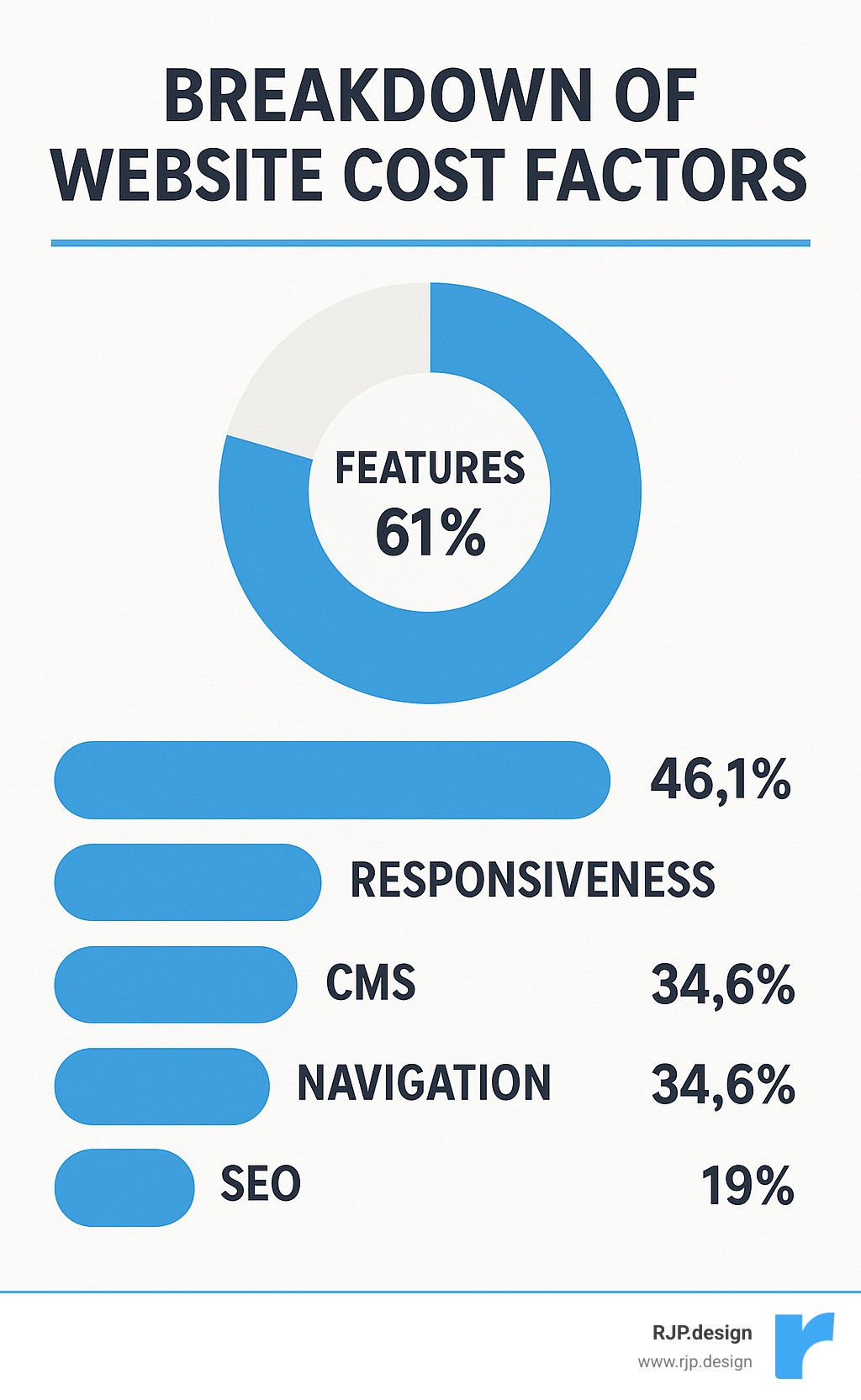
Affordable web design isn’t about cutting corners—it’s about strategic choices that deliver maximum value. According to industry data, more than 61% of a website’s cost comes from features and functionalities, with UI/UX layout and responsiveness each accounting for 46.1% of website cost factors. By focusing on what truly matters for your business goals, you can achieve professional results without unnecessary expenses.
The key difference between cheap and affordable lies in the long-term value. While a $99 template might seem attractive initially, it often leads to limitations in functionality, poor mobile performance (causing 88% of visitors to leave), and eventual redesigns. True affordability means getting a professional, conversion-focused site that grows with your business—all at a price point that respects your budget.
I’m Ross Plumer, an entrepreneur with extensive experience helping businesses develop effective digital presences through affordable web design solutions that have supported companies marketing over $20 million in revenue. My approach combines psychology-backed design principles with practical business knowledge to create websites that not only look great but actually drive results.
Basic affordable web design glossary:
– business website solutions
– creative website solutions
– website marketing solutions
1. Affordable vs. Cheap: Know the Difference
There’s a world of difference between “affordable” and “cheap” when it comes to your business website. I’ve seen too many business owners learn this lesson the hard way – after their bargain website fails to deliver results.
Affordable web design is about smart value – getting what your business actually needs without paying for unnecessary bells and whistles. Cheap web design, on the other hand, is just about the lowest possible price tag, regardless of what corners get cut along the way.
Here’s something that might surprise you: a whopping 88% of visitors will abandon your website if it loads too slowly. That “cheap” website might save you a few hundred dollars upfront, but how much business will it cost you when potential customers bounce before even seeing what you offer?
What Makes a Website Truly Affordable?
When we talk about affordable web design at RJP.design, we’re focused on four things that truly matter:
First, we believe in realistic budgeting. We’ll be straight with you about costs – no sugar-coating or bait-and-switch tactics. Your investment should match your business needs, no more and certainly no less.
Second, we never compromise on professional polish. Your website is often your first impression, and it needs to look the part. Even an affordable website should make visitors think, “These folks know what they’re doing.”
Third, we insist on transparent scope. You’ll know exactly what you’re getting before we start. Hidden fees and surprise charges? Not on our watch.
Finally, we build with ongoing care in mind. Your business will grow and change – your website should be able to grow with you without requiring a complete (and expensive) overhaul every year.
The truth is, the most expensive website is one that doesn’t work for your business. At RJP.design, we believe in keeping things down-to-earth. We’ll help you invest wisely in a website that delivers real returns, not just a pretty digital business card that sits there looking nice but doing nothing for your bottom line.
2. Must-Have Features of Affordable Web Design Packages
When shopping for affordable web design, it’s easy to get distracted by price tags alone. But the real value lies in what features you’re actually getting for your money. Think of it like buying a car—the sticker price matters, but what’s under the hood determines whether you’ve made a smart investment.
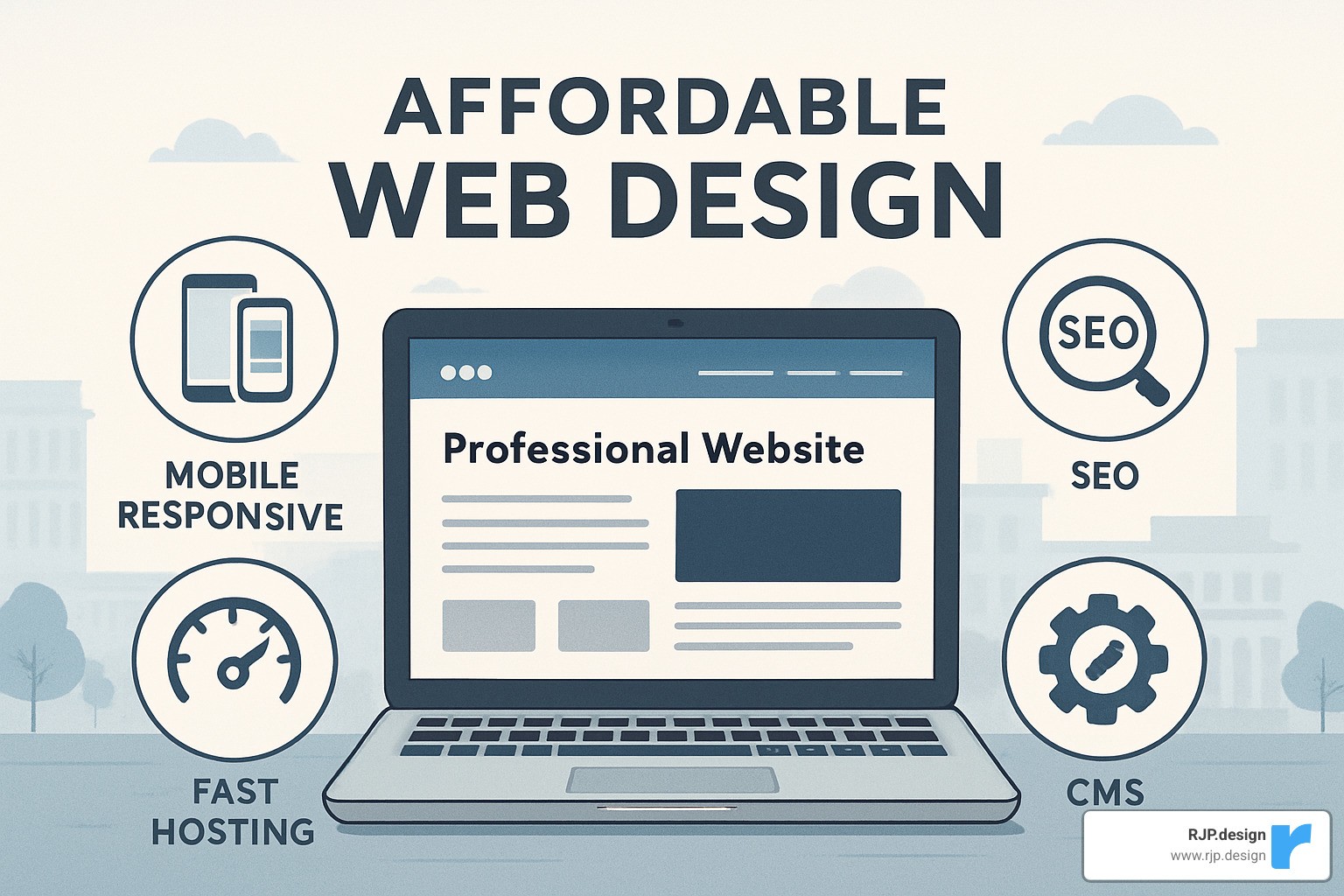
Every worthwhile web design package should include a responsive layout that adapts beautifully to phones, tablets, and desktops. This isn’t a luxury—it’s a necessity in today’s mobile-first world. Equally important is a Content Management System (CMS) that puts you in control, allowing you to update your own content without calling a developer every time.
Your site also needs on-page SEO basics built right in, so potential customers can actually find you when they search online. And don’t overlook the importance of fast, reliable hosting—because even the most beautiful site is useless if it takes forever to load.
Security matters too, which is why an SSL certificate (that reassuring padlock icon in browsers) should be standard in any package worth considering. So should analytics integration to help you understand visitor behavior and make smart decisions about your online presence.
Behind the scenes, regular backups protect your investment against data loss, while basic accessibility features ensure your website can be used by everyone—including people with disabilities.
The good news? Creating these professional features has become more efficient thanks to technology. Industry data shows that 58% of web developers now leverage artificial intelligence tools to design stunning layouts without the premium price tag of years past.
Feature #1: Mobile Responsiveness in Affordable Web Design
If I could only emphasize one feature, it would be mobile responsiveness. Why? Because 94% of people prefer websites that adapt to their devices—and most of your visitors are likely browsing on smartphones or tablets.
True affordable web design builds responsive principles into every aspect of your site. This means flexible grid layouts that adjust seamlessly to any screen size. It means touch-friendly navigation buttons that work perfectly under thumbs of all sizes. It means text that remains readable without squinting or zooming, and images that scale beautifully without slowing everything to a crawl.
At RJP.design, we never treat mobile design as an afterthought or premium add-on. It’s woven into the DNA of everything we create. After all, an “affordable” website that drives mobile visitors away isn’t really affordable—it’s expensive in lost opportunities. Want to learn more about how we approach this? Check out our guide to Easy Responsive Design.
Feature #2: Built-In SEO Basics for Affordable Web Design
Having a beautiful website that nobody can find is like opening a store in the middle of nowhere. That’s why even the most affordable web design solutions should include fundamental search engine optimization elements baked right in.
This starts with clean, semantic HTML code that search engines can easily understand and interpret. Your pages should have proper meta titles and descriptions that accurately reflect their content, along with keyword-friendly URL structures that make sense to both humans and search algorithms.
Don’t forget about image alt tags—they’re not just for accessibility (though that’s important too); they help search engines understand your visual content. A properly generated XML sitemap makes it easier for Google to index your entire site, while fast loading speeds and mobile-friendliness directly impact your search rankings.
These SEO fundamentals don’t add significant cost to development, but they make an enormous difference in your site’s visibility. While comprehensive SEO campaigns require ongoing effort, these basics give you a solid foundation without stretching your budget to the breaking point.
3. Price Tag Reality Check: 2024 Cost Guide
Let’s talk money – the part everyone wants to know about! In 2024, affordable web design spans a surprisingly wide range of price points. I find that clients appreciate knowing exactly what they’re getting at each level, so let’s break it down in plain English.
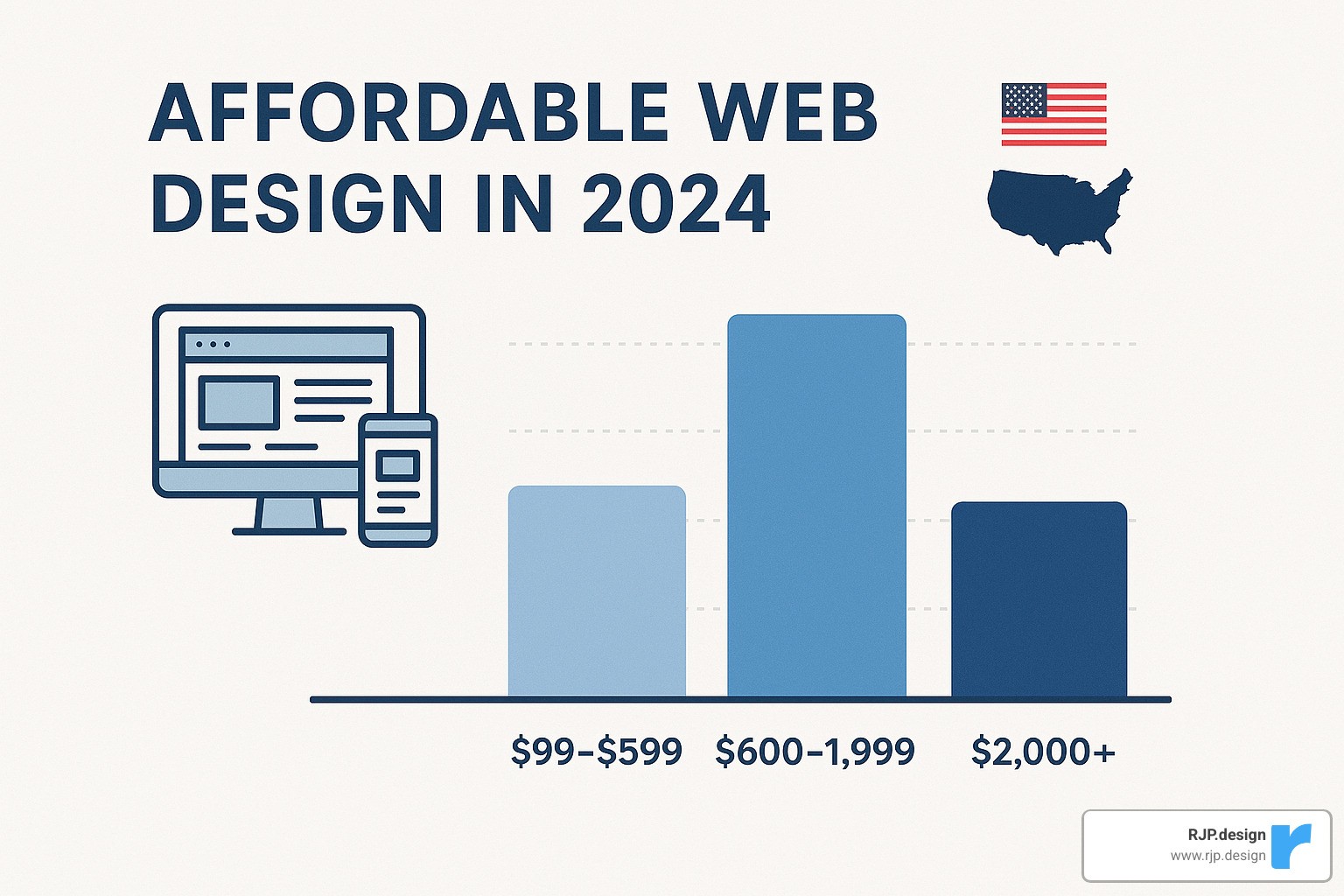
When you’re looking at the entry-level range ($99-$599), you’re typically getting a 1-5 page website with a template design that we’ll customize for your brand. These sites include the basics: mobile responsiveness, simple contact forms, and the ability to update content yourself. It’s perfect for solopreneurs just getting started.
Moving up to the mid-range ($600-$1,999), your options expand considerably. Here we’re talking 5-10 pages with semi-custom designs that stand out more from the crowd. You’ll get a full WordPress content management system, some basic SEO work to help Google find you, and we’ll help with content creation too. Plus, you’ll receive training on how to manage your site going forward.
For established small businesses needing more horsepower, our custom range ($2,000-$5,000) delivers the full package. These 10+ page websites feature completely custom designs, comprehensive SEO optimization, and specialized functionality custom to your business needs. We’ll provide substantial content support and ongoing maintenance options to keep everything running smoothly.
What’s fascinating is how the costs break down behind the scenes. Our research shows that nearly half (46.1%) of a website’s cost factors come from UI/UX layout and responsiveness – basically, making sure your site looks great and works well on all devices. About a third (34.6%) goes to CMS implementation and navigation structure, while SEO and third-party integrations account for roughly 19%.
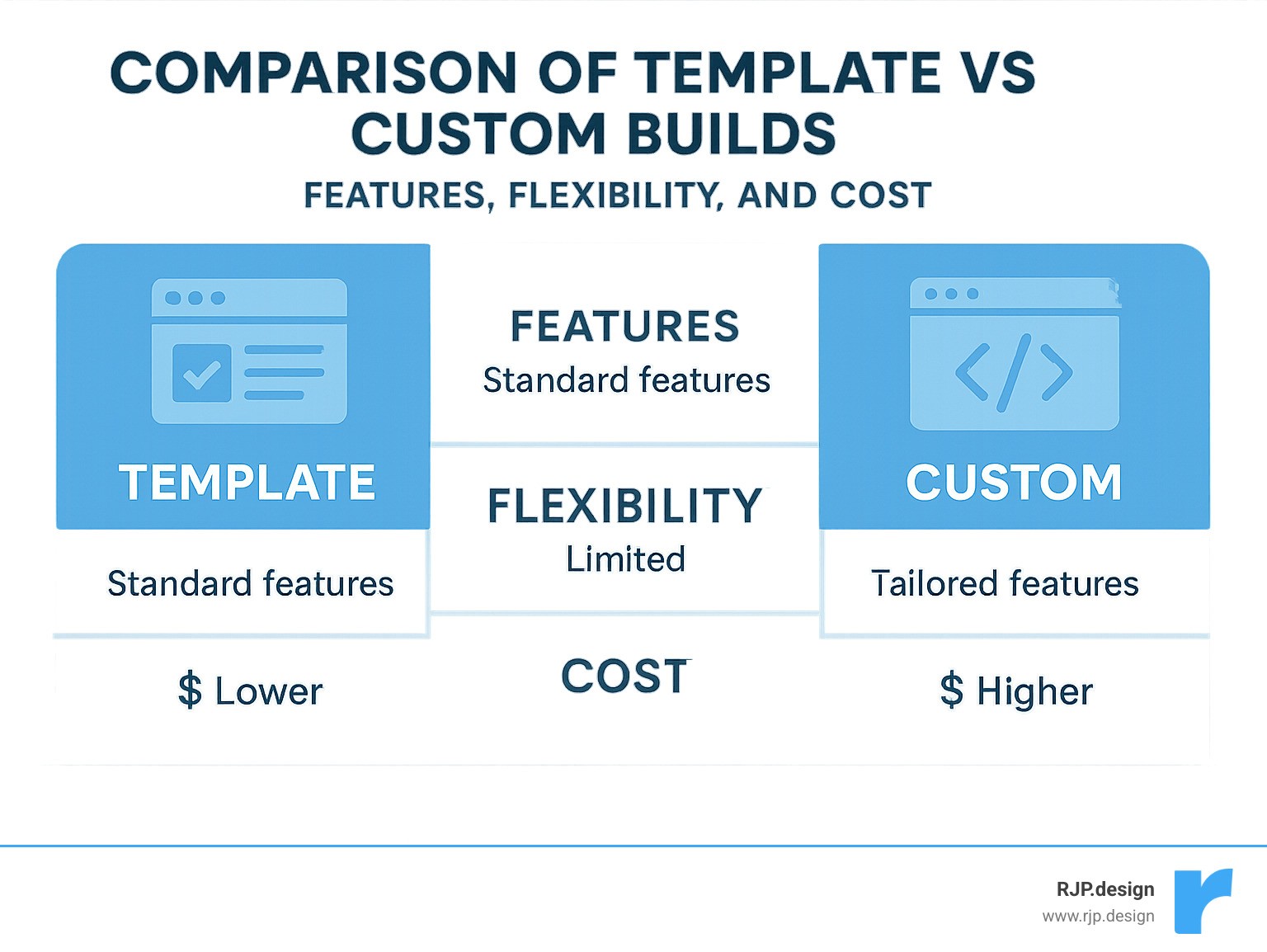
Factors That Drive the Final Bill
When I sit down with clients to discuss their affordable web design project, several key factors often influence where the final price lands.
Content volume is a big one – each additional page requires design time, development work, and testing. A 20-page site naturally costs more than a 5-page one. This is where we help you determine exactly what pages you truly need for maximum impact.
If you need integrations with other systems – maybe a booking calendar, payment processor, or your CRM – that adds complexity. Think of these as building custom bridges between different digital tools.
Visual appeal matters too. Custom graphics like original illustrations or animations take additional creative time but can really make your brand memorable. We’ll help you decide where custom visuals deliver the most bang for your buck.
For online stores, e-commerce functionality brings additional considerations around product management, secure checkout processes, and inventory systems. These specialized features require extra development time but are essential if you’re selling online.
Sometimes clients ask about speed optimizations – and for good reason! Fast-loading sites convert better. Advanced performance tuning requires specialized expertise but can dramatically improve user experience.
Finally, accessibility compliance ensures your site works well for people with disabilities. Meeting WCAG standards may require additional development work but opens your business to more potential customers.
At RJP.design, we don’t believe in one-size-fits-all pricing. We’ll have an honest conversation about what features will truly drive results for your specific business, helping you invest wisely in the elements that matter most. Our goal is making sure you feel good about every dollar spent.
4. Step-by-Step: How Budget Sites Go From Sketch to Launch
Ever wondered how an affordable web design project actually comes together? It’s not magic—just a well-organized process that keeps costs down while delivering quality. At RJP.design, we’ve streamlined our approach to give you the best value without cutting corners.
Think of your website journey as a road trip with clear stops along the way:
We start with a friendly Findy Call where we chat about what makes your business special and what you’re hoping to achieve online. This conversation sets the foundation for everything that follows. Many clients bring inspiration links during this stage—sharing sites you love helps us understand your taste and vision right away.
Next comes the wireframe stage, where we sketch out your site’s basic structure. Think of this as the blueprint before building a house—focusing on how visitors will steer through your information before we worry about colors and fonts.
Once we agree on the structure, we create a detailed design proof showing exactly how your finished site will look. This is when your website starts to feel real! You’ll get the chance to provide feedback, and we offer unlimited revisions until you’re completely satisfied with the look.
After approval, we move to the build phase where our developers turn those designs into a fully functioning website. This is followed by thorough quality assurance testing across different devices and browsers to make sure everything works perfectly.
Finally, we reach the exciting go-live moment when your new site becomes visible to the world!
The entire process typically takes about a 2-week average timeline from start to finish, though we can accommodate a 48-hour rush option for simpler projects when needed. The most common factor affecting timelines? How quickly clients can provide feedback and content—that’s often the difference between a speedy launch and unexpected delays.
Timeline Expectations for Affordable Web Design
Creating an affordable web design doesn’t mean an endless wait. Here’s what our typical milestone calendar looks like:
During week one, we handle planning, design concepts, and initial feedback. Week two focuses on development, testing, and preparing for launch. Throughout the process, we maintain clear client feedback loops to ensure we’re staying aligned with your vision.
One thing that sets RJP.design apart is our comprehensive launch checklist that covers everything from final content reviews to technical details like setting up proper redirects and testing contact forms. These small-but-crucial steps ensure your site launches without hiccups.
We’ve found that clients appreciate knowing exactly where we are in the process at all times. That’s why we provide regular updates and clear timelines—because even an affordable website deserves professional project management.
A smooth process isn’t just about efficiency—it’s about creating space for creativity and problem-solving where it matters most. By following these proven steps, we deliver websites that look more expensive than they actually are, giving your business the professional online presence it deserves.
5. Scale, Support & SEO: Keeping Your Bargain Site Future-Proof
The true value of affordable web design reveals itself over time. A well-built website isn’t just about looking good on launch day—it should grow alongside your business, adapt to changing technologies, and continue performing well in search engines for years to come.
Think of your website as a living, breathing part of your business. Just like you wouldn’t open a physical store and never clean it or update the merchandise, your digital storefront needs regular attention to stay fresh and effective.
Modular CMS Architecture is your best friend when it comes to future-proofing. There’s a reason WordPress powers over 40% of all websites—it scales beautifully from simple blogs to complex business platforms. With a modular system, you can add features room by room instead of rebuilding the entire house.
The tech landscape is evolving rapidly, with 58% of developers now using AI tools to create more sophisticated websites efficiently. This is great news for small businesses! The right plugins can add impressive functionality without the custom coding costs that would have been unavoidable just a few years ago.
Even the most affordable web design needs ongoing care—like a car that needs regular oil changes. Budget for maintenance from the start. Those security patches and performance tweaks might seem small, but they prevent the digital equivalent of a breakdown on the highway.
The mobile revolution isn’t coming—it’s already here. A mobile-first approach ensures your site meets visitors where they actually are: on their phones. This isn’t just about looking nice on smaller screens; it’s about recognizing that most of your customers will experience your brand through a mobile device first.
Google’s Core Web Vitals have become increasingly important for search rankings. Sites built with these performance factors in mind maintain better visibility and provide a smoother user experience. When your pages load quickly and respond well to user interactions, both visitors and search engines reward you.
At RJP.design, we build all sites with scalability in mind from day one. Our Website Concierge Maintenance service ensures your investment continues delivering value long after the initial excitement of launch day has passed.
Turning a Starter Site Into a Growth Engine
An affordable web design can evolve into a powerful business tool with some strategic additions over time. It’s like planting a sapling that eventually grows into a mighty oak—with the right care and attention.
Adding a regularly updated blog does double duty: it improves your SEO by giving search engines fresh content to index, while positioning your business as an authority in your field. Even publishing just twice a month can make a significant difference in your search visibility.
Creating dedicated landing pages for specific products, services, or promotions is like having specialized sales staff for different departments. These focused pages can dramatically improve conversion rates by speaking directly to particular customer needs.
Implementing proper conversion tracking gives you x-ray vision into how visitors actually interact with your site. This data is gold—it shows exactly where improvements can make the biggest impact on your bottom line.
Rather than complete overhauls every five years, plan for strategic redesign cycles every 2-3 years. Focus on high-impact areas based on your analytics and current design trends. This approach spreads costs out while keeping your site feeling contemporary.
The beauty of starting with an affordable web design is that you can add functionality incrementally as your business grows. Need appointment booking this year? Add it. Ready for e-commerce next year? Integrate it then. This gradual expansion allows you to invest strategically in improvements that deliver measurable returns.
This thoughtful approach to website growth ensures you’re never paying for features you don’t need yet, while maintaining a clear path forward as your business evolves. Your website becomes not just a digital brochure, but a genuine growth engine for your business.
6. Avoiding Pitfalls: Templates, DIY Builders, and Other Traps
Let’s have a heart-to-heart about the tempting shortcuts that can end up costing you more in the long run. When you’re looking for affordable web design, it’s easy to get lured into options that seem like bargains but hide expensive complications.
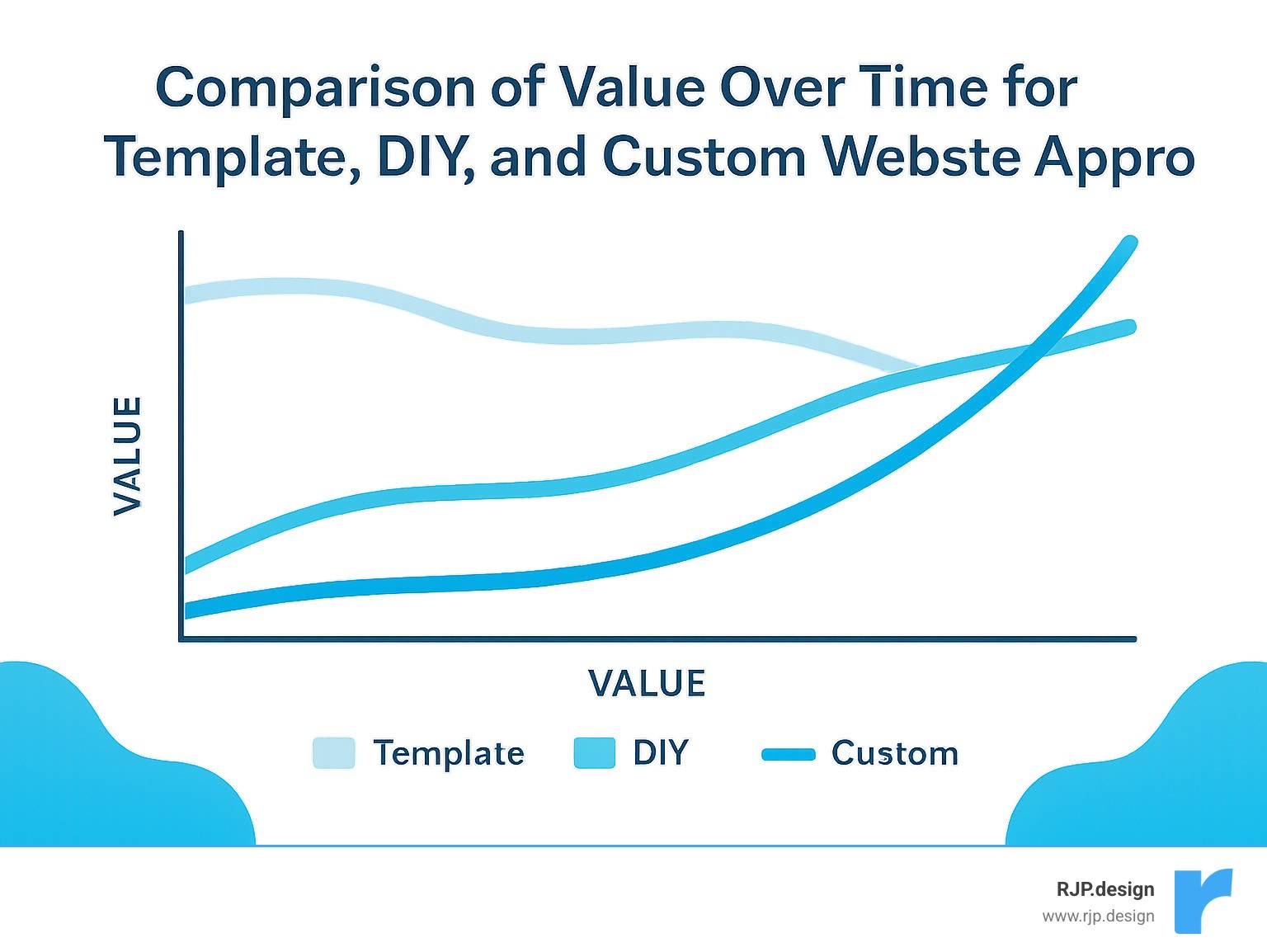
Templates might seem like a quick fix, but have you ever tried choosing from thousands of options? It’s like standing in the cereal aisle with too many choices – overwhelming and time-consuming. Working with a professional who can narrow down options based on your specific business needs saves you not just time but decision fatigue.
Another issue I see all the time is what I call “brand twins” – businesses using the same popular templates and ending up looking identical to their competitors. Your customers shouldn’t get you confused with someone else! Even with template-based designs, make sure there’s enough customization to keep your brand unique and recognizable.
Those DIY website builders with their flashy “$5 per month” ads? They’re not telling you the whole story. Once you need to remove their branding, add basic e-commerce features, or get actual human support, suddenly that price tag swells dramatically. I’ve seen business owners shocked by their first “real” bill after adding the features they actually need.
Speaking of support – there’s real value in having an actual person to call when something breaks. Many budget options leave you scouring help forums at 2 AM when your site goes down. Is saving a few dollars worth that stress when your online store suddenly stops processing orders?
The SEO limitations of many DIY platforms might be the costliest pitfall of all. What good is saving money on your website if no one can find it? Many budget builders have limited SEO capabilities that could be costing you valuable visibility in search results.
Research has shown that interactive layouts improve buyer retention by a whopping 60%. Many template-based or DIY solutions simply can’t deliver these engagement features, resulting in visitors bouncing away before converting into customers.
Top 5 Mistakes When Chasing “Cheap” Web Design
The first major mistake I see is skipping the contract. Even the most affordable web design should come with clear terms. Without proper documentation, you’re setting yourself up for scope creep, misunderstandings, and unexpected costs. A handshake agreement might feel friendly, but it rarely ends well when questions arise.
Ignoring page speed is another costly error. Saving a few dollars on cheap hosting or skipping optimization directly impacts your bottom line when 88% of users abandon slow-loading sites. Those potential customers aren’t coming back!
Many business owners forget about ongoing maintenance. Websites aren’t “set it and forget it” – they need regular updates, security patches, and occasional troubleshooting. The cheapest option upfront often becomes terribly expensive when emergency fixes are needed later (usually at the worst possible time).
I often see sites completely overrun with stock photography. While budget-friendly, those generic images make your business blend into the background rather than stand out. Budget for at least a few custom photos that showcase your actual business, team, or products – authenticity connects with customers in ways stock photos never will.
Finally, many affordable sites launch without proper analytics setup. Without data on how your site performs, you’re flying blind. How will you know what’s working or where to improve? Basic analytics setup should be included in even the most budget-friendly packages.
At RJP.design, we believe in honest conversations about these common pitfalls. Our transparent approach means you’ll understand exactly what you’re getting and what to expect long-term. We’re not interested in selling you the cheapest option – we want to provide the best value that helps your business grow.
Frequently Asked Questions about Affordable Web Design
Is affordable web design scalable as my business grows?
Absolutely! Think of affordable web design like buying a starter home with room to add extensions. The secret is choosing the right foundation from day one.
We’ve found WordPress works wonderfully for most small businesses because it grows right alongside you. A well-built WordPress site can start simple today and expand tomorrow to include an online store, member-only areas, appointment booking, or pretty much anything else you might need—no demolition required!
Your site’s ability to grow comes from several smart design choices we make upfront:
WordPress uses modular page builders that make adding new sections as easy as stacking blocks. Its massive plugin library means new features are usually just a few clicks away. The underlying database handles growing content without breaking a sweat, and when you outgrow your starter hosting, upgrading is straightforward.
At RJP.design, we’re always thinking about your future needs. We’d hate for you to outgrow your website in a year and have to start over. That’s not really affordable in the long run, is it?
How fast can an affordable site be completed?
“How soon can I have my website?” is probably the second question we hear after “How much will it cost?” The good news is that affordable web design doesn’t mean waiting months for your site.
Most projects take between 1-4 weeks from start to finish, depending on how complex your site is and—this is important—how quickly you can provide feedback and content. Here’s what our typical timeline looks like:
We can usually get initial design concepts to you within 2-3 days of our kickoff meeting. For standard small business websites, we aim for a 2-week delivery from approval of the design to launch day. And yes, if you’re in a hurry, we do offer rush options for an additional fee.
The biggest factor that determines whether your site launches on time? Having your content ready. When clients have their text, images, and feedback prepared, everything moves so much more smoothly. That’s why we provide clear content guidelines upfront—we want your affordable web design project to stay on schedule as much as you do!
What hidden costs should I watch out for?
Let’s talk about the “gotchas” that can make an apparently affordable website suddenly not so budget-friendly. Even with the most transparent affordable web design services, there are ongoing costs to keep a website running:
Your domain name typically costs $10-20 per year to renew. Hosting fees range from $5-30 monthly depending on your traffic needs and performance requirements. While SSL certificates (that little padlock in the browser) are often included with hosting, sometimes they’re separate.
Some functionality might require premium plugins with annual renewal fees. If you’re selling online, payment processors will take a small cut of each transaction (usually 2-3%). And unless you’re comfortable updating content yourself, you might need to budget for content changes down the road.
Don’t forget about security! Website protection and regular backups are absolute necessities, but they might be add-ons to your base package. And if your site starts loading slowly as it grows, performance optimization might be an additional service.
At RJP.design, we believe surprises are for birthdays, not invoices. We’ll make sure you understand the total cost of owning your website before we begin, so you can budget appropriately and avoid any shocking bills down the road. That’s what real affordable web design is all about—no hidden fees, just honest value.
Conclusion
Let’s be real – building a website shouldn’t require taking out a second mortgage, but it also shouldn’t leave you with something that looks like it was designed in 1999. Affordable web design is that sweet spot where your wallet stays happy and your business still gets a website it can be proud of.
Throughout this journey, we’ve uncovered what truly matters when creating a website that works hard for your business without breaking the bank. It’s not about pinching pennies at every turn – it’s about making smart investments where they count most.
Think of your website like buying a car. The cheapest option might get you from A to B initially, but you’ll likely spend more on repairs, miss out on important features, and probably need to replace it sooner. A thoughtfully chosen affordable web design package is like that reliable mid-range vehicle that serves you well for years with just regular maintenance.
The true cost of a website isn’t just the upfront price tag. It’s also measured in lost customers from slow loading times, missed opportunities from poor mobile experiences, and the headaches of dealing with inflexible templates when your business needs change.
At RJP.design, we’re real people who understand real business challenges. We don’t speak in jargon or try to upsell you on features you don’t need. Our approach is refreshingly straightforward – we create websites that look professional, work beautifully, and help your business grow, all at prices that respect your budget.
We believe that affordable web design means getting the essentials right: mobile-friendly layouts, basic SEO that helps customers find you, clean code that loads quickly, and a content management system that puts you in control. Then we add just enough customization to make your brand shine without unnecessary complexity.
Whether you’re launching your first business website or feeling frustrated with an outdated one, we’d love to show you how accessible quality web design can be. Our Digital Marketing Services complement your website investment by helping drive traffic and convert visitors into customers.
The digital world moves quickly, but one truth remains constant – investing wisely in quality now saves both money and headaches down the road. Your website is too important to cut corners, but that doesn’t mean it needs to drain your resources either.
Let’s build something together that you’ll be proud to share and that works as hard as you do. Because at the end of the day, affordable web design isn’t just about saving money – it’s about making smart investments in your business’s future.