
SEO
Climb the Ranks: Effective Strategies for SEO Improvement
Jan 23, 2025

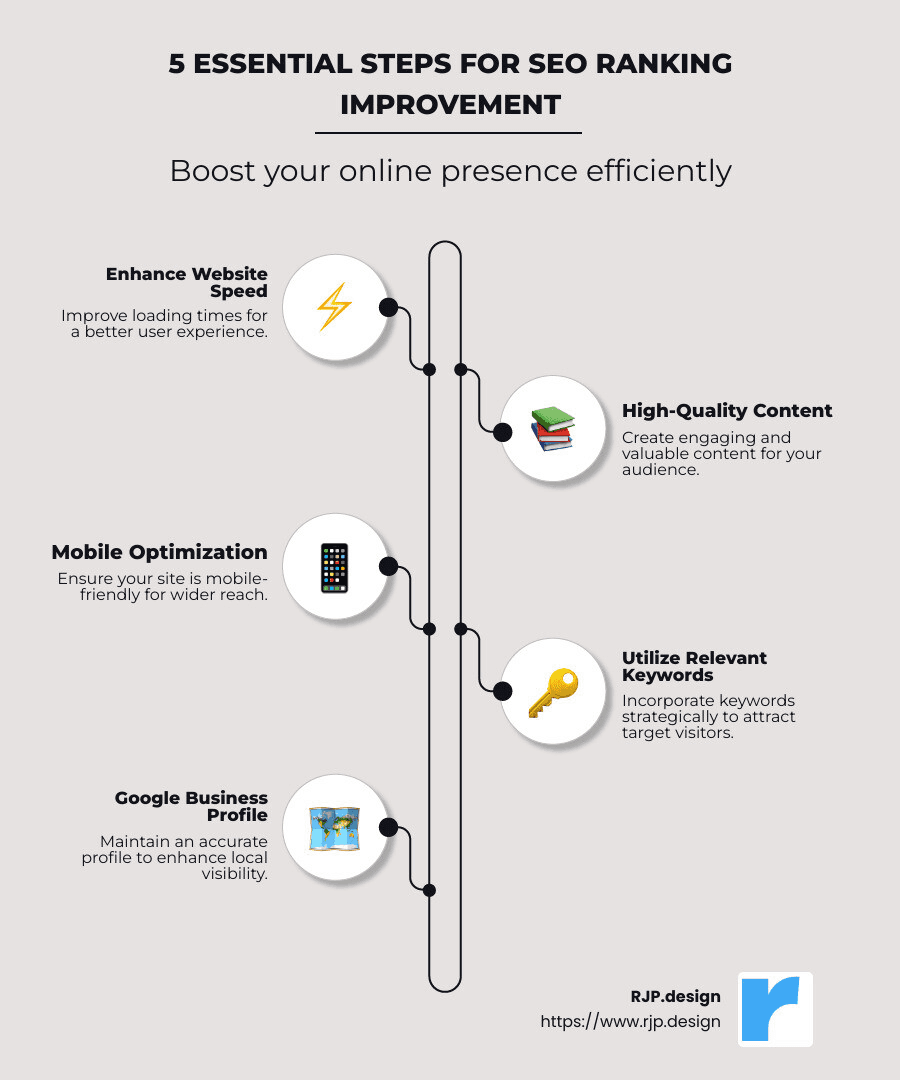
SEO ranking improvement is crucial for any business aiming to succeed online. Without solid SEO strategies, your website may remain hidden, regardless of the effort you put into it. Here’s a quick snapshot of what can be done:
Improve website speed.
Focus on high-quality content.
Optimize for mobile.
Use relevant keywords.
Create and maintain a Google Business Profile.
In today’s digital landscape, SEO is not just about getting traffic; it’s about attracting the right visitors who are most likely to convert into customers. Effective SEO can boost your brand’s visibility, authority, and trustworthiness, enabling you to climb the search engine ranks and reach a wider audience.
I’m Ross Plumer, an expert in digital marketing and web design, specializing in SEO ranking improvement. Having worked with businesses generating over $20 million in revenue, I bring practical insights that can help you effectively increase your online presence.
SEO ranking improvement terms to remember:
– hubspot search engine optimization
– local business SEO
– search engine optimization price
Publish Relevant, Authoritative Content
Creating relevant, authoritative content is the backbone of effective SEO. It’s not just about throwing words on a page; it’s about crafting content that speaks directly to your audience’s needs and interests. Here’s how to do it right:
Keywords
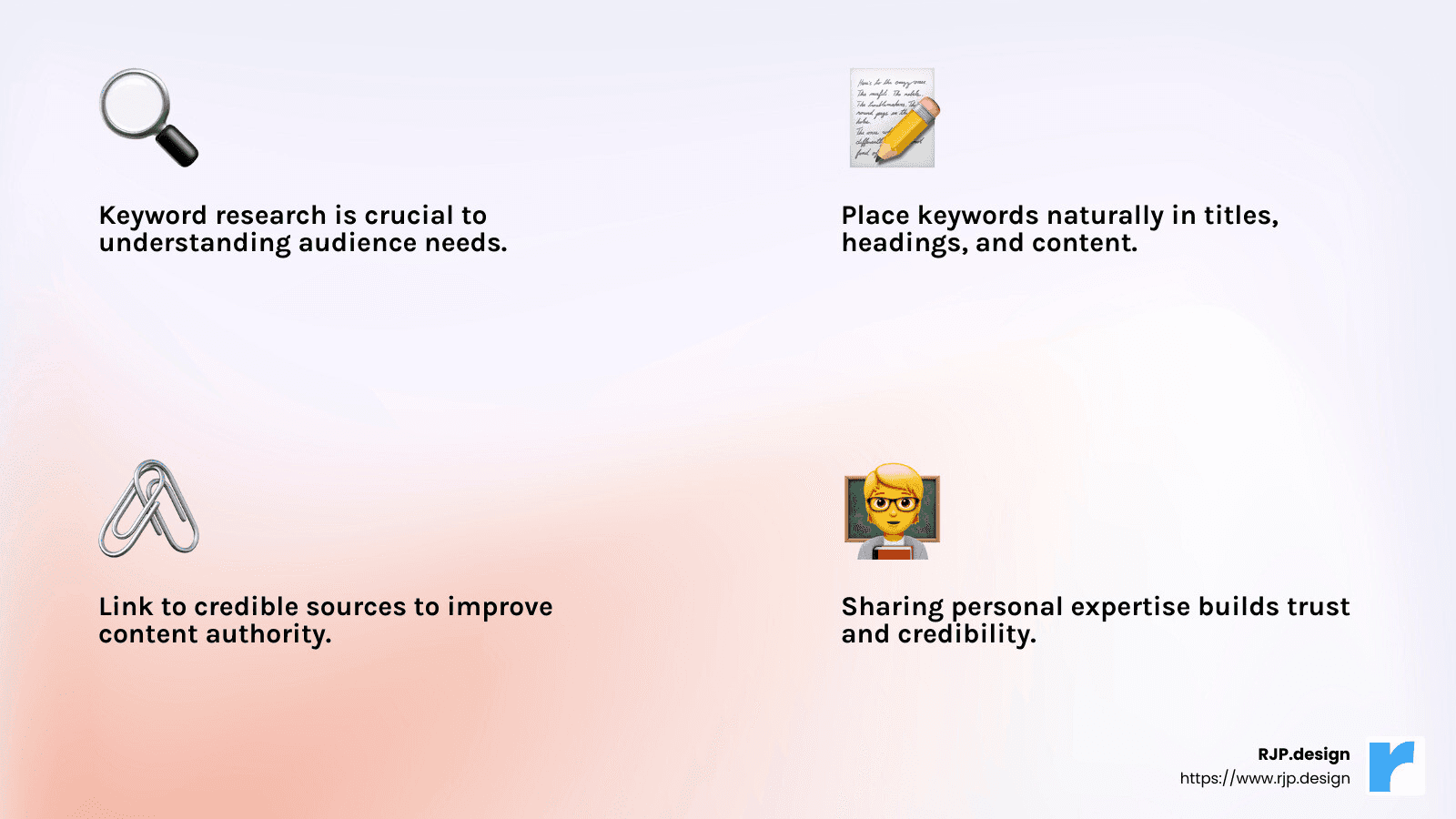
Start with keyword research. This is your roadmap to understanding what your audience is searching for. Use tools like Google Keyword Planner to identify target keywords and multiple keyword phrases. Though, that Google’s Keyword Planner might overestimate volumes by up to 91%, so take these numbers with a grain of salt.
Once you have your keywords, strategically place them throughout your content. Use them in your page URL, title, headings, and subheadings. But be natural—avoid stuffing your content with keywords, as this can hurt readability and user experience.
Content
Content optimization is key to on-page SEO. Your content should be engaging, informative, and authoritative. Repeat your keyword phrase several times throughout the page, but focus on quality content that provides value. Link to relevant sources and additional information within your site and to other reputable websites. This not only helps with SEO but also builds credibility with your audience.
Experience and Expertise
Share your personal experiences and expertise to improve your content’s credibility. This builds trust with your audience and sets you apart from the generic content often generated by AI. For example, if you’re writing about web design, include stories from your own projects or insights from your years in the industry. This approach aligns with Google’s focus on delivering high-quality, relevant information.
SEO Formatting
Use formatting tools like bold, italics, and heading tags to improve readability and emphasize important points. But keep it user-friendly. Heading tags (like H1, H2, H3) help structure your content, making it easier for both users and search engines to steer. Ensure your language is simple and clear—this improves the user experience and keeps readers engaged.
By focusing on these strategies, you can create content that not only ranks well but also resonates with your audience. Next, let’s explore the importance of keeping your content fresh and updated.
Update Your Content Regularly
Keeping your content fresh is crucial for maintaining and improving your SEO ranking. Regular updates signal to search engines that your site is active and relevant, helping you climb the ranks. Here’s how to keep your content fresh and engaging:
Blogging
Blogging is a powerful tool for maintaining content freshness. It allows you to regularly share keyword-rich content that can attract new visitors and keep your audience engaged. Consider starting a departmental news blog where you can post updates, insights, or expert opinions related to your field. This not only boosts your SEO but also positions your brand as a thought leader.
Content audits are essential for identifying outdated information. Regularly review your content to ensure it remains relevant and accurate. Update facts, figures, and links to new sources. This keeps your site trustworthy and valuable to readers.
Interlinking your blog posts and webpages can significantly improve your site’s SEO. When writing a new post, link to relevant older posts. This practice improves site navigation and helps search engines understand the relationship between your pages.
Incorporating new sources into your content can also boost its authority. Whenever possible, link to authoritative, up-to-date sources that support your points. This not only improves your content’s credibility but also provides additional value to your readers.
By maintaining a regular blogging schedule and continuously updating your content, you can ensure that your site remains relevant and attractive to both users and search engines. Next, we’ll dig into the importance of optimizing your metadata for improved search visibility.
Metadata Optimization
Metadata is like a signpost for search engines, guiding them to understand what your page is about. Optimizing metadata is a crucial step in improving your SEO ranking. Let’s break it down.
Title Metadata
Title metadata is the headline that appears on search engine results pages (SERPs) and at the top of your browser window. It’s the first impression users get of your page and is vital for SEO.
Think of your page titles as mini-advertisements. They should be clear, concise, and packed with relevant keyword phrases. This not only helps in drawing clicks but also aids search engines in indexing your content accurately. If you’re using a CMS, automated systems can create meta titles based on your page titles, making it even more crucial to craft titles that are keyword-rich and descriptive.
Description Metadata
Description metadata is the brief text snippet that appears under your page title in search results. It’s your chance to entice users to click through to your site. A compelling meta description typically includes a concise overview of your content, often in two full sentences.
While search engines may not always display your meta description, having one gives them the option to use it. This can improve your search return by making your link more attractive to potential visitors.
Keyword Metadata
Although keyword metadata isn’t as influential in search rankings as it once was, it can still play a role in your SEO strategy. Include a variety of keyword phrases that are relevant to your content. Stick to about 3-7 phrases, each consisting of 1-4 words, like “SEO ranking improvement.” This can help search engines understand the context of your page better.
Use Alt Tags
Alt tags are descriptions you add to your images and videos. They’re essential for accessibility, as they help screen readers convey the content of your media to visually impaired users. They also allow search engines to index your media content, which can improve your SEO.
For instance, if your page reviews yarn shops in London, an image of a shop should have an alt tag describing it, like “Cozy yarn shop in London with colorful yarns.” This makes your content accessible and helps search engines understand the relevance of your media.
Use Schema.org Markup
Schema.org markup is a powerful tool for enhancing your content’s visibility in SERPs. By adding structured data to your pages, you can help search engines better understand your content. This can improve your content’s crawl rates and how it appears in search results.
For example, marking up published and modified dates can be particularly beneficial. It signals to search engines that your content is up-to-date, which can lead to better rankings.
By optimizing your metadata, you give your website a better chance of climbing the search engine ranks. Next, we’ll explore how to make your site link-worthy, enhancing your authority and credibility online.
Have a Link-Worthy Site
Creating a link-worthy site is about producing content that others want to reference and share. This involves crafting authoritative and unbiased content, integrating relevant links, and using descriptive links effectively. Let’s explore how these elements can boost your SEO ranking improvement.
Authoritative and Unbiased Content
To attract links, your content needs to be both authoritative and unbiased. This means providing high-quality, well-researched information that readers find valuable. Think of it as creating a resource that others in your industry would want to cite. For instance, a study on voice search trends was able to garner over 1.6K backlinks because it provided data that bloggers and journalists could easily reference.
Relevant and Descriptive Links
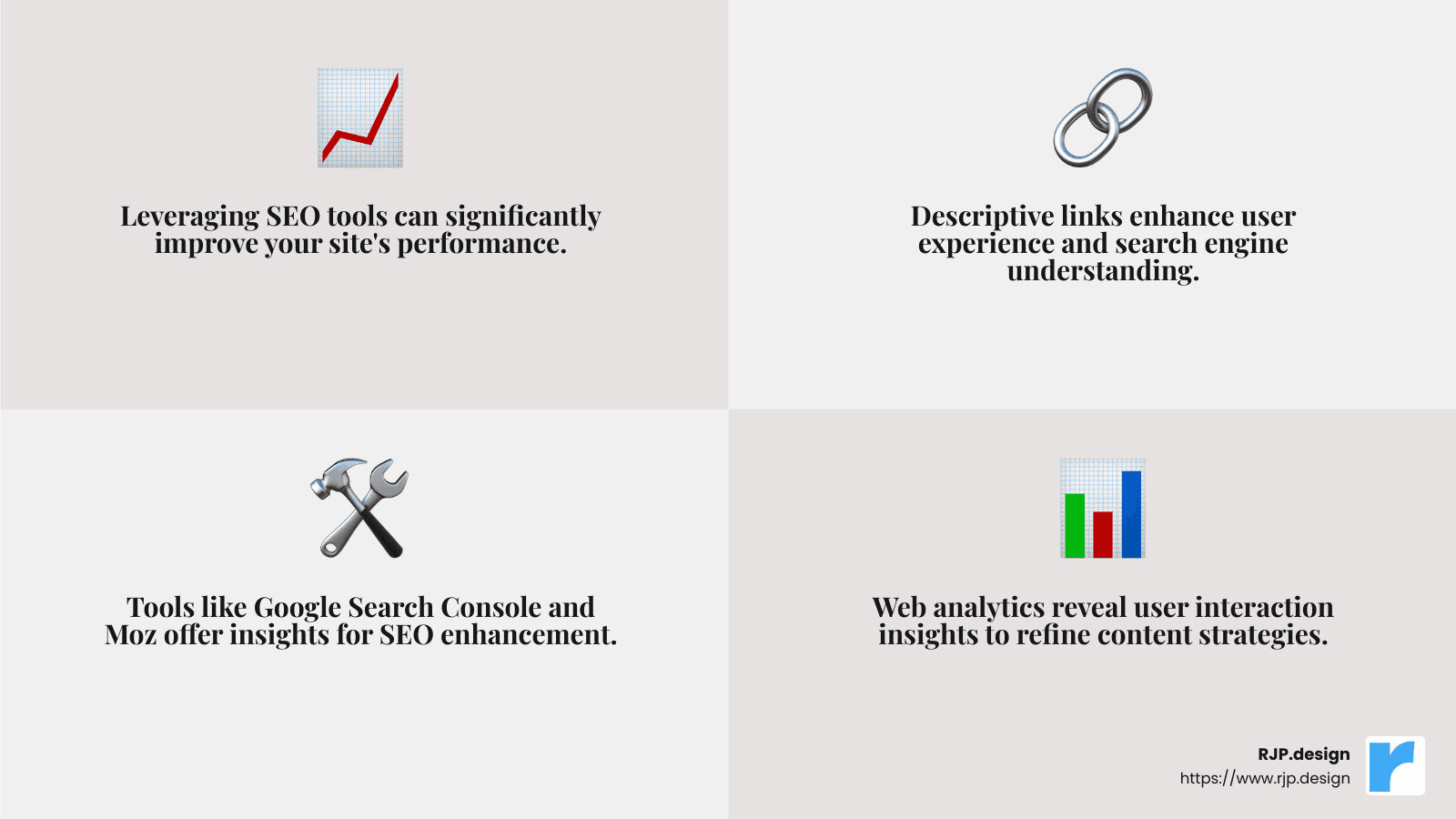
Including relevant links within your content not only supports your arguments but also builds trust with your audience. Instead of generic “click here” links, use descriptive links that incorporate keywords. For example, linking to “SEO tools for beginners” is more informative and improves both user experience and search engine understanding.
Utilizing SEO Tools
To track and improve your site’s performance, leverage tools like Google Search Console, Bing Webmaster Tools, and Moz. These platforms provide insights into how your site is performing in search results, helping you identify areas for improvement. Regularly checking your site’s analytics with tools like Google Analytics can also highlight opportunities for optimization.
Web Analytics
Web analytics are crucial for understanding how users interact with your site. By analyzing metrics such as bounce rate, time on page, and click-through rates, you can refine your content strategy. This data helps you make informed decisions about which pages need updates or additional links, ultimately boosting your site’s authority and SEO rankings.
By focusing on these strategies, you can create a site that’s not only informative but also attractive to other content creators looking for credible sources to link to. This, in turn, improves your site’s authority and helps you climb the search engine ranks.
Next, we’ll explore how optimizing for mobile and executing technical SEO can further improve your site’s performance.
Optimize for Mobile and Execute Technical SEO
Mobile Optimization
Mobile optimization isn’t just an option—it’s a necessity. With more people browsing on their phones than ever before, a mobile-responsive design is crucial for providing a seamless user experience. This means your website should look and function beautifully on any device, whether it’s a smartphone, tablet, or desktop.
To ensure your site is truly mobile-friendly, use tools like Google’s Lighthouse testing tool. This tool checks your site’s performance on mobile devices and highlights areas for improvement. Don’t forget to optimize images for faster loading times. Compressing images without losing quality can significantly speed up your site, keeping users happy and engaged.
Technical SEO
Technical SEO is all about the behind-the-scenes work that makes your site fast, secure, and easy to steer. A well-structured site not only improves user experience but also helps search engines understand and rank your content better.
Start with web development practices that improve site speed. Compress images, minimize HTTP requests, and enable browser caching to reduce load times. A fast website keeps visitors on your page longer, which can improve your rankings.
Next, focus on an organized URL structure. Clean, descriptive URLs help both users and search engines understand what each page is about. Avoid long strings of numbers or unnecessary characters—keep it simple and relevant.
Implementing schema markup is another powerful technique. This code helps search engines understand your content and can lead to rich snippets in search results, increasing your visibility. For example, a recipe site using schema markup might show cooking times and ratings directly in search results, enticing more clicks.
By prioritizing mobile optimization and technical SEO, you’re setting a strong foundation for your site’s success. These steps ensure a fast, user-friendly experience that both visitors and search engines will appreciate.
Next, we’ll dive into frequently asked questions about SEO ranking improvement to address common concerns and provide actionable insights.
Frequently Asked Questions about SEO Ranking Improvement
How does SEO improve rankings?
SEO ranking improvement is like building a solid foundation for your website. It starts with content optimization—crafting your content to be relevant and valuable to your audience. Think of it as writing a book that people want to read, with chapters that are easy to find and understand.
Next is keyword research. This is all about finding what words or phrases your audience is searching for. Use tools like Google Keyword Planner to find these keywords. Then, weave them naturally into your content without overstuffing. This helps search engines understand what your site is about and match it to users’ queries.
Another key element is inbound links. These are links from other websites to yours. It’s like getting a recommendation from a friend. The more quality links you have, the more search engines trust your site. Aim for links from reputable sites in your industry.
What are the steps to improve SEO rankings?
Improving your SEO rankings involves several steps:
Page Loading Speed: A fast-loading site is crucial. Slow pages can frustrate users and lead to higher bounce rates. Use tools like Google’s PageSpeed Insights to identify and fix speed issues.
High-Quality Content: Create content that is informative, engaging, and relevant to your audience. Quality content keeps visitors on your site longer, reducing bounce rates and improving rankings.
Mobile Optimization: Ensure your site is mobile-friendly. More people are using their phones to browse, so your site should look and work well on all devices.
Social Media Sharing: Encourage sharing of your content on social media platforms. This can increase visibility and drive more traffic to your site.
How long does it take to improve SEO ranking?
SEO is a marathon, not a sprint. Generally, it takes three to six months to see noticeable improvements in your rankings. This timeline can vary based on factors like your industry, competition, and the current state of your website.
Consistency is key. Regularly update your content, monitor your performance, and make necessary adjustments. Time and effort are your allies in the journey to better rankings. Patience and persistence will eventually pay off with higher visibility and more traffic.
In the next section, we’ll explore how metadata optimization can further improve your SEO strategy, ensuring your site stands out in search results.
Conclusion
In digital marketing, SEO ranking improvement is crucial for success. At RJP.design, we understand the importance of making your website not just visually appealing but also easily findable. Our goal is to help you climb the search engine ranks and reach your target audience effectively.
Our approach to SEO is rooted in high-quality service and client satisfaction. We believe in creating a seamless online experience that combines cutting-edge design with robust SEO strategies. Our down-to-earth team is dedicated to ensuring that your business stands out in the crowded digital marketplace.
By focusing on user experience, relevant content, and technical excellence, we empower your website to perform at its best. Whether it’s optimizing for mobile or executing technical SEO, we handle it all with precision and care.
Partnering with us means you get a team that’s committed to your success. We don’t just build websites; we build online presences that thrive. Ready to take your SEO to the next level? Explore our digital marketing services and let’s get started on your journey to better rankings and greater visibility.