
Web
The Ultimate Guide to Small Business Web Design
Feb 25, 2026
Why Your Small Business Needs More Than Just a Website
Effective small business web design is more than just an online presence; it's the strategic creation of a professional, conversion-focused website. This digital storefront should generate leads, build credibility, and turn visitors into customers. Here's what sets an effective website apart:
Conversion-focused design that turns visitors into paying customers.
Mobile-responsive layouts that work flawlessly on all devices (63% of Google searches are mobile).
Fast loading speeds under 3 seconds, as most users abandon slower sites.
Clear navigation that guides visitors to take action.
SEO optimization built-in to help customers find you online.
Strategic content that addresses customer problems and showcases your value.
The reality is stark: nearly 30% of small businesses lack a website, and many that have one are losing money. A website should be a 24/7 sales representative, but too many businesses use generic templates that fail to stand out and connect with customers.
The good news is that an effective website is within reach. With the right strategy, small businesses can compete effectively, especially since 46% of all Google searches are for local information. Your customers are looking for you right now.
The stakes are high: 94% of first impressions are design-related, and 93% of consumers will leave a site if it isn't mobile-friendly. Effective design isn't just about looks; it's about creating a seamless user experience that builds trust, communicates value, and converts visitors into customers by solving their specific problems.
I'm Ross Plumer, and I've helped businesses build websites that drive measurable results by integrating psychology, user experience, and conversion optimization. This guide will walk you through the essentials of creating a successful small business website, from strategy to implementation.
The Core Components of High-Converting Small Business Web Design
Your website is often a potential customer's first interaction with your business. It needs to be welcoming, easy to steer, and clearly showcase your offerings. This is where the core components of effective small business web design come into play.
Crafting a Homepage That Captures and Converts
Your homepage is your business's elevator pitch and first impression. It must grab attention, convey value, and guide visitors to their next step. Design matters, but so does meaningful content and a smart strategy.
Here are the essential elements for an effective homepage:
A Clear Promise: Start with a compelling headline that tells visitors exactly what problem you solve.
A Supporting Sub-Promise: Follow up with a concise statement that builds trust and offers more detail.
One Clear Call-to-Action (CTA): A single, prominent CTA like "Book a Call" or "Shop Now" guides visitors and avoids confusion.
Visible Contact Information: Make it incredibly easy for people to reach you by displaying contact details prominently.
Engaging Visuals: Use high-quality images and video to communicate ideas quickly. As two-thirds of people prefer video to learn about a new product, it's a powerful tool.
Core Services/Problems Solved: Clearly list how you help customers so they can quickly see if you're the right fit.
Trust Elements and Social Proof: Include testimonials, reviews, and client logos to build credibility and reassure potential customers.
Mobile-Friendliness: Your site must be optimized for mobile to avoid losing visitors.
Clear Pathways: Offer intuitive paths for different audience segments to find relevant information.
A Resource Menu: Use the footer for links to your blog, FAQs, privacy policy, and social media channels.
When showcasing products, use crisp photos and clear descriptions. For services, use images that evoke the desired outcome. For example, a landscaping company might summarize services on the homepage with links to dedicated gallery pages. Be concise and impactful.
Storytelling can also connect with customers, but the story should reflect your audience's challenges and aspirations. An "About Us" page is a great place to share your brand's purpose and values in a relatable way. According to Nielsen Norman Group's research on web usability, users typically scan web pages rather than reading word-for-word, making clear structure and scannable content essential.
Ensuring a User-Friendly and Accessible Experience
A beautiful website is useless if it's hard to steer. User-friendliness and accessibility are paramount, requiring a balance between aesthetics and business objectives.
The cornerstone of a user-friendly site is a clear information hierarchy, which organizes content logically so visitors can easily find what they need. For some, a one-page design works well, keeping all information accessible via scrolling.
Intuitive navigation is non-negotiable. Use clear menus that follow common usability patterns to guide users effortlessly. Design consistency in colors, fonts, and button styles across all pages is also vital. Well-known brands excel at this, creating a seamless experience from page to page.
Finally, prioritize readability and accessibility. Use legible fonts, ensure high contrast between text and backgrounds, and avoid clutter to reduce cognitive load. A clean, simple interface helps users process information. Ensure your site is accessible to users with disabilities by using descriptive alt text for images and enabling keyboard navigation.
The Technical Foundation: Speed, Mobile, and Security
Your website's underlying technical aspects are critical for success. Without a solid foundation, even the best design will fail.
Mobile-first design is essential. With over 60% of Google searches on mobile, it's no surprise that 93% of consumers leave a site if it isn't mobile-optimized. Responsive design ensures your site adapts to any screen size and delivers a custom experience on each device.
Website speed is critical. Most users abandon sites that take longer than three seconds to load, and Google uses speed as a major ranking factor. To optimize speed, compress images, minimize plugins, leverage caching, and use a Content Delivery Network (CDN).
Choosing the right web hosting and Content Management System (CMS), like WordPress or Shopify, is key. Look for reliable, fast, and scalable hosting. While cheap options are tempting, investing in quality hosting is crucial for performance.
Finally, basic website security cannot be overlooked. Regular updates, strong passwords, and SSL certificates are fundamental to protecting your site and your customers' data.
Your Strategic Roadmap to Website Success
An effective website is part of a broader strategy that ensures your ideal customers can find you, engage with your content, and ultimately become customers.
Integrating SEO into Your Small Business Web Design
Search Engine Optimization (SEO) must be a foundational part of your small business web design. A great website is pointless if no one can find it. SEO helps search engines understand and rank your site, driving valuable organic traffic.
With 46% of all Google searches focused on finding local information, local SEO is immensely important for small businesses. Here's how to integrate SEO into your website:
On-page SEO basics: Optimize individual pages to rank higher.
Keyword integration: Naturally include relevant keywords in titles, descriptions, headings, and content.
Quality content: Provide valuable, informative content that demonstrates your expertise and answers user questions.
Descriptive URLs: Create clear, keyword-rich URLs that are easy to understand.
Image optimization: Use descriptive alt text for all images to improve accessibility and help search engines.
Technical SEO: Ensure search engines can crawl and index your site.
Mobile-friendliness and site speed are major ranking factors.
A clear site structure helps search engines and users steer your content.
Content strategy: Create content that addresses what people are actually searching for (user intent).
Internal linking: Strategically link related pages within your site to improve authority and help search engines find content.
SEO is an ongoing process of monitoring and optimization to maintain and improve your search rankings.
The Web Design Process and Avoiding Common Pitfalls
A clear process makes a small business web design project manageable. We follow a structured roadmap for success:
Strategy and Research: We define your goals, target audience, and website's purpose while researching competitors.
Platform & Domain: We help you select the right CMS and secure a simple, professional domain name.
Structure (Wireframing): We create a blueprint of your site's layout and flow to ensure a logical user journey.
UI Design: We craft a visual design that aligns with your brand, balancing aesthetics with functionality.
Content Creation: We work with you to develop compelling, SEO-friendly content that speaks to your audience.
Development: Our team brings the design to life with clean code, implementing all planned features.
Test and Launch: We rigorously test for usability, speed, and responsiveness before the site goes live.
Post-Launch Optimization: We monitor performance and make ongoing adjustments to improve results.
Throughout this process, we avoid common mistakes like slow speeds, confusing navigation, weak CTAs, poor-quality content, and neglecting mobile-friendliness or SEO. We also ensure your design is modern and engaging by incorporating current trends like human-centered UX, minimalist layouts, and dark mode for accessibility, without sacrificing functionality.
Choosing the Right Partner for Your Small Business Web Design
Choosing a web design partner is a significant decision that impacts your lead generation and business growth.
First, evaluate your needs and set a realistic budget. While custom sites can be expensive, many quality, affordable options exist. Our clients consistently see significant increases in traffic and leads, proving that professional design is a worthwhile investment.
Next, vet potential web design partners. Look for:
A strong portfolio and case studies with proven results.
Deep experience in design, user experience, and SEO.
Positive client feedback and reviews that speak to their professionalism.
Transparent pricing without hidden costs.
A clear, collaborative communication process.
Here are some questions to ask a potential web designer:
What is your design process?
How do you ensure the site will be mobile-friendly and fast?
What is your approach to SEO?
Will I own my website and its content?
What post-launch support do you offer?
How do you measure success?
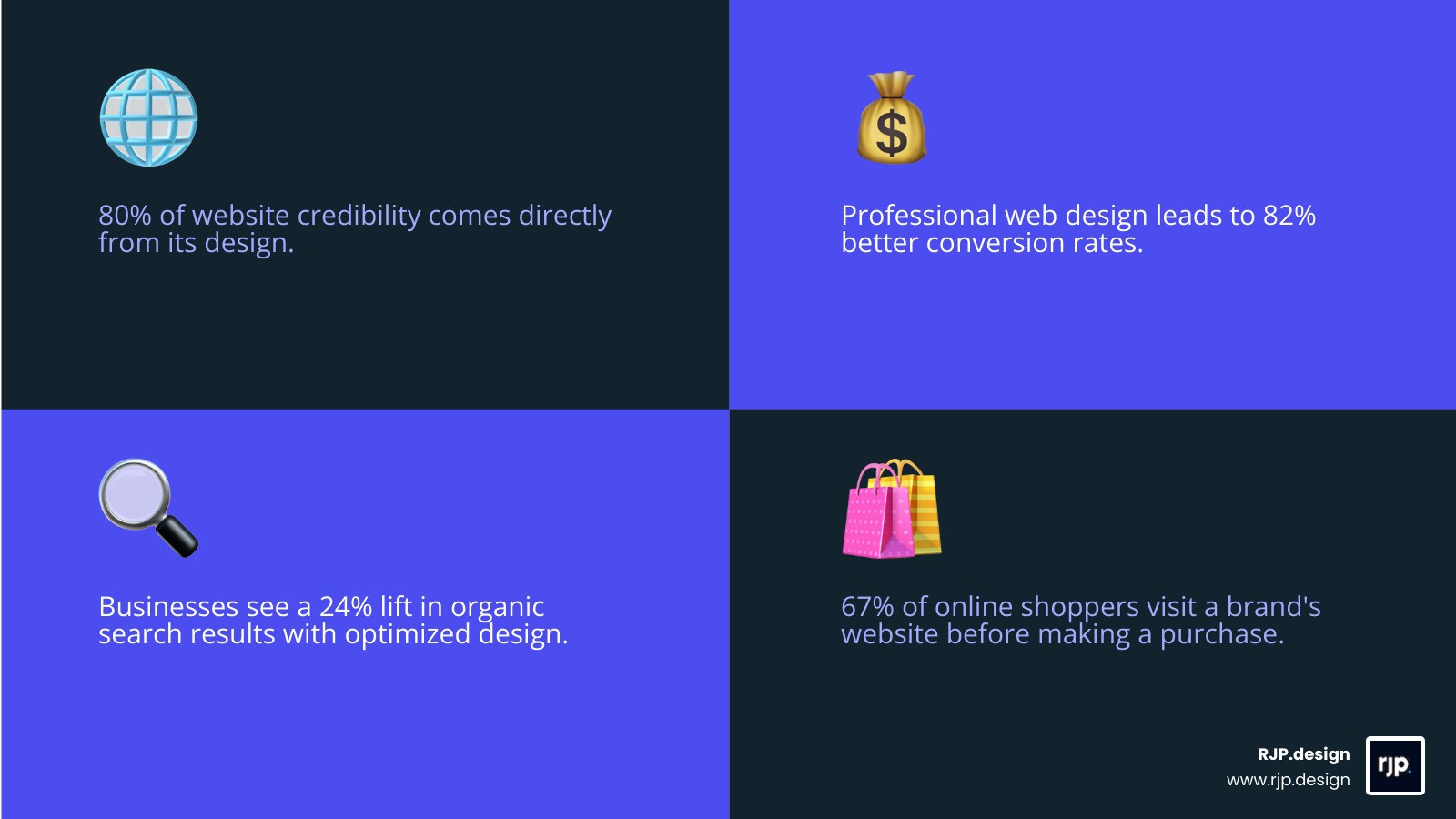
The benefits of professional web design are undeniable. A quality design shapes your brand, generates leads, improves conversions, and increases ROI. We know that 80% of website credibility comes from design and 94% of first impressions are design-related. A professional site signals trustworthiness and competence.
At RJP.design, we specialize in creating websites that don't just look great but are also easily found online, turning visitors into customers. Our down-to-earth team delivers high-quality service and understands the nuances of small business web design. We're committed to helping you achieve your online goals.
If you're ready to see how a professionally designed website can transform your business, we invite you to learn more about our services.
Learn more about our web design and digital marketing services