Marketing
Unlock Your Potential: Custom eCommerce Solutions for Unique Businesses
Feb 24, 2026
Why Your Business Deserves More Than a Template
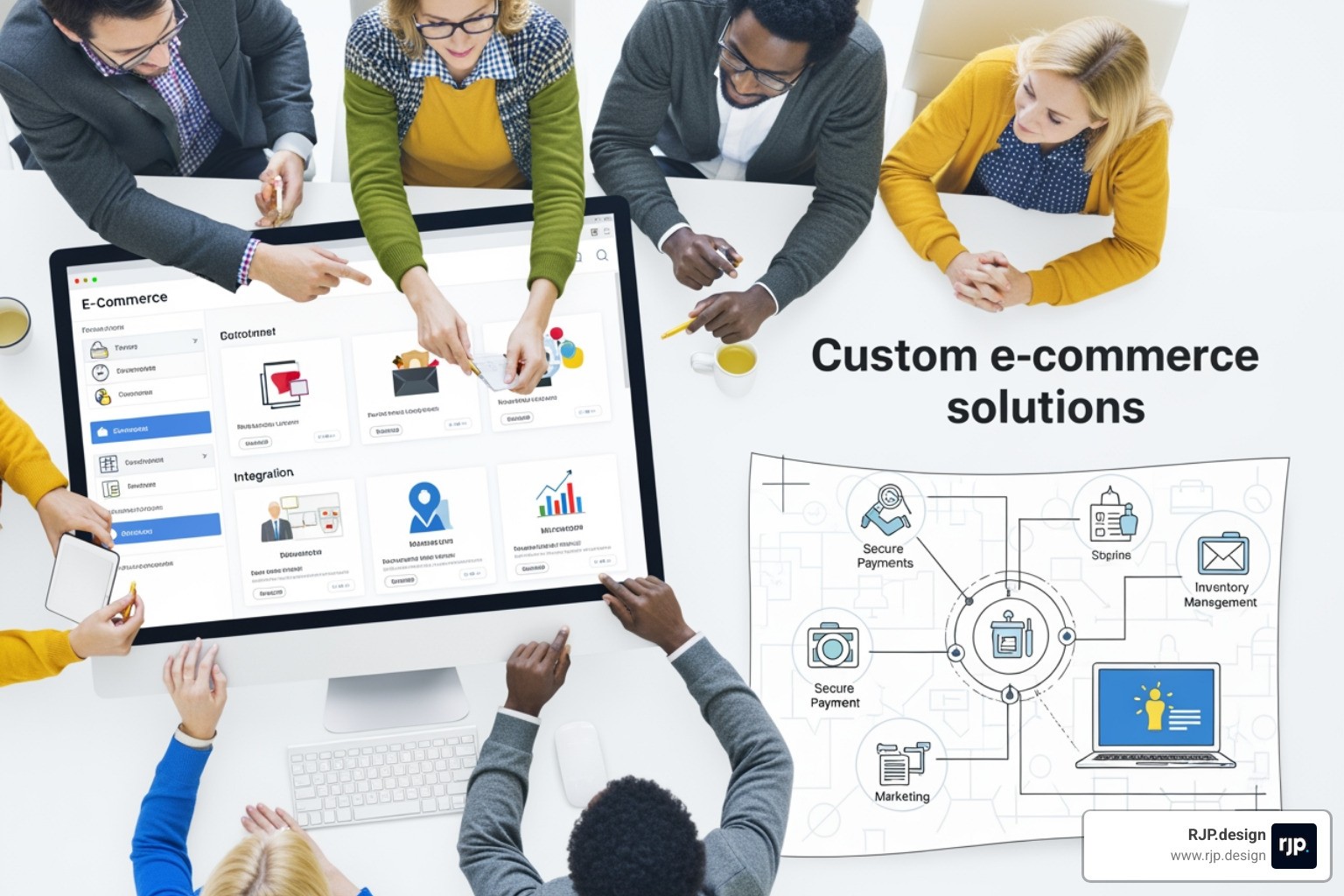
Custom ecommerce solutions are tailor-made online stores built from the ground up to match your unique business model, workflows, and brand identity—rather than forcing your business to fit into a pre-made template.
What You Get with Custom eCommerce Solutions:
Complete Control – Own your code, data, and destiny with zero platform limitations
Unique Features – Build exactly what your customers need, not what a template allows
Seamless Integrations – Connect deeply with your ERP, CRM, PIM, and proprietary systems
Superior Performance – Optimized architecture built for speed, scalability, and conversions
Long-Term ROI – Avoid monthly platform fees and plugin costs that add up over time
As the global eCommerce market grows, businesses are finding that off-the-shelf platforms can't keep pace with their ambitions. For complex pricing, unique customer journeys, or non-standard workflows, a custom solution becomes less of an option and more of a necessity.
While standard platforms suit simple needs, businesses with unique logic, complex integrations, or specific feature requirements will quickly hit a ceiling. Custom development breaks through that ceiling, offering the flexibility, scalability, and competitive advantage that template-based solutions simply can't provide.
The choice is strategic. A custom solution transforms your online store from a cost center into a proprietary asset that competitors can't replicate. You're not just building a website; you're creating a growth engine designed around your customers, your operations, and your vision.
I'm Ross Plumer, and I've helped businesses steer the choice between standard platforms and custom solutions. My approach blends psychology, user experience, and business strategy to build platforms that drive measurable growth and create a lasting competitive advantage.
Must-know custom ecommerce solutions terms:
The eCommerce Crossroads: Standard Platforms vs. Custom-Built Solutions
In the expanding world of online retail, businesses face a pivotal decision: use a prebuilt, off-the-shelf eCommerce platform or invest in a custom ecommerce solution. This choice is a strategic fork in the road that defines a company's competitive edge.
A custom ecommerce solution is a bespoke online store, crafted from the ground up to match a business's unique operational needs, brand identity, and customer journey. This approach offers unparalleled control over every aspect, from the user interface to backend functionalities.
In contrast, prebuilt platforms offer ready-made frameworks for selling online. They are designed for quick setup and ease of use, but this convenience comes with limitations:
Generic Templates: Businesses often must force their unique processes into a generic template, stifling creativity and brand personality.
Limited Customization: Extensive customization requires costly plugins or complex workarounds that can slow down your site without delivering the exact functionality needed.
Scalability Challenges: Off-the-shelf platforms may have caps on sales, products, or transactions that become restrictive as your business grows.
Data Control and Ownership: With some prebuilt platforms, you may not have full ownership of your data, posing security risks and limiting analytics.
Vendor Lock-in: Relying on a third-party platform can make it difficult and expensive to switch providers, leaving you at the mercy of their roadmap and pricing.
A custom ecommerce solution is the right choice when your business model is unique, workflows are complex, or deep integrations are required. If standard platforms block your business model or limit revenue potential, custom development becomes a strategic imperative.
Here's a quick comparison to help you steer the crossroads:
Feature | Standard Platforms | Custom eCommerce Solutions |
|---|---|---|
Flexibility | Limited, template-driven | Unlimited, built to exact specifications |
Cost | Lower initial, escalating monthly fees | Higher initial, lower long-term TCO |
Scalability | Good, but with inherent limitations | Unlimited, designed for future growth |
Time-to-Market | Faster (weeks to a few months) | Slower (months to a year for complex builds) |
Brand Identity | Generic, challenging to stand out | Unique, reinforces distinct brand personality |
Data Control | Often shared, limited direct access | Full ownership and control |
Integrations | Plugin-dependent, sometimes clunky | Seamless, API-driven, custom to systems |
Building for Success: A Guide to Custom eCommerce Solutions
Choosing a custom ecommerce solution is about building a digital asset that acts as a growth engine. It allows you to craft a unique brand identity and gain a competitive edge. With custom solutions, you are not just selling products; you are building an experience that streamlines operations, optimizes performance, and delivers a better long-term return on investment (ROI). It is a platform that evolves with your business, not one that forces your business to adapt. More info about custom website solutions.
The Core Benefits of Custom eCommerce Solutions
The advantages of a custom approach are compelling and directly address the limitations of off-the-shelf alternatives:
Flexibility and Control: Gain complete control over every feature, design element, and integration. You can implement unique business logic, complex pricing models, and specific user flows that are impossible with templated solutions. You own the code, the data, and the platform's destiny.
Complete Brand Control and Unique Identity: A custom solution perfectly reflects your brand's personality and aesthetic. This distinct user experience resonates with your target audience, creating a powerful competitive advantage.
Optimized Customer Journeys: Design hyper-personalized and efficient customer journeys. With over 73% of customers pointing to experience as an important factor in their purchasing decisions, creating specific pathways for different segments leads to higher conversion rates and satisfaction.
Addressing B2C, B2B, and Marketplace Needs: Custom solutions adeptly handle various eCommerce models. For B2C, they enable intuitive UI/UX and personalization. For B2B, they support complex purchasing journeys, custom catalogs, and deep ERP/CRM integration. For Marketplaces, they provide robust platforms for administrators, sellers, and buyers.
Scalability for Future Growth: Custom platforms are architected for scalability. Whether you anticipate traffic surges, product line expansion, or new markets, a custom solution built on modern cloud infrastructure can handle growth without issue.
Better Long-Term ROI: While the initial investment is higher, custom solutions often deliver superior long-term ROI. By avoiding recurring platform fees and minimizing reliance on expensive plugins, a custom build becomes a proprietary asset, not an escalating monthly expense.
Explore amazing ecommerce website designs.
Key Design and User Experience Considerations
Designing a custom ecommerce solution is about crafting an intuitive, efficient, and enjoyable experience. User Experience (UX) and User Interface (UI) design are paramount, directly impacting conversions and customer satisfaction.
Here are our key considerations:
User Experience (UX) First: We prioritize understanding your target audience's needs and pain points. By mapping customer journeys, we ensure every interaction is seamless, helping users find what they need and purchase with ease.
Mobile-First and Responsive Design: With mobile commerce dominating, a mobile-first approach is non-negotiable. We design for smaller screens first, ensuring your site automatically adapts to any device for an optimal viewing experience. For a deeper dive, learn about responsive web design.
Intuitive Navigation: A clear, straightforward navigation structure is vital. We use minimalistic designs that remove clutter and guide the user through their purchasing journey, relying on familiar patterns for ease of use.
Streamlined Checkout Process: The checkout is where conversions happen. We design a simple process that minimizes friction, reduces abandoned carts, and offers various payment options, including guest checkout.
Product Page Optimization: Detailed product pages with high-quality images, compelling descriptions, customer reviews, and clear calls to action are essential. We can integrate features like 3D previews for complex products.
Accessibility (WCAG): We believe in inclusive design. Adhering to Web Content Accessibility Guidelines (WCAG) broadens your audience, improves SEO, and improves the user experience for everyone.
By focusing on these principles, we create custom ecommerce solutions that are not only visually appealing but also highly functional and optimized for conversions. To see some examples, see the best ecommerce sites for UX.
Technology Deep Dive: Integrations, Security, and Scalability
The true power of custom ecommerce solutions lies in the robust technological architecture that enables seamless operations, ironclad security, and limitless scalability.
Custom Integrations with Other Business Systems
A key advantage is creating deep, bidirectional integrations with your existing systems. Unlike plugin-based connections, custom APIs allow for seamless data flow with your CRM, ERP, PIM, and logistics software. This end-to-end integration improves data accuracy, minimizes administrative burden, and improves the customer experience. Discover our custom web applications services.
Payment Processing, Security, and Fraud Prevention
Security is strategic. We implement enterprise-grade security, including secure payment gateways, PCI compliance, and advanced protections like SSL/TLS encryption and Web Application Firewalls (WAF). Custom fraud prevention strategies protect your business and customers.
Scalability and Future Growth
A custom solution is built for the long haul. We use modern architectural patterns like Cloud Infrastructure for on-demand resources, Microservices for improved reliability, and Headless Architecture for flexibility across multiple touchpoints (web, mobile, etc.). This robust foundation supports massive scale and omnichannel capabilities.
Navigating the Development Process: Costs, Timelines, and Maintenance
Starting on a custom ecommerce solution project is a significant investment. Understanding the costs, timelines, and maintenance is crucial for strategic planning.
Typical Cost Range and Development Timeline
The cost and timeline for a custom project depend on its complexity.
Initial Investment: Expect a higher upfront cost than off-the-shelf platforms. Projects can range from $10,000 for a basic MVP to over $200,000 for complex enterprise solutions.
Development Timeline: A Minimum Viable Product (MVP) can take 3-6 months. A full-featured platform typically takes 6-12 months, from findy to launch.
Our structured process includes: 1. Findy and Requirements, 2. Architecture and Design, 3. Backend and Frontend Development, 4. Testing and QA, and 5. Launch and Optimization.
Ongoing Maintenance and Support Requirements
A custom solution requires ongoing care. Annual maintenance typically runs 15-20% of the initial development cost. This covers security patches, bug fixes, and performance monitoring. We offer managed services to handle this, ensuring your platform remains secure and efficient.
Potential Drawbacks or Challenges
While the benefits are profound, be aware of the higher initial investment, longer time-to-market, and the responsibility for ongoing maintenance. However, for businesses ready to lead their market, these are strategic investments that pay off in control, flexibility, and competitive advantage. Read our e-commerce website development complete guide.
Future-Proofing Your Store with Emerging Tech and Data
In the dynamic world of eCommerce, staying ahead means embracing innovation. Custom ecommerce solutions provide the perfect canvas for integrating emerging technologies and leveraging data.
The Role of Data and Analytics
With a custom solution, you have unparalleled control over your data. This allows for sophisticated analytics to track user behavior, identify pain points, and optimize conversions. Leveraging this data, we can implement advanced personalization engines and run A/B tests to continuously improve KPIs. Website analytics tracking services are integral to this process.
Integrating Emerging Technologies
Custom platforms are ideal for integrating cutting-edge tech:
Artificial Intelligence (AI) and Machine Learning (ML): AI can power intelligent chatbots, dynamic pricing, and advanced product recommendations.
Augmented Reality (AR) and Virtual Reality (VR): Allow customers to virtually "try on" products or visualize them in their space, reducing returns and boosting engagement.
Voice Commerce: Integrate with smart speakers to offer a convenient, voice-activated shopping channel.
Social Commerce: Deeply integrate with social media platforms to enable seamless shopping directly from social feeds.
By embracing these technologies and a data-driven approach, your store is built not just for today, but to evolve and thrive in the future. Furthermore, incorporating SEO best practices ensures these advanced features are findable; learn how to improve SEO for e-commerce websites.
Choosing the Right Development Partner for Your Custom eCommerce Solutions
Selecting the right partner is as crucial as the decision to go custom. Here is what to look for:
Proven Track Record: Review their portfolio for projects similar in complexity to yours.
Technical Expertise: Ensure they have expertise in modern technology stacks, including headless and composable commerce architectures.
Findy Process: A good partner begins with a thorough findy phase to understand your business goals and define clear success metrics.
Communication and Collaboration: Look for a transparent, responsive, and collaborative team.
Long-Term Partnership and Support: Choose a partner who offers comprehensive post-launch services, including maintenance, security, and a clear Service Level Agreement (SLA).
Focus on Success Metrics: The partner should define clear KPIs to ensure development is goal-oriented and success is measurable.
Choosing us means partnering with a team that combines deep technical expertise with a passion for understanding your business. We craft strategic digital solutions designed to empower your growth. Find a top-rated ecommerce development agency and see our professional web design services to learn more.
Is a Custom Solution Your Next Step?
If your business has unique processes, a complex product catalog, or a bold vision that standard platforms can't support, it's time to consider a custom path. A custom solution is more than a website—it's a strategic asset built to grow with you and give you a definitive edge in a crowded market.
At RJP.design, we empower businesses to reach their full potential online. Our expertise in crafting bespoke digital experiences, combined with our down-to-earth approach, makes us the ideal partner for your custom eCommerce journey. We ensure your strategic investment fuels growth and secures your competitive advantage.
Don't let template limitations hold you back. If you're ready to build a storefront that truly reflects your brand, optimizes operations, and delights customers, we're ready to help. Start your journey with our expert web design and development services.