
Web
Best Ecommerce Site Designs: Stunning Examples for 2024
Aug 31, 2024

Amazing ecommerce website designs can make or break your online business. Studies reveal it takes only 50 milliseconds for visitors to decide if they’ll stay on your site or leave. First impressions are crucial, so nailing your website design can greatly improve your user experience and, ultimately, your sales.
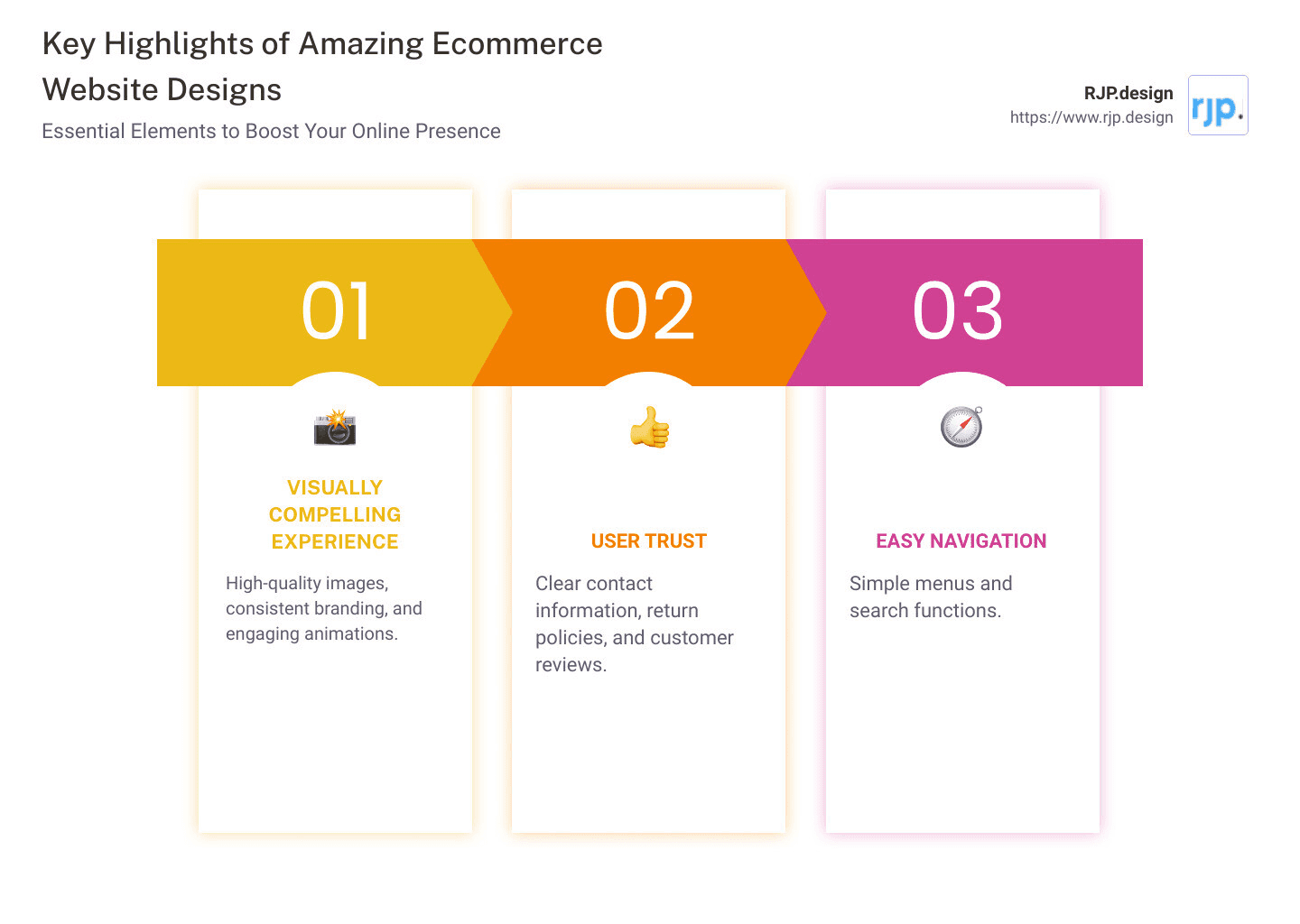
Key highlights of amazing ecommerce website designs:
Visually compelling experience: High-quality images, consistent branding, and engaging animations.
User trust: Clear contact information, return policies, and customer reviews.
Easy navigation: Simple menus and search functions.
Responsive design: Optimal performance on both desktop and mobile devices.
I’m Ross Plumer, with a rich history in digital marketing and ecommerce website design. Over the years, I’ve helped businesses generate over $20 million in revenue by creating impactful, user-friendly online experiences. Together, we’ll dive into what makes an ecommerce site stand out in 2024.
Key Elements of Amazing Ecommerce Website Designs
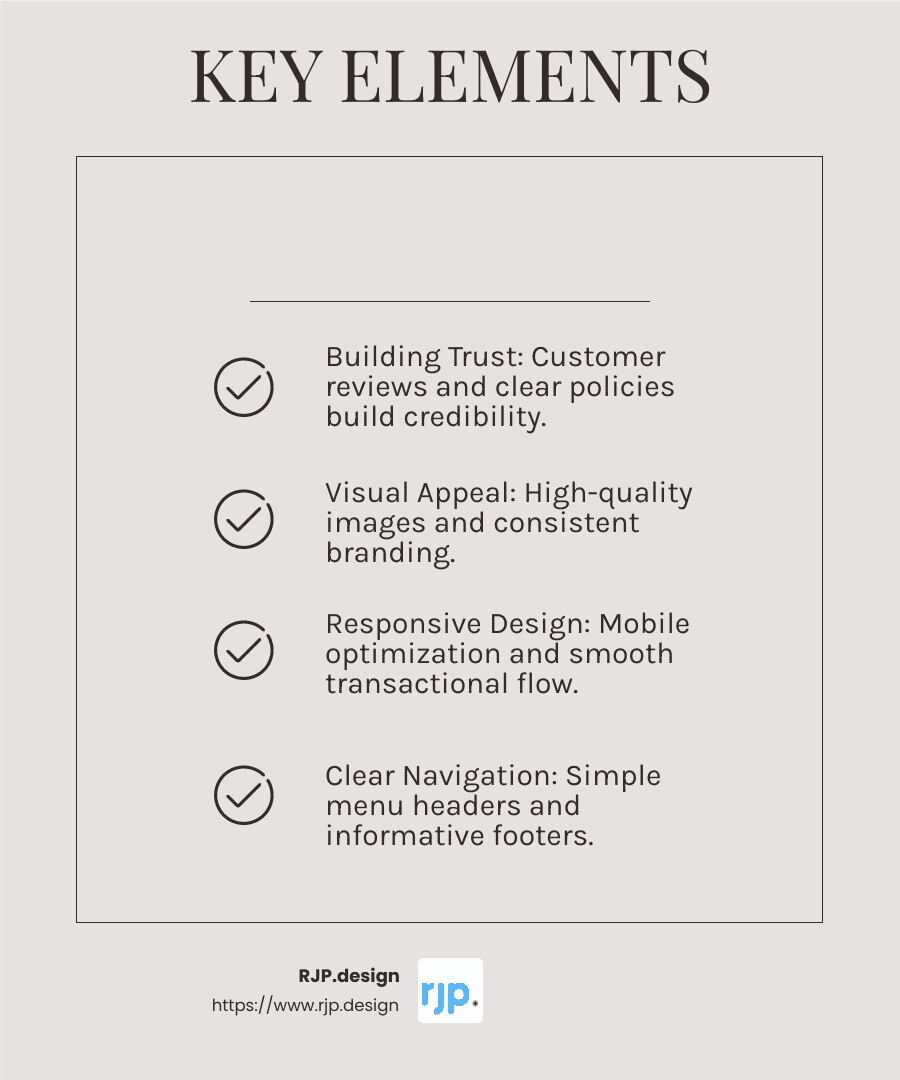
In e-commerce, amazing website designs are not just about looking good—they’re about creating an experience that builds trust, engages users, and makes shopping easy. Here, we’ll explore the essential elements that contribute to a stellar ecommerce site design.
Building Trust with Customers
When visitors land on your e-commerce site, they need to feel confident about making a purchase. Trust-building elements are crucial to achieving this.
Contact Information
Including contact details like an email address, phone number, and mailing address in your site footer and on a dedicated Contact page helps customers feel they’re dealing with a real, trustworthy business.
Return Policy
A clear and fair return policy can reduce shopping cart abandonment and increase sales. For example, Supergoop highlights its free returns policy on every product page, reassuring customers they can shop with confidence.
Technical Certifications
Using secure payment gateways like Shopify Payments ensures customer information is protected. Displaying security badges and accepted payment methods can further improve trust.
Customer Reviews and Testimonials
Integrating customer reviews and testimonials into your site can boost credibility. Many ecommerce platforms offer app integrations to showcase customer feedback, Instagram feeds, and user-generated content.
Creating a Visually Compelling Experience
First impressions are formed in milliseconds, making visual appeal a critical factor in ecommerce design.
High-Quality Images
High-definition product photos can captivate visitors and convey the quality of your products. Sites like Hebe Designer Boutique excel in this area, using beautiful images to improve their online store.
Consistent Branding
Consistency in branding—such as using the same fonts, colors, and logos across all pages—helps create a cohesive and memorable user experience. For example, Allbirds uses consistent visual elements to reinforce its brand identity.
Psychological Design
Employing psychological design principles, like color psychology and visual hierarchy, can guide user behavior. For instance, using contrasting colors for call-to-action (CTA) buttons can draw attention and encourage clicks.
Visual Hierarchy
A clear visual hierarchy ensures that the most important elements stand out. This can be achieved through size, color, and placement. Sites like Grainne Morton use visible grids and line work to organize content effectively.
Focusing on Responsive Design for Mobile and Desktop
With more users shopping on mobile devices, ensuring a seamless experience across all devices is crucial.
Mobile Optimization
Your ecommerce site should be fully optimized for mobile devices, with responsive design elements that adapt to different screen sizes. Features like hamburger menus and adjustable text sizes can improve mobile usability.
Transactional Flow
A smooth transactional flow—from browsing to checkout—is essential. Simplifying the checkout process, like Nike’s single-page checkout, can reduce cart abandonment and increase conversions.
User-Friendly Design
User-friendly design means intuitive navigation, easy-to-find information, and a seamless shopping experience. For example, Zenni’s site features an easy-to-find search bar with autocomplete suggestions, enhancing user convenience.
Designing Clear Navigation
Good navigation helps users find what they’re looking for quickly and easily, improving both user experience and SEO.
Menu Headers
Use familiar and self-explanatory menu headers like “Shop,” “Our Story,” “Bestsellers,” and “Contact.” Keeping top-level navigation simple and clear helps users steer your site with ease.
SEO Improvement
Effective navigation can also boost your site’s SEO. Breadcrumbs, for instance, not only help users understand their location on your site but also help search engines index your pages more effectively.
Footer Links
An informative footer can include links to essential pages like shipping information, return policies, and terms of service. This makes it easier for users to find important information without cluttering your main navigation.
By focusing on these key elements, you can create an ecommerce website that not only looks stunning but also performs exceptionally well, building trust, engaging users, and driving sales.
Next, we’ll dive into some of the best ecommerce site designs for 2024, showcasing real-world examples of these principles in action.
10 Best Ecommerce Site Designs for 2024
MARMOT
MARMOT’s e-commerce site captures the essence of trip with high-quality photos that make the outdoors seem fun and inviting. The easy navigation on the product pages improves the shopping experience, allowing customers to find what they need quickly.
AWAY
AWAY excels with its user-friendly design, showcasing luggage and bags for the modern traveler. The high-quality product images and simple checkout process make purchasing straightforward and enjoyable.
SALTY K
SALTY K stands out with its social media engagement, particularly on Instagram. The provocative photos draw customers in, while clear policies on shipping and returns make buying decisions easier.
BOSE
BOSE’s e-commerce site is a prime example of user-friendly categories that cater to both B2B and B2C markets. The site’s design makes it easy for customers to steer through various product categories, enhancing the shopping experience.
TARGET
Target’s website is known for its functional layout. Despite selling a vast number of items, the site remains uncluttered. Organized product titles, detailed descriptions, and amazing product photos ensure a seamless user experience.
EUROPA EYEWEAR
Europa Eyewear’s website features a contemporary design that appeals to both B2B and B2C markets. Its sophisticated structure ensures effortless user interaction, making it a standout in the eyewear industry.
HUMON
Humon’s site is a masterclass in showcasing products visually. The visual product showcase banner clearly demonstrates how the muscle oxygen sensor works. Testimonials and a lead capture form add to the site’s effectiveness, ticking all the right e-commerce design boxes.
THIRDLOVE
ThirdLove’s e-commerce site excels in community building. The comfortable shopping experience and understanding of its target audience’s needs make it a go-to for women’s underwear. The site’s design speaks directly to common pain points, making it relatable and trustworthy.
OCULUS
Oculus’ e-commerce website impresses with its sleek graphics and user-friendly navigation. An informative blog adds value, making it a comprehensive resource for both VR program developers and ordinary consumers.
DEATH WISH COFFEE
Death Wish Coffee’s site is bold and quirky, much like its brand. The animated hero image and clever copy play on the company’s name, creating a memorable shopping experience. Despite its growth, the site maintains a small-town atmosphere, appealing to both B2B and B2C customers.
These amazing ecommerce website designs exemplify how focusing on user experience, visual appeal, and clear navigation can lead to successful online stores. Next, we’ll explore best practices for e-commerce website design to help you create a site that stands out.
Best Practices for Ecommerce Website Design
Easy Navigation
Clear navigation is essential for an effective e-commerce website. Here’s how to achieve it:
Menu Headers: Use familiar and self-explanatory labels like Home, Products, Blog, and Contact. This makes navigation intuitive.
Clear Labeling: Ensure menu items are clearly labeled to avoid confusion.
Footer Links: Include important links in the footer, such as Shipping Policies, Return Policies, and Contact Information.
Effective Product Segmentation
Proper product segmentation helps customers find what they need quickly:
Categories and Subcategories: Organize products into main categories and subcategories. For example, under Clothing, you might have Men, Women, and Kids.
Product Pages: Each product should have its own dedicated page with detailed information and images.
High-Quality Images and Videos
Visual appeal is crucial in e-commerce:
Product Photography: Use high-quality images from multiple angles. Lifestyle photos show the product in use, helping customers imagine owning it.
Brand Aesthetic: Maintain a consistent visual style that reflects your brand’s identity.
Smooth Checkout Process
A seamless checkout process reduces cart abandonment:
Payment Gateways: Offer multiple payment options like Shop Pay, Amazon Pay, PayPal, and Stripe.
Guest Checkout: Allow customers to check out without creating an account.
Minimal Steps: Simplify the checkout process to as few steps as possible.
Variety of Payment Options
Offering various payment methods can increase conversions:
Shop Pay, Amazon Pay, PayPal, Stripe: Include popular payment gateways to cater to different customer preferences.
Clear Calls to Action
Effective calls to action (CTAs) guide users towards making a purchase:
Shop Now, Add to Cart, Subscribe: Use clear and compelling CTAs to encourage user interaction.
Responsive Design
Ensure your site works well on all devices:
Mobile Optimization: Design your site to be mobile-friendly, as many users shop on their phones.
Hamburger Menus: Use collapsible menus to save space on smaller screens.
Text Size Adjustments: Ensure text is readable on all devices.
SEO Optimization
Optimize your site for search engines to attract more visitors:
Search Engine Ranking: Use keywords effectively to improve your search engine ranking.
Keyword Usage: Incorporate relevant keywords naturally into your content.
Meta Descriptions: Write compelling meta descriptions to improve click-through rates from search engine results.
By focusing on these best practices, you can create an amazing ecommerce website design that not only looks good but also provides a seamless and enjoyable shopping experience for your customers.
Next, we’ll dive into frequently asked questions to address common concerns about e-commerce website design.
Frequently Asked Questions about Amazing Ecommerce Website Designs
What kind of design is good for an ecommerce website?
A good ecommerce website design is one that is mobile-optimized, ensures a memorable shopping experience, and facilitates a secure checkout process.
Mobile Optimization: With nearly 80% of customers making purchases via mobile devices, it’s crucial to use a responsive design that adjusts seamlessly to various screen sizes. This not only improves user experience but also boosts your site’s SEO ranking.
Memorable Shopping Experiences: High-quality images, engaging videos, and consistent branding can make your site stand out. For instance, using hero product photos on your homepage can immediately capture attention and convey your brand’s value proposition.
Secure Checkout: Security is non-negotiable. Use SSL certificates and secure payment gateways to protect customer data and build trust. Displaying security badges can also reassure customers that their information is safe.
What makes a good ecommerce website?
A good ecommerce website combines high-quality images, engaging videos, and an excellent user experience to drive sales and build customer loyalty.
High-Quality Images: Use crisp, high-definition images from multiple angles to showcase your products. Lifestyle photos can help customers visualize using the product in their own lives.
Videos: Incorporate product videos and tutorials to provide a more comprehensive understanding of your offerings. This can significantly boost engagement and conversion rates.
User Experience: Ensure your website is easy to steer with clear menu headers and footer links. A well-organized site with intuitive navigation keeps customers engaged and reduces bounce rates.
What is the best structure for an ecommerce website?
The best structure for an ecommerce website is a hierarchical structure that includes a well-designed homepage, organized categories, specific subcategories, and detailed product pages.
Homepage: Your homepage should feature a hero image of your signature product and highlight popular categories. This helps users quickly find what they’re looking for.
Categories and Subcategories: Organize your products into main categories and subcategories. For example, under Electronics, you might have subcategories like Laptops, Smartphones, and Accessories. This helps users steer your site more efficiently.
Product Pages: Each product should have its own dedicated page with detailed descriptions, high-quality images, and customer reviews. This not only improves the shopping experience but also helps with SEO.
By focusing on these elements, you can create an amazing ecommerce website design that not only looks great but also performs exceptionally well. Next, we’ll explore some real-life examples of stunning ecommerce site designs to inspire you.
Conclusion
Ecommerce design is more important than ever for online businesses. It can make or break your sales. First impressions are crucial, as it takes only 50 milliseconds for visitors to decide if they’ll stay on your site or not.
Key Elements of Amazing Ecommerce Website Designs
Building trust, creating a visually compelling experience, focusing on responsive design, and clear navigation are the key elements to focus on. Trust indicators like contact information, return policies, and customer reviews can make visitors feel secure. High-quality images and consistent branding create a visually appealing experience. Mobile optimization ensures that your site works well on all devices. Clear navigation helps users find what they need quickly.
Best Practices
Easy Navigation: Use clear menu headers, labels, and footer links to make your site easy to steer.
Effective Product Segmentation: Organize products into categories and subcategories to make it easy for customers to find what they want.
High-Quality Images and Videos: Use high-definition images and engaging videos to showcase your products.
Smooth Checkout Process: Minimize steps and offer multiple payment options to make checkout easy.
Responsive Design: Ensure your site is mobile-friendly to reach more customers.
SEO Optimization: Use keywords, meta descriptions, and other SEO tactics to improve your search engine ranking.
RJP.design Services
At RJP.design, we specialize in creating stunning ecommerce website designs that incorporate all these best practices. Our web design and development services are custom to meet your unique needs and help your business thrive online.
By focusing on these key elements and best practices, you can create an ecommerce website that not only looks amazing but also performs exceptionally well. Ready to take your ecommerce site to the next level? Contact us at RJP.design to get started!