
Web
Business Website Solutions: A Comprehensive Guide to Online Success
Sep 4, 2024

Why Business Website Solutions Are Key to Your Success
If you’re searching for business website solutions that will boost your online presence and attract more customers, you’ve come to the right place. Here’s a quick overview:
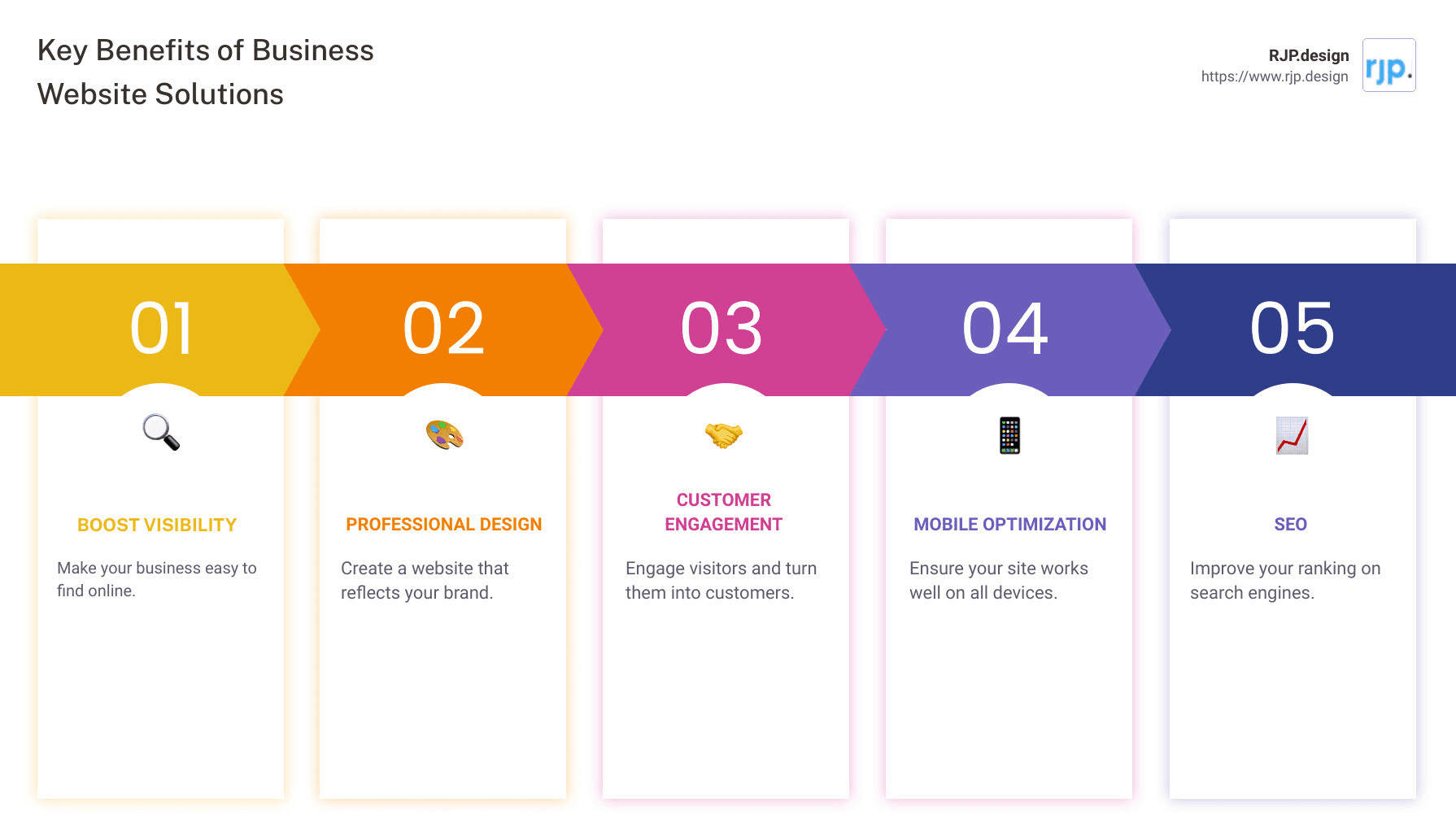
Boost visibility: Make your business easy to find online.
Professional design: Create a website that reflects your brand.
Customer engagement: Engage visitors and turn them into customers.
Mobile optimization: Ensure your site works well on all devices.
SEO: Improve your ranking on search engines.
A website is the cornerstone of your digital presence. Unlike physical storefronts, your website is accessible 24/7, offering visitors information about your products, services, and brand—even while you sleep. As a small business owner, an effective website can be a game-changer, providing a professional online space that can reach a wide audience.
Having a robust, professionally designed website is crucial in today’s market. It impacts how your audience perceives your brand and can drive significant growth. Whether your current website needs a redesign or you’re starting from scratch, having the right business website solutions in place is essential.
I’m Ross Plumer, an expert in digital marketing with extensive experience helping businesses improve their online presence. Leveraging my background in website design and development, I’ve worked with companies generating over $20 million in revenue. My goal is to simplify the process of finding the right business website solutions for you.
Let’s dive in and explore how the right solutions can lift your business to the next level.
Choosing the Right Platform for Your Business Website
When it comes to building a professional website, selecting the right platform is crucial. There are numerous website builders and hosting providers available, each with its own set of features, costs, and ease of use. Below, we’ll explore some of the best platforms for business websites and the factors you should consider when making your choice.
Best Platforms for Business Websites
RJP.design: This platform offers tailor-made, customizable templates and AI capabilities to help bring your vision to life. With over 12 years of experience in building WordPress-based websites, RJP.design specializes in creating responsive, accessible, and SEO-friendly sites. They also provide comprehensive maintenance plans to keep your site updated and secure.
Factors to Consider
Ease of Use: Your platform should be easy to steer and manage. Look for drag-and-drop builders and user-friendly interfaces. For instance, RJP.design offers a portal that makes editing your website a breeze.
Customization: The ability to customize your website to reflect your brand is essential. Platforms like RJP.design allow for extensive customization, enabling you to add unique features and design elements.
Scalability: As your business grows, your website should be able to scale with it. RJP.design is known for its scalability, making it suitable for both small businesses and large enterprises.
Cost: Budget is always a consideration. Platforms like RJP.design offer cost-effective solutions while providing a range of functionalities.
Hosting Providers: Your hosting provider plays a significant role in your website’s performance. Look for providers that offer reliable uptime, fast loading speeds, and excellent customer support. RJP.design provides premium domain and hosting services, ensuring your site runs smoothly.
Choosing the right platform involves balancing these factors to meet your specific needs. Whether you prioritize ease of use, customization, scalability, or cost, there’s a platform out there that can help you achieve your business goals.

Essential Features for Business Websites
Creating a successful business website involves more than just attractive design. It requires a focus on user experience (UX), search engine optimization (SEO), and mobile optimization. These elements are crucial to making your website not only visually appealing but also functional and accessible.
User Experience (UX)
Navigation: Clear and intuitive navigation is fundamental. Visitors should easily find what they’re looking for without getting lost. Simple menus, breadcrumb trails, and a search bar can significantly improve navigation.
Design: A clean, professional design helps build trust. Use a consistent color scheme, readable fonts, and ample white space to make your content easy to digest. Visual hierarchy, where important elements like calls-to-action (CTAs) stand out, guides users through your site.
Accessibility: Ensure your website is accessible to everyone, including those with disabilities. This means using alt text for images, providing captions for videos, and ensuring your site can be steerd using a keyboard.
Search Engine Optimization (SEO)
Keywords: Use relevant keywords throughout your website. These are the terms potential customers are likely to use when searching for your products or services. Avoid “keyword stuffing,” which can harm your ranking.
Meta Tags: Meta tags, including title tags and meta descriptions, help search engines understand the content of your pages. Each page should have unique meta tags that accurately describe its content.
Content Optimization: High-quality, relevant content is key. Regularly update your site with fresh content such as blog posts, case studies, or customer testimonials. This not only helps with SEO but also keeps visitors engaged.
Mobile Optimization
Responsive Design: Your website must look and function well on all devices, from desktops to smartphones. A responsive design automatically adjusts to the screen size, providing a seamless user experience.
Mobile-Friendly Features: Ensure buttons are large enough to be easily tapped, text is readable without zooming, and navigation is straightforward on smaller screens. Fast loading times are also critical; mobile users are likely to leave a site that takes too long to load.
By focusing on these essential features, you can create a business website that is not only attractive but also functional, accessible, and optimized for search engines. This will help you attract and retain more visitors, ultimately driving your business success.
Building and Designing Your Business Website
Creating a successful business website involves several key steps and best practices. Here’s a comprehensive guide to get you started.
Step-by-Step Guide to Building a Website
1. Choose a Domain Name
Your domain name is your website’s address. It should be easy to remember, relevant to your business, and preferably include keywords that help with search engine optimization (SEO). Avoid abbreviations, numbers, and hyphens.
2. Select a Hosting Provider
Hosting is where your website lives on the internet. Choose a reliable hosting provider that offers strong uptime guarantees, security features, and good customer support. Look for providers that offer SSL certificates, which secure your site and build trust with visitors.
3. Pick a Template or Theme
Templates or themes provide a pre-designed layout for your website. Choose one that suits your business type and is customizable. Many platforms like RJP.design offer industry-specific templates, making it easier to get started.
4. Customize Your Website
Use your template as a starting point. Customize it to reflect your brand by changing colors, fonts, and images. The drag-and-drop editors available in many website builders make this process simple, even for beginners.
5. Add Essential Features
Ensure your website includes essential features like a contact form, clear navigation, and a call-to-action (CTA) on each page. These elements help guide visitors and improve user experience.
6. Optimize for SEO
Incorporate relevant keywords, use meta tags, and ensure your content is high-quality and regularly updated. This will help your site rank higher in search engine results.
Design Best Practices
Visual hierarchy refers to the arrangement of elements in a way that guides the visitor’s eyes to the most important parts first. Use larger fonts for headings, bold colors for CTAs, and ample white space to make your content easy to digest.
Color Schemes
Choose a color scheme that aligns with your brand. Typically, this includes a primary color and one or two complementary colors. Consistency in color usage helps create a cohesive look and feel.
Typography
Select fonts that are easy to read and match your brand’s tone. Use a combination of serif and sans-serif fonts to create contrast and improve readability. Limit the number of different fonts to keep your design clean and professional.
Content Strategy
Engaging Content
Your content should be relevant, informative, and engaging. Use a mix of text, images, and videos to keep visitors interested. High-quality content not only attracts visitors but also helps with SEO.
Multimedia
Incorporate multimedia elements like images, videos, and infographics to make your content more engaging. Ensure all media files are optimized for fast loading times to prevent slowing down your site.
Call-to-Action (CTA)
Every page should have a clear CTA, whether it’s to contact you, sign up for a newsletter, or make a purchase. CTAs guide visitors towards taking the desired action and are crucial for conversions.
By following these steps and best practices, you’ll be well on your way to creating a functional, attractive, and effective business website. Next, we’ll explore business website solutions custom to different industries.
Business Website Solutions for Different Industries
Creating a business website isn’t a one-size-fits-all task. Different industries have unique needs and require custom solutions to meet those needs. Here, we’ll explore business website solutions for e-commerce, service-based businesses, and creative portfolios.
E-commerce Solutions
E-commerce websites are designed to sell products directly to customers. They require specific features to function effectively.
Key Features:
Shopping Carts: Essential for customers to collect items they wish to purchase.
Payment Gateways: Secure payment options are a must. Integration with platforms like PayPal or Stripe ensures smooth transactions.
Product Pages: Detailed pages with high-quality images, descriptions, and customer reviews help in making purchasing decisions.
Example:
Consider a small boutique selling handmade jewelry. An e-commerce solution would include:
A shopping cart for easy checkout.
Secure payment gateways like PayPal.
Detailed product pages with multiple images and customer reviews.
Customization:
E-commerce sites should be highly customizable to reflect the brand’s identity. For instance, a bakery’s website might feature a warm color palette and images of baked goods to evoke a cozy, inviting atmosphere.
Service-Based Business Solutions
Service-based businesses, like consultancies or fitness studios, require websites that facilitate booking and highlight their services.
Key Features:
Booking Systems: Allow clients to schedule appointments directly through the website.
Service Descriptions: Clear, detailed descriptions of services offered.
Client Testimonials: Showcase positive reviews to build trust.
Example:
A fitness studio’s website might include:
An online booking system for scheduling classes.
Detailed descriptions of different fitness programs.
Testimonials from satisfied clients to build credibility.
Customization:
Such websites should be designed to appeal to their target audience. For example, a consultancy might use a professional, clean design, while a fitness studio might opt for vibrant, energetic visuals.
Portfolio and Creative Websites
Creative professionals, like artists and designers, need portfolio websites to showcase their work.
Key Features:
Galleries: High-quality image galleries to display work.
Case Studies: Detailed case studies to explain the process and results of specific projects.
Contact Forms: Easy ways for potential clients to get in touch.
Example:
A graphic designer’s portfolio site could feature:
A gallery of past projects.
Case studies detailing the design process and client feedback.
A contact form for new project inquiries.
Customization:
Portfolio websites should be visually appealing and reflect the creator’s style. For instance, a photographer might use a minimalist design to let their photos stand out, while a graphic designer might use bold colors and unique layouts to showcase their creativity.
By understanding the unique needs of different industries, you can create a website that’s not only functional but also custom to your specific business requirements.
Next, let’s dig into the importance of maintaining and updating your business website to ensure it remains effective and secure.
Maintaining and Updating Your Business Website
Creating a business website is just the beginning. To keep it effective and secure, regular maintenance and updates are essential. Let’s explore key tasks and security measures you need to consider.
Regular Maintenance Tasks
Content Updates: Regularly updating your website’s content keeps it fresh and relevant. This includes adding new blog posts, updating product descriptions, and refreshing images.
Plugin Updates: Plugins add functionality to your website but can become outdated. Regular updates ensure they work properly and securely.
Backups: Regular backups are crucial. They protect your data and content in case of a website crash or cyber attack. Aim for automatic weekly backups to an external storage.
Security Measures
SSL Certificates: An SSL certificate encrypts data between your website and its visitors. This is crucial for protecting sensitive information like payment details. Most hosting providers offer free SSL certificates.
Data Protection: Protecting your visitors’ data is a must. Ensure your website complies with data protection regulations like GDPR. This includes having clear privacy policies and obtaining consent before collecting data.
Regular Audits: Conduct regular security audits to identify and fix vulnerabilities. This includes checking for outdated software, weak passwords, and potential malware.
By keeping up with maintenance and security, you ensure your website remains a reliable and safe hub for your business. Up next, we’ll answer some frequently asked questions about business website solutions.
Frequently Asked Questions about Business Website Solutions
What is the best platform to create a business website?
Choosing the right platform is crucial for your business website. RJP.design offers a range of solutions custom to your needs, whether you’re a small business or a large enterprise.
RJP.design provides user-friendly interfaces, making it easy for non-techies to manage their sites. It also excels in customization, with endless themes and plugins, and offers scalable solutions as your business grows. Additionally, RJP.design provides transparent pricing with no hidden fees.
Ease of Use: Platforms like RJP.design offer user-friendly interfaces, making it easy for non-techies to manage their sites.
Customization: RJP.design excels in this area, with endless themes and plugins.
Scalability: As your business grows, you’ll need a platform that can scale with you. RJP.design offers scalable solutions.
Cost: Consider the initial setup and ongoing costs. RJP.design provides transparent pricing with no hidden fees.
How much does it cost to maintain a business website?
The cost of maintaining a business website varies based on several factors:
Domain and Hosting: This is a recurring cost. RJP.design offers domain and hosting services starting at $24 per year.
Content Updates: Regular updates to keep your site fresh. This could be done in-house or outsourced.
Plugin and Software Updates: Essential for security and functionality. Some plugins may have annual fees.
Security Measures: Investing in SSL certificates and regular security audits is crucial.
Support and Maintenance Services: Hiring professionals for ongoing maintenance can range from $50 to $200 per month.
Budget Planning Tips:
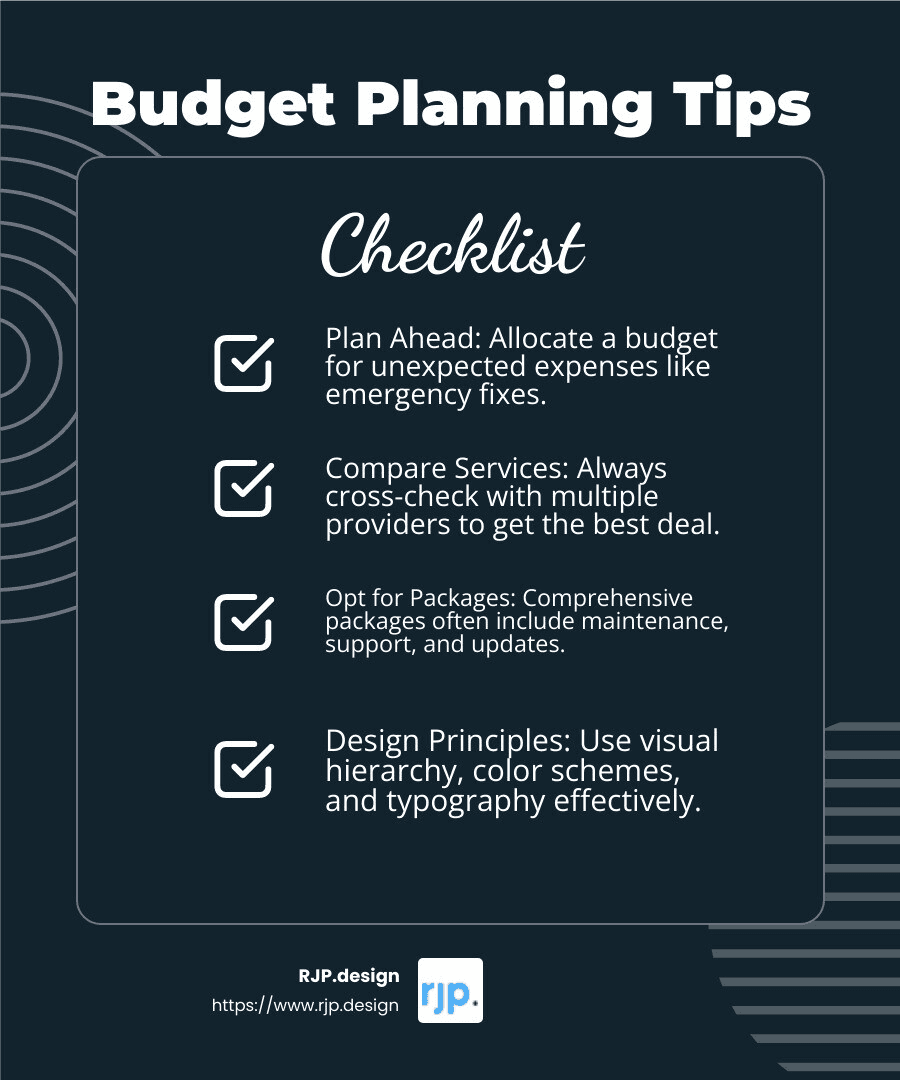
Plan Ahead: Allocate a budget for unexpected expenses like emergency fixes.
Compare Services: Always cross-check with multiple providers to get the best deal.
Opt for Packages: RJP.design offers comprehensive packages that include maintenance, support, and updates.
What are the best practices for designing a business website?
Designing a business website requires a focus on user experience (UX), search engine optimization (SEO), and mobile optimization.
Design Principles:
Visual Hierarchy: Use a clear and logical layout to guide users’ attention.
Color Schemes: Choose colors that reflect your brand and are easy on the eyes.
Typography: Use readable fonts and maintain consistency.
SEO Tips:
Keywords: Integrate relevant keywords naturally into your content.
Meta Tags: Optimize meta titles and descriptions for better search visibility.
Content Optimization: Regularly update content to keep it relevant and engaging.
User Experience (UX):
Navigation: Ensure your site is easy to steer. Use clear menus and links.
Accessibility: Make your site accessible to all users, including those with disabilities.
Mobile Optimization: Ensure your site is responsive and works well on all devices.
By following these best practices, you can create a business website that not only looks great but also performs well in search engines and provides an excellent user experience.
Up next, we’ll dive into some common questions and tips about choosing the best platform for your business website.
Conclusion
Creating a successful business website is a multifaceted process that involves careful planning, design, and ongoing maintenance. By choosing the right platform, incorporating essential features, and following best practices for design and SEO, you can build a website that not only looks great but also drives results.
About RJP.design
At RJP.design, we are committed to providing high-quality service custom to your unique business needs. Our team of experts works closely with you to understand your vision and turn it into reality. From the initial consultation to the final launch, we ensure every step is executed with precision and care.
Client satisfaction is our top priority. We take pride in delivering clean, professional, and responsive websites that exceed our clients’ expectations. Our comprehensive packages include everything you need to maintain and grow your online presence, from SEO and digital marketing to regular updates and security measures.
Online presence improvement is at the heart of what we do. We understand the importance of standing out in today’s digital landscape. That’s why we offer a range of services designed to boost your visibility and attract more customers. Whether you’re a small business or a large enterprise, we have the solutions to help you succeed online.
Ready to lift your business website? Contact us today to get started on your journey to online success.