Marketing
Strategy Secrets – How to Master Digital Marketing
Jul 31, 2025
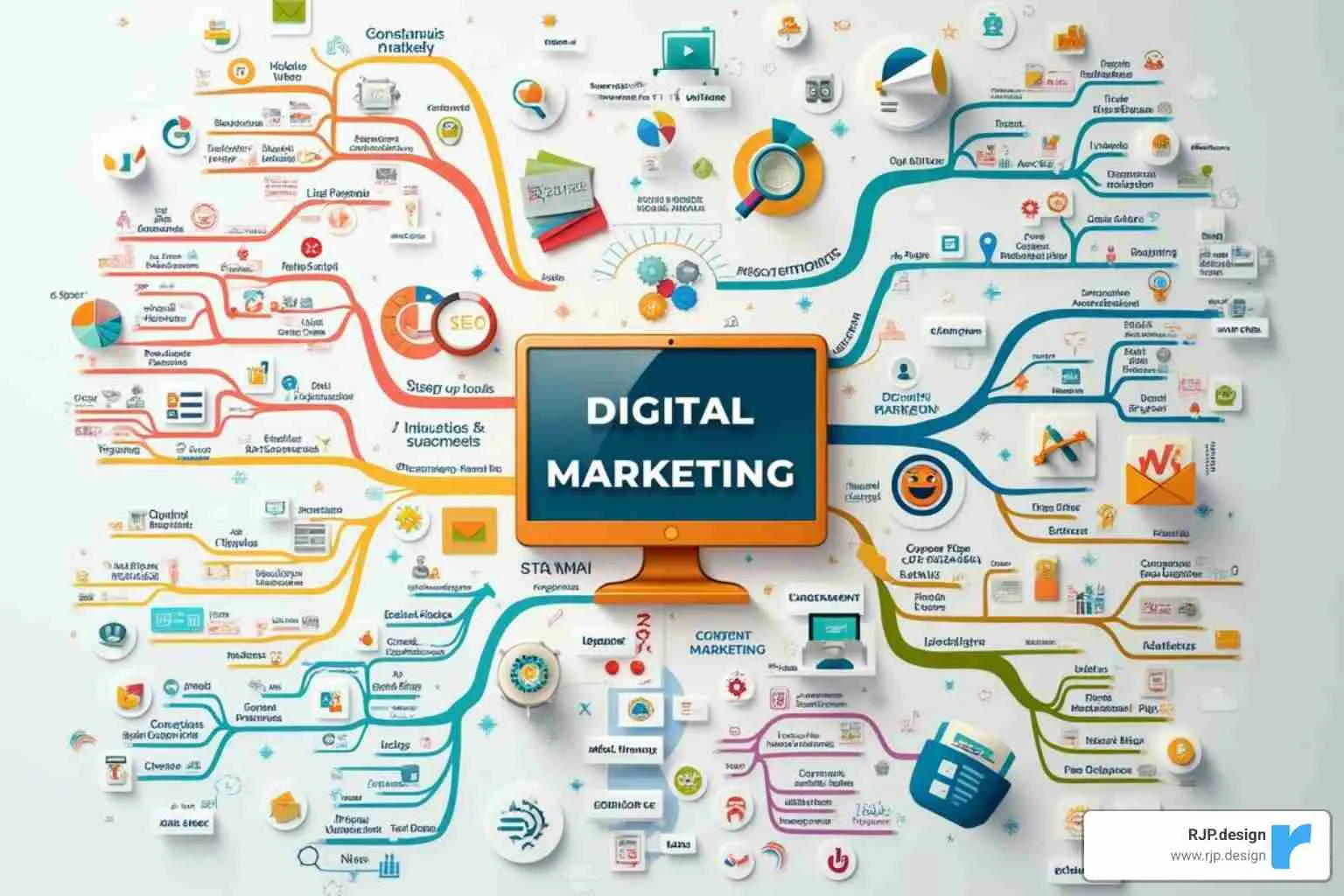
Digital Marketing Strategies: 7 Secrets to Success
Open uping Digital Marketing Strategies
A digital marketing strategy is your business’s comprehensive roadmap for online success. It’s a high-level plan that guides all your online efforts to achieve specific goals, like growing sales or reaching new customers.
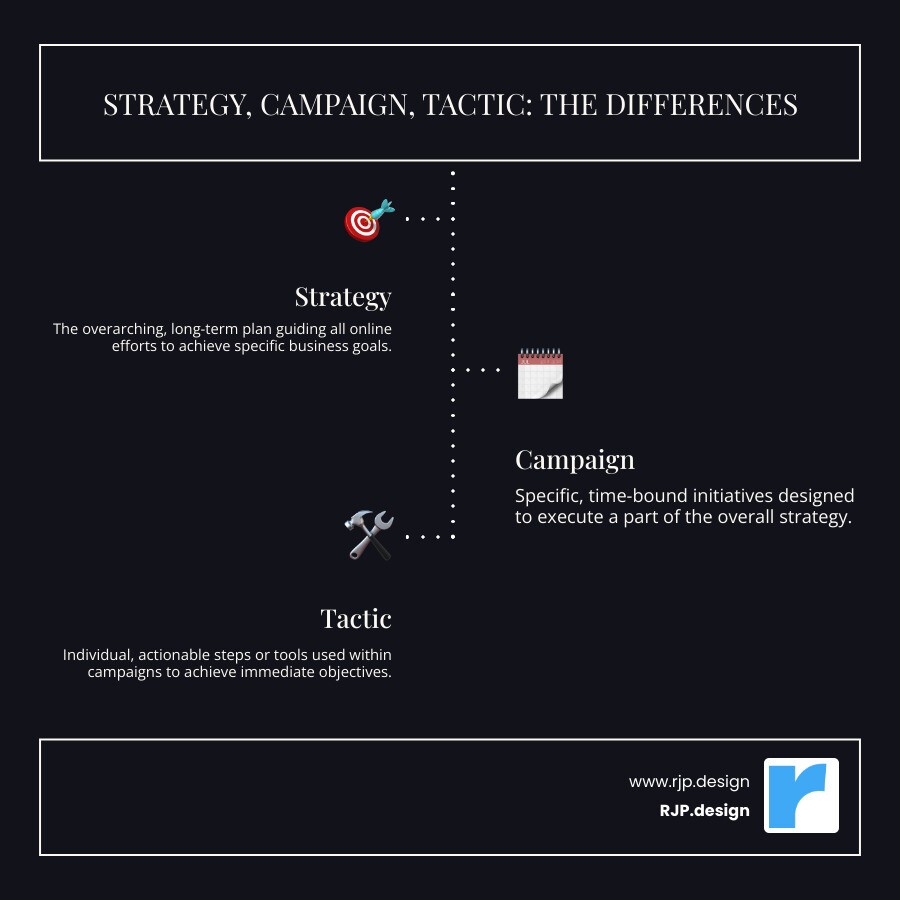
It’s important to distinguish between the different levels of planning:
Strategy: The overarching, long-term plan (e.g., “Increase brand awareness by 25% this year”).
Campaigns: Specific, time-bound initiatives that fall under the strategy (e.g., “Run a social media campaign for Q2”).
Tactics: The individual actions or tools used in campaigns (e.g., “Post daily on Instagram,” “Run Facebook ads”).
A clear strategy gives your business direction, improves your return on investment (ROI), and allows you to measure what’s working. Without one, you’re just guessing. It helps you move from simply being online to making your online presence a powerful asset for your business.
I’m Ross Plumer, and I bring deep expertise in digital marketing strategies, refined by working with businesses that have marketed over $20 million in revenue. My approach integrates psychology and societal research to create marketing plans that resonate and drive significant results.
Easy digital marketing strategies word list:
What is a Digital Marketing Strategy? (And Why You Need One)
Ever wondered how some businesses seem to nail their online presence? The secret isn’t magic; it’s a well-baked digital marketing strategy. At its heart, a strategy is your long-term game plan for achieving specific business goals online. It lays out your objectives, helps you understand who you’re trying to reach, and provides a clear framework for all your marketing activities.
It’s easy to confuse terms like “strategy,” “campaign,” and “tactic.” They’re related, but play different roles:
Feature | Strategy | Campaign | Tactic |
|---|---|---|---|
Scope | Overarching, long-term, broad | Specific, time-bound, focused | Granular, actionable, short-term |
Goal | High-level business objectives | Specific campaign objectives | Individual task completion |
Example | Increase overall market share by 10% in 3 years | Launch new product X with 20% sales in 3 months | Run Facebook ads for product X, Post daily on Instagram |
An effective marketing strategy is essential because it empowers your business to connect with your audience, attract quality leads, and turn prospects into loyal customers. For B2B companies, it’s the bedrock for building trusted relationships. In today’s market, a clear plan is vital for standing out and seeing a real return on your investment (ROI).
Why a documented strategy is crucial for success
Without a clear digital marketing strategy, businesses often waste time, effort, and marketing dollars on random activities. A documented plan is crucial because it:
Provides Direction and Focus: A strategy is your roadmap, ensuring all your digital efforts work together toward your business goals.
Deepens Audience Understanding: It forces you to get to know your online clients—their behaviors, preferences, and pain points. With 82% of customers researching online, a solid strategy helps you be where they are.
Delivers Measurable Results: A strategy defines what success looks like (your Key Performance Indicators, or KPIs) and how you’ll track it, allowing for real-time adjustments to boost your ROI.
Ensures Effective Resource Allocation: It helps you wisely distribute your budget, time, and team’s expertise, focusing on the channels and tactics most likely to hit your goals.
Builds Stronger Branding: A clear plan ensures consistent messaging across all digital touchpoints, which is vital for building a powerful and memorable Branding presence.
The core components of effective digital marketing strategies
Every robust digital marketing strategy is built on a few fundamental pillars working together.

Goals and Objectives: What do you want to achieve? We use the SMART framework to set goals that are Specific, Measurable, Attainable, Relevant, and Time-bound. For example, “increase online sales by 20% within the next six months.”
Audience Analysis: Who are you trying to reach? Understanding your target audience by creating detailed buyer personas is non-negotiable.
Digital Marketing Channels: These are the avenues you’ll use to connect with your audience, such as SEO, Social Media, Email Marketing, and PPC advertising. The key is choosing the channels your audience actually uses.
Content Plan: Content is the fuel that engages your audience. This involves deciding what content to create (blogs, videos, etc.), when to create it, and how it supports your goals. Strong SEO Keyword Research is crucial to ensure your content gets found.
Budget and Resources: What time, money, and people do you have available? These must be allocated wisely across your chosen channels and activities.
Measurement and Optimization: How will you know if your strategy is working? We define and track KPIs to make data-driven adjustments and continuously refine your strategy over time.
The 7-Step Framework for Building Your Strategy
Building an effective digital marketing strategy doesn’t have to be overwhelming. We’ve simplified the journey into a clear, 7-step framework to guide you from planning to execution.

1. Define Your Goals and KPIs
First, determine what you want to achieve. Are you aiming for brand awareness, lead generation, sales, or customer retention? Use the SMART framework to set goals that are Specific, Measurable, Attainable, Relevant, and Time-bound. For example, a SMART goal is: “Increase organic website traffic by 25% within the next six months.”
Next, pick your Key Performance Indicators (KPIs). These metrics track your progress. Common KPIs include website traffic, lead generation cost, conversion rates, social media engagement, and email open/click rates. Defining these early ensures your efforts are focused and measurable.
2. Understand Your Audience with Buyer Personas
Effective marketing requires a deep understanding of the people you want to reach. We build detailed buyer personas—semi-fictional profiles of your ideal customers. This involves:
Audience research: Gathering data from surveys, interviews, and analytics on demographics, interests, and online behavior.
Identifying pain points: Understanding the challenges your customers face and how your product or service can solve them.
Mapping the customer journey: Tracing the path your audience takes from awareness to purchase, identifying key touchpoints along the way.
Creating these personas helps craft messages that resonate. We offer customized buyer persona templates for our clients to simplify this process. Knowing that 76% of US adults shop on their phones highlights the importance of understanding mobile habits.
3. Audit Your Existing Channels and Assets
Before building anything new, take stock of what you already have. We audit your current digital assets, categorizing them into three groups:
Owned Media: Assets you control, like Your website, blog, and social media profiles. We assess their performance and user experience.
Earned Media: Free publicity you’ve gained, such as press mentions, customer reviews, and social shares. We evaluate the existing buzz around your brand.
Paid Media: Any advertising you pay for, like Google Ads or social media campaigns. We analyze past performance to see what worked.
This audit reveals strengths, weaknesses, and opportunities, helping to focus your new strategy.
4. Plan Your Content and SEO
Content is the heart of your strategy, used to educate, entertain, and connect with your audience. A solid content plan includes:
Content Pillars: Broad topics relevant to your audience and business.
Content Formats: The types of content you’ll create, such as blog posts, videos, infographics, or case studies.
Editorial Calendar: A schedule for when and where each piece of content will be published.
SEO Integration: Optimizing all content for search engines is essential for visibility. This includes keyword research and on-page optimization. We can help with Content for Local SEO and broader SEO Optimization Services. While Content remains king, the focus must be on content that genuinely helps people.
5. Choose Your Digital Marketing Channels
With your goals, audience, and content plan in place, select the best channels to deliver your message. You don’t need to be everywhere—you need to be where your audience is. We consider a strategic mix of channels:
Search Engine Optimization (SEO): To rank higher in organic search results.
Pay-Per-Click (PPC) Advertising: For immediate visibility through paid ads.
Social Media Marketing (SMM): To engage with your community on platforms like Facebook and Instagram.
Email Marketing: To build relationships and nurture leads.
Video Marketing: To engage audiences with visual content on platforms like YouTube.
We help small businesses identify the right mix with our Internet Marketing Services for Small Businesses.
6. Set Your Budget and Resources
Every plan needs fuel. This step involves allocating your budget and team resources effectively. We help you decide how to distribute funds across different channels, prioritizing those with the highest expected return. For example, a PPC Advertising Solution might be prioritized for quick lead generation. We also assess your team’s skills to determine if training or external expertise is needed. Being realistic about your resources is crucial to avoid spreading yourself too thin.
7. Implement, Measure, and Optimize
This is where the plan comes to life. But launching is just the beginning. The power of digital marketing lies in its measurability and the ability to continuously improve.
Implementation: We execute the plan across your chosen channels.
Tracking Performance: We monitor your KPIs using tools like Google Analytics to see what’s working.
Data-Driven Adjustments: We analyze the data to make informed decisions, shifting resources from underperforming tactics to successful ones.
A/B Testing: We test different versions of ads, headlines, or images to see what performs best and improve your Website Conversion Strategies.
Continuous Improvement: Digital marketing is always evolving. We constantly learn and adapt your digital marketing strategies based on data and market trends to ensure long-term success.
Key Channels to Power Your Digital Marketing Strategies
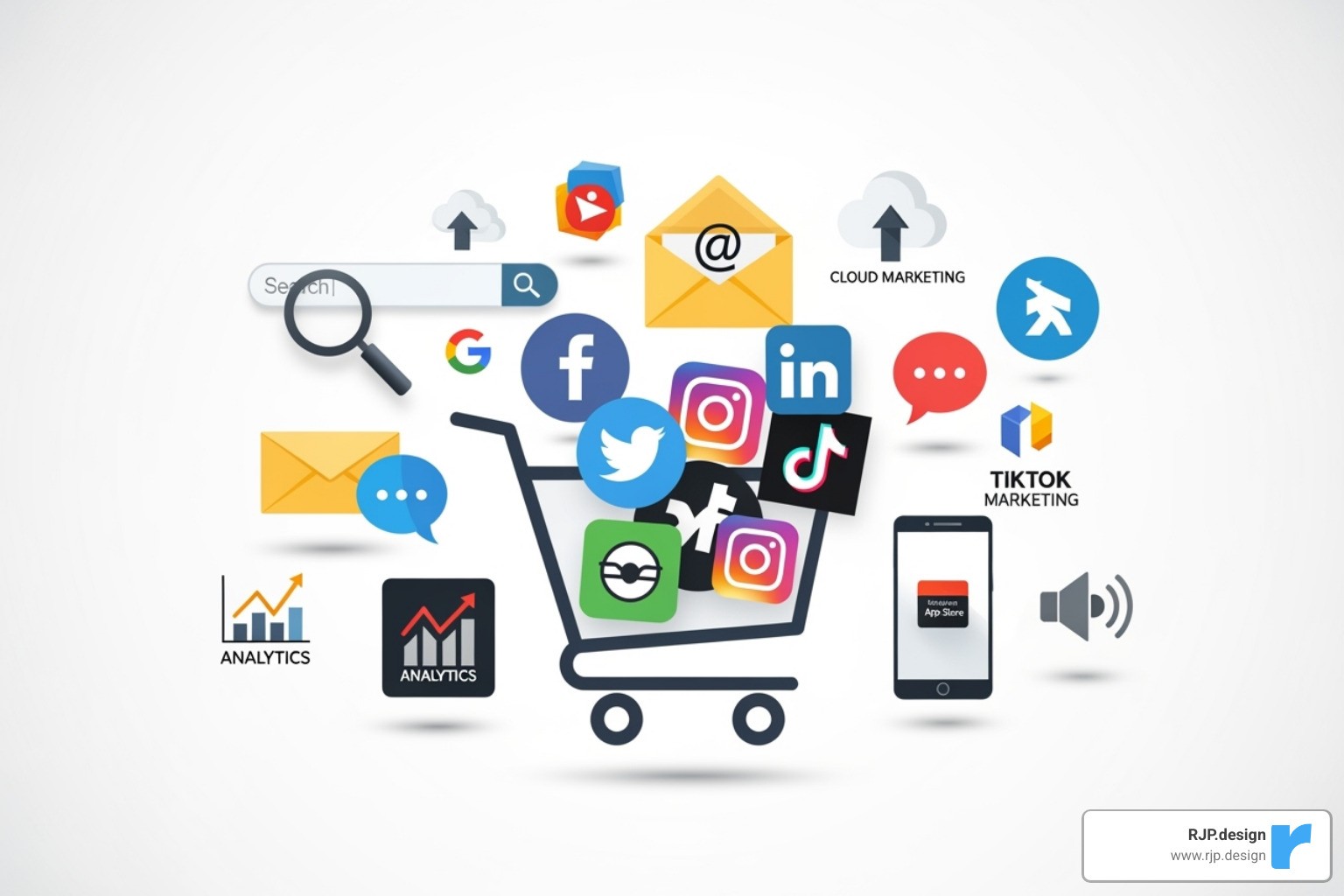
An effective digital marketing strategy uses multiple channels working together in harmony. This integrated or omnichannel marketing approach ensures your brand tells a consistent story and provides a seamless experience across all customer touchpoints. For more on how these pieces fit together, see our insights on Top marketing strategies and trends.
Search Engine Optimization (SEO)
SEO is the process of helping your website rank higher in search engine results, driving organic traffic from users actively looking for what you offer. We focus on several key areas:
On-Page SEO: Optimizing your website’s content, including text, headings, and images, to align with search queries.
Off-Page SEO: Building your site’s authority through activities like earning high-quality backlinks. Our Link Building Off-Page SEO services are designed for this.
Technical SEO: Ensuring your site’s backend is optimized for search engines, focusing on speed, mobile-friendliness, and crawlability.
Local SEO: Optimizing your online presence to attract local customers. We offer expert Local SEO Services to help you dominate your local market.
Content Marketing
Content marketing is about creating and sharing valuable, relevant content to attract and retain your audience. Instead of selling, you’re educating, entertaining, and building trust. This positions your brand as a helpful authority. As we say, Content remains king, but the focus must be on value.
Content can take many formats, including blog posts, e-books, case studies, and infographics. While not directly promotional, great content naturally guides users toward a desired action, often leading them to your High Converting Landing Pages. Since consumers often view 3-5 pieces of content before contacting sales, a strong content strategy is vital.
Social Media Marketing
Social media is where you can build a community, boost brand awareness, and drive sales. It’s about creating conversations and fostering engagement—likes, comments, and shares. Research shows social media can encourage 71% of customers to recommend a brand. You can also use it for customer service, influencer marketing, or highly targeted paid social ads on platforms like Facebook, Instagram, and LinkedIn. Our Social Media Services help businesses steer this dynamic landscape.
Email Marketing
Email marketing remains one of the most powerful tools for nurturing leads and building customer relationships, often delivering a high ROI. It’s excellent for:
Lead Nurturing: Guiding potential customers through their journey with targeted content.
Personalization & Segmentation: Tailoring messages based on subscriber data can increase opens by 30% and clicks by 50%.
Automation: Setting up automatic email sequences for welcome messages, abandoned carts, and post-purchase follow-ups.
Email helps you build direct relationships and gather valuable first-party data, making it an indispensable channel.
Frequently Asked Questions about Digital Marketing Strategy
It’s natural to have questions when developing digital marketing strategies. Here are answers to some of the most common ones we hear.
How long does it take to see results from a digital marketing strategy?
There’s no single answer, as the timeline depends on several factors. Paid advertising (PPC) can deliver results in days, while strategies like SEO and content marketing are long-term investments that build value over months or even a year. Key factors influencing the timeline include:
Your goals: Quick traffic boosts vs. long-term brand authority.
Your resources: Budget and team size can accelerate results.
Your industry: More competitive markets take longer to penetrate.
Generally, we advise clients to think in terms of quarters for measuring the impact of a comprehensive strategy. Building a strong online presence is a marathon, not a sprint.
What is the most important part of a digital marketing strategy?
If we had to pick one element, it would be understanding your target audience. This is the cornerstone of all successful digital marketing strategies. Why? Because knowing your audience informs every other decision:
You can set goals that solve their problems.
You can create content that answers their questions.
You can choose channels where they spend their time.
You can craft messaging that resonates with their needs.
Without a deep understanding of your audience, even the best-designed campaign will likely fall flat.
How often should I update my digital marketing strategy?
Your digital marketing strategy should be a living document, not a static one. The digital world is constantly changing, so regular updates are essential.
Quarterly: Review performance data and make agile adjustments to your tactics.
Annually: Conduct a comprehensive review to align your strategy with broader business goals and assess major market shifts.
As Needed: Update your strategy in response to significant events, like a new product launch, a major industry disruption, or a platform algorithm update.
Continuous monitoring and optimization are key. Digital marketing requires ongoing attention and adaptation to remain effective.
Conclusion
We’ve journeyed through the essentials of digital marketing strategies, from planning to execution. The main takeaway is that a clear, documented strategy is your north star, changing scattered efforts into a powerful engine for success. Without it, you’re aiming in the dark.
Your strategy must also be agile. The digital world is always evolving, and a successful plan is one that adapts and grows based on data-driven insights. This flexibility is your superpower. Finally, always prioritize providing genuine value. Whether through SEO, social media, or email, helping your audience builds the trust and loyalty that drive sustainable growth.
Here at RJP.design, we love helping businesses not just get online, but truly shine there. Our passion is creating fantastic websites and boosting online presence, ensuring you look great and are easily found by the right people. Our secret sauce is our commitment to high-quality service and our down-to-earth team, all focused on your satisfaction. We believe effective digital marketing strategies are about showing up strategically to make every click count.
If you’re ready to stop guessing and start growing, let’s chat! We’re here to help you craft a robust plan that brings tangible results.
Improve your digital presence with our expert digital marketing solutions