
Web
HTML5, CSS, and Ben Frain Walk into a Bar – A Responsive Web Design Review
Aug 1, 2025

Responsive Web Design with HTML5 and CSS by Ben Frain #1
Unpacking Responsive Web Design with HTML5 and CSS by Ben Frain
The book responsive web design with html5 and css by ben frain is a foundational guide for building modern, adaptable websites. This resource helps you master essential HTML5 and CSS to create experiences that function perfectly on any device. You’ll learn to implement cutting-edge features like Grid, Flexbox, and Container Queries, while optimizing images and ensuring accessibility.
As Ben Frain notes, “When the first edition of this book came out in 2012, responsive web design was a new and exciting possibility… A decade later… it’s simply the de facto standard. If you’re building a website or web application and it isn’t responsive, you’re probably doing it wrong!” This highlights how critical responsive design is today.
I’m Ross Plumer, and I’ve spent years in digital marketing and web development. My expertise involves applying the principles from Frain’s book to create impactful digital strategies. Understanding these concepts is key to building sites that work for everyone, everywhere.
Easy responsive web design with html5 and css by ben frain word list:
The Foundation: What is Responsive Web Design?
Responsive Web Design (RWD) is the standard practice for building websites that automatically adjust to fit any screen, from phones to desktops. Instead of multiple site versions, RWD uses a single, flexible design to ensure a great user experience for everyone.
The concept was popularized by Ethan Marcotte in a 2010 article for A List Apart. He defined its three core technical ingredients:
Fluid grids: Layouts that use relative units like percentages, not fixed pixels, to stretch and shrink with the screen.
Flexible images: Media that resizes within its container to prevent distortion or overflow.
Media queries: CSS rules that apply different styles based on the device’s characteristics, like its width.
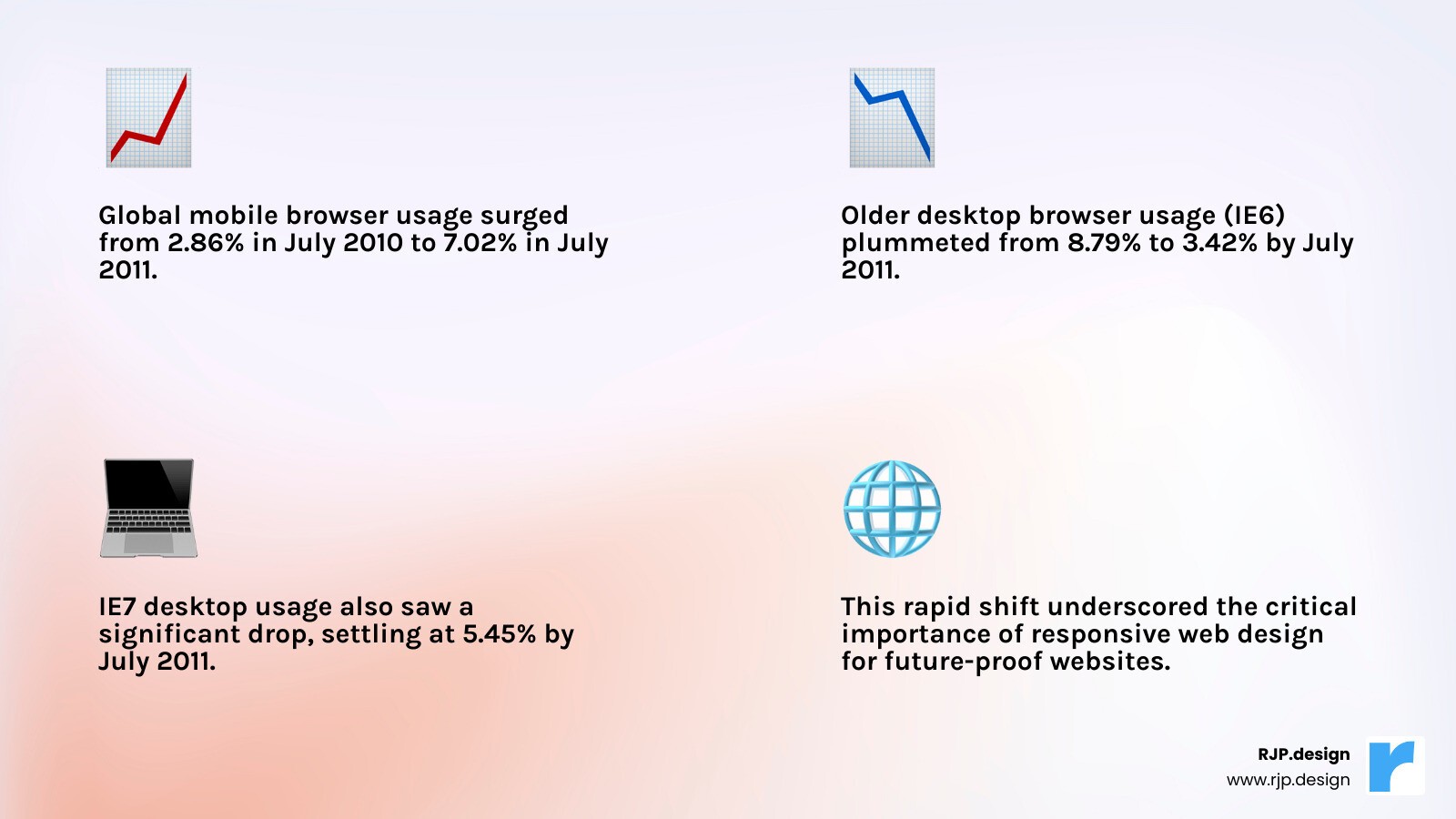
As Ben Frain, author of responsive web design with html5 and css by ben frain, states, RWD has evolved from a novel idea to the “de facto standard.” The rapid growth of mobile browsing—which more than doubled from 2010 to 2011—made this shift essential.
At RJP.design, we accept a mobile-first strategy, designing for the smallest screens first. This prioritizes core content, improves performance, and improves the User Experience (UX). This approach also provides significant SEO benefits, as search engines like Google prefer a single, responsive URL, making your site easier to crawl and rank.
To learn more, read The seminal A List Apart article that started it all.
Core Building Blocks from Ben Frain’s Guide
Ben Frain’s guide, responsive web design with html5 and css by ben frain, breaks down the core techniques for building modern websites. It emphasizes a strong foundation in semantic HTML and fundamental CSS principles before moving to advanced topics.
A key takeaway is the focus on Semantic HTML5, which gives meaning to your content and provides built-in Accessibility. Frain also covers CSS fundamentals for styling and layout, and the importance of optimizing responsive assets like images for performance.
Mastering HTML5 for a Solid Structure
Frain stresses writing clean, meaningful HTML. This starts with the correct <!DOCTYPE html> declaration and setting the lang attribute for accessibility. He then introduces key HTML5 semantic elements:
<main>: For the primary, unique content of a page.<nav>: Contains navigational links.<section>: Groups related content.<article>: For self-contained content like a blog post.<aside>: For tangentially related content, like a sidebar.<header>and<footer>: Define introductory or concluding content for a page or section.
Frain also emphasizes Accessibility through WAI-ARIA attributes and following WCAG guidelines to make sites usable by everyone. He also covers techniques for embedding responsive video and other media so they scale correctly within your layout.
Essential CSS for Fluidity and Control
CSS brings responsive designs to life. Frain covers the crucial techniques:
The viewport meta tag:
<meta name="viewport" content="width=device-width, initial-scale=1.0">tells mobile browsers how to scale the page correctly.Media query syntax:
@mediarules apply styles based on screen size or other device features, allowing for custom experiences.Breakpoints: The specific screen widths where your layout adjusts to provide the optimal view.
The
max-widthproperty: A simple but powerful tool for making images and other elements fluid.CSS
calc(): Lets you perform calculations within CSS values for precise, dynamic layouts.CSS Custom Properties (Variables): Allow you to define reusable values (like colors or fonts) for cleaner, more maintainable stylesheets.
Optimizing Images and SVGs for Performance
Since images are often the heaviest assets, Frain provides practical optimization methods:
The
srcsetattribute: Provides a list of image versions, allowing the browser to choose the most appropriate one for the user’s device and resolution.The
sizesattribute: Works withsrcsetto tell the browser how large the image will be displayed at different screen sizes, helping it load the right file.The
<picture>element: Offers more control for art direction (showing different images at different sizes) or serving modern formats like WebP with fallbacks.SVGs (Scalable Vector Graphics): Offer resolution independence, as they are vector-based and scale to any size without losing quality. They are perfect for logos and icons.
Inline SVGs: Embedding SVG code directly in HTML allows for manipulation with CSS and JavaScript, offering maximum flexibility.
Frain provides downloadable code examples for hands-on learning: Download the book’s code examples.
Modern Layouts: Mastering Flexbox and CSS Grid
Modern CSS has revolutionized web layout, moving us beyond clunky legacy methods like floats. In responsive web design with html5 and css by ben frain, Ben Frain introduces the two powerhouses of modern layout: Flexbox and CSS Grid. These tools make building flexible, responsive websites more intuitive and efficient.
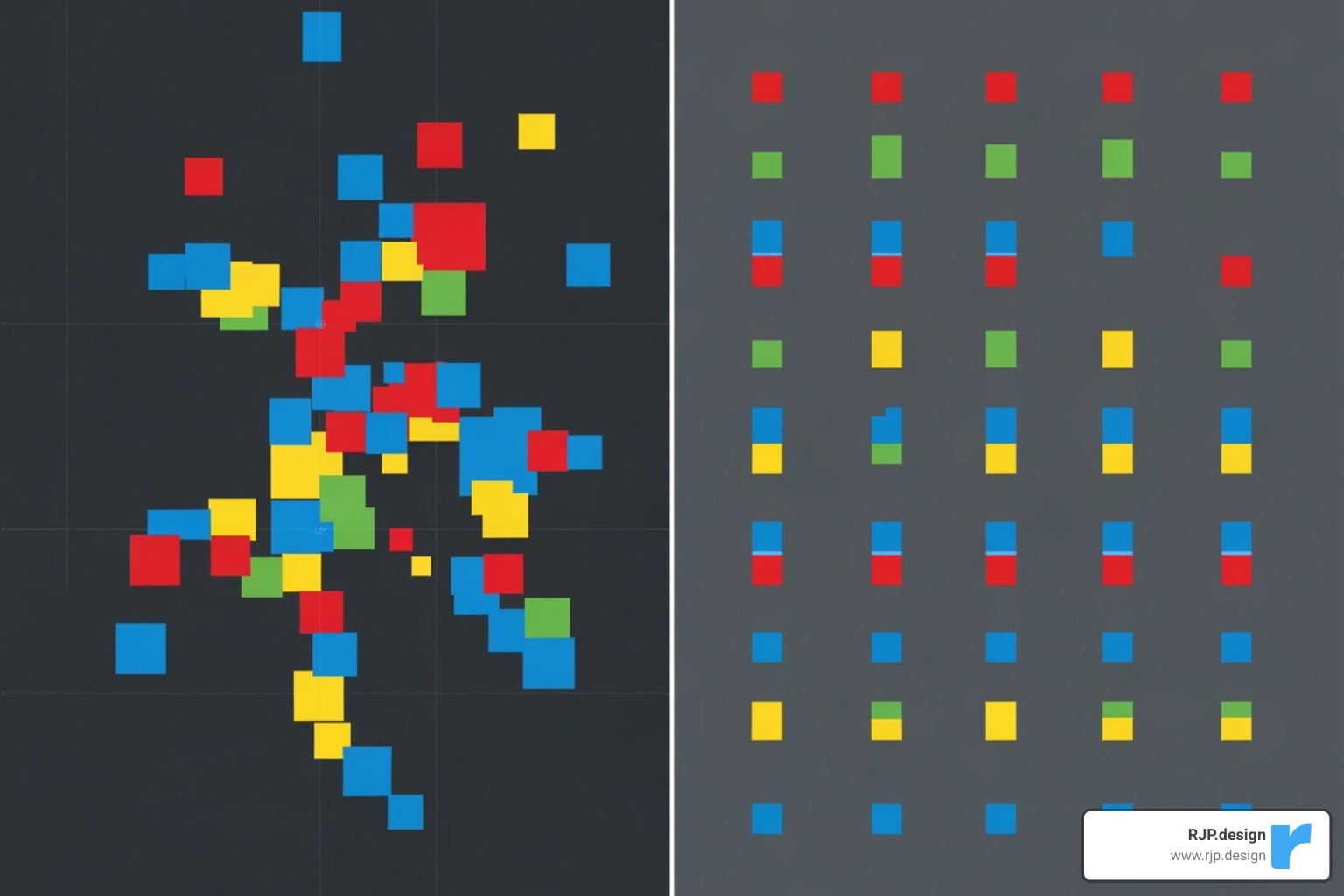
Frain clarifies that it’s not a matter of Flexbox vs. Grid; they are complementary tools, each with a specific strength:
Flexbox is ideal for one-dimensional layouts, arranging items in a single row or column.
CSS Grid excels at two-dimensional layouts, managing both rows and columns simultaneously for complex page structures.
Often, you’ll use Flexbox inside a Grid container to align items within a larger layout.
Opening Up One-Dimensional Layouts with Flexbox
Flexbox simplifies alignment. By setting display: flex; on a parent element (the flex container), its children (flex items) can be easily arranged. Frain covers the key properties:
justify-content: Aligns items along the main axis (e.g., distributing space between them).align-items: Aligns items along the cross axis (e.g., vertically centering them).flex-grow: Allows items to expand and fill available space.
Flexbox makes traditionally difficult tasks, like vertical centering or creating adaptive navigation bars, incredibly simple.
Building Complex Two-Dimensional Layouts with CSS Grid
CSS Grid is a complete system for creating sophisticated page layouts. It gives you control over both rows and columns at once. Frain explains the essential concepts:
grid-template-columnsandgrid-template-rows: Define the structure and size of your grid tracks.The
frunit: A flexible “fractional unit” that distributes available space proportionally.gap: A simple property for creating consistent spacing between grid items.grid-template-areas: An intuitive way to name grid areas and visually map out your layout in the CSS.The
minmax()function: Sets a minimum and maximum size for a grid track, creating responsive columns or rows.Auto-placement: Grid’s ability to automatically place items into the grid structure, simplifying the process.
Frain’s book provides a comprehensive guide on when and how to use both Flexbox and Grid, empowering you to tackle any layout challenge. You can Explore the book’s full curriculum to see all topics covered.
The Future is Now: Advanced CSS in Responsive Web Design with HTML5 and CSS by Ben Frain
The web is constantly evolving, and Ben Frain’s responsive web design with html5 and css by ben frain covers the cutting-edge features shaping its future. The book champions progressive improvement: building a solid foundation that works everywhere, then enhancing it with modern features for capable browsers.
This is often achieved with feature queries (@supports rule), which apply styles only if a browser supports a specific CSS feature. This ensures new techniques don’t break layouts on older browsers, all while keeping performance optimization in mind.
Beyond Media Queries: Container Queries and Cascade Layers
Two groundbreaking features are changing how we write CSS:
Container Queries: While media queries respond to the viewport size, the
@containerrule lets components adapt based on the size of their parent container. This allows for truly modular, reusable components that can be placed anywhere.Cascade Layers: The
@layerrule helps solve the specificity problem in large stylesheets. It gives developers explicit control over the cascade, making it easier to manage styles from different sources and prevent conflicts.
Enhancing User Experience with Transitions and Animations
Frain explores how to add motion to create more engaging user experiences using CSS:
Transitions: For smooth property changes, like a button’s color on hover.
2D/3D Transforms: To move, rotate, scale, or skew elements.
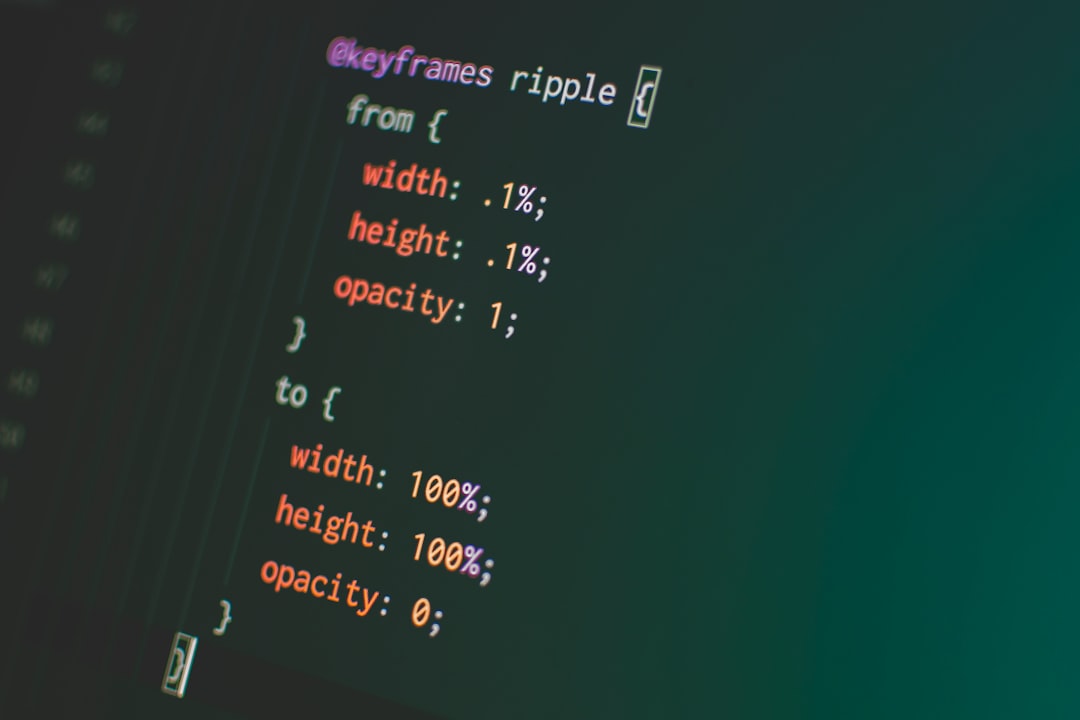
@keyframesanimations: For creating complex, multi-step animation sequences.
He notes that animating transform and opacity is best for performance, as these properties are handled more efficiently by browsers.
A Deep Dive into Ben Frain’s Approach to responsive web design with html5 and css
Frain covers many practical topics for modern development:
Responsive forms: Building forms that are usable and look great on any device, including styling and validation.
HTML5 input types: Using types like
email,tel, anddateto provide better user interfaces and mobile keyboards.Advanced color functions: Exploring new CSS functions like
color-mix()andcolor-contrast()for dynamic and accessible color schemes.Variable fonts: A modern font format where a single file contains multiple styles (like weight or width), improving performance and design flexibility.
The
font-displayproperty: A crucial tool for controlling font loading behavior to improve perceived performance and prevent flashes of unstyled text.
This book prepares you for the real-world challenges of modern web development.
Frequently Asked Questions about RWD and Ben Frain’s Book
Here at RJP.design, we get many questions about RWD and Ben Frain’s book. Let’s answer some of the most common ones.
Is “responsive web design with html5 and css by ben frain” good for beginners?
Yes, absolutely. Ben Frain structured the book to be accessible to newcomers. He targets developers needing to improve front-end skills or anyone who wants a deep understanding of responsive design. The book starts with fundamental concepts of HTML5 and CSS before moving to advanced topics, and importantly, “No JavaScript knowledge is needed.”
Readers praise its clear, comprehensive style. Erik Sagen called it an “amazing primer for a beginner” and a great “recap of basic to advanced concepts” for experts. Douglas K. Farrel noted its “nice mix of wry humor and a relaxed style.” This makes it an excellent resource for all skill levels.
What is the difference between responsive and adaptive design?
Both aim for a great multi-device experience, but they work differently.
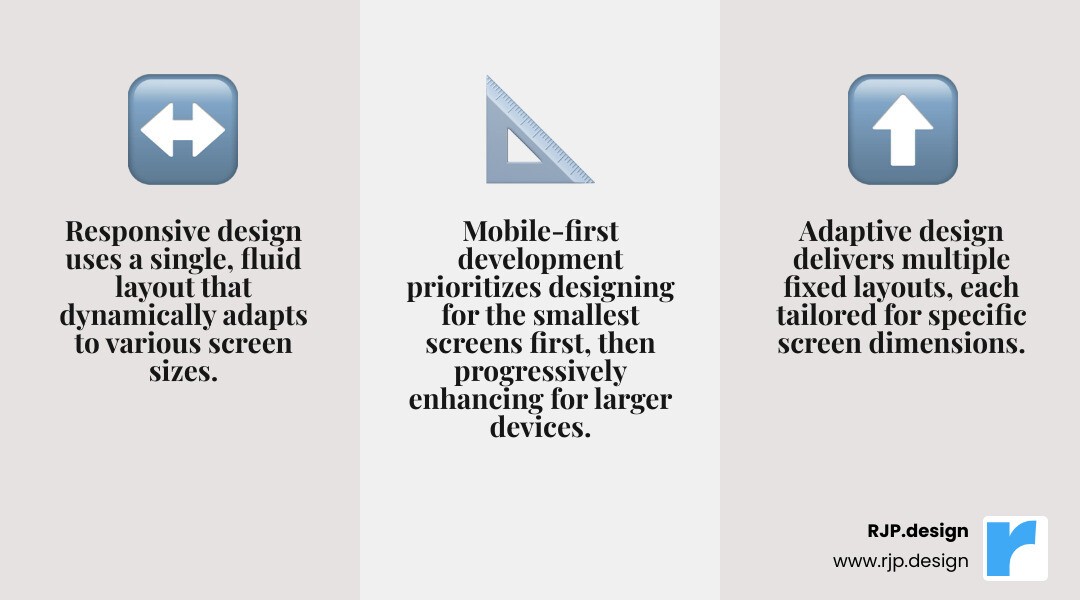
Responsive design uses a single fluid layout that continuously adjusts to any screen size. It relies on flexible grids and media queries to create a seamless experience, which is the primary approach Frain’s book champions.
Adaptive design uses several distinct, multiple fixed layouts. The server detects the user’s device and serves the most appropriate pre-built layout for that screen size.
The key difference is that responsive design is fluid and continuous, while adaptive design snaps between pre-defined states. Responsive design is often favored for its flexibility and simpler maintenance.
Why is a mobile-first approach so important in RWD?
A mobile-first approach, advocated by Frain, means designing for the smallest screens first and then enhancing the design for larger ones. This strategy is crucial for several reasons.
First, it forces content prioritization, as limited mobile screen space requires focusing on what’s most important. This leads to a cleaner, more focused user experience. Second, it delivers significant performance benefits. Mobile-first sites are inherently lighter and faster, as you only load essential assets initially. This philosophy of progressive improvement—starting with a solid core experience and adding features for larger screens—ensures your site is scalable, fast, and user-friendly on every device.
Conclusion: Building Future-Proof Websites
Wrapping up our look at responsive web design with html5 and css by ben frain, it’s clear that RWD is the standard for modern web development. Frain’s book is an essential map for creating experiences that perform flawlessly on any screen.
The key takeaways are clear: build on a foundation of semantic HTML5 and CSS fundamentals. Master modern layout tools like Flexbox and CSS Grid, and always optimize assets for performance. Accept advanced features like Container Queries for future-proof components, and always follow a mobile-first approach to prioritize content and ensure a great user experience for everyone. Frain’s guide provides practical, actionable steps with a friendly writing style that makes complex topics approachable.
Here at RJP.design, we live by these principles every day. Our expertise is in building websites that are not just visually stunning but also technically robust, fast, and optimized for search engines. We craft digital experiences that work for your business and delight your audience.
If you want a website that connects with customers on every device, we’re here to make it a reality.