SEO
Google SEO Campaign Made Easy (Even Your Grandma Could Do It!)
Jul 3, 2025
Google SEO Campaign: 7 Powerful Steps for Easy Success 2025
Why Google SEO Campaigns Are Your Secret Weapon
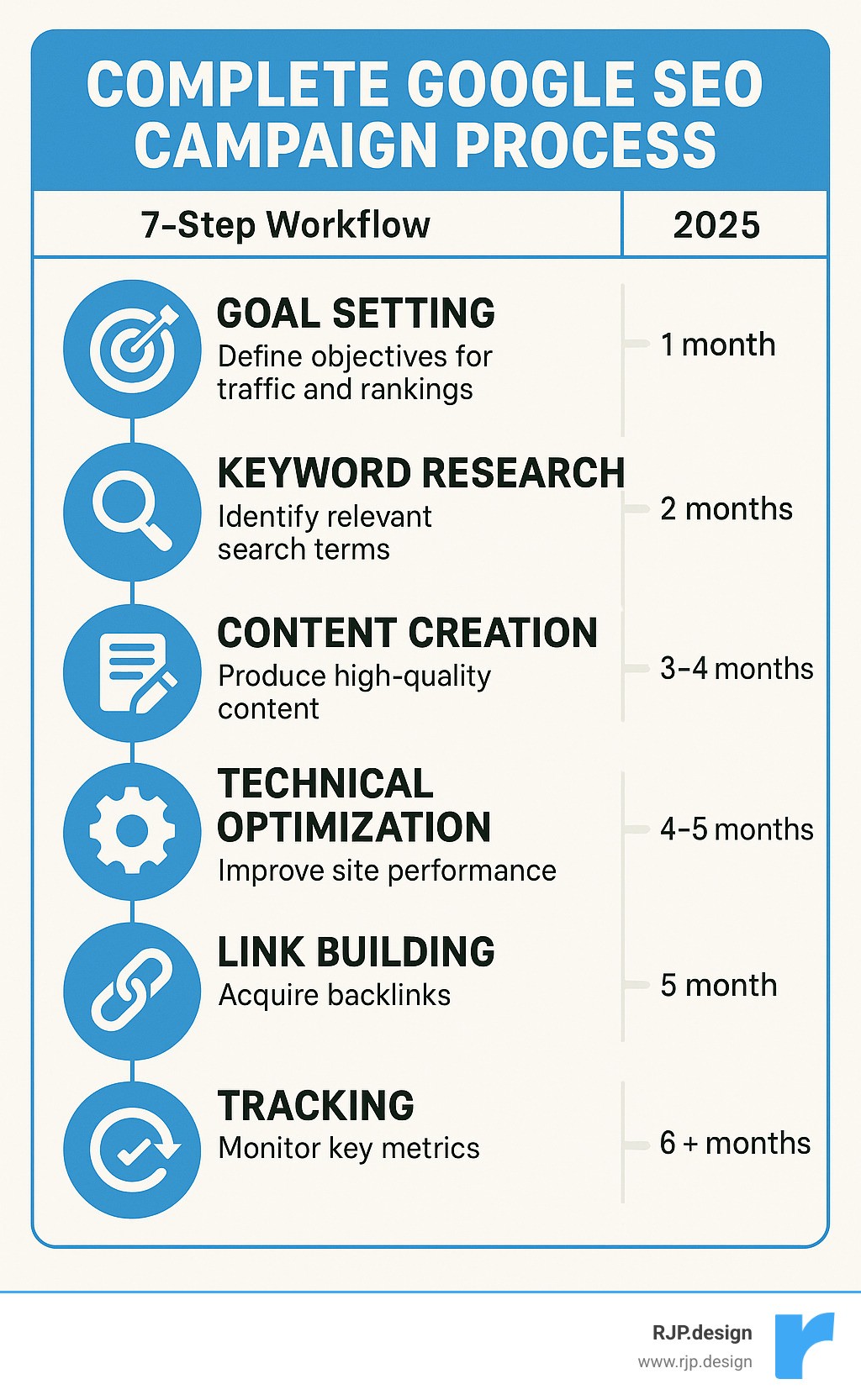
A google seo campaign is a strategic plan to improve your website’s visibility in Google search results through keyword research, content creation, technical optimization, and backlink building. Here’s what you need to know:
Essential Components:
Goal Setting – Define clear traffic and ranking targets
Keyword Research – Find terms your customers actually search for
Content Creation – Publish helpful, user-focused content
Technical SEO – Fix site speed, mobile issues, and crawl errors
Link Building – Earn quality backlinks from reputable sites
Tracking – Monitor rankings, traffic, and conversions
Most SEO campaigns take 4-6 months to show meaningful results, but the long-term payoff can be massive. Unlike paid ads, organic traffic keeps flowing even after you stop actively working on it.
The best part? You don’t need a computer science degree to get started. As one SEO expert put it: “There are no secrets here that’ll automatically rank your site first in Google (sorry!).” Success comes from following proven fundamentals consistently.
About the Author
I’m Ross Plumer, and I’ve helped businesses market over $20 million in revenue using strategic digital marketing approaches. My experience launching google seo campaign strategies for companies of all sizes has taught me that the most effective campaigns start with simple, actionable steps that anyone can follow.
Google seo campaign word roundup:
Google SEO Campaign Blueprint
Picture this: you’re about to start on a journey to get your website noticed by Google. A successful google seo campaign isn’t just throwing random tactics at the wall and hoping something sticks – it’s your carefully crafted roadmap to online visibility.
Think of Google as a massive library with billions of books. Your job is to make sure your “book” (website) is not only on the shelves but also easy to find when someone needs exactly what you offer.
Here’s how the magic happens: Google’s crawlers visit your website like curious explorers, finding your content and adding it to their massive index. Then comes the ranking phase, where Google decides which pages best answer each search query. This crawl-index-rank cycle is the foundation of everything we’ll discuss.
Search intent is where things get interesting. Google isn’t just matching keywords anymore – it’s trying to understand what people really want when they search. Your campaign needs to align with these real human needs, not just the keywords you think are important.
Let’s talk timelines because I know you’re wondering “when will I see results?” Some technical fixes can improve your rankings within days, but meaningful organic growth typically takes 4-6 months. It’s like planting a garden – you need patience, but the harvest is worth the wait.
What is a Google SEO Campaign?
A google seo campaign is like having a master plan for your online success. Instead of randomly trying different SEO tactics, you’re running a coordinated effort with clear goals, specific timelines, and measurable outcomes that actually move the needle for your business.
Your campaign objectives should focus on increasing organic search visibility for keywords that matter to your business, driving more qualified traffic to your website, and improving conversion rates from that organic traffic. The ultimate goal? Building long-term brand authority and trust that keeps paying dividends.
What sets a successful campaign apart is its systematic approach. You’re not hoping for the best – you’re following a proven framework that addresses technical foundations, content strategy, and authority building all at once.
How Google Search Works
Understanding how Google organic search works is like learning the rules before you start playing the game. And trust me, once you understand these rules, everything else starts making sense.
Google uses automated crawlers that continuously explore the web. These crawlers start with known web pages and follow links like breadcrumbs, finding new content and analyzing your site’s structure, content, and technical elements.
The indexing process is where Google processes and stores all this information in its massive digital filing system. Then comes the ranking phase, where Google’s algorithm determines which pages best answer each user’s query using hundreds of ranking factors.
RankBrain, Google’s AI component, uses machine learning to interpret complex queries and can adjust rankings based on user behavior signals. The key takeaway? Google’s system rewards high-quality, relevant content that genuinely satisfies user needs.
Step-by-Step Guide to Launching Your Campaign
Ready to roll up your sleeves and launch your google seo campaign? Think of this as your GPS for the journey ahead – no more wandering around hoping you’ll stumble onto the right path. We’re going to use the SMART goals framework because, let’s be honest, “get more traffic” isn’t a goal, it’s a wish.
Let’s walk through each phase of your Google Search Optimization campaign, from setting goals that matter to tracking results that drive your business forward.
Set Clear & Measurable Goals
Your google seo campaign needs concrete objectives, not vague hopes like “get more traffic.” Here’s the thing – without specific targets, you’ll never know if you’re winning or just spinning your wheels.
Traffic targets should be specific and realistic. Instead of “increase traffic,” aim for something like “increase organic traffic by 50% within 6 months.” Now you have a real number to work toward and a deadline that keeps you accountable.
Conversion goals are where the rubber meets the road. Focus on business outcomes that actually matter, like “generate 25% more leads from organic search” or “increase organic revenue by $10,000 monthly.”
Visibility metrics give you concrete ranking targets. You might aim to “rank in the top 3 for 10 high-value keywords” or “achieve featured snippets for 5 informational queries.”
Here’s what realistic KPI benchmarks look like:
Metric | Beginner Target | Intermediate Target | Advanced Target |
|---|---|---|---|
Organic Traffic Growth | 25% in 6 months | 50% in 6 months | 100% in 6 months |
Keyword Rankings | Top 10 for 5 terms | Top 5 for 10 terms | Top 3 for 20 terms |
Conversion Rate | 2% improvement | 5% improvement | 10% improvement |
Backlink Growth | 10 quality links | 25 quality links | 50 quality links |
Keyword Research Like a Pro
Effective keyword research is the foundation that makes or breaks your google seo campaign. You need to find terms that your potential customers actually search for, not just words you think they might use.
Start with seed terms – basic words that describe your business, products, or services. These become your launching pad for deeper research.
Long-tail keywords are often your secret weapon, especially when starting out. These longer, more specific phrases typically have lower competition and higher conversion rates. Instead of targeting the brutal keyword “SEO,” you might target “SEO services for small businesses.”
Search intent is absolutely crucial here. Google categorizes queries into four types: informational queries like “how to bake sourdough bread,” navigational searches like “Joe’s Bakery downtown,” commercial research like “best bakery near me,” and transactional searches like “order birthday cake online.”
The Google Keyword Planner is your free starting point. It provides search volume data, competition levels, and suggested bid prices that indicate commercial value.
Create People-First Content
Content creation is where the magic happens in your google seo campaign. Google’s guidelines emphasize creating content for people first, then optimizing for search engines second.
The E-E-A-T framework (Experience, Expertise, Authoritativeness, Trustworthiness) should guide everything you create. Show real-world knowledge through specific examples and case studies. Demonstrate deep expertise through comprehensive coverage and accurate information.
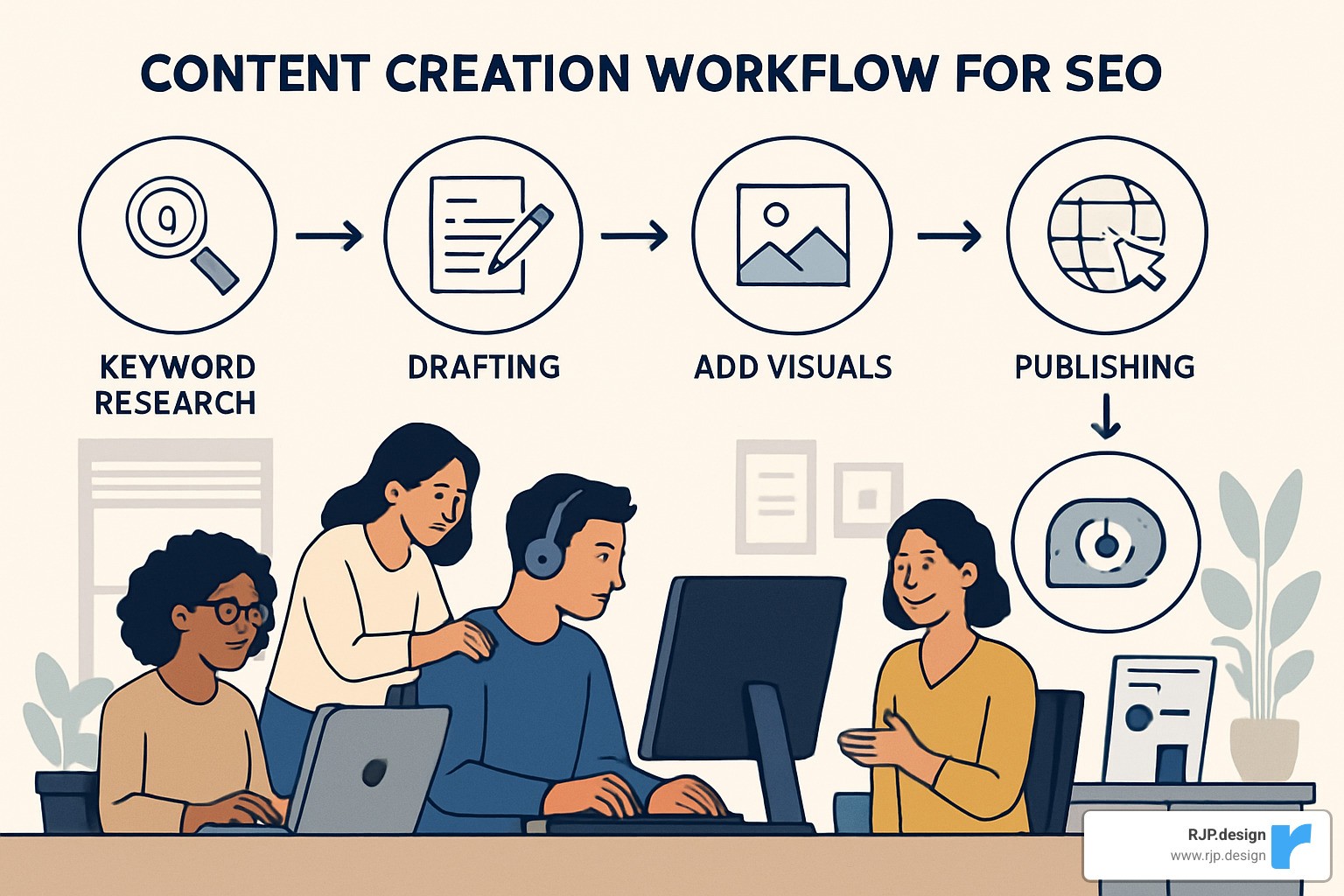
Topic clusters are a powerful organizational strategy. Create comprehensive “pillar” pages that cover broad topics, then support them with detailed “cluster” pages that dive deep into specific subtopics.
Readability matters tremendously. Use short paragraphs, bullet points, subheadings, and simple language. Include relevant images, infographics, and videos to break up text and illustrate key points.
Technical SEO Essentials
Technical SEO is about making your website fast, mobile-friendly, and easy for search engines to understand. Think of it as the foundation that everything else builds upon.
Core Web Vitals are Google’s key user experience metrics that directly impact rankings. Mobile-first indexing means Google primarily uses the mobile version of your site for ranking decisions.
Schema markup helps search engines understand your content better, potentially leading to rich results like star ratings or FAQ snippets in search results.
The URL Inspection Tool in Search Console is invaluable for diagnosing technical issues. Use it to check if pages are indexed and identify crawl errors.
Build & Earn Quality Backlinks
Backlinks remain a crucial ranking factor because they signal trust and authority to Google. Focus on earning high-quality links from reputable sources rather than pursuing quantity.
Guest posting can be effective when done correctly. Focus on contributing valuable content to relevant, authoritative sites in your industry. Internal linking is often overlooked but incredibly powerful – link related pages using descriptive anchor text.
Effective outreach strategies include creating linkable assets like original research or comprehensive guides, building relationships with industry influencers, and participating in relevant online communities.
Launch, Track & Iterate Your Google SEO Campaign
Launching your campaign is just the beginning – the real work starts with continuous monitoring and optimization based on real data.
Google Analytics provides comprehensive insights into your organic traffic performance. Google Search Console is essential for understanding how Google sees your site.
Key metrics to track include organic traffic growth, keyword ranking improvements, click-through rates from search results, conversion rates from organic traffic, and backlink acquisition.
Tools & Metrics That Make Life Easy
Running a successful google seo campaign doesn’t have to feel like solving a puzzle blindfolded. The right tools can transform what feels overwhelming into something manageable – and dare I say, even enjoyable.
At RJP.design, we’ve tested more SEO tools than we care to count. Our philosophy is simple: actionable insights beat pretty reports every time. We focus on tools that actually help you improve your rankings, not just admire colorful charts.
Free Tools Starter Pack
Google Search Console should be your first stop and daily companion. This free tool shows you exactly how Google sees your website, which keywords are bringing visitors, and what technical hiccups need fixing.
Google Analytics 4 gives you the full story of what happens after people find your site. You’ll see which organic traffic converts best, how users steer your site, and where you might be losing potential customers.
Google Keyword Planner might be designed for advertisers, but it’s gold for SEO research. Use it to find new keyword opportunities and understand search volume trends.
PageSpeed Insights keeps your site running smoothly. It analyzes your loading performance and provides specific recommendations for improvement.
These four free tools provide everything most small to medium businesses need to launch and track their campaigns effectively.
Budget-Friendly Upgrades
As your google seo campaign grows and shows results, you might find yourself wanting more sophisticated insights.
RJP.design SEO audit tools offer comprehensive site analysis without the complexity of enterprise platforms. Our tools identify technical issues and optimization opportunities in plain English.
Browser extensions can streamline your daily workflow by providing SEO insights directly while you browse. On-page optimization tools help ensure your content hits the sweet spot – properly optimized for target keywords without sounding robotic.
If you’re considering professional help, our SEO Consultant Price guide breaks down what different service levels include.
Advanced Stacks for Agencies
Larger organizations need tools that can handle multiple clients and complex reporting requirements. This is where RJP.design advanced SEO solutions really shine.
Custom dashboards consolidate data from multiple sources into one clear view. Data integrations connect your SEO metrics with other business systems like CRM platforms.
The beauty of advanced setups is automation. Reports generate themselves, alerts notify you of important changes, and trends become obvious instead of hidden in spreadsheets.
Common Pitfalls & How to Avoid Them
Let’s talk about the mistakes that can derail your google seo campaign – because knowing what not to do is just as important as knowing what to do right.
Duplicate content is probably the most common issue I encounter. This happens when you have similar content appearing on multiple pages. Search engines get confused about which version to show, so they might not show any of them. The fix: use canonical tags or consolidate similar pages.
Zombie pages are pages that generate zero traffic or conversions but still eat up your crawl budget. Think outdated product pages or thin blog posts. Removing these dead weight pages can lead to dramatic improvements.
Keyword stuffing is like wearing too much cologne – a little goes a long way, but too much repels everyone. Focus on writing for humans first and use keywords naturally.
Link spam might seem tempting when someone promises 1,000 backlinks for $99, but these schemes often lead to penalties. Google’s spam policies are crystal clear about this.
Mobile issues are increasingly critical since Google uses mobile-first indexing. If your site looks terrible on phones, you’re essentially invisible to a huge portion of searchers.
Diagnostic Checklist
Think of regular site audits like getting a health checkup for your website. Catching problems early saves you from major headaches later.
Your technical foundation needs to be solid. Watch out for broken links, slow page loading speeds, mobile usability problems, and crawl errors in Search Console.
Content quality issues can quietly undermine your efforts. Thin or duplicate content, missing image optimization, outdated information, and poor readability all hurt your rankings.
Authority problems include lack of quality backlinks, toxic link profiles from spammy sites, weak internal linking structure, and poor E-E-A-T signals.
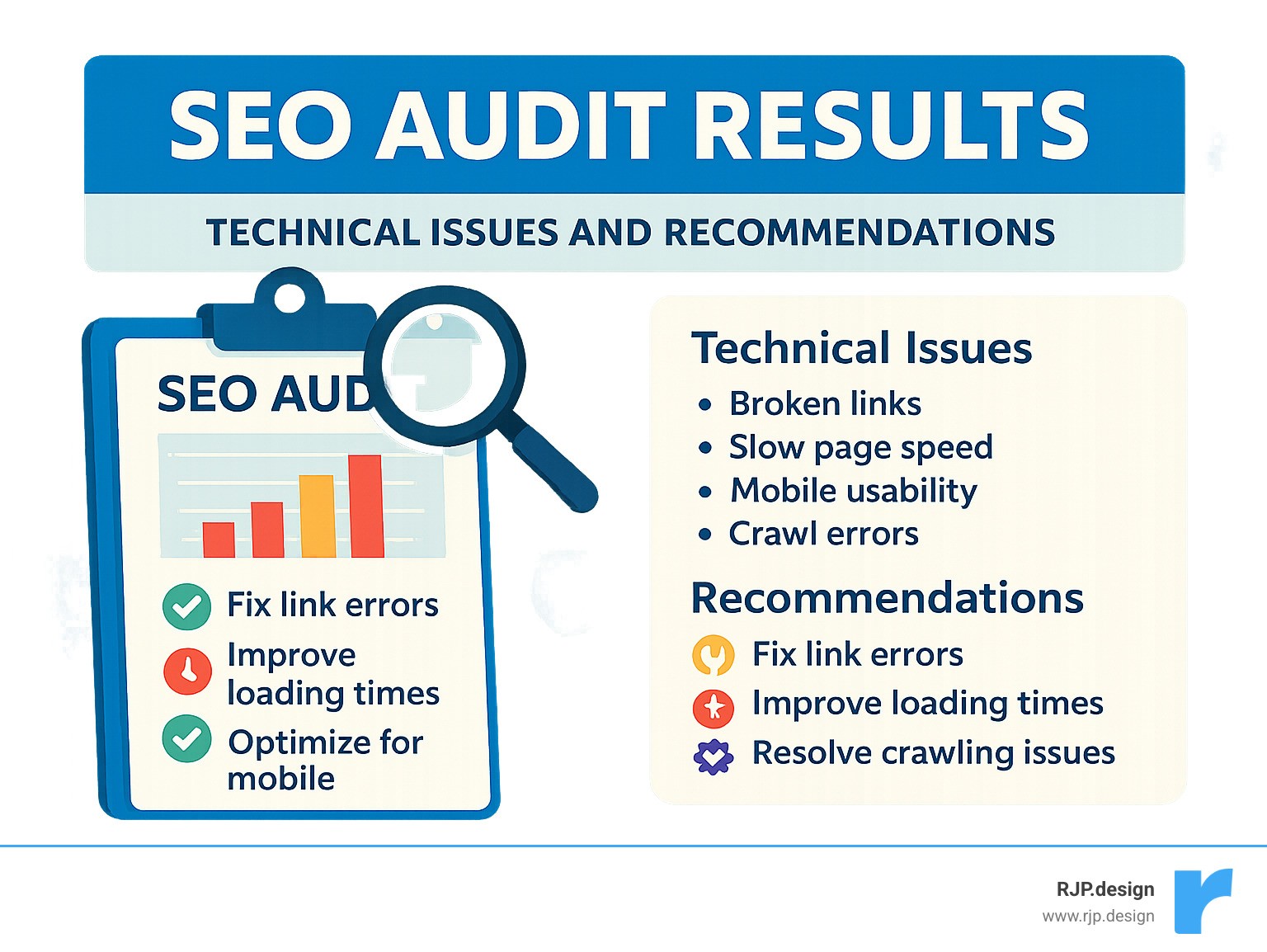
RJP.design offers comprehensive site audit tools that automatically identify these issues and provide specific recommendations for improvement. Regular monitoring and quick fixes keep your google seo campaign running smoothly.
Balancing SEO, PPC & the AI Future
The digital marketing landscape is evolving rapidly, and smart businesses know that putting all their eggs in one basket isn’t the answer. Your google seo campaign doesn’t have to exist in isolation – it can work beautifully alongside paid advertising.
Think of SEO and PPC as two different tools in your marketing toolbox. SEO is like planting a garden – it takes time to grow, but once established, it keeps producing results with minimal ongoing investment. PPC is more like buying groceries – you get what you need right away, but you have to keep paying for it.
Understanding how Google organic search works helps you see how these pieces fit together. Organic results are based on relevance, authority, and user experience signals, while paid results are based on bid amounts and ad quality scores.
When to Add PPC Fuel
Sometimes your google seo campaign needs a little extra boost, and that’s where PPC comes in handy.
Short-term wins are probably the most obvious use case. Maybe you’re launching a new product or running a seasonal promotion. PPC gives you immediate visibility while your SEO efforts catch up.
Remarketing works incredibly well with organic traffic. Someone finds you through search but doesn’t convert. Now you can show them targeted ads as they browse other websites.
The Google Ads platform makes it straightforward to create targeted campaigns that support your SEO goals. One effective strategy is using PPC to test keywords before investing time in creating SEO content.
Preparing Your Campaign for AI Search
The future of search is here, and it’s powered by artificial intelligence. Preparing your google seo campaign for this reality isn’t just smart – it’s essential for long-term success.
Conversational queries are becoming the norm as people get comfortable with voice search and AI assistants. Your content needs to answer these natural language questions.
Structured data becomes even more critical in an AI-driven world. These code snippets help AI systems understand your content’s context and meaning.
The shift toward AI search means focusing on creating comprehensive, authoritative content that directly addresses user needs. This evolution doesn’t make SEO obsolete – it makes quality SEO more important than ever.
Frequently Asked Questions about Google SEO Campaigns
Let me address the questions I hear most often from clients starting their first google seo campaign.
How long until I see results?
This is the most common question I get, and I totally understand why. You’re investing time and money into SEO, and you want to know when you’ll see a return.
Here’s the reality: SEO is like planting a garden, not flipping a light switch. The quick wins can surprise you – fix a broken link or speed up your page, and you might see improvements within days.
New content typically takes 2-4 weeks to get indexed and start showing up in search results. Meaningful ranking improvements usually take 3-6 months of consistent effort.
Competitive keywords require patience. If you’re targeting terms that established sites have dominated for years, expect 6-12 months or longer.
Full campaign impact shows around the 4-6 month mark, with continued improvement over time. This is when all your efforts start working together.
What are the top SEO KPIs to track?
With so many metrics available, focus on ones that directly connect to your bottom line.
Primary KPIs should include organic traffic growth, keyword ranking improvements, conversion rate from organic traffic, and organic revenue or lead generation.
Secondary metrics like click-through rates from search results, average session duration, and bounce rate give deeper insights into user behavior.
Technical performance metrics include page loading speeds, mobile usability scores, and Core Web Vitals performance.
I recommend tracking these monthly rather than obsessing over daily changes. SEO success shows up in trends, not daily fluctuations.
Do backlinks still matter in 2024?
Absolutely yes. Backlinks remain one of Google’s most important ranking factors, but the game has changed significantly.
Quality over quantity is the new rule. Google has become sophisticated at identifying low-quality links. One high-quality link from a respected source is worth more than dozens of low-quality directory listings.
What still works focuses on genuine value creation: earning links from authoritative, relevant sites, creating genuinely linkable content, and building real relationships with industry influencers.
What doesn’t work anymore can actually hurt your rankings: buying links from link farms, participating in link exchange schemes, and using exact-match anchor text excessively.
At RJP.design, we’ve seen how quality backlinks can transform a site’s search performance. The key is patience and authenticity.
Conclusion
You’ve made it to the end of our google seo campaign guide, and that’s already a big step forward! Most people get overwhelmed by all the technical stuff and give up before they even start. But here you are, armed with a practical roadmap that really works.
The beauty of SEO is in its simplicity. You don’t need to master everything at once. Start with clear goals that make sense for your business. Focus on the fundamentals because they never go out of style. Great keyword research leads to helpful content, which attracts quality backlinks, which improves your rankings.
The long-term mindset is what separates successful campaigns from failed ones. SEO isn’t a sprint – it’s more like training for a marathon. Be patient with the process and consistent with your efforts.
Track your progress using the free tools we discussed, especially Google Search Console and Google Analytics. Let the data guide your decisions rather than guessing.
Most importantly, stay user-focused. Google’s getting smarter every day at recognizing content that genuinely helps people. Write for your customers first, then optimize for search engines.
The research we’ve shared shows real businesses achieving remarkable results – 333% traffic increases and 400% ROI improvements aren’t just lucky breaks. They’re the result of systematic effort applied consistently over time.
As AI and new technologies reshape the search landscape, the core principles remain unchanged. Create valuable content, provide excellent user experiences, and build genuine authority in your field.
If you’re feeling overwhelmed by the technical aspects or need help developing a comprehensive strategy, that’s completely normal. At RJP.design, we specialize in creating websites and enhancing online presence for businesses. Our down-to-earth team understands that not everyone wants to become an SEO expert – sometimes you just want it done right.
For transparent pricing information, check out our Search Engine Optimization Price guide.
Your google seo campaign journey starts with a single step. Pick one thing from this guide – maybe setting up Google Search Console, researching five keywords, or auditing your site speed – and do it today.
The best google seo campaign is the one you actually implement. So stop overthinking it and start taking action. Your future self will thank you for the organic traffic that keeps flowing in, month after month, year after year.