
Web
What Exactly is a Service Website Anyway?
Jul 3, 2025

Service Website: 7 Powerful Reasons You Need One in 2025
Why Service Websites Are Essential for Modern Business Success
A service website is an online platform designed to showcase and promote specific services offered by a business or individual, encouraging visitors to take action like requesting a quote, booking an appointment, or making contact.
Quick Answer – What is a Service Website:
Purpose: Showcase services, build credibility, and convert visitors into clients
Key Features: Service descriptions, pricing, testimonials, booking systems, contact forms
Target Users: Service-based businesses like consultants, agencies, contractors, healthcare providers
Main Goal: Generate leads and facilitate easy client engagement 24/7
Whether you’re running a dental practice, consulting firm, or home repair business, your website serves as your digital storefront. Research shows that consumers believe a website makes a business look more credible than just having social media, and with over 50% of all website traffic coming from mobile devices, having a professional service website isn’t optional anymore – it’s essential.
Visitors typically decide within 15 seconds whether to stay on your website, and up to 90% of their assessment is based on visual elements alone. That’s why understanding what makes a service website effective can be the difference between a thriving business and one that struggles to attract new clients online.
I’m Ross Plumer, and I’ve helped businesses market over $20 million in revenue through strategic service website design and digital marketing.
Service website terms to know:
What is a Service Website and Why Every Service-Based Business Needs One
Think of a service website as your hardest-working employee – one who never takes a sick day, never sleeps, and is always ready to help your customers. Unlike websites that sell physical products, your service website has one main job: building trust with potential clients and making it incredibly easy for them to say “yes” to working with you.
Here’s something that might surprise you: up to 90% of how people judge your website comes down to colors alone. Scientific research on color psychology shows that the right color choices can improve brand recognition by 80%.
Your service website works around the clock, providing 24/7 availability that gives you a serious competitive edge. While you’re sleeping, your website is busy answering questions through FAQ sections, showcasing your best work, and capturing leads through contact forms.
Modern customers expect this kind of convenience. They want to research your services, check out your pricing, and read what other clients say about you – all before they pick up the phone.
The Core Purpose of a Service Website
Your service website needs to excel at four key things:
Lead generation starts with understanding your visitor’s journey. Someone lands on your site with a problem, and your job is to guide them naturally toward the solution – which happens to be your services.
Building trust happens through every element of your site. Professional design tells visitors you take your business seriously. Client testimonials show that real people get real results from working with you.
Providing information efficiently saves everyone time. When your website answers common questions upfront, you get fewer tire-kickers and more qualified leads.
Making contact easy sounds obvious, but you’d be amazed how many service providers make this harder than it needs to be. Multiple contact options, simple forms, and clear next steps remove every possible barrier.
Key Benefits for Small vs Enterprise Providers
If you’re a small service provider, your website is your secret weapon for competing with bigger companies. A well-designed service website can make a solo consultant look just as professional and capable as a large agency.
Conversion boosts happen when your website does the heavy lifting of explaining your services and building trust. Scalability becomes possible when your website handles routine inquiries automatically.
With mobile dominance accounting for the majority of web traffic, your service website must work flawlessly on smartphones and tablets. This isn’t just about making things fit on smaller screens – it’s about creating experiences that convert visitors into clients no matter what device they’re using.
Essential Elements of a High-Converting Service Website
Building a service website that actually converts visitors into clients requires getting the fundamentals right. Think of these elements as essential ingredients – skip one, and the whole thing falls flat.
Your unique value proposition headline is the first thing visitors see, and it better be good. Tell people exactly what you do and why they should care about it. If someone can’t understand what you offer within five seconds of landing on your site, they’re gone.
The hero section is where you make or break that crucial first impression. You’ve got about 15 seconds to convince someone to stick around. High-quality visuals that actually represent your work, paired with copy that speaks directly to what keeps your ideal clients up at night, creates the kind of connection that turns browsers into buyers.
Focus on benefits instead of features. Nobody cares that you’ve been in business for 20 years – they care about how your experience helps them solve their problems faster, cheaper, or better.
Client logos and testimonials provide the social proof that modern consumers absolutely expect. Even if you’re just starting out, a few genuine testimonials from early clients can work wonders for your credibility.
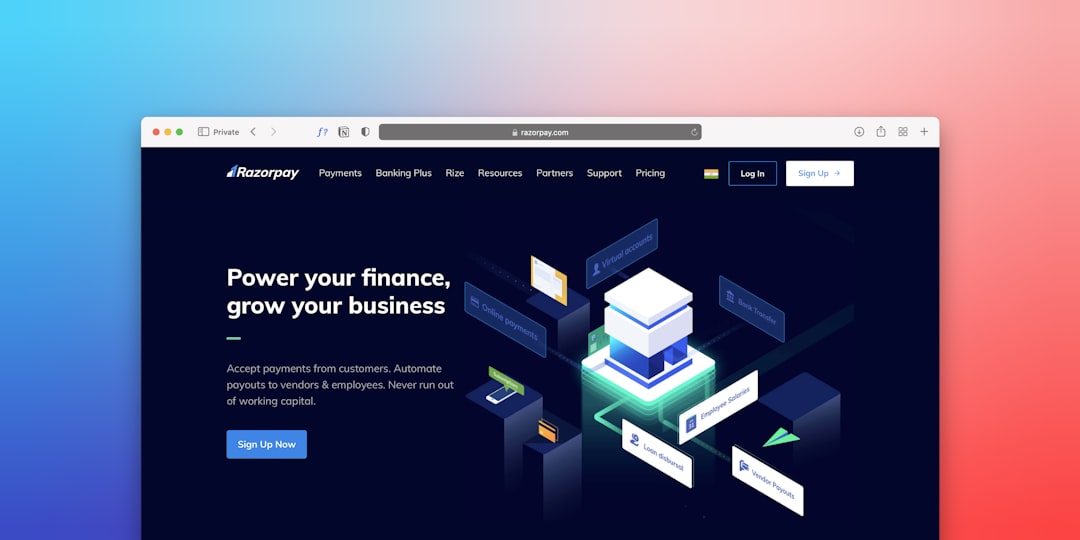
Transparent pricing helps people self-qualify and reduces those awkward “How much does it cost?” conversations with people who can’t afford your services anyway.
Your contact forms should be shorter than a grocery list. Research shows that keeping forms under seven fields dramatically improves conversion rates.
For businesses that want to take their online presence seriously, our Website Concierge Maintenance service ensures all these elements stay optimized and working smoothly long after launch.
Must-Have Pages on Your Service Website
Your homepage is like the front desk of a hotel – it needs to quickly orient visitors and direct them where they need to go. This is where you put your strongest testimonials, clearest service descriptions, and most compelling calls-to-action.
A services overview page gives visitors the big picture of what you offer. Individual service pages are where you get to shine. Each service deserves its own spotlight, with specific pain points, benefits, and outcomes clearly explained.
Your about page is where the magic of human connection happens. People don’t just buy services – they buy from people they know, like, and trust.
A blog section might seem like extra work, but it’s actually one of the smartest investments you can make. Content creation is the most effective SEO tactic according to 72% of online marketers.
FAQ pages are your secret weapon against objections. Address the concerns and questions that come up in every sales conversation.
Your contact page should make reaching you as easy as ordering pizza. For more guidance on creating effective service websites, check out our Services page.
Tools & Integrations Your Visitors Expect
Modern service website visitors come with certain expectations. Online scheduling systems eliminate the back-and-forth of trying to find a time that works for everyone.
Secure payment processing builds trust and enables immediate transactions. Live chat functionality provides immediate assistance when visitors have questions.
CRM synchronization ensures that every lead captured through your website automatically enters your sales process.
For businesses looking to implement these advanced features seamlessly, our Web Design & Development services can help create a fully integrated solution.
Designing & Structuring Service Pages That Convert
Creating service website pages that actually convert visitors into clients isn’t about fancy design tricks – it’s about understanding how people read and make decisions online. Most visitors won’t read every word on your page. They’re scanning, looking for specific information that answers their questions and solves their problems.
Start every service page with what I call a pain-and-benefit opening. This means immediately addressing why someone landed on your page and how you’re going to help them. Skip the fluff about your company history – lead with the problem you solve and the outcome you deliver.
Your layout needs to work with human behavior, not against it. People scan in predictable patterns, so use compelling subheadings, bullet points, and plenty of white space to make information digestible.
Short videos under 60 seconds can dramatically boost your conversion rates. The most effective service-page videos show real outcomes, feature genuine client testimonials, or demonstrate quick before-and-after results.
Your responsive grid layout isn’t just about looking good on phones – it’s about creating a professional impression across every device.
Feature | Overview Page | Individual Service Pages |
|---|---|---|
Purpose | Broad service introduction | Deep dive into specific services |
SEO Value | General keyword targeting | Specific long-tail keywords |
User Journey | Early exploration stage | Later consideration stage |
Content Depth | Surface-level descriptions | Detailed benefits and processes |
Best For | First-time visitors | Qualified prospects |
How to Structure a High-Converting Service Website Page
Every high-converting service website page follows a proven structure that feels natural to visitors while guiding them toward taking action.
Your headline needs to work harder than just looking pretty. It should include your service website keyword naturally while immediately addressing what your visitor cares about most.
Compelling subheads act like chapter titles in a book – they help people jump to the information they need most. Focus on benefits lists rather than feature lists. Your visitors don’t care that you use “proprietary methodologies” – they care that they’ll save time, make more money, or solve their pressing problem.
Engaging images should tell part of your story. Team photos build trust, before-and-after shots prove results, and process images help people understand what working with you looks like.
Social proof blocks work best when scattered throughout your page, not just dumped at the bottom. Your strong calls-to-action should appear multiple times using different approaches.
Overview Page vs Individual Pages: When to Use Each
The choice between service overview pages and individual service pages isn’t an either-or decision – smart service website design uses both strategically.
Overview pages work beautifully when your services are closely related or when you want visitors to understand your full capabilities. They’re perfect for building topical authority while keeping navigation simple.
Individual pages shine when you offer distinct services that appeal to different audiences. They allow you to target specific keywords, address unique pain points, and provide the detailed information that converts browsers into buyers.
The pillar page strategy works well here – use your overview page as a comprehensive hub that links to detailed individual service pages.
Our Professional Web Design approach considers all these factors to create the structure that works best for your business and your clients’ needs.
SEO & Mobile Optimization for Service Websites
Getting your service website found online isn’t just about having great content – it’s about making sure search engines understand what you offer and can easily serve your site to people who need your services.
The SEO game for service providers is quite different from selling products online. You’re targeting people with specific problems who need professional help. This means your keyword research should focus on the actual phrases your potential clients type into Google when they’re frustrated, confused, or ready to hire someone.
Someone searching for “web design” might just be curious, but someone searching for “professional web designer near me” is probably ready to hire someone. These longer, more specific phrases (called long-tail keywords) are often easier to rank for and bring in much better leads.
Your meta titles and descriptions are like your website’s elevator pitch in search results. They need to quickly communicate what you do, where you’re located (if relevant), and why someone should click on your result.
Schema markup helps search engines understand that you’re a service provider, what services you offer, where you’re located, and what your clients think about your work. This can lead to those helpful business cards that appear in search results with your phone number, address, and star ratings.
Page speed is absolutely critical for service websites. Research shows that blogging can be 13x more likely to drive positive ROI when done correctly, but all that great content won’t help if your site takes forever to load.
Google’s Core Web Vitals have become major ranking factors, measuring how fast your pages load, how quickly visitors can interact with them, and whether elements jump around while loading.
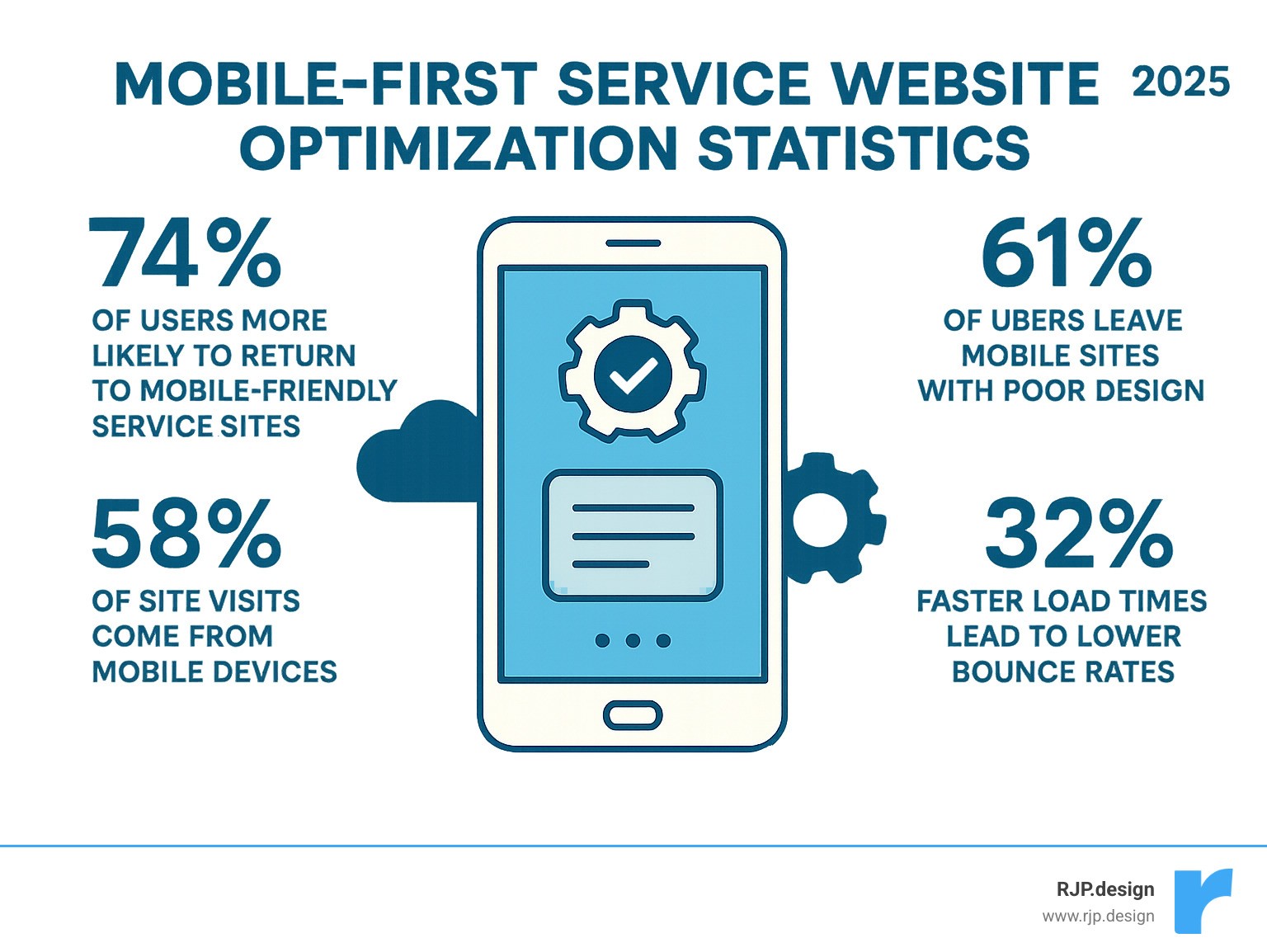
Technical SEO Essentials for a Service Website
The technical foundation of your service website needs to be solid before any other SEO efforts can succeed. Your site architecture should create a logical flow from general information to specific services.
Internal linking between your service pages, blog posts, and other resources keeps visitors engaged while showing search engines which pages are most important.
Your XML sitemap is like a roadmap for search engines, showing them all the important pages on your site. SSL certificates aren’t optional anymore – they’re essential for any service website that handles contact forms or payment information.
Getting all these technical elements right can be overwhelming, which is why our Digital Marketing services include comprehensive SEO audits and implementation.
Mobile-First Design & Performance for Your Service Website
Most of your potential clients are finding and evaluating your services on their phones. Mobile-first design isn’t just a trendy concept – it’s a business necessity that directly impacts your bottom line.
Designing mobile-first means starting with the smartphone experience and then adapting for larger screens. Your responsive breakpoints need to handle everything from small smartphones to large desktop monitors smoothly.
Image optimization becomes even more critical on mobile devices where data speeds might be slower. Every image should be compressed without losing quality and sized appropriately for different screen sizes.
Lazy loading makes your initial page load much faster, which is crucial for keeping mobile visitors engaged during those critical first few seconds.
Building Trust & Driving Action: Pricing, Testimonials, CTAs, and Real-World Examples
Building trust online isn’t just about having a pretty website – it’s about showing potential clients that you’re the real deal. Your service website needs to demonstrate credibility through every element, from pricing transparency to client testimonials that actually mean something.
Transparent pricing information eliminates one of the biggest barriers between you and your next client. When visitors can see what they’re looking at investment-wise, they’re more likely to reach out because they’ve already mentally prepared for the cost.
Customer reviews and testimonials provide the social proof that modern consumers absolutely expect. What works are specific, outcome-focused testimonials that tell a story. Instead of “John was amazing to work with,” try “John helped us redesign our website and our online inquiries increased by 60% in the first month.”
Case studies take this concept even further. They’re like detailed success stories that walk potential clients through real challenges you’ve solved.
The placement of your calls-to-action matters more than you might think. Early in their research journey, visitors prefer softer approaches like “Learn More.” But once they’re deeper into considering your services, direct CTAs like “Schedule Your Free Consultation” become much more effective.
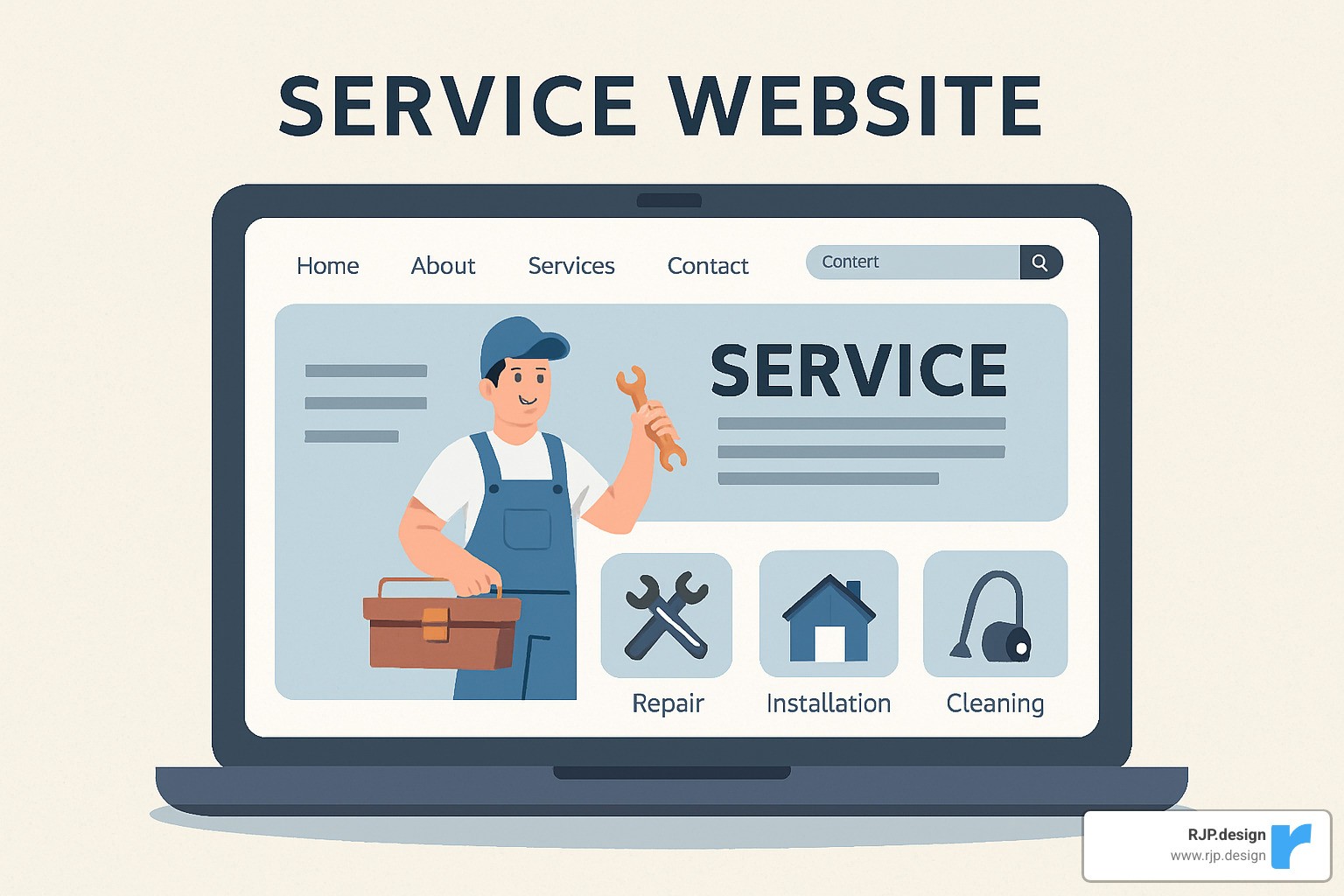
Should You Display Pricing on Your Service Website?
Standardized services with fixed pricing absolutely benefit from transparent pricing. It eliminates those awkward price-shopping phone calls and attracts people who are genuinely ready to invest in your services.
Custom services present a trickier situation. You can’t quote exact prices without understanding the scope, but you can still provide helpful information. Starting prices, ranges, or package options give visitors a realistic expectation without boxing you into specific numbers.
Tiered packages work beautifully for services that can be standardized into different service levels. This approach reduces confusion and speeds up decision-making.
Crafting Irresistible Calls-to-Action on Every Page
Your calls-to-action are where interest becomes action, so every word matters. Action verbs that clearly communicate what happens next consistently outperform vague language. “Schedule Your Free Strategy Session” tells visitors exactly what they’re getting, while “Contact Us” leaves them guessing.
Urgency words can motivate quick action when used authentically. Microcopy around forms and buttons addresses visitor concerns before they become obstacles. Simple additions like “No spam, guaranteed” can dramatically improve form completion rates.
Inspiring Service Website Examples & What to Steal From Them
Looking at successful service websites reveals patterns that work across different industries. In8love Wellness uses calming colors and benefit-focused copy that perfectly matches their wellness audience’s mindset.
Mindy Nguyen’s website demonstrates how personal branding can set service providers apart in crowded markets. Her professional photography, crystal-clear value proposition, and strategic placement of client testimonials create immediate trust and credibility.
Prophet’s website shows how enterprise service providers can present complex capabilities in ways that regular humans can understand.
These successful examples share common DNA: clear value propositions, professional design, strategic testimonial placement, and multiple easy paths to contact.
For businesses ready to implement these proven strategies, our Creative Website Solutions can help you create a site that builds trust and drives action.
Frequently Asked Questions about Service Websites
When I talk with business owners about creating their first service website, the same questions come up again and again. Let me address the most common concerns I hear.
What makes a service website different from an eCommerce site?
The biggest difference is trust. While eCommerce sites focus on showcasing products that customers can see and touch, service websites need to build confidence in something intangible. You’re asking people to believe in your expertise before they’ve experienced your work.
This means your website needs more relationship-building elements. Your about page becomes crucial – people want to know who they’re hiring. Testimonials carry more weight because they’re the closest thing to a guarantee that potential clients can get.
The sales process is different too. eCommerce sites aim for immediate “add to cart” decisions. Service websites guide visitors through a longer journey – from awareness to consultation to eventual purchase.
How often should I update my service website content?
This depends on what type of content we’re talking about, but consistency matters more than frequency. Your core service descriptions should get a quarterly review to make sure they still accurately reflect what you offer.
If you’re blogging, aim for a schedule you can actually maintain. Weekly posts work great if you have the capacity, but monthly updates are perfectly fine too. The research shows that 72% of online marketers consider content creation their most effective SEO tactic.
Testimonials and case studies should be added as they happen – don’t wait for a scheduled update when you get a glowing review or complete an impressive project.
Should testimonials appear on every page of my service website?
You want social proof throughout your site, but strategic placement works better than copy-pasting the same testimonials everywhere. Think about what visitors need to hear at different stages of their decision-making process.
Your homepage deserves your strongest, most comprehensive testimonials. Individual service pages should feature testimonials specific to those particular services whenever possible.
Match your testimonials to visitor intent. Someone deep in your FAQ section might be dealing with specific concerns that targeted testimonials can address.
Conclusion
Creating a successful service website isn’t just about having an online presence – it’s about building a digital foundation that works around the clock to grow your business. Every element we’ve explored contributes to a powerful system that attracts and converts your ideal clients.
The statistics tell a compelling story. When 90% of visitor assessment happens within those first few moments, and 72% of marketers depend on content creation for SEO success, your website becomes far more than a digital business card. It becomes your most hardworking employee.
What separates thriving service businesses from struggling ones online often comes down to implementation. You can have the most beautiful design in the world, but without compelling headlines that speak directly to visitor pain points, your site won’t convert.
The magic happens when all these pieces work together harmoniously. Your mobile-optimized design ensures everyone can access your services easily. Your benefit-focused content helps visitors understand exactly how you solve their problems. Your clear calls-to-action guide people naturally toward becoming clients.
Here’s what successful implementation looks like: Start with headlines that make visitors feel understood. Weave testimonials throughout your site, not just buried at the bottom of pages. Design mobile-first because that’s where most people will find you. Focus on benefits rather than features in your service descriptions. Place strategic calls-to-action that feel natural, not pushy.
At RJP.design, we’ve seen how the right service website transforms businesses. Our clients don’t just get prettier websites – they get lead-generating machines that work while they sleep. We understand that behind every service business is someone who’s passionate about helping others, and we’re passionate about helping you reach more of the people who need what you offer.
The difference between a website that sits quietly in the corner and one that actively grows your business often comes down to understanding these fundamentals and implementing them thoughtfully. Your website should feel like the best version of your business – professional, helpful, and genuinely focused on solving problems for the people you serve.
Ready to build a service website that works as hard as you do? Our team at RJP.design brings both the technical expertise and the down-to-earth approach that makes the process enjoyable rather than overwhelming. Let’s create something together that not only looks great but delivers the results your business deserves.
Find how our Web Design & Development services can transform your online presence into a powerful business growth tool.