SEO
Landing Pages SEO Secrets That Google Doesn’t Want You to Know
Jun 25, 2025
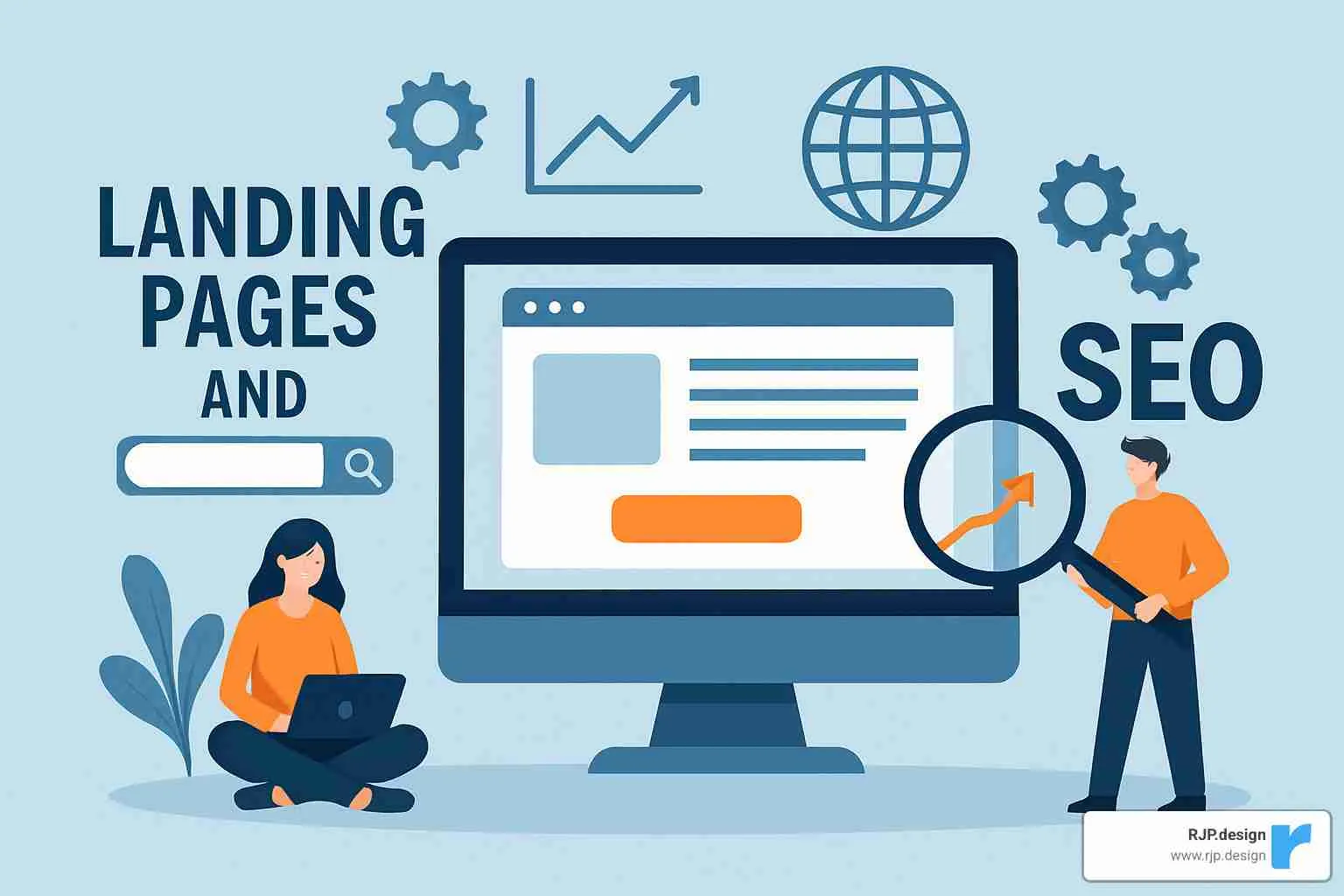
Landing Pages and SEO: 7 Powerful Secrets for 2025 Success
Why Landing Pages and SEO Work Better Together Than You Think
Landing pages and SEO might seem like opposing forces – one focused on conversions, the other on rankings. But here’s what most businesses miss: the best landing pages do both.
Quick Answer for Landing Pages and SEO:
– SEO landing pages = Pages optimized for search rankings AND conversions
– Key difference: More content depth than PPC pages, less than blog posts
– Main benefit: Free, targeted traffic that converts at higher rates
– Success formula: Target long-tail keywords + match search intent + optimize for speed
– Common mistake: Choosing SEO OR conversions instead of AND
Most small business owners think they have to pick a side. Either create a bare-bones page that converts visitors from ads, or build a content-heavy page that ranks in Google.
The truth? Your landing pages can rank high in search results while still converting visitors into customers.
Landing pages have an average conversion rate of just under 10%, but most never see organic search traffic because they’re not optimized for SEO. Meanwhile, 68.8% of Google searches happen on mobile devices, creating massive opportunities for businesses that get this right.
The secret isn’t choosing between SEO and conversions – it’s understanding how they work together. When you optimize a landing page for search, you’re getting more qualified traffic from people actively searching for what you offer.
I’m Ross Plumer, and I’ve helped businesses market over $20 million in revenue by combining conversion-focused design with search optimization strategies. My approach to landing pages and SEO focuses on creating pages that satisfy both Google’s algorithms and your customers’ needs.
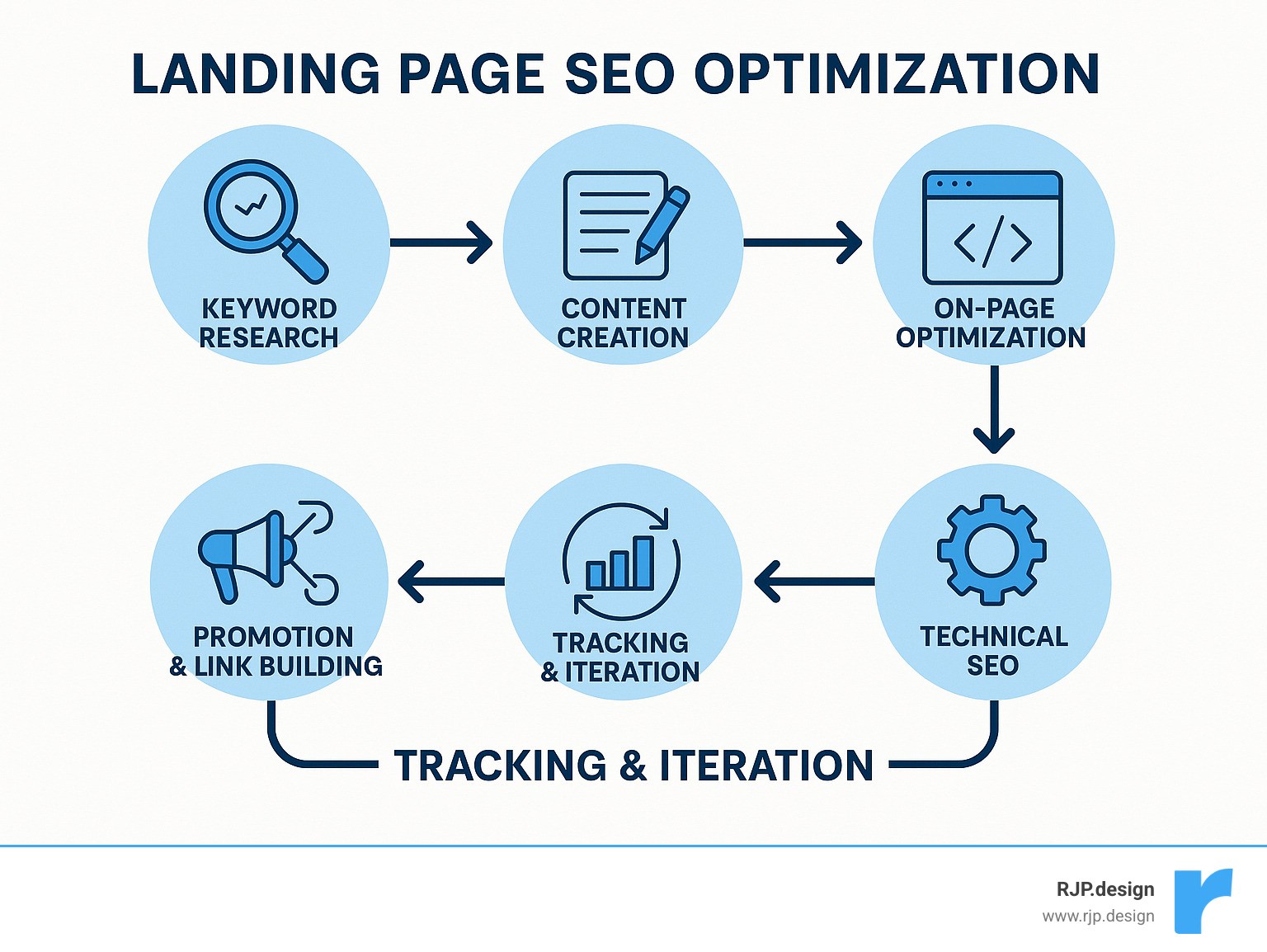
Landing pages and seo terms made easy:
– seo content optimizer
– link building off page seo
– website traffic analysis
Landing Pages vs. Other Web Pages: Foundations for SEO Success
Think of your website like a house. Your homepage is the front door, your blog posts are the living room, but landing pages and SEO work differently. They’re focused workshops set up for one specific task.
What Is a Landing Page?
A landing page is a standalone web page built with one clear purpose. When someone clicks on your Google ad, opens your email, or finds you in search results, this is where they land.
What makes landing pages special is their focused goal. While your homepage tries to appeal to everyone, a landing page speaks directly to one specific group with one specific problem.
Picture this: someone searches “best accounting software for restaurants” and lands on your page. Everything they see should feel like it was created just for restaurant owners looking for accounting help. No distractions, no mixed messages.
How Does It Differ From Home & Blog Pages?
Navigation and internal linking work differently across page types. Your homepage needs extensive menus to help visitors explore. Blog pages include lots of internal links to related articles. But landing pages keep navigation minimal to maintain focus and reduce bounce rate.
Content depth and structure vary dramatically. Blog posts dive deep with comprehensive content. Your homepage provides an overview of everything. Landing pages hit the sweet spot – enough content to rank well and build trust, but focused enough to keep visitors moving toward your call-to-action.
The funnel stage consideration is crucial. Blog posts target people in the awareness stage. Landing pages target people ready to take action. This affects everything from keyword choices to content tone.
Here’s how SEO and PPC landing pages compare:
Element | SEO Landing Pages | PPC Landing Pages |
|---|---|---|
Content Length | 800-2000+ words | 200-500 words |
Keywords | Extensive keyword research | Minimal keyword focus |
Navigation | Limited but some internal links | Extremely minimal |
Lifespan | Long-term, evergreen | Campaign-specific |
Traffic Source | Organic search results | Paid advertisements |
Backlinks | Actively seek editorial links | No link building needed |
This foundation understanding changes everything about optimization. You’re creating a page that attracts the right organic traffic and converts it.
The Anatomy of an SEO Landing Page
Creating an SEO-optimized landing page requires careful attention to multiple elements working together.
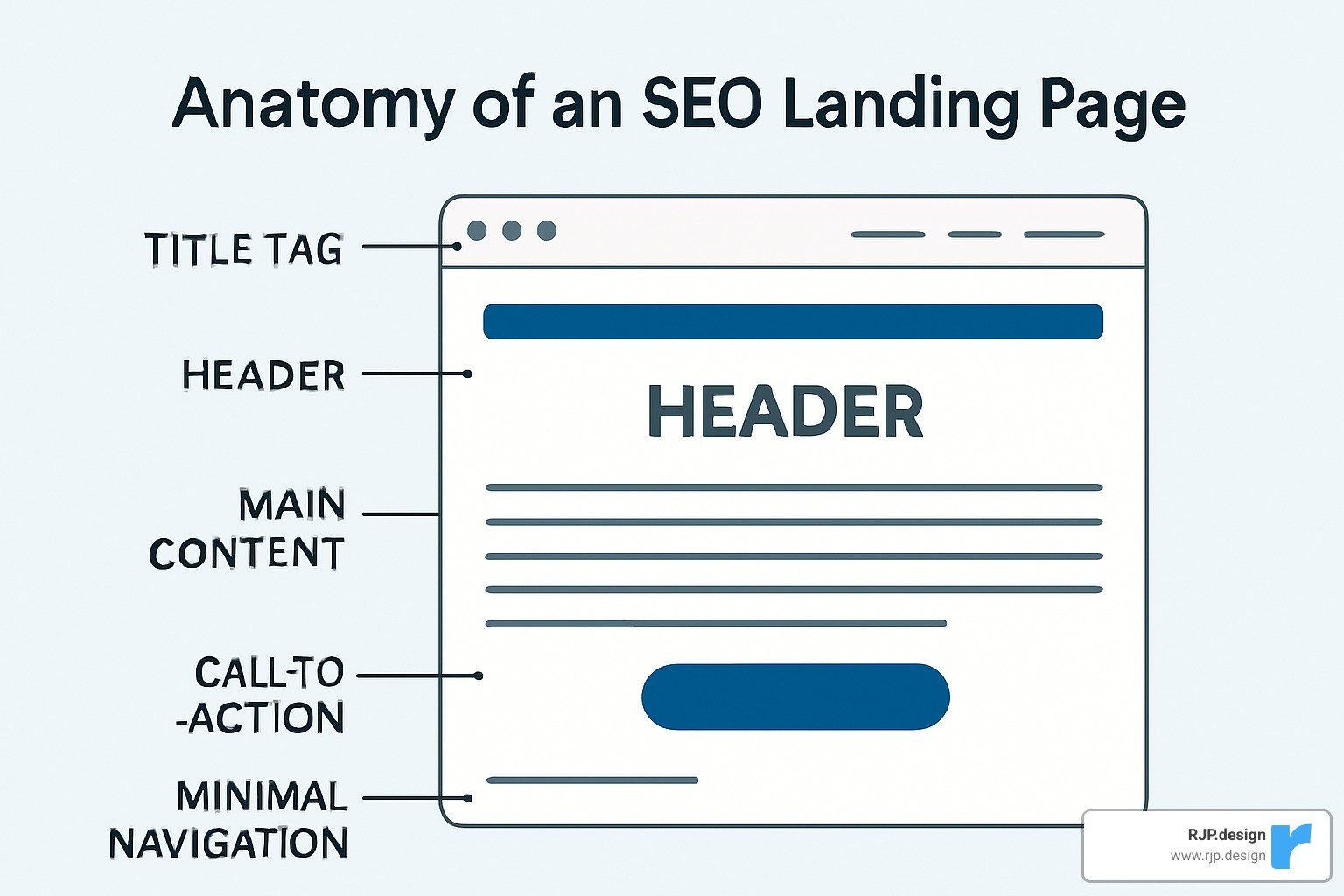
On-Page Elements That Matter Most
Title Tag Optimization:
– Keep it between 50-60 characters
– Include your primary keyword near the beginning
– Make it compelling enough to encourage clicks
– Match the search intent behind your target keyword
Meta Description Strategy:
– Write 155-160 characters maximum
– Include your target keyword naturally
– Create urgency or highlight unique value
– Include a clear call-to-action when appropriate
Hero Section Copy:
– H1 tag should include your primary keyword
– Subheadline clarifies the value proposition
– Opening paragraph addresses search intent immediately
– Primary CTA button uses action-oriented language
Image Optimization:
– Use descriptive, keyword-rich file names
– Write detailed alt text for accessibility and SEO
– Compress images to maintain fast loading speeds
– Consider using schema markup for product images
Technical Must-Haves
Mobile-First Design:
With 68.8% of Google searches happening on mobile devices:
– Responsive design that adapts to all screen sizes
– Touch-friendly buttons and forms
– Readable text without zooming
– Fast loading on mobile networks
Page Speed Optimization:
Page load times under 3 seconds are crucial:
– Optimize and compress all images
– Minify CSS, JavaScript, and HTML
– Use browser caching and CDN services
– Eliminate render-blocking resources
Core Web Vitals:
– Largest Contentful Paint (LCP): Should be 2.5 seconds or less
– First Input Delay (FID): Should be 100 milliseconds or less
– Cumulative Layout Shift (CLS): Should be 0.1 or less
Content vs. Design: Finding the Sweet Spot
The biggest challenge in landing pages and SEO is balancing content depth with conversion optimization:
Long-Form Content Sections:
– Place detailed information below the fold
– Use expandable sections to manage visual clutter
– Include FAQ sections to target semantic keywords
– Add testimonials for social proof
Trust and Authority Signals:
– Industry certifications and badges
– Customer testimonials with photos
– Security certifications (SSL, privacy compliance)
– Money-back guarantees or risk-free trials
For schema markup implementation, use tools like the Structured data generator to create proper markup for your landing pages.
Landing Pages and SEO: Step-by-Step Optimization Blueprint
Getting landing pages and SEO to work together isn’t magic – it’s following a proven process. Here’s the step-by-step blueprint that actually works.
Landing Pages and SEO Keyword Research
Keyword research for landing pages is different from blog content research. We’re hunting for keywords that show someone is ready to take action.
Long-tail commercial keywords are your best friends. These are 3-4+ word phrases that show buying intent. Think “best email marketing software for small business” instead of just “email marketing.” Longer phrases have less competition and attract visitors who know exactly what they want.
Search intent matching is where most people mess up. Analyze the top-ranking pages for target keywords to understand what Google wants to show. If someone searches “how to choose accounting software,” they want a comparison guide, not a sales page.
Competitor gap analysis means looking for keywords competitors rank for that you’re missing. Focus on long-tail variations of their high-competition terms. If they’re ranking for “web design,” target “professional web design that increases sales.”
Semantic keyword research means thinking like Google thinks. Include synonyms, industry terminology, and the actual problems your service solves. This gives Google confidence that your page thoroughly covers the topic.
Test your optimization using PageSpeed Insights to ensure technical performance supports your SEO goals.
Crafting Copy That Ranks & Converts
Writing for landing pages and SEO means creating content that satisfies search algorithms while persuading people to take action.
Benefit-driven headlines include keywords naturally while highlighting what customers care about. Instead of “Our Web Design Services,” try “Professional Web Design That Increases Your Sales by 40%.”
Primary keyword placement needs to feel natural. Include the main keyword in the H1 tag, use variations in H2 subheadings, and make sure it appears in the first paragraph. Focus on using keywords where they make sense.
FAQ sections are goldmines for capturing long-tail searches. People type questions into Google constantly. Use question-style headings in H3 tags, addressing real customer concerns and objections.
Storytelling elements keep people engaged and reduce bounce rates. Customer success stories and problem-solution narratives make content more interesting while naturally incorporating keywords.
Building Authority Off-Page
Off-page SEO for landing pages requires strategic thinking. Landing pages don’t naturally attract links like comprehensive guides do.
Strategic outreach starts with creating something worth linking to – detailed case studies, original research, or useful tools. Then reach out to industry publications and build real relationships with influencers.
Industry citations and mentions build authority without requiring traditional backlinks. Get listed in relevant directories, participate in industry forums, and contribute valuable insights to publications.
Social sharing strategy supports SEO efforts indirectly. Social signals drive traffic and awareness that can lead to natural links. Create shareable content snippets and encourage satisfied customers to share experiences.
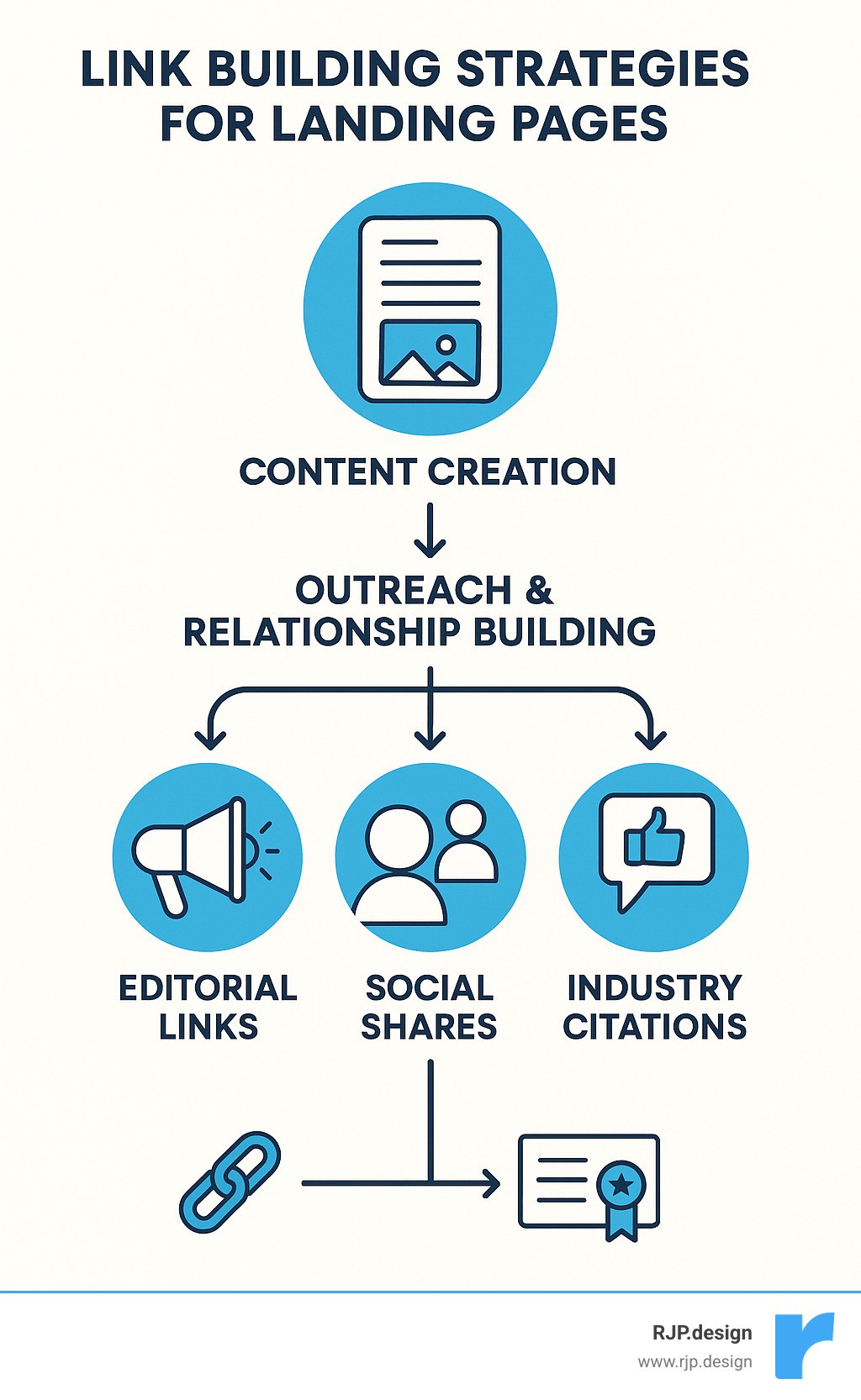
Building authority takes time, but when it works, your landing pages start ranking higher and converting better.
Balancing CRO With Technical SEO
Here’s where things get interesting with landing pages and SEO – you don’t have to choose between pages that convert and pages that rank. The best performing landing pages do both.
Google’s algorithm updates increasingly favor pages that provide genuine value to users. The technical elements that help pages rank are often the same ones that help them convert.
A fast-loading page keeps both Google and visitors happy. Clear navigation helps search engines understand content while guiding users toward conversion. Well-structured content satisfies search intent while building trust.
Heat maps and user behavior data reveal how technical SEO impacts conversions. Users abandon forms that take too long to load or bounce from pages with confusing layouts. These same issues hurt search rankings.
Core Web Vitals & UX Metrics
Google’s Core Web Vitals aren’t just technical requirements – they’re user experience metrics that directly impact whether visitors convert.
Largest Contentful Paint (LCP) measures how quickly your main content loads. For landing pages, this is usually your hero section. When this loads in under 2.5 seconds, visitors see your value proposition immediately.
Cumulative Layout Shift (CLS) prevents buttons from moving just as users click them. Nothing kills conversions faster than a form that jumps around while loading. Keep this under 0.1 by setting proper image dimensions.
Interaction to Next Paint (INP) ensures your page responds quickly when users interact with forms or buttons. Target 200 milliseconds or faster to maintain smooth experiences.
Time on page tells Google your content is valuable while giving you more opportunities to convince visitors to convert. Lower bounce rates signal content relevance to search engines.
Testing & Iteration Framework
Continuous improvement is where landing pages and SEO really shine. Unlike paid advertising, organic traffic gives you a steady stream of visitors to optimize for.
A/B testing for SEO landing pages requires testing what ranks and converts better together. Test headlines that include target keywords against more conversion-focused versions.
Content length testing reveals insights about your audience and search intent. Some landing pages perform better with concise content, others need comprehensive information to build trust.
Micro-conversion tracking helps you understand the full customer journey. Monitor email signups, PDF downloads, and time spent on key sections. These smaller actions often predict larger conversions.
For businesses looking to implement comprehensive strategies that complement landing page optimization, our Digital Marketing services provide expertise to maximize both search visibility and conversion performance.
Promoting, Tracking & Iterating for Continuous Growth
Success with landing pages and SEO doesn’t end when your page goes live. Ongoing promotion, measurement, and optimization are crucial for long-term success.
Link-Building & Promotion Playbook
Guest Posting Strategy:
– Write valuable content for industry publications
– Include natural links back to your landing pages
– Focus on publications your target audience reads
– Provide genuine value, not promotional content
Resource Link Building:
– Create valuable resources (calculators, templates, guides)
– Reach out to sites that link to similar resources
– Update and improve existing resources regularly
Internal Linking Strategy:
– Link to landing pages from relevant blog posts
– Include landing page links in resource pages
– Add contextual links within service descriptions
– Create topic clusters that support landing pages
Measurement & KPI Dashboard
Essential SEO Metrics:
– Organic sessions: Track traffic growth over time
– Keyword positions: Monitor rankings for target keywords
– Click-through rates: Measure SERP performance
– Backlink growth: Track new referring domains
Conversion Metrics:
– Goal completions: Primary conversion actions
– Conversion rate: Percentage of visitors who convert
– Revenue per visitor: Economic value of traffic
– Cost per acquisition: Compare to paid channels
Technical Performance:
– Page load speed: Monitor Core Web Vitals
– Mobile usability: Track mobile-specific issues
– Crawl errors: Identify and fix technical problems
ROI Calculation:
To demonstrate the value of your landing pages and SEO efforts:
– Calculate organic traffic value using average cost-per-click data
– Track conversions attributed to organic search
– Compare customer lifetime value from organic vs. paid traffic
– Monitor long-term ranking improvements and traffic growth
Frequently Asked Questions about Landing Pages & SEO
Do I Need to Keep Seasonal Pages Live Year-Round?
Yes, you should keep seasonal pages up all year long. Marketing managers start planning holiday campaigns in July and August. Wedding photographers get inquiries for next year’s spring weddings in winter.
When you delete and recreate seasonal pages every year, you’re throwing away all the SEO authority you’ve built. Those backlinks, social shares, and search engine trust signals disappear.
Instead, keep the page live but update it regularly. Refresh dates, add new case studies, update pricing, and maybe add a section about planning ahead during off-seasons. This maintains search rankings while keeping content relevant.
How Many Keywords Should One Landing Page Target?
The sweet spot is one primary keyword plus 3-5 related secondary keywords.
Your primary keyword should be the main thing people search for when they want what you’re offering. Use this in your title tag, main headline, and naturally throughout content.
For secondary keywords, think about variations people might search for. If your main keyword is “small business web design,” secondary keywords might include “website design for small companies” and “affordable business websites.”
Don’t try to target “web design” and “email marketing” and “social media management” all on one page. Each service deserves its own dedicated landing page.
Can One Page Rank & Convert at the Same Time?
Absolutely yes – and it’s exactly what you should aim for. I’ve worked with clients who doubled organic traffic while increasing conversion rates by 40% on the same pages.
The secret isn’t choosing between ranking and converting – it’s understanding that good SEO and good user experience go hand in hand.
Structure your content so conversion-focused elements are front and center – your headline, value proposition, and main call-to-action. Then include more detailed, SEO-friendly content below the fold.
Google’s algorithms want to show pages that actually help people. When you focus on creating genuinely helpful content that addresses search intent, rankings and conversions both improve naturally.
Conclusion
Landing pages and SEO work best when they’re designed as partners, not competitors. After working with countless businesses at RJP.design, I’ve seen the magic that happens when you stop choosing between rankings and conversions and start optimizing for both.
Your most successful landing pages will show up in search results when ideal customers are looking for solutions. But showing up isn’t enough – those pages need to convince visitors to take action.
Everything we’ve covered builds toward that goal. Your keyword research helps you understand what customers are searching for. Your content strategy addresses their needs while satisfying search engines. Your technical optimization ensures fast, smooth experiences that both Google and humans appreciate.
This approach builds momentum over time. Unlike paid ads that stop working when you stop paying, SEO-optimized landing pages continue attracting qualified visitors months and years after you publish them.
The businesses we work with at RJP.design don’t just get beautiful pages that convert – they get pages that keep working for them long after launch. We’ve helped companies market over $20 million in revenue by combining conversion-focused design with search optimization strategies.
Your next step is simple: start with one landing page and get it right. Choose your most important service, do thorough keyword research, and create a page that genuinely helps your customers while following the SEO principles we’ve outlined.
Remember to track your results and keep improving. The best landing pages evolve as you learn more about your audience and as search trends change.
Ready to create landing pages that work harder for your business? Our team at RJP.design specializes in building pages that both rank in search results and convert visitors into customers. We understand the technical side and the human psychology side – because both matter for real success.
Learn more about our Creative Website Solutions and find how we can help you implement these landing pages and SEO strategies for your specific business needs.
The best landing page is one your customers can find when they need you most, and one that makes them excited to work with you. When you nail both elements, you create a reliable source of new customers that doesn’t depend on paid advertising.