Web
How to Redesign Your Website (Without Losing Your Mind or Money)
Jun 24, 2025

Redesign Web Design: 7 Powerful Ways to Avoid Costly Mistakes 2025
Why Redesign Web Design Projects Feel Like a “Baptism by Fire”
Redesign web design projects can transform your business – but they often feel overwhelming. Here’s what you need to know:
Website redesign = Complete overhaul of content, structure, design, and navigation
Website refresh = Minor visual updates like colors, fonts, and graphics
Timeline: 4-8 months for full redesigns
Cost factors: Complexity, functionality, platform choice, and team expertise
Frequency: Every 3-5 years or when performance drops significantly
Your website shapes how customers experience your brand. When it falls short through slow performance, dated design, or confusing navigation, you risk losing valuable opportunities.
The research shows that over 50% of website visits now come from mobile devices, making responsive design critical. Yet many business owners describe their first redesign as a “six-month-long baptism by fire” – learning everything on the fly while managing stress and budget concerns.
The good news? A structured approach prevents most redesign disasters. You can protect your SEO, stay within budget, and actually enjoy the process when you know what to expect.
I’m Ross Plumer, and I’ve helped businesses market over $20 million in revenue through strategic redesign web design projects. My approach combines psychology and data-driven insights to create websites that don’t just look good – they convert visitors into customers.
Simple guide to redesign web design:
– custom web design services
– professional web design
– small business web design services
Is It Time for a Redesign?
Your website has been working hard for you, but like a trusty car, it won’t run forever without major updates. Most websites need a complete overhaul every 2-4 years – though well-maintained sites built on flexible platforms can stretch this timeline a bit longer.
Traffic drops are often the first red flag. When your visitor numbers plateau or take a nosedive, your site might be showing its age. But the real warning comes when your bounce rate consistently exceeds 70% – that’s like having seven out of ten people walk into your store and immediately turn around and leave.
Poor mobile experience is perhaps the biggest deal-breaker of all. Research shows that 88% of users won’t return after a negative experience, and with mobile traffic dominating the web, a clunky mobile site is basically turning away half your potential customers.
Your website should evolve with your business too. Maybe you’ve gone through rebranding, shifted your target market, or your business goals have completely changed. When your site no longer reflects who you are or what you do, it’s confusing visitors instead of converting them.
Technical warning signs can’t be ignored either. Sites that aren’t mobile-responsive, use outdated technology, have security vulnerabilities, or make content updates a nightmare are living on borrowed time.
Here’s something that might surprise you: mobile-first indexing means Google primarily uses your mobile site for ranking and indexing. A poor mobile experience doesn’t just frustrate users – it directly hurts your search rankings too.
We’ve seen this change firsthand. One of our clients watched their conversion rate jump 150% after we improved their mobile experience and simplified their navigation.
More info about Professional Website Redesign
Pre-Redesign Planning: Goals, Metrics & Audience
Here’s the truth about redesign web design projects: the ones that succeed brilliantly all start the same way. Not with mood boards or color palettes, but with a solid plan that keeps everyone focused on what actually matters.
Start by knowing where you stand today. You can’t celebrate improvement if you don’t know your starting point. Pull your current website metrics from Google Analytics – things like monthly traffic numbers, bounce rates, and conversion rates. Check your page load speeds and see how your site performs on mobile devices. Document your current search engine rankings for the keywords that matter to your business.
Set goals that actually mean something. Vague objectives like “make the website better” lead to disappointment. Instead, create SMART goals that give your project clear direction. Maybe you want to increase organic traffic by 40% within six months, or improve your mobile conversion rate from 2% to 4%. Perhaps you need to reduce that bounce rate from 65% to 45%, or achieve those coveted “Good” scores in Google’s Core Web Vitals.
Get inside your customers’ heads. This is where many redesign projects go sideways – making assumptions about what visitors want instead of actually asking them. Create detailed buyer personas based on real data, not wishful thinking. Survey your existing customers about their pain points, motivations, and how they prefer to consume information.
Tools like heatmaps and user session recordings reveal the gap between what you think people do on your site and what they actually do. We once found through heatmap analysis that visitors were frantically clicking on elements that weren’t actually clickable. That insight completely reshaped the client’s navigation strategy.
Align your team before the chaos begins. Get everyone who has a stake in the website – marketing, sales, customer service, leadership – in the same room. Define who makes what decisions and establish clear roles and responsibilities. This prevents the dreaded “design by committee” scenario where every stakeholder wants their pet feature included.
More info about Keep Your Website in Sync with Your Business
The Redesign Web Design Roadmap
A successful redesign web design project follows a structured process. Here’s our proven roadmap that has helped dozens of businesses achieve their digital change goals:
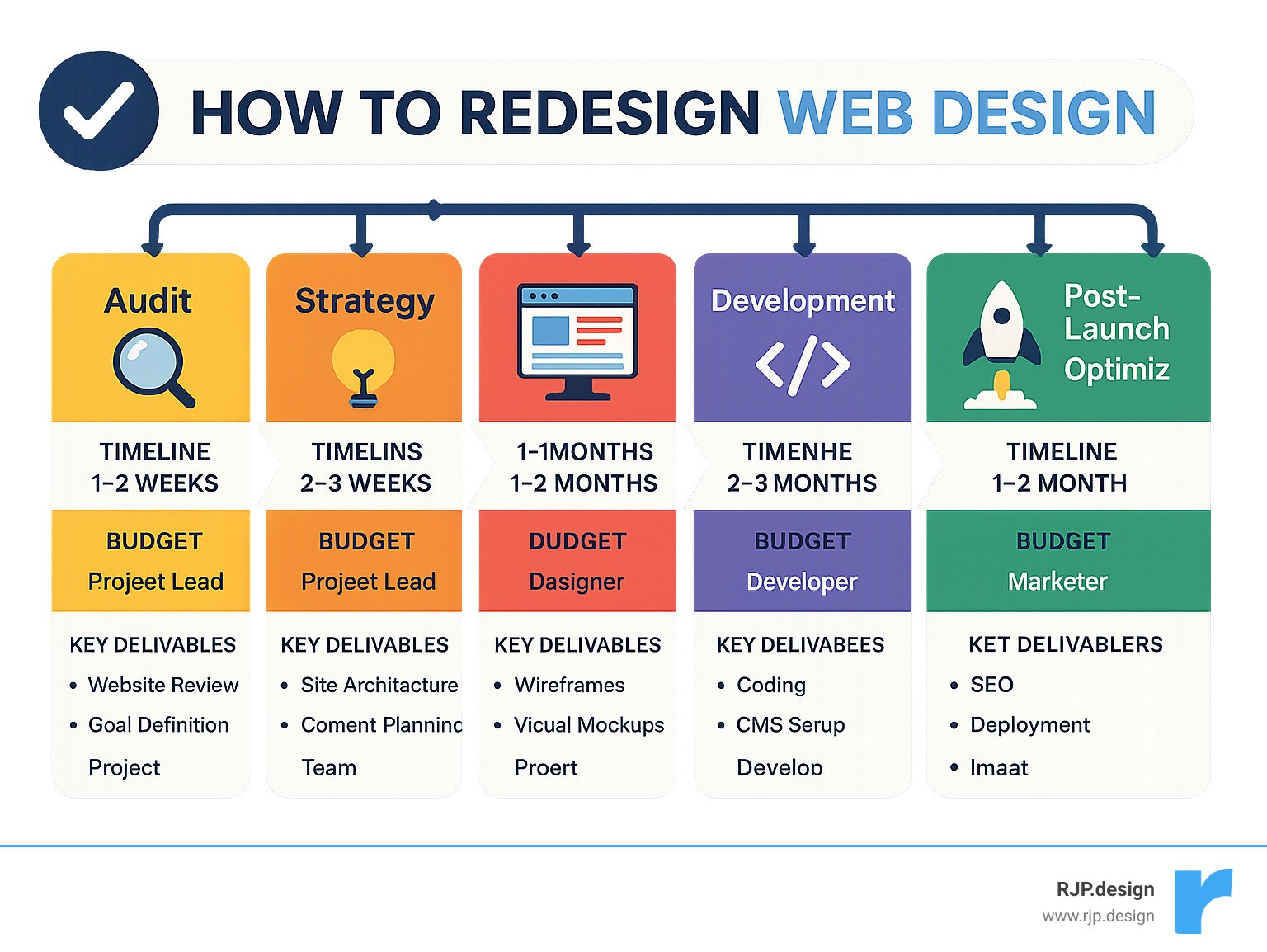
Think of your website redesign like building a house. You wouldn’t start hammering nails before drawing blueprints, right? The same logic applies to redesign web design projects.
Our five-phase approach breaks down the complexity into manageable chunks. Findy and research kicks things off during weeks 1-2, followed by strategy and planning in weeks 3-4. The exciting design and prototyping phase spans weeks 5-10, while development and testing takes up weeks 11-16. Finally, launch and optimization wraps everything up in weeks 17-18.
This timeline works well for medium-complexity business websites. E-commerce sites or complex web applications often need extra time – and that’s perfectly normal.
Each phase builds on the previous one, creating momentum toward your goals. During findy, we dive deep into your current site’s performance and user behavior. The strategy phase transforms those insights into actionable plans and wireframes.
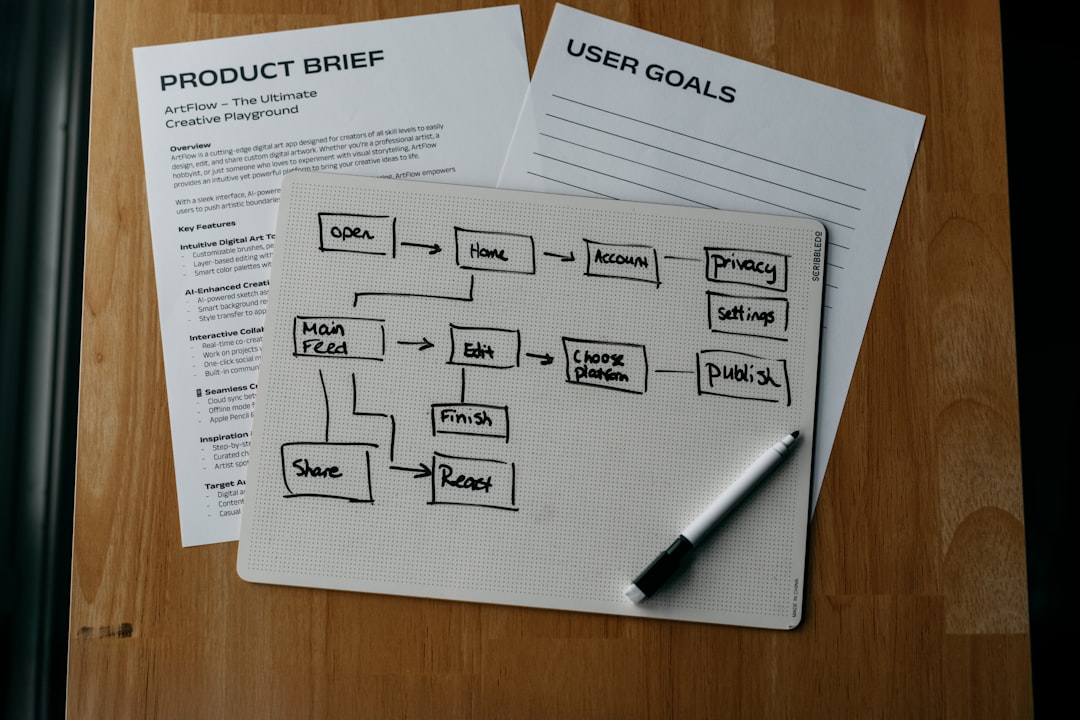
Design is where things get visual and exciting. We create mood boards that capture your brand’s personality, then develop wireframes that map out user journeys. This phase often generates the most stakeholder discussion – and that’s good! Better to hash out navigation decisions now than after development begins.
Development brings everything to life through responsive HTML, CSS, and JavaScript. We carefully migrate your content while setting up your chosen CMS for easy future updates. Quality assurance testing happens throughout, not just at the end.
Thanks to industry experts like Simon Strande and others, we now have proven methodologies that dramatically improve redesign success rates. The key insight? Treat your redesign like a strategic business initiative, not just a visual refresh.
Audit & Strategy for Redesign Web Design
The audit phase is your foundation. Skip this step, and you’re building on quicksand. Here’s how we conduct a thorough redesign web design audit that sets you up for success.
Your analytics tell a story – you just need to know how to read it. Google Analytics reveals which pages attract the most traffic, where visitors get stuck, and what drives conversions. We look for patterns in user behavior that reveal hidden opportunities.
Technical performance auditing uncovers the invisible problems that hurt your rankings. Page load speeds, mobile responsiveness issues, broken links, and SEO technical problems all get documented and prioritized.
Content auditing means cataloging every page and piece of content on your current site. We decide what to keep and optimize, what needs updating, what should be consolidated, and what can be removed entirely.
Competitive gap analysis shows us what’s working in your industry. We analyze your direct competitors to identify design trends, functionality gaps, and opportunities for differentiation.
User experience assessment through real user testing provides insights that analytics can’t capture. Even 5-10 user sessions reveal critical friction points in navigation, content clarity, and conversion processes.
More info about Business Website Solutions
UX, Branding & Aesthetics in Redesign Web Design
The design phase is where your redesign web design project becomes tangible. But great design isn’t just about looking good – it’s about creating experiences that drive results.
Your style guide becomes the north star for all design decisions. It includes your logo usage and brand colors, typography hierarchy and font choices, button styles and interactive elements, plus image style and photography guidelines.
Color psychology influences user behavior more than most people realize. Blue builds trust, making it perfect for financial services. Orange creates urgency and works great for calls-to-action. Green suggests growth and health, while red demands attention but can increase anxiety if overused.
Accessibility isn’t optional – it’s essential for reaching your full audience. We maintain sufficient color contrast with a 4.5:1 ratio minimum, include alt text for all images, ensure keyboard navigation works properly, and use clear, readable fonts at appropriate sizes.
Mobile-first design starts with the smallest screen and scales up. With over 50% of traffic coming from mobile devices, this approach ensures your site works perfectly on smartphones, then scales beautifully to tablets and desktops.
More info about Creative Website Solutions
Development, CMS & Content Migration
The development phase transforms your designs into a functional website. This is where technical expertise becomes crucial for redesign web design success.
Choosing the right CMS affects your daily website management for years to come. WordPress offers flexibility and wide support, making it great for most businesses. Shopify excels for e-commerce with built-in payment processing. Webflow provides a visual development tool that bridges design and code.
Responsive development ensures your site works flawlessly across all devices. This means flexible grid systems that adapt to screen sizes, optimized images that load quickly on mobile, touch-friendly buttons and navigation, plus fast loading times even on slower connections.
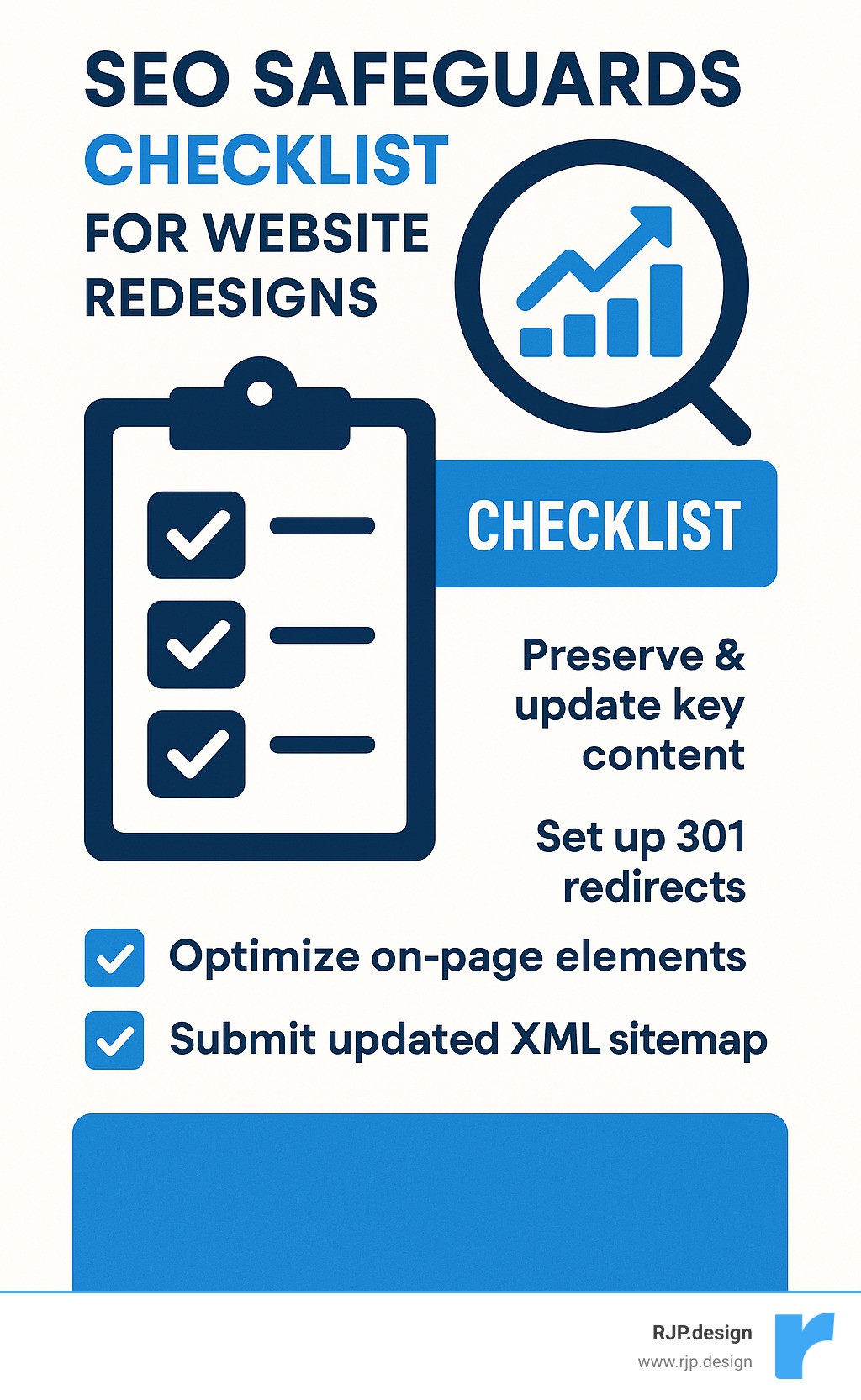
SEO-friendly development protects and improves your search rankings. We set up 301 redirects for changed URLs, implement proper heading structure using H1, H2, and H3 tags, add schema markup for rich snippets, optimize page load speeds, and create comprehensive XML sitemaps.
Content migration requires careful planning to avoid losing traffic or rankings. We audit all existing content first, update outdated information, optimize for target keywords, maintain URL structure where possible, and set up redirects for any changed URLs.
More info about Responsive Web Design
Timeline, Budget & Team Selection
Realistic timeline expectations prevent frustration and rushed decisions. Most redesign web design projects take 4-8 months from start to finish, but complexity drives the actual timeline.
Simple redesigns with 5-10 pages and basic functionality typically finish in 2-3 months. Medium complexity projects featuring 20-50 pages with custom features need 4-6 months. Complex projects with 100+ pages, e-commerce capabilities, or multiple integrations can take 6-12 months or longer.
Budget considerations vary dramatically based on scope and team choice. DIY approaches might cost $500-2,000 in tools and themes. Freelancers typically charge $2,000-15,000, while small agencies range from $10,000-50,000. Large agencies often start at $50,000 and can exceed $200,000 for complex projects.
Cost drivers include custom functionality and integrations, e-commerce capabilities, multiple language support, advanced SEO optimization, and ongoing maintenance and support.
Team selection criteria matter more than price alone. Whether you choose in-house staff, freelancers, or agency support, evaluate their portfolio quality and relevant experience, understanding of your industry, technical expertise in required platforms, communication style and responsiveness, plus post-launch support offerings.
More info about Web Design & Digital Marketing Made Effortless
SEO, Content & Technical Safeguards
Your search rankings represent months or years of hard work. Losing them during a redesign web design project would be heartbreaking – and completely avoidable with proper planning.
I’ve watched businesses lose 70% of their organic traffic overnight because they skipped these crucial safeguards. Don’t let that be your story.
Start with keyword mapping before you change a single page. Document which keywords currently drive traffic to each page, then map those same keywords to your new page structure. This isn’t just about maintaining rankings – it’s about improving them by aligning your content with actual search intent.
Your URL structure deserves special attention during any redesign web design project. Keep URLs as similar as possible to avoid confusion for both users and search engines. When you must change URLs, set up 301 redirects immediately. These redirects tell search engines that your content has permanently moved, preserving the ranking power you’ve built up over time.
Core Web Vitals have become critical ranking factors that Google takes seriously. Your Largest Contentful Paint should load within 2.5 seconds, while First Input Delay needs to stay under 100 milliseconds. Cumulative Layout Shift should remain below 0.1 to prevent that annoying experience where buttons move just as users try to click them.
The technical foundation matters more than most people realize. Proper heading hierarchy helps search engines understand your content structure, while structured data markup can earn you rich snippets in search results. Your meta titles and descriptions need optimization for each page, and a comprehensive XML sitemap helps search engines find all your content efficiently.
ADA compliance isn’t just about doing the right thing – though that’s reason enough. Accessibility improvements often boost SEO performance too. Alt text for images helps both screen readers and search engines understand your visual content.
Tools like SEMrush and Ahrefs become invaluable during redesign projects. They help you monitor keyword rankings, track technical issues, and measure the impact of your changes in real time.
Security hardening protects both your visitors and your search rankings. Search engines penalize sites with security vulnerabilities, so implementing SSL certificates, regular updates, and proper backup systems isn’t optional.
One of our clients maintained 95% of their organic traffic during their redesign by following these safeguards religiously. Another saw their organic traffic increase by 60% within three months of launch because we optimized their technical foundation while preserving their existing SEO equity.
Launch, Testing & Continuous Optimization
The launch phase of your redesign web design project is like opening night at a theater – exciting, nerve-wracking, and absolutely critical to get right. After months of planning and development, this is where everything comes together.
Your staging environment is your best friend during this phase. Think of it as your dress rehearsal space where you can test everything without risking your live website.
Start with comprehensive cross-browser testing across Chrome, Firefox, Safari, and Edge. Your website might look perfect in Chrome but completely broken in Safari – and you won’t know unless you check. The same goes for device testing across mobile phones, tablets, and desktops.
Form functionality testing deserves special attention because broken contact forms equal lost leads. Test every single form on your site, from newsletter signups to contact inquiries.
Speed testing with Google PageSpeed Insights should show significant improvements over your old site. If you’re not seeing better scores, something needs fixing before launch.
Launch day itself requires a methodical approach. Back up your current website completely first – this is your safety net if anything goes wrong. Update DNS settings if needed, upload your new files, then immediately test all critical functionality.
The first 48 hours after launch are make-or-break time. Monitor your website uptime religiously and watch Google Search Console for any crawl errors. Check your analytics for unusual traffic patterns or behavior changes that might indicate problems.
Your launch isn’t the finish line – it’s actually the starting line for continuous improvement. A/B testing becomes your secret weapon for optimization. Test different headlines, button colors, page layouts, and calls-to-action. Small changes can lead to big improvements in conversions.
Set up a performance dashboard to track your key metrics moving forward. Monitor website traffic, conversion rates, page load speeds, search rankings, and user engagement. This data tells the real story of your redesign web design success.
We always recommend a two-week “bug hunting” period after launch, where you actively look for issues and gather user feedback. It’s intense work, but catching problems early saves headaches later.
More info about Website Concierge Maintenance
Frequently Asked Questions about Redesign Web Design
What’s the difference between a website refresh and a full redesign?
Think of a website refresh like redecorating your living room. You’re keeping the same furniture layout but updating the paint, cushions, and artwork. With websites, this means tweaking colors, swapping out fonts, updating images, and making small layout adjustments.
A full redesign web design project is more like gutting and rebuilding your entire house. You’re starting fresh with the foundation and reimagining how everything works together.
This comprehensive approach tackles content restructuring and navigation overhaul, completely new visual design and branding, upgraded functionality and modern features, conversion optimization throughout the user journey, and technical improvements including platform updates.
If visitors can easily find what they need and your site converts well, but it just looks a bit dated, a refresh might do the trick. However, if you’re dealing with frustrated users, poor search rankings, or technology that’s holding you back, it’s time for the full redesign web design treatment.
How much does a typical redesign cost and how long will it take?
Every business owner asks this question, and honestly, it’s like asking “how much does a house cost?” The answer depends on what you’re building and who’s building it.
Timeline expectations vary significantly based on complexity. A simple business site with basic pages typically wraps up in 2-3 months. Medium complexity projects with custom features and multiple page types usually take 4-6 months. Complex sites with extensive functionality can stretch 6-12 months.
Investment ranges reflect the scope and expertise involved. Small business websites often fall between $5,000-25,000. Medium-sized businesses requiring custom features typically invest $25,000-75,000. Large enterprise websites with complex requirements can range $75,000-200,000 or more.
Several factors drive costs higher: custom functionality and third-party integrations, sophisticated design requirements and multiple page templates, extensive content creation and migration needs, and ongoing support and maintenance needs.
The key is viewing your redesign web design project as an investment, not just an expense. A well-executed redesign should generate returns through improved conversions and better user experience that far exceed your initial investment.
How often should I plan to redesign my website?
Most businesses benefit from a major redesign web design project every 3-5 years, but your specific timeline depends on several important factors.
Industry pace plays a huge role in this decision. Fast-moving sectors like technology and fashion often need updates every 2-3 years to stay current with trends and user expectations. Traditional industries like manufacturing or professional services might comfortably go 4-5 years between major redesigns.
Performance warning signs often signal it’s time for a redesign regardless of timeline. Watch for declining website traffic or stagnant growth, dropping conversion rates compared to previous periods, competitors offering significantly better user experiences, major changes in your brand or business model, and technology limitations that prevent you from serving customers effectively.
Regular maintenance makes a difference in extending your website’s useful life. Sites that receive consistent updates, security patches, and minor improvements typically last longer than those left untouched after launch.
Smart planning approach involves taking a proactive rather than reactive stance. Consider minor updates and improvements annually, with major redesigns every 3-4 years. This prevents your site from becoming completely outdated and makes each redesign web design project less overwhelming and more manageable.
Conclusion
Your redesign web design journey doesn’t have to feel like surviving a storm. With the right approach, it can actually be an exciting change that brings real results to your business.
Think of your website redesign as building a bridge between where your business is now and where you want it to be. Every decision you make – from choosing colors to mapping user journeys – should connect back to your goals and your customers’ needs.
The path forward starts with honest assessment. Take a hard look at your current site using the guidelines we’ve shared. Is it truly serving your business, or is it holding you back? Your analytics will tell the story, but don’t forget to listen to your customers too.
Set goals that matter. Instead of vague wishes like “make it look better,” aim for specific outcomes. Maybe you want to increase mobile conversions by 30% or reduce your bounce rate to under 50%. These concrete targets will guide every design decision and help you measure success.
Budget for success, not just survival. Yes, redesigns require investment. But when done right, they pay for themselves through improved conversions, better user experience, and stronger search rankings. Think long-term returns, not just upfront costs.
Your website will never be “perfect” – and that’s actually good news. The most successful businesses treat their sites as living assets that grow and evolve. Plan for ongoing improvements rather than expecting to get everything right on the first try.
The digital world keeps changing. Mobile usage continues climbing, search engines get smarter, and customer expectations keep rising. A strategic redesign web design approach prepares your business to adapt and thrive through these shifts.
At RJP.design, our down-to-earth team understands that behind every website is a real business with real goals and real budget constraints. We work with you to create something that not only looks professional but actually moves the needle for your business.
Your website is often the first impression customers have of your brand. Make sure it’s telling the story you want them to hear.