
SEO
SEO Content Optimization: The Secret Sauce to Top Rankings
May 8, 2025

SEO content optimizer: 7 Powerful Ways to Boost Rankings 2025
The Power of Optimized Content for Rankings
An seo content optimizer is a specialized tool that helps website owners analyze and improve content to rank higher in search engines. These tools use AI, natural language processing, and competitor analysis to guide your content creation process.
What is an SEO Content Optimizer?
– A tool that analyzes your content against top-ranking competitors
– Provides recommendations for keywords, topics, and structure
– Scores your content based on search engine ranking factors
– Suggests improvements to help you outrank competitors
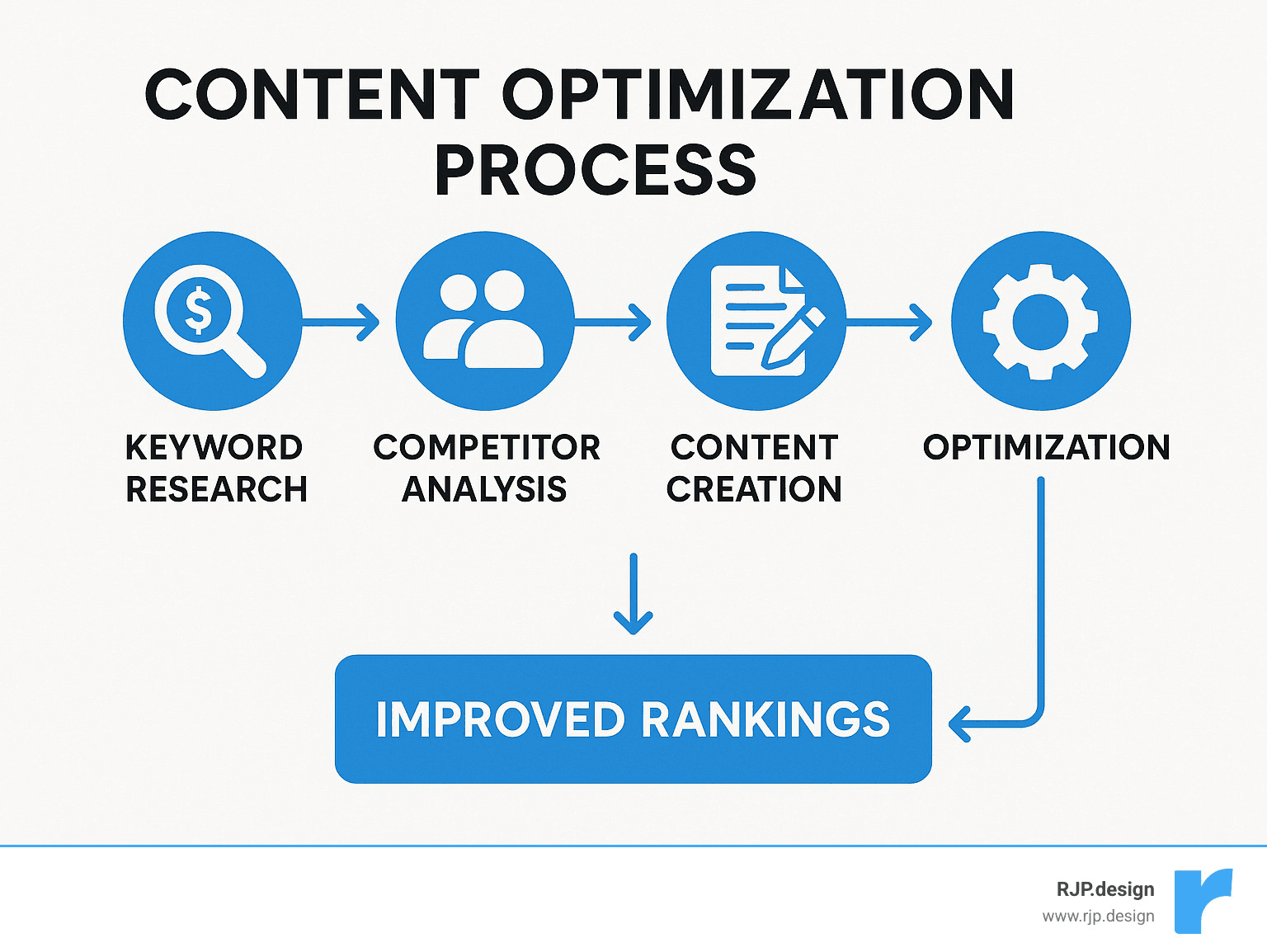
SEO content optimizers work by analyzing the top-ranking pages for your target keywords, identifying patterns and gaps in your content, and providing actionable recommendations to improve your chances of ranking. They take the guesswork out of content creation and help ensure your pages meet the standards search engines look for.
The best part? Results can come quickly. Some users report seeing ranking improvements within 24 hours, with studies showing up to 15% organic traffic growth within the first month of implementing recommendations.
I’m Ross Plumer, an entrepreneur with experience in digital marketing who has helped businesses optimize their content using seo content optimizer tools to drive over $20 million in revenue. My approach combines technical SEO knowledge with proven content optimization strategies that deliver meaningful results.
Seo content optimizer word guide:
– link building off page seo
– technical seo experts
– search engine optimization price
What Is an SEO Content Optimizer & Why It Matters
Think of an seo content optimizer as your friendly neighborhood SEO expert who never sleeps. It’s a smart tool that looks at what’s working for top-ranking pages and helps you create content that can compete with—or even outperform—them. These tools don’t just count keywords; they analyze how well you’re covering a topic, how your content flows, and whether you’re answering the questions your audience is actually asking.
Google has come a long way from its early days. Today’s search algorithms are incredibly sophisticated, almost like they can “read” your content the way a human would. That’s why modern content optimization is so important—it helps you speak Google’s language while still connecting with real people.
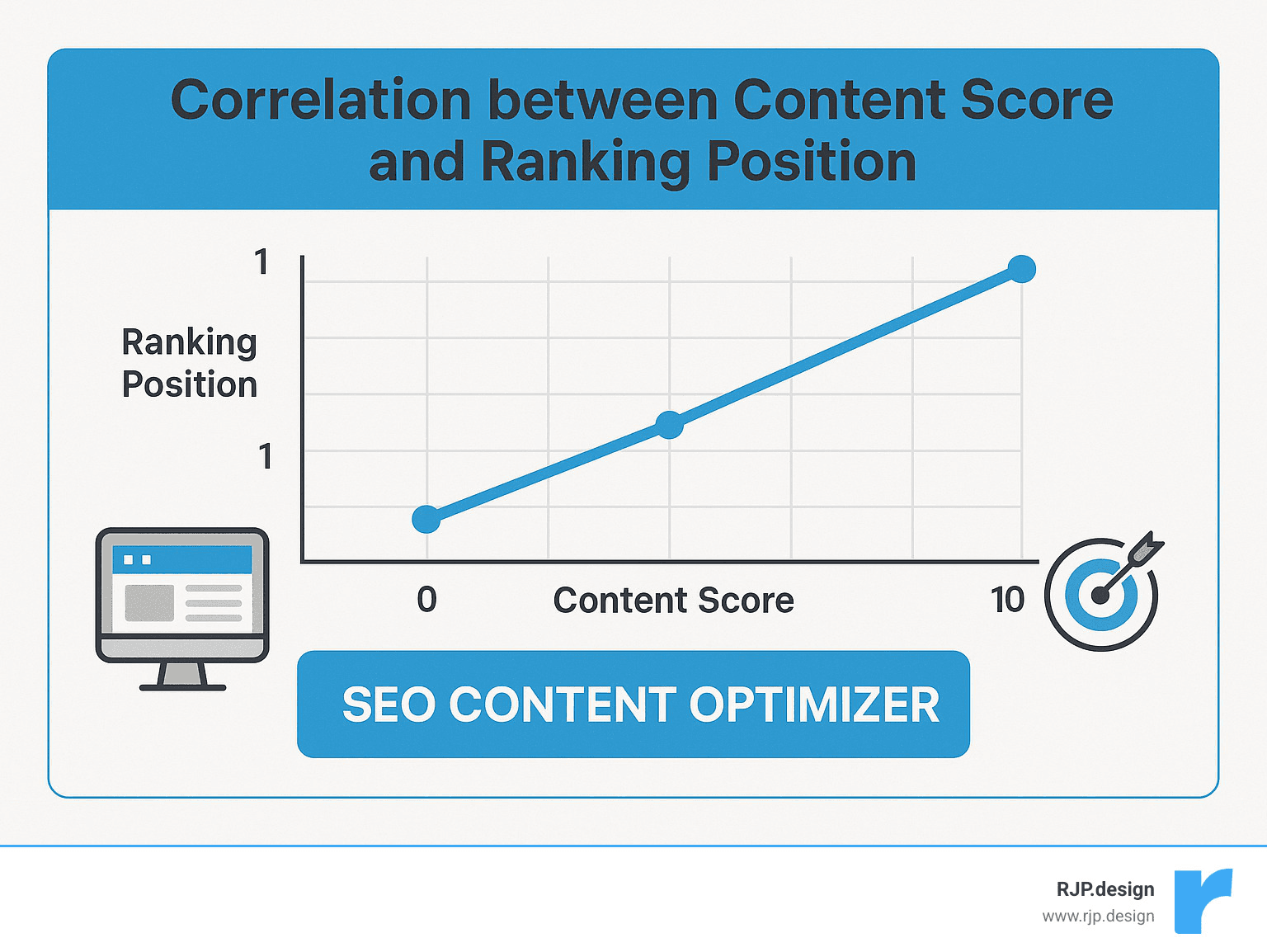
What’s really interesting is what the data tells us. Pages with high Content Performance Scores (the rating these optimizers give your content) consistently rank better in Google searches. This isn’t just marketing talk—it’s been confirmed across studies of more than 30,000 keywords. The correlation is clear: well-optimized content climbs higher.
Here at RJP.design, we’ve seen this play out firsthand. One of our clients saw their organic visibility shoot up by over 200% after implementing our optimization recommendations. And here’s the kicker—we didn’t touch their backlinks or make technical changes. It was all about making their content more relevant and comprehensive.
The Evolution from Keyword Density to Topic Authority
Remember the early 2000s SEO playbook? “Just repeat your keyword 15 times and you’ll rank!” Thank goodness those days are behind us. Today’s search landscape rewards genuine expertise and comprehensive coverage, not keyword stuffing.
Google’s Natural Language Processing (NLP) has completely transformed the game. The search engine now understands content almost like a human would, considering:
How terms relate to each other in context
The relationships between concepts and entities
Whether you’ve thoroughly covered a topic
If your content actually satisfies what the searcher wanted
This evolution means that modern seo content optimizers need to be much smarter too. The good ones help you build genuine authority by identifying related concepts, common questions, and important subtopics that comprehensive content should address.
The results speak for themselves. One case study reported a 15% organic traffic boost within just one month of using a semantic-driven seo content optimizer. This growth came simply from adding NLP-identified terms to already-optimized articles, helping them climb into the top five Google results for relevant searches.
Benefits for Site Owners, Marketers & Writers
Adding an seo content optimizer to your toolkit benefits everyone involved in your content creation process.
If you own a website, you’ll love seeing higher organic visibility without increasing your ad budget. Your visitors will stick around longer because your content better matches what they’re looking for. This leads to better conversion rates and builds your brand as an authority in your field.
For marketers, these tools are game-changers. They provide data-driven insights based on what’s actually working for competitors. Content production speeds up because writers have clear guidelines. You can scale your content operation while maintaining quality, and you’ll actually be able to measure the return on your content investments.
Writers benefit too! Instead of guessing what to include, they get clear guidance on topics to cover. They face fewer revision requests because they can optimize in real-time. Best of all, they can write naturally while still meeting SEO requirements, knowing their work will actually perform well.
One marketing team we worked with saved between 1.5 and 3 hours per article after implementing an advanced seo content optimizer—that’s a 10-20% reduction in production time. And their content actually performed better! This efficiency allowed them to either produce more high-quality content or focus their energy on other important marketing initiatives.
How SEO Content Optimizers Work Behind the Scenes
Ever wondered what’s happening under the hood when you use an seo content optimizer? It’s actually pretty fascinating stuff! These tools aren’t just simple keyword counters—they’re sophisticated systems powered by cutting-edge technology that works tirelessly to help your content shine.
Behind every great seo content optimizer is a powerful combination of artificial intelligence, machine learning algorithms, and natural language processing. These technologies work together like a well-oiled machine, analyzing what makes content rank and providing you with actionable insights. Recent scientific research on semantic relevance has shown just how effective these approaches can be when properly implemented.
Data Collection & SERP Deconstruction
When you type a keyword into your seo content optimizer, it kicks off an impressive chain of events. The tool immediately gets to work examining the search engine results pages (SERPs) for your target term.
First, it carefully analyzes the top-ranking pages—usually the top 10 to 30 results. Think of it as sending out digital scouts to see what’s working in the real world. These scouts don’t just skim the surface; they dig deep into the content, extracting text, headings, and structural elements that contribute to those pages’ success.
Next comes the really clever part. The tool uses sophisticated algorithms to identify patterns across these top performers. What topics do they all cover? Which subtopics appear most frequently? What entities (people, places, concepts) do they mention? The tool even categorizes content based on search intent, helping you understand exactly what users are looking for when they type in your target keyword.
At RJP.design, we’ve fine-tuned this process to ensure our clients don’t just copy competitors but strategically create something better. It’s like having a blueprint for success, but with room to add your own unique value.
Real-Time Scoring & Recommendation Engines
This is where the magic really happens. As you write or edit your content, the seo content optimizer evaluates it against the benchmark model it created, providing feedback in real-time.
Your content receives a numerical score based on how well it matches the ideal model for your keyword. The tool highlights gaps in your coverage, pointing out missing topics or structural elements that could improve your ranking potential. It also assesses readability (crucial for keeping visitors engaged) and checks whether you’ve included important concepts and related entities.
One thing we’re particularly careful about at RJP.design is choosing optimization tools with manipulation-resistant scoring systems. As one developer told us, “Many traditional tools give instant score boosts with minimal effort—essentially rewarding keyword stuffing. This can mislead users into thinking their content has improved when the quality is actually poor.”
We prefer tools that prioritize genuine quality over quick fixes, ensuring our clients see sustainable ranking improvements rather than temporary bumps followed by penalties.
Integrations & Workflow Automation
The best seo content optimizer tools don’t force you to change your workflow—they adapt to it. Modern optimization tools integrate seamlessly with the platforms you already use, whether that’s Google Docs for drafting, WordPress for publishing, or custom CMS systems via API connections.
These integrations transform content optimization from a separate task into a natural part of your writing process. You can optimize as you write, share projects with team members for collaborative improvement, and implement recommendations without constantly switching between platforms.
Some advanced tools even automate parts of the optimization process, suggesting internal linking opportunities or generating SEO-friendly meta descriptions based on your content. For more insights on how this fits into broader optimization strategies, check out our guide on Google Search Optimization.
At RJP.design, we’ve seen how these powerful tools can transform content performance while actually saving time—a rare win-win in the marketing world!
Key Features to Look For in a Modern seo content optimizer
Shopping for an seo content optimizer can feel overwhelming with so many options out there. But not all tools deliver the same results. Let me walk you through what really matters when choosing a tool that’ll actually improve your rankings (and not just drain your wallet).
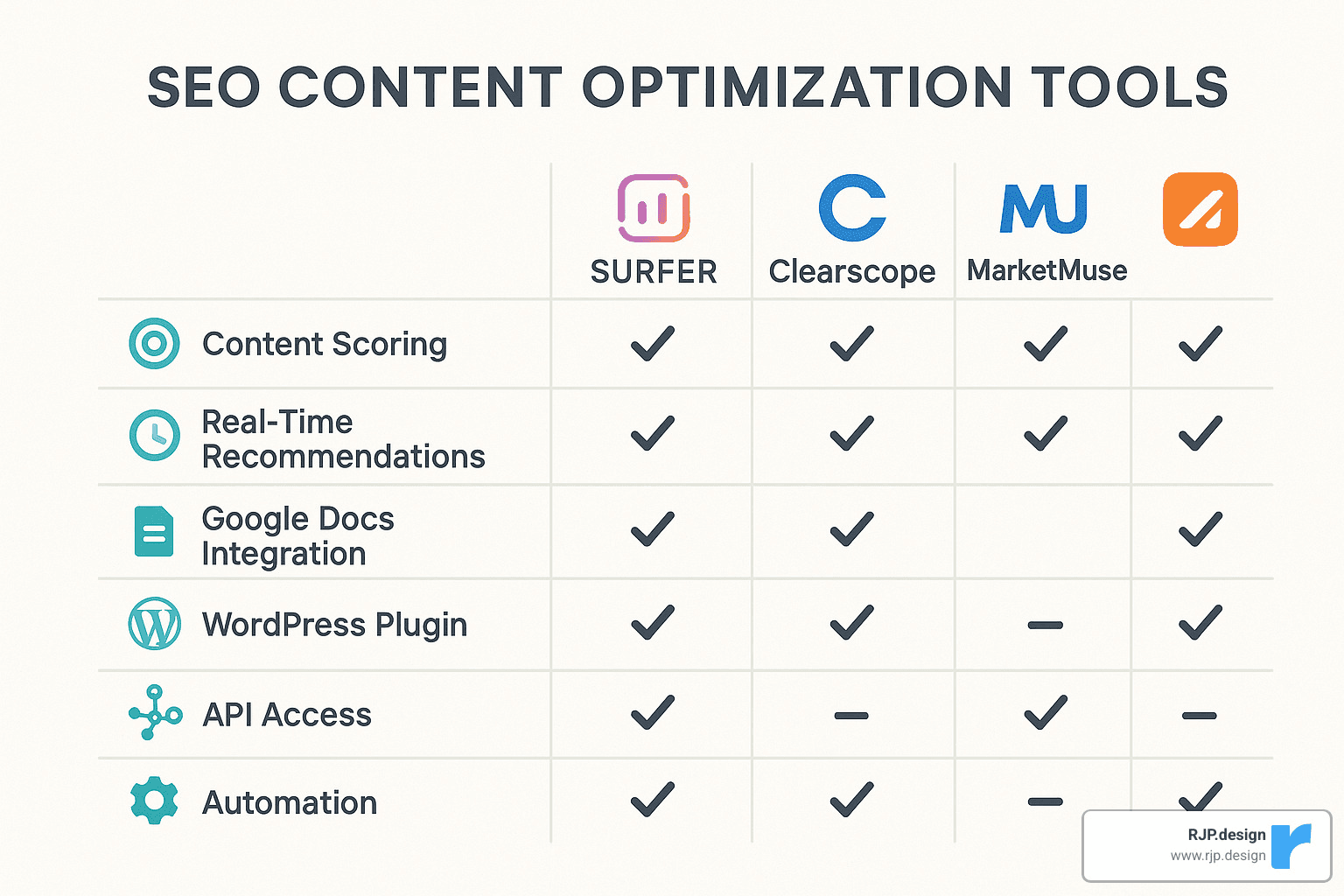
Content Scoring: The Heart of any seo content optimizer
Think of content scoring as your SEO report card. This single number tells you how well your content is likely to perform in search results.
What makes the difference between a good and great scoring system? The best tools show a clear connection between their scores and actual rankings. They’re transparent about what factors into the score, give you specific actions to improve it, and can’t be fooled by keyword stuffing (which doesn’t work anyway!).
The research backs this up too. Originality.ai’s tool predicts rankings with 32.1% accuracy compared to 26% from competitors. At RJP.design, we’ve consistently seen content scoring 80+ reach the first page within 1-2 months. That’s not magic—it’s good optimization at work.
AI & NLP Suggestions That Go Beyond Keyword Stuffing
The days of just sprinkling keywords throughout your content are long gone (thank goodness!). Today’s best seo content optimizer tools use natural language processing to understand context, just like Google does.
These smart tools identify important entities (people, places, concepts) related to your topic and understand how different terms connect to each other. They balance common terms with unique ones that help you stand out, all while keeping your content sounding natural.
I’ve seen this work wonders. One of our clients at RJP.design was stuck on page three despite having “the right keywords.” After implementing NLP-based suggestions, they jumped to page one. Another case study reported reaching the top five positions after adding NLP-recommended terms to already-optimized articles.
Competitor Gap Analysis & Actionable Briefs
Why start from scratch when you can learn from what’s already working? Great seo content optimizer tools analyze top-ranking competitors and turn those insights into actionable briefs.
They’ll automatically build content outlines based on what’s ranking, show you exactly how you stack up against competitors, highlight where your content needs more depth, and even pull frequently asked questions straight from search results.
As one marketer put it, these features are like “content marketing cheat codes.” They transform content creation from guesswork into a science, saving you hours of research and improving your results.
Quality Control: Using a seo content optimizer to Safeguard Authenticity
With AI-generated content everywhere these days, quality control features have become essential. Google has made it clear they value content showing experience, expertise, authority, and trustworthiness (E-E-A-T).
Good optimization tools now include plagiarism detection to ensure originality, readability scoring to match your audience’s level, “humanizer” features that fix AI-generated patterns, and grammar checks to maintain professional standards.
These features aren’t just nice-to-haves—they’re becoming necessary as search engines get better at detecting low-quality or artificial content.
Workflow Essentials: Integrations, Sharing & Version Control
For teams, workflow features can make or break your optimization process. Look for tools that offer multi-user editing, role-based permissions for different team members, version history to track changes, content calendars for planning, and streamlined approval processes.
At RJP.design, we’ve implemented these collaborative workflows for many clients, and the results speak for themselves: faster content production and more consistent optimization across their entire website.
The right seo content optimizer doesn’t just improve your content—it makes the whole process easier, more efficient, and more effective. That’s why we’re so particular about the tools we recommend to our clients.
Step-By-Step Guide: Optimize a Page in 60 Minutes
Let’s roll up our sleeves and get practical! I’m going to walk you through exactly how to optimize your content using an seo content optimizer in just one hour. Whether you’re creating something new or breathing fresh life into an existing page, this approach works beautifully for both.

Step 1 – Research & Benchmark
Time: 10 minutes
First things first – you need to know what you’re aiming for. Spend your initial 10 minutes getting the lay of the land.
Start by identifying your primary keyword and a couple of secondary ones that support your main topic. Then, take a peek at the current top 10 results in Google to understand search intent. Are the ranking pages comprehensive guides? Product comparisons? How-to articles? This tells you what Google (and searchers) expect to see.
While you’re there, jot down some benchmarks. How long are the top-performing articles? What kind of headings do they use? Which subtopics appear consistently?
I always tell our clients at RJP.design to check out the “People also ask” boxes and “Related searches” at the bottom of Google results – they’re goldmines for understanding what real people want to know about your topic!
Step 2 – Draft or Import Existing Content
Time: 10 minutes (for importing) or 30+ minutes (for drafting)
If you’re working with content that already exists, this step is a breeze. Just import your URL into your seo content optimizer, check your initial score, and identify the major gaps you’ll need to fill.
Creating something from scratch? Start with a solid outline based on your research. We’ve found at RJP.design that spending time on a thoughtful outline saves hours of revision later. Set rough word count targets for each section to keep yourself on track, then draft your content with a focus on quality and thoroughness.
Remember – you’re writing for humans first, search engines second. Your outline is just the skeleton; now you need to add the heart and soul.
Step 3 – Run the Optimizer & Implement Suggestions
Time: 25 minutes
This is where the magic happens! Your seo content optimizer will suggest terms and topics to include. Don’t just sprinkle these in randomly – that’s a recipe for awkward, stilted content. Instead, weave them naturally into your narrative where they add genuine value.
Focus on terms with high relevance scores and prioritize the ones completely missing from your content. While you’re at it, take a look at your structure. Do you need additional subheadings to cover important subtopics? Would reorganizing certain sections improve the flow?
Don’t forget readability – break up those text walls! Shorter paragraphs, strategic bullet points, and thoughtful transition words make your content more digestible. Your readers will thank you, and so will your bounce rate.
Step 4 – Quality Assurance & Compliance
Time: 10 minutes
Now it’s time for a critical eye. Does anything sound forced or unnatural? Have you accidentally stuffed too many keywords into one paragraph? Fix these issues first – they’re optimization killers.
Run a quick plagiarism check to ensure your content is original. Then verify accessibility basics like image alt text, proper heading hierarchy, and sufficient color contrast. These small details make a big difference for both users and search engines.
One of our clients at RJP.design followed their seo content optimizer’s recommendation to actually remove 85% of their content (over 22,000 words!). The result? They hit the #1 position within just two days. Sometimes less truly is more when it comes to quality content.
Step 5 – Publish, Request Indexing & Track Results
Time: 5 minutes
The finish line is in sight! Publish your newly optimized content, then head over to Google Search Console to request indexing. This gives Google a nudge to check out your fresh content sooner rather than later.
Set up tracking for the metrics that matter: rankings for your target keywords, organic traffic to the page, user engagement signals like time on page and bounce rate, and any conversion metrics relevant to your goals.
One of our case studies showed a jump from position #5 to #2 within just 24 hours of implementing optimization recommendations. While your mileage may vary, properly optimized content often shows surprisingly quick improvements.
At RJP.design, we’ve seen time and again that this systematic approach to content optimization delivers consistent results without the guesswork. Give it a try – your search rankings will thank you!
Metrics That Matter: From Content Score to Ranking Gains
When diving into seo content optimizer tools, it’s easy to get lost in a sea of numbers and charts. But which metrics actually matter for your business? Let’s break down the key performance indicators that will tell you if your optimization efforts are paying off.
How Fast Can You Expect Results?
One of the questions we hear most often at RJP.design is “when will I see results?” It’s a fair question – you’re investing time and energy into optimization, and you want to know when that investment will pay off.
The truth is, content optimization isn’t like flipping a switch. It’s more like planting a garden – you’ll see different results at different stages:
In the first 24-48 hours, you might notice some ranking fluctuations as Google processes your changes. Don’t panic if positions jump around a bit – this is completely normal! Think of it as Google “trying on” your content to see where it fits best.
Within 1-2 weeks, existing content that you’ve optimized typically starts showing more stable improvements. This is when we often see our clients’ eyes light up during check-in calls.
For brand new content, the 2-4 week mark is usually when it begins establishing its position in search results. Google is getting to know your content for the first time, so it takes a little longer.
The full potential of your optimized content generally reveals itself between 1-3 months as your content matures and gains traction. This is when the real magic happens!
I’m always amazed by change stories like the WebWave case study, where they increased organic visibility by a jaw-dropping 7500% after implementing comprehensive content optimization. While results this dramatic don’t happen every day, they showcase what’s possible with the right approach.
Several factors influence how quickly you’ll see results, including your site’s existing authority, how competitive your target keywords are, how extensive your optimization changes were, where you were ranking before, and even how quickly Google indexes your updates.
At RJP.design, we typically see the needle start to move within the first week, with significant improvements continuing throughout the first month after optimization. We’ve found this pattern holds true across most industries, though some competitive niches may take a bit longer.
Reading the Numbers & Iterating
The secret sauce to long-term success with an seo content optimizer isn’t just in the initial optimization – it’s in how you interpret the results and refine your approach over time.
Smart content optimization is a cycle of improvement. Start by keeping a close eye on your ranking positions for target keywords. But don’t stop there! Look deeper at your click-through rate from search results – are more people clicking on your listing now? Check your organic traffic volume to see if more visitors are finding your page.
User engagement metrics tell an important story too. Are visitors spending more time on your page? Is your bounce rate decreasing? These signals suggest your optimized content is better satisfying user intent – something Google pays close attention to.
Finally, don’t forget the bottom line: conversion rates. At RJP.design, we help clients connect their optimization efforts to actual business outcomes. After all, rankings are great, but leads and sales are what really matter.
The most successful content strategies involve continuous refinement. Analyze which optimization changes had the biggest impact, then double down on those approaches. Identify any sections that still aren’t performing well and give them extra attention in your next update. Keep your content fresh with regular updates, and consider expanding sections that drive particularly high engagement.
As one of our favorite case studies shows: “We optimized 6 articles and increased the organic traffic by 78%.” What made this approach so successful wasn’t just the initial optimization – it was their commitment to analyzing performance data and making ongoing improvements based on what they learned.
Content optimization isn’t a one-time task – it’s an ongoing relationship with your audience and the search engines that serve them. At RJP.design, we’re here to guide you through every step of that journey.
Common Pitfalls & Pro Tips
Even the best seo content optimizer can’t work miracles if you’re making fundamental mistakes. Let’s explore some common pitfalls and how to avoid them, so you can get the most out of your optimization efforts.
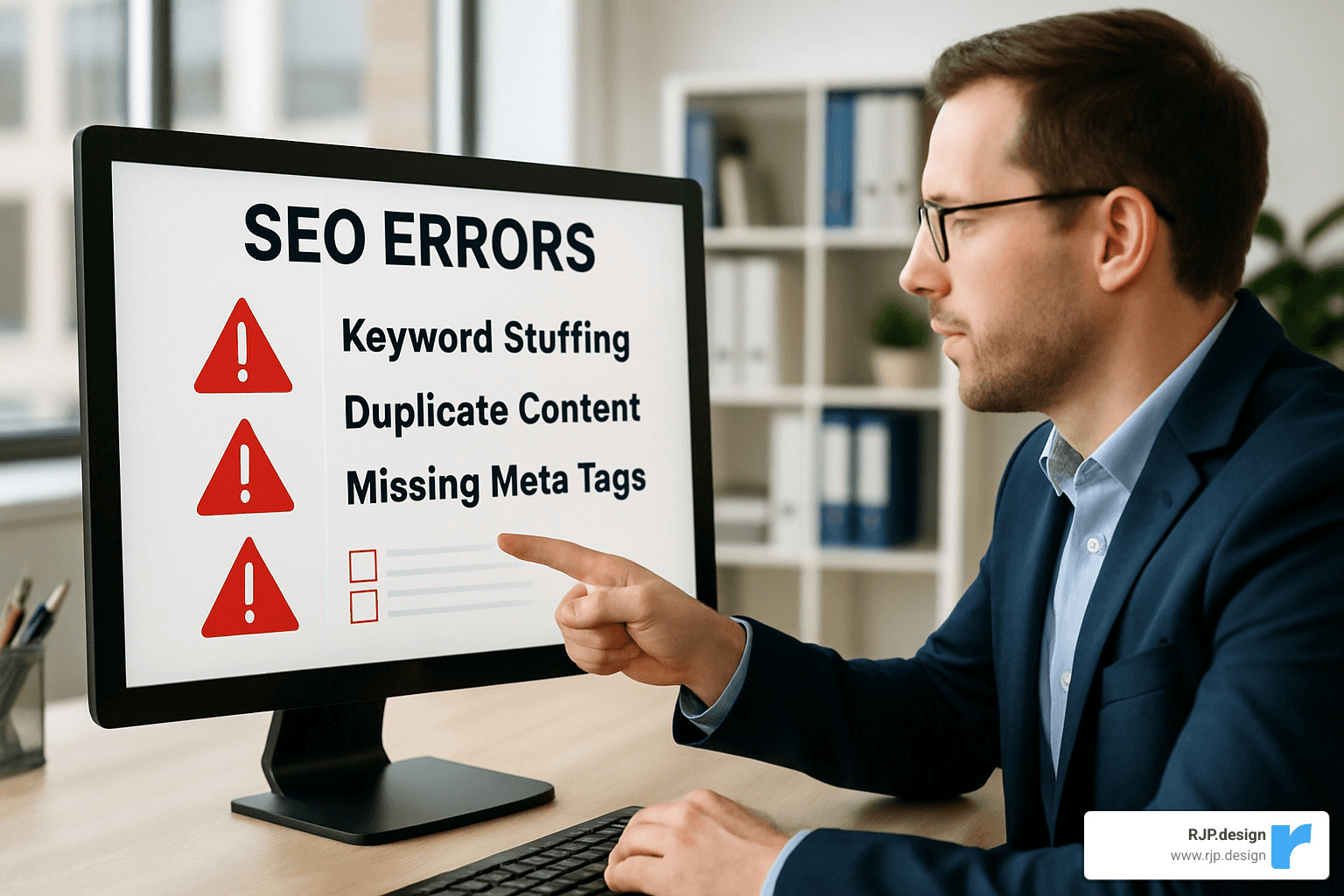
When an Optimizer Won’t Help
I’ve seen many clients at RJP.design get disappointed when their newly optimized content doesn’t immediately shoot to the top of Google. The truth is, content optimization is just one piece of the SEO puzzle. Here’s when you might need to look beyond your seo content optimizer:
Technical SEO issues can sabotage even the most beautifully optimized content. If your website loads like it’s running on dial-up internet or breaks completely on mobile devices, Google will be reluctant to send visitors your way, no matter how good your content is.
Your backlink profile matters tremendously, especially in competitive niches. Think of backlinks as votes of confidence from other websites. Without them, you’re the new kid at school that nobody knows yet—it’s hard to get elected class president when nobody knows your name!
I’ve also seen clients suffering from what I call thin site syndrome—when your website has only a handful of pages. In these cases, optimizing those few pages might help a little, but you’re fighting an uphill battle against established competitors with hundreds of content-rich pages.
Finally, no amount of optimization can fix a misaligned business model. If you’re trying to sell luxury watches on pages targeting “how to tell time” searches, you’re swimming against the current of user intent. The best seo content optimizer in the world can’t bridge that fundamental gap.
Future-Proofing Your Strategy
Google’s algorithms are constantly evolving, so how do you ensure your optimization efforts stand the test of time? Here’s what works for our most successful clients at RJP.design:
First, accept Google’s E-E-A-T principles wholeheartedly. This means demonstrating genuine expertise in your content—not just keyword-stuffing but providing valuable insights that only someone knowledgeable in your field could offer. Include author credentials where it makes sense, cite authoritative sources, and keep your content fresh with regular updates.
Next, robots don’t buy your products—humans do! Balance optimization with readability by ensuring your content flows naturally despite incorporating recommended terms. Your brand voice should shine through all that optimization. If your content reads like it was written by a robot for robots, you’ve gone too far.
Finally, adopt a continuous improvement mindset. Schedule regular content audits, update statistics and examples, and keep an eye on what your competitors are doing. The SEO landscape never stands still, and neither should your content strategy.
As one agency put it: “If we had to choose one SEO tool to live with forever, it would be a content optimizer.” This speaks volumes about how central quality content has become to long-term SEO success.
At RJP.design, we’ve seen time and again that the businesses who thrive aren’t just those who optimize once and forget about it. They’re the ones who make content optimization an ongoing part of their digital strategy, constantly refining and improving based on results and changing search trends.
Frequently Asked Questions about SEO Content Optimizers
What is a content score and why does it influence rankings?
When you’re using an seo content optimizer, you’ll notice something called a content score – think of it as your content’s report card. This score shows how well your writing matches what Google and other search engines want to see for a specific keyword.
Your content score looks at several important factors that search engines care about. It checks if you’ve covered the topic thoroughly, used relevant terms and phrases (not just keywords), structured your content logically, made it easy to read, and used keywords naturally within the right context.
This isn’t just a made-up metric – there’s real evidence behind it. Research examining 30,000 keywords found that pages with higher Content Performance Scores consistently rank better in Google searches. It makes sense when you think about it – the score measures many of the same things Google looks for when deciding which content deserves to rank highly.
Here at RJP.design, we’ve seen this play out with our clients time and again. When we help them improve their content scores, they typically see ranking improvements within 2-4 weeks. Some lucky clients even see movement in just a day or two!
Can a content optimizer replace human writers?
Despite advances in AI technology, an seo content optimizer simply cannot replace human writers – and we wouldn’t want it to! While some tools do include AI writing features, they work best as helpful assistants rather than replacements.
Human writers bring so much to the table that tools just can’t match. We bring original insights based on real experience and expertise. We understand how to maintain your brand’s unique voice and personality. We come up with creative angles and perspectives that AI simply can’t imagine. We know how to verify facts and make ethical judgments about content. And perhaps most importantly, we understand the emotional connection with readers that makes content truly resonate.
The sweet spot is combining human creativity with AI-powered optimization. Let writers create high-quality, original content first, then use optimization tools to fine-tune it for search engines.
As one content marketer perfectly put it: “The AI writer feature is a masterful tool, but it’s just that—a tool. It doesn’t replace the human touch that makes content truly connect with readers.”
How many days until I see ranking improvements?
The million-dollar question! While I’d love to give you an exact timeline, the truth is that seeing results after using an seo content optimizer varies based on several factors.
For existing pages that you’re optimizing, you’ll often see movement within 1-7 days. We’ve had clients report jumping from position #5 to #2 within just 24 hours! Brand new pages typically take a bit longer – usually 2-4 weeks to establish initial rankings, with continued improvement over the next 2-3 months as they gain traction.
The competitive landscape matters too. Highly competitive terms might take 1-3 months to show significant movement, while less competitive terms can improve within days to weeks.
Other factors that influence your timeline include:
– Your website’s overall authority and age
– How frequently Google crawls and indexes your site
– How extensive your optimization changes were
– Your site’s technical performance
At RJP.design, we’re all about setting realistic expectations. We typically tell clients to look for noticeable improvements within the first month, with continued gains over the following 2-3 months as search engines fully process and respond to the changes. Patience combined with quality optimization almost always pays off!
Conclusion
In today’s competitive search landscape, an seo content optimizer has become an essential tool for anyone serious about achieving top rankings. These powerful tools have transformed content creation from an art of guesswork into a science of predictable results by using AI, natural language processing, and data-driven insights.
I’ve seen how the right optimization approach can transform a website’s performance. The most successful strategies don’t just focus on keywords—they create a comprehensive experience that serves both search engines and readers.
What really works is a balanced approach that combines several key elements. You need comprehensive topic coverage that addresses all the important aspects users are searching for. You need natural integration of semantically relevant terms that flow conversationally rather than feeling forced. Your content structure should strategically align with user intent, making information easy to find. And perhaps most importantly, you need a commitment to continuous improvement based on performance data.
At RJP.design, we take pride in helping businesses of all sizes implement these optimization strategies in a way that feels authentic. Our down-to-earth approach focuses on creating content that real people actually want to read—because that’s what ultimately leads to sustainable ranking improvements and business growth.
Gone are the days when keyword stuffing could trick search engines into ranking your content. Today’s SEO success comes from genuinely valuable content that thoroughly addresses user needs. Whether you’re refreshing existing pages that have lost their rankings or creating brand new content to capture untapped search traffic, an seo content optimizer provides the insights and guidance needed to compete effectively.
The beauty of modern optimization tools is how they empower writers rather than replacing them. They provide the data-backed framework while allowing your unique brand voice and expertise to shine through. This partnership between human creativity and technological insight creates content that resonates with both algorithms and audiences.
Ready to transform your content strategy with expert optimization? Learn more about our Digital Marketing services and find how our team at RJP.design can help you achieve your ranking goals with our friendly, no-nonsense approach to SEO content excellence.