
Web
Designing Success: Best Web Design Services for Small Businesses
Apr 29, 2025

Why Your Small Business Needs a Professional Website
Let’s face it – in today’s digital world, your website is often the first handshake between your business and potential customers. Small business web design services aren’t just a nice-to-have anymore; they’re essential for staying competitive and capturing those crucial first impressions.
When customers are looking for local services or products, 98% of them start with an online search. That professional-looking website isn’t just about appearances – it’s about creating trust from the moment someone lands on your homepage.
I’ve seen this change firsthand. One pest control company we worked with saw their leads increase by a staggering 1,700% after investing in a professional website redesign. The return on investment wasn’t just good – it was business-changing.
For most small businesses, a professional website typically costs between $2,000-$10,000, with projects taking anywhere from 4-12 weeks from initial concept to launch day. This investment covers essential elements like responsive design that works beautifully on all devices, SEO optimization to help customers find you, and professional content that speaks to your audience.
Mobile-friendliness isn’t optional anymore – with over 60% of web traffic coming from phones and tablets. Your customers are browsing on the go, and if your site isn’t responding well on mobile, you’re likely losing business without even realizing it.
Small businesses face unique online challenges that larger corporations don’t. Without a dedicated marketing department, you need a website that’s:
User-friendly and simple to update without calling a tech expert every time
Built to attract local customers through strategic local SEO
Designed with conversion in mind to turn visitors into actual leads and sales
Affordable to maintain long-term (most businesses budget $99-$299 monthly for maintenance)
Speed matters too – both for user experience and search rankings. Those complicated checkout processes? They’re costing you sales, with 21% of shoppers abandoning their carts when the process feels too complex.
I’m Ross Plumer, and I’ve spent years helping small businesses generate millions in revenue through effective small business web design services that balance beautiful design with real-world functionality. Your website should work as hard as you do, bringing in customers while you focus on running your business.
Looking to learn more? Check out our resources on professional web design, web design company site, and affordable mobile website redesign.
At RJP.design, we believe your website should do more than just exist – it should thrive, connect, and convert. Because in today’s digital marketplace, your online presence isn’t just part of your business – it’s the front door.
What Makes Great Small Business Web Design Services
When it comes to small business web design services, there’s a world of difference between a website that simply exists and one that actively works to grow your business. The best services blend artistry with strategy to create an online presence that both looks good and delivers results.
Credibility and Trust Signals
Your website often forms the first impression potential customers have of your business. It’s your digital storefront, and just like a physical location, appearance matters. According to research, 76% of consumers regularly read online reviews for local businesses before deciding where to spend their money.
Great web design builds trust through professional aesthetics that match your brand quality. We’ve found that prominently displaying client testimonials, industry certifications, and clear contact information significantly increases visitor confidence. Secure browsing with visible HTTPS indicators also reassures visitors their information is safe with you.
One of our clients shared after their redesign: “My practice has grown quickly and improved our accessibility to those we serve or hope to serve within our community. The new website is directly responsible for our growth and the fact that we have more than doubled our revenue in six months.” That’s the power of credibility-focused design!
Lead Generation Architecture
Let’s be honest – most small business websites have one primary job: generating qualified leads. The best small business web design services build conversion pathways directly into your site’s DNA.
This means strategically placing contact forms where they’ll get noticed, implementing click-to-call functionality for mobile users, and creating clear calls-to-action on every page. For many of our clients, adding thoughtful lead magnets – like downloadable resources in exchange for contact information – has transformed their websites from digital brochures into 24/7 sales representatives.
Mobile-First Design Approach
With over 60% of web traffic now coming from smartphones and tablets, designing for mobile isn’t just nice to have – it’s essential. A truly mobile-friendly site does more than just “work” on phones; it creates an experience specifically optimized for smaller screens.
This means touch-friendly navigation elements, streamlined mobile checkout processes, and content that adapts beautifully across all device sizes. We test every site we build across multiple devices to ensure your customers have a seamless experience whether they’re on a desktop, phone, or tablet.
Page Speed Optimization
Nothing drives visitors away faster than a slow-loading website. Studies show that 40% of visitors will abandon a site that takes more than 3 seconds to load – that’s potential business walking out your digital door!
Quality small business web design services prioritize speed through image compression, efficient code structure, and browser caching. We regularly test and optimize our sites to ensure they load lightning-fast, keeping visitors engaged and improving search engine rankings.
SEO Foundation
Even the most beautiful website is worthless if no one can find it. Professional web design bakes search engine optimization into the foundation of every site through proper heading structure, clean URLs, and schema markup for improved search visibility.
We also ensure mobile optimization (a key Google ranking factor) and create XML sitemaps for better indexing. These technical elements might not be visible to your visitors, but they make all the difference in helping them find you in the first place.
Conversion-Focused User Experience
User experience design focuses on creating intuitive, frictionless interactions that naturally guide visitors toward taking action. This means intuitive navigation that makes sense to real people, clear information hierarchy so visitors can find what they need, and streamlined forms that don’t frustrate potential leads.
As the Local Consumer Review Survey from BrightLocal confirms, today’s consumers rely heavily on digital information when making purchasing decisions. A website that’s difficult to use or confusing to steer will send those potential customers straight to your competitors.
At RJP.design, we believe great design isn’t just about looking good – it’s about creating websites that work as hard as you do to grow your business.
Choosing the Right Small Business Web Design Services
Finding the perfect partner for your small business web design services can feel like searching for a needle in a digital haystack. With so many options out there, how do you know which one will truly understand your business vision?
Let’s break it down into something manageable so you can make a confident choice that works for your unique needs.
Understanding Service Models
Think of web design services like restaurants – they come in different flavors to satisfy different appetites. Some businesses need a quick, simple solution while others require a full gourmet experience.
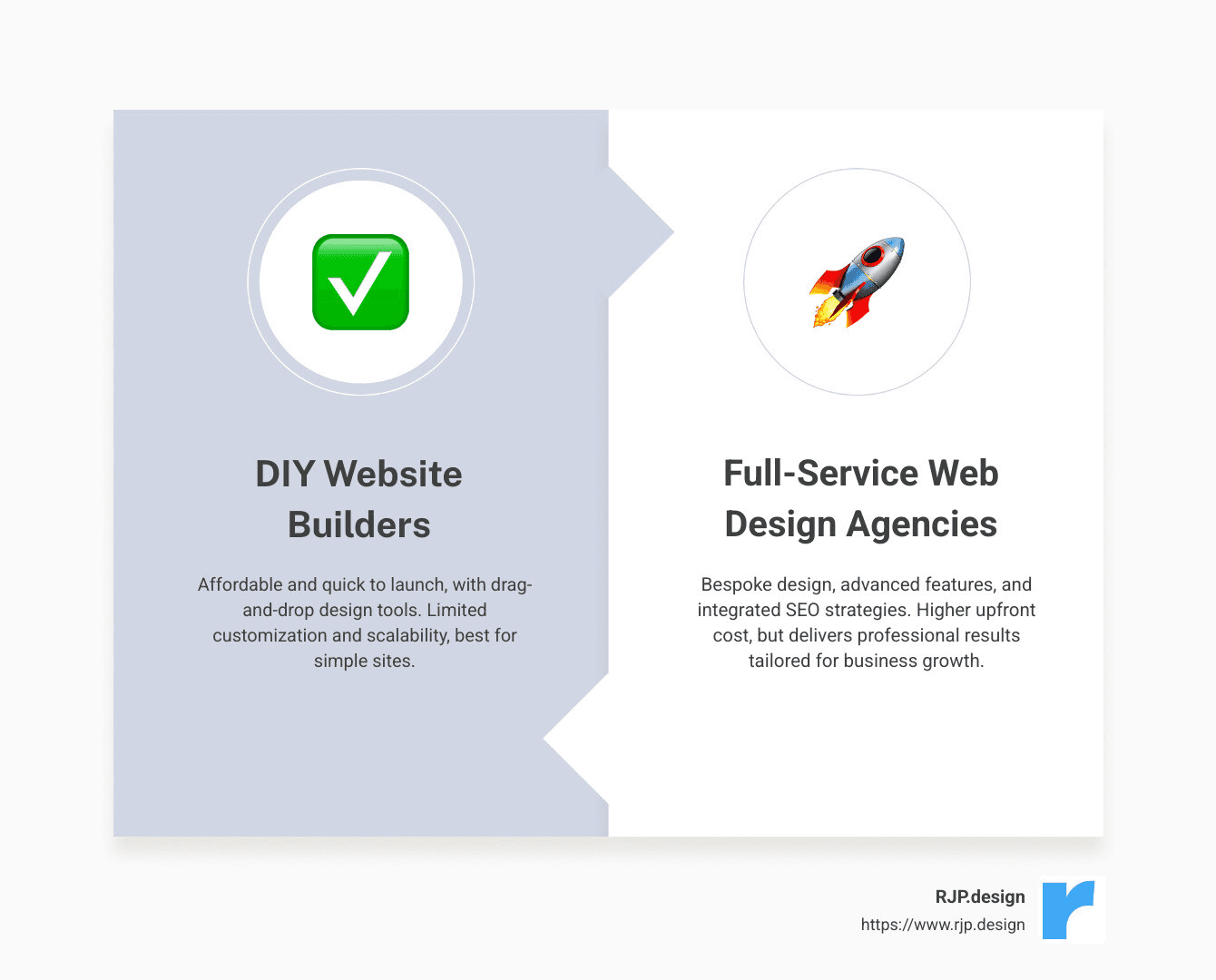
Full-service agencies offer the “everything on the menu” approach, handling your strategy, design, development, content, and ongoing maintenance. If you prefer personalized attention with high-quality custom design, boutique design studios might be your perfect match. They typically pour more creative energy into fewer clients.
Freelancers bring flexibility and often friendlier pricing, though their availability might be limited. If you’re feeling hands-on, DIY platforms with professional support let you take the wheel while having an expert in the passenger seat for guidance. And for specialized industries like healthcare or restaurants, consider designers who speak your industry’s language – they’ve already solved the unique challenges your business faces.
Budget Considerations
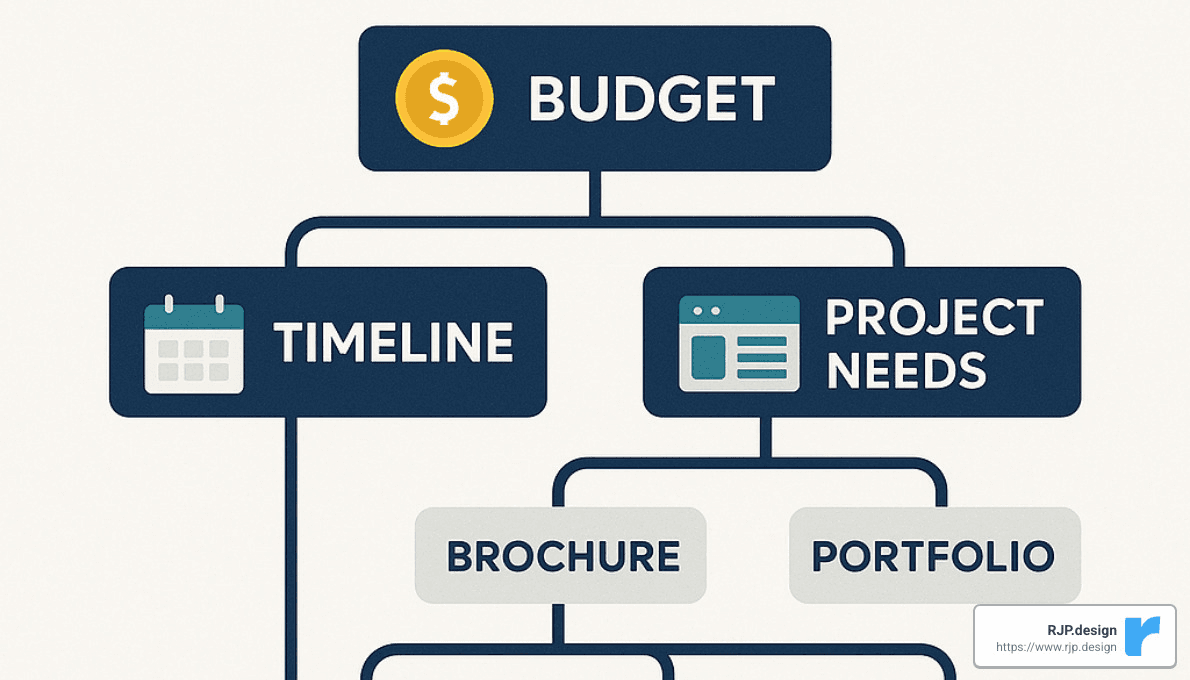
Let’s talk money – because budgets matter to small businesses. Website costs vary widely based on what you need:
Basic informational sites typically range from $2,000-$5,000, while small business sites with custom features usually cost between $5,000-$10,000. If you need e-commerce capabilities or complex functionality, expect to invest $10,000-$25,000 or more. And don’t forget about ongoing maintenance, which typically runs $99-$299 monthly.
A website isn’t just an expense – it’s an investment that generates returns. As one of our happy clients shared: “I highly recommend this company. They did an excellent job redesigning my website. I’m already seeing an increase in customer traffic and sales. And they custom solutions to my needs.”
Project Complexity and Timeline
Rome wasn’t built in a day, and neither is a great website. Being realistic about timelines helps set proper expectations:
Simple informational websites generally take 4-6 weeks from start to finish. Custom small business websites need about 8-12 weeks to get right. For e-commerce sites or those with complex functionality, plan for 12-16+ weeks of development time.
The industry typically requires anywhere from 40 to 300 hours to design a website, depending on complexity. At RJP.design, we’ve learned that transparency about timelines from day one creates happier clients and more successful projects.
Transparency in Pricing and Process
Good relationships are built on trust. Look for providers who lay all their cards on the table with clear, upfront pricing and a well-defined process. This includes detailed proposals with all costs outlined, clearly defined project milestones, regular check-ins, and absolutely no surprise charges that make you wince when the invoice arrives.
For deeper insights into professional design approaches, our professional web design page offers additional guidance.
Key Questions to Ask Before Hiring Small Business Web Design Services
Before signing on the dotted line, arm yourself with these essential questions to ensure you’re making the right choice:
What is your typical design process? The answer should reveal a structured approach that includes your input at key stages.
How do you handle website maintenance after launch? Your site needs ongoing care to stay healthy and secure.
Will I have access to update my website content? You shouldn’t need to call your designer every time you want to change a paragraph or add a photo.
Who owns the website and its content? This should be you – it’s your business, after all.
What reporting will I receive on website performance? Good partners track how your site is performing and share those insights with you.
How do you approach mobile responsiveness? Your site needs to work beautifully on phones, tablets, and desktops.
What security measures do you implement? At minimum, they should mention SSL certificates, regular backups, and security monitoring.
Can you provide references from similar clients? Talking to their past clients can tell you volumes about what to expect.
Template vs Custom Web Design
Feature | Template-Based Design | Custom Web Design |
|---|---|---|
Cost | $500-$5,000 | $5,000-$25,000+ |
Timeline | 2-6 weeks | 8-16+ weeks |
Flexibility | Limited by template structure | Unlimited design possibilities |
Uniqueness | Many similar sites may exist | One-of-a-kind design |
Scalability | May require rebuilding for major changes | Built with future growth in mind |
Brand Alignment | Adapted to fit template | Built around your brand |
Best For | Startups, tight budgets, simple needs | Established businesses, specific requirements |
As one of our clients beautifully put it after choosing custom design: “Rather than pushing us to make changes on our website that would make it more similar to so many other websites, they offered suggestions for simple tweaks we could make to get the results we want, while still allowing our personalities to shine through.”
The right small business web design services partner doesn’t just build you a website – they build you a digital home that welcomes visitors and turns them into customers. Take your time finding the perfect match for your business needs.
5 Must-Have Features in 2025 Web Design Packages
The web design landscape is constantly evolving, and as we look toward 2025, certain features have shifted from optional to absolutely essential for small business success. When you’re shopping for small business web design services, make sure these five critical elements are included in your package:
1. Responsive Design with Mobile Optimization
Remember when mobile-friendly websites were a bonus? Those days are long gone. Google now uses mobile-first indexing, which means they primarily look at your site’s mobile version when deciding how to rank you in search results.
Your website needs to automatically adapt to any screen size, from the largest desktop monitor to the smallest smartphone. Navigation should be touch-friendly on mobile devices, with text that’s readable without pinching or zooming.
“We’ve seen clients’ conversion rates jump by 30% after implementing truly responsive designs,” shares one of our designers at RJP.design. “With more than 20% of visitors now exclusively using mobile phones to browse, this isn’t something you can compromise on.”
Your site should easily pass Google’s Mobile-Friendly Test and offer consistent functionality no matter what device your customers are using.
2. Core Web Vitals Optimization
Google’s Core Web Vitals have become key ranking factors that measure real-world user experience. Think of them as your website’s vital signs:
Largest Contentful Paint (LCP) measures how quickly the main content of your page loads. First Input Delay (FID) tracks how responsive your site is when users try to interact with it. And Cumulative Layout Shift (CLS) measures whether elements on your page jump around as it loads (we’ve all experienced that frustration!).
Professional small business web design services should optimize these metrics as standard practice. At RJP.design, we build sites with these metrics in mind from day one, rather than trying to fix them after launch.
3. Accessibility Compliance
Creating an accessible website isn’t just about avoiding potential legal issues—it’s about serving all your potential customers with dignity and respect.
“The accessibility features they built into our site have opened up our services to an entirely new customer segment we weren’t reaching before,” one client recently told us.
Your website should include ADA compliance features like screen reader compatibility, keyboard navigation options, sufficient color contrast, and proper alt text for images. These elements make your site usable for people with various disabilities and, honestly, often make the experience better for everyone.
4. E-commerce Readiness
Even if you’re not selling products online today, your website should be built with e-commerce capabilities in mind. The number of online shoppers in the US is expected to reach 218.8 million in 2023, and that trend isn’t slowing down.
Your site structure should allow for future integration of secure payment processing, product catalog functionality, shopping cart systems, customer account capabilities, and order management. Building with these considerations from the start will save you from costly rebuilds later when your business expands.
5. Integrated Analytics and Security
You can’t improve what you don’t measure, and you can’t protect what you don’t secure. That’s why proper analytics and security features are non-negotiable in modern web design.
Your site should include Google Analytics 4 integration, conversion tracking setup, and ideally heat mapping capabilities to show exactly how visitors interact with your pages. On the security side, SSL certification (HTTPS), regular security scanning, and automated backup systems protect both your business and your customers’ data.
At RJP.design, we believe these five elements form the foundation of a future-proof website. We include them as standard in all our web design packages because we’re building not just for today, but for your business’s continued growth over the years ahead.
Product Roundup: 7 Service Models that Work for Small Businesses
When you’re looking for small business web design services, the number of options can feel overwhelming. Each service model has its own strengths, and finding the right fit depends on your specific needs, budget, and growth goals. I’ve worked with businesses across all these models, and here’s my honest breakdown of what works best for different situations:
1. Custom Boutique Agencies
Best for: Established small businesses that need to stand out with distinctive branding
Boutique agencies like RJP.design focus on creating websites custom specifically to your unique business personality. We’re small enough to give you personal attention but experienced enough to deliver professional results.
What makes boutique agencies special is the depth of strategy and customization. Rather than forcing your business into a template, we build everything around your specific goals and customer journey.
One of our clients recently shared, “With their services we have received more compliments on our website than ever before! Their customer service is best and their professionalism is much needed in their industry.”
Most boutique projects range from $5,000-$25,000 for the initial design, with ongoing maintenance typically between $100-$300 monthly.
2. Full-Service Digital Marketing Firms
Best for: Growth-focused businesses needing a comprehensive marketing approach
If you’re looking beyond just a website to a complete digital marketing strategy, these larger agencies might be your answer. They handle everything under one roof – your website, SEO, content creation, paid advertising, and social media.
The real advantage here is integration. When your website team also manages your Google Ads and content strategy, everything works together more seamlessly. One of our clients who switched to this model saw a 540% increase in organic leads after implementing a coordinated web design and SEO approach.
These comprehensive services typically start around $8,000-$50,000 for initial design work, with ongoing marketing packages ranging from $1,000-$5,000 monthly.
3. Subscription-Based Design Teams
Best for: Businesses with constantly evolving design needs
This newer model has gained popularity for its predictable pricing and unlimited design requests. Instead of paying per project, you subscribe to a service that handles all your design needs for a flat monthly fee.
The beauty of this approach is budget certainty – no surprise bills when you need changes. Many businesses appreciate knowing exactly what they’ll spend each month while still having access to professional design support whenever needed.
As one business owner told us, “We are so grateful for the support and excellent customer service. Over 95% of our content update requests are handled with a single email or call within 2 business hours.”
Subscription design services typically run between $750-$2,500 monthly depending on complexity and response time guarantees.
4. Freelance Specialists
Best for: Budget-conscious startups with straightforward website needs
Working directly with independent designers and developers often means lower costs and more direct communication. You’re typically working with the actual person building your site, not going through account managers.
Freelancers can be excellent for smaller projects where budget is a significant concern. Many specialize in specific areas like e-commerce or specific platforms, bringing focused expertise to your project.
Just remember that availability and support can vary significantly between freelancers. Always check reviews, ask for references, and clarify support expectations before starting.
Typical freelance rates range from $30-$80 hourly or $1,500-$10,000 per complete project.
5. DIY Builders with Pro Help
Best for: Micro-businesses with very limited budgets who still need professional polish
These hybrid services give you the affordability of DIY website builders with the guidance of professionals who can help customize and optimize your site. You start with templates but get expert assistance to make them truly yours.
One small business owner shared, “I started with a template but got stuck trying to make it work for my business. Having professional help to customize it made all the difference.”
This approach typically costs between $500-$3,000 for initial setup, plus $20-$100 monthly for the platform fees.
6. Industry-Specific Platforms
Best for: Businesses in specialized industries with unique compliance or functionality needs
If you’re in healthcare, real estate, restaurants, or another specialized field, industry-specific providers understand your unique requirements from day one. They build in the exact features your industry demands – whether that’s HIPAA compliance for medical practices or reservation systems for restaurants.
“They understood the specific needs of our medical practice from day one. The patient portal integration saved us countless hours,” one healthcare client noted after switching to an industry-specific solution.
These specialized services generally run $3,000-$15,000 for initial design, with monthly fees of $100-$500 for specialized features and compliance.
7. Managed Hosting & Maintenance Partners
Best for: Businesses with existing websites who need reliable technical support
These services focus less on design and more on keeping your website secure, updated and performing well. They handle all the technical aspects that most business owners don’t have time for – software updates, security monitoring, backups, and performance optimization.
As one relieved business owner told us, “I no longer worry about my website going down or getting hacked. They handle all the technical aspects so I can focus on my business.”
Most maintenance packages cost between $99-$299 monthly and often include guaranteed response times and 99.9% uptime promises.
At RJP.design, we’ve created our service model by combining the personalized approach of a boutique agency with the reliability of a maintenance partner. We believe small businesses deserve both custom design that reflects their unique personality and ongoing support they can count on month after month.
Cost & Timeline: What to Expect
Understanding what you’ll invest in small business web design services helps you plan your budget and set realistic expectations for your project timeline.
Typical Cost Breakdown
When it comes to website costs, the range varies widely based on what you need:
Most small businesses can expect to invest between $2,000-$10,000 for a professional website that effectively represents their brand. More complex projects with e-commerce functionality typically range from $10,000-$25,000, while sophisticated web applications with custom features can reach $25,000-$50,000+.
If you’re working with an agency or freelancer on an hourly basis, rates typically fall between $30-$80 per hour depending on experience level. Junior designers might charge on the lower end, while seasoned professionals with specialized skills command premium rates.
A website isn’t a one-time expense. Ongoing costs are part of maintaining your digital storefront:
Standard maintenance packages usually run $99-$199 monthly
Premium support with regular updates might cost $200-$299 monthly
Full-service digital marketing packages start around $1,000 monthly
As one of our clients recently shared: “I initially balked at the maintenance cost, but after calculating the time I was spending trying to update the site myself, it’s actually saving me money!”
Project Timeline Expectations
Most small business websites take about 12 weeks from start to finish, though this varies based on complexity. A simple informational site might be completed in 4-6 weeks, while feature-rich e-commerce platforms can take 16 weeks or longer.
Your project will typically move through these phases:
The findy and planning phase (1-2 weeks) lays the groundwork with consultations, goal-setting, and mapping out your site structure. This is where we get to know your business and what success looks like for you.
During the design phase (2-4 weeks), we create wireframes and visual concepts, refine them based on your feedback, and finalize the design direction. This is where your website starts coming to life visually.
The development phase (2-8 weeks) is where we build the actual website, implementing functionality and setting up your content management system. If you’re adding e-commerce features, this phase may take longer.
In the content and testing phase (1-3 weeks), we populate your site with content, ensure everything works properly across different browsers and devices, and make final adjustments.
Finally, the launch and post-launch phase (about 1 week) includes setting up your domain and hosting, making your site live, and implementing analytics to track performance.
Factors That Affect Cost and Timeline
Several elements can significantly impact both how much you’ll spend and how quickly your site will launch:
Content readiness is a big one. If you already have professional text and images ready to go, we can move much faster. If we need to create content from scratch, add 2-4 weeks to the timeline. Many of our clients find this is where unexpected delays happen.
Decision-making speed matters too. Projects move smoothly when you can provide prompt feedback on designs and functionality. When decisions get delayed (which happens often in busy small businesses), timelines stretch.
Feature complexity directly affects both cost and time. Custom functionality, third-party integrations, and e-commerce features require additional development hours. Each integration adds another layer of testing and potential troubleshooting.
Design revisions beyond the standard 2-3 rounds will extend your timeline. We’ve found that having a clear vision upfront and involving all decision-makers early helps minimize extensive revision cycles.
Technical requirements like membership areas, custom databases, or special security needs add complexity and cost. These features require specialized expertise and more rigorous testing.
Research from Dynamic Yield on cart abandonment shows that websites optimized for user experience see significantly higher conversion rates – making the investment in quality design worthwhile despite the upfront costs.
At RJP.design, we believe in complete transparency. Before beginning any project, we provide detailed timelines and clear cost breakdowns so you know exactly what to expect. This approach has led to happier clients and smoother projects, as there are no surprises along the way.
Boosting SEO & Visibility Through Design
A beautiful website that no one can find is like a billboard in the desert. That’s why at RJP.design, we integrate search engine optimization directly into our small business web design services from day one.
The Connection Between Design and Search Rankings
Google doesn’t just rank websites based on keywords anymore – it prioritizes sites that visitors actually enjoy using. Your website’s design directly impacts how search engines view you:
Mobile responsiveness is no longer optional. With Google’s mobile-first indexing, your site needs to look and function beautifully on phones and tablets first. This isn’t just about rankings – it’s about reaching the 60% of your visitors who are browsing on mobile devices.
Speed matters tremendously. We’ve seen clients gain significant ranking improvements simply by optimizing their page loading times. As one business owner told us, “We saw our search traffic double within three months of launching our redesigned site. The SEO-focused design approach made all the difference.”
User engagement metrics tell Google whether visitors find your site valuable. When people stay longer, view more pages, and bounce less frequently, search engines take notice. Our designs naturally encourage these positive behaviors through intuitive navigation and compelling content presentation.
Proper site architecture helps both humans and search engines understand your content. We build websites with logical structures that make information easy to find and categorize.
Local SEO Integration
For small businesses serving specific geographic areas, local search visibility is absolutely critical. Your neighbors are looking for you online!
We integrate your Google Business Profile with your website, ensuring consistent information across both platforms. This synchronization significantly improves your chances of appearing in those valuable “near me” searches.
Behind the scenes, we implement local business schema markup – a special code that clearly tells search engines your business location, hours, and services. This technical touch can make the difference between appearing in local search results or remaining invisible.
According to BrightLocal research, 76% of consumers regularly read online reviews before choosing a local business. That’s why we build review collection and display systems directly into your site, making it easy for happy customers to boost your online reputation.

How Design Choices Impact Search Rankings
The way we structure your website has direct effects on your search visibility:
Site architecture isn’t just about aesthetics – it’s about creating a logical hierarchy that search engines can easily crawl and understand. We organize content into intuitive categories and subcategories that make sense to both visitors and Google.
URL structure might seem technical, but clean, descriptive web addresses that include relevant keywords help both users and search engines understand what each page is about. No more cryptic strings of numbers and symbols!
Internal linking works like a roadmap, guiding visitors (and search engines) through your most important content. We strategically connect related pages to distribute ranking power throughout your site.
Core Web Vitals optimization focuses on the technical aspects of user experience that Google now directly measures: loading speed, interactivity, and visual stability. We obsessively test and refine these metrics because they directly impact both rankings and visitor satisfaction.
Content hierarchy using proper heading tags (H1, H2, H3) helps search engines understand what’s most important on each page. This isn’t just a technical detail – it also improves readability for visitors using screen readers.
For more information about how responsive design impacts SEO, visit our responsive web design page.
Content & Technical Foundations for Small Business Web Design Services
Beyond what visitors see, we build technical SEO foundations into every site:
Keyword research informs our content strategy without resulting in awkward, keyword-stuffed text. We identify the terms your potential customers actually use, then naturally incorporate them where they make sense.
Metadata might be invisible to visitors, but compelling title tags and meta descriptions can dramatically improve your click-through rates from search results. We craft these elements to entice clicks while accurately describing each page.
Image optimization balances visual quality with loading speed. We properly size, compress, and label images with descriptive filenames and alt text that help both search engines and visitors with visual impairments.
Secure websites (HTTPS) receive preferential treatment in search rankings. We ensure your site is properly secured, building trust with both visitors and search engines.
Technical elements like XML sitemaps, structured data markup, and proper analytics integration complete the SEO foundation. These behind-the-scenes components help search engines find, understand, and properly index your content.
At RJP.design, we believe great design and strong SEO aren’t separate considerations – they’re two sides of the same coin. Our small business web design services ensure your site not only captures attention but also attracts the right visitors from day one.
Ongoing Support & Maintenance Essentials
A website isn’t a “set it and forget it” kind of deal. Much like your car needs regular oil changes, your website requires consistent care to keep running smoothly. Quality small business web design services should always include options for ongoing support after your site launches.
Why Ongoing Maintenance Matters
Many business owners are surprised to learn just how much regular maintenance their website needs. Think of your website as a living, breathing part of your business rather than a static brochure.
Without regular updates, your site becomes vulnerable to security breaches – something that can damage both your operations and reputation. Performance tends to degrade over time as databases grow and plugins age, leading to frustratingly slow loading times that drive customers away.
As one of our clients put it: “I had no idea how much was happening behind the scenes until my site crashed from lack of updates. Now I understand why maintenance matters.”
Browser updates can unexpectedly break features on unmaintained sites, while outdated content makes visitors question whether you’re still in business. Perhaps most importantly, while your site sits unchanged, your competitors are actively improving theirs – standing still in the digital world means falling behind.
Essential Maintenance Services
Good maintenance covers several critical areas. First, software updates keep your content management system, themes, and plugins current with the latest security patches and features. We always test these updates in a staging environment first to ensure they don’t break your site.
Security measures are non-negotiable in today’s landscape. This includes regular malware scanning, firewall protection, monitoring for suspicious login attempts, and implementing security patches immediately when vulnerabilities are found.
Reliable backup systems provide peace of mind, with daily automated backups stored securely off-site. We regularly test restoration procedures to ensure your data can be recovered if needed – because an untested backup isn’t really a backup at all.
Your site’s speed directly impacts both user experience and search rankings, which is why performance optimization is so important. This includes database cleanup, proper caching configuration, image compression, and code minification to keep pages loading quickly.
Finally, content updates keep your site fresh and relevant. From adding new products or services to removing outdated information, posting seasonal promotions, or sharing company news – regular content refreshes signal to both visitors and search engines that your business is active and thriving.
Monitoring and Reporting
Effective maintenance isn’t just reactive – it’s proactive. This means implementing systems that alert us the moment something goes wrong, rather than waiting for you to notice problems.
We set up uptime monitoring that immediately notifies our team if your site goes down, often allowing us to fix issues before you or your customers even notice. Regular performance tracking helps us identify potential bottlenecks before they become serious problems.
Security monitoring provides 24/7 protection against intrusion attempts, while monthly analytics reporting keeps you informed about your traffic patterns, conversion rates, and user engagement. We also track your SEO positions so you can see how your keyword rankings change over time.
At RJP.design, our website concierge maintenance services handle all these details so you can focus on running your business instead of worrying about technical website issues. As one happy client told us: “I highly recommend them to any entrepreneurs or businesses looking for professional and also personal service in the design and function of their website.”
Self-Maintenance vs. Professional Services
Some business owners consider handling maintenance themselves to save money. While this is certainly an option, it’s worth considering the tradeoffs:
Self-Maintenance | Professional Maintenance |
|---|---|
Lower direct cost | Predictable monthly expense |
Requires technical knowledge | Expertise included |
Time-consuming for business owners | Saves valuable time |
Reactive (fixing problems) | Proactive (preventing problems) |
Limited monitoring capabilities | Comprehensive monitoring |
Risk of missed updates | Guaranteed update schedule |
Most of our clients find that the time they save with professional maintenance more than pays for itself. Instead of spending your Sunday afternoon updating plugins and troubleshooting error messages, you can focus on what you do best – running your business.
As Sarah, a local bakery owner, told us: “The monthly maintenance fee is the best money I spend. I never worry about my website anymore – it just works, and when I need changes, they happen quickly. That peace of mind is priceless.”
Frequently Asked Questions about Small Business Web Design Services
How much should a small business budget for a new website?
When it comes to investing in your online presence, it helps to know what to expect financially. For most small business web design services, you’re looking at an investment between $2,000 and $10,000, depending on what features you need and how complex your site will be.
If you’re planning an e-commerce site where customers can purchase directly, the starting point typically jumps to around $5,000, and can reach $25,000+ if you need custom functionality or integrations.
Simple web designs generally cost a flat rate of about $5,000, while more complex sites with advanced features can reach $10,000 or beyond. If you’re working with a designer on an hourly basis, expect rates between $30 and $80 per hour.
Remember though – your website isn’t just an expense; it’s an investment that generates real returns. Many of our clients see their website investment paid back within 6-12 months through increased leads, sales, and stronger brand presence. As one client told us, “The website paid for itself within the first four months with new customer acquisitions.”
How long does it take to design and launch?
Most small business websites take between 4 and 12 weeks from start to finish. Several factors influence this timeline:
The complexity of your site and its features play a big role – a simple five-page informational site is naturally quicker than a full e-commerce platform with hundreds of products. Content readiness is another major factor – if you already have professional photos and well-written copy, things move much faster.
Your feedback turnaround time matters too. Projects move smoothly when clients can review and respond to design drafts within a day or two, rather than weeks.
At RJP.design, our typical project follows this rhythm:
Findy and planning: 1-2 weeks (getting to know your business and mapping out the site)
Design: 2-4 weeks (creating the visual look and feel)
Development: 2-6 weeks (building the actual website)
Content and testing: 1-2 weeks (adding content and making sure everything works perfectly)
Launch: 1 week (final checks and going live)
We provide detailed timelines at the start of each project so you’ll always know what to expect and when.
What ongoing support will my site need?
Think of your website like a car – it needs regular maintenance to keep running smoothly. All websites require ongoing care to stay secure, up-to-date, and performing well.
Regular software updates are essential. Your content management system (like WordPress), plugins, and themes need updating to patch security vulnerabilities and maintain compatibility with browsers and devices. Skipping these updates is like leaving your front door wide open.
Security monitoring provides peace of mind. We implement proactive monitoring for suspicious activity, regular malware scanning, and firewall protection to keep the bad guys out.
Backup systems are your safety net. If something goes wrong (and eventually, something always does), regular tested backups ensure your site can be quickly restored with minimal downtime.
Content updates keep your site fresh and relevant. Both visitors and search engines prefer websites with current information and regular new content.
Performance optimization ensures your site stays fast. Over time, databases grow and can slow things down without regular maintenance.
Most of our clients choose a monthly maintenance plan ranging from $99 to $299, depending on their needs. As one client put it: “The monthly maintenance fee is the best insurance policy I’ve ever purchased for my business. I never worry about my website anymore.”
Do I need a custom website or will a template work?
This is a bit like asking whether you need a custom suit or if off-the-rack will work – it really depends on your specific situation.
Templates work beautifully when your budget is limited, your needs are straightforward, you need a website quickly, or your business fits well within standard industry models. Many successful small businesses start with template-based sites.
Custom design makes more sense when your brand has specific visual requirements, you need unique functionality that templates don’t offer, you want to stand out from competitors using the same templates, or your business processes require special features.
The good news is this isn’t an all-or-nothing decision. Many of our clients start with what we call a “semi-custom” approach – using a quality template as a foundation but customizing key elements to match their brand and needs. As their business grows, they often upgrade to fully custom solutions.
How do I know if my current website needs a redesign?
Your website might be sending signals that it’s time for a refresh. Here are the most common signs we see:
If your site doesn’t work well on smartphones, it’s definitely time for an update. With over 60% of web traffic now coming from mobile devices, a poor mobile experience is driving customers away.
Design trends evolve quickly, and most websites start looking dated after 3-5 years. This doesn’t just affect aesthetics – it impacts how customers perceive your business’s professionalism.
Speed matters tremendously. If your site takes more than 3 seconds to load, research shows you’re losing up to 40% of visitors before they even see your content.
Low conversion rates may indicate design problems. If plenty of people visit your site but few take action (call, email, purchase), the design may be creating friction or confusion.
When making simple content updates becomes a technical challenge, it’s a sign your site needs modernizing. Today’s systems make content management much simpler.
Poor search rankings often stem from outdated technical structure. Google and other search engines favor modern, well-structured websites.
High bounce rates (when visitors leave quickly) usually point to user experience issues that a redesign can address.
At RJP.design, we offer free website audits to help identify specific issues and opportunities. As one client told us after their redesign: “I didn’t realize how much business my old site was costing me until I saw the difference a modern design made. My only regret is not doing it sooner.”
Conclusion
Investing in professional small business web design services is no longer optional in today’s digital marketplace. Your website serves as your 24/7 salesperson, brand ambassador, and often the first impression potential customers have of your business.
The right web design partner should understand both the aesthetic and technical aspects of creating an effective online presence, while also appreciating the unique challenges and opportunities small businesses face.
At RJP.design, we specialize in creating websites that not only look great but drive real business results. We believe your website should work as hard as you do. Our approach combines strategic design that supports your business goals with mobile-first development for today’s smartphone-dominant world. We integrate SEO best practices from the ground up to improve your visibility where it matters most, and focus on conversion-optimized layouts that actually generate leads and sales rather than just looking pretty.
Most importantly, we stick around after launch. Our team provides ongoing support to keep your site secure, updated, and performing at its best. No disappearing act after we collect the final payment!
Our down-to-earth team speaks plain English, not tech jargon. We prioritize clear communication at every step, with full transparency about costs, timelines, and expectations. You’ll never be left wondering what’s happening with your project or why something costs what it does.
We’ve built our reputation on delivering measurable results for businesses just like yours. Whether you’re a local bakery looking to showcase your creations or a professional service firm needing to establish credibility, we tailor our approach to your specific industry and goals.
High-quality web design shouldn’t be reserved for big corporations with massive budgets. That’s why we offer flexible solutions custom-custom to your specific needs and budget. We’ll work with you to prioritize features that deliver the biggest impact for your investment.
Whether you’re launching your first website or redesigning an existing one, effective web design balances beautiful aesthetics with strategic functionality. Your website isn’t just a digital brochure—it’s potentially your most powerful business tool when properly designed and maintained.
Ready to take your online presence to the next level? Learn more about our complete web design & development services or contact us today for a free consultation. Let’s create a website that truly works for your business and helps you achieve your goals.