SEO
Stop Being Invisible: How to Add SEO to Your Site Today
Aug 3, 2026

To successfully add SEO to website structures, you need to understand how modern search engines evaluate and rank digital content. Search engines like Google rely on automated web crawlers (often called spiders or bots) to continuously scan the internet, discover new or updated web pages, and store those pages in a massive database known as an index. When a user submits a search query, complex ranking algorithms instantly analyze indexed pages to deliver the most authoritative and relevant results available.
When you optimize your site, you must focus on search intent—answering the exact query a user types into the search bar. Whether users want to purchase a product, compare services, or research a specific topic, your content should address their explicit needs. Google prioritizes high-quality, human-first content that reflects E-E-A-T principles (Experience, Expertise, Authoritativeness, and Trustworthiness). Designing content specifically for actual human readers rather than search engine algorithms ensures visitors stay longer on your pages, lowers bounce rates, and signals genuine value to search engine algorithms.
Keyword Research and On-Page Tuning: How to Add SEO to Website Elements
Keyword research is the foundation of effective search engine optimization because it reveals the exact phrases, questions, and terminology your target audience uses online. To identify high-value search terms, begin by brainstorming customer queries, assessing competitor rankings, and analyzing Google's "People Also Ask" sections and search suggestions. Once you identify target terms, place them strategically across key on-page elements:
URLs: Keep slugs short, descriptive, lowercase, and hyphenated (e.g.,
/services/add-seo-to-website).Meta Titles: Craft unique, descriptive titles under 60 characters with your primary keyword placed near the front.
Meta Descriptions: Write compelling summaries between 150–160 characters that highlight your core offering and include a clear call to action.
Image Optimization and Alt Text: Compress image file sizes to improve load speed, use descriptive file names, and add concise 8-to-12-word descriptive alternative text to assist visually impaired users and image search crawlers.
Video SEO: Embed relevant video content with descriptive titles, transcripts, and schema markup to capture video search traffic and boost dwell time.
Internal Linking: Connect related articles across your site using descriptive, context-rich anchor text instead of generic phrases like "click here."
To simplify these distinct optimization areas, examine how on-page, off-page, and technical SEO compare:
SEO Category | Primary Focus | Key Actions |
|---|---|---|
On-Page SEO | Content & Page Structure | Keyword placement, meta titles, alt text, internal links |
Off-Page SEO | External Authority | Backlinks, digital PR, brand citations, social signals |
Technical SEO | Backend Infrastructure | Site speed, mobile responsiveness, XML sitemaps, HTTPS |
Understanding how these core categories complement one another allows you to balance ongoing content updates with necessary structural fixes. You can learn more about meta tag optimization to improve how your pages display in search result listings and boost user click-through rates.
Technical SEO, Speed, and Mobile Optimization
Over 60% of global web traffic comes from mobile devices, making mobile-first indexing the industry standard. Search engines predominantly evaluate the mobile version of your site to determine rankings, search visibility, and indexation eligibility. If your site performs poorly on smartphones or tablets, your desktop rankings will likely suffer as well.
To maintain strong technical health and deliver a frictionless user experience, monitor your Core Web Vitals performance closely:
Largest Contentful Paint (LCP): Measures main content loading speed; aim for main visual content to render within 2.5 seconds.
Interaction to Next Paint (INP): Measures overall page responsiveness; ensure interactive elements respond in under 200 milliseconds.
Cumulative Layout Shift (CLS): Measures visual layout stability; maintain a shift score under 0.1 to prevent unexpected content jumps.
In addition to speed optimization, secure your site with an HTTPS SSL certificate to protect user data and earn search engine trust. Maintain clean URL structures, implement canonical tags to avoid duplicate content, and generate and submit an updated XML sitemap to Google Search Console so crawlers can index your content effortlessly. You can discover technical SEO strategies to optimize backend performance further and eliminate crawling bottlenecks.
Local Visibility and Link Building Strategies
Local SEO connects your business directly to nearby consumers actively searching for products and services in your area. Approximately 46% of all Google searches carry local intent, and 58% of consumers search for local businesses on smartphones daily.
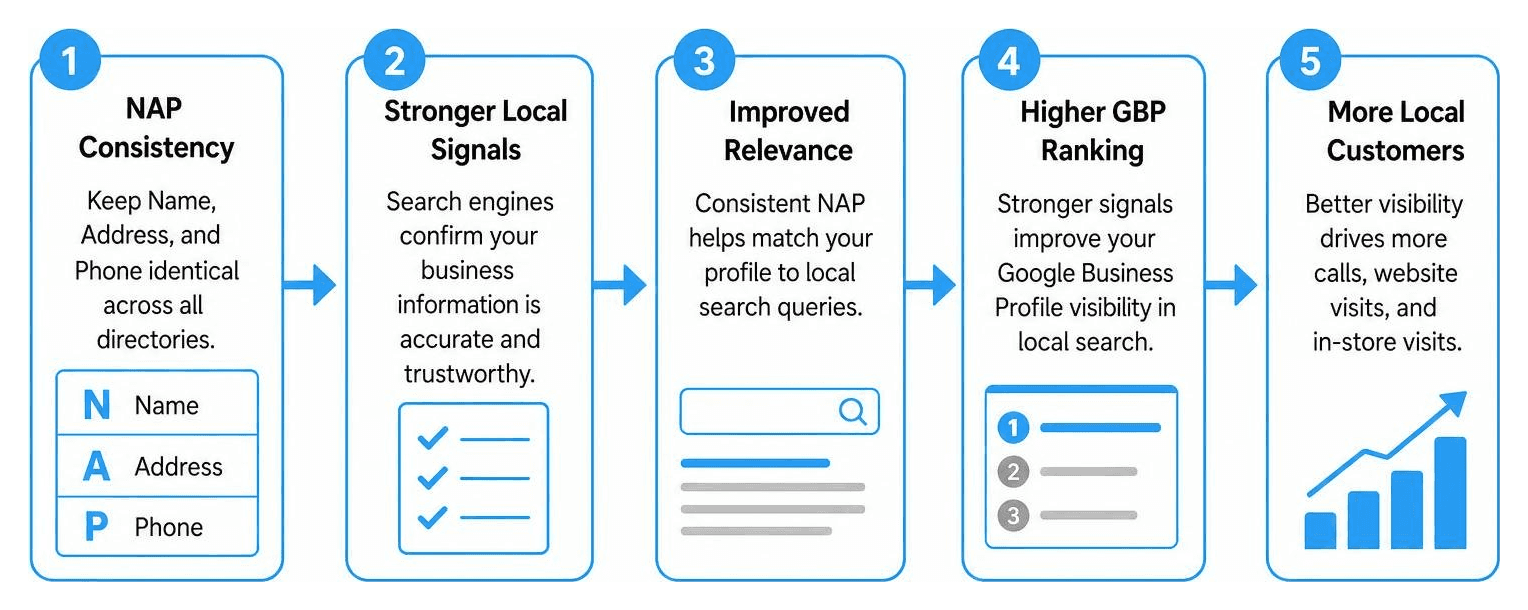
To strengthen your local search presence and outrank regional competitors:
Maintain NAP Consistency: Ensure your business Name, Address, and Phone number are formatted identically across online directories, social media profiles, and search engines.
Optimize Google Business Profile: Claim and verify your listing, publish regular updates, upload high-quality photos, respond promptly to reviews, and list all relevant service categories.
Build Directory Citations and Customer Reviews: List your business on prominent industry directories like Yelp, YellowPages, and Facebook, and encourage satisfied customers to leave positive Google reviews.
Earn High-Quality Backlinks: Build authoritative links by partnering with local organizations, sponsoring community events, or publishing industry research studies.
Integrate Social Media Channels: Connect active social profiles to your website to encourage content sharing, drive referral traffic, and boost brand signals as search engines crawl your site.
Developing a cohesive local optimization strategy helps establish trust within your immediate market. You can explore local search optimization to turn local queries into direct client calls and qualified leads.
Managing Growth and Next Steps
When you add SEO to website workflows, expect a steady, compounding build over time rather than instant results. Search engine optimization is an ongoing strategic process that requires patience, continuous testing, and active maintenance. Initial rankings for lower-competition or long-tail keywords typically emerge within 4 to 8 weeks, while highly competitive organic terms often require 3 to 6 months of consistent content creation and backlink building. Refreshing your top-performing content every six months prevents traffic decay, keeps information current, and maintains strong rankings against emerging competitors.
Performance Monitoring and Tools: Why You Add SEO to Website Projects
Continuous monitoring helps you understand what content resonates with users and where technical bottlenecks exist. Free diagnostic tools like Google Search Console (GSC) and Google Analytics 4 (GA4) are fundamental assets for tracking organic performance and user behavior:
Google Search Console: Inspect individual page indexation, track primary keyword positions, analyze click-through rates (CTR), submit updated sitemaps, and diagnose crawling errors.
Google Analytics 4: Monitor user engagement, track organic conversion paths, identify top landing pages, and evaluate visitor demographic trends.
Site Audit Workflows: Run regular automated audits using tools like Semrush, Ahrefs, or Screaming Frog to catch broken internal links, missing meta descriptions, slow page speeds, and technical crawl errors early.
By leveraging these insights, you can refine your optimization strategy, fix emerging issues, and maximize your return on investment. Check out the official SEO Starter Guide: The Basics | Google Search Central | Documentation | Google for Developers for Google's foundational guidelines and best practices.
Avoiding Mistakes and Getting Professional Support
As you optimize your site, avoiding costly mistakes is just as critical as implementing strategic enhancements. Common pitfalls that can damage search engine trust and harm rankings include:
Keyword Stuffing: Forcing repetitive keywords unnaturally into body text, headers, or alt text creates a poor reading experience and triggers search engine penalties.
Duplicate Content: Publishing identical or near-identical text across multiple pages confuses search engines. Resolve duplicate content issues using 301 redirects or standard
rel="canonical"tags.Orphan Pages: Ensure every webpage receives internal links from other relevant sections of your site so crawlers and human visitors can locate them easily.
Ignoring Broken Links: Broken 404 links create frustrating user experiences and waste crawl budget. Perform routine audits to update or redirect broken URLs.
If managing technical audits, content creation, mobile responsiveness, and speed optimization feels overwhelming, our down-to-earth team at RJP.design provides clear, client-focused support to simplify the entire process. Boost your search performance with professional SEO optimization services to start building sustainable search traffic today.