Marketing
Your Blueprint for Success: Understanding Digital Advertising Solutions
Feb 2, 2026

Why Digital Advertising Solutions Matter for Your Business Growth
Digital advertising solutions are the tools, platforms, and strategies businesses use to promote their products or services online. From search engine ads and social media campaigns to programmatic display advertising and video ads, these solutions enable you to reach your target audience, measure results in real-time, and optimize campaigns for maximum return on investment.
Quick Answer: What are Digital Advertising Solutions?
Search Ads: Target customers actively searching for your products (Google Ads, Microsoft Advertising).
Social Media Ads: Reach specific demographics on platforms like LinkedIn, Facebook, and Instagram.
Display & Video Ads: Build brand awareness across websites, apps, and streaming services.
Programmatic Advertising: Automate ad buying using AI for precision targeting and efficiency.
E-commerce Ads: Showcase products directly to shoppers (Amazon Ads, Google Shopping).
Measurement Tools: Track ROI, conversions, and campaign performance in real-time.
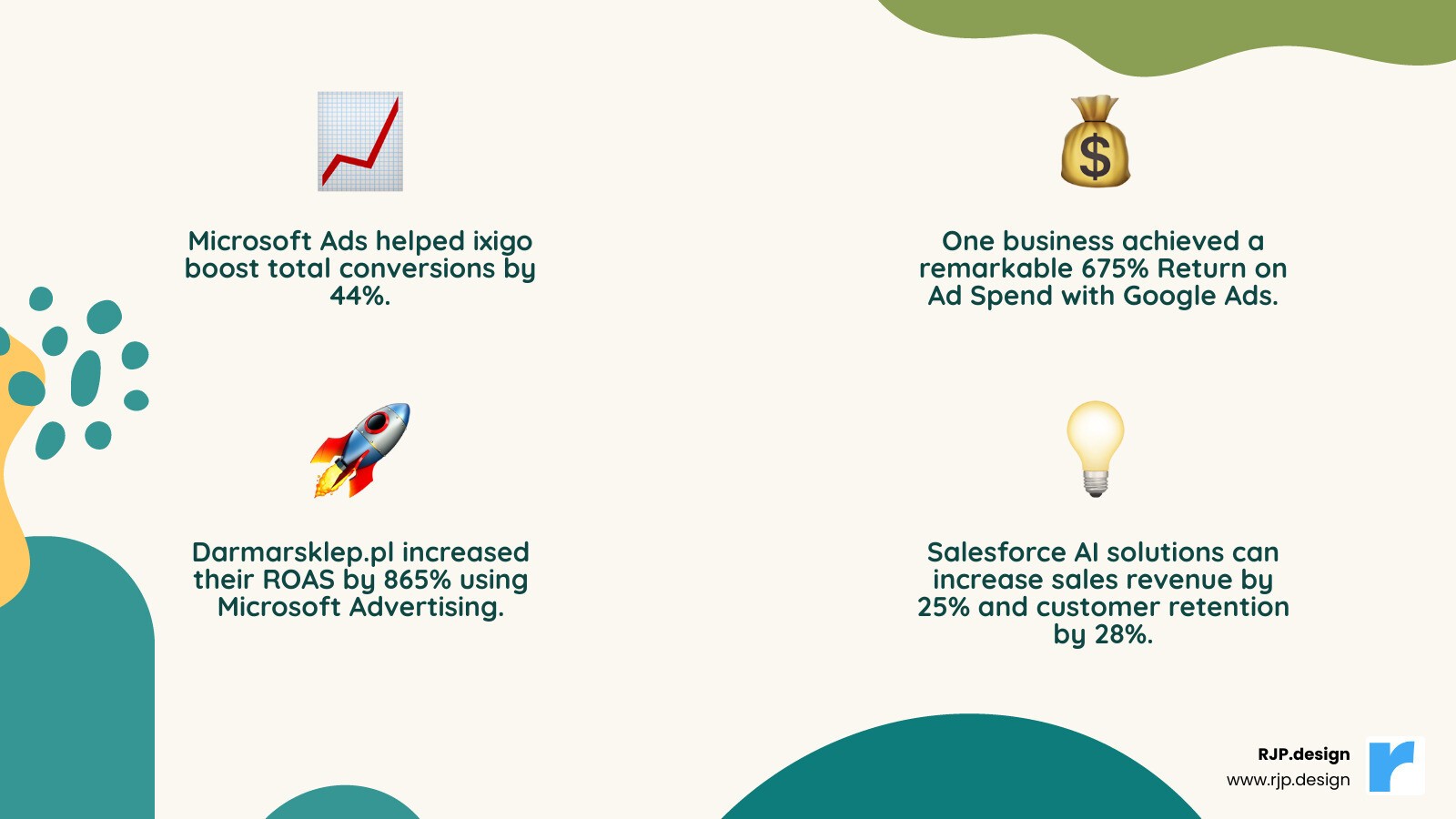
If you've ever felt overwhelmed by the sheer number of advertising options or frustrated by campaigns that drain your budget, you're not alone. The digital landscape is complex, but the reality is that businesses leveraging the right digital advertising solutions see measurable growth. For example, advertisers on Amazon saw 34% more sales growth on average, while companies using Microsoft Advertising have achieved results like 865% increases in ROAS (Return on Ad Spend). One business using Google Ads even reported a 675% return on ad spend.
The difference between wasting money and driving growth isn't luck—it's understanding which solutions align with your goals, audience, and resources.
I'm Ross Plumer, and I've helped businesses market over $20 million in revenue by implementing strategic digital advertising solutions. In this guide, we'll cut through the complexity to give you a clear blueprint for understanding these tools. You'll learn which platforms work best for different goals, how to leverage automation, and how to measure success to make informed decisions about your digital advertising strategy.
Easy digital advertising solutions glossary:
Navigating the Landscape of Digital Advertising
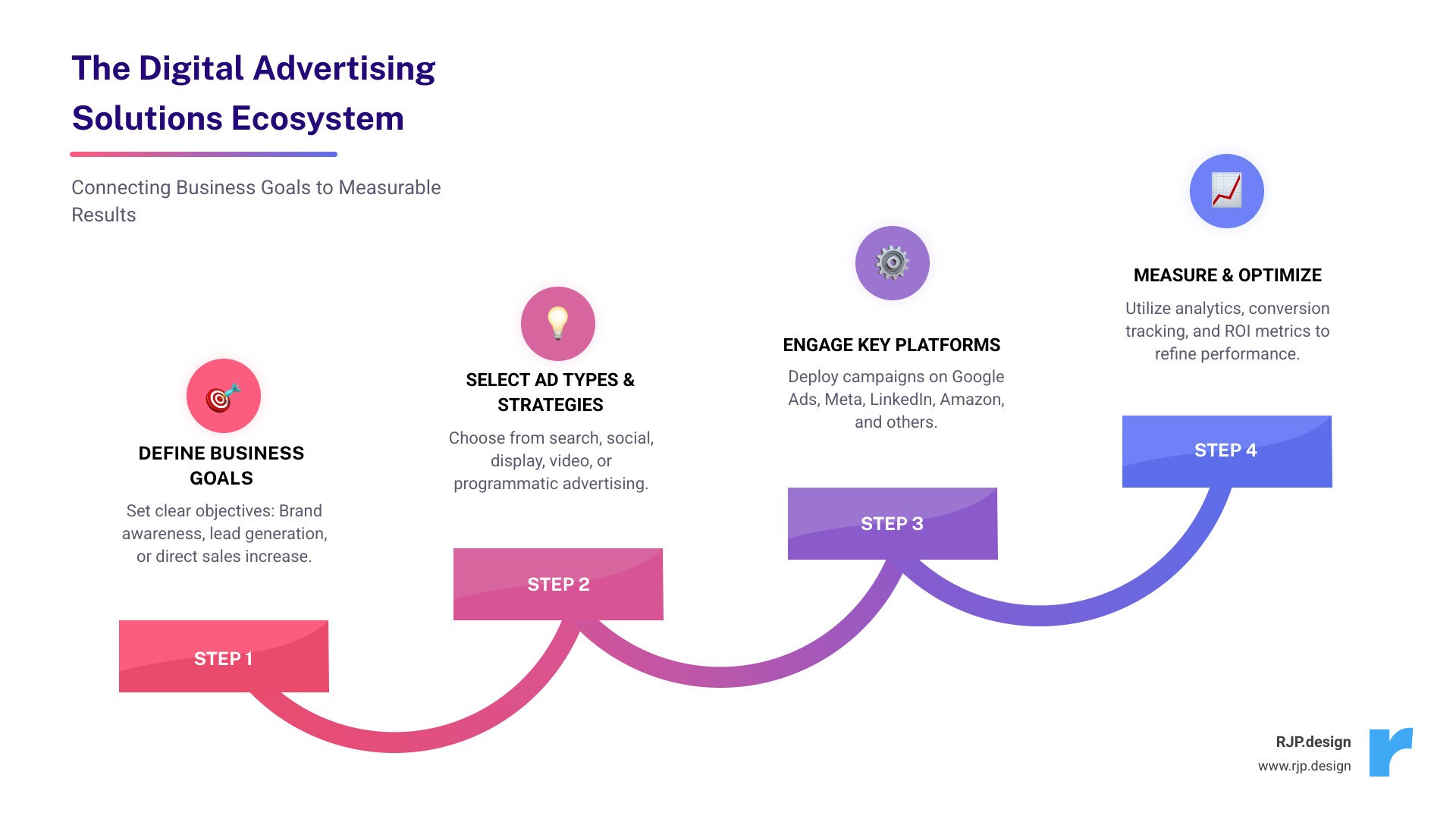
Think of the digital advertising solutions landscape as a toolkit. Each tool has a purpose, and knowing which one to use makes all the difference. Once you understand the core types of advertising, the complexity starts to make sense. Let's break it down.
Foundational digital advertising solutions: From Search to Social
These are the channels that consistently deliver results across industries.
Search engine ads are a straightforward concept. When someone searches for a term like "best running shoes for marathons," the ads at the top of the results are search ads. This is intent-based targeting at its finest, reaching people at the exact moment they're looking for what you offer. Platforms like Google Ads and Microsoft Advertising operate on this principle, making search ads exceptional for driving sales and qualified traffic. Want to explore how this works? Check out our PPC Advertising Solution.
Social media advertising targets people based on their interests, behaviors, and demographics on platforms like Facebook, Instagram, and LinkedIn. The power of social advertising lies in its precise demographic targeting, allowing you to reach specific audiences, such as 35-year-old marketing managers who love hiking. This makes it ideal for brand awareness, community building, and driving sales.
Display advertising keeps your brand visible across the web through banner and visual ads on websites and apps. While they may not always generate immediate clicks, they are crucial for building brand awareness. By showing your visuals to people based on their browsing history, your brand becomes familiar, which matters when they're ready to buy.
Video ads are engaging, emotional, and memorable. Playing on YouTube, streaming services, and social platforms, they combine the brand awareness of display ads with the emotional connection of storytelling. When done well, video ads don't just inform—they inspire action.
Specialized Platforms for B2B and E-commerce
While foundational channels work for most, some platforms excel in specific niches.
LinkedIn Ads dominate the B2B space by reaching over 1 billion professionals worldwide. Its strength is professional data, allowing you to target by job title targeting, company size, industry, and more. This makes it possible to reach VP-level decision-makers in specific industries, making the platform powerful for lead generation and building brand presence. You can get started reaching 1 billion+ professionals around the world or target the right audience using unique attributes. For additional resources, visit the Help Center or explore Learning Courses. For broader strategies, explore our Social Digital Solutions.
Amazon Ads are essential for e-commerce, capturing people when they're ready to buy. The platform's shopper intent data is incredibly valuable because users are actively shopping. Amazon offers Sponsored Products, Sponsored Brands, and more to maximize visibility. The results are compelling: advertisers using Sponsored Products saw 34% more sales growth on average, and one brand achieved a 10x return on ad spend (ROAS). If you sell products online, Amazon Ads are key to driving sales and increasing market share. Learn more at Amazon DSP.
The Rise of Automation: Programmatic Advertising Explained
Programmatic advertising is the future, and it's already here. It uses software to automate ad buying, making campaigns more efficient and effective. Imagine evaluating millions of potential customers in milliseconds and placing your ad in front of the most likely responders—all automatically.
Instead of manual negotiations, advertisers bid on ad impressions in real-time through a Demand-Side Platform (DSP). This process, called Real-Time Bidding (RTB), happens in the fraction of a second it takes a webpage to load. The key benefits are efficiency, precision targeting, and constant optimization based on real-time data. AI plays a central role, automating bids, personalizing creative, and predicting user behavior to reduce wasted budget.
According to the Google News Initiative on programmatic advertising, this technology has transformed how digital ad space is bought and sold. For a deeper dive into how these solutions fit into broader strategies, visit our Digital Marketing Strategies page.
The landscape of digital advertising solutions is navigable. Start with the foundations, add specialized platforms if they fit, and consider programmatic advertising to scale your efforts. Understanding which tool to use is what separates good campaigns from great ones.
Strategizing and Measuring Your Digital Advertising Solutions
Having access to the best digital advertising solutions is only half the battle. Real success comes from thoughtful planning, precise execution, and meaningful measurement.
Crafting Your Campaign: From Planning to Optimization
Every successful campaign follows a clear journey that helps maximize results and avoid costly mistakes.
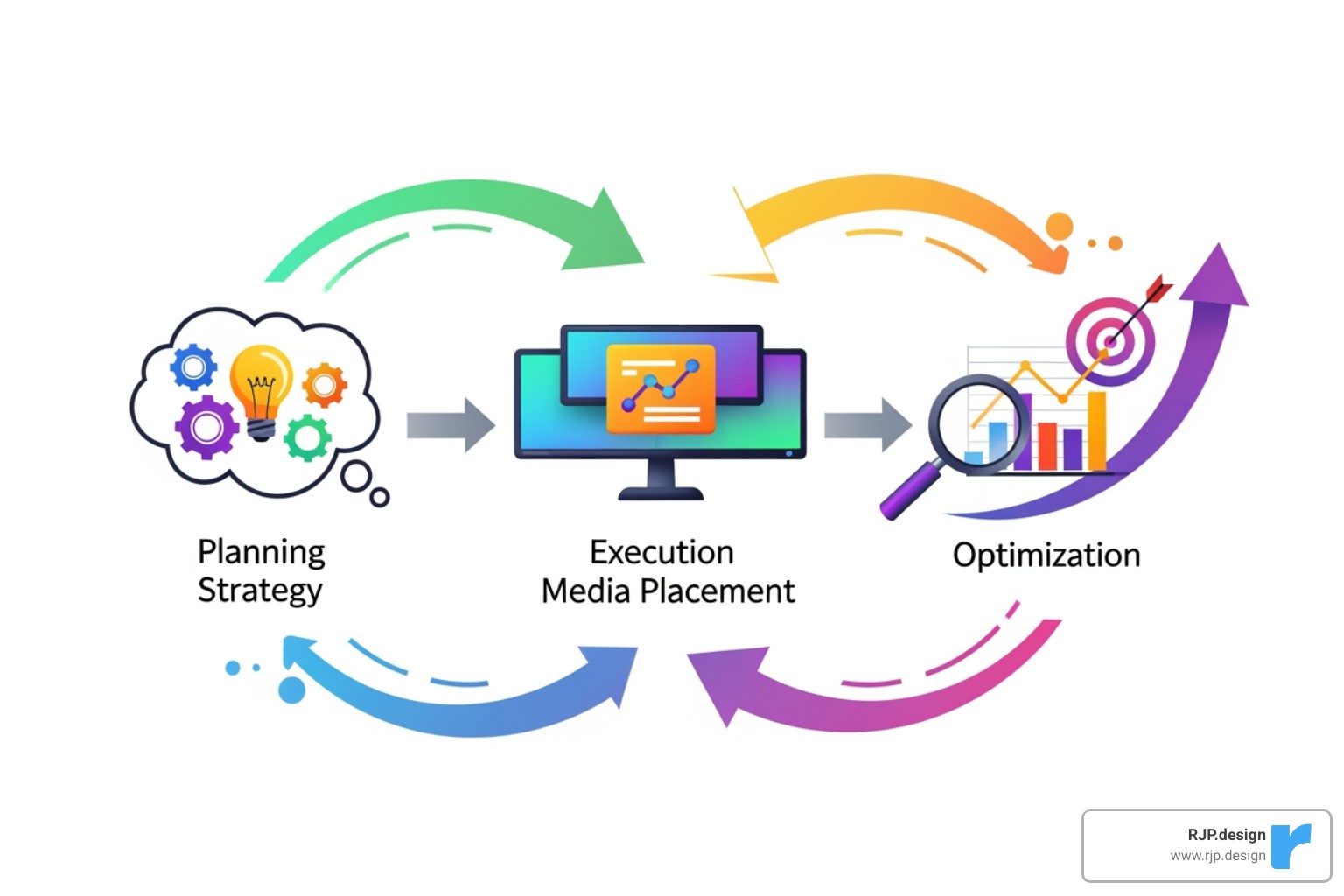
Solid planning starts with crystal-clear goal setting. Are you building brand awareness, driving lead generation, or pushing direct sales? Be specific. Next, audience segmentation is crucial. Paint a detailed picture of who you're talking to—their demographics, online behaviors, and problems. This isn't about casting the widest net; it's about casting the right one.
From there, strategic budget allocation determines where to invest based on your audience and goals. Your ad creative—from headlines to videos—must resonate emotionally and stop the scroll. Finally, A/B testing is essential. Never assume what will work best; test different headlines, images, and calls to action to refine your approach. Constant budget management ensures you shift resources toward what's working.
A strong campaign brief includes:
SMART objectives (specific, measurable, achievable, relevant, time-bound)
A detailed target audience profile
A clear key message and value proposition
A specific call to action
Budget, timeline, and creative requirements
Key reporting metrics and platform selection
For businesses looking to align paid campaigns with organic search, our SEO Campaign Management services provide a comprehensive approach.
The Power of Data and AI in modern digital advertising solutions
Data and artificial intelligence are practical tools that help us understand customers, predict their actions, and deliver relevant messages.

Data-driven advertising moves us beyond guesswork. By analyzing website traffic, customer demographics, and ad engagement, we can make informed decisions. First-party data—information collected directly from your customers—is the gold standard for creating highly personalized campaigns. Of course, ethical data use is essential for maintaining customer trust and complying with regulations like our Privacy Policy.
AI and machine learning are changing how we approach digital advertising solutions. Through predictive analysis, AI forecasts customer behavior and identifies high-value segments. This leads to sophisticated ad personalization, where dynamic ads adapt in real-time to individual users.
Major platforms are heavily investing in AI. Google Ads uses AI to find new customers and build creative, with its Performance Max tool reaching customers across all channels. You can learn more on the Google Ads AI Essentials help page. Microsoft Advertising has integrated generative AI, helping one company generate 44% total conversions. Other platforms like Salesforce and AdRoll also leverage AI to streamline management and deliver precise performance.
Measuring Success: ROI and Future-Proofing Your Strategy
Without proper measurement, advertising is just an expensive guess. We need clear metrics to know if our investment is paying off.
Conversion tracking is the foundation, telling us when an ad leads to a desired action like a purchase or lead submission. From there, we focus on key metrics. Return on Ad Spend (ROAS) measures the revenue generated for every dollar spent. Businesses have seen incredible results, like a 675% return on ad spend with Google Ads or an 865% increase with Microsoft Advertising. Cost Per Acquisition (CPA) shows the cost to acquire one customer, helping us gauge efficiency.
Here's how the key metrics compare:
Metric | Formula | What it Measures |
|---|---|---|
Return on Ad Spend (ROAS) | (Revenue from Ads / Ad Spend) x 100 | Revenue generated per dollar spent on ads. A direct measure of ad profitability. |
Cost Per Acquisition (CPA) | Total Ad Spend / Number of Conversions | The cost to acquire a single customer or lead. |
Click-Through Rate (CTR) | (Clicks / Impressions) x 100 | The percentage of people who clicked on your ad after seeing it. Indicates ad relevance. |
Conversion Rate | (Conversions / Clicks) x 100 | The percentage of people who completed a desired action after clicking the ad. |
Cost Per Click (CPC) | Total Ad Spend / Total Clicks | The average cost for each click on your ad. |
Impressions | Total number of times your ad was displayed | How many times your ad was seen, indicating reach and visibility. |
Smart budget management means starting small, gathering data, and scaling what works. We leverage automation but maintain human oversight, always focusing on ROI. This approach has helped businesses achieve results like 23x ROI in 2023 and 400% ROI in 2021.
To stay ahead, we must watch emerging trends like the cookieless future, advancements in AI and machine learning, a privacy-first approach, and new channels like Connected TV (CTV) and audio advertising.
At RJP.design, we stay on top of these trends to ensure our clients' digital advertising solutions are effective and future-proof. We pride ourselves on high-quality service from a down-to-earth team that cares about your success. Explore our Social Media Services to see how we can boost your online engagement.
With the right knowledge and a strategic approach, digital advertising becomes a powerful engine for growth. We hope this guide provides a clear blueprint for achieving real online success.