
Marketing
Unlock Your Brand's Potential: The Ultimate Guide to Social Media Leverage
Jan 6, 2026

Why Social Media is Essential for Your Business Growth
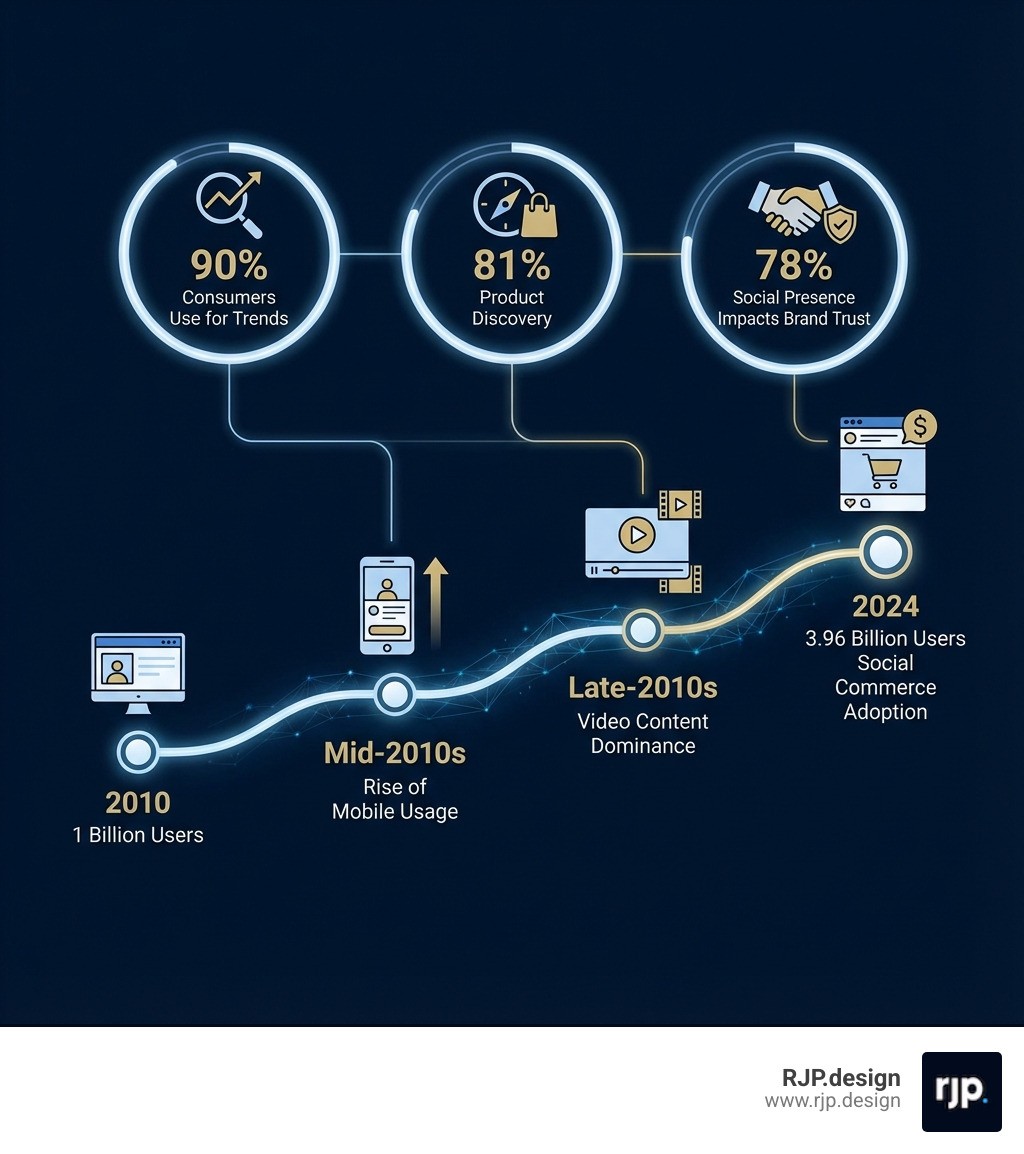
How to leverage social media means connecting your brand with over 3.96 billion active users who spend significant time daily making purchase decisions on these platforms.
Quick Answer: How to Leverage Social Media Effectively
Set clear goals (awareness, leads, engagement)
Pick platforms your audience uses
Create valuable, engaging content
Engage authentically with your audience
Use paid ads and influencers to expand reach
Monitor metrics and optimize continuously
For businesses struggling with online visibility, social media is a game-changing opportunity. With 78% of consumers agreeing a brand's social presence impacts their trust (jumping to 88% for Gen Z), and 81% using social platforms for product findy, a strategic presence is non-negotiable.
Social media offers real-time engagement and feedback that traditional marketing can't match. Your audience is online, and they expect to find you there. However, a simple presence isn't enough. You need a strategic approach to cut through the noise.
I'm Ross Plumer, and I've helped businesses leverage social media to drive measurable results. This guide provides a framework to turn social media from a chore into a powerful growth tool.
How to Leverage Social Media: A 6-Step Strategic Framework

Effectively leveraging social media requires a strategic plan that integrates with your overall digital marketing strategies. This framework will help you turn your social media efforts into a growth engine for your brand.
Step 1: Define Your Goals and Choose the Right Platforms
First, clarify why you're on social media by setting clear, measurable objectives. Set SMART goals (Specific, Measurable, Achievable, Relevant, Time-bound). For example, aim to "increase Instagram followers by 20% in the next quarter" rather than just "increase followers."
Common goals and their Key Performance Indicators (KPIs) include:
Brand Awareness: KPIs: Reach, Impressions, Follower Growth, Mentions.
Lead Generation & Sales: KPIs: Click-Through Rate (CTR), Website Traffic, Conversion Rate, Leads Generated.
Customer Engagement & Loyalty: KPIs: Engagement Rate (likes, comments, shares), Response Rate, Customer Satisfaction (CSAT).
Next, identify your audience and where they spend their time online. Your business type influences platform choice. B2B often succeeds on LinkedIn for professional networking, while B2C thrives on visual platforms like Instagram and TikTok or broad-reach ones like Facebook. Different platforms also attract different demographics. For example, Instagram is popular with millennials, while TikTok has a younger user base and high engagement rates.
Here's a quick overview of key platforms:
Platform | User Base (Approx.) | Primary Audience | Best Content Type |
|---|---|---|---|
3.02 billion (US: 302M) | Broad; all ages | Text, images, long-form video, groups, events | |
2 billion (US: 130M) | Millennials, Gen Z | High-quality images, short-form video (Reels), Stories | |
310 million active monthly | Professionals, B2B | Thought leadership, industry news, professional networking, company updates | |
TikTok | 1 billion active | Gen Z, younger millennials | Short-form, entertaining video, trends, challenges |
X (formerly Twitter) | 415 million active monthly | News, public discourse | Real-time updates, concise text, short videos, discussions |
518 million active monthly | Visual findy, planning | Images, infographics, how-to guides, product showcasing |
Focus on a few key platforms where your audience is most active for a stronger, more consistent presence.
Step 2: Craft Engaging Content and Build a Strong Brand Voice
With goals and platforms set, create content that resonates and showcases your brand's personality. Balance promotional posts with valuable, entertaining, and educational content.
Content Pillars: Establish 3-5 content pillars (e.g., educational tips, behind-the-scenes, customer spotlights) to guide your creation.
Content Mix: Use a variety of formats:
Short-form Video: Dominant on TikTok and Instagram Reels, these videos have high engagement rates.
Images & Infographics: Visual content performs well; posts with images get 650% higher engagement than text-only posts.
Stories & Live Streams: Offer authentic, real-time engagement.
Educational Posts: Establish your brand as an expert with tutorials and industry insights.
User-Generated Content (UGC): Encourage customers to create content featuring your products. UGC is powerful, with 79% of people saying it impacts their purchasing decisions. It builds trust as consumers prefer relatable voices over celebrity endorsements.
Ensure your messaging, tone, and visuals are consistent across all channels to be instantly recognizable. Define your brand's personality (e.g., witty, informative, empathetic) and stick to it. Follow the 80/20 rule: 80% value-driven content and 20% promotional, as 46% of users will unfollow brands that are overly promotional. We help businesses craft compelling content for digital marketing services that speaks to their audience.
Step 3: Foster Community and Master Audience Engagement
Social media is a conversation. Building a community requires active, authentic engagement.

Be Responsive: Respond to comments and messages promptly to show you're listening.
Be Authentic: Share behind-the-scenes content, celebrate your team, and be transparent. 90% of consumers use social media to follow trends, but they connect with brands that feel real.
Offer Support: Use direct messaging for instant communication and polls or Q&As to gather feedback. Monitor and respond to all reviews, as they are crucial for purchase decisions. Aim for a quick response time; 78% of customers complaining on X expect a response within an hour.
Build Community:
Host live Q&A sessions.
Run polls and quizzes.
Feature user-generated content (UGC).
Create branded hashtags.
Start a dedicated group for deeper discussions.
By actively engaging, you not only boost loyalty but also enhance your digital presence significantly.
Step 4: Amplify Your Reach with Paid Ads and Influencers
To cut through the noise, supplement organic reach with paid social media advertising and influencer marketing. Global social ad spending is projected to reach $219 billion in 2024.
Paid Social Media Advertising
Paid ads let you target specific demographics, interests, and behaviors. Use sophisticated targeting features on platforms like Facebook to reach potential customers and retarget past visitors. Experiment with various formats like image, video, and carousel ads. Start with a small budget, monitor performance, and optimize your campaigns.
Influencer Marketing
Influencer marketing can produce 11 times more ROI than other marketing approaches. Partner with influencers whose values align with your brand, as authenticity is key. Macro-influencers offer broad reach, while micro-influencers (10k-100k followers) often have higher trust and engagement within niche communities. Set clear goals, allow creative freedom, and analyze results beyond simple likes.
Ready to boost your social presence? Explore our social media management and ads services.
Step 5: Master How to Leverage Social Media for Customer Support and SEO
Social media is also a powerful tool for customer service and can indirectly benefit your SEO.
Customer Support and Feedback
Monitor brand mentions and respond quickly to all customer queries and feedback. Address negative comments professionally to manage your reputation. Use social listening tools to gather unfiltered insights into customer sentiment, which can inform product development. Also, encourage employees to share company content; their posts have 8x higher engagement and humanize your brand.
SEO and Website Traffic
While social media doesn't directly impact search rankings, it plays a significant indirect role in your SEO strategies for websites. Sharing links to your site increases traffic, which can signal value to search engines. A strong social presence also boosts brand visibility and direct searches for your brand. Use social media to distribute your content, expanding its reach and potential for earning valuable backlinks.
Step 6: Analyze, Optimize, and Understand How to Leverage Social Media Data
The final step is to measure, learn, and adapt. Without analysis, your efforts are directionless. Continuously track key metrics to understand performance:
Reach & Impressions: Who saw your content and how often.
Engagement Rate: How many people interacted with your content.
Conversion Rate: The percentage of users who took a desired action.
Website Traffic: How much traffic came from social media.
Social media is dynamic, so continuous optimization is key. Go beyond monitoring mentions; social listening involves tracking conversations around your industry to understand sentiment. Regularly audit competitors, A/B test different elements, and stay updated on algorithm changes. Use these insights to inform sales, product development, marketing, and customer service strategies. Our website analytics tracking services help you make sense of this data.
Conclusion: Transform Your Digital Presence Today
We've covered how to leverage social media strategically: from setting goals and creating content to amplifying reach and analyzing data. Social media is a necessity for connecting with customers, building trust, and driving growth. A strong social presence fosters genuine connections and provides invaluable audience insights, but it requires commitment and adaptability.
At RJP.design, we help businesses thrive on social media. Our team combines high-quality service with digital marketing expertise to make your brand look great and get found online. We can help you steer the complexities of social media and turn it into a powerful asset.
Are you ready to open up your brand's full potential and see measurable results from your social media efforts?
Take the next step in your digital marketing journey and let us help you transform your digital presence today.