
Web
The Complete Guide to Why Planning Matters
Aug 19, 2026

Why Plan Is Important? The Core Reasons for Success
When we ask Why plan is important?, the answer goes far beyond filling out a calendar or listing daily tasks. At its foundation, planning acts as a psychological bridge between where we are right now and where we want to be. It provides proactive control, allowing individuals and organizations to drive outcomes rather than simply reacting to emergencies.
Without a clear blueprint, even the most passionate teams waste energy. Skipping structured preparation creates what leaders call a false economy: saving a few hours up front often results in costly rework, uncoordinated efforts, and missed opportunities later on. In fact, research shows that 48% of all organizations fail to achieve at least half of their strategic targets, largely because planning is treated as an annual event rather than an ongoing guide.
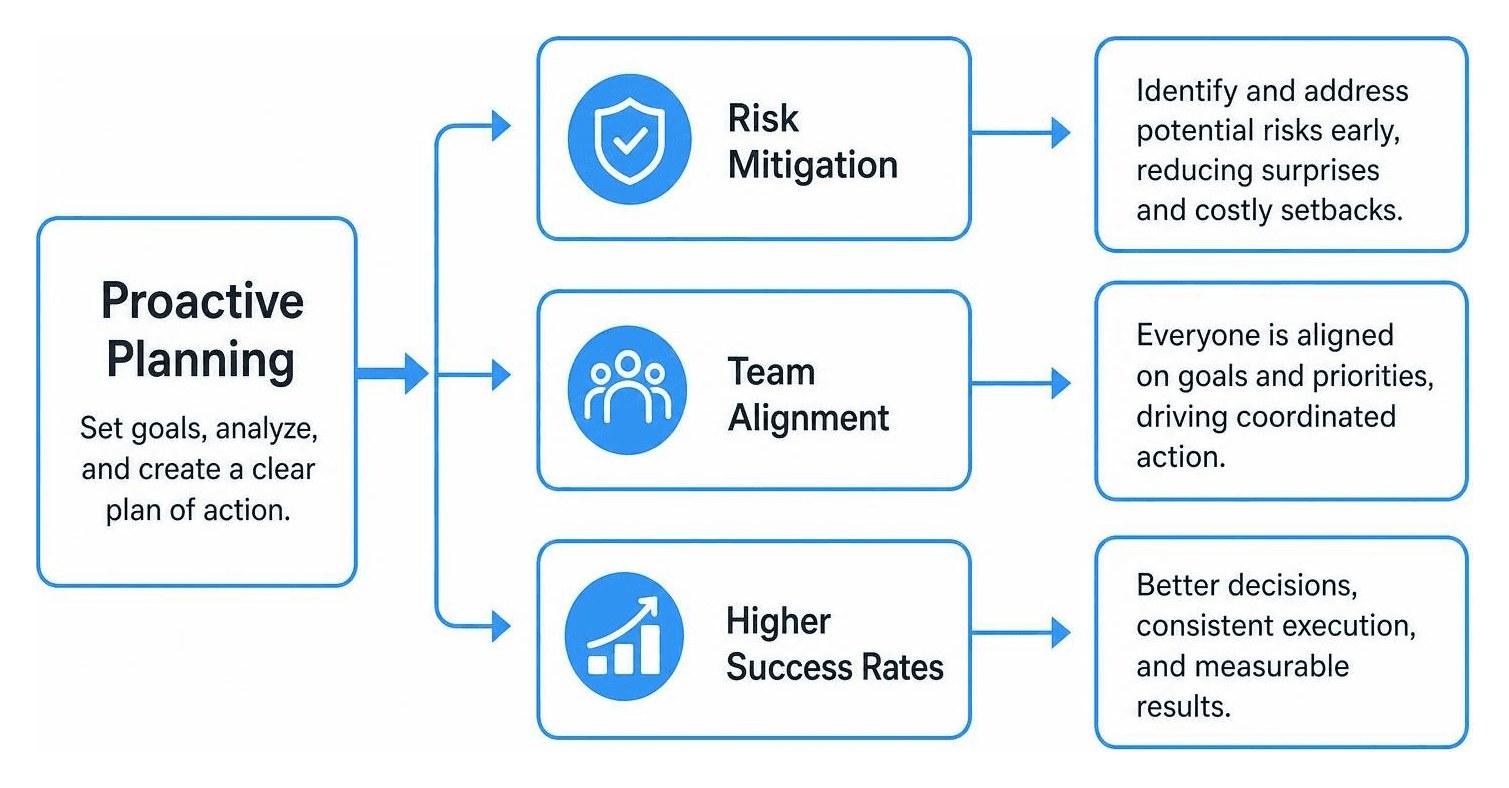
When you establish a structured path, you unlock several essential benefits:
Risk Mitigation: You uncover potential flaws, bottlenecks, and financial gaps long before they damage your project or business.
Organizational Alignment: Everyone understands the primary objective, ensuring that daily actions directly support long-term goals.
Competitive Edge: Proactive planning allows you to anticipate market shifts and move faster than competitors who operate reactively.
Progress Tracking: Concrete milestones give you objective data to evaluate whether your tactics are succeeding.
Boosting Productivity and Time Management: Why Plan Is Important?
Poor time management rarely stems from a lack of effort; more often, it is caused by a lack of structure. Jumping between unrelated tasks without a plan creates heavy cognitive switching costs, wasting valuable mental energy every single week.

To protect focus and optimize peak performance hours, top professionals rely on proven framework techniques:
The Eisenhower Matrix: Categorizes tasks into four distinct quadrants based on urgency and importance. This prevents urgent but low-value distractions from overriding strategic priorities.
Time-Blocking: Dedicates explicit calendar blocks to deep, uninterrupted work rather than managing your day directly out of an overflowing inbox.
The Pomodoro Technique: Structures focus into intensive 25-minute work intervals followed by short breaks to maintain steady mental energy throughout the day.
Task Triage and Capacity Planning: Limits planned daily work to 80% of actual capacity. Leaving a 20% flexibility buffer accounts for inevitable interruptions without derailing your entire schedule.
Using these methods transforms daily routines from chaotic firefighting into structured achievement.
Stress Reduction and Financial Stability: Why Plan Is Important?
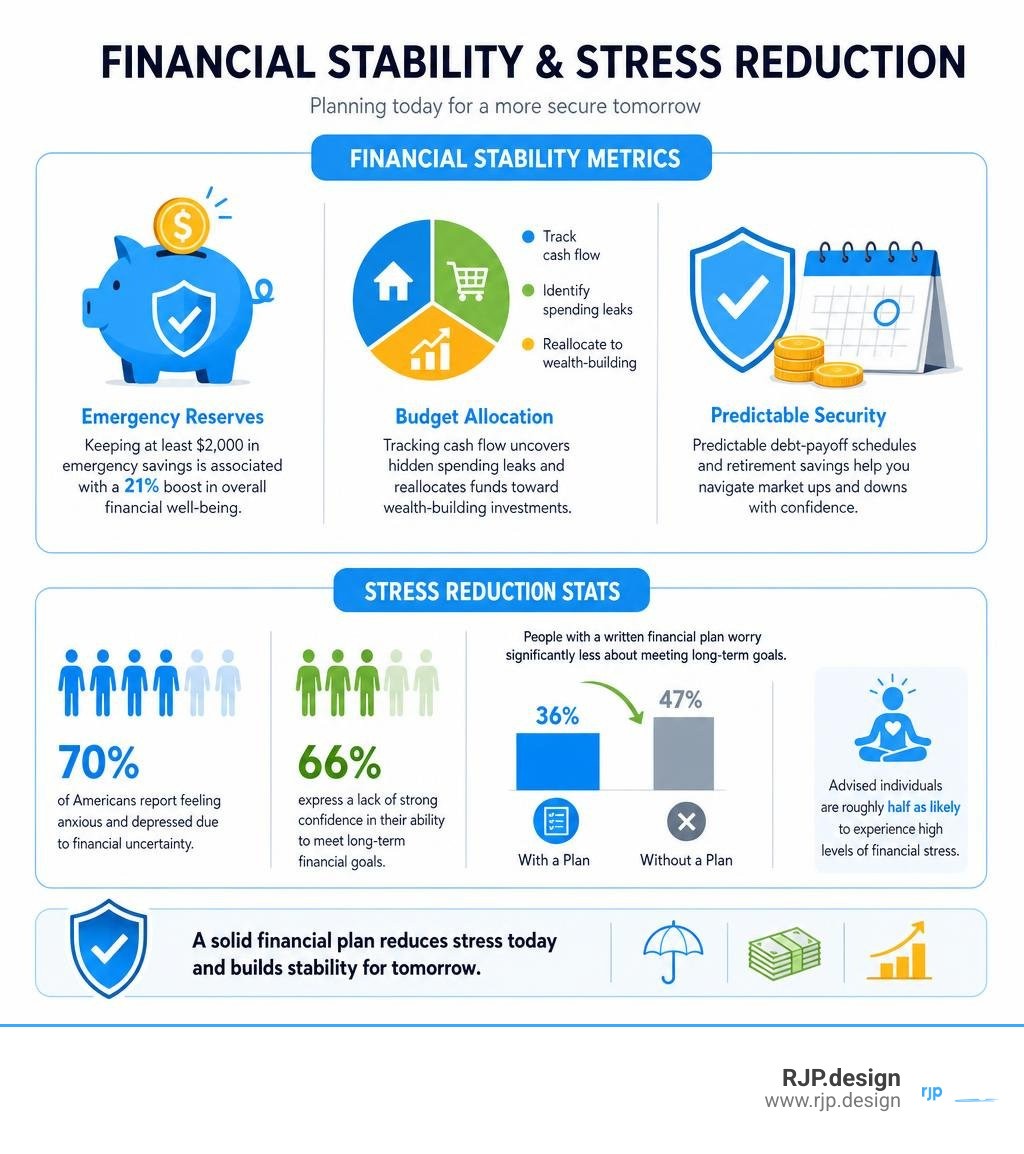
Financial uncertainty is one of the leading sources of personal and professional anxiety. Industry data reveals that nearly 70% of Americans report feeling anxious and depressed due to financial uncertainty. Furthermore, 66% express a lack of strong confidence in their ability to meet long-term financial goals.
Creating a comprehensive strategy directly combats this stress. Advising research indicates that people with a written financial plan worry significantly less about meeting their long-term goals (36%) compared to those operating without a plan (47%). Moreover, advised individuals are roughly half as likely to experience high levels of financial stress.
A solid financial foundation requires structured risk buffers:
Emergency Reserves: Maintaining even a modest liquid cash buffer provides immediate protection against unexpected shocks. Keeping at least $2,000 in emergency savings is associated with a 21% boost in overall financial well-being.
Budget Allocation: Tracking cash flow uncovers hidden spending leaks—such as minor daily habits that quietly accumulate to thousands of dollars each year—and reallocates those funds toward wealth-building investments.
Predictable Security: Setting up predictable debt-payoff schedules and retirement savings allows individuals to navigate short-term market downturns calmly without panic selling.
To see how structured strategies extend into online commercial growth, explore our Digital Marketing Complete Guide 2026.
Strategic Business Growth and Resource Allocation
For organizations, understanding Why plan is important? is a matter of long-term survival. Yet, leadership studies show that 48% of executive leaders spend less than one single day per month discussing strategy. When leadership fails to set a clear direction, teams fall back on cognitive biases—such as recency bias or confirmation bias—and make short-sighted decisions.
Strategic planning establishes clear key performance indicators (KPIs), aligns cross-functional teams, and guides capital allocation. However, strategic clarity must be paired with operational agility. A study of Harvard Business School graduates revealed that 93% of founders who launched successful companies ultimately evolved and pivoted away from their original business plans.
Strategic Planning | Reactive Execution |
|---|---|
Driven by long-term KPIs and data | Driven by immediate fire-drills and urgent requests |
Identifies market risks and opportunities early | Unprepared for market disruptions or client shifts |
Optimizes resource allocation across high-ROI assets | Wastes budget and team capacity on low-impact tactics |
Evaluates performance objectively against milestones | Relies on subjective guesswork to measure progress |
Integrating a clear market positioning strategy is essential for sustainable expansion. You can learn more about aligning operational strategy with market presence in our guide on Business Growth Online and our comprehensive Website Design Strategy Complete Guide.
Essential Frameworks to Execute an Effective Plan
Creating an actionable plan requires more than good intentions; it demands proven execution frameworks.

To build a plan that delivers results, follow these practical steps:
Define SMART Goals: Ensure every goal is Specific, Measurable, Attainable, Relevant, and Time-bound.
Establish Key Milestones: Break down large initiatives into manageable checkpoints to maintain team momentum.
Build in Flexibility Buffers: Treat your plan as an adaptable roadmap rather than a rigid set of rules. Schedule periodic review sessions to evaluate real-world performance and refine your tactics.
Align Tasks with Peak Energy: Assign high-priority cognitive challenges to hours when your focus is naturally highest.
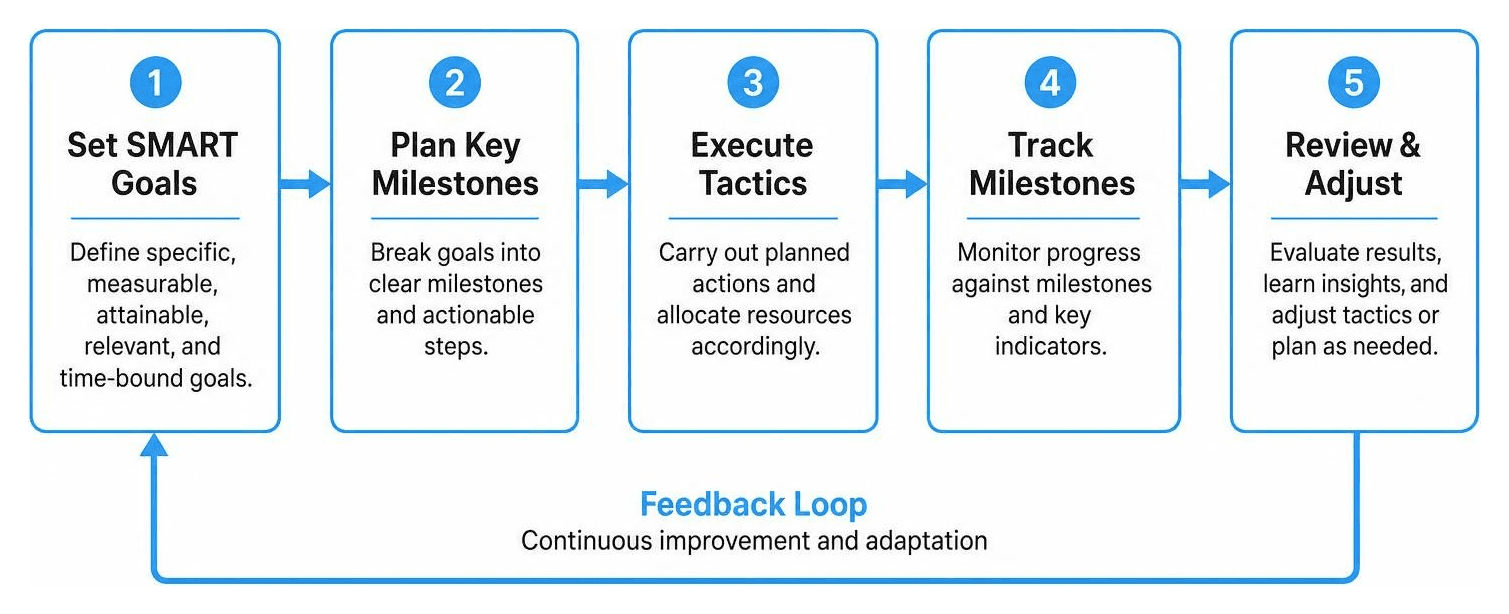
Measuring performance regularly ensures your strategy translates into real-world gains. For insights on tracking strategic targets, review our guides on How To Measure Success and implementing tailored Digital Marketing Strategies.
Overcoming Common Planning Pitfalls and Pitfall Prevention
Even well-intentioned plans can fail if common execution mistakes go unaddressed. Understanding these traps allows you to build a far more resilient strategy:
Over-Planning and Perfectionism: Spending too much time refining the blueprint creates a false sense of progress while delaying physical action.
Underestimating Time Requirements: Knowledge-work tasks frequently take longer than anticipated. Multiplying initial task estimates by a realistic buffer prevents project delays.
Failing to Communicate: A plan kept strictly in leadership's hands creates misalignment. Ensure strategic goals are shared across all organizational levels.
Adhering to Static Plans: Refusing to update your strategy when market conditions change converts a helpful roadmap into a handicap.
The Action Gap: Creating an elaborate document without setting immediate "next physical action" triggers leads to operational stall out.
Avoiding these traps keeps your brand adaptive and competitive. Learn how strategic alignment protects brand positioning in our How To Build Brand Ultimate Guide.
Building Your Path to Success with Strategic Execution
Understanding Why plan is important? gives you the clarity to convert ambitious goals into predictable outcomes. Whether you are managing personal financial milestones or scaling an enterprise, a structured plan turns complex challenges into achievable steps.
At RJP.design, we help businesses cut through digital noise by combining high-performing website solutions with clear strategic execution. We work closely with our clients to turn online activity into measurable lead generation, brand authority, and sustainable revenue growth.
Ready to transform your business's online strategy? Explore our Social Media Services and discover how our team can help you build a high-impact roadmap for your digital presence today.