
Web
How to build brand identity that people actually remember
Aug 6, 2026

Understanding brand identity: Foundations, trust, and business value
How to build a brand that people actually remember? Here's the short answer:
Research your audience and competitors — understand who you're for and where the market gaps are
Define your mission and positioning — get clear on why you exist and what makes you different
Develop your brand voice and personality — choose 3–5 adjectives that describe how you communicate
Design your visual identity — logo, colors, typography, and a style guide
Tell a compelling brand story — give people something to connect with emotionally
Apply your brand consistently across every customer touchpoint, online and off
Measure and evolve — track awareness, trust, and loyalty over time
That's the roadmap. But the why behind each of those steps matters just as much as the steps themselves.
Most people think branding is about picking a nice logo and a color palette. It isn't. A brand is the collective imagery, feeling, and reputation that follows a business everywhere — into every customer conversation, every social post, every product unboxing.
Here's why that distinction matters: according to a 2025 Edelman report, brand trust carries equal weight to price and product quality in a customer's purchasing decision. And per Qualtrics' 2025 research, consumers who highly trust a brand give an average Net Promoter Score 104 points higher than those who don't. That's not a marginal difference — that's a business advantage.
Kantar's data reinforces this further. The world's most valuable brands have consistently outperformed major stock indices over 20 years. Your brand isn't a marketing expense. It's a long-term asset.
I'm Ross Plumer, a digital marketing strategist with experience helping businesses market over $20 million in revenue — and how to build a brand that actually drives results is something I've worked on across industries, from startups to established enterprises. In this guide, I'll walk you through every step, so you can build something that lasts.
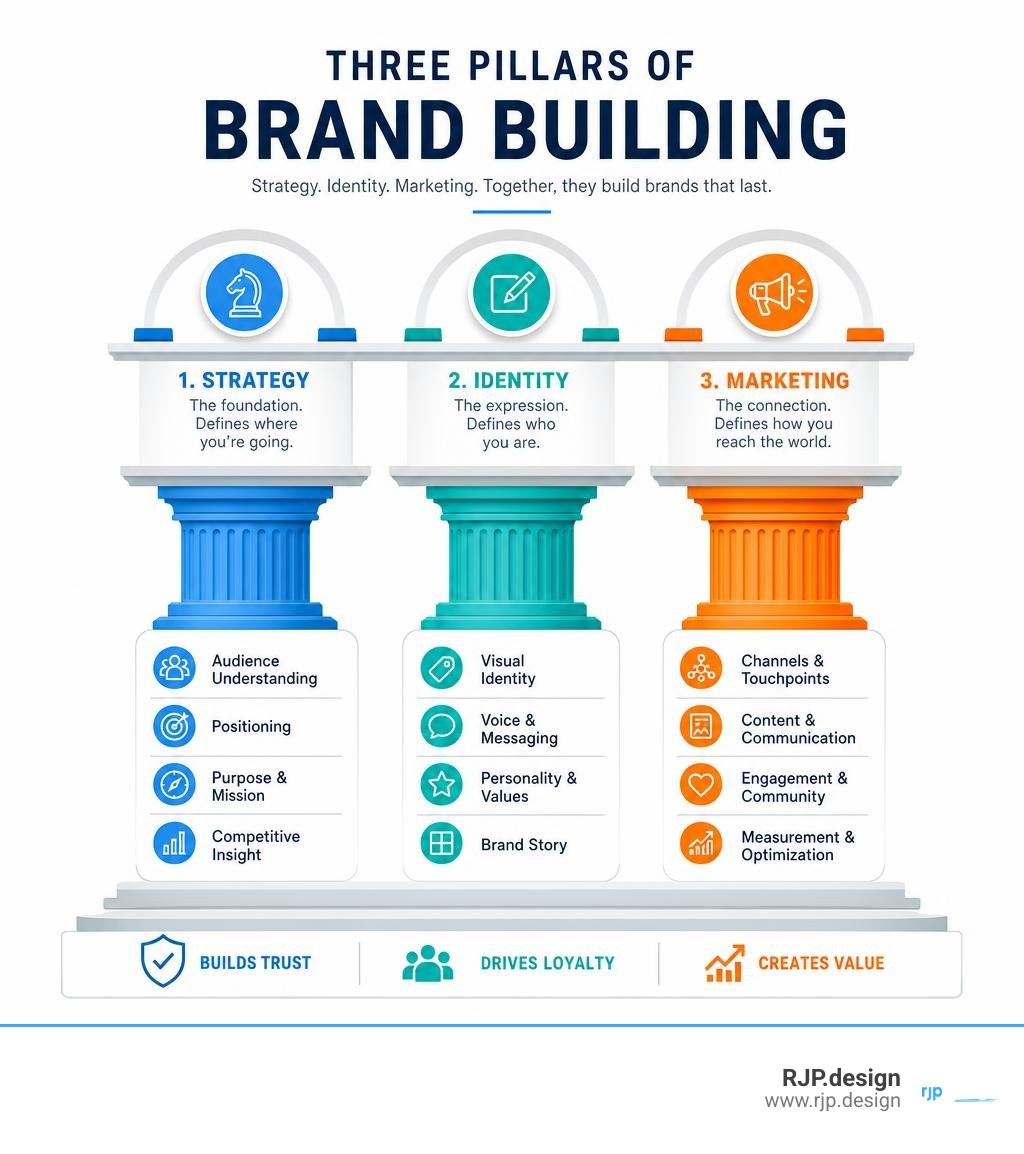
Must-know How to build brand? terms:
How to build brand? A 7-step roadmap from strategy to design
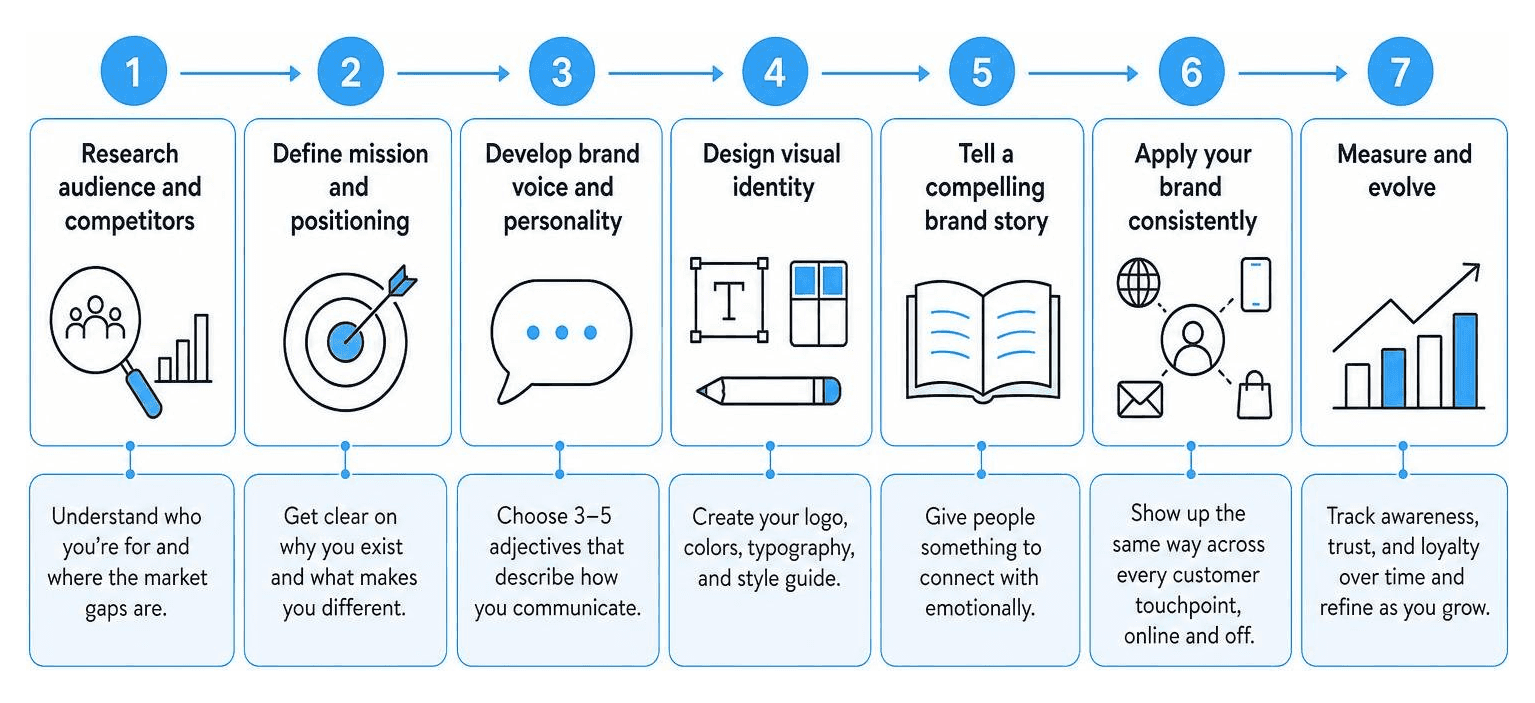
Building a brand from scratch isn't a matter of luck; it requires a systematic process. When we work with growing companies, we divide the brand-building execution into sequential phases: strategic research, positioning, identity design, and digital distribution. Without a solid strategic foundation, even the polished logos fall flat.
Let me break down these critical steps so you can create a clear market identity and build lasting customer loyalty.
Step 1: Research target audience and analyze competitors
Before picking colors or drafting taglines, you must figure out who you are building for—and who you are competing against. In a 2025 Shopify survey, 37% of business owners named marketing their biggest challenge, while 36% struggled most with finding customers. Both issues usually stem from skipped audience research.
To build detailed buyer personas, focus on deeper psychographics rather than broad demographics:
Pain Points: What specific frustration drives them to seek out a solution?
Values: According to Amazon's 2025 data, 79% of shoppers prefer buying from brands whose values align with their own. What societal or lifestyle beliefs matter to them?
Current Alternatives: Where are they currently spending money, and what leaves them dissatisfied?
Next, conduct competitor review mining. Look at customer reviews on competitor listings and social media pages. Note what customers praise and, more importantly, where competitors fall short. Identifying these market gaps gives you a direct "wedge" to enter the market. If you need dedicated guidance during this foundational phase, explore our business strategy services.
Step 2: Define mission, positioning, and archetype
Once you know your audience and market gaps, define your brand purpose, mission, and unique positioning.
Brand Purpose: Why do you exist beyond making money?
Mission Statement: An internal guiding principle outlining what you do, who you serve, and how you deliver value every day.
Positioning Statement: A concise formula: "We help [Target Audience] achieve [Specific Outcome] through [Unique Value Proposition]. Unlike [Competitors], we [Key Differentiator]."
To make your brand instantly recognizable, select a core brand archetype (such as the Rebel, the Creator, the Guide, or the Expert). Selecting an archetype gives your team clear guardrails for tone and decision-making.
Equally important: create a "Not For" list. Defining who your brand is not meant for gives you permission to say no to distracting opportunities and focus entirely on your core audience.
How to build brand voice and storytelling?
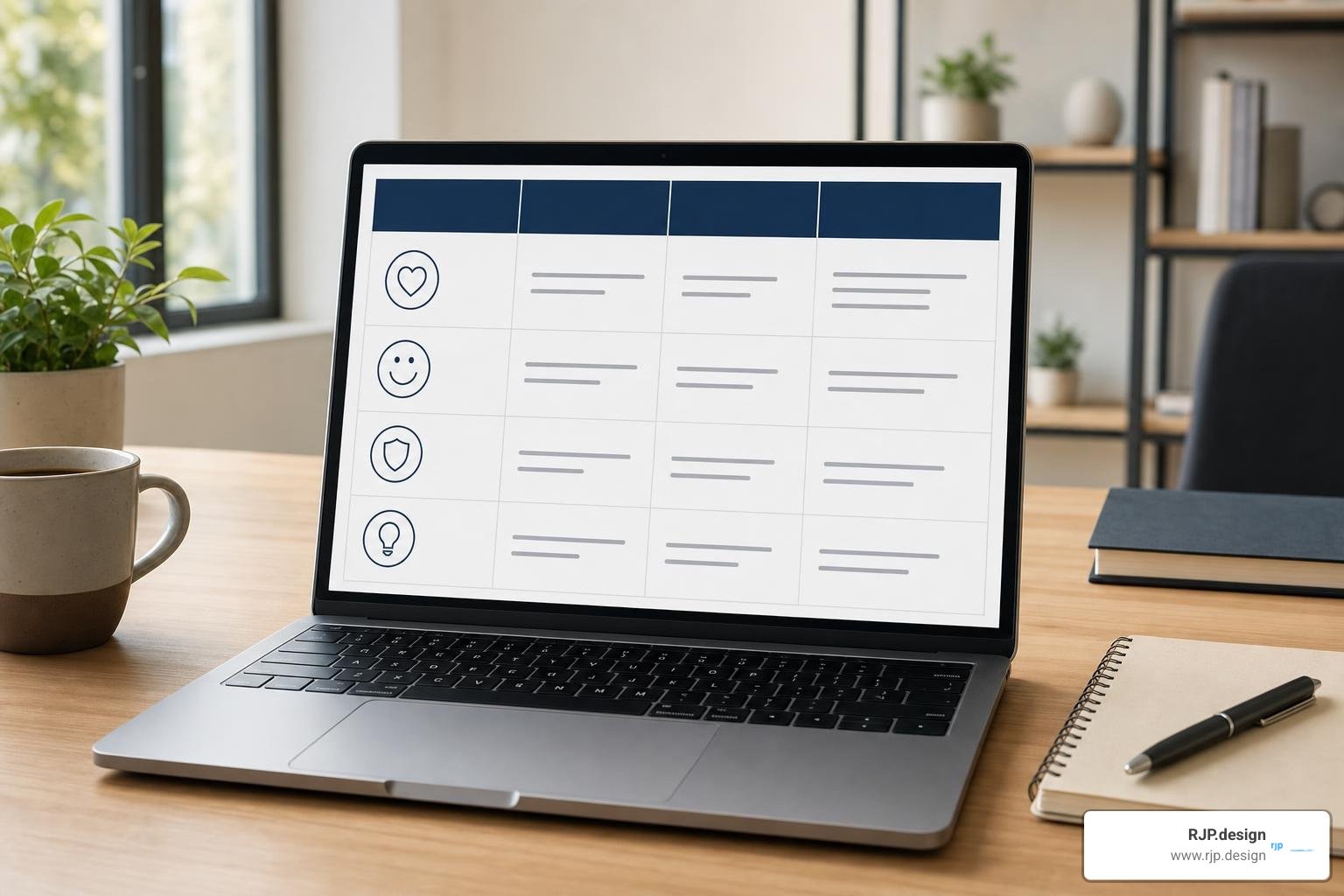
Your brand voice represents your business's human personality in written form. To establish yours, select 3 to 5 core descriptive adjectives (e.g., Empathetic, Authoritative, Unfiltered, Playful). Pair each adjective with explicit "Do's and Don'ts" so anyone writing on your behalf maintains consistency.
When crafting your brand narrative, structure your story using a classic customer-centric framework:
The Hero: Your customer (not your product).
The Conflict: The friction or industry problem they face.
The Guide: Your brand, offering empathy and authority.
The Resolution: The successful outcome achieved through your solution.
Slogans and taglines should condense this narrative into a memorable phrase. Consider bold water brand Liquid Death, which achieved over $263 million in sales by turning a commoditized product into a rebellious, anti-plastic lifestyle movement.
To turn your message into steady traffic, learn how to create content strategy and leverage professional content for digital marketing services.
Step 4: Design visual identity, logos, and color palettes
Your visual identity visually anchors your strategic position. Never design a logo before clarifying your strategy—otherwise, you will inevitably have to redesign it later.
Logo Style | Best Used For | Design Tip |
|---|---|---|
Wordmark / Logotype | New brands building name recognition | Select clean typography with distinct character spacing. |
Monogram / Lettermark | Companies with long names | Ensure legibility at micro scales (e.g., app icons). |
Combination Mark | E-commerce and modern multi-channel brands | Use versatile icon-plus-text elements that adapt everywhere. |
Brand Mark / Symbol | Established brands with high global recall | Pair with strong wordmarks early on before going standalone. |
Color psychology plays a crucial role in immediate subconscious perception. Choose 1–2 primary colors along with 2–3 accent shades. Limit typography choices to two complementary fonts: one bold heading typeface and one clean, accessible body font.
Codify these assets inside a brand style guide outlining logo clear spaces, color hex codes, and font hierarchies. For custom logos and graphic assets, discover our branding and graphic design services flyers print media logos etc.
Step 5: Integrate consistency across digital touchpoints
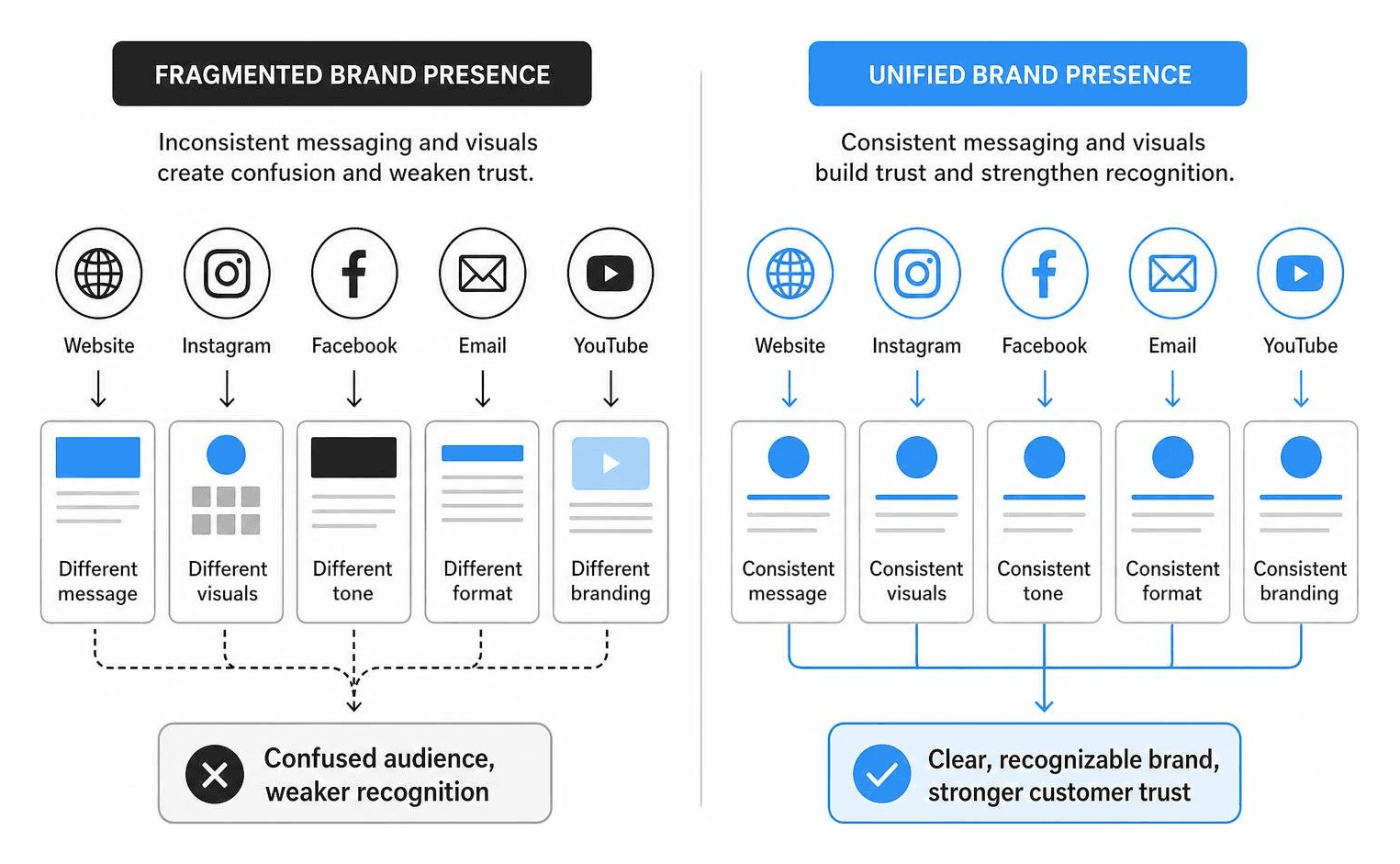
A brand identity only works if you enforce it consistently across all customer touchpoints. In 2025, Shopify research highlighted that 35% of business owners view establishing a cohesive social media presence as a core growth strategy.
To ensure omnichannel consistency:
Keep social handles, display photos, and bios uniform across platforms.
Align your web design layout, page speeds, and messaging tone seamlessly.
Combine founder-led content with official brand communications. Algorithmic channels frequently favor human faces, making founder storytelling a powerful driver for business awareness.
When prospective clients visit your site, custom web architecture ensures your visual identity translates into conversion opportunities. Learn how digital presence enhancement and tailored creative website solutions transform initial visits into recurring business.
How to build brand equity and measure success?

Brand equity is the commercial value generated from positive consumer perception, trust, and loyalty. But how do you quantify something as intangible as perception?
We recommend tracking a mix of quantitative metrics and qualitative sentiment indicators:
Net Promoter Score (NPS): Measures customer advocacy and trust levels.
Branded Search Volume: Tracks how many people explicitly search for your business name on Google or AI search discovery engines.
Direct Traffic & Repeat Purchase Rate: Measures organic customer retention and true brand recall.
Unlinked Brand Mentions: Tracks organic community discussion across news sites, podcasts, and social media.
For detailed steps on auditing these metrics, review our guide on how to measure success.
If customer sentiment drops, your visual identity feels dated, or your target audience shifts significantly, it may be time to rebrand. Test strategic tweaks with existing loyal customers before launching major public updates.
Launching and sustaining your modern brand identity
Building a brand is not a one-off project; it is an ongoing practice. Common mistakes that slow businesses down include:
Changing brand visuals too frequently out of personal boredom.
Trying to appeal to everyone instead of dominating a clear niche.
Neglecting customer support, which ruins customer trust faster than poor design.
You don't need a massive agency budget to launch effectively. Bootstrap tools, accessible design software, and AI content generation tools (used by 69% of merchants in 2025 according to Shopify) allow modern teams to launch lean and scale fast.
At RJP.design, we believe in straightforward collaboration, expert execution, and delivering digital strategies that yield tangible revenue growth. Whether you are building from scratch or elevating an existing presence, nail your foundational strategy, show up consistently, and let your reputation do the selling.
Ready to amplify your brand's digital presence? Elevate your online presence with expert guidance through our social media services.
External Resources & Further Reading
Step-by-step launch guidance: How To Build a Brand From Scratch (2026) - Shopify