
SEO
Order in the Court: Mastering Local SEO for Legal Firms
Jul 3, 2026

Why Local SEO for Legal Firms Is the Smartest Investment Your Practice Can Make
Local SEO for legal firms is the process of optimizing your law practice's online presence so that potential clients in your area can find you — not your competitor — when they search Google for legal help.
Here's a quick snapshot of what it involves and why it matters:
What It Is | Why It Matters |
|---|---|
Optimizing your Google Business Profile | Puts your firm on the map — literally |
Building consistent citations across directories | Signals trust and legitimacy to search engines |
Generating authentic client reviews | 90% of people read reviews before choosing a lawyer |
Creating location-specific website content | Connects your services to the clients near you |
Following ABA ethical guidelines in your marketing | Protects your reputation and license |
Over half of all law firm leads begin with a local search on Google. And yet, most small and mid-sized practices are barely visible in those results — leaving a steady stream of potential clients to walk straight through a competitor's door.
The stakes are high. When someone searches for a lawyer, they're often in a stressful, urgent situation. They need help now. If your firm doesn't appear in the top results, for most searchers you simply don't exist — 75% of users never scroll past the first page.
The good news? Local SEO is one area where smaller, focused firms can genuinely out-compete larger ones. It's not about budget. It's about strategy, consistency, and trust.
I'm Ross Plumer, a digital marketing strategist with experience helping businesses generate over $20 million in revenue through targeted online strategies — including local SEO for legal firms. In this guide, I'll walk you through exactly what it takes to rise to the top of local search results, ethically and effectively.
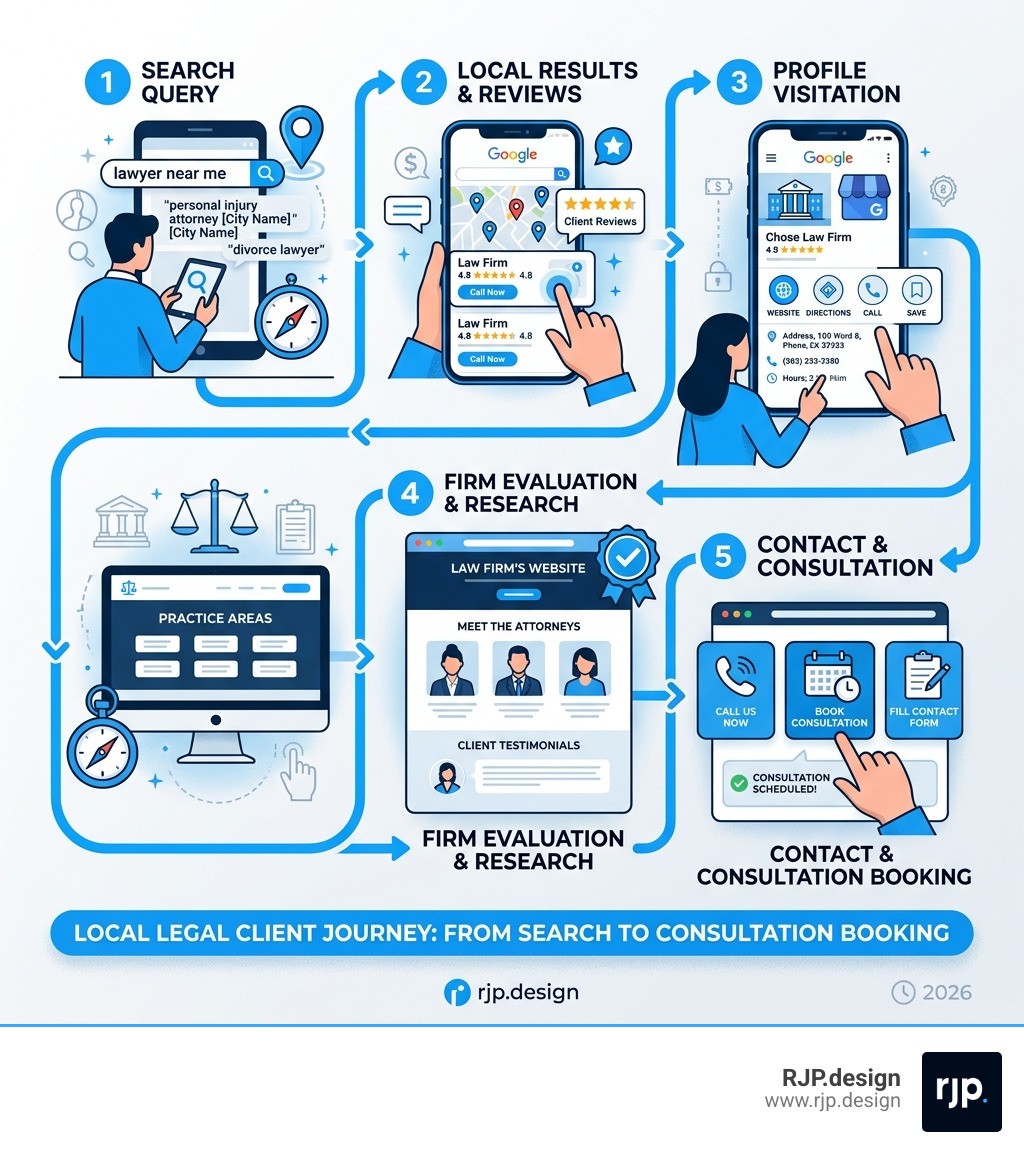
Know your Local SEO for legal firms terms:
The Pillars of Local SEO for Legal Firms
To win at local search, we first need to understand how Google decides which law firms to show in that coveted "Local Pack" (the map section at the top of the results). As of April 2026, Google’s algorithm remains centered on three core factors: Relevance, Distance, and Prominence.
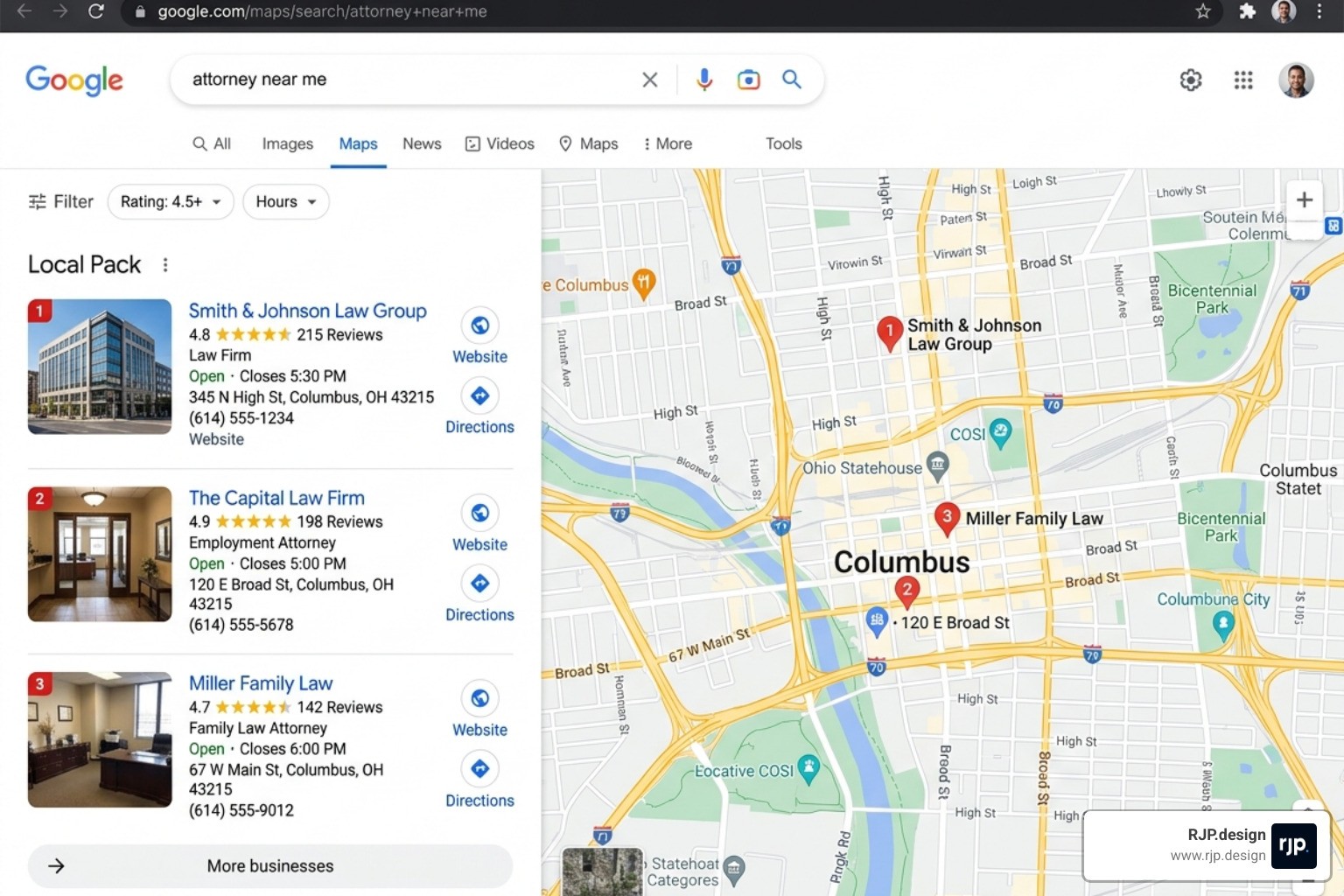
Relevance: How well does your firm’s profile match what the person is searching for? If someone searches for "probate lawyer," and your profile only mentions "general litigation," Google might skip you.
Distance: How far is your office from the searcher? While we can't move your office closer to every client, we can ensure Google knows exactly where you are.
Prominence: This is about your firm’s reputation. Google looks at your reviews, your backlinks, and how often your firm is mentioned across the web.
Understanding the difference between the "Local Pack" and "Localized Organic Results" is crucial for a balanced local SEO for legal firms strategy.
Feature | Local Pack (The Map) | Localized Organic Results |
|---|---|---|
Location | Top of the page, below ads | Below the Local Pack |
Main Driver | Google Business Profile | Website Content & Backlinks |
Key Factor | Proximity to the searcher | Domain Authority & On-page SEO |
Visuals | Includes Star Rating & Map | Text-based Snippets |
Optimizing Your Google Business Profile for Local SEO for Legal Firms
Your Google Business Profile (GBP) is the heartbeat of your local presence. If you haven't claimed it yet, stop reading this and do it now! Once claimed, you must verify it — usually via a postcard to your physical office.
Pro-tip for 2026: Don’t just set it and forget it. A fully optimized profile gets 42% more direction requests and 35% more website clicks than an incomplete one.
Choose Precise Categories: Don't just pick "Lawyer." Use "Personal Injury Attorney," "Family Law Attorney," or "Criminal Justice Attorney." Use the most specific primary category that fits your main practice area.
High-Quality Photos: Firms with professional photos see significantly higher engagement. Show your office, your team, and your lobby. It humanizes the firm and builds immediate trust.
Google Posts: Think of these as "mini-ads." Use them to announce a recent case victory (within ethical bounds), a new blog post, or community involvement.
Q&A Section: You can (and should) pre-populate this with frequently asked questions. "Do you offer free consultations?" or "Where is the best place to park?" are great starters.
For a deeper dive, check out our guide on how to optimize GMB to ensure no detail is missed.
Building Authority Through Citations and Reviews
In the legal world, your reputation is everything. Google measures this reputation through citations and reviews.
NAP Consistency NAP stands for Name, Address, and Phone number. It sounds simple, but inconsistency is a silent killer for local SEO for legal firms. If you are "Smith & Associates" on Google but "Smith Law Firm" on Yelp, Google gets confused. In 2026, even small differences like "Street" vs. "St." can slightly dilute your local authority. We recommend a monthly audit to ensure your NAP is identical across the web.
Priority Legal Directories While general directories like Yellow Pages are okay, legal-specific directories carry much more weight. You should prioritize:
Avvo: High domain authority and a go-to for client research.
Justia: Excellent for SEO value and practice area indexing.
Martindale-Hubbell: The gold standard for professional peer reviews.
FindLaw: A massive traffic driver for local legal queries.
The Review Engine 98% of consumers trust online reviews as much as personal recommendations. But it’s not just about the number of stars; it’s about review velocity (how often you get new reviews) and review diversity (having reviews on Google, Facebook, and Avvo).
We always advise our clients to respond to every review. A professional response to a negative review can actually build more trust than a sea of perfect 5-star ratings. It shows you are attentive and care about client satisfaction.
Explore more about managing these in our guide on local directory listings.
On-Page Strategies and Local SEO for Legal Firms
Your website needs to be a beacon for local searchers. This starts with Location Pages. If your firm has offices in Dallas, Plano, and Fort Worth, you need a dedicated, unique page for each city.
Don't use "cookie-cutter" content. Each page should mention:
Local landmarks (e.g., "Our office is just three blocks from the Old Red Courthouse").
Specific local laws or court procedures.
Embedded Google Maps for that specific office.
Unique client testimonials from that specific area.
Schema Markup This is "code for humans that helps robots." By adding "LocalBusiness" and "Attorney" schema markup to your site, you’re giving Google explicit data about your practice. This can lead to "Rich Snippets" in the search results, making your listing take up more space and look more professional.
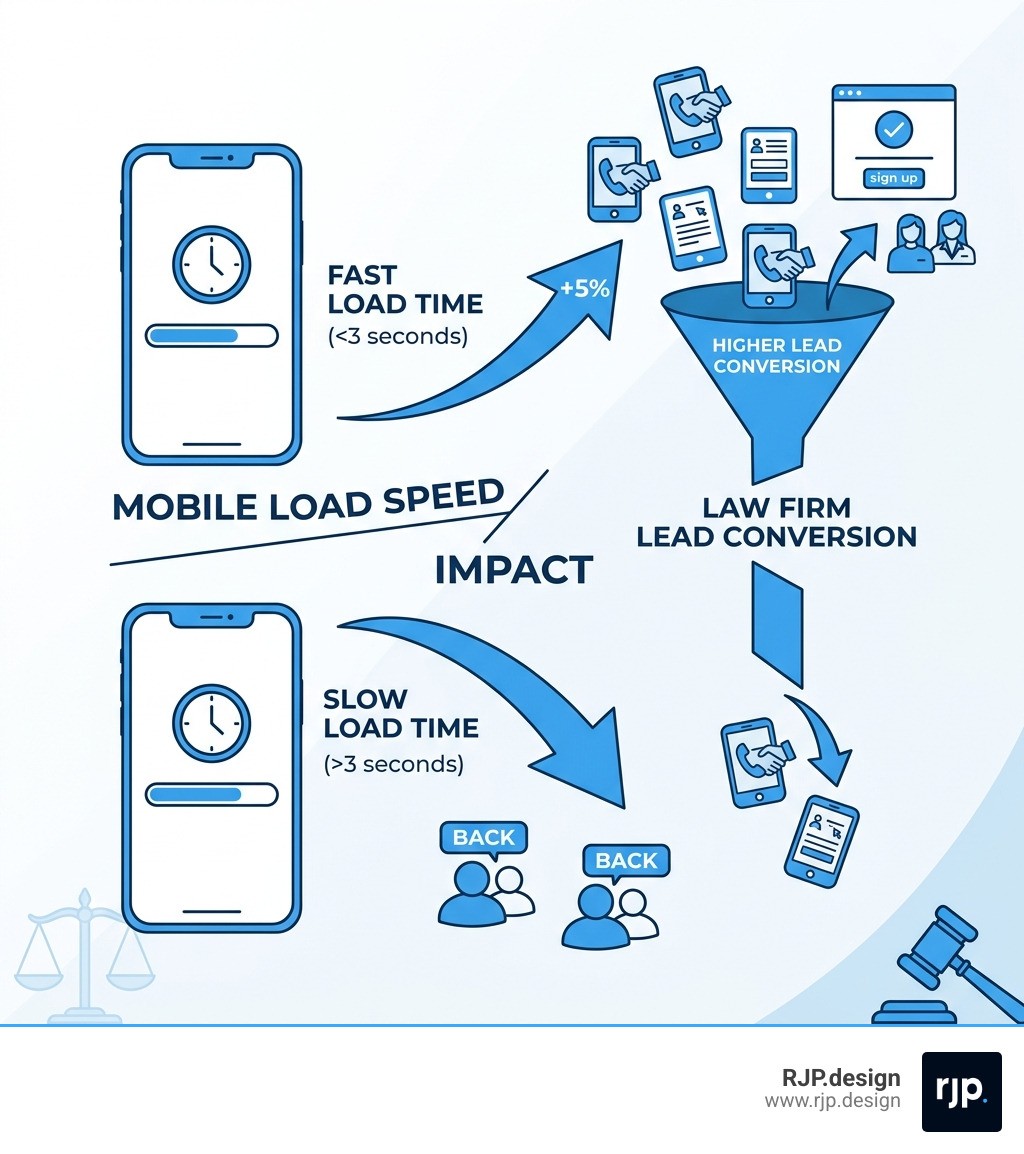
Mobile Speed and Usability Over 60% of legal searches happen on mobile devices. If your site takes more than 3 seconds to load, your potential client has already clicked the "Back" button and moved to the next firm. We ensure our sites are mobile-first, fast, and easy to navigate with "one-tap" calling buttons.
Get the full technical breakdown in our local SEO guide 2025 to stay ahead of the curve.
Ethical Compliance and Sustaining Your Rankings
Marketing a law firm isn't like marketing a coffee shop. You have a bar license to protect. Local SEO for legal firms must be handled with surgical precision to avoid violating ethical rules.

Navigating Ethical Pitfalls in Legal Marketing
The ABA Model Rules (specifically Rule 7.2) and various state bar associations have strict guidelines on how lawyers can advertise.
Avoid "Best" or "Expert" Claims: Unless you are board-certified in a specific area, avoid calling yourself the "best" or an "expert." Instead, use phrases like "Philadelphia criminal defense attorney serving Center City." It’s geographically relevant and ethically safe.
Honest Reviews: Never, ever incentivize reviews. Offering a discount or a gift card for a 5-star review is a direct violation of most ethical codes and Google’s own terms of service.
Jurisdictional Limits: Your website and GBP should clearly state where you are licensed to practice. Don't try to rank for "New York Divorce Lawyer" if you are only licensed in New Jersey.
No Virtual Offices: Google has cracked down on firms using virtual offices or P.O. boxes to "game" the distance factor. If you don't have a staffed physical office at a location, don't list it as a primary business address. It risks a GBP suspension and an ethics complaint.
For a comprehensive look at the rules, see Local SEO for Law Firms: The Complete Playbook | Legal Practice Marketing .
Measuring Success and Long-Term Growth
How do you know if your local SEO for legal firms is actually working? You need to look beyond just "rankings."
Key Performance Indicators (KPIs) to Track:
GMB Actions: How many people clicked "Call," "Directions," or "Website" from your map listing?
Local Organic Traffic: Is your website getting more visitors from your specific target cities?
Conversion Rate: Are these visitors actually filling out contact forms or calling the office?
Cost Per Lead: How does the cost of your SEO efforts compare to the revenue generated from new cases?
The Timeline for Results In our experience, Local SEO is a marathon, not a sprint.
Months 1-2: Technical fixes, GBP optimization, and citation cleanup. You might see a small bump in visibility.
Months 3-6: Rankings begin to stabilize. You’ll notice an uptick in calls and direction requests.
Months 6-12: This is where "prominence" kicks in. With consistent reviews and content, you can begin to dominate the Local Pack.
As we move through April 2026, the firms that started their journey a year ago are now reaping the rewards of a compounding digital asset. If you're just starting, the best time to begin was yesterday; the second best time is today.
Learn more about building a long-term local SEO campaign that delivers measurable ROI.
Conclusion: Partnering for Local Dominance
Mastering local SEO for legal firms is a full-time job. Between managing client cases and running a practice, most attorneys simply don't have the 15-20 hours a month required to do it right.
That’s where we come in. At RJP.design, we specialize in taking the technical burden off your shoulders. We don’t just build "pretty" websites; we build high-performance digital engines that ensure you are found by the people who need you most. Our down-to-earth team prioritizes your satisfaction and your firm’s growth, ensuring that your online presence is as professional and authoritative as your courtroom presence.
Whether you are a solo practitioner or a multi-location firm, we have the tools and the expertise to help you dominate your local market. Don't let your competitors capture the leads that should be yours.
Ready to take the stand? Explore our local SEO services or contact us today to start your journey to the top of the search results.
Quick Checklist for Your Firm Today:
[ ] Claim and verify your Google Business Profile.
[ ] Audit your NAP consistency across Avvo and Justia.
[ ] Set up a system to ask every happy client for a Google review.
[ ] Ensure your website loads in under 3 seconds on a mobile phone.
[ ] Add "LocalBusiness" schema markup to your homepage.
Success in local search is built on small, consistent actions. By following the strategies in this guide, you’re not just optimizing for an algorithm — you’re building a bridge to your next client. Let's get to work.