
SEO
The Ultimate Guide to SEO Basics for Service Businesses
Aug 10, 2026

Core Pillars of SEO for Service Businesses
Service vs Ecommerce: Why SEO for Service Businesses Works Differently
Ecommerce websites focus on product listings, online shopping carts, and shipping across country or global borders. In contrast, service providers operate within defined geographic boundaries. Whether you travel to customers as a Service Area Business (SAB) or welcome them at a physical office, your primary goal is generating inquiries rather than direct digital checkouts.
Understanding this difference is critical for effective Local Business SEO. Prospective clients searching for services usually need immediate solutions—like fixing a leaking pipe or scheduling a legal consultation. These searches are deeply transactional and location-sensitive. Rather than competing nationally, your strategy must focus on earning visibility within your real-world service radius and converting searchers into phone calls or form submissions.
Dominating Google Business Profile and the Local Map Pack
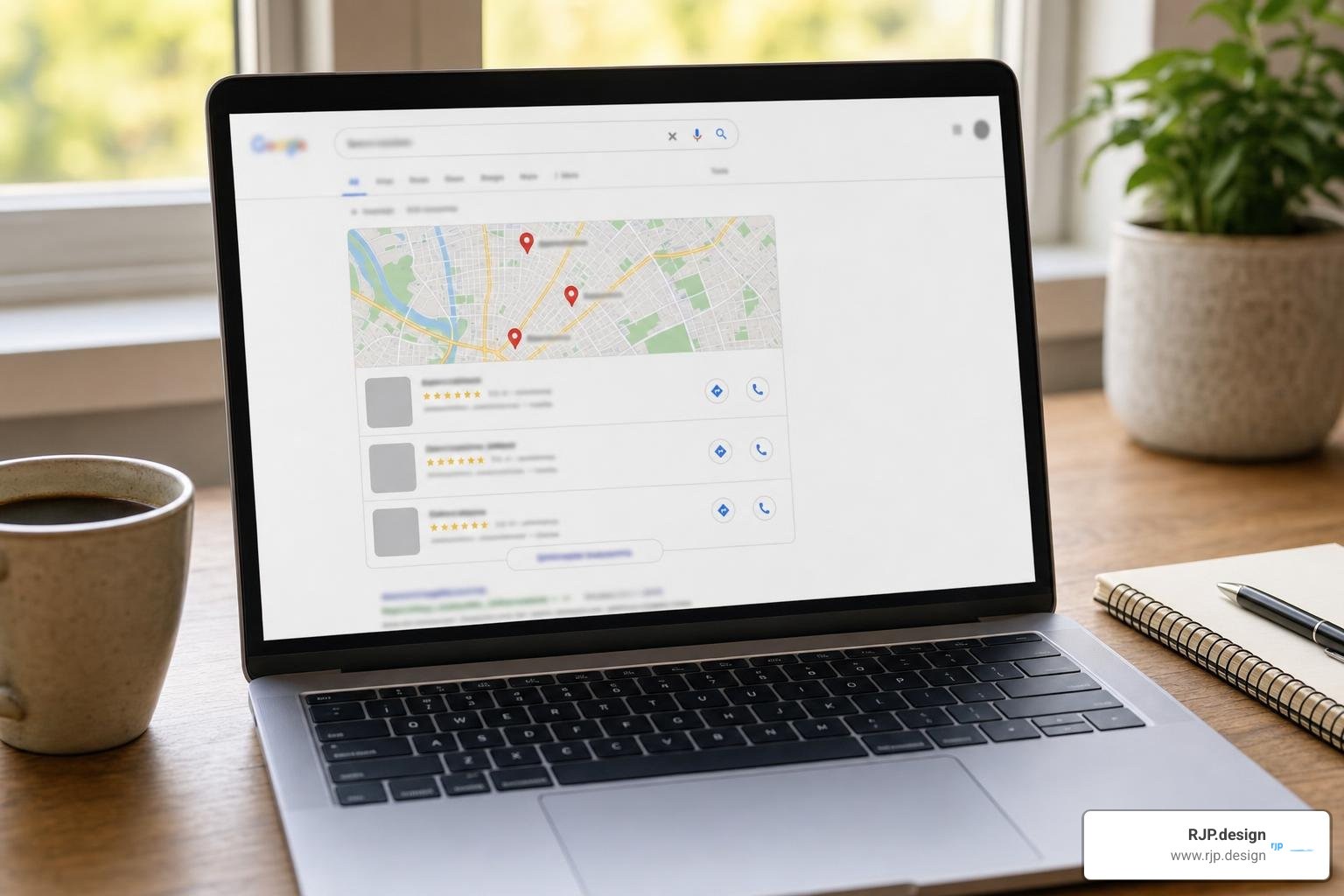
An optimized Google Business Profile (GBP) carries roughly 32% of the total ranking weight for local Map Pack listings. For service businesses, appearing in this top three-pack of map results often drives more direct leads than traditional organic links.
To maximize your local map rankings, focus on these core elements:
Select precise categories: Choose the single primary category that reflects your primary line of work, then add relevant secondary categories for your remaining services.
Define service areas accurately: If you visit clients, list the specific cities or postal codes you actively serve without setting an unrealistically wide radius.
Build review velocity: Reviews account for roughly 16% of local pack ranking weight. Consistently asking satisfied clients for feedback maintains a steady influx of recent reviews. Responding to all reviews—mentioning specific services where natural—signals active management to both Google and prospective clients.
Upload original visual evidence: Regularly upload photos of your team, branded vehicles, equipment, and completed projects. Profiles with real photos receive up to 42% more direction requests and 35% higher click-through rates.
Maintain strict NAP consistency: Keep your business Name, Address, and Phone number identical across all primary directories and web listings.
Structuring Service Pages and Location Pages for Maximum Reach
A common mistake service providers make is bundling every offering onto a single "Services" page or creating dozens of repetitive, low-quality city pages. Search engines require clear organization to index your offerings effectively.
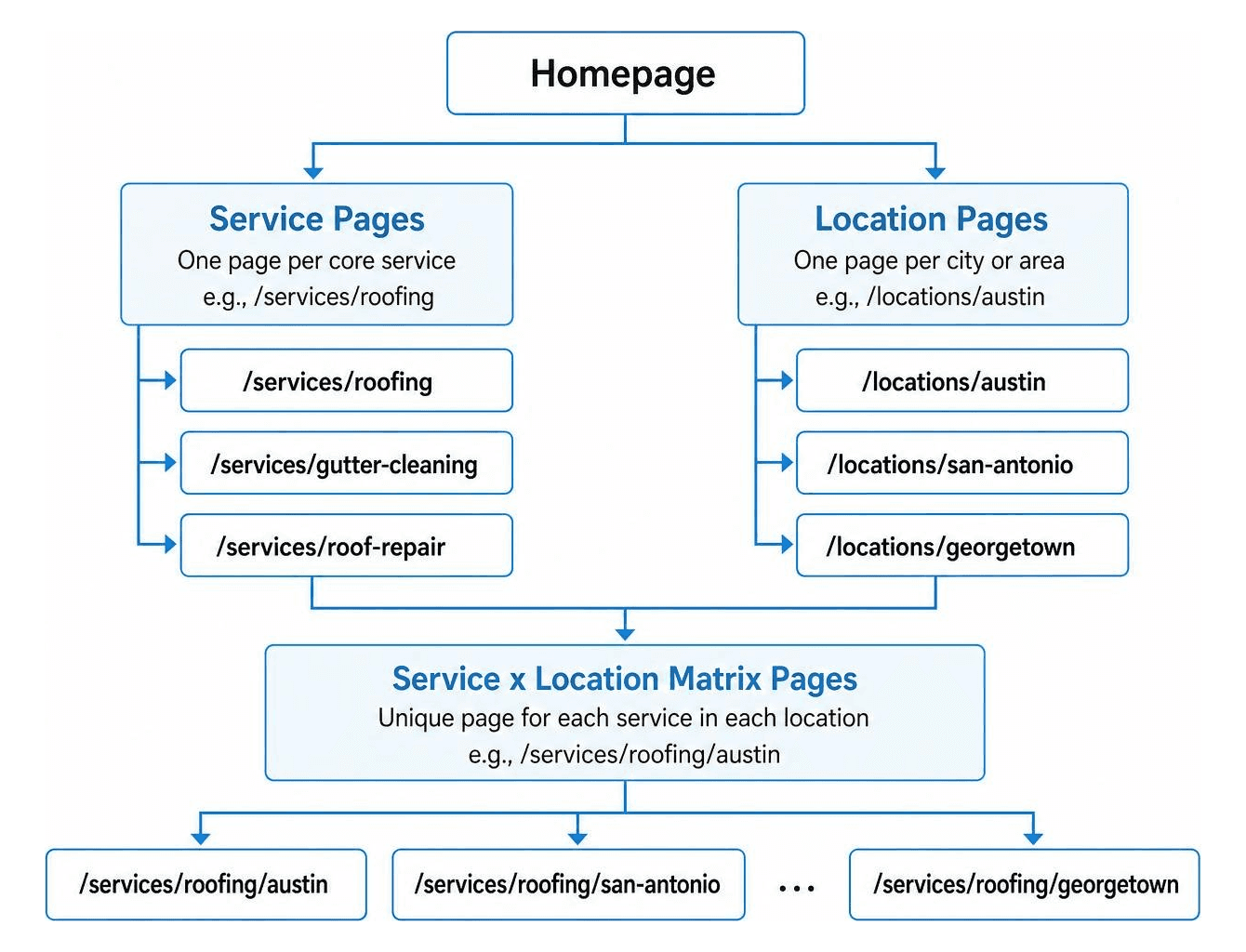
To build a high-performing site architecture:
Create dedicated service pages: Build one detailed page for each specific core service (e.g., dedicated pages for drain cleaning, water heater repair, and main line replacement rather than one general plumbing page).
Deploy a Service x Location matrix: For multi-city coverage, create custom location pages that incorporate genuine local proof—such as localized project descriptions, local reviews, and city-specific details—to avoid duplicate content penalties.
Optimize clean URL structures: Use logical URL formats like
/services/service-nameand/locations/city-name.Implement structured data: Apply LocalBusiness, Service, and FAQPage Schema.org markup to help search engine crawlers understand your exact offerings and service boundaries. A strong layout built alongside professional Service Website Design ensures visitors convert easily once they land on your site.
Technical SEO Fixes and Lead-Generating Content Strategies
Technical performance and content depth work together to build search authority and trust. Because 76% of local searches occur on mobile devices, your site must feature tap-to-call phone numbers, fast-loading forms, and clean mobile responsiveness. Sites loading in under two seconds keep visitor engagement high, while slow pages lose up to half their potential traffic.
Content marketing for service providers should address real client questions throughout the buying journey. Focus on content types that capture high-intent leads:
Detailed cost guides: Address pricing directly (e.g., "How Much Does Roof Replacement Cost in 2026?") to capture buyers who are actively researching budget requirements.
How-to articles and diagnostic posts: Explain troubleshooting steps for minor issues; this builds authority while encouraging clients to call when a problem requires professional help.
Seasonal prep guides: Publish maintenance checklists and seasonal posts three months prior to peak demand periods (such as winterizing plumbing or prepping HVAC units for summer).
Leveraging Comprehensive SEO Services ensures both technical site health and strategic content production work together seamlessly.
Execution, ROI Tracking, and Avoiding Critical Mistakes

Building Local Backlinks and Measuring SEO for Service Businesses ROI
Building search prominence requires earning trust signals from respected sources across your local community. Instead of purchasing generic link packages, focus on earning local backlinks through natural outreach and community involvement:
Sponsor local organizations: Support local sports teams, charities, and community events to earn links on event pages and partner lists.
Join trade associations: Secure listings in local chambers of commerce, regional trade organizations, and local business directories.
Form non-competing partnerships: Partner with adjacent service providers (such as a home inspector linking to a trusted roofer) to cross-promote services online.
To measure your true ROI from SEO for service businesses, track lead actions directly rather than focusing solely on keyword positions. Set up conversion tracking in Google Analytics and use dynamic call tracking to tie phone calls, form submissions, and booked estimates directly back to organic search traffic. Integrating dedicated Local SEO Services helps establish end-to-end conversion tracking to verify performance.
Key SEO Mistakes, Ranking Timelines, and Cost Per Acquisition
Avoiding common pitfalls saves significant time and budget. The most frequent errors include:
Creating thin, copy-pasted location pages with identical text across multiple city targets.
Failing to respond promptly or consistently to customer reviews.
Hiding phone numbers or booking options behind long forms, creating unnecessary friction for users.
SEO build-out requires time to demonstrate compounding returns. While initial indexation updates occur within 30 to 60 days, noticeable lead growth generally develops between months three and six, with strong ROI compounding over 7 to 12 months.
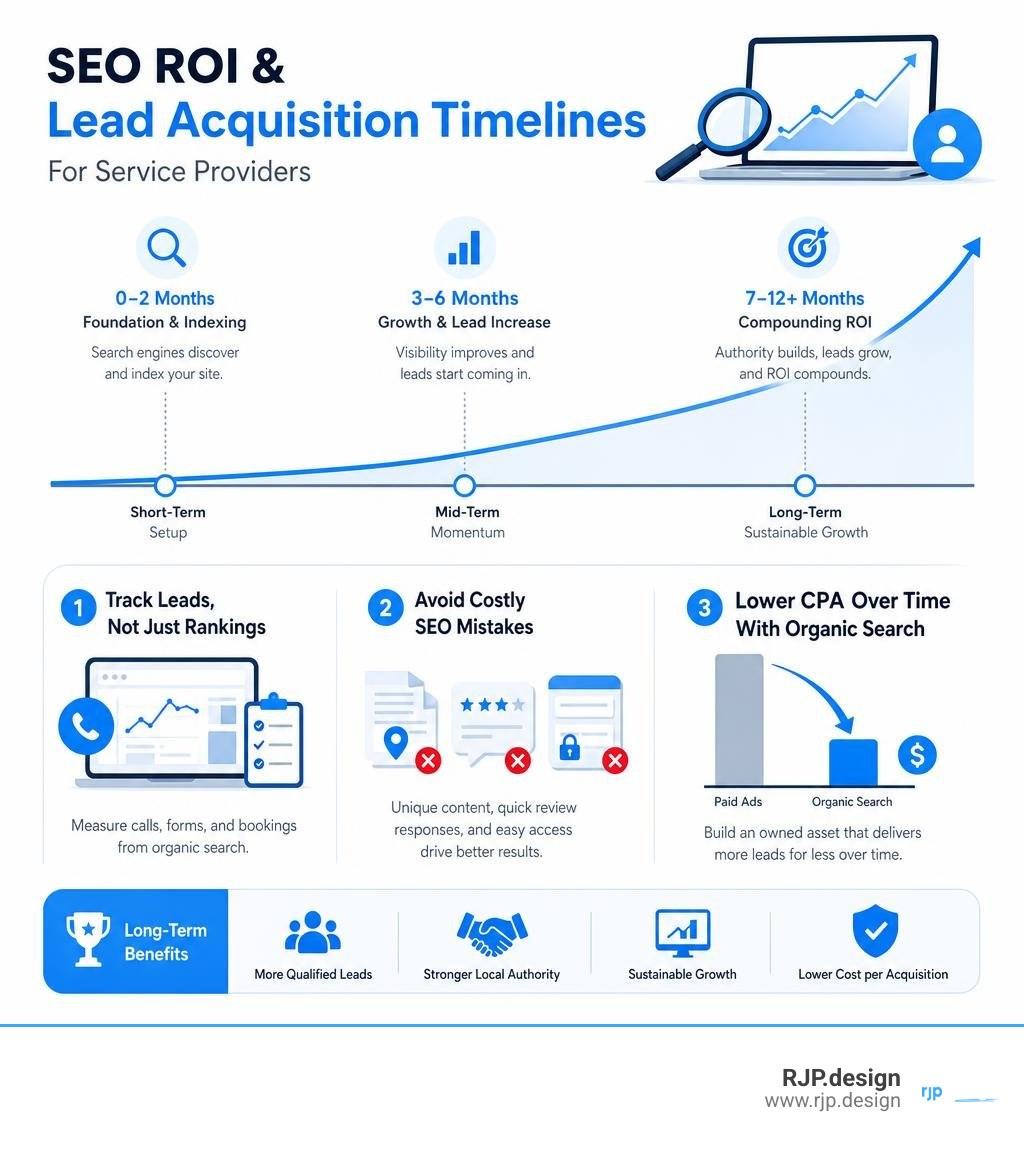
Over time, organic search delivers an extraordinarily low cost per acquisition compared to paid advertising channels, because you are building an owned asset rather than paying for every individual click.
Partnering with experienced specialists like our team at RJP.design ensures your website layout, technical architecture, and local strategy are built for long-term growth. Explore our full suite of SEO Optimization Services to start growing your local search visibility today.