Web
The Art and Science of Web Design & Development Explained
Jan 15, 2026
Why Website Design Development Matters for Your Business
Website design development is the process of creating a functional, visually appealing website. It combines creative design (the look and feel) with technical development (the code) to build a site that attracts visitors and converts them into customers.
The Website Design Development Process at a Glance:
Strategy & Planning - Define goals, analyze your audience, create sitemaps and wireframes
Design & Content Creation - Develop visual mockups, branding, and SEO-optimized content
Coding & Development - Build the functional website using HTML, CSS, JavaScript, and CMS platforms
Testing, Launch & Maintenance - Ensure quality, deploy the site, and provide ongoing support
Why it matters: Visitors form an impression of your site in about 0.5 seconds. A poorly designed or slow website means lost opportunities, while a well-executed one becomes your most powerful business asset.
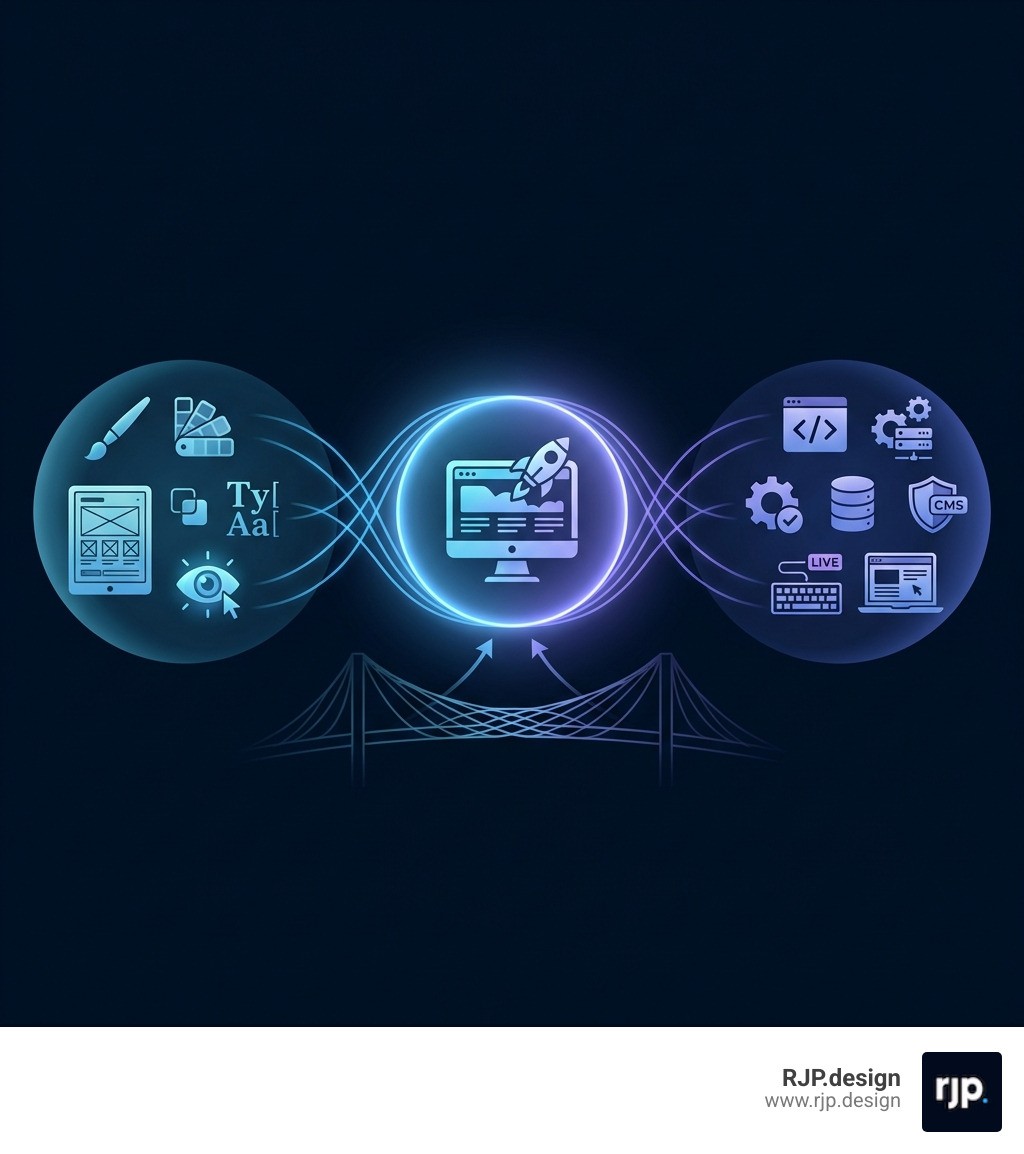
Web design handles what users see (the visuals and user experience), while web development handles what users interact with (the functional code). The magic happens when these two disciplines work together seamlessly.
The reality for small businesses: Many struggle with outdated websites that are slow, don't work on mobile, or fail to drive results. Understanding the development process empowers you to make informed decisions, whether you're building in-house or partnering with an agency.
I'm Ross Plumer, and I've helped businesses market over $20 million in revenue through strategic website design development and digital marketing. My approach combines technical expertise with user psychology to create websites that don't just look good—they perform.
The Core Website Design Development Process
A successful website follows a structured process, much like a building needs a blueprint. This section breaks down the journey from a simple idea to a fully functional, live website, showing how each phase builds upon the last to create an effective digital presence.
Step 1: Strategy & Planning
This "thinking before coding" phase is crucial, as projects often fail from a fuzzy vision, not a lack of technical skill. We start by defining what you want your website to accomplish.
Project Ideation and Goal Setting: First, we define your vision and goals. Are you aiming to generate leads, sell products, or build a community? We prioritize these goals to guide every decision, using our defining project goals process to pinpoint what success looks like for you.
Target Audience Analysis: Understanding your target audience—their needs, values, and limitations—is paramount. This insight informs the content, user experience (UX), and design, as a site for teenagers will differ greatly from one for corporate executives.
Competitor Analysis: We analyze your competitors to see what works and what doesn't. This helps us identify market gaps and position your website to stand out from the crowd.
Sitemap Creation: A sitemap is your website's blueprint. It organizes pages logically for a smooth user journey and clear structure, which is crucial for both user navigation and search engine optimization (SEO).
Wireframing & User Flow Mapping: Wireframes are rough sketches of each page, showing features and navigation without visual design. They establish information hierarchy and map user flows—how visitors will move through your site. This early step, part of our Project Planning, helps us find usability issues before design begins.
Step 2: Design & Content Creation
With a solid plan, we bring your vision to life with visuals and compelling content. This is where the "art" of website design development shines.
Visual Design (UI/UX): Here, we shape your site's "look and feel." Our designers create the layout, colors, typography, and user interface (UI), balancing brand guidelines with modern trends. Since users form impressions in 0.5 seconds, a strong, intuitive, and responsive design is crucial.
Branding, Color Theory, & Typography: Consistent branding, color, and typography are your website's soul. We select palettes and fonts that reflect your brand, evoke emotion, and ensure readability. High-quality visuals are essential to engage users.
Content Strategy & Creation: Content is a key driver of engagement and visibility, not just filler. We develop a content strategy to craft messaging that resonates with your audience, tells your brand story, and guides visitors toward your goals. Our Content for Digital Marketing Services ensures your message is powerful.
SEO Keyword Research & On-Page SEO: Content and SEO are linked. We perform SEO Keyword Research to find high-value keywords and weave them naturally into your content. We also optimize on-page SEO elements like title tags and meta descriptions to help search engines rank your site. The goal is to create useful, search-friendly content.
Here’s a quick overview of the distinctions and collaboration between design and development:
Aspect | Web Design (The Look & Feel) | Web Development (The Code & Functionality) |
|---|---|---|
Focus | Visual aesthetics, user experience (UX), user interface (UI) | Functionality, performance, underlying code |
Output | Wireframes, mockups, prototypes, design systems | Functional website, databases, server-side logic, APIs |
Key Skills | Graphic design, color theory, UX/UI principles, empathy | Programming languages, problem-solving, logic, system architecture |
Tools | Figma, Adobe Creative Cloud | VS Code, GitHub, frameworks (React, Node.js) |
Goal | Create an intuitive, engaging, and visually appealing user journey | Build a robust, secure, and high-performing digital product |
Step 3: Coding & Development
Here, static designs become interactive experiences. Our developers use various programming languages and technologies to bring the approved designs to life.

HTML (HyperText Markup Language): HTML is the skeleton of your site, providing the basic structure for every page, including headings, paragraphs, and images.
CSS (Cascading Style Sheets): CSS is the style. It controls the look of your HTML elements—colors, fonts, and layout—ensuring a consistent visual identity that matches the design.
JavaScript: This language adds interactivity to your website, from animations to complex forms. It makes your site dynamic and engaging for users.
Front-End Frameworks: For complex projects, we use frameworks like React or Vue.js. They provide pre-built structures that accelerate development and improve performance.
Back-End Development: This handles the "behind-the-scenes" logic, such as managing databases and servers that power dynamic content and user authentication.
Content Management System (CMS): A robust CMS is essential for many businesses, allowing easy content updates without coding. We often use platforms like WordPress, which powers 43.2% of the websites on the Internet. Whether you need a Custom Website Design Company or a Business Website Development solution, we choose a CMS that is intuitive and powerful.
Step 4: Testing, Launch & Maintenance
Building the site is half the battle; ensuring it performs flawlessly long-term is the other. This final phase is critical for success.
Quality Assurance (QA): Before launch, we conduct rigorous Quality Assurance (QA) testing. This systematic process catches bugs and inconsistencies. We check:
Functionality Testing: Does every button and form work as expected?
Browser Compatibility: Does the site look and function correctly across all major browsers (Chrome, Firefox, Safari, Edge)?
Performance Testing: We test loading speeds and responsiveness. 53% of mobile users leave if a page takes longer than three seconds to load.
Security Checks: We implement robust security measures to protect your data.
Deployment: Once testing is complete, we move your website to a live server, making it accessible to the world. We handle all technical aspects for a seamless transition.
Post-Launch Support & Maintenance: A website isn't a "set it and forget it" asset; it needs to evolve. Our commitment continues post-launch with comprehensive support, including regular updates, backups, and performance and security monitoring. As your business grows, a Website Redesign Service may be needed to stay current, and we’re here for that too!
Key Pillars of a Successful Modern Website
A great website isn't just about a solid process; it's about building for the modern user and the future of the web. This means prioritizing speed, inclusivity, and leveraging new technologies to stay ahead. We believe your website should work for you, not the other way around!
Performance & Accessibility: The Foundation of User Experience
Online users have little patience. Performance and accessibility are no longer optional—they are fundamental requirements for a successful website.
Page Speed: Slow loading speeds have real consequences. We know that 53% of mobile users leave if a page takes longer than three seconds to load. Faster pages also convert better; an analysis found that pages loading in one second convert 2.5 to three times more than pages that take five seconds to load. Google makes speed a critical ranking factor with its Core Web Vitals, which measure loading, interactivity, and stability. Our focus on performance optimization ensures your site is fast and keeps users happy.
Responsive Web Design: With more users on mobile than desktop, a responsive layout is vital. Responsive Web Design ensures your site automatically adjusts to any screen size for an optimal experience. This is crucial for usability and reaching your entire audience.
Web Content Accessibility Guidelines (WCAG): Accessibility means designing sites for people with disabilities to use effectively. This is not just good practice but often a legal requirement under laws like the Americans with Disabilities Act (ADA). With over 95% of homepages failing Web Content Accessibility Guidelines (WCAG) checks, we build accessibility into our website design development process from the start. This improves usability for all and reduces your legal risk.
The Future: AI's Impact and Essential Tools
The landscape of website design development is constantly evolving, with artificial intelligence (AI) ready to revolutionize how we build and interact with the web. Embracing these advancements and utilizing the right tools are key to staying competitive.
AI in Development: AI is accelerating content creation, informing UX decisions, and automating testing. This makes the development process faster and more intelligent. We leverage AI to streamline workflows and build with cutting-edge efficiency.
Personalization: Personalization, tailoring content to user preferences, is now a requirement. 65% of consumers prefer buying from brands with personalized experiences, which can cut acquisition costs, boost revenue, and improve ROI. AI is key to delivering these bespoke experiences.
Structured Data: This standardized format helps search engines categorize and display your content in rich results, improving findability. As AI-powered search grows, well-implemented structured data is crucial for your online presence.
Automation: From automated testing to deployment, automation reduces human error and speeds up the development lifecycle, allowing our teams to focus on creativity and complex problem-solving.
Essential Tools: A craftsman is only as good as their tools, and the same goes for web design and development. We rely on a powerful suite of tools to bring your projects to life:
Design: Figma is our go-to for collaborative design and bridging the gap between designers and developers, especially with its Figma for VS Code plugin.
Development: Visual Studio Code (VS Code) is a powerful, versatile code editor.
Version Control: GitHub is indispensable for managing code changes and team collaboration.
Collaboration: Tools like Slack keep our teams connected and ensure efficient communication.
Performance Monitoring: We use tools like Google's PageSpeed Insights and the Chrome User Experience Report to continuously monitor and optimize your website's speed and performance.
At RJP.design, we combine these cutting-edge tools and methodologies with our deep expertise to deliver websites that are not just beautiful and functional, but also future-ready. We're always learning, always adapting, and always striving to deliver the best possible results for our clients.
Ready to build a high-performing website that drives results? Explore our services and let's craft a digital experience that truly stands out.