
Web
Website Redesign for Contractors: From Digital Eyesore to Lead-Generating Machine
Jul 24, 2026

Your Contractor Website Is Either Winning Clients or Losing Them — There Is No Middle Ground
A website redesign for contractors is the process of rebuilding or significantly updating an existing contractor website to improve its design, performance, local search visibility, and ability to convert visitors into qualified leads.
Here is what a successful contractor website redesign typically involves:
Mobile optimization — ensuring the site loads fast and looks sharp on any device
Local SEO structure — service-area pages, schema markup, and Google-friendly architecture
Trust signals — real project photos, licensing badges, reviews, and team credentials
Clear calls-to-action — single, focused prompts like "Get a Free Estimate" placed strategically throughout
SEO preservation — 301 redirects, crawl audits, and content migration to protect existing rankings
AI search visibility (GEO) — structuring content so tools like ChatGPT and Google AI Overviews can recommend your business
Think about the last time you hired someone for a high-value service. Chances are, you looked them up online first — even if a friend referred them. That is exactly what your prospective clients are doing right now.
Your website is often the first real impression a potential client gets of your business. And if it looks like it was built in 2012, loads slowly on a phone, or buries the "Request a Quote" button three scrolls deep, that impression is doing serious damage — quietly, every single day.
The construction and contracting industry has a visibility problem that most business owners do not fully see. An outdated site does not just look bad. It actively pushes leads toward competitors with sharper, faster, more trustworthy digital presences.
The good news? This is entirely fixable.
I am Ross Plumer, founder of RJP.design, and I have spent my career helping contractors and service businesses transform underperforming websites into genuine lead-generation engines — with hands-on experience across projects that have collectively driven over $20 million in client revenue. My approach to website redesign for contractors blends digital marketing strategy, conversion psychology, and technical SEO to deliver results that go well beyond aesthetics. In the sections that follow, I will walk you through everything you need to know to make a smart, informed redesign decision.
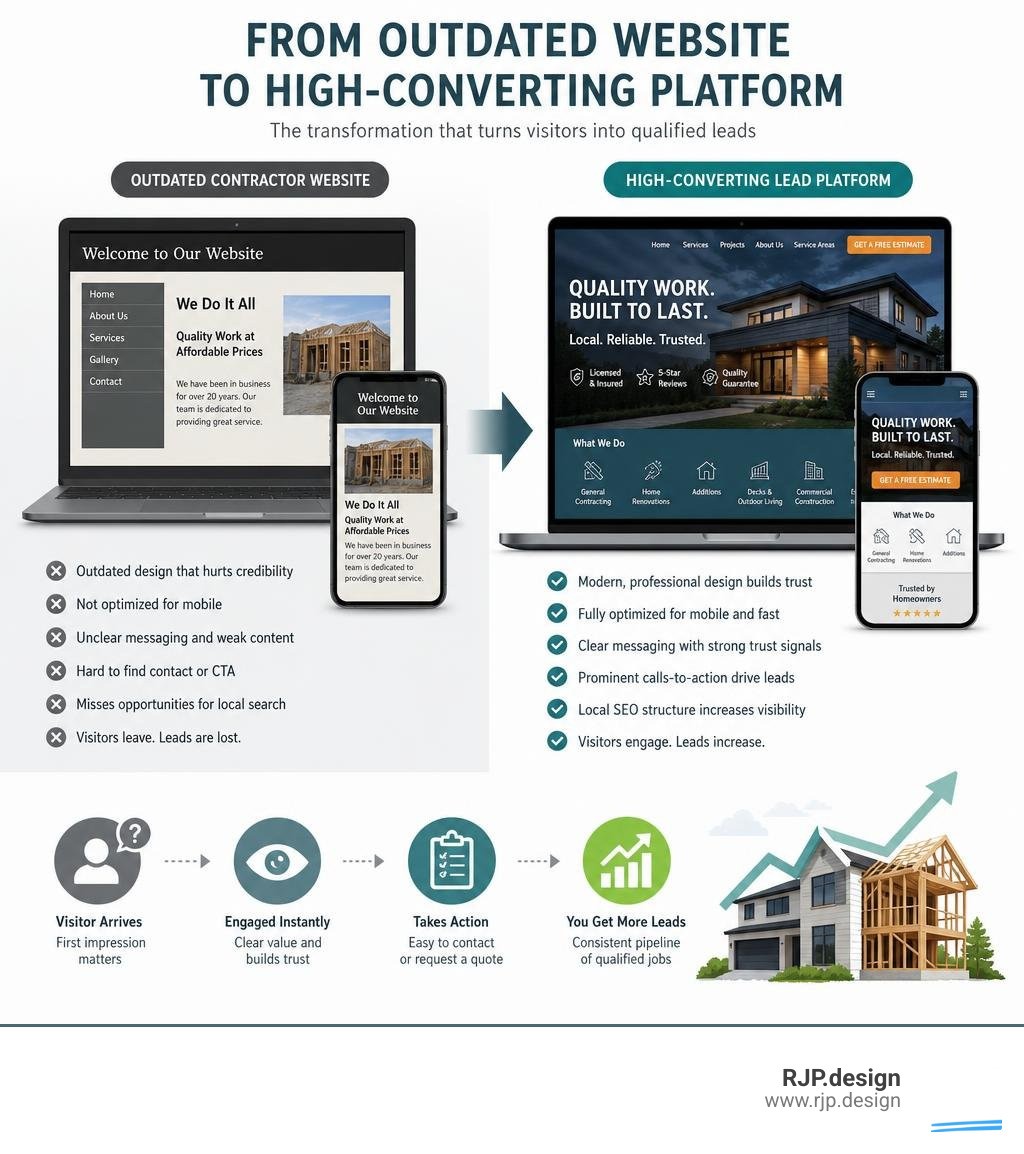
Why a Website Redesign for Contractors Is Essential in 2026
In 2026, the digital landscape for home services and commercial building has shifted. Word-of-mouth remains highly valuable, but the vetting process has moved almost entirely online. Before a homeowner invites you into their kitchen or a property developer puts you on a bid list, they will vet your digital footprint.
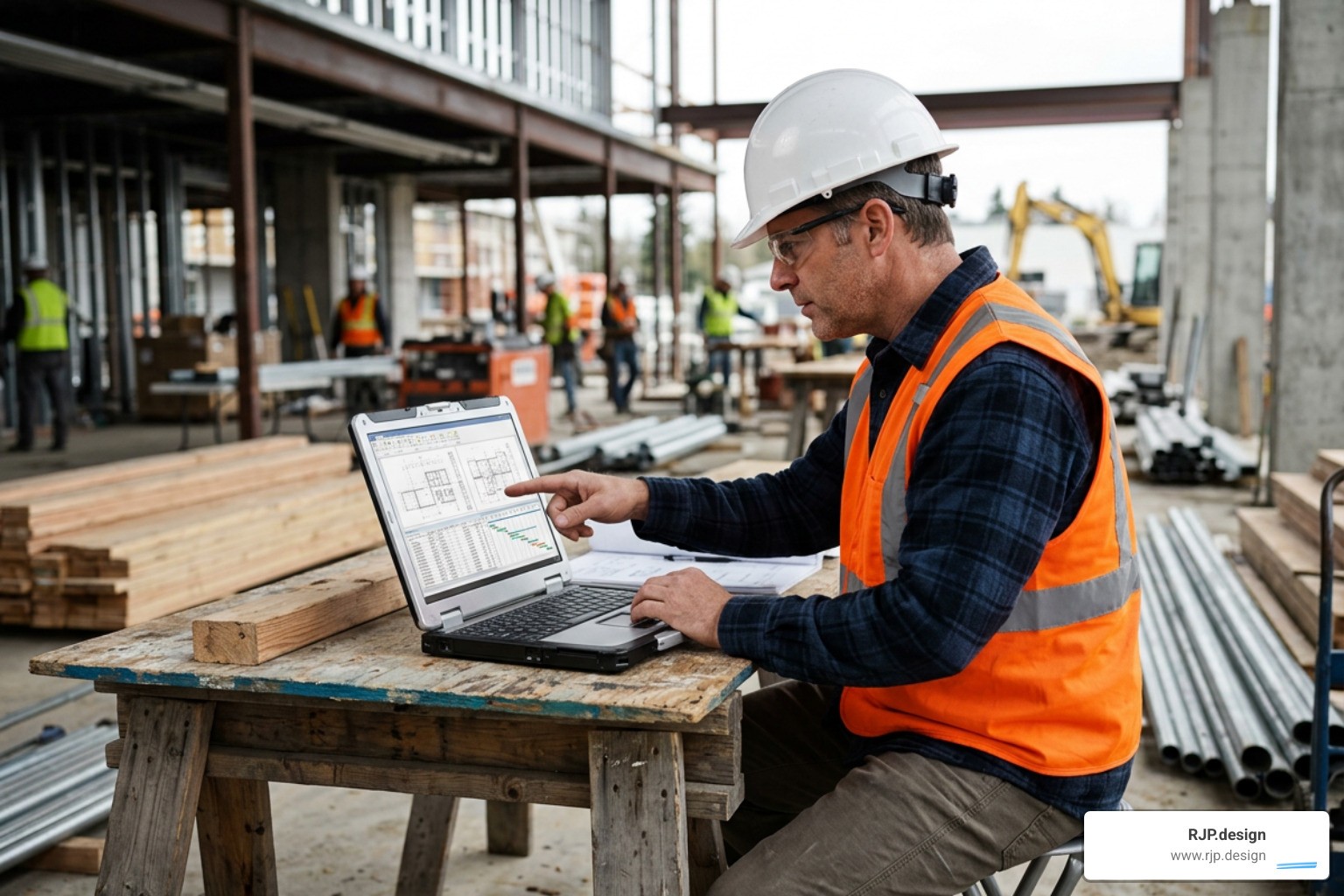
A modern website acts as your top-performing salesperson. It works 24/7, answering basic questions about your service areas and credentials so your office phone stops ringing with unqualified inquiries. If your site looks unprofessional, prospects will assume your physical craftsmanship cuts corners too. Building digital authority through a strategic web presence is no longer a luxury; it is the core infrastructure of modern business growth.
Red Flags That Signal It Is Time for a Website Redesign for Contractors
How do you know if your current site is holding your business back? Look out for these common warning signs:
Your site feels sluggish on mobile: If pages take more than a few seconds to display, users will leave before they even see your work.
The "cringe" factor: If you find yourself telling prospective clients, "Don't look at our website, it's really outdated," it is time for a change.
High bounce rates and low lead volume: You might be getting traffic, but if visitors leave almost immediately without submitting a form, your layout is failing to convert them.
Outdated branding and services: Your business has likely evolved. If your site still lists services you no longer offer or displays an old logo, it creates confusion.
Administrative overhead: If your team spends hours answering basic questions about your licensing, process, or service area, your website is not doing its job.
If you recognize these red flags, exploring a Professional Website Redesign is the logical next step. To understand the full scope of a modern overhaul, check out our Complete Website Redesign Guide.
How a Website Redesign for Contractors Boosts Local SEO and AI Search Visibility
When local homeowners search for services, they use highly localized terms like "kitchen remodeling near me." To win these high-value leads, your site must rank prominently in local search results.

Mobile performance plays a massive role here. Statistics show that 68% of construction-related search queries now happen on a mobile device. Furthermore, 53% of mobile users abandon a site that takes over 3 seconds to load. If your site fails the Google Mobile-Friendly Test, search engines will bury your business in the search results.
But search is changing. In 2026, we also have to optimize for Generative Engine Optimization (GEO). AI-driven search engines like ChatGPT, Claude, and Google AI Overviews are actively pulling data from contractor websites to answer user prompts. To make sure these AI engines recommend your business, your redesign must include:
Clear, structured data through local schema markup (LocalBusiness, Service, and Review schemas).
Highly organized, granular service and location pages that follow the Google Search Central Guidelines.
Fast-loading, accessible content that AI crawlers can easily parse.
To build a sustainable flow of organic leads, integrating professional Local SEO Services is critical. For a deeper dive into finding regional design experts, read our Web Design Near Me Ultimate Guide.
Crucial Conversion Elements: Portfolios, Trust Signals, and CTAs
A beautiful website is useless if it does not convert visitors into paying clients. In remodeling and home services, clients buy on emotion and visual proof.
To turn admiration into action, your site needs three pillars:
High-Quality Portfolios: Swap out low-resolution smartphone photos for professional project photography. Instead of a simple grid of images, structure your portfolio as case studies. Tell the story of the project: the client's problem, your process, and the final outcome.
Strong Trust Signals: Display your licensing numbers, general liability insurance badges, and trade association memberships prominently. Authentic client testimonials and reviews should be woven throughout your pages, not hidden on a single page.
Focused Calls-to-Action (CTAs): Industry data shows that pages with a single focused CTA convert 202% better than pages with multiple competing options. Instead of confusing visitors with five different buttons, direct them to one clear next step, like "Schedule a Consultation."
For a deeper look at optimizing your service pages to drive conversions, explore our guide on Service Website Design.
You can also streamline your office operations by integrating your website forms directly with your CRM (like JobTread) using automation tools like Zapier. This ensures that every new lead is instantly funneled to your sales team without manual data entry.
Common Redesign Mistakes That Hurt Contractor Lead Generation
Many contractors make critical mistakes during a redesign that actually destroy their existing search engine rankings and lead pipelines.
High-Converting Website Elements | Low-Converting / Outdated Elements |
|---|---|
Fast, lightweight, mobile-responsive layout | Flashy parallax scrolling and heavy video backgrounds |
Dedicated, granular service pages | All service offerings merged onto a single page |
Short, high-intent contact forms (Name, Phone, Zip) | Overly long forms that ask for too much details upfront |
Structured 301 redirects to preserve SEO rankings | Broken URL structures and ignored legacy links |
Real, custom photos of your actual team and trucks | Generic stock photos used across the entire site |
One of the biggest conversion killers is a bloated contact form. Every additional field added to a contact form reduces submission rates by approximately 11%. Keep your intake forms simple: ask only for their name, contact details, project type, and zip code.
Another common pitfall is merging your service pages. If you offer roofing, siding, and gutter services, do not combine them into one generic page. Doing so destroys your search visibility for each individual service. Keep your pages highly granular to maintain your search rankings.
B2B vs. Residential: Tailoring the Redesign to Your Audience
Your redesign strategy should vary significantly depending on whether you serve commercial clients or residential homeowners.
For residential remodeling, the buying process is emotional and highly visual. Homeowners want to see beautiful transformations, read friendly client reviews, and easily understand your pricing and timeline.
For commercial general contractors, your website is not a passive lead-generation tool; it is an institutional qualification tool. Property managers, institutional developers, and subcontractors do not make emotional decisions. They want to verify your safety record, see your past multi-million dollar project portfolio, and access a secure subcontractor portal to review bid documents.
If you are a local business owner looking to tailor your platform to your target market, read our guide on Small Business Website Redesign to align your site with your business goals.
Cost, Timelines, and Preserving SEO Authority During Launch
A professional contractor website redesign typically takes 4 to 8 weeks to complete, depending on the complexity of your portfolio and custom features.
To protect your business during this transition, we build your new site in a secure staging environment. This keeps your current website live and generating leads while we perfect the new design. Before launching, we run comprehensive crawl audits and map out 301 redirect structures. This ensures that when your new site goes live, every old link smoothly redirects to its new page, preserving your hard-earned SEO authority.
To find the right budget and package for your business, check out our Website Redesign Packages Complete Guide and explore our tailored Website Packages for Small Business.
Conclusion: Partnering for Your Digital Transformation
Redesigning your website is an investment in your company's digital infrastructure. By prioritizing fast mobile performance, local SEO, clear trust signals, and strategic calls-to-action, you can transform your website from a digital eyesore into a lead-generating machine.
At RJP.design, we specialize in building high-performing websites for growing businesses. Our down-to-earth team prioritizes client satisfaction, clean code, and transparent communication to ensure your business stands out in a crowded market.
Ready to take your digital presence to the next level? Explore our Complete Web Redesign Agency Guide or get in touch with us today to start your digital transformation!