SEO
Bing SEO Best Practices: Your Guide to Ranking on Microsoft's Search Engine
Aug 21, 2026

Why This Bing SEO Guide Could Be Your Biggest Untapped Traffic Opportunity
This bing SEO guide covers everything you need to rank higher on Microsoft's search engine — from setting up Bing Webmaster Tools to optimizing for ChatGPT and Microsoft Copilot citations.
Quick answer: How do you do SEO on Bing?
Verify your site in Bing Webmaster Tools
Submit an XML sitemap and enable the IndexNow protocol
Place exact-match keywords in your title tag, H1, and opening paragraph
Build backlinks from authoritative, aged domains (especially .edu and .gov)
Maintain active social profiles on LinkedIn, Facebook, and Twitter/X
Claim your Bing Places for Business listing
Add schema markup (FAQPage, Article, Product) for rich results
Monitor performance using Bing Webmaster Tools and Microsoft Clarity
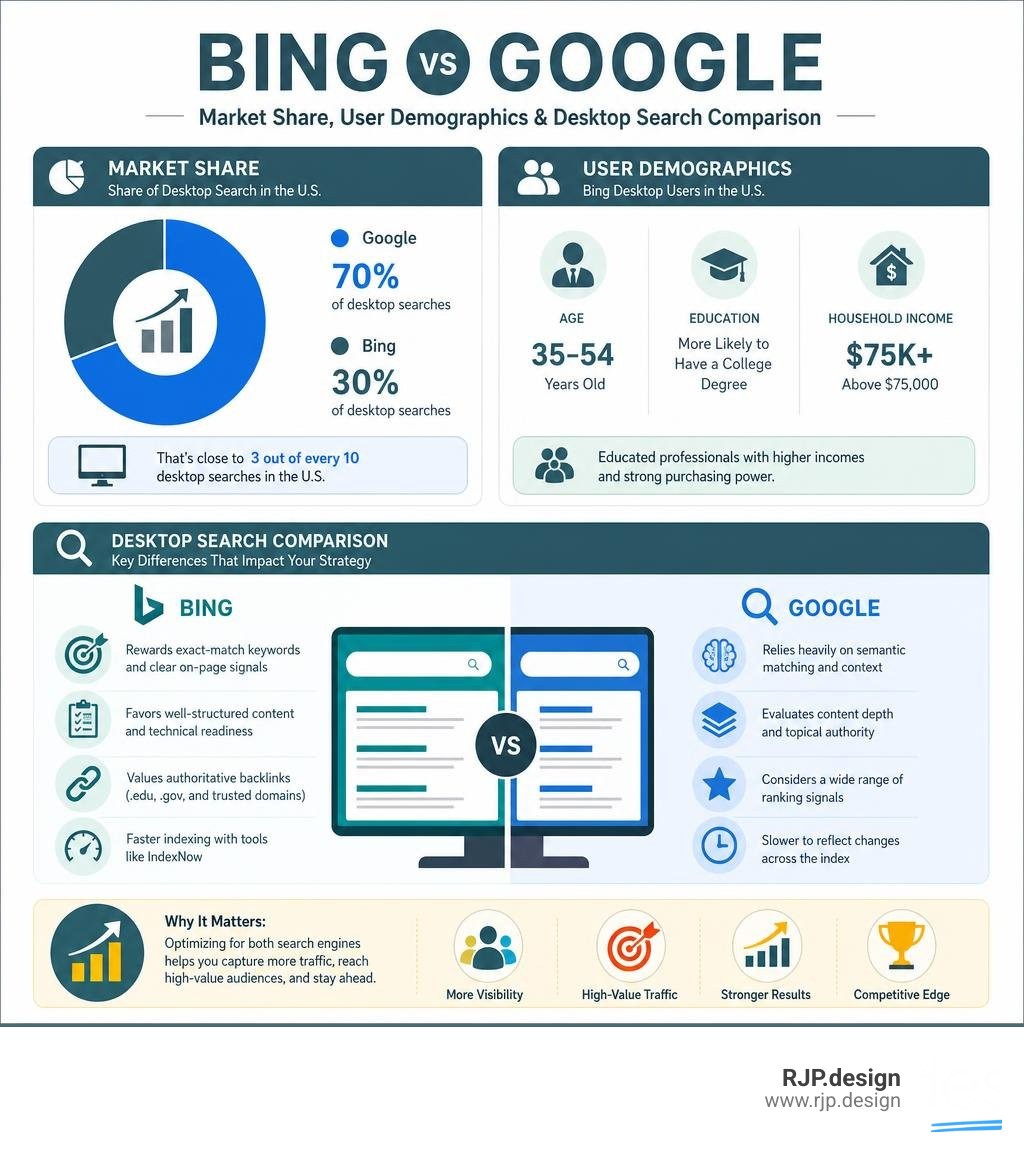
Most marketers are so focused on Google that they've never given Bing a serious look. That's understandable — Google dominates global search. But here's what's easy to miss: the Microsoft Search Network handles close to 30% of all U.S. search queries, and Bing's index now powers ChatGPT Search, Microsoft Copilot, DuckDuckGo, Yahoo!, and more.
That means one set of optimizations can multiply your reach across multiple platforms simultaneously.
Bing's typical user is also worth paying attention to. They tend to be educated professionals aged 35–54 with household incomes above $75,000. These aren't casual browsers — they're decision-makers with purchasing power. And because fewer businesses compete aggressively for Bing rankings, the opportunity is genuinely wide open.
In June 2026, with Gartner predicting a 25% drop in traditional search volume as AI-powered tools reshape how people find information, diversifying beyond Google isn't just smart — it's necessary.
I'm Ross Plumer, a digital marketing strategist with experience helping businesses generate over $20 million in revenue through targeted SEO strategies, including this bing SEO guide approach for clients who want to grow beyond Google. Let's walk through exactly what it takes to rank on Bing — and get cited by the AI tools that depend on it.
The Ultimate Bing SEO Guide: Core Ranking Factors and Optimization Steps
To succeed with search engine optimization on Bing, we have to look past the standard Google playbook. While both search engines share the ultimate goal of delivering relevant, high-quality results to users, their underlying algorithms weight ranking signals differently.
Optimizing for Bing is often faster and more straightforward because Bing's algorithm is more "literal." While Google leans heavily on complex semantic matching and contextual interpretation, Bing rewards clear on-page signals, exact-match keywords, and structural readiness. By implementing a targeted strategy, you can unlock a steady stream of high-converting organic traffic with far less competitive friction.
Why Optimize for Bing and AI Search in 2026?
Investing in Bing SEO in 2026 is one of the most practical SEO strategies for websites looking for rapid traffic growth. The traditional search landscape has evolved, and Bing is no longer just a standalone search engine; it is the data backbone for the conversational web.
When you learn how to optimize your site using a modern bing SEO guide, you are not just optimizing for bing.com. You are optimizing for the retrieval systems powering OpenAI’s ChatGPT (which has over 700 million users) and Microsoft Copilot (with over 100 million monthly active users).
Furthermore, Bing's user base is highly lucrative. According to industry data, Bing's audience skews older, is more educated, and has a household income exceeding $75,000. Because these users are often using pre-installed enterprise environments (like Windows and Microsoft Edge) at work, they exhibit exceptionally high engagement metrics. Visitors coming from Bing typically have lower bounce rates, view more pages, and click more affiliate or high-intent conversion links than those from other sources.
To understand the operational differences, let's look at how the two search giants compare:
Feature / Metric | Microsoft Bing | |
|---|---|---|
U.S. Search Query Share | Nearly 30% (via Microsoft Search Network) | ~65% - 70% |
Primary Indexing Focus | Desktop-first | Mobile-first |
Keyword Matching | Exact-match & literal | Semantic & contextual |
Social Signals | Direct ranking factor | Not a direct ranking factor |
AI Integration | Powers ChatGPT Search & Copilot | Powers Google Gemini / AI Overviews |
Indexing Speed | Fast via IndexNow protocol | Standard crawl-based queue |
For a deeper dive into how this traffic converts, check out SEO for Bing: Unlocking the Power of Bing's Search Traffic to see why businesses are shifting their budgets to capture this high-value audience.
Core Ranking Factors in This Bing SEO Guide
If you want to rank on the first page of Bing, you must understand what its crawlers actually reward. According to official guidelines and empirical testing, Bing's algorithm places immense value on clear technical signals and direct keyword matches.
Here are the core ranking factors we must optimize for:
Exact-Match Keywords: Bing relies heavily on exact keyword phrases in your titles, headings, and early body copy.
Domain Age and Trust: Bing favors older, established domains and places a strong emphasis on trusted domain extensions like .edu, .gov, and .org.
Social Signals: Unlike Google, Bing openly admits that social media engagement (shares, likes, and active brand profiles) acts as a positive ranking signal.
User Engagement: Dwell time (how long a user stays on your page after clicking from the search results) and click-through rates (CTR) are highly influential.
Page Speed and Desktop UX: Because Bing has a massive desktop user base, desktop performance and clean layout structures are critical.
By aligning your site with these specific signals, you can secure faster rankings. For a comprehensive overview of general optimization, review our SEO Best Practices Guide. To understand how these ranking factors have evolved this year, consult Bing SEO: How to Optimize for Microsoft's Search Engine in 2026 • SEO SHERPA™.
Step-by-Step On-Page and Content Optimization
On-page optimization for Bing is beautifully straightforward. While we still write for human readers, we make our target topics incredibly obvious for Bing's crawlers.
Title Tags and H1s: Place your exact target keyword at the very beginning of your title tag and H1. If you are targeting "best CRM software," your title should ideally start with that exact phrase rather than a creative variation.
The First 100 Words: Introduce your exact-match keyword in the opening paragraph. Bing's crawler reads early text to establish immediate relevance.
Strong Metadata: Write compelling meta descriptions that contain your primary keyword. Bing is much more likely than Google to display your meta description exactly as written. For guidance on structuring these elements, see our SEO Meta Tags Guide.
Structured Data and Schema: Implement JSON-LD schema markup across your site. Use Article, FAQPage, Product, and Organization schema to help Bing's bots understand the entities on your page.
Multimedia and Alt Text: Bing indexes images and videos aggressively. Name your image files descriptively and use keyword-rich, natural alt text for every graphic.
Technical Optimization and IndexNow Integration
Bing's crawler, Bingbot, crawls less frequently than Google's bots. To prevent indexing delays, we must take control of our technical setup.
The fastest way to get indexed on Bing is by implementing the IndexNow protocol. IndexNow is a free, open-source protocol that allows website owners to instantly notify search engines whenever content is created, updated, or deleted. Instead of waiting days or weeks for a standard crawl, IndexNow can get your new pages indexed in a matter of minutes.
Additionally, we must ensure our XML sitemaps are submitted directly within Bing Webmaster Tools. Keep your sitemaps clean by listing only canonical URLs and maintaining accurate <lastmod> tags.
Because Bing still utilizes desktop-first indexing as its primary baseline (while maintaining a unified index for mobile), we must prioritize desktop user experience. Ensure that your desktop site loads incredibly fast, is free of heavy JavaScript execution blocks, and presents clean HTML that is easy to render. If your site has complex code structures, working with Technical SEO Experts can help resolve crawl blocks and optimize your server configuration.
Leveraging This Bing SEO Guide for ChatGPT and Copilot Visibility
The most exciting development in 2026 is the direct correlation between your Bing rankings and your visibility in conversational AI tools.
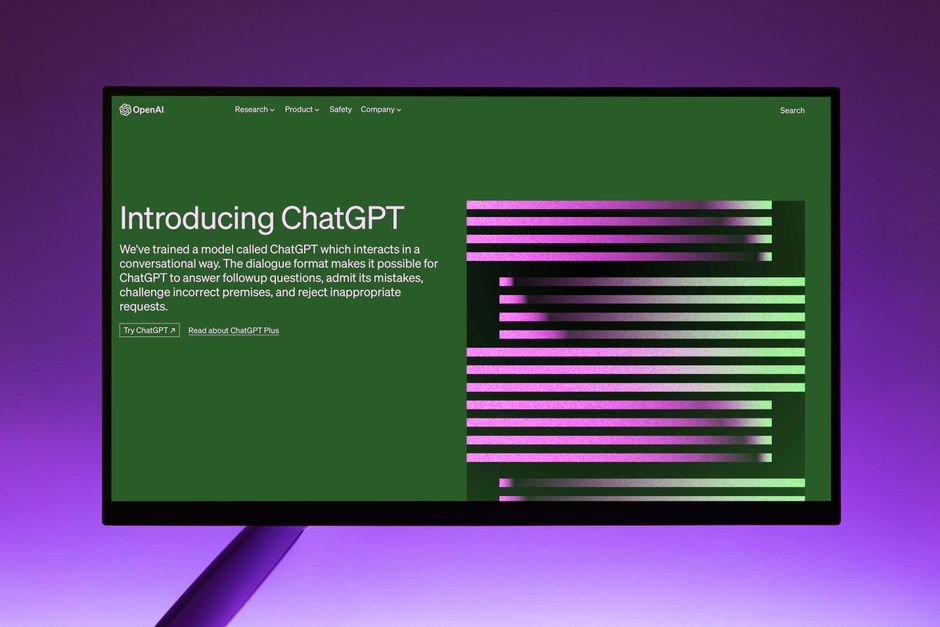
When a user asks ChatGPT Search or Microsoft Copilot a question, the AI does not generate answers out of thin air. It uses Bing's search index as its grounding database to retrieve real-time web documents. Studies show a massive bias toward the top search positions:
Sites ranking in positions 1 to 3 on Bing receive a 71% citation rate in ChatGPT responses.
Sites in positions 4 to 10 drop to a 38% citation rate.
Pages ranking outside the top 50 have virtually zero chance of being cited.
To make your content highly extractable for AI models, structure your pages using an answer-first format. Lead your articles or sections with a direct, 80-to-120-word summary or definition, followed by clear H2 and H3 question-based subheadings. Use bulleted lists and tables wherever possible, as AI synthesizers prefer pre-formatted data. For a complete blueprint on optimizing for these conversational environments, read our Bing Search Optimization Complete Guide.
Off-Page Authority: Backlinks and Social Signals
When it comes to off-page authority, Bing looks at the web through a slightly different lens than Google.
Backlink Volume vs. Contextual Placement: While Google prioritizes highly contextual, niche-relevant links, Bing places substantial weight on the sheer volume of links from trusted, aged domains. A link from an old, established website or an educational (.edu) or government (.gov) portal carries immense authority in Bing's algorithm.
Social Proof as an Active Signal: Bing officially treats social signals as a ranking factor. Having active profiles on LinkedIn, Facebook, and Twitter/X that regularly share and drive engagement to your content tells Bing that your brand is a trusted real-world entity.
Brand Mentions: Unlinked brand mentions across authoritative news sites and forums are highly predictive of AI search visibility and traditional search rankings alike.
By building a natural backlink profile and maintaining a vibrant social presence, you will see a direct increase in both your SEO and Website Traffic.
Conclusion: Partner with Experts for Multi-Engine Success
Optimizing for Bing is no longer a secondary task — it is a primary growth lever for businesses that want to capture high-value desktop conversions and secure visibility in the rapidly expanding world of AI search.
At RJP.design, we specialize in building high-performing, search-friendly websites that look beautiful and are structurally optimized for both traditional search engines and AI discovery. Our down-to-earth team prioritizes your satisfaction, taking the guesswork out of technical SEO and content optimization so you can focus on running your business.
Whether you need to configure IndexNow, implement advanced schema markup, or redesign your site for better desktop performance, we are here to help. Explore our Bing SEO Optimization services today, and let's work together to grow your digital presence across every search engine that matters.