Web
From Zero to Hero: Unlocking Website Traffic with Smart SEO Strategies
Jan 2, 2026

What is SEO Traffic and Why It's Your Business's Lifeline
SEO and website traffic are fundamentally intertwined. SEO (Search Engine Optimization) is the process of optimizing your website to rank higher in search engine results, which directly drives organic traffic to your site. Here's what you need to know:
Key Facts About SEO and Website Traffic:
Over 53% of all website traffic comes from organic search, making it the most effective channel for online visibility.
The top Google result captures 27.6% of all clicks, while only 0.63% of users go beyond the first page.
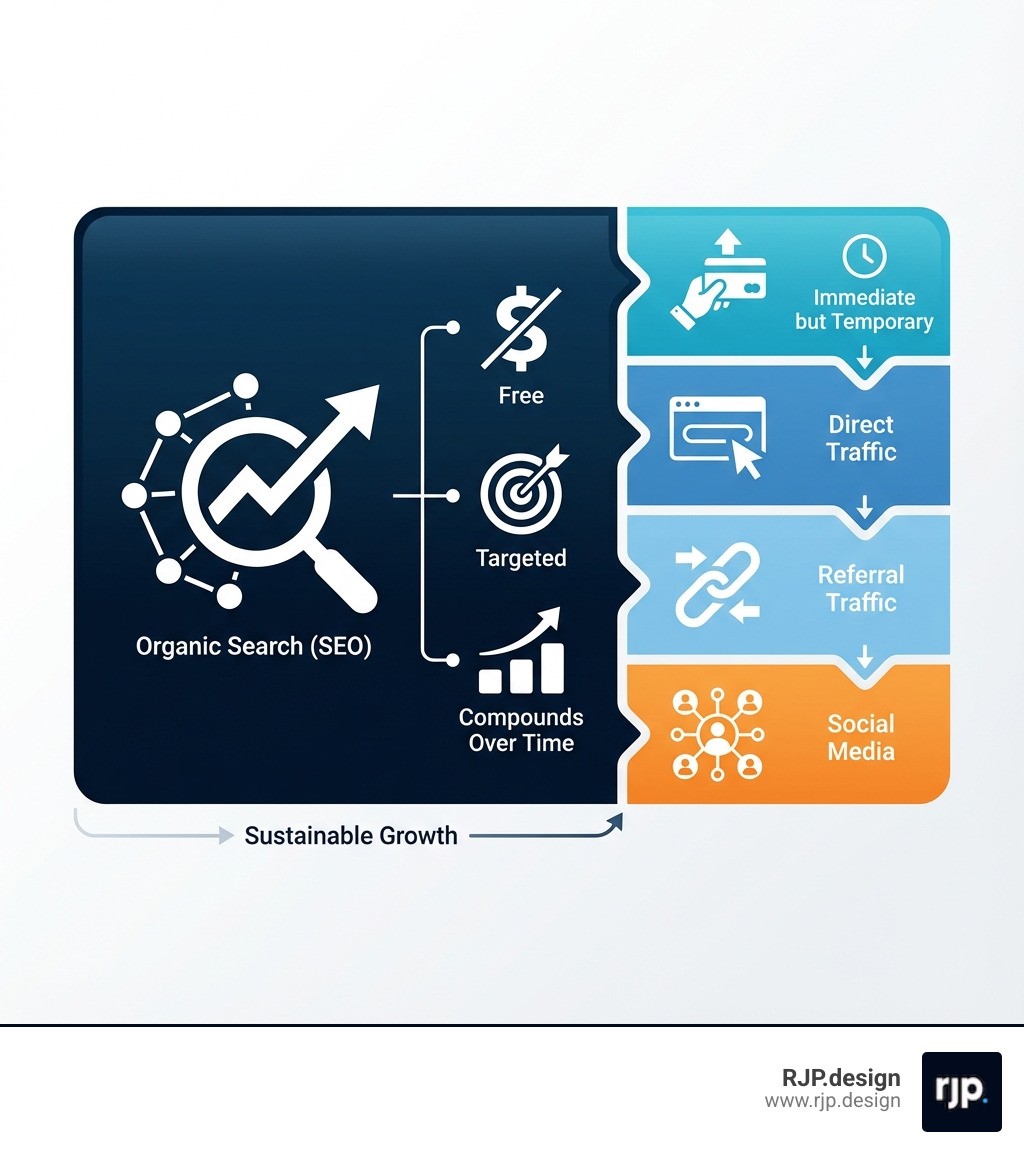
SEO traffic is free and targeted—unlike paid ads, you don't pay per click, and visitors are actively searching for what you offer.
Mobile accounts for 63.31% of all web traffic, making mobile-friendly sites essential.
User engagement signals like dwell time and bounce rate influence how Google ranks your pages.
Simply put, if you're not in search results, you're invisible to most potential customers. While paid ads offer a temporary boost, they vanish when you stop paying. SEO, however, builds a sustainable source of traffic that grows over time, creating a foundation for long-term growth.
I'm Ross Plumer, and I've helped businesses market over $20 million in revenue by leveraging the powerful connection between SEO and website traffic to transform their online presence. My approach combines technical expertise with a deep understanding of how people actually search and engage with content online.
SEO and website traffic further reading:
The Ultimate Guide to Increasing SEO and Website Traffic
At RJP.design, we know a beautiful website is only effective if people can find it. A robust SEO strategy attracts the right visitors—those genuinely interested in what you offer. This targeted, free SEO traffic is the lifeblood of sustainable online growth. Open uping significant SEO and website traffic involves a multi-faceted approach, from your content to your site's technical performance. Let’s dive into the core components.
Foundational SEO: Mastering Content and On-Page Signals
Your primary goal with SEO is to create content that Google recognizes as the best answer to a user's query. This starts with understanding what your audience is searching for and why.
Keyword Research and Search Intent Keyword research is the cornerstone of an effective SEO strategy. We identify what your audience is searching for and why, allowing us to tailor content to meet their needs. For example, a term like "best ab exercises" indicates a high volume of users seeking specific fitness advice. Learn more in our guide to SEO Keyword Research.
High-Quality Content and E-E-A-T Google rewards comprehensive, original, and genuinely helpful content. To signal credibility, we focus on E-E-A-T: Experience, Expertise, Authoritativeness, and Trust. This means demonstrating real-world experience and deep knowledge, establishing you as a trustworthy authority in your field. Google's own guidance on creating helpful, reliable, people-first content confirms this approach is vital.
On-Page Optimization: Title Tags, Meta Descriptions, and Internal Linking On-page SEO involves optimizing elements you can directly control on your website.
Title Tags: Craft unique, clear headlines for search results that include the primary keyword.
Meta Descriptions: While not a direct ranking factor, a compelling meta description acts as an ad for your page, encouraging clicks and improving click-through rate (CTR).
Internal Linking: Link between pages on your site to help search engines find content, pass authority, and guide users.
Content Freshness and Readability: Regularly update content for accuracy and relevance. Ensure it's easy to read with clear language, headings, and high-quality images with descriptive alt text.
Technical Excellence: The Impact of Site Speed, Mobile, and UX
Technical SEO ensures your website is easily crawlable and provides a seamless user experience.
Site Speed Matters Google favors fast websites as a direct ranking factor. A 5-second load time can cause 90% of users to leave, negatively impacting your rankings. Faster sites lead to happier users and better engagement. Learn more from Google's insights on using page speed in mobile search ranking.
Mobile-Friendliness is Non-Negotiable With 63.31% of web traffic from mobile, a mobile-friendly site is essential. Google uses mobile-first indexing, meaning it primarily ranks the mobile version of your site. If your site isn't optimized for mobile, you're missing a massive audience. Our Mobile-Friendly Websites guide offers deeper insights.
Site Architecture and User Experience (UX) A well-structured site with descriptive URLs helps search engines and users steer your content. User experience (UX) is paramount, and Google tracks engagement signals to gauge content value:
Dwell Time (Time on Page): Longer visits suggest users find your content valuable.
Bounce Rate: A high percentage of visitors leaving after viewing only one page can signal a mismatch between user expectation and your content.
Pages Per Session: When users visit multiple pages, it indicates high engagement and satisfaction.
Core Web Vitals These factors measure a page's loading performance, interactivity, and visual stability. Optimizing for Core Web Vitals directly improves UX and SEO.
Building Authority: The Crucial Role of Backlinks and Off-Page SEO
Once your site is technically sound and full of great content, the next step is building its authority. This is where off-page SEO and backlinks come in.
Backlinks and Referring Domains Backlinks (links from other sites to yours) are a fundamental ranking factor. Think of them as votes of confidence. A quality backlink from a reputable, relevant website signals to Google that your content is valuable and authoritative. Quality matters far more than quantity.
Effective Link Building Strategies Building high-quality backlinks is an ongoing process. Effective strategies include:
Guest Posting: Writing articles for other reputable sites in your industry to earn a link back to your site.
Digital PR: Creating compelling content that naturally attracts media attention and links.
Broken Link Building: Finding broken links on other sites and suggesting your relevant content as a replacement.
Community Engagement: Participating in online communities and forums to share expertise and, where appropriate, your content.
Content Promotion: Actively promoting new content to reach interested audiences, search engines, and potential linkers faster.
For a deeper dive into how we can help, explore our Comprehensive SEO Services.
Common Mistakes That Hinder Your SEO and Website Traffic
Avoiding common SEO traps is as crucial as implementing best practices. Here are some pitfalls to avoid:
Top 5 SEO Pitfalls to Avoid:
Keyword Stuffing: Avoid unnaturally repeating keywords. This practice hurts user experience and can lead to penalties.
Thin or Duplicate Content: Publishing low-value, short, or copied content harms your rankings. Google prioritizes unique and helpful information.
Buying Spammy Backlinks: Acquiring links from low-quality or irrelevant sites is a black-hat tactic that can result in severe Google penalties.
Ignoring Mobile Users: With over 63% of traffic from mobile, neglecting mobile-friendliness alienates a huge audience and hurts your rankings.
Poor User Experience (UX) & Neglecting Technical Health: A slow site, broken links, or confusing navigation creates a bad user experience. These negative signals tell Google your site isn't meeting user needs, leading to lower rankings. Regular SEO audits are essential.
How Other Traffic Channels Support Your SEO Efforts
A holistic digital strategy uses multiple channels to indirectly support and amplify your SEO efforts.
Direct Traffic: Visitors who type your URL directly signal brand recognition and trust, which are positive indicators for SEO.
Referral Traffic: Links from other websites drive interested users, increasing exposure that can lead to more brand searches and shares.
Social Media Marketing: While most social links are "nofollow," social media is vital for brand awareness, content amplification, and driving engagement that indirectly supports SEO.
Email Marketing: Your email list provides high-quality traffic. Promoting content via email can lead to immediate shares and natural backlinks, signaling value to search engines.
Paid Traffic (PPC): Paid ads don't directly boost organic rankings, but they are great for testing keywords and gaining immediate visibility while your SEO matures.
Integrating these channels creates a robust ecosystem that strengthens your overall online authority and search visibility.
Measuring Your Success: Key Metrics for SEO and Website Traffic
Understanding your performance is crucial for continuous improvement. We rely on key tools and metrics to track progress.
Google Analytics (GA4): The primary tool for tracking overall traffic, user behavior, and conversions. Explore your data in your GA4 account.
Google Search Console (GSC): Provides data on how your site performs in Google Search, including clicks, impressions, and keywords. It also helps identify technical issues. Access your data in your GSC account.
Organic Sessions: The number of visits from organic search, a fundamental indicator of SEO success.
Keyword Rankings: Tracking your rank for target keywords shows if your efforts are working.
Click-Through Rate (CTR): The percentage of users who click your listing in search results. A higher CTR indicates compelling titles and descriptions.
Conversion Rate: Measures how effectively organic traffic turns into leads or sales, connecting SEO to business goals.
Instead of relying on a single benchmark, we first analyze your own data to track month-over-month and year-over-year trends. This internal benchmarking provides the most relevant context for your business. Learn more in our guide on Website Analytics Tracking.
From Insights to Impact: Your Path to Sustainable Growth
SEO is not a one-time fix; it's an ongoing journey. The digital landscape is constantly evolving, with Google's algorithms changing frequently. This dynamic environment means continuous learning and refining strategies.

Realistic Timelines for SEO Results One of the most common questions we hear is, "How long will it take to see results?" SEO is a long-term investment, but you can expect to see progress in stages:
Within the first three months: Focus on positive movement, not perfection. You should see an increase in impressions in keyword reports, showing your content is getting more visibility.
Within the first six months: Expect to see consistent traffic from non-branded keywords. This is a major milestone, indicating people are finding you through relevant searches, not just your brand name.
Within the first 12 months: Small improvements begin to snowball into significant gains. You'll see a clear upward trajectory in rankings, traffic, and conversions. Many top-ranking pages are over three years old, showing the value of consistent effort.
Beyond 12 months: With sustained effort, your site can become a recognized authority, attracting continuous SEO and website traffic and generating valuable leads.
As time progresses, the SEO and website traffic you generate is often much less expensive than paid traffic, highlighting the incredible value of this long-term investment.
At RJP.design, we are a high-quality, down-to-earth team that prioritizes client satisfaction. We build websites for SEO success from the ground up, helping you achieve your business goals through smart, sustainable digital strategies.
Ready to transform your online presence and open up the full potential of SEO and website traffic? Explore our Digital Marketing services and let us help you go from zero to hero.