
Web
20 Elements to Optimize: Your eCommerce A/B Testing Blueprint
Dec 1, 2025
Why eCommerce Website A/B Testing is Your Secret Weapon for Growth
If your online store isn't converting visitors into customers at the rate you'd like, you're not alone. With average eCommerce conversion rates hovering between 2-4%, a staggering 96-98% of your traffic leaves without making a purchase. This is where eCommerce website A/B testing becomes your most powerful tool for growth.
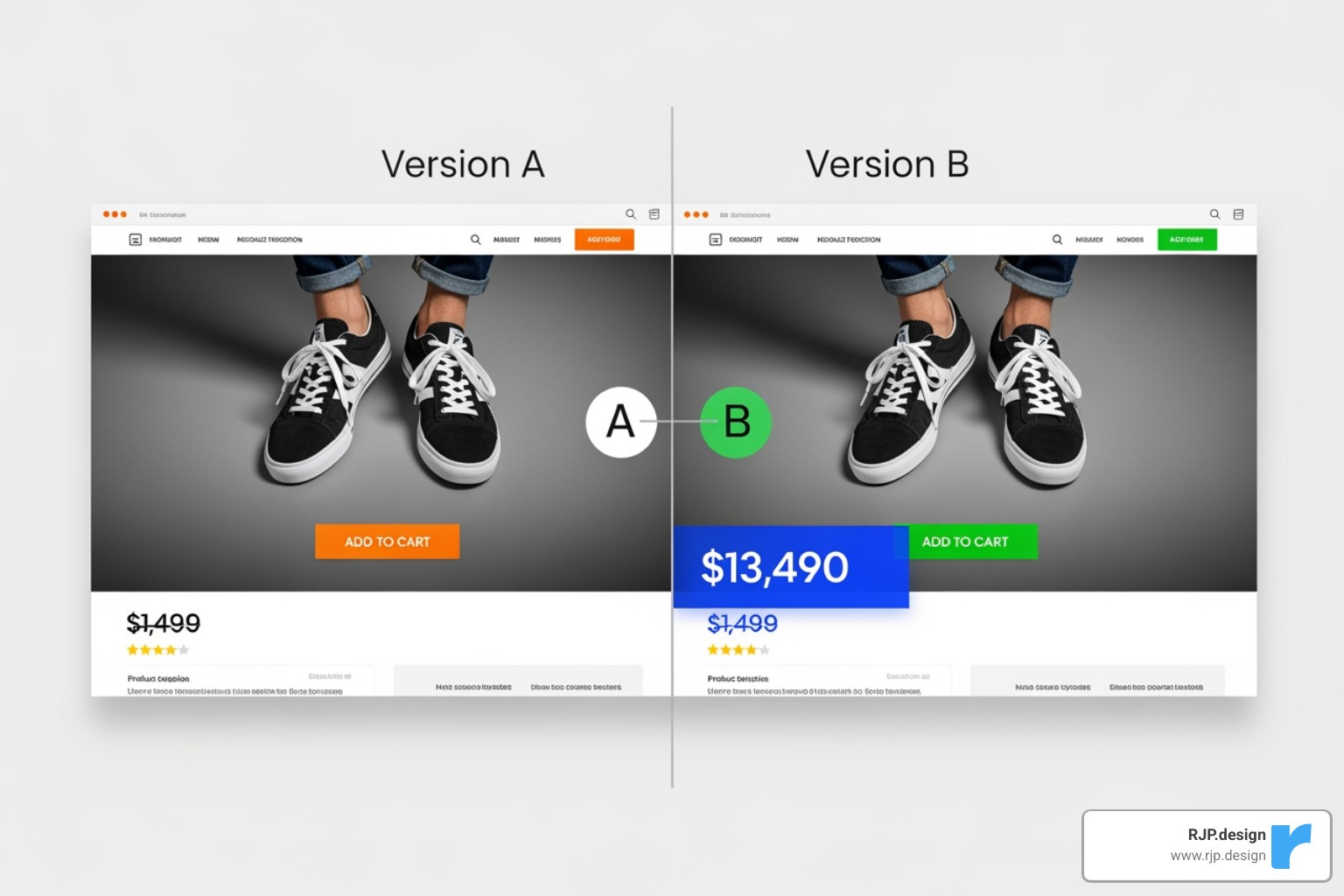
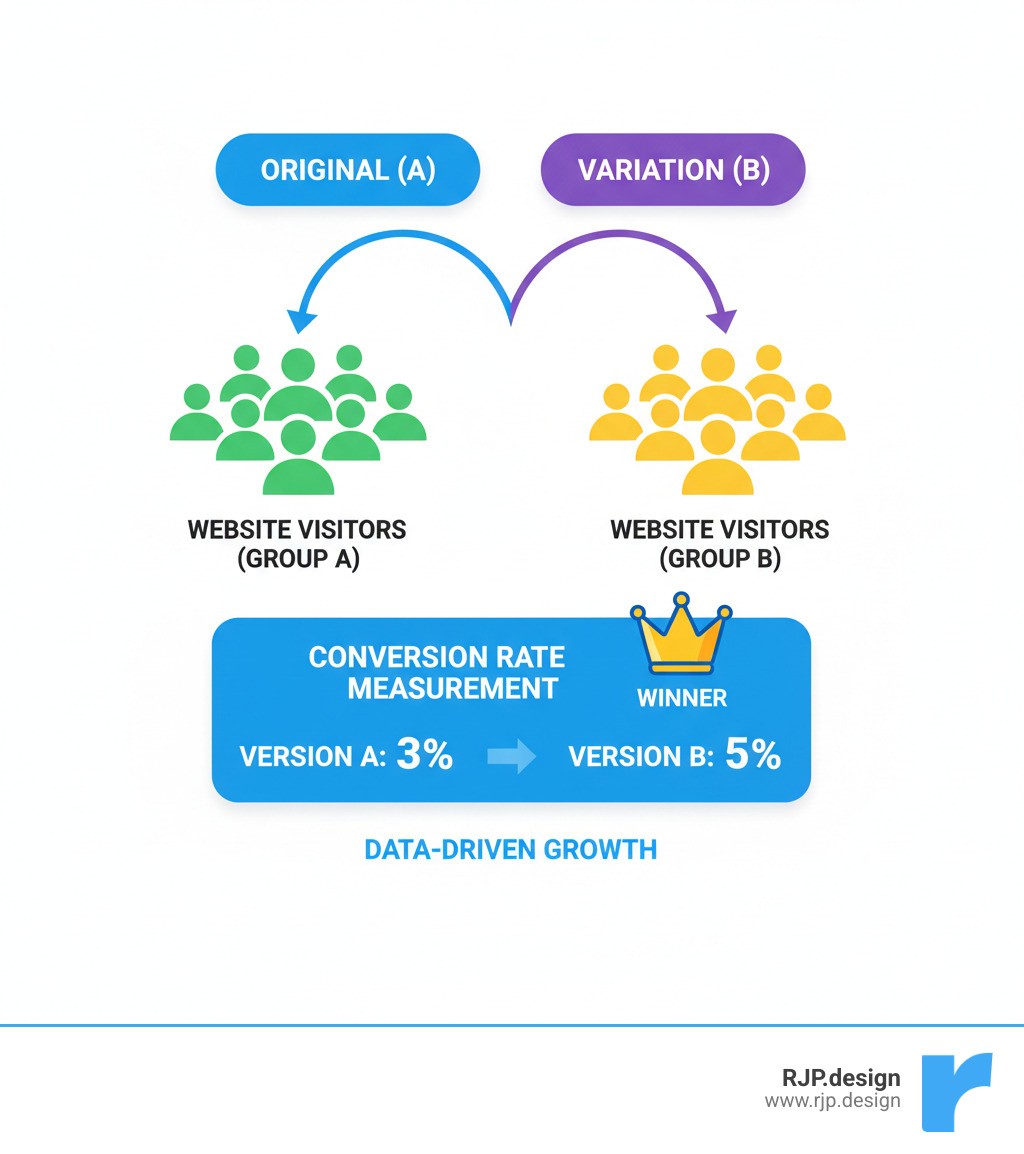
A/B testing, or split testing, is a method of comparing two versions of a webpage (Version A vs. Version B) to see which one performs better. By showing each version to a segment of your audience, you can measure metrics like clicks, sign-ups, and sales. This process eliminates guesswork, allowing you to make data-driven decisions that increase conversions, reduce cart abandonment, and boost revenue.
Even small improvements yield significant results. A Harvard Business School study found that startups using A/B testing see tangible growth benefits. For an established eCommerce business, turning a 2% conversion rate into 3% means a 50% revenue increase—without spending more on ads.
The key is knowing what to test and how to do it systematically. This blueprint, based on experience from marketing over $20 million in revenue, provides 20 specific, high-impact elements you can start testing today to turn your store into a conversion machine.
Ready to stop guessing and start growing? Let's dive in.
Learn more about eCommerce website A/B testing:
Your Blueprint for eCommerce Website A/B Testing
The 'Why': Key Benefits of Split Testing
Investing time in eCommerce website A/B testing directly impacts your bottom line. It transforms your marketing efforts from hopeful guesses into a predictable growth engine. Here’s why it’s essential:
Improved ROI: Convert more of your existing traffic, making every ad dollar you spend work harder.
Reduced Cart Abandonment: Pinpoint and fix the friction that causes over 70% of shoppers to leave their carts behind.
Increased Average Order Value (AOV): Find which product bundles, upsells, and offers encourage customers to buy more.
Improved User Engagement: Create an enjoyable site experience that keeps visitors on your site longer and turns them into repeat customers.
SEO Benefits: A better user experience (lower bounce rates, longer sessions) signals to Google that your site deserves higher rankings. SEO leads close at a 14.6% rate, making this a powerful, self-reinforcing cycle.
Data-Backed Strategy: Replace opinions and guesswork with hard evidence of what your customers truly want.
Every test provides valuable customer insights, and every improvement compounds. For more on this, explore our Website Conversion Strategies and learn how to boost your visibility with SEO Ranking Improvement.
The 'What': 20 Key Elements to Test on Your Store
Focus your eCommerce website A/B testing on elements that deliver the biggest impact. Here are 20 high-priority areas to start with:
Headlines: Test benefit-driven vs. problem-solving language to capture attention.
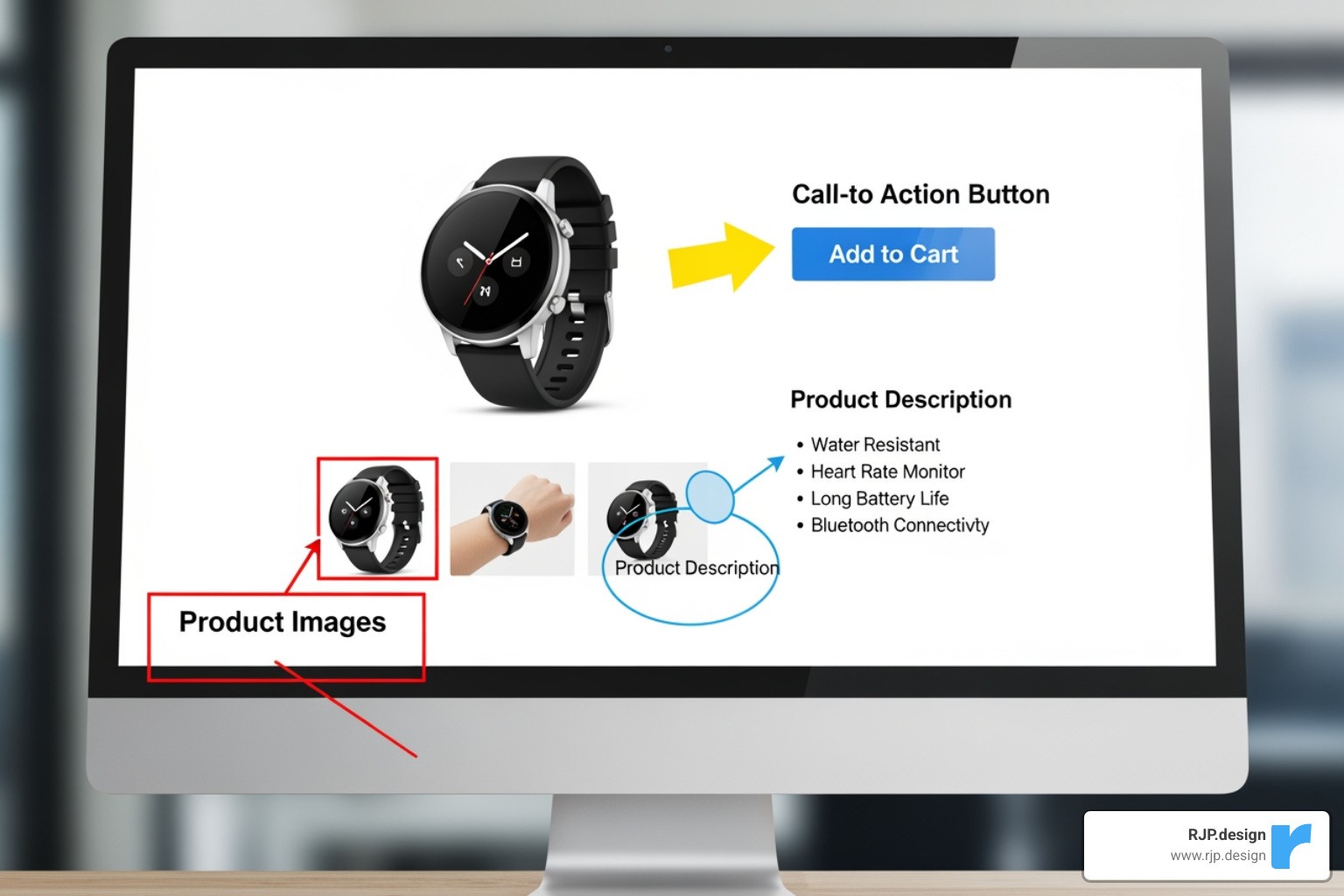
Call-to-Action (CTA) Buttons: Experiment with text ("Buy Now" vs. "Add to Cart"), color, size, and placement.
Product Images vs. Videos: Compare static photos, lifestyle shots, 360-degree views, and short demo videos.
Product Descriptions: Test technical specs vs. storytelling or bullet points vs. paragraphs.
Pricing and Discount Offers: Try different price points, percentage-off vs. dollar-off deals, and promotional messaging.
Shipping Costs: Test free shipping (with a minimum threshold) against flat rates to combat the #1 cause of cart abandonment.
Homepage Hero Image: Compare a powerful static image against a video background or a product carousel.
Navigation Menus: Test different layouts, category labels, and search bar placements to improve product findy.
Checkout Process: Test a single-page checkout against a multi-step process and reduce the number of form fields.
Pop-ups and Forms: Experiment with exit-intent pop-ups, gamified "spin-to-win" wheels, and different offers.
Social Proof and Reviews: Test the placement and prominence of testimonials, star ratings, and user-generated content.
Quick Product Views: Allow shoppers to preview items from a category page to streamline browsing.
Product Bundles and Upsells: Test different product combinations and discount levels to increase AOV.
Email Subject Lines: For your campaigns, test personalization, length, and emoji use to boost open rates.
Back-in-Stock Notifications: Test the visibility and messaging of this feature to capture otherwise lost sales.
AI Product Recommendations: Experiment with different algorithms and placements for AI-driven suggestions.
Customer Support Access: Test the placement of live chat widgets or help links, especially during checkout.
Font Size and Line Height: Ensure your text is easy to read to keep users engaged with your content.
Human Photographs: Test authentic photos of people using your products against generic stock images.
Gamified Campaigns: Try limited-time interactive campaigns like an "Easter egg hunt" to drive engagement and sales.
For inspiration, explore our collection of Amazing Ecommerce Website Designs.
The 'How': A Step-by-Step Guide to Running Your First Test
Effective A/B testing is a disciplined process. Follow these steps to turn uncertainty into actionable insights.
Start with Research: Use analytics (like Google Analytics), heatmaps, and session recordings to find underperforming pages with high bounce rates or low conversions.
Formulate a Clear Hypothesis: Create a testable statement: "Because we observed [data/feedback], we believe changing [element] will result in [expected outcome], measured by [metric]."
Create Your Variation: Change only one element at a time. If you change the headline and the button color, you won't know which one drove the result.
Choose a Testing Tool: Select software that can split traffic and track results. Many options are available for Shopify and other platforms.
Run the Experiment: Let the test run long enough to collect sufficient data—typically at least two full business cycles (2-4 weeks) to account for weekly variations in traffic.
Analyze the Results: Once the test concludes, check if the results are statistically significant. Ensure your primary metric improved without harming other key metrics.
Implement and Learn: If you have a clear winner, implement it. If not, document what you learned and use the insights to form your next hypothesis. Every test is a learning opportunity.
Our Custom Web Design Services team can help implement these optimizations professionally.
Understanding the Numbers: Sample Size & Statistical Significance
To trust your eCommerce website A/B testing results, you need to understand two key concepts.
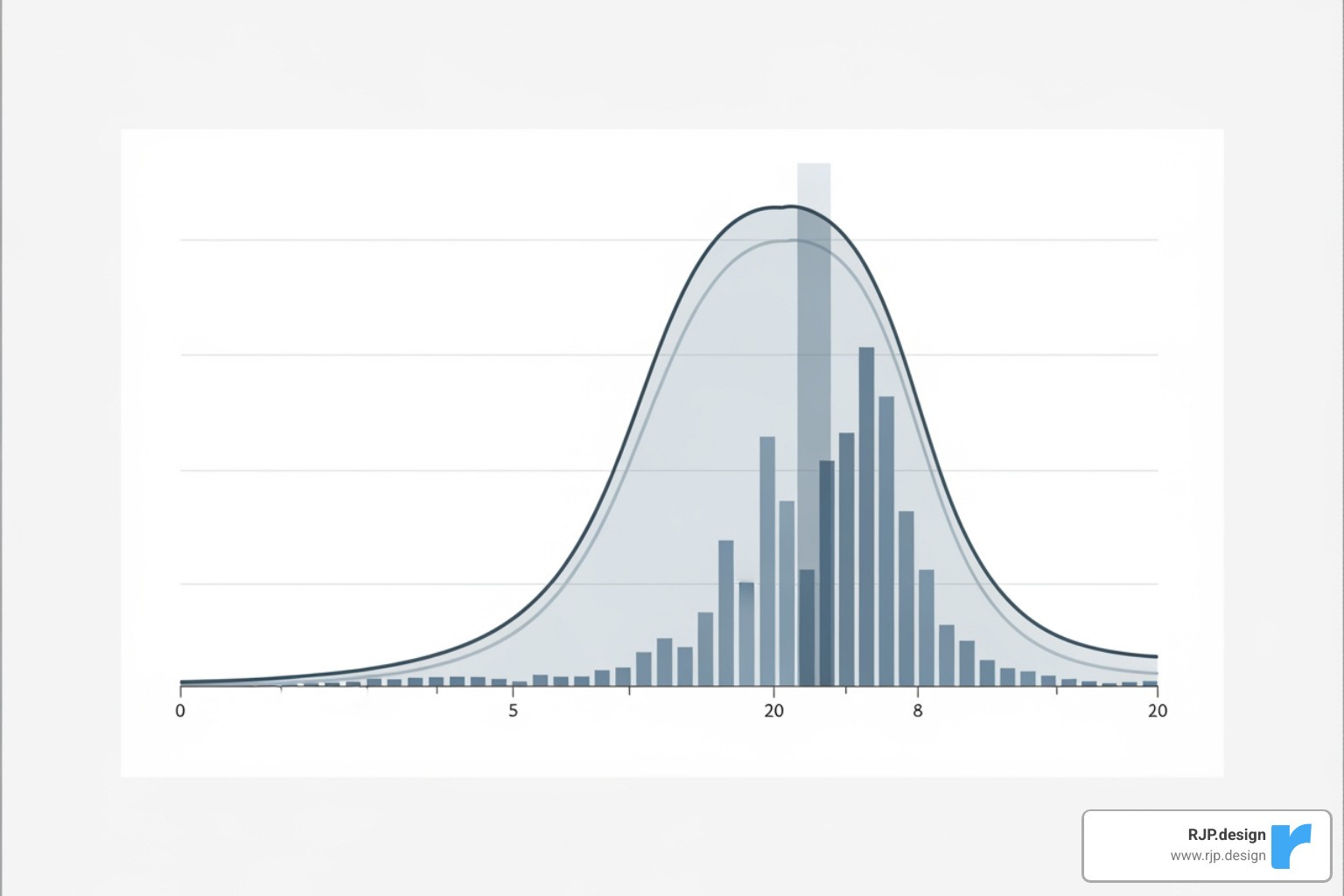
Statistical significance tells you if the observed difference between your two versions is real or just random chance. Most tests aim for a 95% confidence level, meaning there's only a 5% chance the result is accidental.
Sample size is the number of visitors needed for your test to be reliable. Before you start, use a sample size calculator to determine how much traffic you need based on your current conversion rate and the improvement you expect to see.
The biggest mistake is stopping a test too early. An early leader often doesn't hold its advantage. Commit to your predetermined sample size and test duration (at least 2 weeks) to avoid making decisions based on incomplete, misleading data.
Beyond A/B: Multivariate Testing and Personalization
Once you've mastered A/B testing, you can explore more advanced methods.
Multivariate Testing (MVT): Tests multiple elements at once (e.g., three headlines and two button colors) to find the best combination. This requires very high traffic.
Split URL Testing: Compares two entirely different page designs hosted on separate URLs. Ideal for major redesigns.
Personalization: Uses visitor data (like browsing history or location) to dynamically show each user the content most likely to convert them. Instead of finding one "winner" for everyone, it finds the right experience for each individual.
Here’s a quick comparison:
Feature | A/B Testing | Multivariate Testing (MVT) | Personalization |
|---|---|---|---|
Complexity | Low to moderate | High | High |
Elements Tested | 1 (or very few) | Multiple elements, all combinations | Dynamic, per-user content |
Traffic Needs | Moderate | High | High (for effective AI/ML) |
Primary Goal | Optimize single element | Optimize combination of elements | Custom user experience |
Output | A single "winning" variant | Optimal combination of variants | Continuously adapting content |
Start with A/B testing and consider these advanced techniques as your traffic and expertise grow.
Common Pitfalls and How to Avoid Them
Avoid these common mistakes to ensure your eCommerce website A/B testing efforts are successful.
Testing Too Many Elements at Once: This makes it impossible to know which change caused the result. Test one variable at a time.
Insufficient Sample Size: Small samples lead to misleading results. Use a calculator to determine the traffic you need before you start.
Ending Tests Too Early: Early results are often misleading. Stick to your predetermined test duration and sample size.
Ignoring External Factors: Seasonality, holidays, and promotions can skew data. Run tests during normal business periods for clean results.
Not Learning from "Failed" Tests: A test that doesn't produce a winner still provides valuable insight into what your customers don't want.
Confirmation Bias: Don't let your personal preferences influence your interpretation of the data. Let the numbers decide.
Negative SEO Consequences: Use temporary (302) redirects for tests and a canonical tag to avoid duplicate content issues. Ensure your testing script doesn't slow down your site.
A solid site structure is the foundation for effective testing. Our Professional Website Redesign services can help you build that foundation.
Conclusion: Start Optimizing for Profit Today
We've covered the why, what, and how of eCommerce website A/B testing. The single most important takeaway is this: you can replace guesswork with data. Your customers are constantly giving you feedback through their actions. The businesses that succeed are those that listen and adapt.
A/B testing isn't a one-time project; it's a continuous process of understanding your audience and refining their experience. Small, incremental wins—a slight bump in conversion rate, a small increase in average order value—compound over time, changing your store's profitability without increasing your ad spend.
This process works best on a solid foundation. At RJP.design, we build high-performing online stores designed for growth from day one. Our down-to-earth team is committed to creating websites that not only look great but are built to convert visitors into loyal customers.
Ready to build a website that's optimized for success? Explore our Web Design Development services, and let's start growing your business together.