
Web
Step-by-Step Guide to How to Build an Email List
Aug 13, 2026

Email marketing remains an unmatched growth channel in 2026. Across the globe, there are over 4.4 billion email users. While organic reach on social media platforms often hovers between 1% and 5%, well-maintained email lists achieve average open rates between 18% and 40%. On average, email marketing generates $38 to $42 for every dollar spent, making it the primary customer acquisition driver for 81% of small and medium-sized businesses.
When you rely entirely on third-party social platforms or search engine updates, you are building your business on rented land. If you want to understand how visitor behavior translates into actual growth, integrating Website Traffic Analysis helps you pinpoint where your best subscribers originate.
Building a high-performing email list requires permission-based opt-in marketing. You must secure explicit consent from subscribers before sending them messages.
You will need to choose between single opt-in and double opt-in. Single opt-in adds a user to your list immediately after form submission, offering the lowest friction. Double opt-in requires the user to click a confirmation link sent to their inbox. Double opt-in ensures higher subscriber quality, reduces fake submissions, and protects domain health.
Before sending your first campaign, you must configure three key technical domain authentication records with your DNS provider:
SPF (Sender Policy Framework): Verifies which IP addresses are authorized to send email on behalf of your domain.
DKIM (DomainKeys Identified Mail): Adds a cryptographic signature to your messages to confirm they were not altered in transit.
DMARC (Domain-based Message Authentication, Reporting, and Conformance): Tells mailbox providers (like Gmail and Yahoo) what to do if an email fails SPF or DKIM checks.
Proper technical authentication ensures compliance with strict sender requirements, prevents your messages from landing in spam folders, and satisfies global data privacy regulations like GDPR and the CAN-SPAM Act.
Step 1: Choose the Right Email Service Provider and Tech Infrastructure
To execute your strategy effectively, select an Email Service Provider (ESP) that scales alongside your business goals.

Look for platforms offering key core capabilities:
High email deliverability rates and dedicated IP options.
Flexible subscriber segmentation logic based on tags, entry points, and click behavior.
Automated email sequence builders with conditional logic.
Built-in form and landing page capabilities.
When launching a new domain or sending infrastructure, gradually warm up your domain by sending small volumes to your most engaged users before expanding. Maintain a healthy text-to-image ratio (roughly 60:40 to 70:30) in your templates, as image-heavy designs often trigger spam filters. Exploring structured Internet Marketing Solutions helps align your platform choices with your broader growth funnel.
Step 2: Create High-Value Lead Magnets to Master How Build Email List Growth
Visitors rarely hand over their email address without a clear value exchange. Generic calls-to-action like "Subscribe to our newsletter" convert poorly compared to specific, problem-solving lead magnets.
To create an irresistible lead magnet, apply the $20 test: ask yourself if the resource you are creating provides so much practical value that a real person would gladly pay $20 for it. Modern subscribers prefer quick, immediate wins over massive 50-page ebooks.
High-converting lead magnet formats include:
Actionable Templates & Swipe Files: Ready-to-use spreadsheets, checklists, or copy templates that save time.
Interactive Quizzes & Calculators: Engaging tools that give users customized results while generating 30% to 40% conversion rates.
Mini-Email Courses: A 3- to 5-day automated series that teaches a hyper-specific skill.
Resource Guides & Checklists: One-page reference documents that solve an immediate pain point fast.
Step 3: Deploy High-Converting Signup Forms and Landing Pages
Once your lead magnet is ready, place your opt-in forms where high-intent traffic can easily find them.
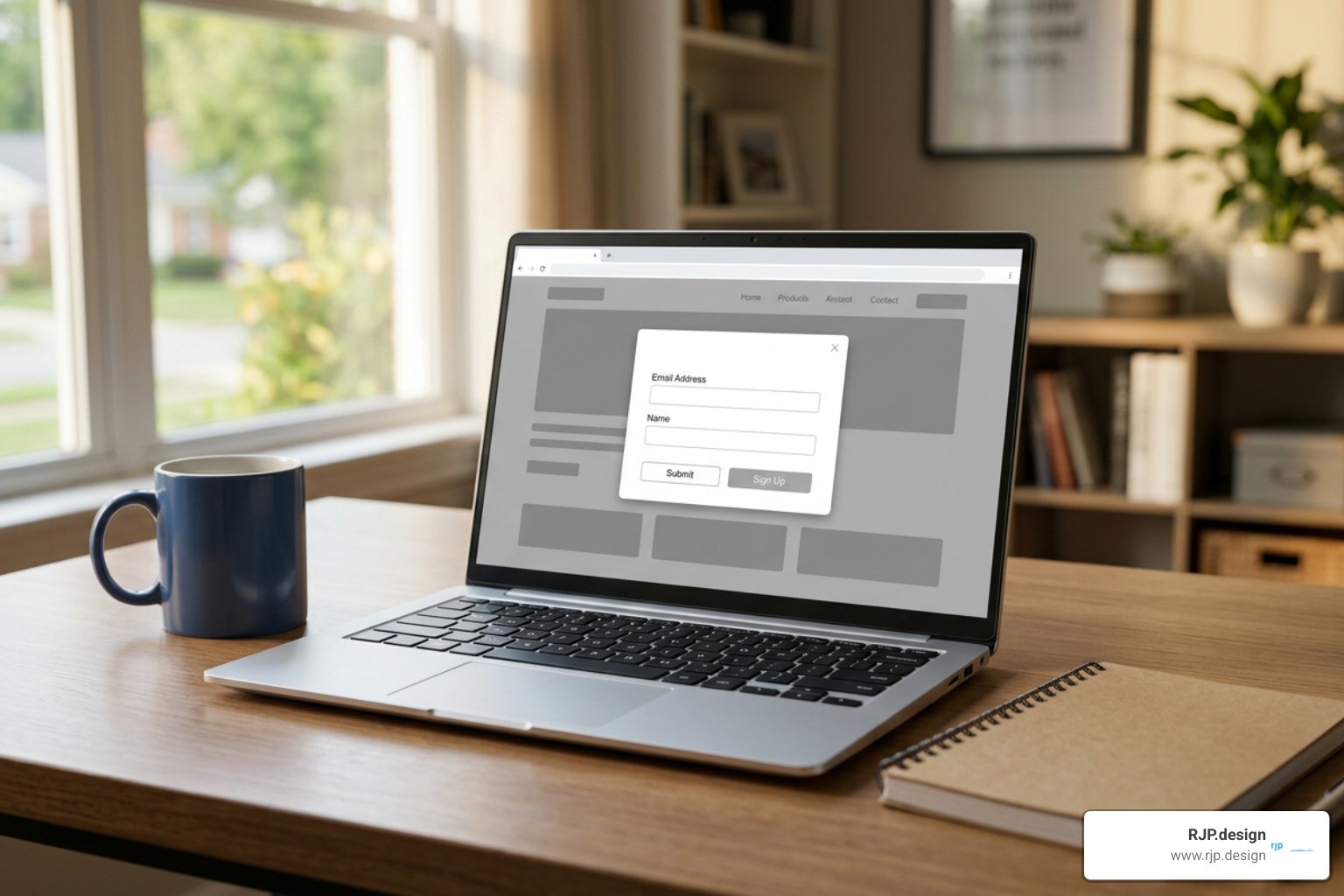
Rather than cluttering your layout, focus on the three highest-converting form placements:
Exit-Intent Popups: Triggered when a visitor moves their cursor to leave the page. These convert between 5% and 14%.
Inline Content Forms: Embedded directly after 300 to 500 words within high-traffic blog posts, yielding 1% to 3% conversion rates.
Sticky Footer Bars: Non-intrusive bars fixed to the bottom of the screen, averaging 3% to 5% conversion.
Keep your forms minimal. Asking for an email address alone produces the highest completion rate; every additional form field reduces conversions by 10% to 25%. For specific campaigns, driving traffic to dedicated high-converting landing pages with a single focus delivers conversion rates of 20% to 40%.
Step 4: Write Automated Welcome Sequences and Day 0 Autoresponders
Your welcome email is the most important message you will ever send. Welcome emails routinely achieve 50% to 70% open rates because subscriber interest is at its absolute peak.
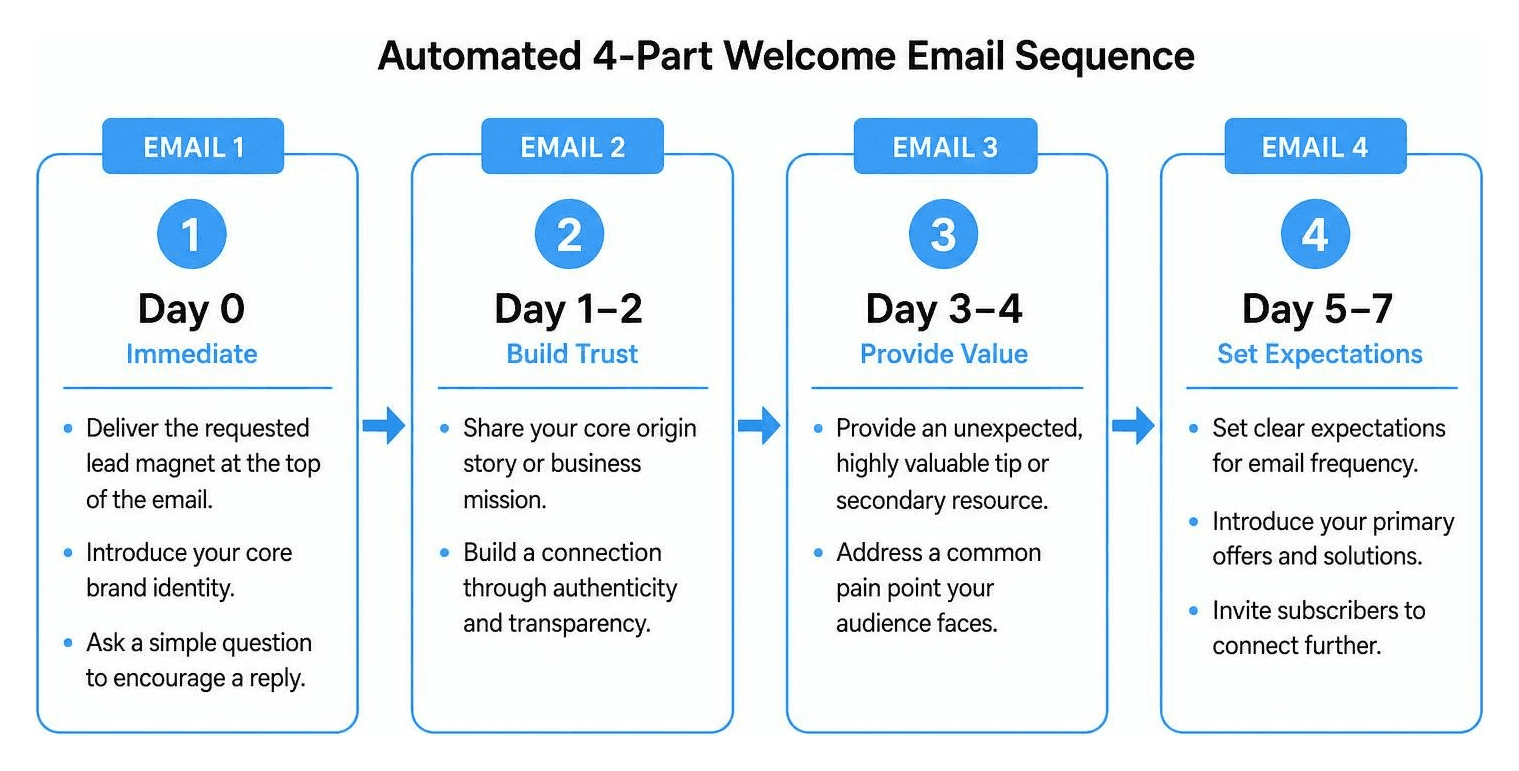
Set up a Day 0 autoresponder that triggers instantly upon opt-in. Use a strategic 3- to 5-email welcome series structure:
Email 1 (Day 0 - Immediate): Deliver the requested lead magnet at the very top of the email. Introduce your core brand identity and ask a simple question to encourage a direct reply (which boosts mailbox deliverability).
Email 2 (Day 1-2): Share your core origin story or business mission to build trust and authority.
Email 3 (Day 3-4): Provide an unexpected, highly valuable tip or secondary resource that addresses a common pain point.
Email 4 (Day 5-7): Set clear expectations regarding sending frequency, introduce your primary offers, and invite subscribers to connect further.
Step 5: Proven Promotion Tactics on How Build Email List Audiences Organically
To scale your list past your initial audience, combine compounding long-term growth channels with faster promotional bursts.
Implementing structured Digital Marketing Strategies allows you to turn everyday content into a subscriber growth engine.
Effective organic growth tactics include:
Content Upgrades: Create tailored downloadable assets for your top 5 highest-traffic blog posts. Content upgrades convert 3x to 5x better than site-wide opt-ins.
Social Media Bio Funnels: Feature your lead magnet URL in all social bios and highlight key resource takeaways in video and text posts.
Podcast Appearances & Guest Blogging: Appear on industry shows or write guest articles, directing listeners and readers to a dedicated opt-in landing page.
Newsletter Swaps & Co-Promotions: Partner with non-competing creators in your niche to cross-promote lead magnets to each other's audiences.
Referral Programs: Implement a milestone-based referral system that rewards existing subscribers with exclusive content when they refer friends.
List Hygiene, Pitfalls to Avoid, and Long-Term Audience Nurturing
Growing a list is only half the battle; maintaining list quality protects your business long term. The fastest way to destroy your sender reputation is to shortcut the process.
Inbound Organic List Building | Buying or Renting Email Lists |
|---|---|
Permission: Explicit opt-in consent granted | Permission: Zero consent; unsolicited contact |
Deliverability: High inbox placement, low bounce rates | Deliverability: Severe ISP penalties, high bounce rates |
Engagement: High open rates (20-40%) and clicks | Engagement: Extremely low engagement, high spam flags |
Compliance: Full compliance with GDPR and CAN-SPAM | Compliance: High legal risk and potential ESP account termination |
Long-Term ROI: High conversion rates and brand trust | Long-Term ROI: Wasted budget and damaged domain reputation |
Never buy or rent email lists. Purchased lists are filled with stale addresses, spam traps, and unengaged contacts. Emailing unverified contacts leads to high bounce rates and immediate spam complaints, causing mailbox providers like Gmail and Yahoo to blacklist your domain.
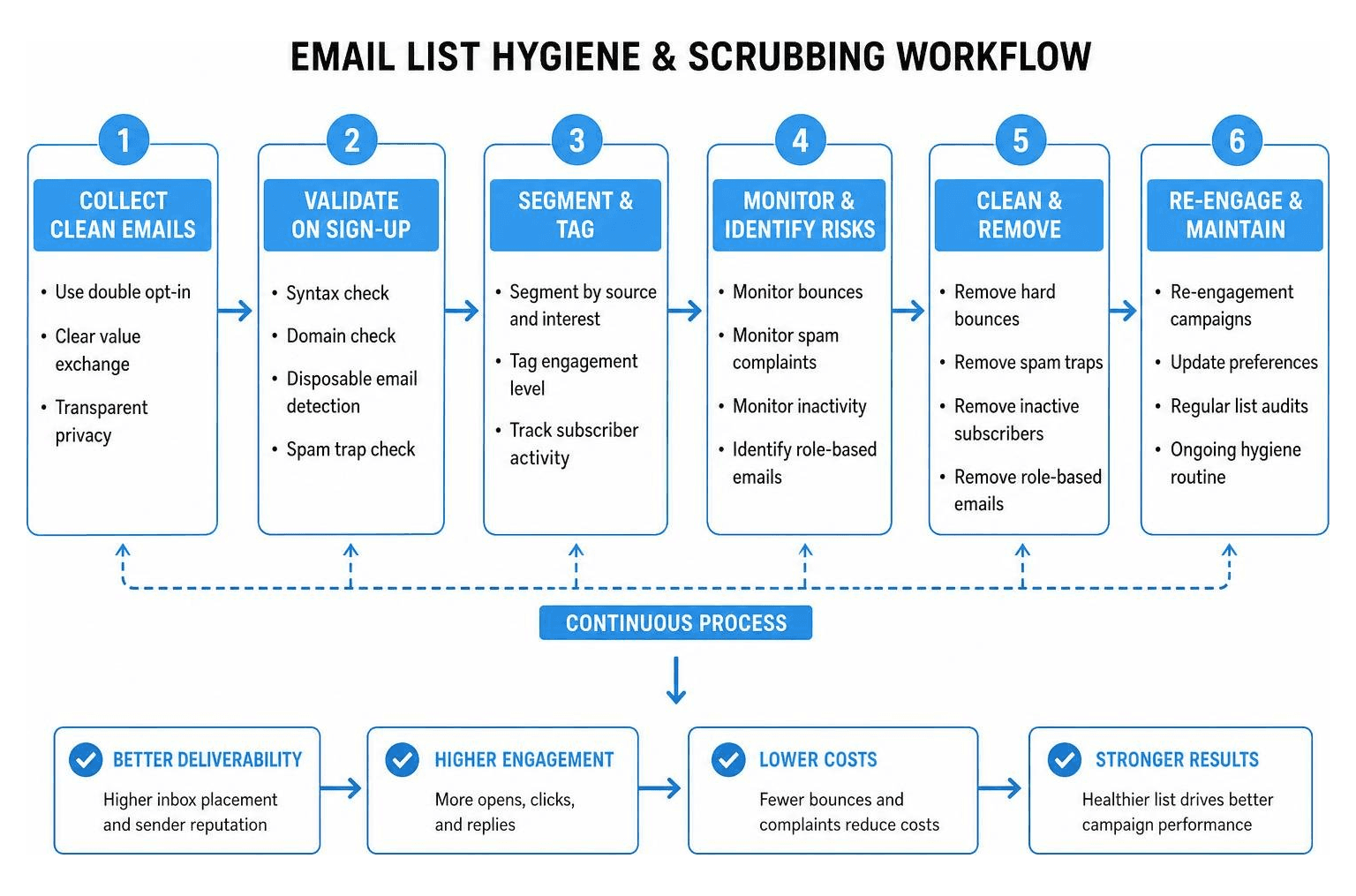
Practicing regular email list hygiene safeguards your sender reputation:
Use email verification APIs at sign-up to block fake entries.
Scrub unengaged subscribers (contacts who have not opened or clicked an email in 3 to 6 months) every quarter.
Run a brief re-engagement campaign before purging inactive contacts.
Remove hard bounces and honor every unsubscribe request immediately.
Trimming disengaged contacts may reduce your total subscriber count, but it dramatically improves your open rates, click-through rates, and inbox placement.
Nurture your audience by committing to a predictable publishing schedule—whether weekly, bi-weekly, or monthly. Deliver consistent value using an 80/20 balance: 80% educational, entertainingly helpful content, and 20% promotional offers. Treat your inbox access as a privilege, and your email list will become the most profitable asset in your digital strategy.
If you are ready to expand your online reach and build an audience that stays connected, explore how you can Grow your audience with custom social media services to feed your email funnel today.