Web
All About Google Local Pack Services
Aug 12, 2026

Essential Google Local Pack Services for Local Business Growth
When someone searches for a emergency plumber or a cozy café nearby, Google relies on a specialized local algorithm to present the top choices. Securing one of these top three spots provides massive business growth. Companies featured in local packs earn 126% more traffic and 93% more direct user actions—such as calls, website visits, and direction requests—compared to those stranded further down the search results.
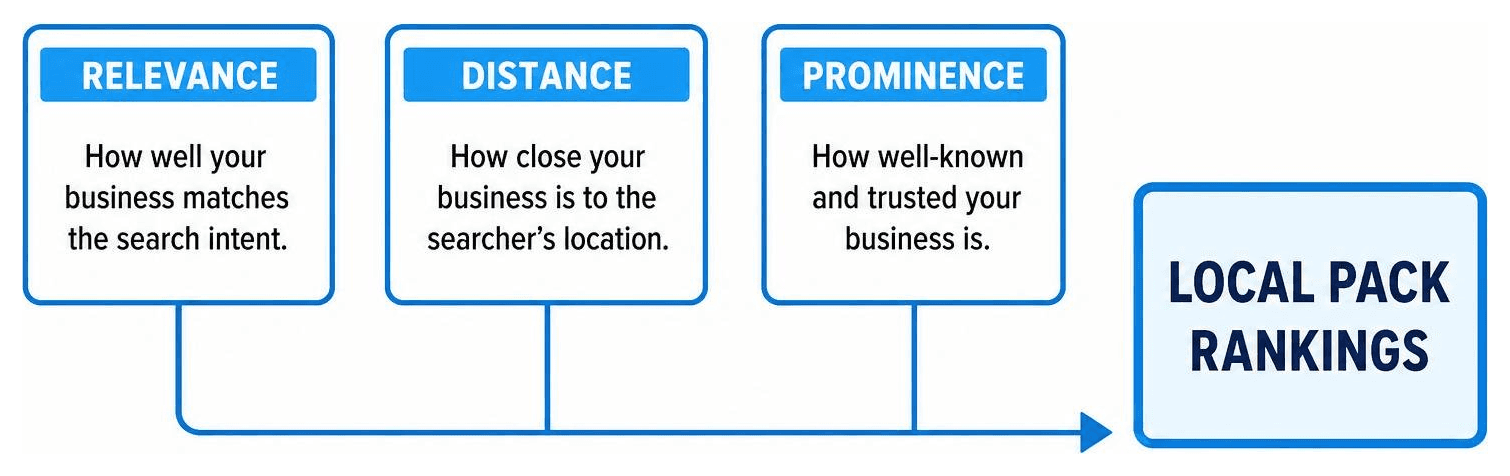
Understanding how these three core algorithm signals shape your map presence helps you build high-impact local search visibility:
Google Business Profile Setup and Primary Category Optimization
Your Google Business Profile (GBP)—formerly Google My Business—is the cornerstone of any local search campaign. Setting it up correctly requires claiming ownership, verifying your physical location, and completing every available data field.
Selecting your primary category is the single most influential on-page signal for local relevance. For example, if you run an HVAC company, selecting "HVAC Contractor" as your primary category rather than a generic secondary option like "Air Conditioning Repair Service" can immediately boost your profile's search alignment.
Complete profiles earn trust faster. Adding operational details, special attributes (like wheelchair accessibility or free Wi-Fi), and regular media updates makes a huge impact. In fact, listings featuring high-quality photos receive 42% more requests for driving directions and 35% more website clicks than photo-less listings. For step-by-step profile strategies, review our Google Business Profile ultimate guide and detailed overview on how to optimize GMB.
Strategic Review Management in Google Local Pack Services
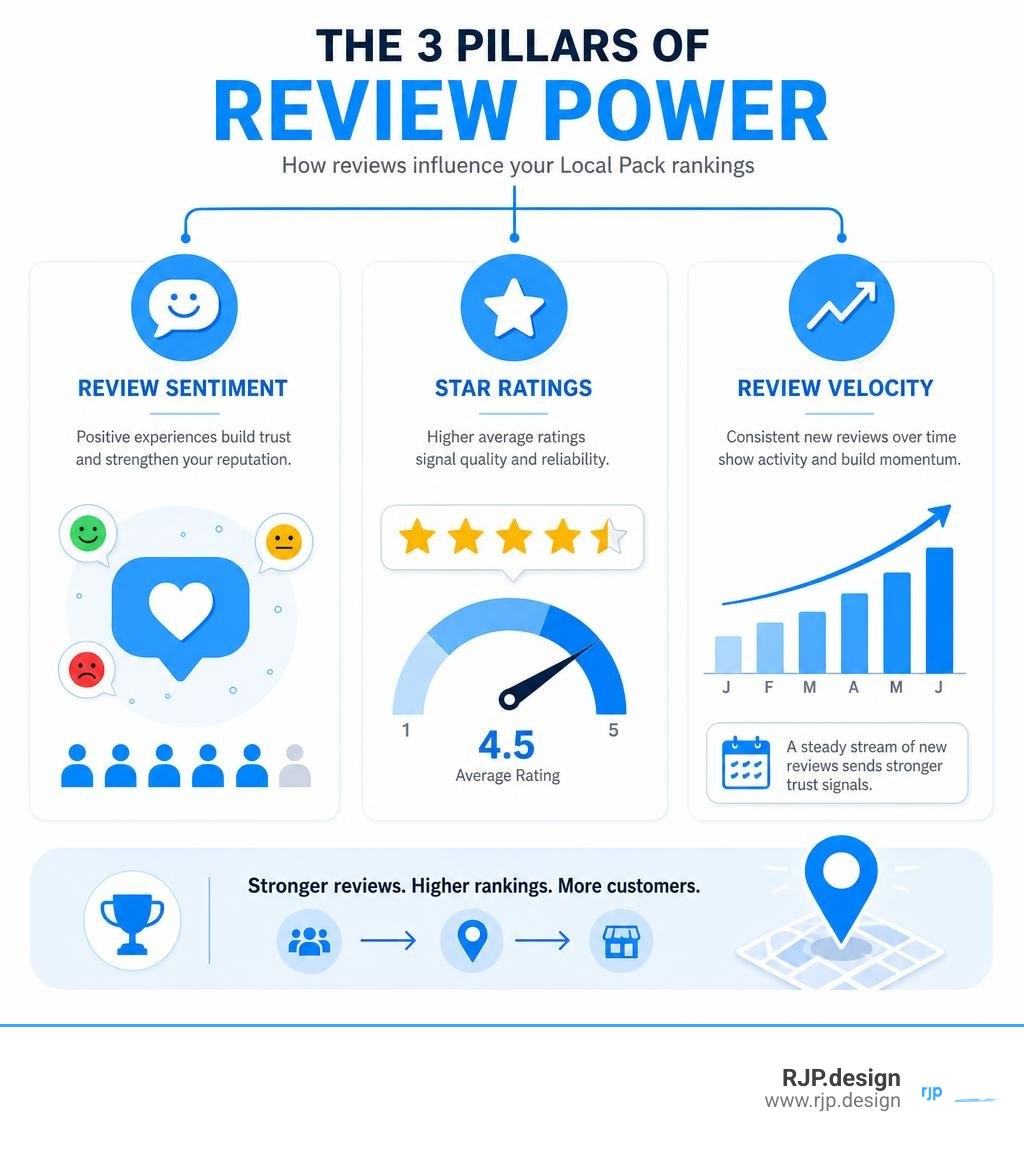
Customer feedback directly powers Google's prominence factor. Beyond total star ratings, search engines evaluate your review velocity—the consistency with which you earn new reviews over time. A steady stream of 5 to 10 new reviews monthly sends stronger trust signals than receiving 50 reviews at once followed by months of silence.
Managing your online reputation involves four proactive steps:
Request feedback immediately: Ask customers for reviews right after a completed service or purchase when the experience is fresh.
Respond promptly: Reply to both positive and negative reviews within 48 hours to demonstrate active client care.
Include local keywords natural in replies: Mention specific services and your city name when responding to feedback.
Leverage local justifications: Highlighting specific services in review responses helps trigger Google’s "justification snippets" directly inside the map pack interface.
Applying these local business SEO tips builds long-term customer trust and shields your listing against competitive shifts.
Citation Building, Directory Alignment, and Local Link Building
Google verifies your real-world footprint by cross-referencing your Name, Address, and Phone number (NAP) across major online directories. Discrepancies—like using "Suite 100" on Google and "Ste #100" on external business directories—can weaken Google’s confidence in your business details.
Professional google local pack services systematically audit online directories to eliminate duplicate profiles and correct inconsistent entries using dedicated local citations SEO workflows.
Beyond citations, earning backlinks from respected community websites, local chambers of commerce, sponsor pages, and regional business partners reinforces your local authority. You can explore advanced off-page strategies in our local link building guide 2026. Additionally, active citation management includes monitoring your area for competitor spam, such as listings using fake business names stuffed with location keywords, and submitting redressal forms to keep map search results fair.
High-Intent Local Keyword Research and Content Optimization
To match local search queries, your website content must reflect what nearby customers search for. Local keyword research blends core services with regional modifiers (e.g., "roof repair service in Austin").
Effective content optimization includes:
Creating dedicated location landing pages: If your business serves multiple sub-regions, build custom landing pages for each area instead of cramming every city onto a single homepage.
Optimizing on-page SEO elements: Naturally place geo-targeted keywords within H1 titles, meta descriptions, image alt text, and body copy.
Implementing LocalBusiness Schema Markup: Add structured code to your website so search engines can easily read your exact contact details, operating hours, and geo-coordinates.
Integrating targeted terms on localized landing pages bridges the gap between customer queries and your business offerings. To refine your strategy, see our guides on local keyword SEO and content for local SEO.
Technical Website Optimization and Proximity Signals
With over 60% of local queries occurring on mobile devices, desktop-only websites miss out on valuable leads. A fast, mobile-responsive design ensures visitors can easily navigate your site and tap click-to-call buttons.
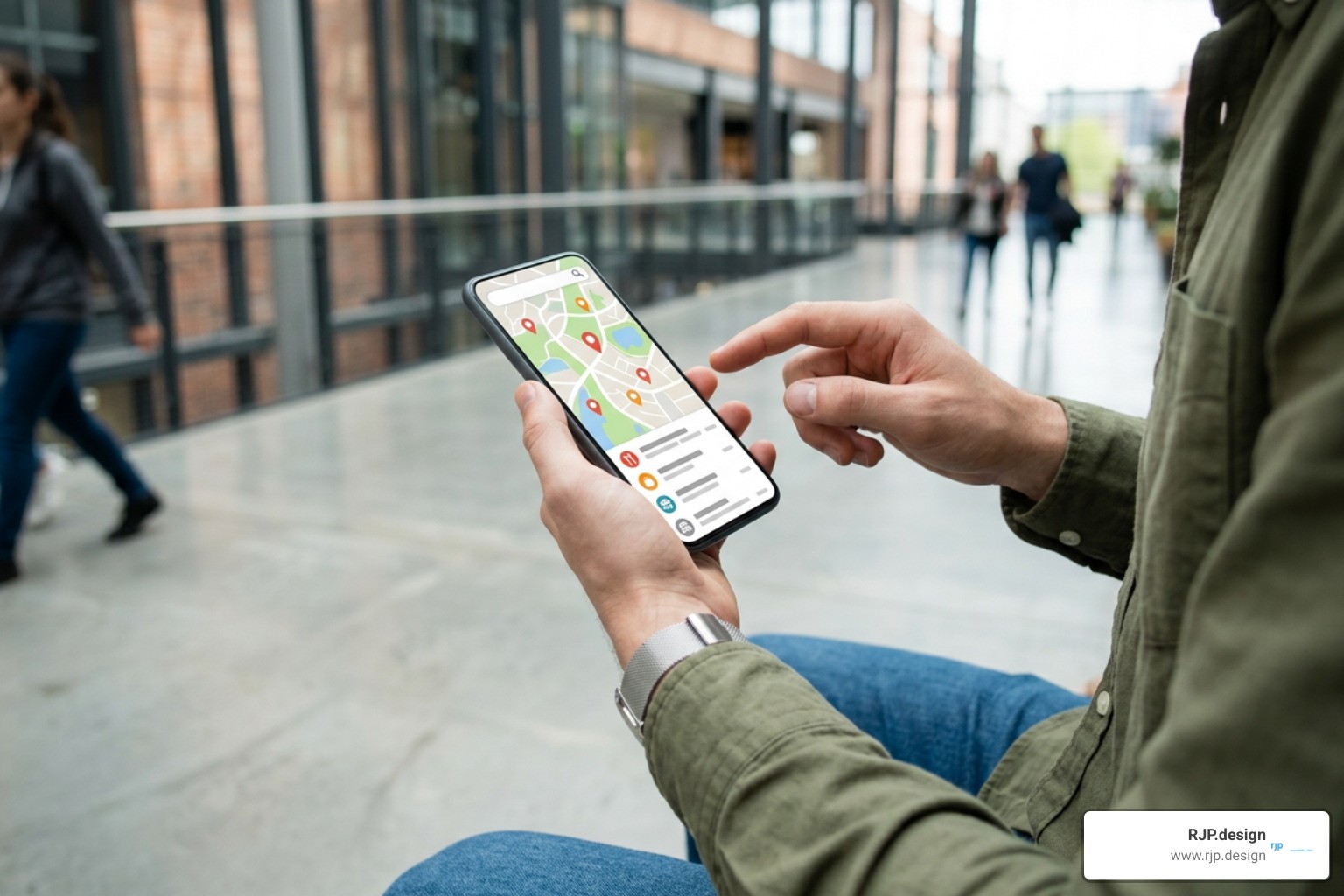
Proximity measures how close a business is to the searcher's physical location. While you cannot change your physical street address, technical optimizations ensure your proximity signals are accurately communicated to search engines:
Mobile Page Speed: Compress images and streamline code so pages load instantly on mobile networks.
Click-to-Call Friction: Place visible, tap-to-call phone buttons at the top of your mobile site.
Zero-Click Search Preparation: Structure essential details clearly so users find immediate answers directly on SERPs and map cards.
Discover complete technical optimization frameworks in our local search optimisation complete guide.
Distinguishing Local Finder, Local Service Ads, and Google Local Pack Services
Navigating local search features can be confusing because multiple map layouts exist across desktop and mobile devices.
Here is how these distinct search features compare:
Google Local 3-Pack: The organic block of three local businesses paired with a map. Placements are earned through organic optimizations covering relevance, distance, and prominence.
Local Finder: The expanded directory that appears when a user clicks "More places" at the bottom of the Local 3-Pack, revealing 20 or more area businesses.
Local Services Ads (LSAs): Paid advertising units appearing above the Local Pack, often featuring "Google Guaranteed" or "Google Screened" badges. To dive deeper into structured API responses and ad units, refer to the Google Local Services Place Results API - SerpApi documentation and our comprehensive local SEO marketing guide 2026.
Tracking Local Pack Performance and Avoiding Ranking Mistakes
Improving your local map rankings requires continuous monitoring and proactive maintenance. Because rankings fluctuate based on exact GPS coordinates within a city, tracking local map visibility requires specialized tools.
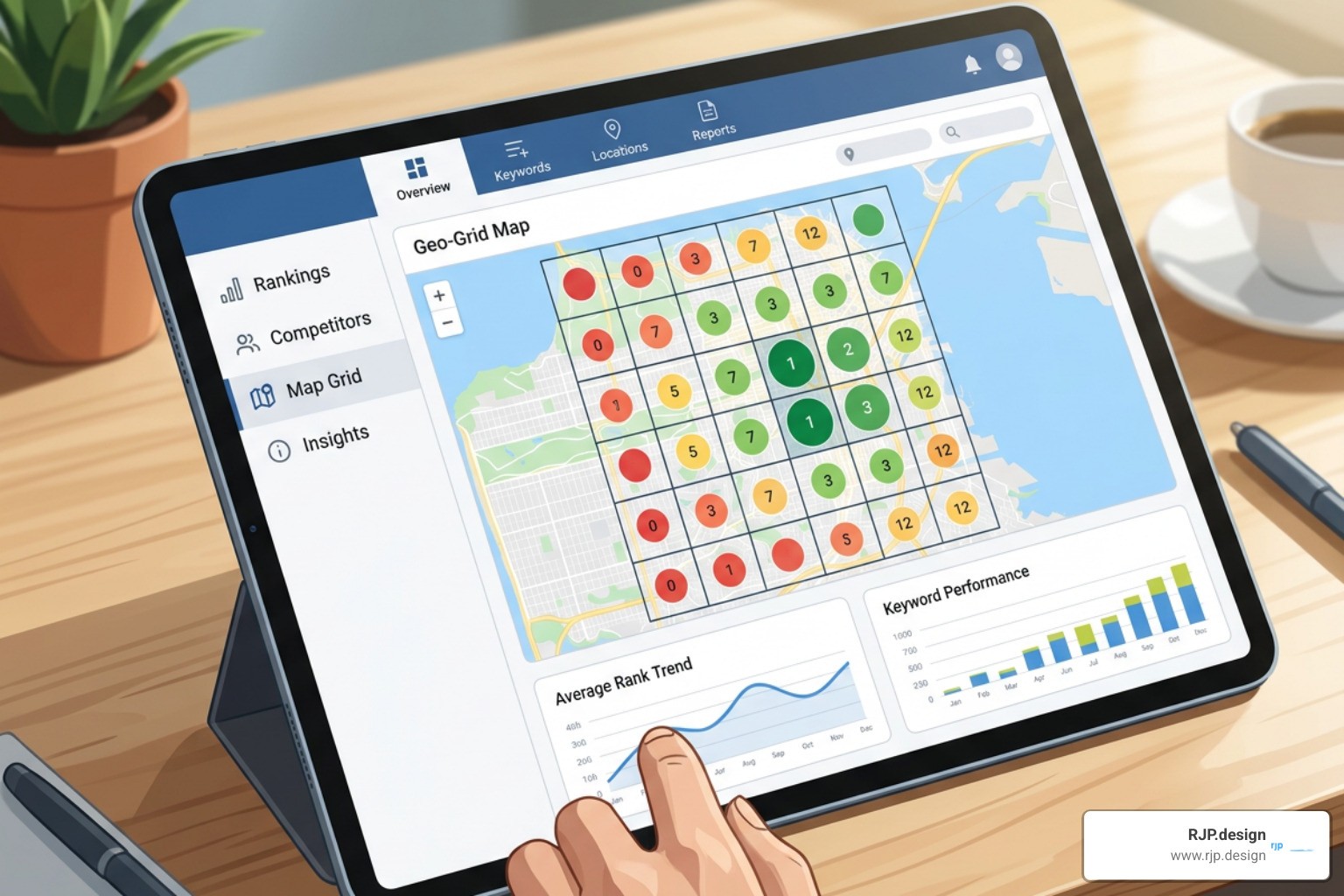
To track performance accurately, rely on these foundational tools and methods:
Geo-Grid Tracking: Use grid-based tracking software to monitor your business ranking across individual neighborhood blocks rather than relying on a single city-center ranking metric.
GBP Insights Dashboard: Monitor search queries, photo views, direct call actions, and direction requests directly within your Google Business profile.
Custom UTM Parameters: Append tracking tags to the website links on your business profile to cleanly isolate map pack traffic inside Google Analytics.
Avoiding common optimization mistakes is equally important. Watch out for these typical pitfalls:
Category Drift: Frequently changing primary categories confuses search algorithms and degrades overall authority.
Profile Inactivity: Leaving your profile unupdated for over 60 days signals to Google that the business may be inactive.
Unverified Listings: Failing to complete owner verification leaves your profile vulnerable to unauthorized public edits or third-party claims.
At RJP.design, we help local service providers build clean, modern websites and clear online profiles that stand out in competitive search spaces. To see where your local presence currently stands, explore our specialized tracking local SERPs SEO company techniques, book dedicated local SEO audits, or review our full range of local SEO services.