SEO
The Ultimate Guide: How to Improve Your Search Engine Rankings
Feb 27, 2026

Why Your Search Engine Ranking Matters More Than Ever
If you want to improve search engine ranking, you must focus on three core areas: creating high-quality, user-focused content; optimizing your site's technical foundation; and building authority through backlinks. These strategies help search engines understand, trust, and rank your content higher.
Here are the essential steps to improve your search engine ranking:
Optimize for user intent - Create content that directly answers what people are searching for.
Fix technical SEO issues - Ensure your site loads fast (under 2.5 seconds), works on mobile, and uses HTTPS.
Build topical authority - Cover your subject comprehensively through interconnected content.
Earn quality backlinks - Get links from reputable websites in your industry.
Implement schema markup - Help search engines understand your content and earn rich snippets.
Improve Core Web Vitals - Focus on page experience signals like loading speed and stability.
Optimize for local search - Keep your Google Business Profile updated and encourage reviews.
Monitor and measure - Use Google Search Console and Analytics to track progress.
With Google driving most web traffic and 75% of users staying on page one, ranking high is critical. The top three spots alone capture over 68% of all clicks, so if you're not on page one, you're largely invisible to potential customers.
SEO is about helping search engines understand your content while helping users find your site. The landscape has evolved beyond keyword stuffing; today's algorithms prioritize quality content and a positive user experience. For small businesses, this is crucial, as nearly 90% of consumers start their buying journey with an online search.
While SEO can feel overwhelming, a small amount of knowledge can make a big difference. Focusing on the basics—helpful content, a technically sound website, and building authority—yields meaningful results. The investment in SEO pays dividends that compound over time. Unlike paid advertising, which stops when you stop paying, organic rankings provide lasting traffic. With a higher conversion rate than PPC (14.6% vs. 10%) and the highest reported ROI for many marketers, SEO builds a sustainable asset for your business.
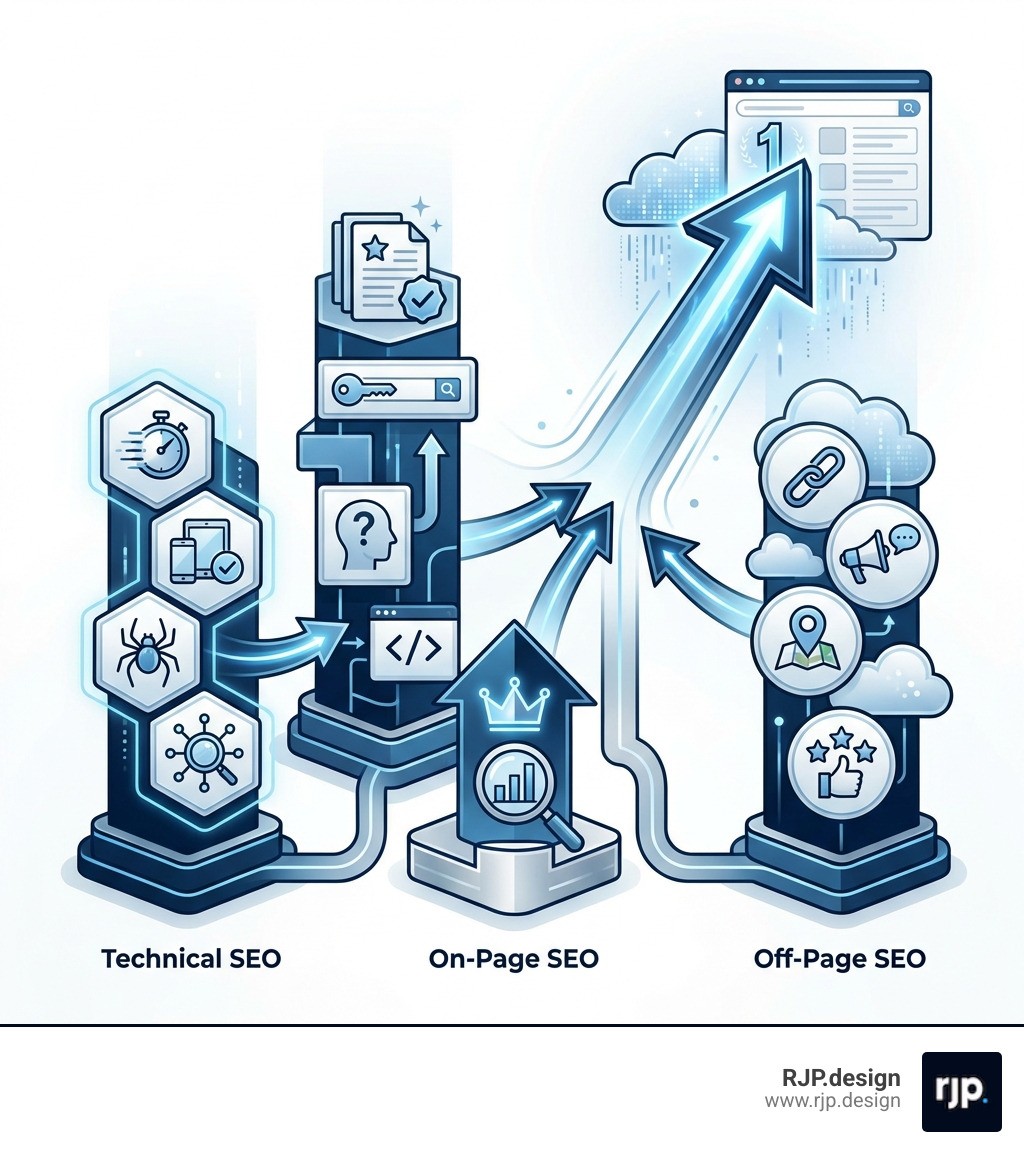
This guide will walk you through the pillars of SEO—technical optimization, on-page content, and off-page authority. I'm Ross Plumer from RJP.design, where we specialize in building websites and search strategies that help businesses look great and get found online. I’ve seen how strategic efforts to improve search engine ranking can transform a company's digital presence and bottom line.
Essential Improve search engine ranking terms:
Introduction to Search Engine Optimization
Search engine optimization (SEO) is the practice of increasing your website's traffic quality and quantity through organic search engine results. Since Google accounts for about 63% of web referrals, learning how to improve search engine ranking is essential for being seen online.
Search engines work in three stages. First, they use crawlers to find pages (crawling). Next, they store and organize this content in a massive database (indexing). Finally, when a user enters a query, their algorithms analyze numerous factors to deliver the most relevant and authoritative results (ranking).
This is 'earned' media, unlike paid search (PPC). While PPC offers immediate visibility for a price, its traffic stops when you stop paying. SEO builds long-term authority and delivers a higher conversion rate (14.6% vs. 10% for PPC), making it a cornerstone of Search Engine Marketing (SEM) with lasting value.
Core Strategies to Improve Search Engine Ranking
Mastering On-Page and Technical SEO
To improve search engine ranking, your website needs a strong foundation. On-page SEO involves optimizing the content on your pages (text, titles, headings), while technical SEO ensures your site's backend is optimized for search engines to crawl and index it efficiently.
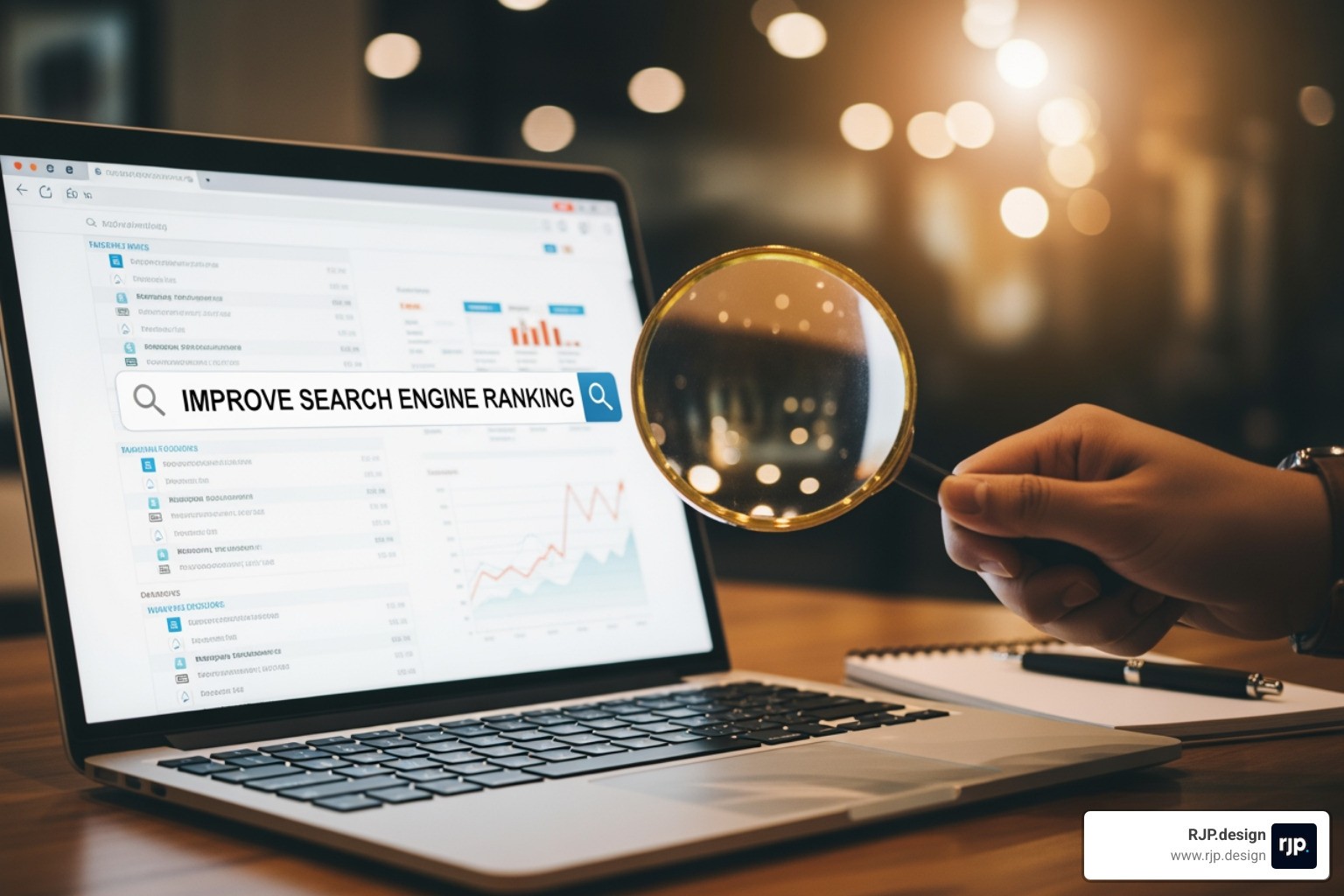
A logical site structure with clean URLs and minimal duplicate content is key. Since most searches are mobile, Google uses a mobile-first indexing approach. Your site must be responsive and provide a seamless experience on all devices, a standard you can check with Google's Lighthouse testing tool.
Google's page experience signals, including site security (HTTPS), are confirmed ranking factors. At their core are the Core Web Vitals:
Largest Contentful Paint (LCP): Loading performance. Aim for under 2.5 seconds.
First Input Delay (FID): Interactivity. Aim for four seconds or less.
Cumulative Layout Shift (CLS): Visual stability. Aim for a score below 0.1.
Site speed is crucial; over half of visitors leave if a page takes more than three seconds to load. We optimize speed by compressing images, minifying code, and enabling browser caching. These technical fixes are vital to improve search engine ranking. Learn more from our Technical SEO Experts.
Creating High-Value Content That Ranks
To improve search engine ranking, your content must be exceptional. High-quality content is useful, well-organized, unique, and authoritative—so comprehensive that it's the 'last click' a user needs to make.
Understanding user intent is paramount. We analyze search results to determine what users truly want and create content that directly meets that need. Keyword research helps us uncover the long-tail and question-based queries your audience uses. We use tools like Moz Keyword Explorer, Google Keyword Planner, and AnswerThePublic to find these opportunities.
Google's E-E-A-T framework (Experience, Expertise, Authoritativeness, Trust) is crucial for assessing content credibility, especially for "Your Money or Your Life" (YMYL) topics. We demonstrate this by showcasing first-hand experience and author credentials, guided by Google’s Search Quality Rater Guidelines.
We build topical authority by creating content hubs—a central 'pillar' page on a broad topic that links to detailed 'cluster' articles. This signals to search engines that your site is a definitive resource.
Visuals like original images and videos boost engagement and create new findy paths through image and video search. We optimize them with descriptive alt text for accessibility and SEO. For more on optimizing your content, see our insights on SEO Content Optimizer.
Schema markup is code that clarifies your content for search engines, helping you earn rich snippets (like star ratings or FAQs in search results). We use JSON-LD and types from Schema.org markup to improve visibility, which you can validate with Google’s Rich Results Test.
Here's a list of content types that build authority:
In-depth guides
Original research and data studies
Case studies and success stories
Expert interviews and Q&As
Whitepapers and e-books
Comprehensive tutorials and how-to articles
Thought leadership pieces
Infographics and data visualizations
Building Authority with Backlinks and Local SEO
External signals like backlinks and local presence tell search engines your site is trustworthy. This is where off-page SEO comes in.
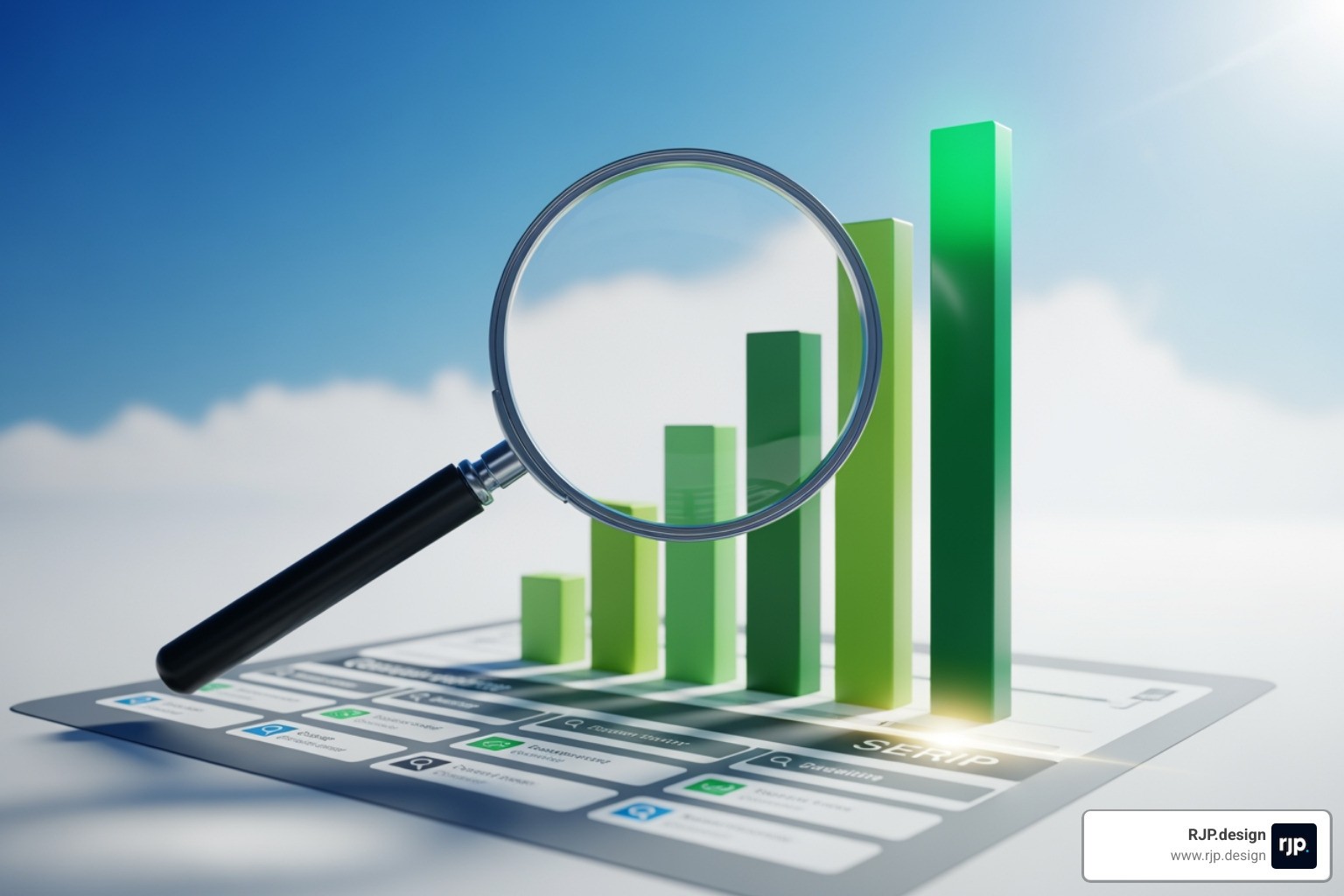
Backlinks—links from other sites to yours—act as 'votes of confidence' for search engines. Quality matters more than quantity. We focus on earning links from reputable sites through valuable content and outreach, avoiding spammy tactics that can incur penalties. This involves promoting your best content to relevant publications and journalists using platforms like HARO to earn valuable mentions.
For businesses serving a specific area, local SEO is indispensable to improve search engine ranking. Google ranks local results based on relevance, distance, and prominence (how well-known your business is).
A fully optimized Google Business Profile is the first step. We ensure your NAP (Name, Address, Phone number), hours, and services are accurate and consistent across all local citations (directory listings). Adding photos and actively managing customer reviews are also key signals for building trust and prominence. For more, watch How to improve your local ranking on Google and explore our Local SEO Services.
Measuring, Costs, and Long-Term Strategy
The Evolving Landscape: AI's Impact on SEO
To continually improve search engine ranking, we must adapt to the rise of AI. AI is reshaping search, with generative AI providing direct answers in search results. While this can affect clicks, users on a buying journey still value visiting websites for detailed information.
This requires a new approach, sometimes called Generative Engine Optimization (GEO) or Answer Engine Optimization (AEO). The strategy is to create comprehensive, authoritative content using natural, conversational language that directly answers user questions, making it easily digestible for AI models. This means optimizing for longer, conversational keywords. As AI becomes more prevalent, building a strong, trustworthy brand is more critical than ever to stand out. We can help you with Digital Presence Enhancement to steer this new era.
Measuring SEO Success and Justifying Investment
How do you know if your efforts to improve search engine ranking are paying off? Measuring success is key to understanding your return on investment. We monitor Key Performance Indicators (KPIs) like organic traffic, ranking positions, click-through rate (CTR), and conversions (e.g., form submissions).
Using tools like Google Search Console and Google Analytics 4, we analyze data to refine your strategy. Our Website Traffic Analysis services provide deeper insights.
SEO is an investment in resources, not a direct advertising cost. While it requires a budget for expertise and content, it's one of the most effective marketing strategies, offering an excellent long-term ROI.
Here's a quick look at how SEO compares to PPC:
Feature | SEO (Organic Search) | PPC (Paid Search) |
|---|---|---|
Visibility | Earned over time, builds authority | Immediate, pay-to-play |
Cost | Investment in resources (time, content, tools) | Per click or impression (ongoing budget needed) |
Results Timeline | Weeks to months (often 6+ months for significant impact) | Instant once campaign is live |
Sustainability | Permanent once achieved, continues to drive traffic | Stops when budget runs out |
Conversion Rate | Higher (14.6% on page one) | Lower (10%) |
Credibility | High, seen as more trustworthy by users | Lower, often perceived as ads |
Control | Less direct control over rankings, more holistic | Full control over ad placement and targeting |
Best Practices to Improve Search Engine Ranking for the Long Haul
Sustainable SEO success is a long-term commitment, not a quick fix. It means focusing on sound strategies and avoiding common pitfalls.
Avoid outdated practices like keyword stuffing or buying backlinks, which can harm your site. Also, understand that concepts like E-E-A-T are guidelines for creating helpful content, not direct ranking factors, and meta keywords are no longer used by Google for ranking.
The long-term benefit of SEO is sustainable traffic. Unlike paid ads, a strong organic presence builds lasting brand credibility and continues to deliver results without ongoing ad spend. It's about repeatedly showing up with clarity and value.
At RJP.design, we integrate technical expertise with user psychology to build sustainable visibility that drives real business results. Our down-to-earth team is committed to high-quality service and client satisfaction, ensuring your website is not only beautiful but also highly visible. For expert guidance on implementing these strategies, explore our SEO Ranking Improvement services.