
Web
Beginner's Guide to Local Citation Building Steps
Aug 25, 2026

Introduction
Local citation building involves five essential steps: auditing existing web listings, standardizing core Name, Address, and Phone (NAP) data in a master document, claiming foundational Tier 1 profiles, submitting to niche and local directories, and syndicating data across major aggregators. These structured citations serve as verified digital reference points that confirm your business exists at a distinct physical location, establishing the algorithmic trust needed for top search rankings.
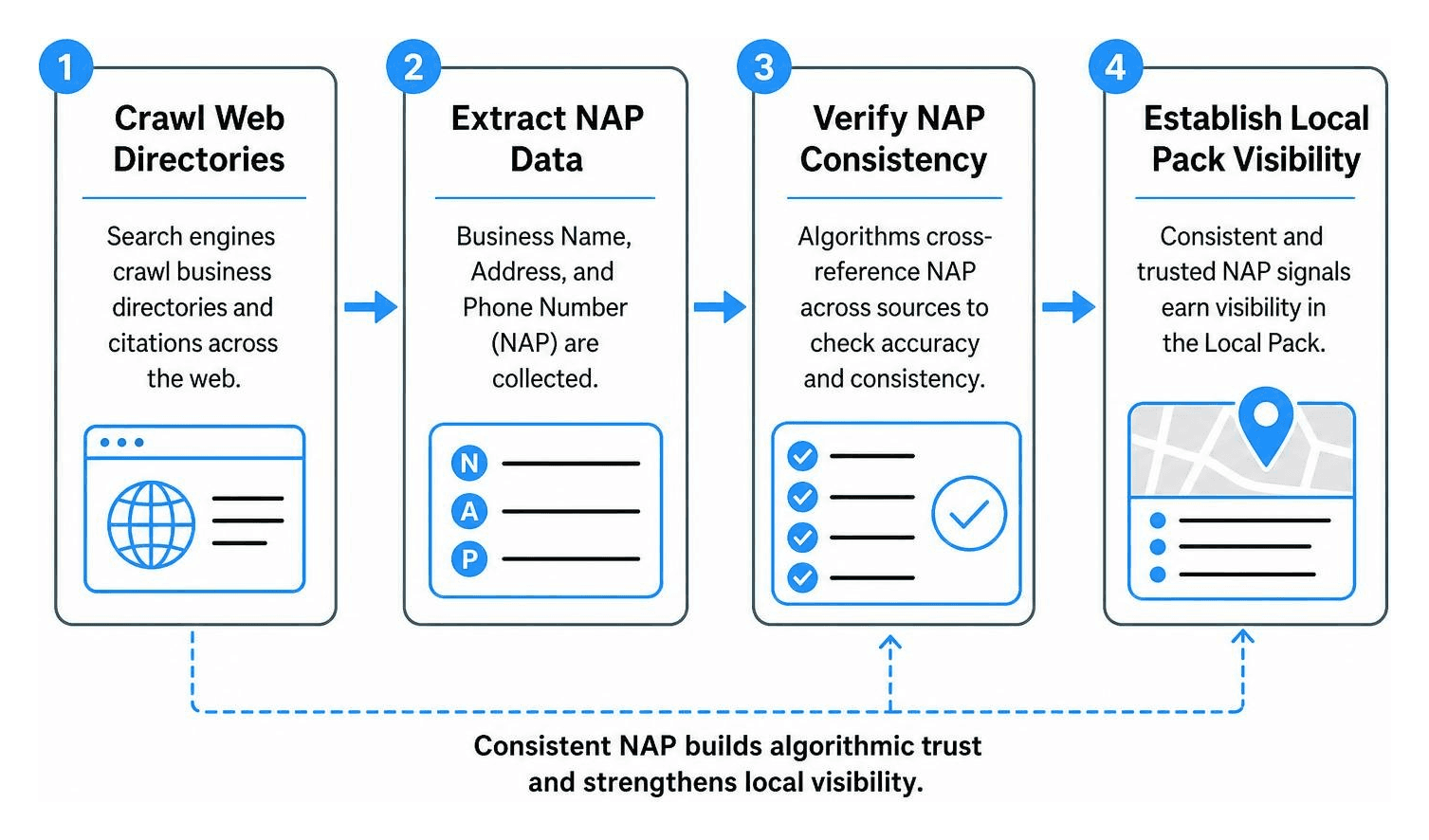
In 2026, building local pack visibility requires maintaining accurate data across diverse platforms. Search engines cross-reference these external data points to determine whether to feature a company within the Google Map Pack or local answer engines. Beyond traditional search algorithms, modern AI engines also extract facts from business directories to answer natural language queries.
Failing to maintain this data causes direct conversion drop-offs. Research indicates that 47% of consumers look for an alternative business nearby if the one they intend to visit is listed as closed online. When your business details are complete and aligned across web ecosystems, prospective buyers encounter fewer points of friction, and search engines reward that reliability with higher rankings.
Strategic Local Citation Building for Search Visibility
Building search visibility involves more than dropping your business name onto arbitrary websites. Search engines evaluate the authority and context of every citation source to confirm geographic legitimacy. Developing a strong profile of Local Citations SEO creates verified trails that algorithms use to measure digital prominence.
Beyond standard directory listings, unstructured citations—such as unlinked brand mentions in local newspaper articles, regional blogs, event sponsorships, or chamber of commerce member rolls—play an active role in reinforcing your entity's authority. Search engines and AI models recognize these mentions as genuine neighborhood signals. Incorporating these organic references alongside foundational business directories solidifies your digital presence in local markets.
Core Methods of Local Citation Building
There are three primary methodologies for managing local directory citations: manual submissions, automated API-based listing distribution, and data aggregators.
Manual Submissions: Registering directly on individual directory sites gives you permanent ownership of your accounts and login credentials. Manual submissions let you customize rich details like local business descriptions, high-resolution photos, and niche categories.
Data Aggregators: Primary networks such as Data Axle, Neustar Localeze, and Foursquare collect business information and syndicate it downstream to hundreds of smaller web directories, mobile applications, and in-car navigation systems.
API Listing Tools: Subscription-based API services sync information across fixed listing networks instantly. However, if an API subscription lapses, listings often lose their verified lock and can revert to outdated or crowdsourced data.
Understanding the mechanics of Business Citations SEO helps you choose the right approach for your budget and timeline:
Feature | Manual Citation Building | Data Aggregators | API Listing Management |
|---|---|---|---|
Ownership Model | Permanent listing ownership | Data pushed to databases | Active subscription required |
Recurring Fees | None (one-time build) | Low annual verification | High recurring subscription |
Data Customization | Full control over rich media | Core NAP & categorical data | Standardized API templates |
Propagation Speed | 1 to 6 weeks | 4 to 12 weeks | Real-time / 24–48 hours |
Duplicate Clean-Up | Manual suppression per site | Systemic database update | Algorithmic locking |
Combining manual submissions for your most important industry profiles with broad data aggregator syndication gives you permanent ownership without recurring software lock-in.
Directory Tiers for Local Citation Building
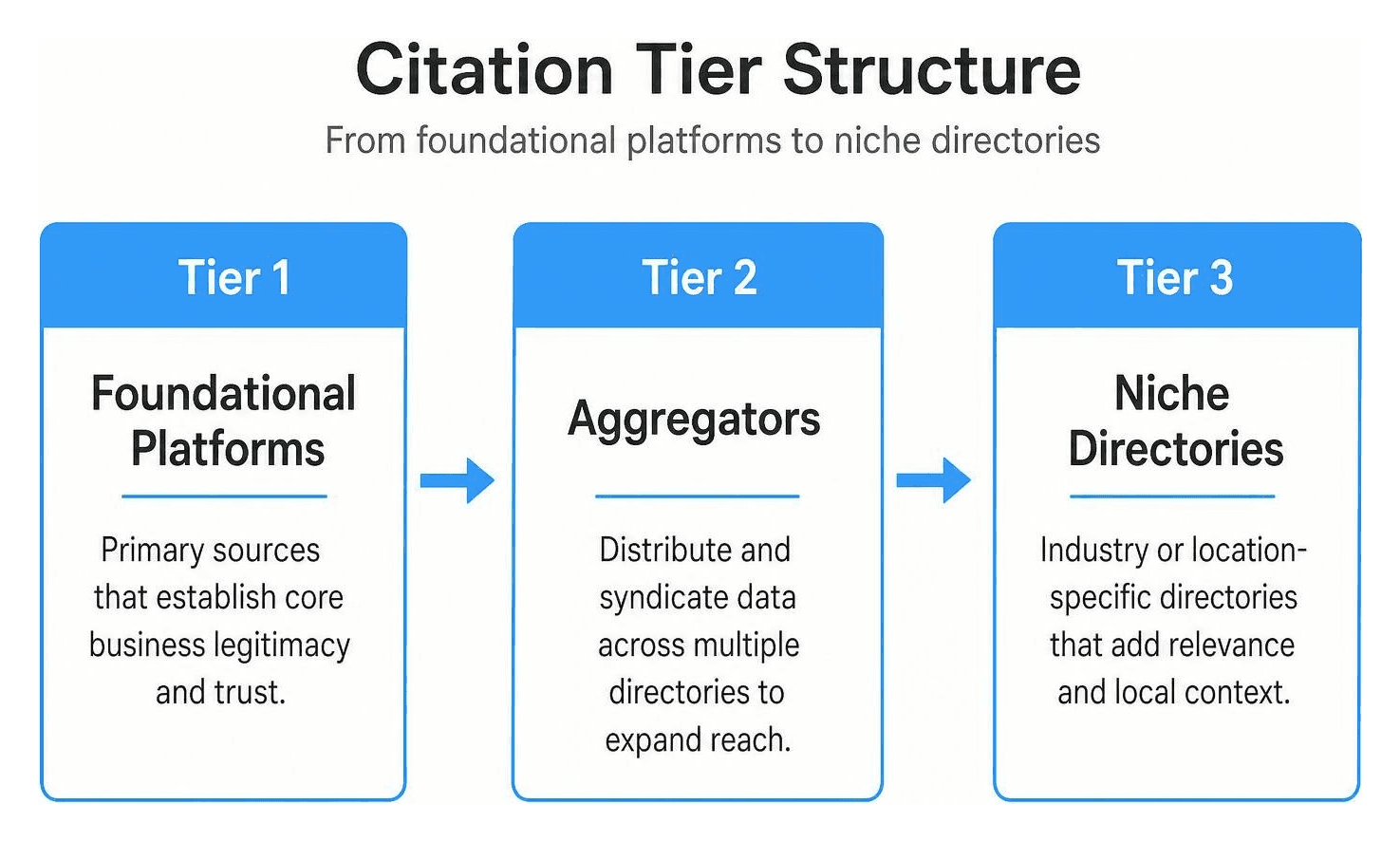
To maximize the return on your time, organize citation sources into four clear tiers based on their authority and search impact:
Tier 1: Foundational Platforms (60% of impact): Essential platforms every business must claim. These include Google Business Profile, Apple Business Connect, Bing Places, Facebook Business Pages, and Yelp.
Tier 2: High-Authority Core Directories (25% of impact): Established national directories such as the Better Business Bureau (BBB), YellowPages, Foursquare, and MapQuest.
Tier 3: Industry-Specific Portals (10% of impact): Specialized directories tailored to your specific trade or profession (for example, Houzz and Angi for contractors, Avvo for attorneys, or Healthgrades for healthcare providers).
Tier 4: Hyperlocal and Geo-Targeted Sources (5% of impact): Local chamber of commerce sites, regional business associations, and municipal business indexes.
Securing quality Local Directory Listings on relevant Tier 3 and Tier 4 sites provides deep contextual relevance that generic directories cannot match. Consult our Local Citations Guide: Build 100+ Free Links (2026) to explore a comprehensive index of free citation resources.
NAP Consistency and Profile Optimization
Data precision is essential during citation submission. In fact, 92% of citation failures stem from inconsistent data entry between different platforms. If your physical address is registered as "Suite 200" on your website, avoid listing it as "Ste 2" or omitting the unit number on third-party directories. For detailed optimization tactics, review our Google Business Profile Ultimate Guide.
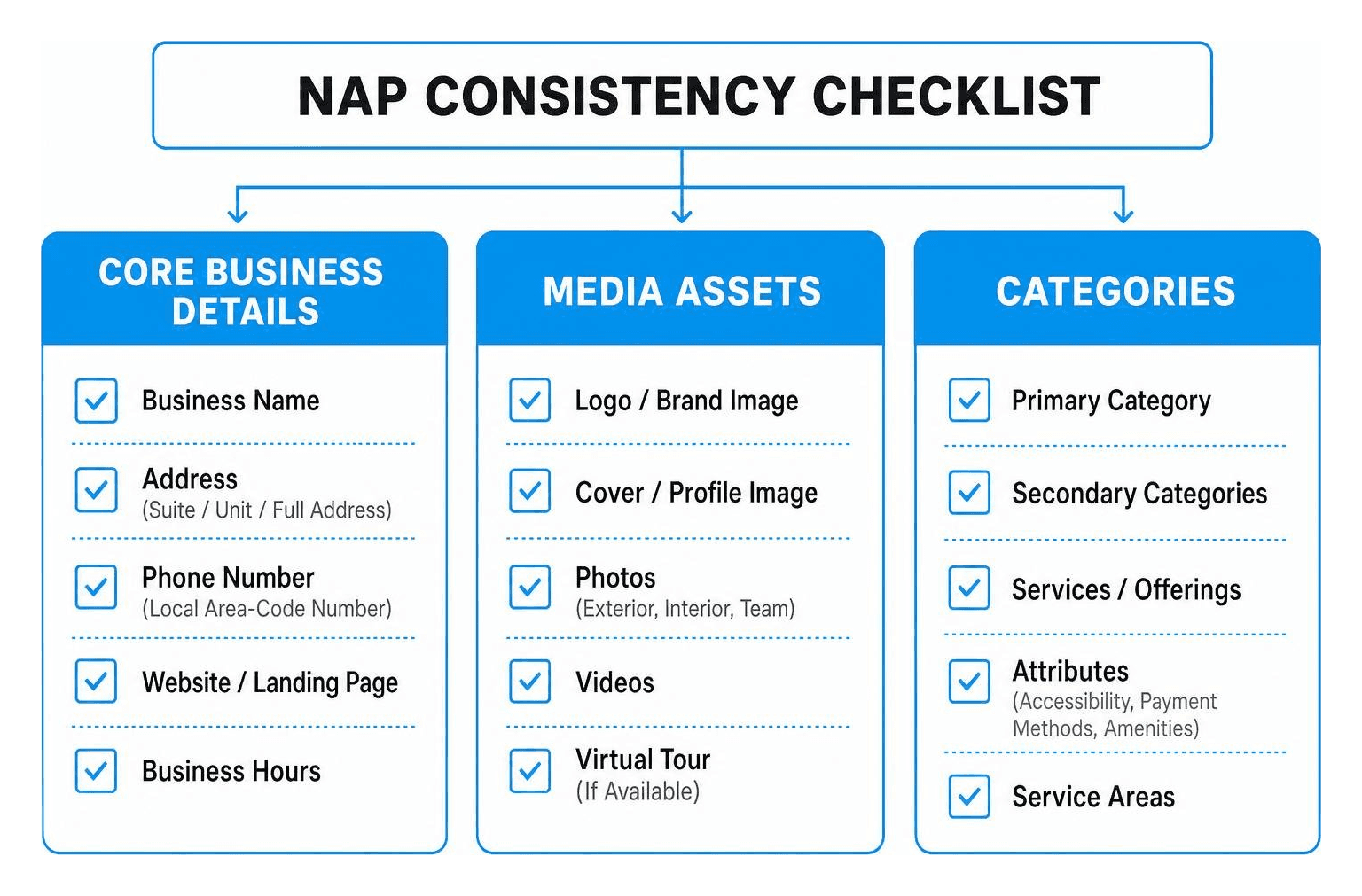
To maximize your Local Search Visibility, optimize every profile with rich media:
Direct Landing Pages: Link citations directly to your location landing page rather than a redirected URL.
Local Phone Numbers: Always list a dedicated local area-code number instead of a generic toll-free line.
Complete Profiles: Fill in all optional fields, including trading hours, payment methods, accessibility attributes, and logos. Research shows that complete directory profiles receive 7x more clicks than sparse listings.
Step-by-Step Citation Audit and Execution Workflow
Before creating new listings, audit your existing digital footprint. Inconsistent contact information, leftover records from previous physical addresses, or accidental duplicates dilute your local ranking power. Performing routine Local SEO Audits uncovers conflicting data that could be confusing search engines.
Create a standardized Master NAP document using the format above. Copying and pasting your details directly from this master file prevents formatting errors during manual registration. For additional ways to refine your local workflow, explore our Local Business SEO Tips.
Step-by-Step 30-Day Citation Acquisition Plan
Building a robust profile doesn't have to happen overnight. Spreading the work across a structured 30-day sprint ensures thorough, accurate submissions:
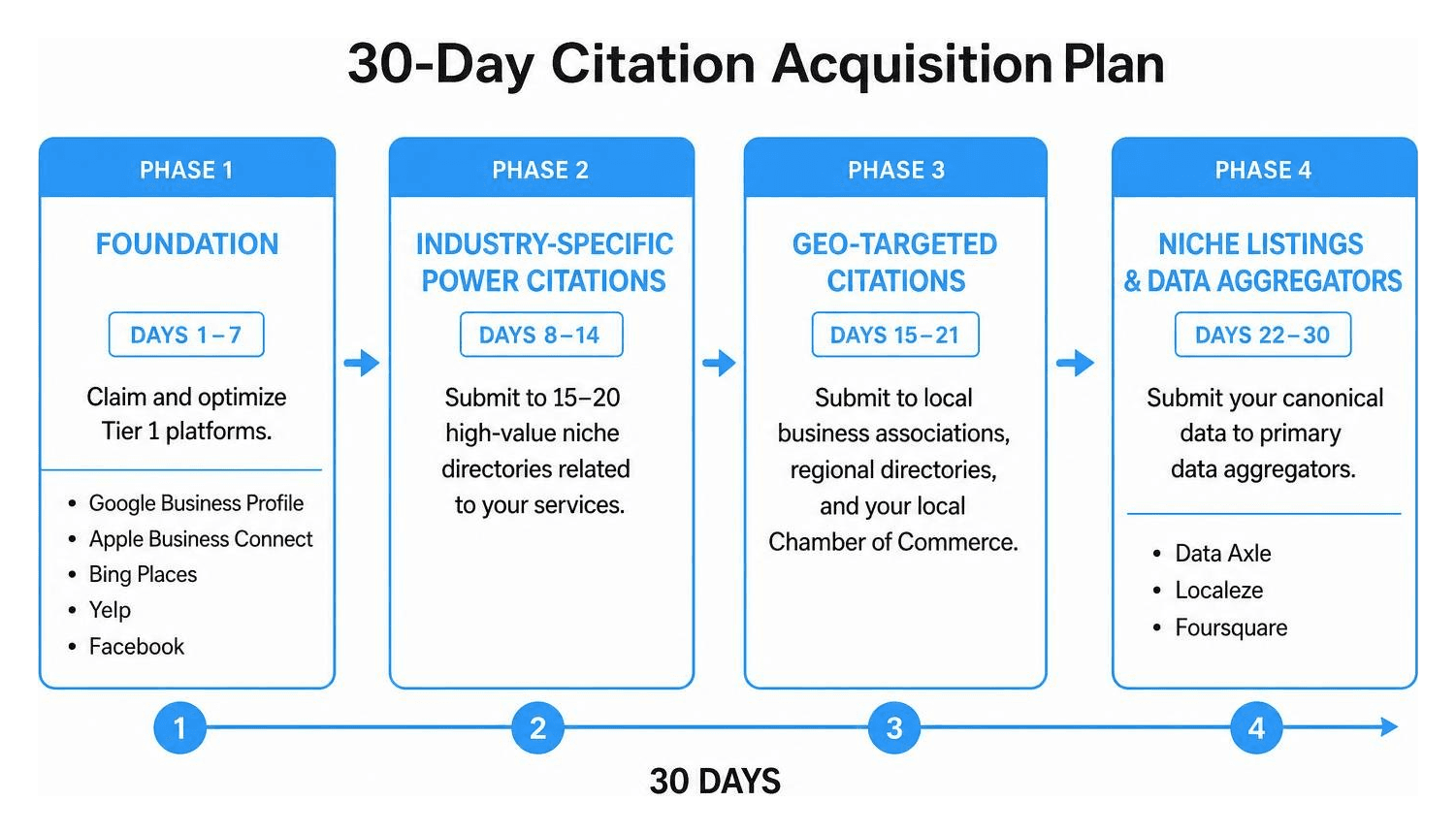
Phase 1: Foundation (Days 1–7): Claim and optimize your Tier 1 platforms (Google Business Profile, Apple Business Connect, Bing Places, Yelp, and Facebook). For step-by-step guidance, follow How to Build Local Citations: Step-by-Step Guide for 2026 | Flento.
Phase 2: Industry-Specific Power Citations (Days 8–14): Identify and submit your business to 15–20 high-value niche directories related directly to your services.
Phase 3: Geo-Targeted Citations (Days 15–21): Submit to local business associations, regional directories, and your local Chamber of Commerce to secure authoritative geographic links.
Phase 4: Niche Listings and Data Aggregators (Days 22–30): Submit your canonical data to primary data aggregators (Data Axle, Localeze, and Foursquare) to distribute your profile across downstream maps and apps.
Pairing this structured directory rollout with comprehensive Local SEO Link Building provides a well-rounded foundation for local organic visibility.
Auditing Inconsistencies and Tracking Results
Once your citations are live, keep an organized tracking spreadsheet to log directory names, live profile URLs, submission dates, and login credentials. Search engine spiders typically discover, crawl, and index new directory profiles over a window of 2 to 8 weeks.
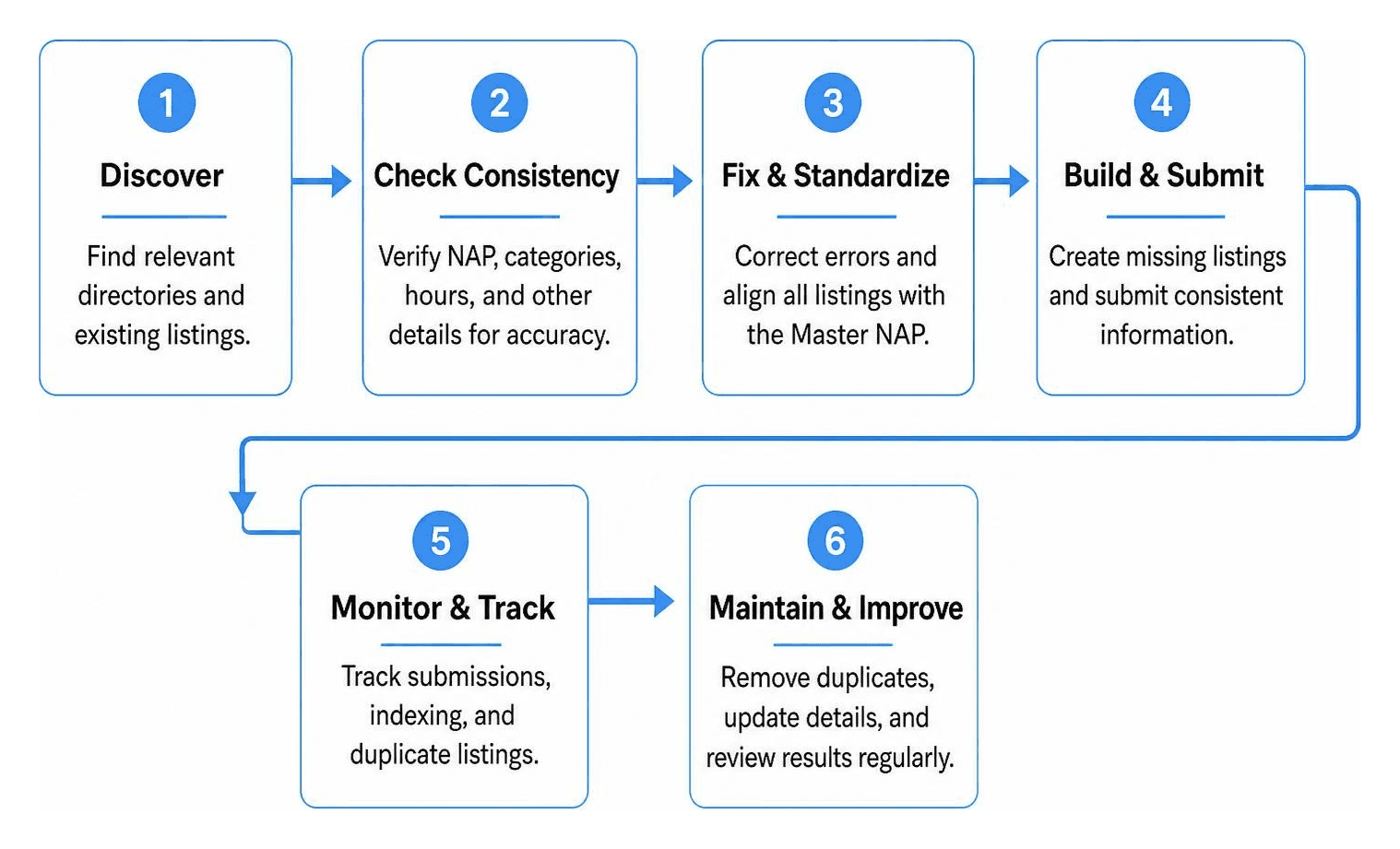
Duplicate Removal: Periodically run Google search queries combining your phone number and former addresses to catch and merge duplicate profiles.
Quarterly Reviews: Schedule brief quarterly checkups to keep seasonal operating hours, holiday schedules, and service offerings up to date.
Performance Tracking: Monitor your Local 3-Pack rankings, organic traffic from location pages, and direct phone calls to measure the business impact of your listing efforts.
At RJP.design, we help business owners cut through the noise with clean web designs and reliable search optimization strategies. If you want a dedicated team to manage your directory footprint, optimize your profiles, and elevate your local search presence, explore our comprehensive Local SEO Services today.
Frequently Asked Questions
What is the difference between structured and unstructured citations?
Structured citations appear on formal business directories, mapping platforms, and review portals where business details follow a fixed format (Name, Address, Phone). Unstructured citations occur organically when a blog, online news article, event page, or local website mentions your business information within standard body text.
How long does it take for citations to improve local search rankings?
Most businesses see ranking improvements within 4 to 8 weeks after publication. This timeline gives search engine crawlers enough time to index new directories, verify data consistency across platforms, and update their local ranking indexes.
Can I build citations if I operate a service-area business without a public storefront?
Yes. Many directories allow service-area businesses (SABs) to hide their specific street address while displaying their city, state, postal code, and primary service regions. This keeps your private address protected while still earning local ranking signals.
Will changing my business phone number hurt existing citations?
Changing a phone number without updating your citation portfolio causes NAP inconsistencies that can harm local rankings. When changing contact numbers, update your Master NAP document first, correct your Tier 1 foundational platforms, submit updates through major data aggregators, and systematically update all secondary directory accounts.