
Marketing
Decoding Multi-Vendor E-commerce: Your Blueprint for Success
Dec 30, 2025
Introduction to Multi-Vendor E-commerce
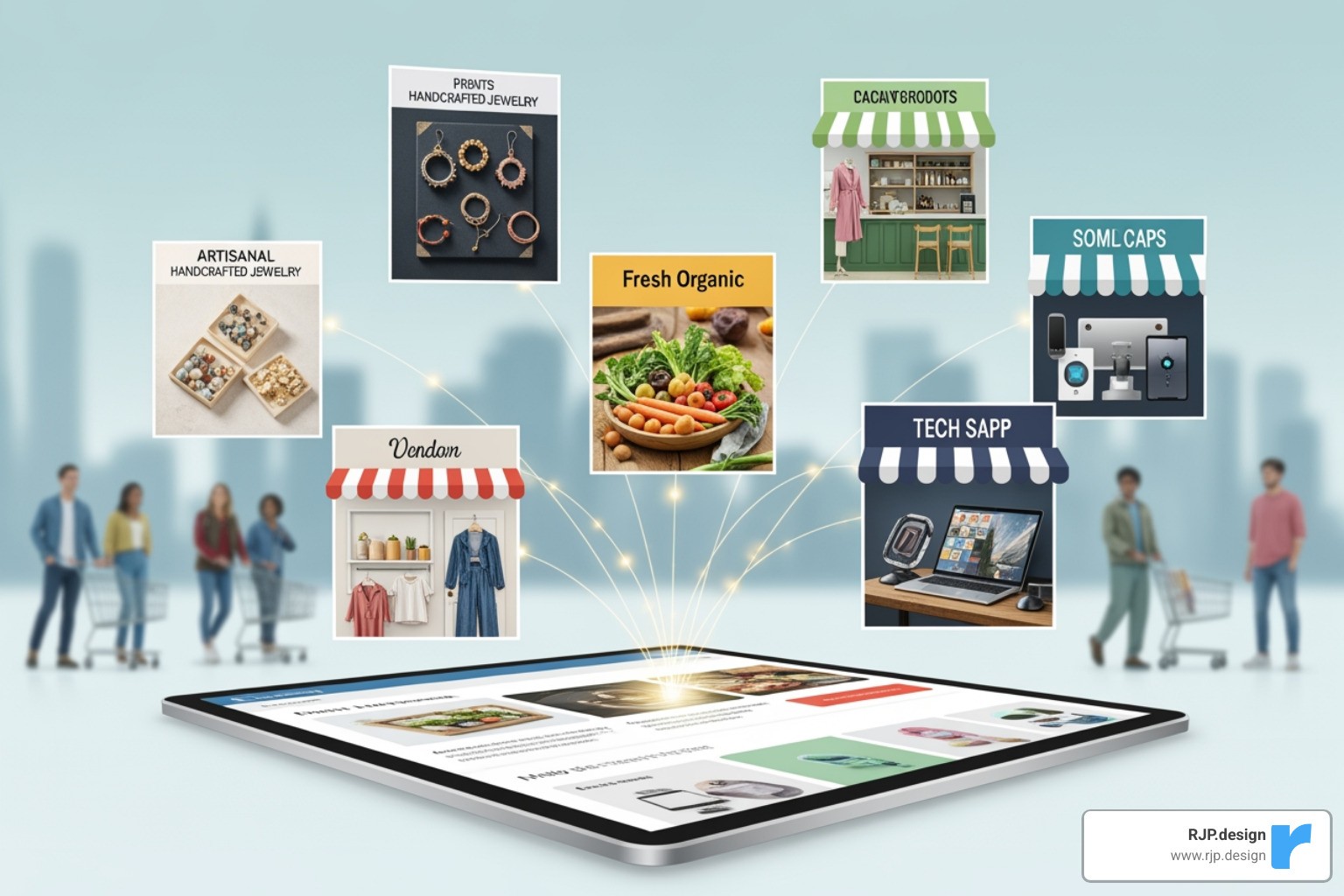
The ecommerce multi vendor model is reshaping digital retail. It allows multiple sellers to offer products or services on a single platform, creating a comprehensive shopping destination. Unlike a traditional single-vendor site, a multi-vendor marketplace aggregates diverse offerings, which is key to its growing popularity.
Here's a quick look at what defines an ecommerce multi vendor marketplace:
Definition: An online platform where independent sellers list and sell their products to a shared customer base.
Customer Experience: A vast selection, competitive pricing, and a single checkout for items from multiple vendors.
Seller Experience: Access to an established customer base, reducing marketing costs and administrative tasks.
Platform Owner Role: Manages the site, payments, and marketplace rules without holding inventory.
The growth is staggering: third-party sales now account for 59% of global e-trade. With online spending projected at $6.33 trillion in 2024 and over 2.79 billion online shoppers, the market is growing by over 20% annually. This creates immense opportunities for entrepreneurs to build a thriving digital ecosystem.
I'm Ross Plumer, and my work at RJP.design involves optimizing digital strategies for businesses generating over $20 million in revenue. We integrate strategic insights with innovative solutions to help companies succeed in this dynamic market. This guide is your blueprint for mastering the ecommerce multi vendor model.
The Blueprint for Building a Successful Ecommerce Multi Vendor Marketplace
Building an ecommerce multi vendor marketplace is like creating a digital shopping mall. You provide the space for independent businesses to sell, orchestrating the overall experience without managing inventory yourself. This model offers incredible possibilities for scale and variety compared to a traditional single-vendor store.
Marketplaces are typically either horizontal or vertical. Horizontal marketplaces offer a wide range of products, like a digital department store. Vertical marketplaces focus on a specific niche, such as handmade crafts or vintage fashion, attracting dedicated communities by building expertise in that area.
Understanding the Benefits and Business Models
What makes the ecommerce multi vendor model so appealing is that everyone wins.
For buyers, the benefits are clear: a diverse product range no single store can match, competitive pricing driven by multiple sellers, and the convenience of a single checkout. This superior experience encourages repeat business.
Sellers gain instant access to a large customer base, reducing their marketing costs. The platform handles administrative tasks like payment processing, allowing them to focus on their products. Selling on a reputable marketplace also lends credibility and trust to their brand.
As the owner, your revenue model is key. Common options include:
Commission-based: Take a percentage of each sale. This is the most popular model as it aligns your success with your vendors'.
Subscription-based: Charge vendors a recurring fee for access, providing you with predictable income.
Listing fee: Charge per product listing, which can work for high-value items.
Freemium/Hybrid: Offer basic features for free and charge for premium tools, visibility, or advertising placements.
Here's how the main models compare:
Model | Revenue Stability | Vendor Appeal | Administrative Complexity |
|---|---|---|---|
Commission | Variable | High (only pay when they sell) | Moderate (tracking sales) |
Subscription | High | Moderate (predictable cost, but upfront) | Low (fixed fees) |
Listing Fee | Moderate | Low (cost for every item, even if no sale) | Moderate (tracking listings) |
Essential Steps for Building Your Ecommerce Multi Vendor Marketplace
Creating a successful marketplace requires laying the right groundwork. Here’s how to build a solid foundation.
Niche selection is a critical first step. Instead of competing with general marketplaces, focus on a specific area like sustainable fashion or artisanal foods. This helps you attract the right vendors and a dedicated customer base, establishing you as an authority.
Market research and competitor analysis are essential to understand your audience, identify market gaps, and define your unique value proposition. Analyze what competitors do well and where they fall short to shape your strategy.
Vendor acquisition strategy is crucial. Attract quality sellers with a simple onboarding process and clear communication of benefits like access to customers and marketing support. Provide resources and maintain open communication to help them succeed.
Defining marketplace policies early on prevents future issues. Create clear, transparent rules for product quality, pricing, shipping, and prohibited items to build trust and ensure smooth operations.
Shipping and logistics planning involves deciding if vendors ship independently or if you'll offer integrated solutions with major carriers. Document your process clearly for vendors.
Return and dispute resolution processes are vital for customer satisfaction. Clearly define responsibilities and steps for mediating conflicts to protect all parties and build confidence in your platform.
If you're looking for maximum flexibility and control over your marketplace, you might want to learn how to build custom ecommerce site to create exactly what you envision.
Choosing the Right Technology and Key Features
The technology you choose is the foundation of your marketplace. The right platform supports growth and excellent user experiences, while the wrong one creates operational problems.
You can choose between SaaS (Software-as-a-Service) platforms and self-hosted solutions. SaaS offers quick setup and low maintenance at the cost of customization. Self-hosted solutions provide full control and flexibility but require more technical expertise.
Scalability is crucial; your platform must handle growth in traffic, vendors, and products. A great user experience (UX) is equally vital. An intuitive interface, fast load times, and responsive design are essential for retaining both buyers and sellers. At RJP.design, we specialize in creating the best ecommerce sites ux because we know it's critical for success.
Key features for your marketplace include:
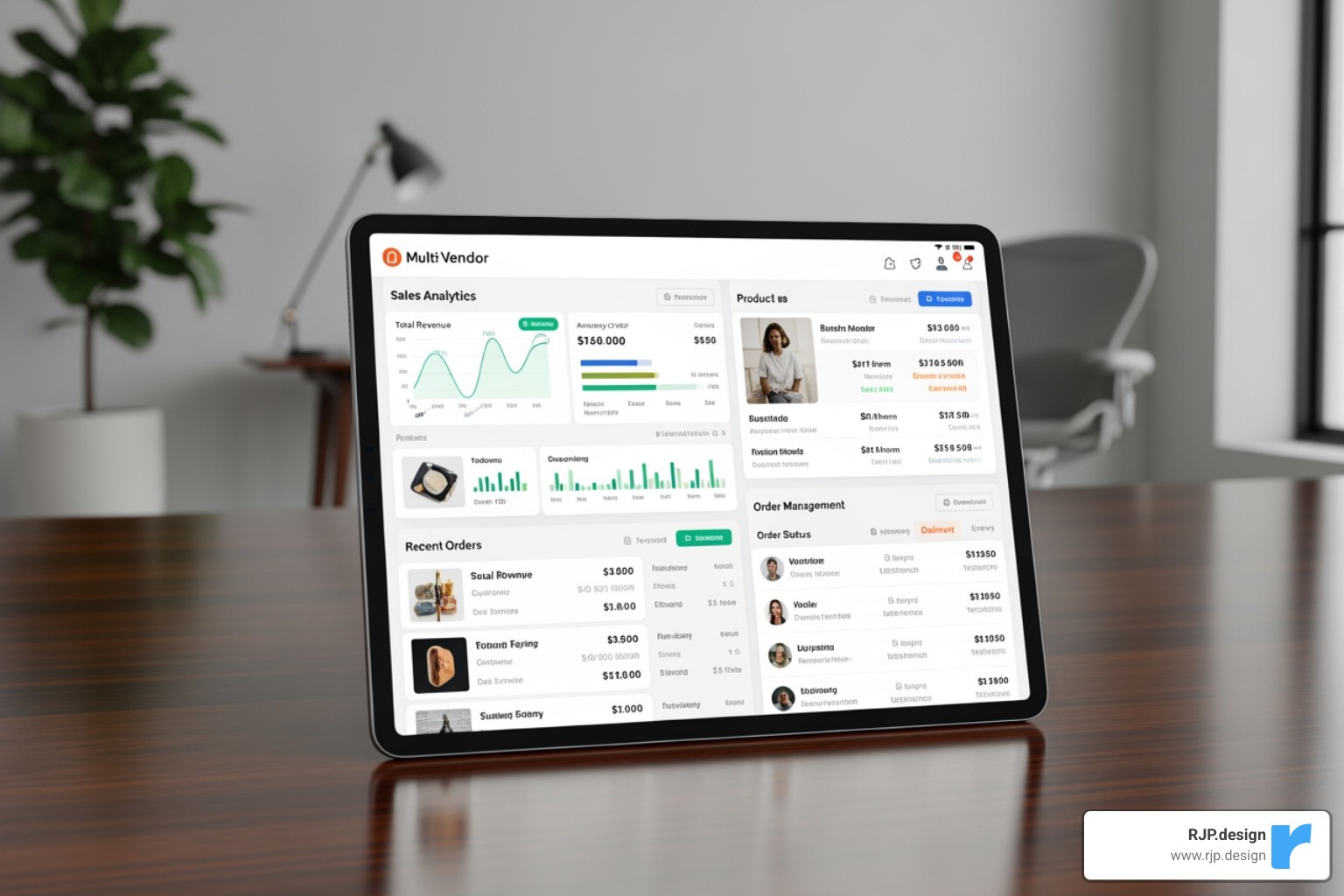
Vendor Dashboard: For vendors to manage products, orders, and view sales reports.
Admin Panel: For you to oversee vendors, products, commissions, and analytics.
Product Catalog Management: Easy listing tools for vendors, including bulk uploads and variations.
Automated Payments & Commissions: A system to automatically split payments and distribute earnings.
Shipping & Order Management: Tools for vendors to track shipments and update order statuses.
Reviews & Ratings: To build trust and social proof.
Analytics & Reporting: To track KPIs and make data-driven decisions.
Mobile Responsiveness: Essential, as over half of web traffic is mobile.
For those considering a highly customized solution, understanding e-commerce portal development can provide valuable insights into what's possible.
Building Trust and Managing Vendor Relationships
Trust is the currency of a multi-vendor marketplace. Buyers must trust that their payments and data are secure and that products are as described. Sellers must trust that they will be paid correctly and operate in a fair environment. Without this trust, your platform cannot succeed.
To build trust, implement:
Secure Payment Gateways: Use reputable, PCI-compliant processors with strong fraud protection.
Transparent Policies: Clearly outline terms, privacy, returns, and vendor agreements.
Customer Reviews & Ratings: Provide social proof and help maintain quality.
Vendor Vetting: Screen new vendors and monitor their ongoing performance.
Responsive Customer Support: Address issues promptly for both buyers and sellers.
Data Protection: Use SSL certificates and conduct security audits to protect user data.
Effective vendor management is key to success. Ensure an easy onboarding process, communicate frequently about updates and opportunities, and provide performance tracking tools. Offer incentives for top performers and support for struggling vendors to build a loyal, successful community.
We pride ourselves on creating digital experiences that build confidence. Our expertise in best ecommerce sites ux ensures your marketplace is both functional and trustworthy.
Marketing Your Marketplace and Leveraging Analytics
Marketing a marketplace is a unique challenge, as you must attract both buyers and sellers simultaneously. This requires a balanced strategy.
Attracting Sellers: Focus on benefits like access to customers and low marketing overhead. Reach out directly to vendors in your niche. Offer early incentives like reduced commissions to build initial momentum.
Attracting Buyers: Once you have sellers, promote your product variety and competitive pricing. Use a multi-channel approach:
SEO: Optimize all pages for relevant keywords and ensure technical excellence.
Content Marketing: Create valuable content to attract organic traffic and build authority.
Social Media: Engage your audience with product showcases and vendor stories.
Paid Ads: Use targeted ads on Google and social platforms to drive traffic.
Leveraging Analytics: Use data to guide your strategy. Track key metrics like sales volume, customer acquisition cost (CAC), vendor performance, and retention rates. These insights help you promote top products, support vendors, optimize marketing spend, and improve the user experience.
For more detailed strategies on making your marketplace visible, explore our insights on seo for e-commerce websites.
The Future of Ecommerce Multi Vendor Platforms
The multi-vendor landscape is constantly evolving. Staying ahead of trends is key to building a relevant, future-proof platform.

Key future trends include:
Continued Growth: The e-commerce market continues to expand, with marketplaces ready to capture a large share.
Rise of Niche Marketplaces: Specialized vertical platforms will gain traction by offering curated experiences and building strong communities.
AI and Personalization: AI will drive hyper-personalized recommendations, dynamic pricing, and improved search.
Headless Commerce: Decoupling the front-end and back-end will allow for greater flexibility and unique user experiences.
Omnichannel Integration: Blending online and offline experiences (e.g., in-store pickup) will become standard.
Sustainability Focus: Consumer demand for ethical and sustainable products will grow, requiring transparency from marketplaces.
These trends highlight the dynamic nature of multi-vendor commerce and the need for platforms to stay agile, innovative, and genuinely customer-centric.
Launching Your Marketplace Venture
Building a successful ecommerce multi vendor marketplace means creating a thriving community for buyers and sellers. As we've covered, success hinges on a few key pillars: choosing the right niche and technology, building trust, and executing a smart two-sided marketing strategy.
The core success factors are:
Solid, scalable technology.
Strong relationships with vendors and customers.
Smart marketing that attracts both sides of the marketplace.
Get these right, and you'll build a resilient platform with diverse revenue streams. You're not just opening a store; you're creating an ecosystem that grows stronger with every new member.
At RJP.design, we specialize in building robust online platforms that look great and are easily found online. Our down-to-earth team has helped businesses generating over $20 million in revenue optimize their digital strategies. We bring that same expertise to marketplace ventures, balancing the technical, relational, and marketing elements essential for success.
Ready to transform your marketplace vision into reality? Get started with your web design and development project today. Let's build a platform that creates value for everyone and sets you up for long-term success.