
Marketing
Automate Your Workflow with Ecommerce Shipping Integration
May 26, 2026

Why Ecommerce Shipping Integration Is the Missing Piece in Your Fulfillment Workflow
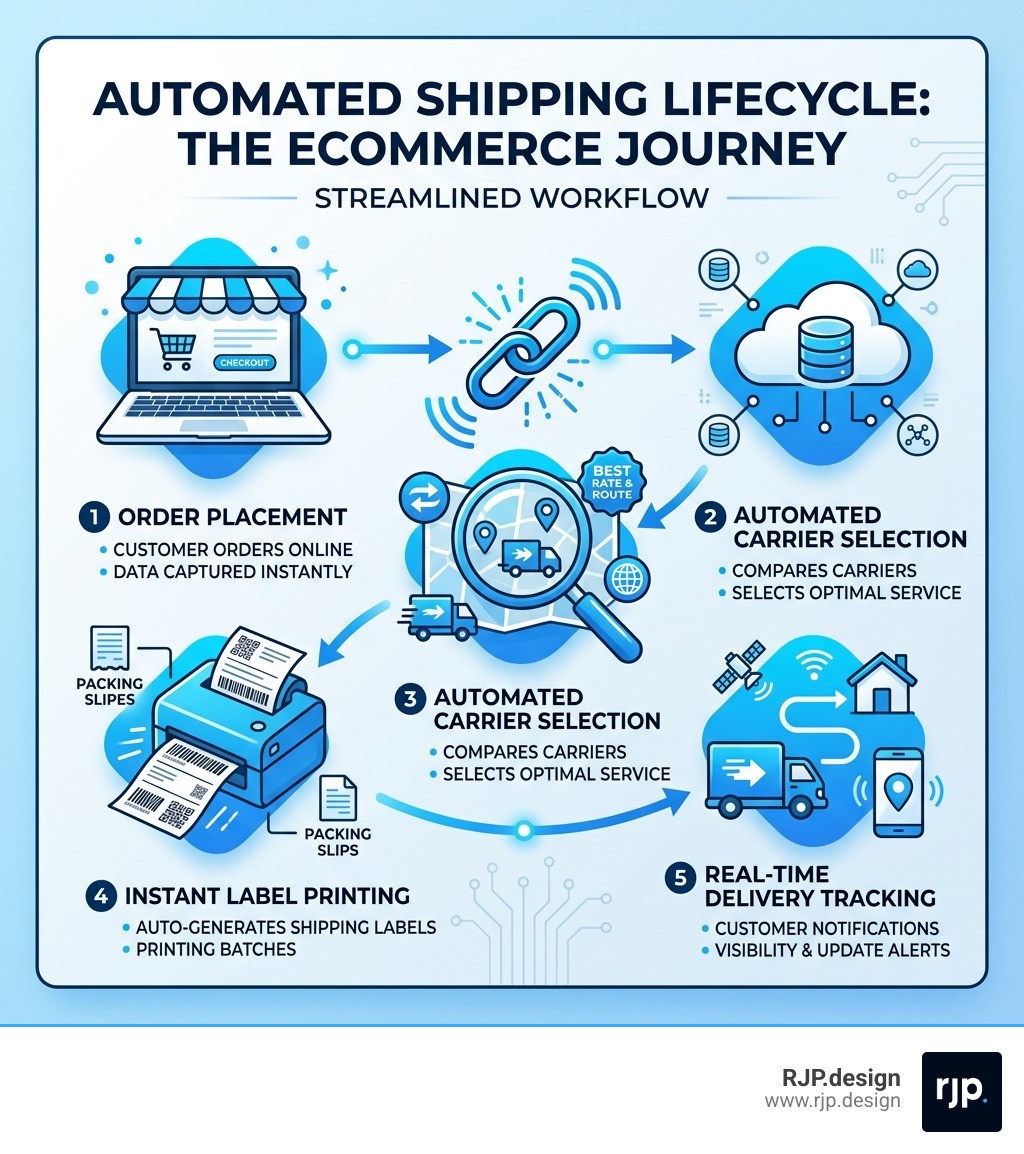
Ecommerce shipping integration is the process of connecting your online store to one or more shipping carriers, logistics tools, or fulfillment platforms — so orders flow automatically from checkout to doorstep without manual data entry.
Here's a quick look at the top shipping integration platforms to compare:
Platform | Best For | Key Savings | Carriers Supported |
|---|---|---|---|
ShipStation | Scaling businesses | Up to 90% off shipping | 200+ global carriers |
Easyship | International shipping | Up to 91% off labels | 550+ courier services |
Shippo | Small to high-volume | Up to 90% off labels | 40+ global carriers |
EasyPost | Developer/API-first | Up to 83% off shipping | Major carriers + more |
ReachShip | Budget-conscious SMBs | No markup on rates | USPS, UPS, FedEx, DHL |
WooCommerce Shipping | WooCommerce stores | Up to 67% off DHL | USPS, UPS, DHL |
If you're still copying order details by hand into a carrier website, you're leaving serious time and money on the table. High shipping costs are one of the leading causes of cart abandonment — and in May 2026, customers simply expect fast, transparent, and trackable delivery as a baseline, not a bonus.
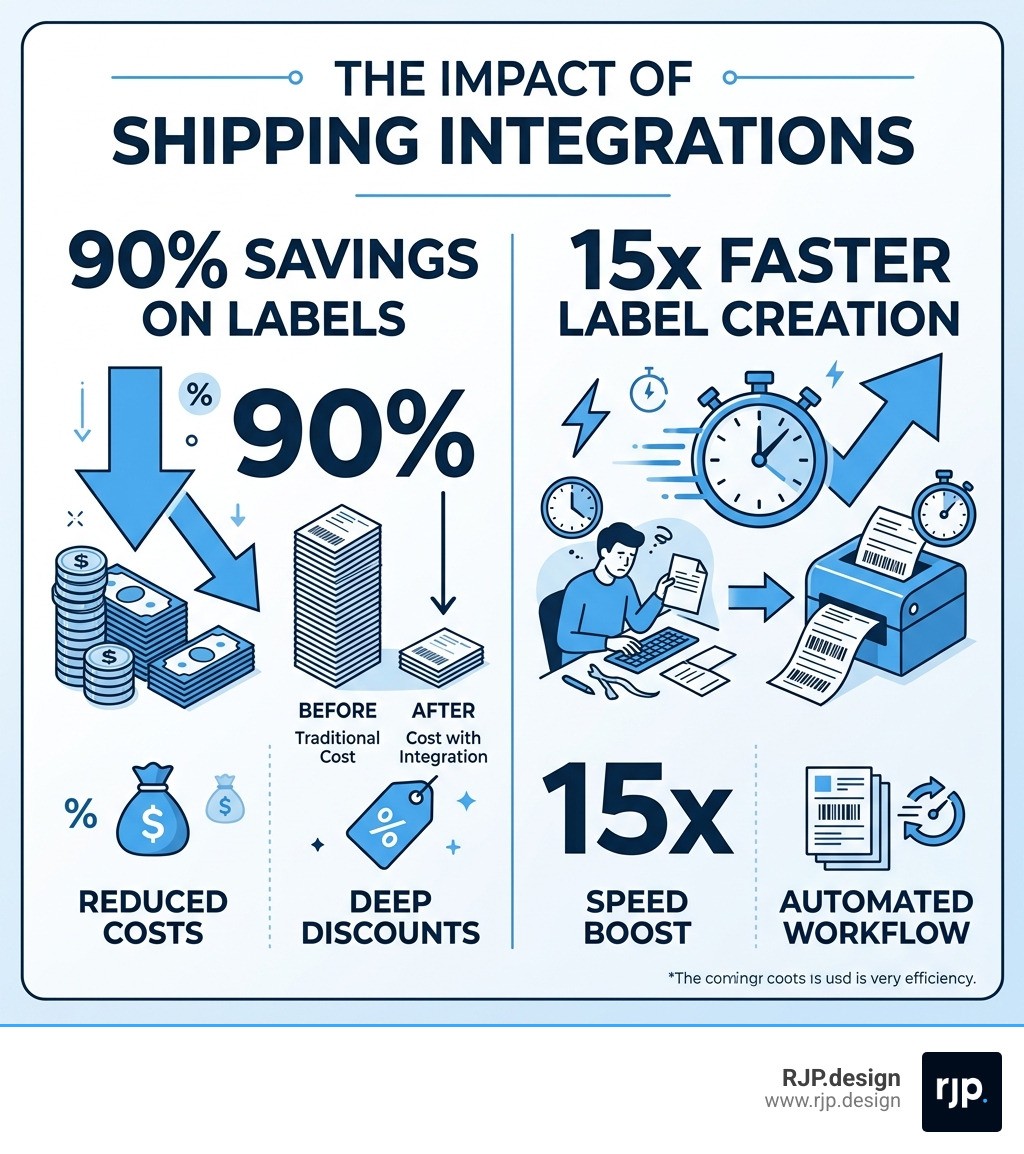
The right integration doesn't just save you a few clicks. It can fundamentally change how your business scales. Platforms like ShipStation report users saving an average of 10 hours per month, while businesses using EasyPost have saved up to 83% on carrier costs. One company — Sticker Mule — saved over $6,000 per month just by switching to a smarter rate API.
Fast delivery isn't a nice-to-have anymore. It's part of the promise your brand makes every time a customer clicks "buy."
I'm Ross Plumer, a digital marketing and ecommerce specialist with hands-on experience helping businesses that have driven over $20 million in revenue — including advising on ecommerce shipping integration as a core part of scalable online operations. In this guide, I'll break down the best platforms, key features, and how to choose the right fit for your business size and budget.
Handy ecommerce shipping integration terms:
Key Features of Ecommerce Shipping Integration
When we look at modern fulfillment, a standalone website is no longer enough. To stay competitive in May 2026, your store needs a "brain" that communicates directly with global carriers. This is where ecommerce shipping integration software comes in.
The best tools, such as the Best Multi-Carrier Shipping Software for Businesses | Shippo, act as a centralized dashboard. Instead of logging into USPS, then FedEx, then DHL, you manage everything in one place. Key features you should look for include:
Batch Processing: Printing one label at a time is fine for a hobby, but when you're shipping hundreds of orders, you need to print labels in bulk.
Inventory Sync: Ensuring your stock levels update across Shopify, Amazon, and eBay the moment a shipping label is created.
Address Validation: This is a silent hero. Tools that verify addresses can reduce delivery issues by up to 91%, saving you from the "return to sender" fees that eat your margins.
Multi-Carrier Support and Rate Comparison in Ecommerce Shipping Integration
One of the biggest mistakes we see businesses make is sticking to a single carrier. Carrier prices fluctuate based on package weight, dimensions, and destination zones. By using ReachShip Multi-Carrier Shipping for US eCommerce Stores, you can compare live rates side-by-side.
Carrier | Typical Discount | Best Use Case |
|---|---|---|
USPS | Up to 89% | Small, light packages (First Class/Priority) |
UPS | Up to 82% | Heavier items and reliable ground shipping |
FedEx | Varies | Time-sensitive or high-value deliveries |
DHL Express | Up to 67% | Fast international shipping |
Live rating allows your customers to see the exact shipping cost at checkout. This transparency reduces "sticker shock" and improves conversion rates. Some platforms even offer "Bring Your Own Account" (BYOA) features, allowing you to use your own negotiated rates without any platform markup.
Automation and API Capabilities for High-Volume Shippers
As your business grows, manual clicks become the enemy of efficiency. High-volume shippers often move beyond simple plugins and utilize a Shipping API - Multi-Carrier Shipping API Solution.
Using the API Integration for Fulfillment & Shipping | ShipStation, you can turn your fulfillment into a "self-driving engine." Imagine a system where the cheapest carrier is automatically selected based on the delivery zip code, the label is printed, and the customer is notified — all without a human touching a keyboard. This type of scalable infrastructure allowed brands like Spiceology to ship 3x more orders during peak seasons with half the team they used to require.
Enhancing Customer Experience with Ecommerce Shipping Integration
Shipping isn't over when the package leaves your warehouse. In fact, the "post-purchase" phase is where brand loyalty is won or lost. "WISMO" (Where Is My Order) inquiries are the number one source of customer support tickets.
By integrating your shipping, you can provide real-time tracking and branded notifications. Instead of a generic carrier link, send your customers to a custom tracking page on your own domain. This is a great time to ensure your site is up to date; check out our Ecommerce Website Redesign Guide 2026 for tips on maintaining a cohesive brand experience.
Choosing and Implementing Your Shipping Software
Selecting the right ecommerce shipping integration is a strategic growth move. It’s not just about the monthly subscription fee; it’s about the ROI. If a piece of software costs $50 a month but saves your team 10 hours of labor and reduces shipping errors by 15%, it has already paid for itself multiple times over.

Selecting the Right Platform for Your Business Size
Your needs will change as you scale. Here is how we generally categorize the solutions:
Small Business / Startups: Look for free or low-cost options like ReachShip or WooCommerce Shipping. These offer deep discounts without monthly fees.
Mid-Market / High-Volume: Platforms like ShipStation or Shippo are ideal. They offer the automation tools needed to handle 500+ orders a week.
Enterprise / Custom Platforms: If you have a custom-built site, you'll want to Add Shipping to Your Website using pre-built UI elements or a robust API like EasyPost.
For more on building a foundation that supports these tools, see our Custom Ecommerce Solutions Ultimate Guide.
Step-by-Step Integration Process for Major Platforms
Most modern ecommerce shipping integration tools can be set up in under 30 minutes. Here is the general workflow for platforms like Shopify or WooCommerce:
Step 1: Install the App/Plugin. Visit the Shopify App Store or the WooCommerce marketplace and add your chosen shipping tool.
Step 2: Connect Your Carriers. Enter your account details for USPS, UPS, etc., or use the platform's built-in discounted accounts.
Step 3: Configure Shipping Rules. Set rules like "If weight is under 1lb, always use USPS Ground Advantage."
Step 4: Sync Your Orders. The software will automatically pull in "unfulfilled" orders.
Step 5: Print and Ship. Select your orders, click "Print Labels," and you're done.
Overcoming Logistics Challenges and Maximizing ROI
While shipping might seem like a headache, the right integration solves the most common pain points:
International Shipping: Navigating customs and duties is simplified. Tools like Easyship calculate "fully landed costs" (taxes + duties) at checkout so international customers aren't surprised by extra fees upon delivery.
Returns Management: You can automate the creation of return labels or even provide a self-service return portal, which significantly improves the online retail store website design guide experience.
3PL Collaboration: If you outsource your fulfillment, shipping integrations allow your store to "talk" to your 3PL’s warehouse management system (WMS) in real-time.
At RJP.design, we believe that your website should be your hardest-working employee. By automating your shipping, you free up your time to focus on marketing and product development. Whether you need a top rated ecommerce development agency to build a custom solution or you're looking for seo for e commerce websites to drive more traffic to your newly automated store, we're here to help.
Ready to take the manual labor out of your logistics? Learn more info about web design development and how we can help you integrate the perfect shipping solution for your brand.
Summary Checklist for Shipping Integration
[ ] Compare at least three carriers for your most common package size.
[ ] Enable address validation to stop delivery errors before they happen.
[ ] Set up automated tracking emails to reduce customer service tickets.
[ ] Look into bigcommerce website development services if you are outgrowing your current platform.
[ ] Review your shipping margins monthly to ensure you're getting the best rates.
By following this guide, you’re not just shipping packages; you’re building a scalable, professional operation that can grow from $1M to $10M+ in revenue, just like the success stories we see every day in ecommerce shipping integration.