
Web
Best SEO Web Design: How to Look Good and Rank Better
May 25, 2026

Why the Best SEO Web Design Is the Foundation of Online Growth
The best SEO web design isn't just about looking good — it's about building a site that search engines can find, understand, and reward with higher rankings. In April 2026, Google's algorithms are more sophisticated than ever, and the gap between a pretty website and a high-performing one has never been wider.
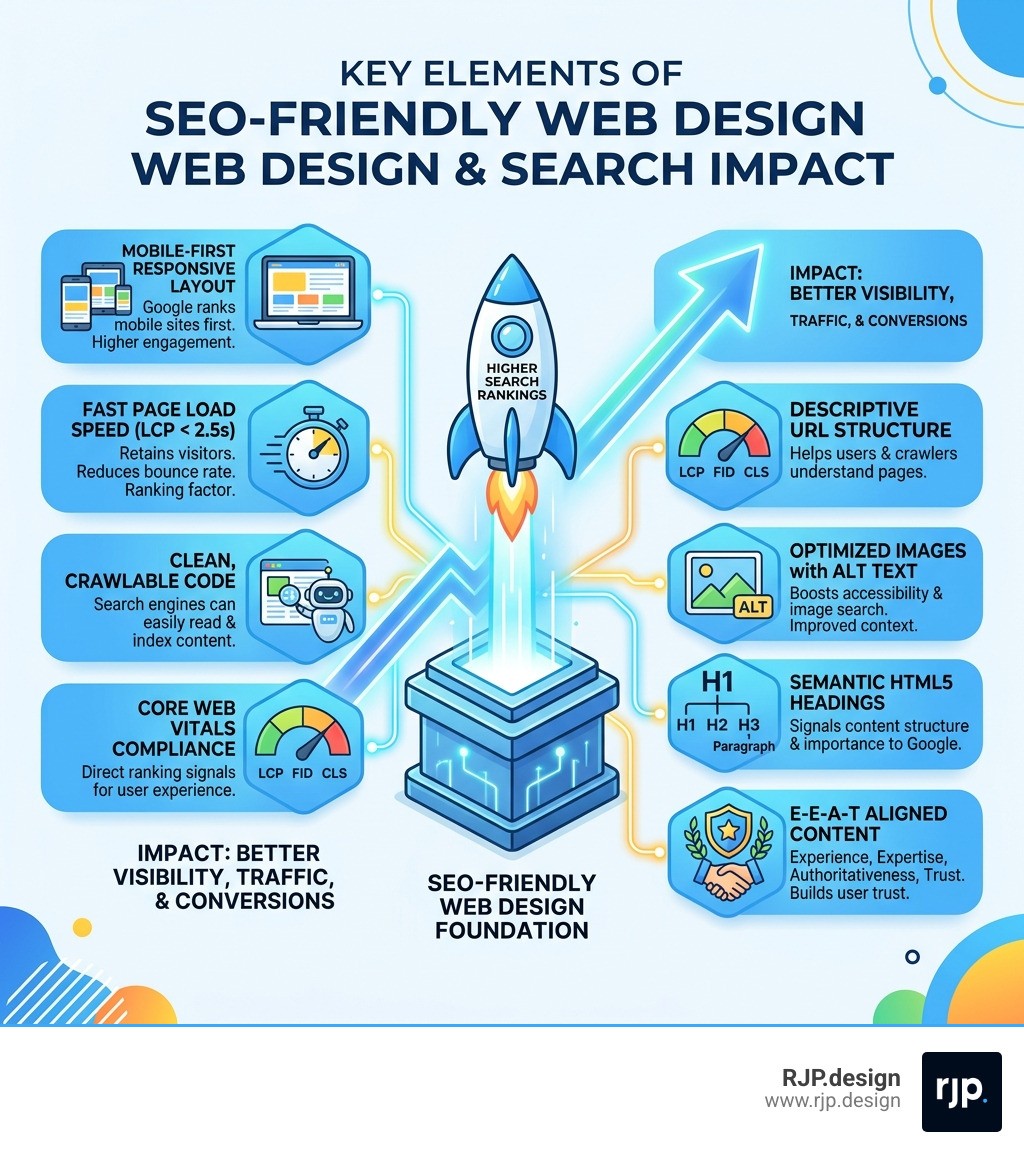
Here's a quick snapshot of what makes the best SEO web design work:
Element | Why It Matters |
|---|---|
Mobile-first responsive layout | Google ranks your mobile site first |
Fast page load speed (LCP < 2.5s) | Slow sites lose visitors and rankings |
Clean, crawlable code | Search engines need to read your site |
Descriptive URL structure | Helps users and crawlers understand pages |
Optimized images with alt text | Boosts accessibility and image search |
Semantic HTML5 headings | Signals content hierarchy to Google |
HTTPS security | A confirmed Google ranking factor |
Internal linking | Spreads link equity across your site |
Core Web Vitals compliance | Direct ranking signals since 2021 |
Easy navigation and breadcrumbs | Reduces bounce rate and aids crawling |
Social media integration | Supports off-page SEO signals |
SEO-friendly CMS (e.g., WordPress) | Powers 43%+ of the web for good reason |
E-E-A-T-aligned content | Builds trust with both users and Google |
Here's the hard truth: Google doesn't care how beautiful your website is. An ugly site with solid SEO fundamentals will consistently outrank a stunning one that's slow, uncrawlable, or poorly structured. Design and optimization need to work together from day one — not as an afterthought.
For small business owners especially, this matters enormously. A site that looks polished but doesn't rank is essentially invisible. And an invisible website doesn't attract customers, no matter how good your products or services are.
I'm Ross Plumer, a digital marketing and web design strategist with experience helping businesses market over $20 million in revenue — and the best SEO web design sits at the core of everything I do at RJP.design. In the sections below, I'll walk you through exactly what it takes to build a site that both looks great and earns its place at the top of search results.
Best seo web design further reading:
The 13 Must-Have Elements for the Best SEO Web Design
When we talk about the best SEO web design, we aren't just talking about a checklist you complete after the site is finished. We’re talking about baking optimization into the very DNA of your website. Designing without SEO is like building a Ferrari but forgetting to put an engine inside—it might look great in the driveway, but it isn't going anywhere.
To ensure your site performs, we focus on these 13 essential elements:
Mobile-Responsiveness: Since Google uses mobile-first indexing, your site must work perfectly on every screen size.
Crawlability: If search engine bots can't "read" your site, they can't index it. This means avoiding "locked" content.
Indexability: Ensuring your SEO-Friendly Websites aren't accidentally blocking Google via robots.txt files.
Semantic HTML5: Using tags like
<header>,<nav>, and<article>to tell Google exactly what each part of your page is.HTTPS Security: Encrypting user data isn't just a best practice; it's a ranking signal.
Core Web Vitals (LCP): Largest Contentful Paint measures how fast the main content loads. Aim for under 2.5 seconds.
Core Web Vitals (CLS): Cumulative Layout Shift ensures elements don't jump around while loading (which annoys users).
Core Web Vitals (INP): Interaction to Next Paint measures how quickly your site responds to user clicks.
Logical Site Architecture: A flat hierarchy where no page is more than three clicks from the homepage.
Schema Markup: Structured data that helps Google show "rich snippets" (like star ratings or prices) in search results.
Optimized Images: High-resolution visuals that don't weigh down the page.
Clean URL Structures: Using
/services/web-designinstead of/page-id=123.Social Integration: Easy-to-find share buttons that boost your content's reach.

Why Site Speed and Clean Code Define the Best SEO Web Design
In 2026, speed is no longer a luxury; it’s a survival requirement. Research shows that 53% of mobile visitors will abandon a page if it takes longer than three seconds to load. When we handle SEO Website Development, we prioritize "clean code." This means minifying CSS and JavaScript—essentially stripping out all the unnecessary spaces and characters that slow down a browser's ability to read the file.
We also implement "performance budgets." This is a limit we set on the total file size of a page. By reducing HTTP requests (the number of times a browser has to ask the server for a file), we ensure the site snaps into view instantly. Clean code also helps search engine crawlers do their jobs more efficiently, meaning your new content gets indexed faster.
Mobile-First Indexing and Responsive Layouts
Gone are the days when you could design a desktop site and just "shrink it" for mobile. Google now looks at the mobile version of your site first to determine your rankings. This makes Responsive Web Design the gold standard.
A truly responsive site uses fluid grids and flexible images that automatically adjust to the user's screen. We also pay close attention to "touch targets"—ensuring buttons are at least 48x48 pixels so people with larger thumbs don't get frustrated. Content parity is also vital; you shouldn't hide important text on mobile just to save space, as Google might stop counting that text toward your rankings.

Navigational Excellence: Breadcrumbs and URL Structure
Have you ever been on a website and felt completely lost? That’s a sign of poor navigation, and it’s an SEO killer. The best SEO web design uses a "flat" site hierarchy. This means your site is organized logically so that users (and search bots) can find what they need quickly.
Breadcrumbs are those little "Home > Services > SEO" links at the top of a page. They aren't just for users; they provide clear paths for Google to understand the relationship between pages. Pair this with descriptive URL slugs and a smart SEO Strategies for Websites plan, and you’ve created a site that Google loves to crawl. We avoid "mega menus" that overwhelm the user and instead focus on internal links that guide the visitor naturally toward a conversion.
Content Strategy and Image Optimization for Search
Content is the reason people visit your site, but how that content is presented matters just as much as what it says. We follow Google’s E-E-A-T (Experience, Expertise, Authoritativeness, and Trustworthiness) guidelines to ensure your site feels like a leader in its field.
Images are often the biggest culprit for slow sites. In 2026, we use next-gen formats like WebP or AVIF, which offer high quality at a fraction of the file size of old JPEGs. Every image should have "alt text"—a short description that tells search engines what the image is. This not only helps with image search rankings but is also a cornerstone of the W3C Web Accessibility Guidelines. By implementing "lazy loading," we tell the browser to only load images as the user scrolls down to them, saving precious seconds during the initial page load.
Comparing CMS Platforms for the Best SEO Web Design
Choosing the right Content Management System (CMS) is one of the most important decisions you'll make. Not all builders are created equal when it comes to SEO.
Platform | SEO Strength | Best For |
|---|---|---|
WordPress.org | High | Total technical control and huge plugin ecosystem like AIOSEO. |
Shopify | Medium-High | E-commerce stores that need automated redirects and fast CDNs. |
BigCommerce | Medium-High | Large-scale retail with built-in SEO features and auto-301 redirects. |
Wix | Medium | Small businesses looking for ease of use with improved AI SEO tools. |
While we often recommend SEO for WordPress Websites because it powers over 43% of the web and offers 100% code control, the "best" platform depends on your specific business goals. The key is to choose a system that allows you to edit metadata, customize your robots.txt file, and handle 301 redirects without needing a degree in computer science.
Avoiding Common Pitfalls and Leveraging AI Tools
The world of web design is littered with "cool" features that actually hurt your SEO. For example, you should avoid Flash entirely (it’s ancient and unreadable by Google) and limit heavy JavaScript that can hide content from crawlers. Intrusive pop-ups that cover the whole screen can also lead to a Google penalty.
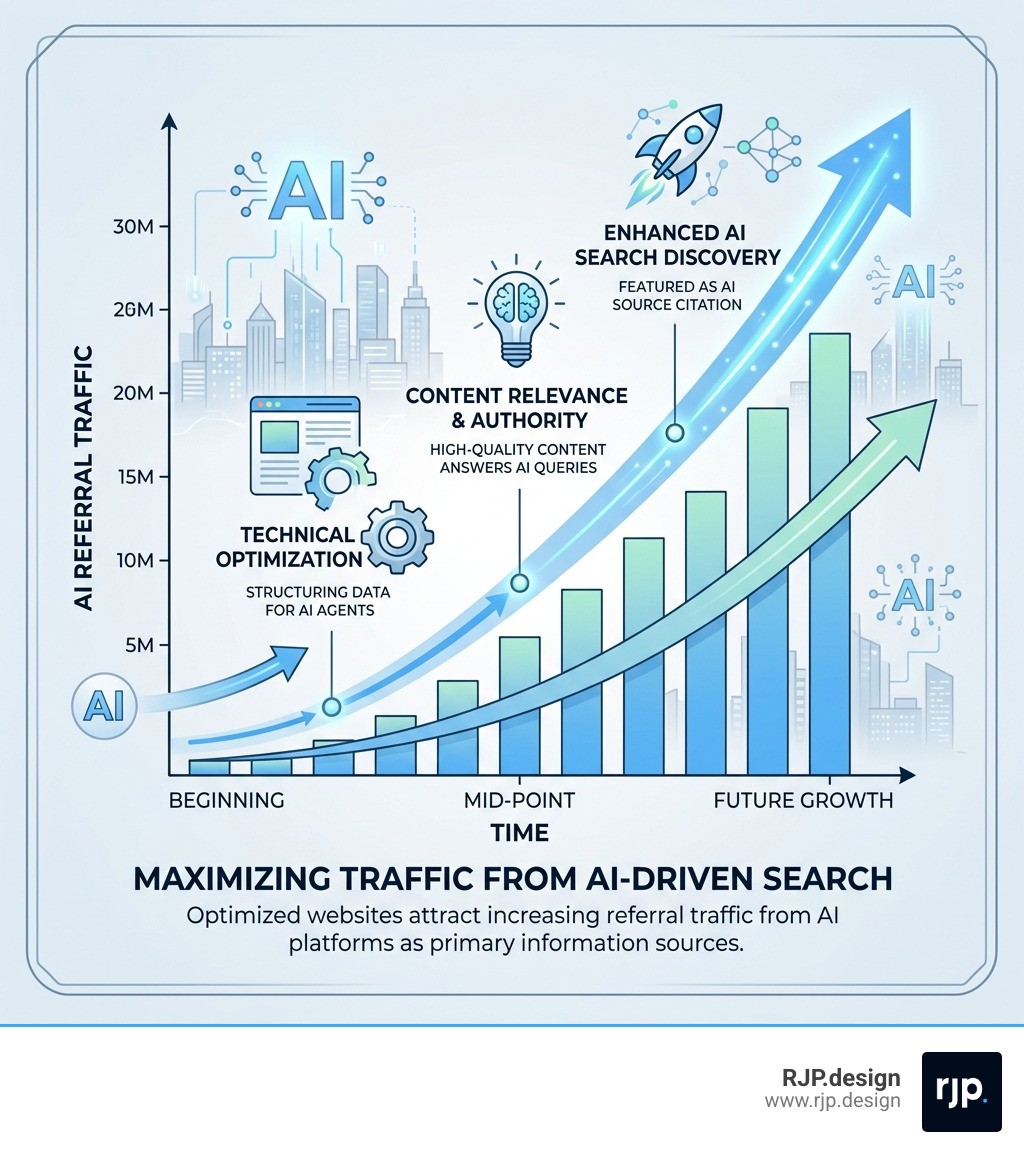
However, 2026 has brought some incredible new tools to the table. We use AI-driven personalization to show users the content most relevant to them, and we optimize for Generative Engine Optimization (GEO). This means structuring your data so that AI platforms like ChatGPT and Gemini can easily cite your website as a source. If your site isn't ready for AI search, you're missing out on a massive new stream of traffic. Regular use of SEO Audit Services helps us catch these issues before they impact your bottom line.
Conclusion: Partnering for Long-Term Search Success
Building the best SEO web design is a marathon, not a sprint. It requires a deep understanding of how users behave and how search engines evolve. At RJP.design, we don’t just build "pretty" websites; we build digital assets that work for you 24/7.
Our down-to-earth team prioritizes client satisfaction, ensuring that the technical complexities of SEO are handled behind the scenes so you can focus on running your business. Whether you are launching a new brand or redesigning an old one, the process typically takes 8–16 weeks, and the ROI of an integrated design is undeniable.
Ready to stop being invisible? From SEO Optimization Services to custom development, we are here to help you look good and rank better.
Quick Links for Your SEO Journey: