
SEO
How to Win the Hyperlocal SEO Game and Rule Your Block
Sep 15, 2026

Hyper Local SEO Wins the Customers Closest to You
To win with hyper local SEO, focus on the neighborhoods, ZIP codes, and landmarks that bring your business the best customers - not just the entire city. Start by optimizing your Google Business Profile, choose three to five high-value service areas, and create genuinely useful pages that show local knowledge and proof.
Target one neighborhood or micro-market per page.
Include real local details, such as landmarks, common property types, or neighborhood-specific service needs.
Add local reviews, project photos, clear service information, and accurate structured data.
Link each neighborhood page back to a city or "Areas We Serve" hub.
This matters because a city-level page often cannot answer a highly specific search such as "emergency plumber near Capitol Hill" or "best salon near [local landmark]." Google Maps, voice search, and AI-generated answers increasingly try to match the searcher's immediate context with businesses that appear relevant, nearby, trustworthy, and ready to help.
Local search is a serious opportunity: 46% of Google searches seek local information, while consumers routinely compare map listings, reviews, photos, and quick AI summaries before contacting a business. The goal is not to publish dozens of swapped-name location pages. It is to build a credible digital presence for the distinct communities you actually serve.
I'm Ross Plumer, an entrepreneur and digital marketing professional with experience in website design, development, and strategies for businesses that have marketed more than $20 million in revenue. In this guide, I will break down hyper local SEO into practical steps that help small businesses become easier to find, understand, and choose in their own neighborhoods.
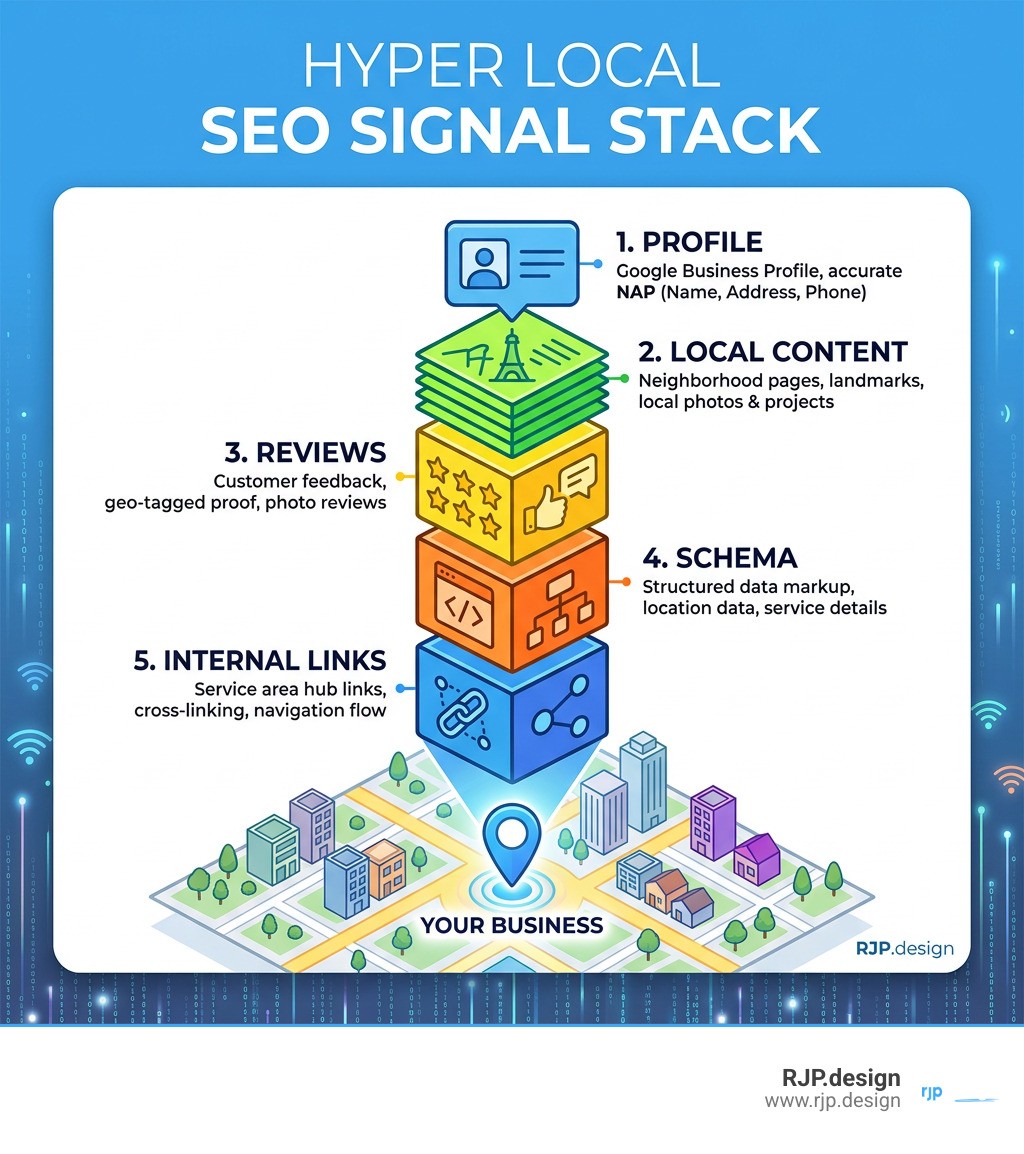
Key hyper local seo vocabulary:
The Mechanics of Hyper Local SEO: Why Sub-City Targeting Wins
Modern search behavior has shifted from broad geographic terms to exact micro-locations. When consumers search on their phones, they rarely type just a broad city name anymore. Over 68% of local voice queries now include a specific neighborhood or landmark. Furthermore, searches containing "near me" paired with distinct community names have grown by over 200%.
Search engines process these queries by weighing proximity, entity relevance, and prominence. If a customer stands in a historic district searching for urgent plumbing help, an algorithm looks for businesses that prove authority in that precise zone.
Broad pages often succumb to "radius bloat." Setting an entire metropolitan area as your single service target dilutes your local signals. Micro-targeting specific pockets allows you to dominate where you do your most profitable work.
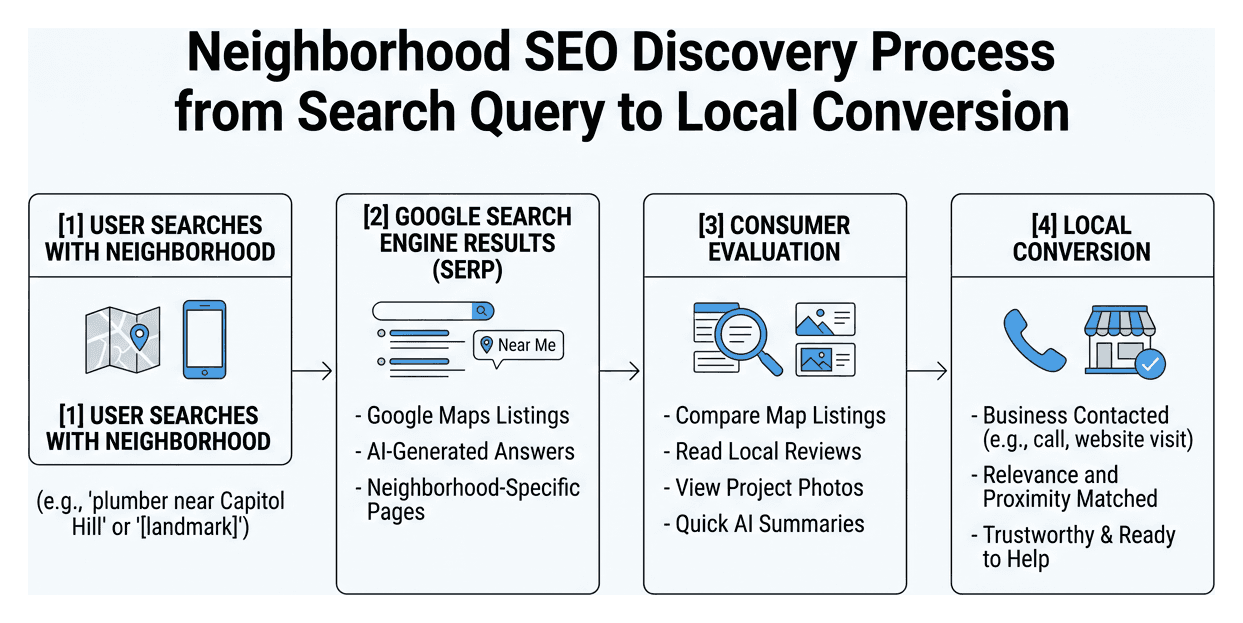
Traditional Local Search vs. Modern Hyper Local SEO Signals
Traditional local marketing worked when search engines relied primarily on basic postal addresses and broad directory listings. Today, artificial intelligence overviews, conversational engines, and map algorithms evaluate real-world engagement and contextual entity signals.
Understanding the difference between macro-city campaigns and sub-city execution is essential:
Feature | Traditional City SEO | Hyperlocal SEO |
|---|---|---|
Geographic Scope | Entire municipality or metro area | Neighborhoods, boroughs, ZIP codes, and street corridors |
Search Intent | Broad research (e.g., "Denver plumber") | High intent / urgent need (e.g., "furnace repair Washington Park") |
Entity Signals | Generic city name and primary postal code | Local landmarks, building codes, cross streets, regional home styles |
AI Citation Likelihood | Lower (~12% on generic terms) | Significantly higher (67%+ on neighborhood & landmark terms) |
Competition Level | Saturated with national aggregators | Low competition from local-first providers |
Focusing strictly on a broad local city SEO footprint often leads to wasted spend against national directories. Modern strategies, as outlined in detailed frameworks like Hyperlocal SEO: Definition, Strategy (2026), prioritize granular community relevance to secure AI answers and map pack positions.
Optimizing Google Business Profile and Proximity Levers for Hyper Local SEO
Your Google Business Profile (GBP) represents the foundation of your neighborhood footprint. Rather than setting an arbitrary 50-mile circle, define exact service boundaries matching your target communities.
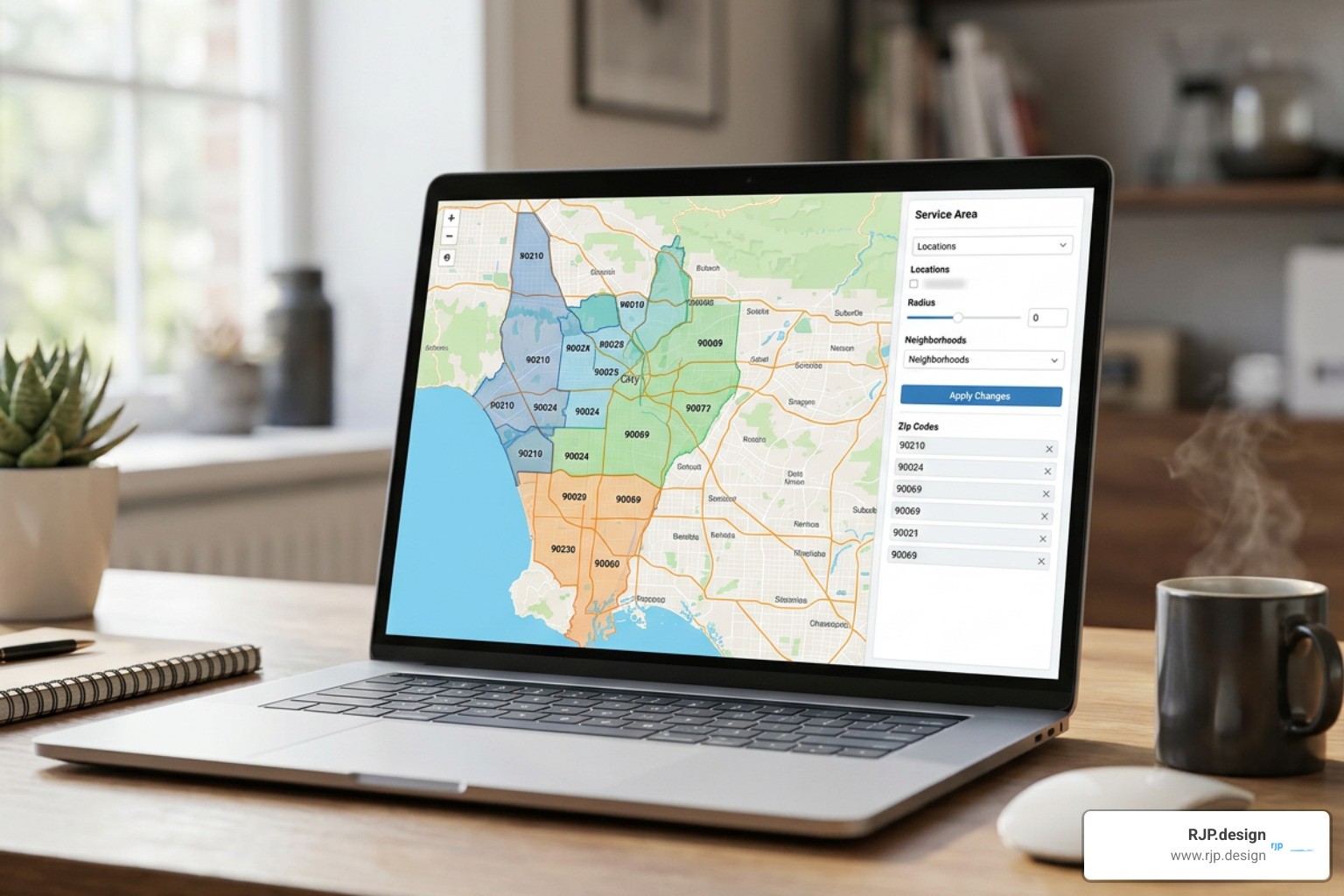
To maximize your local presence:
Configure Precise Service Areas: Select the specific ZIP codes and recognized sub-districts you serve instead of a blanket county.
Select Specific Primary Categories: Choose the most accurate category that reflects your core revenue driver.
Upload Geotagged Visual Proof: Encourage team members to upload genuine project photos on-site. Profiles featuring active customer and team imagery consistently outperform dormant listings.
Maintain Profile Engagement: Post regular local updates, highlight seasonal service specials, and respond promptly to direct messages.
A fully optimized profile is the primary vehicle for dominating the Google 3-pack SEO results. For comprehensive setup tactics, explore our Google Business Profile ultimate guide and discover our specialized Google Local Pack services.
How to Execute a Dominant Neighborhood Strategy and Scale Results
Capturing market share across surrounding communities requires an organized system. Instead of haphazardly launching thin pages, build a structured network of content backed by proper technical markup and localized proof.
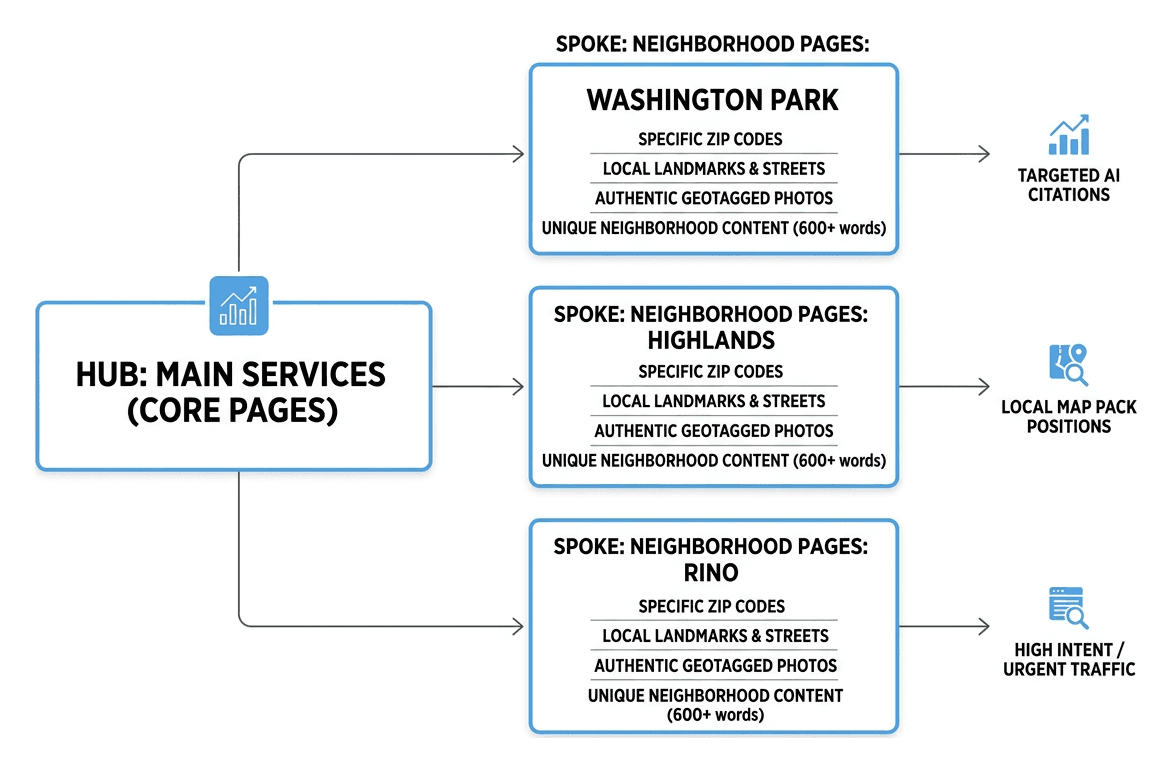
Structuring High-Converting Neighborhood Landing Pages and Schema
A successful neighborhood page must provide real substance. Publishing a thin 200-word page with swapped city names will result in indexing issues or algorithmic demotions. High-performing pages typically feature 600 or more words of unique, authentic content.
Essential elements for every landing page include:
Hyperlocal Entity Mentions: Reference recognizable local parks, school districts, major cross streets, and common regional property types (such as mid-century ranch homes or historic brownstones).
Localized FAQ Sections: Answer questions specific to the area, such as local water hardness, permit processes, or regional climate impacts.
Neighborhood Reviews and Case Studies: Feature client testimonials explicitly mentioning their sub-district.
Embedded Maps and Directional Landmarks: Provide natural orientation points for customers visiting your location.
To help search engines and AI models understand your geographic coverage, implement structured schema markup. Using LocalBusiness structured data alongside areaServed and geometric GeoCircle boundaries provides machine-readable confirmation of where you operate.
For technical blueprints on structured data implementation, review this Hyperlocal AEO Strategy and discover how purpose-built city landing pages SEO turn organic visitors into qualified leads.
Natural 'Near Me' Targeting and Review Sentiment Optimization
Trying to rank for "near me" searches by repeating the phrase "plumber near me" in your headings looks unnatural and damages readability. Modern search engines automatically substitute "near me" with the searcher's physical coordinates before querying their index.
To capture proximity-based demand naturally:
Target the actual neighborhood name and service combination in your primary title, H1, and opening copy.
Rely on verified GBP coordinates and schema data to signal geographic proximity.
Cultivate continuous review velocity. Reviews account for significant local ranking weight, and 83% of consumers read reviews before making a buying decision.
Encourage clients to mention the neighborhood and specific service in their reviews (e.g., "Replaced our water heater in Maplewood within two hours!").
Algorithms analyze sentiment, term frequency, and named entities within your reviews. These authentic mentions provide search engines with third-party verification of your work in that area.
Supporting your on-page work with structured local citation building and targeting high-intent phrases using local keyword SEO solidifies your authority across every target pocket.
Scaling Content and Internal Linking Without Thin Page Penalties
Expanding across multiple neighborhoods without writing duplicate content requires a clean architectural framework:
Adopt a Hub-and-Spoke Linking Structure: Build a central "Areas We Serve" page that links outward to each individual neighborhood spoke.
Link Contextually Between Neighbors: Connect adjacent neighborhood pages using natural anchor text to distribute page authority throughout the cluster.
Incorporate Custom Local Data Points: Differentiate each page using unique local statistics, climate challenges, and specific service considerations.
Balance AI Drafts with Human Editorial Oversight: Use AI tools to structure initial outlines, but rely on human review to add real stories, genuine client feedback, and authentic community terminology.
Building quality neighborhood assets takes effort, but the compounding returns are substantial. A business starting with three to five prioritized zones typically begins seeing ranking movements within 4 to 8 weeks, followed by substantial lead growth within 3 to 6 months.
If you are ready to expand your service footprint, dominate neighborhood searches, and build high-converting location pages, explore our expert local SEO services. Our down-to-earth team at RJP.design specializes in creating high-performing websites and strategic search systems that ensure your business gets found, chosen, and trusted by the customers right down the street.